Middle East · 07 August, 2026 · 2 min read
Saudi Arabia, Turkey And Pakistan Sign Mecca Joint Defence Agreement
Mecca Agreement for Collective Defense signed by Saudi Arabia, Turkey, Pakistan. Any armed attack on one signatory is an attack on all three, officials say.
Saudi posture: denial of axis/sectarian bloc vs emphasis on anti-Iran orientation.
3 of 4 outlets skipped it: a Turkish official says other countries can join the pact.
29outlets compared
Same story, two versions
tap a side to read it in full
NewsX
“Commonly known as “Islamic NATO,” this trio alliance brings together three distinct strategic powers”Read the original ↗
Al-Monitor
“Ankara nonetheless said later that the agreement was "not aimed at any particular country"”Read the original ↗
NewsX calls it “Islamic NATO”, while Al-Monitor stresses “not aimed at any particular country”.
Mecca pact and clause
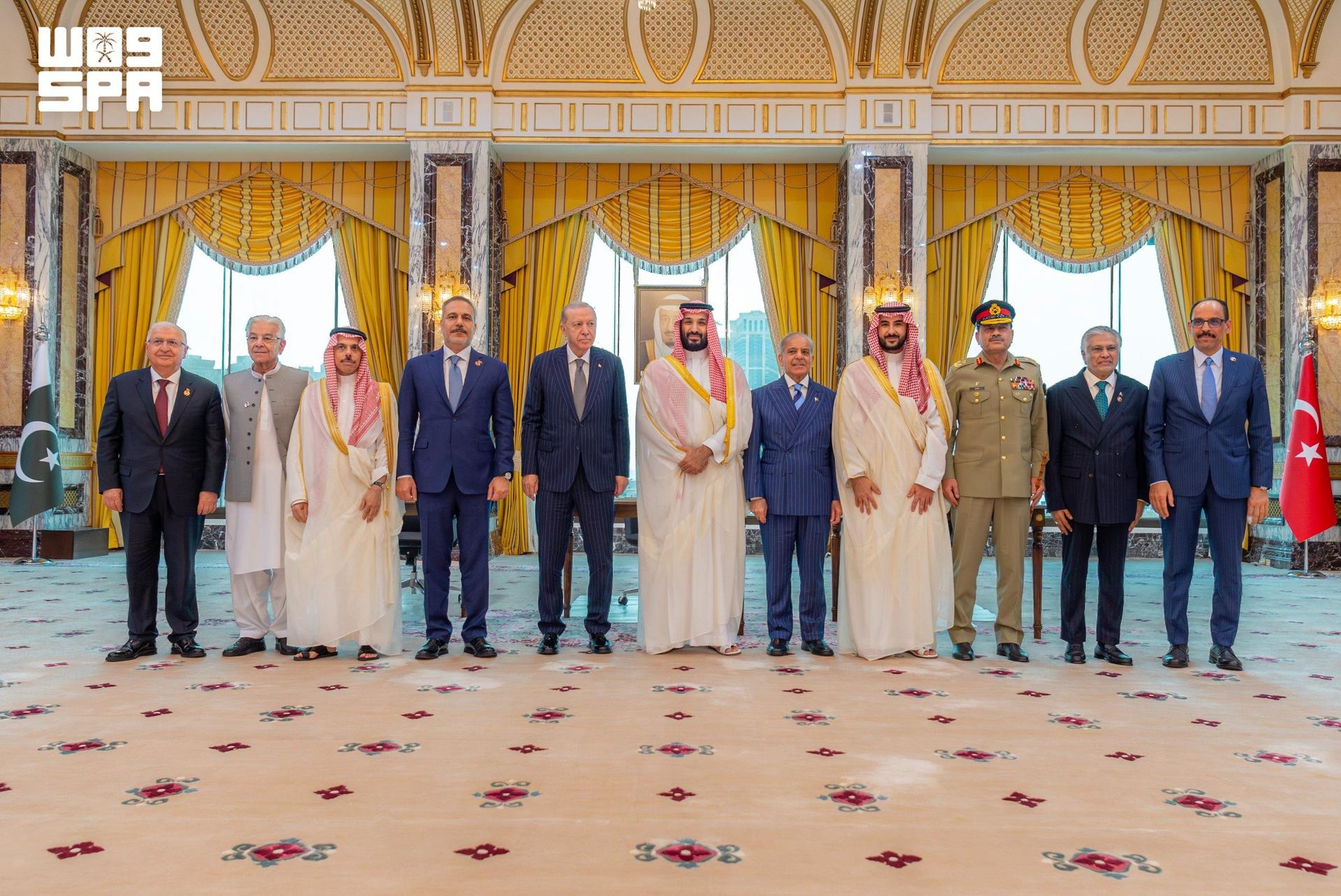
Saudi Arabia, Turkey and Pakistan signed the Mecca Joint Defence Agreement in Mecca on Friday, with the pact stipulating that an armed attack against any one of the three states shall be regarded as an attack on all three. The agreement was signed by Saudi Crown Prince Mohammed bin Salman, Turkish President Recep Tayyip Erdogan and Pakistan’s Prime Minister Shehbaz Sharif, according to statements from all three countries.
The deal was described as intended to strengthen collective deterrence against any act of aggression, and it also provides for the enhancement of all aspects of defence cooperation among the three States. The signing came as the sources tied the move to growing security concerns and threats from the war in Iran, with the agreement framed as a response to increased regional uncertainty.

Defensive framing and critics
A Turkish government official described the agreement as “purely defensive in nature,” saying the sides pledged mutual support only for defence and that the deal is “not against any specific actor”. The same official added that the agreement does not abrogate or replace any bilateral or multilateral agreements between these states or with other states and organisations.
In Iran, Ebrahim Rezaei, a member of the Iranian Parliament’s National Security and Foreign Policy Commission, criticised the deal on X, saying it would not bring security to Saudi Arabia. Rezaei wrote, “The Saudis should know that a paper agreement with Turkey and Pakistan will not bring them security,” and he urged policy change so Saudi Arabia would not have to “#BegForSecurity from others,” according to the source.

Regional implications and follow
The sources linked the pact to a broader security environment shaped by the war in Iran and by tensions involving Gaza, with the Irvine Times account saying the agreement came amid rising tensions between Turkey and Israel over Gaza and other regional conflicts. In a separate framing, Radio Free Europe/Radio Liberty reported that the leaders signed on August 7 to “strengthen collective deterrence against any act of aggression,” and it quoted Pakistan’s Foreign Ministry that “any armed attack against any one of the three states shall be regarded as an attack against them all.”
““This is a development that we are closely following.””
RFE/RL also quoted Masoud Alfak, a Riyadh-based analyst, describing the agreement as a “major development in the region's security architecture” and saying the countries “believe they face common threats” and that “the primary objective is to promote regional security and stability rather than seeking confrontation or joining wars.” India’s Ministry of External Affairs spokesperson Randhir Jaiswal said in a press briefing that the defence pact was “a development that we are closely following,” while the Zee News account placed the signing in the context of missile attacks on Gulf oil exporters and the US-Iran conflict.