Crime03 May, 20267 min read
Saudi Arabia’s Ministry of Interior Deports 14,855 And Arrests 11,300 In Week-Long Crackdown
This article is an automated aggregation of coverage from news outlets. Our editorials offer in-depth analysis curated by the NewsCord team.
Ministry of Interior deported 14,855 illegal residents and arrested 11,300 in a week. Campaign operated April 23–29 via joint inspections by security forces and agencies.

Arrests, deportations, penalties
Saudi Arabia’s security authorities carried out a week-long crackdown that combined arrests, deportations, and legal procedures targeting people accused of violating residency, work, and border security rules. The Ministry of Interior said it deported 14,855 illegal residents and arrested 11,300 others during a week-long security campaign, with the arrests carried out during joint inspection campaigns between April 23 and April 29. Gulf News reported that those detained included 6,244 violators of residency regulations, 3,543 of border security laws, and 1,513 of labour rules, while the ministry also referred 18,601 violators to their diplomatic missions to obtain travel documents and processed 4,337 to complete travel arrangements.
The Times of India similarly described a nationwide crackdown over one week, saying the Ministry of Interior reported 11,300 individuals detained between April 23 and April 29, including 6,244 for breaching residency laws, 3,543 for violating border security rules, and 1,513 for labour-related offences. The same Times of India account said enforcement measures were ongoing against nearly 29,913 expatriates, including 27,699 men and 2,214 women, who were undergoing legal procedures.
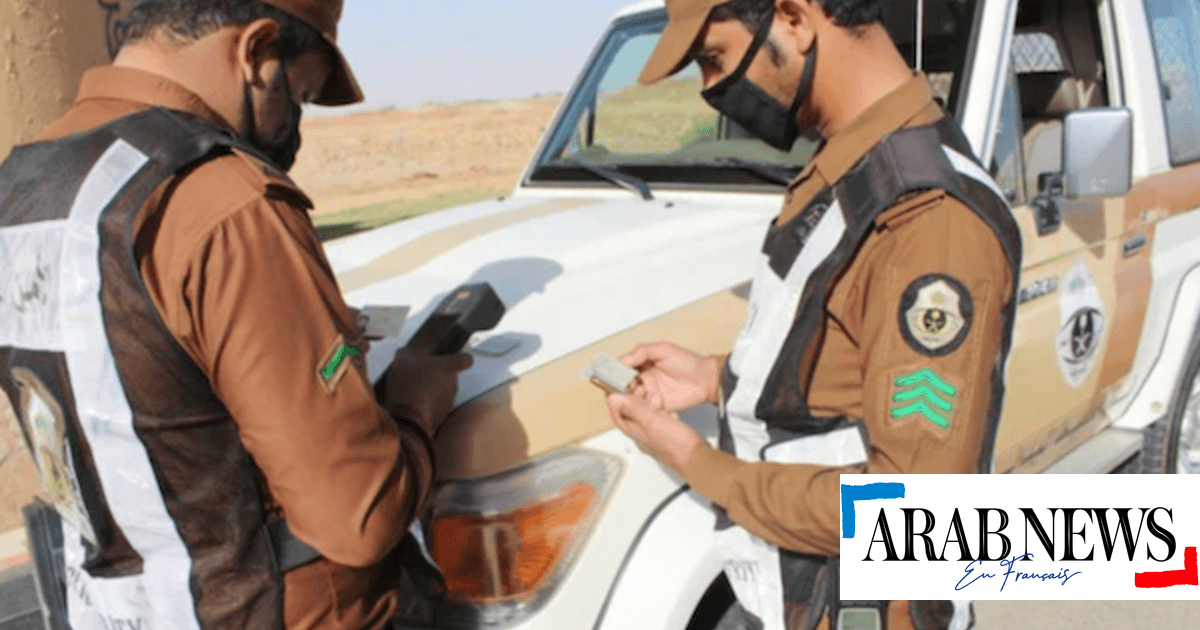
The Ministry of Interior also warned that those aiding illegal entry or residence could face up to 15 years in prison and fines of up to SR1 million, a warning echoed across multiple reports. In parallel, Bladi.net said Saudi authorities arrested 13,118 people in violation of residency, work, and border security regulations ahead of Hajj, and described additional legal proceedings for 21,872 irregular migrants under Saudi Interior Ministry oversight.
Facilitators targeted
Alongside detentions of people accused of violating residency and border rules, Saudi authorities said they also arrested people accused of facilitating illegal entry, transport, shelter, or employment. Gulf News said “Fourteen people were accused of transporting, sheltering or employing violators were also arrested,” and it added that the Ministry of Interior warned that those aiding illegal entry or residence face “up to 15 years in prison and fines of up to SR1 million.” The Times of India reported a similar enforcement focus, stating “Authorities said 14 people were detained for assisting violators by providing transport, shelter or employment,” and it quoted the ministry’s warning: “Anyone who assists illegal entry, provides transport or shelter, or offers any form of support will face up to 15 years in prison and fines of up to SR1 million.”
Akhbrna’s report described the campaign as also targeting “illegal intermediaries,” saying “Twenty-two people were arrested on charges of aiding, sheltering, and employing individuals who violate the residence, work, and border security laws.” In a separate Tawasul News account, the General Administration of Mujahideen spokesperson said the penalties for those who assist violators could reach “up to 15 years in prison and a financial fine of up to one million riyals,” and the spokesperson described the crime of facilitating entry as “among major crimes that warrant detention.”

That same Tawasul News statement said the operation in Jazan involved a Yemeni resident “transporting with him three violators of the border security system of the same nationality inside a vehicle,” and it said the men were “stopped and referred to the competent authorities.” The Tawasul News spokesperson also urged reporting through emergency numbers, stating “report any violation of the residence, work, and border security regulations to the numbers (911) in the Makkah, Medina, Riyadh, and Eastern Province regions, and (999) and (996) in the other regions of the Kingdom.”
Jazan border operation
A security operation described by Tawasul News focused on Jazan and framed the arrests as part of efforts to stop smuggling and illegal crossing. The report said the General Administration of Mujahideen forces in Jazan “continues to succeed in combating smuggling operations and illegal crossing,” and it described the arrest of “a resident of Yemeni nationality who was transporting with him three violators of the border security system of the same nationality inside a vehicle.” It added that the group was “stopped and referred to the competent authorities, in accordance with strict judicial and security instructions,” and it said the operation was one of many efforts “to protect the lives of the homeland.”
The spokesperson’s statement emphasized that security is “the cornerstone of our stability,” and it said security efforts “represent the first line of defense that prevents crossing borders or destabilizing internal security.” The report also said that anyone who facilitates entry for violators, transports them, provides shelter, or offers assistance “exposes themselves to penalties reaching up to 15 years in prison and a financial fine of up to one million riyals,” and it added that penalties include “the seizure of means of transportation and lodging.”
The spokesperson further described the crime as touching “the honor and integrity of the offender,” and it urged reporting violations through emergency numbers. The statement also said the reporting person bears “no legal responsibility,” and it described “information confidentiality” as part of the reporting assurances.
Hajj season enforcement
Saudi Arabia’s enforcement actions were also described as part of preparations for the Hajj season, with the Interior Ministry linking security measures to the “smooth conduct” of the pilgrimage. Bladi.net said Saudi Arabia aims to “strengthen security and ensure the smooth conduct of the Hajj,” and it stated the gathering is expected to welcome “more than 1.5 million pilgrims, both nationals and international.” The same report said intensive inspection campaigns were carried out from “May 15 to 21” and resulted in the arrest of “8,150 people for violation of the residency law, 3,344 for violations of border security regulations, and 1,624 for violations of labor regulations.”
It also said “1,207 individuals who had attempted to enter Saudi territory illegally” were arrested, adding that “mainly Ethiopian (61%) and Yemeni (37%),” and it reported “94 people who were attempting to leave the kingdom illegally.” Bladi.net further said “21,872 irregular migrants (20,616 men and 1,256 women) are currently under legal proceedings,” and it reported that “15,936 have been referred to their diplomatic missions for obtaining travel documents.”

The report said “11,566 others have been deported to their countries of origin,” and it quoted the Interior Ministry’s commitment to “severe penalties, notably prison terms of up to 15 years, fines of up to one million Saudi riyals, and the confiscation of means of transport and housing used in the offense.” It also said the operations were part of preparations for “the current Hajj season 1446/2025, which will take place from June 4 to 9,” and it described additional measures including “fines up to 20,000 riyals against anyone attempting to perform Hajj without authorization” and “expulsion of people residing illegally in Saudi Arabia” with a “period of 10 years.”
Criminal justice and repression
Beyond immigration enforcement, Human Rights Watch described Saudi Arabia’s use of criminal prosecutions and prison sentences against dissidents, human rights activists, and others, framing the cases as part of a broader pattern of repression. In 2021, Human Rights Watch said authorities “ont systématiquement réprimé des dissidents, des activistes des droits humains et des religieux indépendants,” and it cited specific convictions by the Saudi terrorism court. The report said that on “Le 5 avril,” the terrorism court “a condamné un travailleur humanitaire, Abdulrahman al-Sadhan, âgé de 37 ans, à 20 ans de prison suivis d’une interdiction de voyager de 20 ans,” for charges linked to the “diffusion pacifique de ses opinions.”
It also said that on “Le 20 avril,” the same court “a condamné un activiste des droits humains, Mohammed al-Rabea, à six ans de prison” based on “des accusations vagues et fallacieuses” tied to his activism. Human Rights Watch further described that “Selon des sources proches de ces deux affaires, les autorités saoudiennes les ont torturés lors de leur détention et les ont contraints à signer des aveux fabriqués,” and it said that in June a Saudi court sentenced Sudanese journalist “Ahmad Ali Abdelkader, âgé de 31 ans, à quatre ans de prison” over “des accusations vagues” related to opinions and media interviews he shared on Twitter.
The report also said that “Des procès dans lesquels les prévenus sont passibles de la peine de mort ont continué d’être intentés,” and it named “Salman al-Awda” and “Hassan Farhan al-Maliki” among those facing death-penalty risk up to September. Human Rights Watch described how some prominent women’s rights activists were released but remained under travel bans, stating “Loujain al-Hathloul, Samar Badawi et Nassima al-Sadah” were “demeurent sous le coup d’une interdiction de voyager,” and it said their suspended sentences allow authorities to return them to prison.