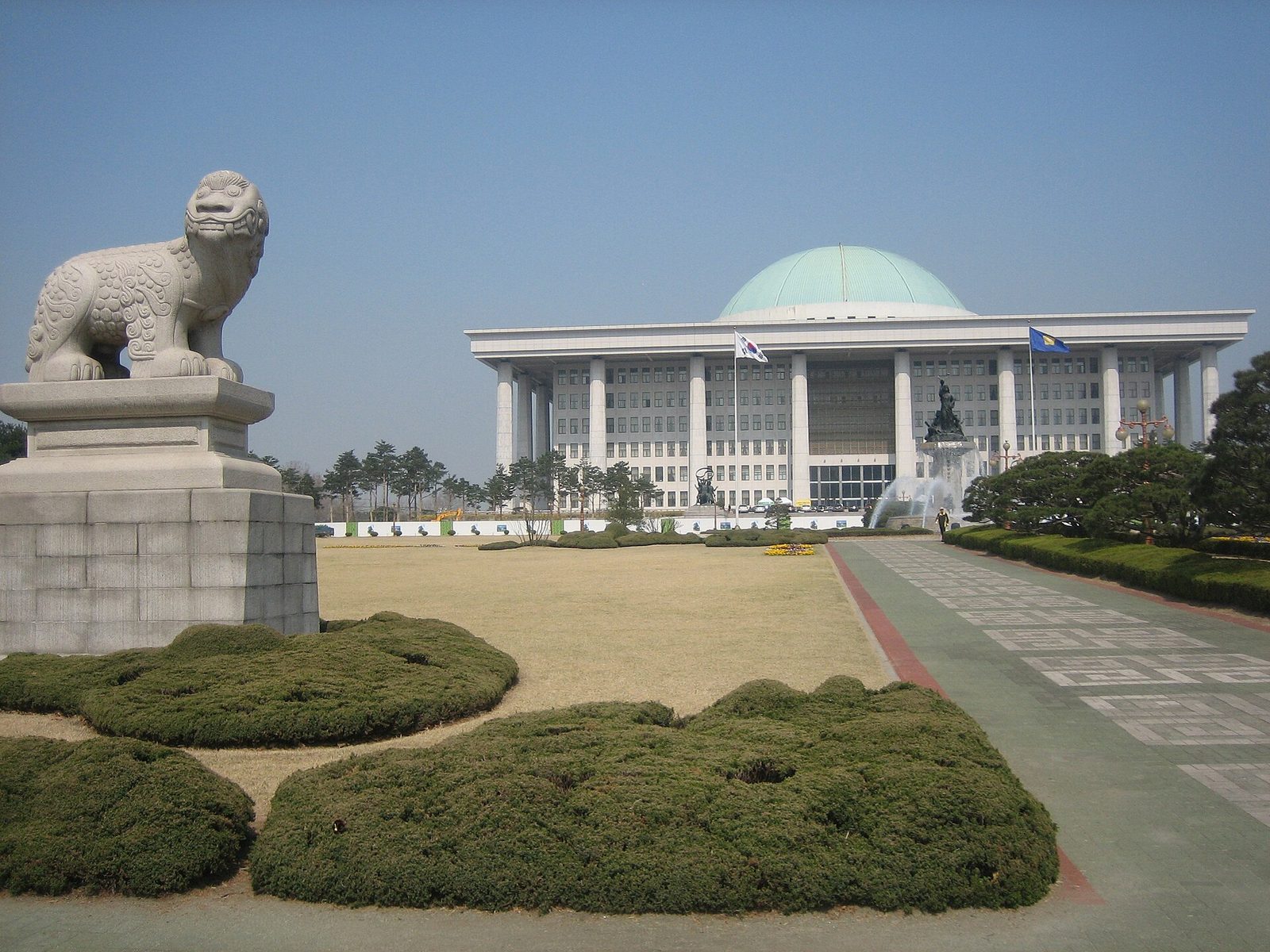
Cryptoupdated 22m ago2 min read
Archive photo · 9 April 2007South Korea Schedules Dec. 3 Hearing for Digital Asset Basic Act on Won Stablecoins
8 Western Alternative6 Other1 AsianPhoto: Alain Seguin at Flickr, from Ottawa, Canada, CC BY-SA 3.0 · Cropped for layout
This article is an automated aggregation of coverage from news outlets. Our editorials offer in-depth analysis curated by the NewsCord team.
Dec. 3 public hearing scheduled for the Digital Asset Basic Act. Bill allows won-denominated stablecoins issued by bank-led consortia with majority control.
Save coverage image
Dec. 3 Hearing Set
South Korea’s National Assembly scheduled a public hearing for Dec. 3 to discuss the Digital Asset Basic Act, a legislative proposal that would reshape how cryptocurrency exchanges and stablecoin issuers operate.
The National Assembly’s Political Affairs Committee circulated a notice among its members informing them that the hearing would begin at 10 a.m. local time.
The government proposal would initially restrict won stablecoin issuance to consortiums in which banks collectively hold a majority stake, while fintech and technology companies would be permitted to become the largest individual shareholders.
The parliamentary committee will consider the government proposal alongside existing bills submitted by individual lawmakers, and the FSC presented its version during a Virtual Asset Committee meeting chaired by FSC Chairman Lee Eok-won on Nov. 24.
The FSC later handed its proposal to Yoo Dong-soo, chairman of the parliamentary committee and a member of the ruling Democratic Party, who is expected to serve as the bill’s lead sponsor.
Stablecoins, Reserves, and Caps
South Korea’s draft digital assets bill would initially limit issuance of won-denominated stablecoins to consortiums in which banks collectively hold a majority stake, while allowing a fintech or technology company to hold a larger stake than any individual bank. The bill would require stablecoin issuers to hold reserves equivalent to the entire value of their outstanding tokens and honor redemption requests immediately, and it would bar issuers from paying interest to token holders. The draft also proposes that crypto exchanges face a general 20% ownership cap for major shareholders, with exceptions allowing stakes of up to 34% subject to FSC approval.
The FSC described the ownership restrictions as designed to preserve the neutrality of trading platforms by adopting ownership standards comparable to those governing alternative trading systems in South Korea’s capital markets. The bill would hold digital asset businesses liable for damage arising from cybersecurity incidents and technical failures, with financial penalties of up to 10% of sales revenue applicable when companies breach mandatory safety requirements.
ICOs and the Next Steps
South Korea’s draft would also lift the ban on initial coin offerings, allowing domestic coin issuance after a nine-year prohibition that began in 2017. The bill would permit domestic initial coin offerings if issuers file a white paper with the FSC before marketing tokens to the public, and it would require exchanges to file and publish a report on each token they list. The draft would allow stablecoins, formally termed “digital payment tokens,” to circulate domestically if they meet the FSC’s standards, and it would let foreign issuers operate after opening a local branch and registering with the FSC.
The bill still needs to pass the National Assembly before proceeding to presidential promulgation, and Tiger Research said the legislation is expected to take effect one year after promulgation. FSC Chairman Lee Eok-won said the bill would be fully discussed in the National Assembly and enacted quickly, while the draft’s details, including shareholder requirements for stablecoin consortiums, remain subject to subsequent enforcement decrees.