Technology and Scienceupdated 58m ago2 min read
MapSpaceX Recovers Starship Upper Stage at Texas Launch Tower After 15th Test Flight
“The landing followed a setback the day before, as Starship’s first-stage booster exploded”
“Bringing back an upper stage from orbit is a major technical hurdle”
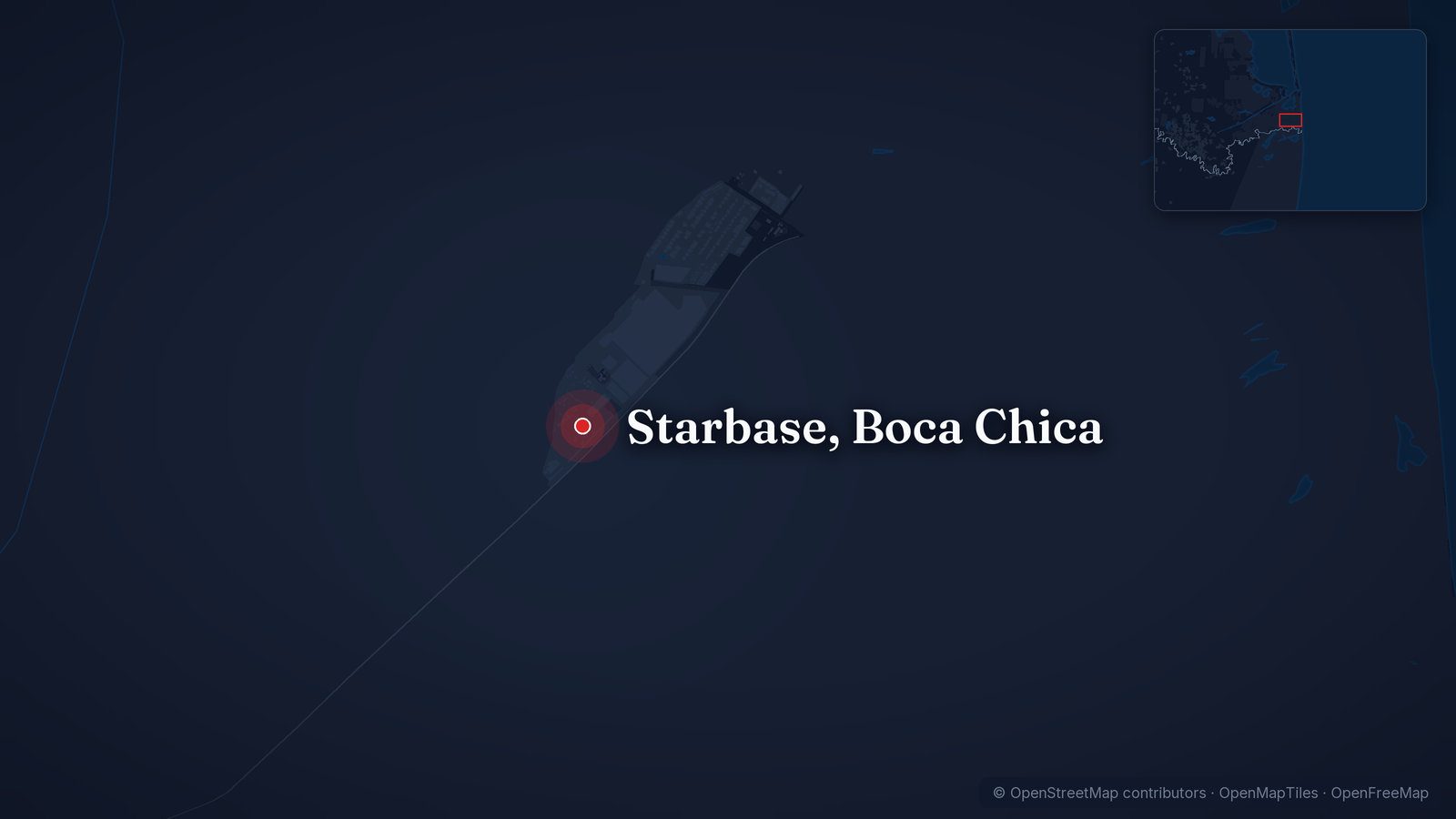
Map: © OpenStreetMap contributors, ODbL · Cropped for layout
This article is an automated aggregation of coverage from news outlets. Our editorials offer in-depth analysis curated by the NewsCord team.
Starship upper stage returned from a 22-hour orbit and was captured by launch tower arms. Flight 15 reached orbit but booster landing was not recovered on the pad.
Save coverage image
First Upper-Stage Catch
SpaceX’s Starship completed its 15th test flight by returning its upper-stage spacecraft to the Texas launch tower and settling it into the robotic arms during the recovery attempt. SpaceX launched Starship from the Starbase launch site in Boca Chica, Texas, at 4:47 p.m. on November 13 (local time), and the upper-stage spacecraft then entered Earth orbit, completing 14 orbits over roughly 22 hours and 30 minutes. SpaceX deployed 26 satellites for the high-speed satellite internet network Starlink during the mission, and the spacecraft re-entered the atmosphere on November 14 (local time) before returning to the Texas launch site.
SpaceX’s attempt to recover both the first-stage booster and the upper-stage spacecraft was aborted when an automated flight termination system was triggered about 6 minutes and 30 seconds after liftoff, and the first-stage booster diverted over the Gulf of Mexico before exploding. SpaceX’s chief executive Elon Musk said on the social media platform X that the first-stage booster ran short on propellant, while the upper stage “smoothly entered Earth orbit” and achieved the first successful capture of the upper stage.
Booster Abort and Praise
SpaceX spokesperson Dan Huot said the guidance, navigation and control system triggered the no-go, explaining that “It was doing what it was supposed to do.”
Elon Musk said the booster was “slightly low on fuel,” and SpaceX described the aborted double-catch as a failure of the booster to proceed with a catch after it was not in the correct position.
NASA administrator Jared Isaacman praised the achievement on X, writing, “It was almost magical... More and more people believe... one step closer to the Moon,” after the upper-stage capture.
SpaceX also posted on social media that “Mechazilla catches the Starship! Congratulations to the entire SpaceX team for this incredible achievement!” as the mechanical arms secured the spacecraft near the Mechazilla launch tower.
The Guardian framed the event as a victory because SpaceX caught the upper stage for the first time, even as the booster diverted and exploded in the Gulf of Mexico.
Next Steps for Reuse
SpaceX said the test flight did not achieve all of its objectives because the booster recovery was aborted, and the company still needs to perfect Starship’s thermal protection system to minimize repairs and maintenance after each flight. SpaceX plans to drastically increase launch frequency starting with the 16th flight by using new launch sites such as Florida’s Kennedy Space Center, according to DongA Science. SpaceX also plans an “in-orbit propellant refueling” test next year by docking two Starship vehicles in orbit and transferring propellant between them.
“It will also carry out docking rehearsals for NASA’s crewed lunar mission Artemis III.”
SpaceX will carry out docking rehearsals for NASA’s crewed lunar mission Artemis III, and the sources say the 2028 date for returning humans to the lunar surface is tied to NASA’s plan. Elon Musk’s previously announced schedule for an uncrewed Mars exploration mission by the end of this year has been postponed, while the upper-stage success is described as a major step toward fully reusable rocket operations.