Full story
Ceuta braces for Aug. 15
Spain and Morocco reinforced Ceuta’s borders after online messages spread calling for a new mass incursion into the North African enclave on Saturday, Aug. 15, two weeks after tens of thousands crossed into the city.
“demandingMadrid “immediately and significantly reinforce border protection in its African enclaves”
Politico.eu said Spanish and Moroccan security officers reinforced Ceuta’s borders on Friday and that the rumored surge was cited by critics of Spain’s migration policies, including Austria’s conservative Europe, Integration and Family Minister Claudia Bauer demanding Madrid “immediately and significantly reinforce border protection in its African enclaves”.

Reuters reported that Spain beefed up police and military presence in Ceuta amid social media messages encouraging migrants to attempt another mass border breach on Saturday, with soldiers in combat fatigues standing watch outside supermarkets and official buildings on Friday evening.
Reuters also said at least 96 people died in the attempt on July 30 and over 72,000 managed to enter Ceuta, while Interior Minister Fernando Grande-Marlaska told reporters in Ceuta on Thursday, “We’ll continue to deploy whatever personnel are necessary to restore normality as soon as possible and prevent events like those of July 30 from happening again,”.
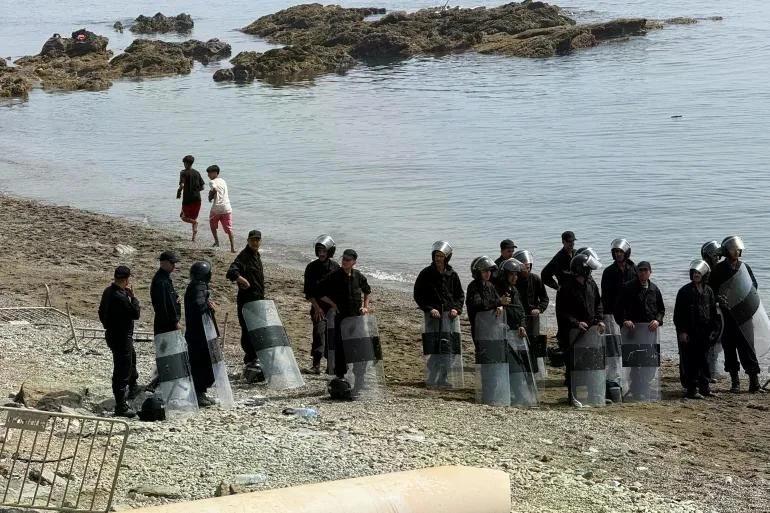
On the Moroccan side, Reuters said dozens of black-clad Moroccan security personnel surveilled the beach in Fnideq from which many migrants who swam around Ceuta’s Tarajal breakwater departed, and Morocco warned it would prosecute organisers and participants.
Numbers, screening, and deterrence
As Spain and Morocco coordinated their response, Reuters said Spain installed a maritime barrier and sent over 500 additional police officers from the mainland, and Grande-Marlaska said about 5,000 migrants remained in Ceuta.
Reuters reported that officials started screening adults and decided more than 500 asylum cases, most of them rejected, and Grande-Marlaska added that people who entered irregularly would not be allowed to stay in the enclave, travel to mainland Spain or obtain legal status, except in rare cases of extreme vulnerability.
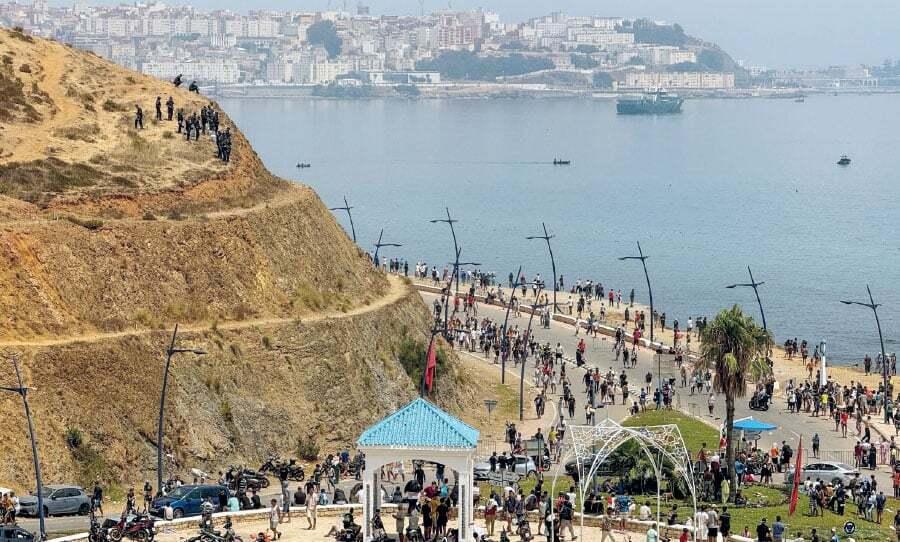
RTVE.es put the remaining population at 5,000 according to Grande-Marlaska and said Ceuta’s president Juan Jesús Vivas estimated between 8,000 and more than 12,000 migrants, while also reporting that Morocco installed new lines of barbed wire and concertina fencing at strategic points of the border.
Canal Sur said the Guardia Civil insisted in messages, also in Arabic, to dissuade people from crossing and quoted Ana Redondo saying, “Todos los que entren ilegalmente serán repatriados, no tienen ninguna posibilidad”.
In Ceuta, RTVE.es reported that Vivas estimated 1,300 migrant minors remain in the autonomous city after the massive arrival, and he said, “The asylum mechanism cannot be turned into a platform to facilitate entry into the rest of the continent, Spain, and the EU; Ceuta cannot play that role,”.
Stakes: asylum, minors, and sovereignty
The dispute over what happens next in Ceuta and how to manage migrants who remain is tied to both security and legal status, with Reuters saying Spain would return to Morocco those without a right to remain and that people who entered irregularly would not be allowed to obtain legal status.
““None of them will remain in Ceuta, none of them will make it to the Iberian Peninsula”
POLITICO.eu quoted Grande-Marlaska saying, “None of them will remain in Ceuta, none of them will make it to the Iberian Peninsula, none of them will be given legal status,” while CNBC Africa reported Spanish officials rejecting discussion of sovereignty of the enclaves and quoting Margarita Robles: “Ceuta and Melilla aren’t just Spanish; they’re super-Spanish and cannot be touched,”.
RTVE.es said Vivas called the situation “unsustainable and at maximum risk” and argued that the city’s future depends on “when and how this crisis is resolved,” while also saying he had asked for the expulsion of those who entered illegally two weeks ago.
El Periódico described Spain’s reinforcements as increasing police forces by almost 48% in two weeks and said Defense kept more than 2,000 soldiers in the city, while also noting a 500-meter inflatable maritime barrier installed in Ceuta and a similar one in Melilla.
For Morocco, the stakes include preventing another rush and prosecuting those behind online calls, with CNBC Africa citing Morocco’s Interior Ministry warning it would prosecute organisers and participants and calling on people to remain vigilant and responsible and not to be drawn into “such suspicious and misleading calls”.