
Tourism · 13 August, 2026 · 3 min read
Cyril Ramaphosa Launches South Africa ETA System, Rejecting 6,126 Fraudulent Applications
Ramaphosa launches Electronic Travel Authorisation to streamline entry, boost tourism, investment, and border security. System rejected 6,126 fraudulent applications after processing over 216,000.
10 outlets told this the same way.
7 of 9 outlets skipped it: ETA helps identify and warn potential overstayers at departure.
10outlets compared
ETA launched at OR Tambo
South Africa launched its Electronic Travel Authorisation (ETA) system at OR Tambo International Airport on Wednesday, with President Cyril Ramaphosa unveiling the digital initiative aimed at simplifying entry while strengthening border security. Home Affairs Minister Dr Leon Schreiber said the system uses biometric technology and automated risk analysis to detect fraudulent travel applications before travellers arrive, and he said it had rejected 6,126 fraudulent applications after processing 216,204 applications. Schreiber said the ETA was initially piloted during South Africa’s G20 presidency for travellers from China, India, Indonesia and Mexico, and he said approved applicants receive the ETA within 24 hours.
The system requires travellers to create a profile on the Home Affairs website, verify their cellphone number and email address using one-time PINs, scan their passports and upload a selfie. Schreiber said the platform compares the passport photograph with the applicant’s facial photograph and automatically scans the passport against more than 40 parameters to establish whether it is an authentic document.
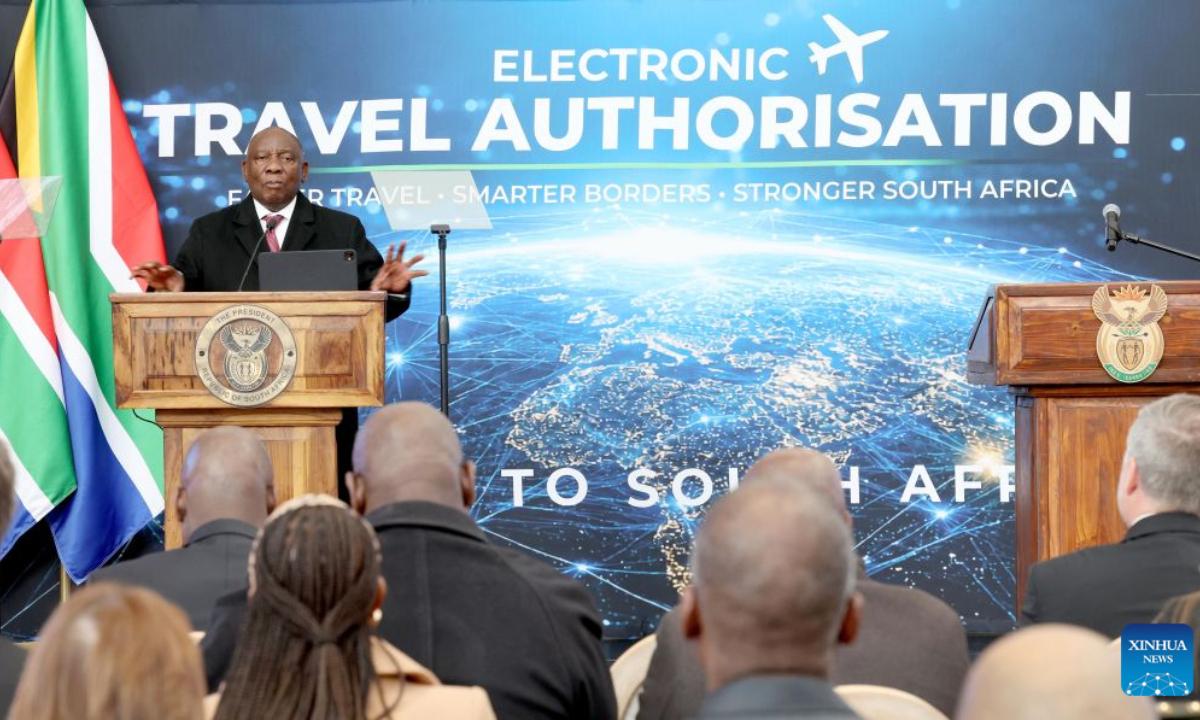
Ramaphosa links travel to jobs
Ramaphosa framed the ETA as more than a technology upgrade, saying, "This is a statement about the kind of country we are building," and he tied the reform to making South Africa more open to opportunity and more competitive in the global economy.
He said the ETA would "make travel to South Africa easier, faster and more predictable," and he argued it would encourage tourism, support trade, attract investment, and facilitate skills and knowledge exchange.

In the same launch remarks, Ramaphosa described the economic logic of visa reform, saying, "Visa reform is not simply an immigration reform. It is an economic reform. It is a jobs reform," and he linked the reform to the prospect of more hotel bookings, more restaurants filled, and more tour operators employed.
The launch venue was also used to connect the policy to Oliver Reginald Tambo’s legacy, with Ramaphosa saying, "Today, through this new system, we are strengthening the way in which the world comes to South Africa."
Schreiber said the ETA is designed to support tourism, investment and legitimate travel while strengthening the government’s ability to detect visa fraud and illegal immigration before travellers reach the country.
Fraud checks and overstayer risk
Schreiber said the ETA’s automated risk analysis is used after payment to identify indicators of fraud or other risks, and he said the rejected applications included cases involving fraudulent passports and manipulated documents. He also said the ETA is intended to detect potential overstayers in real time, with facial verification at the departure counter and direct communication from Home Affairs if a traveller’s face has not been recorded as exiting in time. Schreiber said, "If that warning is not heeded, the security features of the ETA enable immigration enforcement steps to be taken," and he described the technology as live at airports rather than hypothetical.
“If that warning is not heeded, the security features of the ETA enable immigration enforcement steps to be taken.”
The system is linked to the Border Management Authority’s upgraded Electronic Movement Control System, known as EMCS 2.0, and Schreiber said it uses facial verification when travellers arrive to confirm the person presenting at the border matches the person who received authorisation. Home Affairs said the ETA will initially be available to travellers arriving at OR Tambo International Airport, Cape Town International Airport, King Shaka International Airport and Lanseria International Airport, with plans to expand facial recognition and EMCS 2.0 to land and sea ports of entry in the coming months.