Europe03 August, 20263 min read
Spain’s Ceuta Border Breach Kills More Than 50 as Thousands Swim From Morocco
This article is an automated aggregation of coverage from news outlets. Our editorials offer in-depth analysis curated by the NewsCord team.
Over 60,000 migrants attempted to cross into Ceuta from Morocco. Ceuta experienced an unprecedented migration crisis.
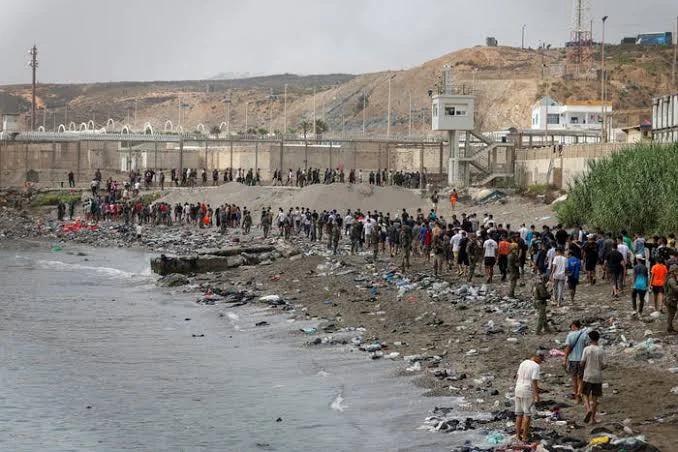
Ceuta breach and deaths
A deadly rush to Spain’s Ceuta enclave on North Africa’s Mediterranean coast saw tens of thousands of people try to swim into the territory after the border was breached, and Abdulah Buji said he nearly became one of the more than 50 people who died trying to reach Ceuta by swimming around a border fence. Buji, a 21-year-old training to become a teacher, described being met by Spanish authorities’ message to “Turn back voluntarily or face deportation,” after he crossed but lost his belongings and money during the crossing. The Daily Sabah account said that of the 60,000 people who crossed between Thursday and Friday morning, about 45,000 had returned to Moroccan territory within hours, and local authorities called for additional police and military forces to restore order.
In a separate account, JNS.org said that on Thursday at least 50,000 people, mostly young men, broke through the fence that surrounds Ceuta and that authorities said at least 72 people died because of crowd crushes, clashes and drowning. JNS.org also said that most of those who crossed had been returned to Morocco, whose territory surrounds Ceuta, while the Daily Sabah account described startled residents and armed Spanish police officers and soldiers in the streets.
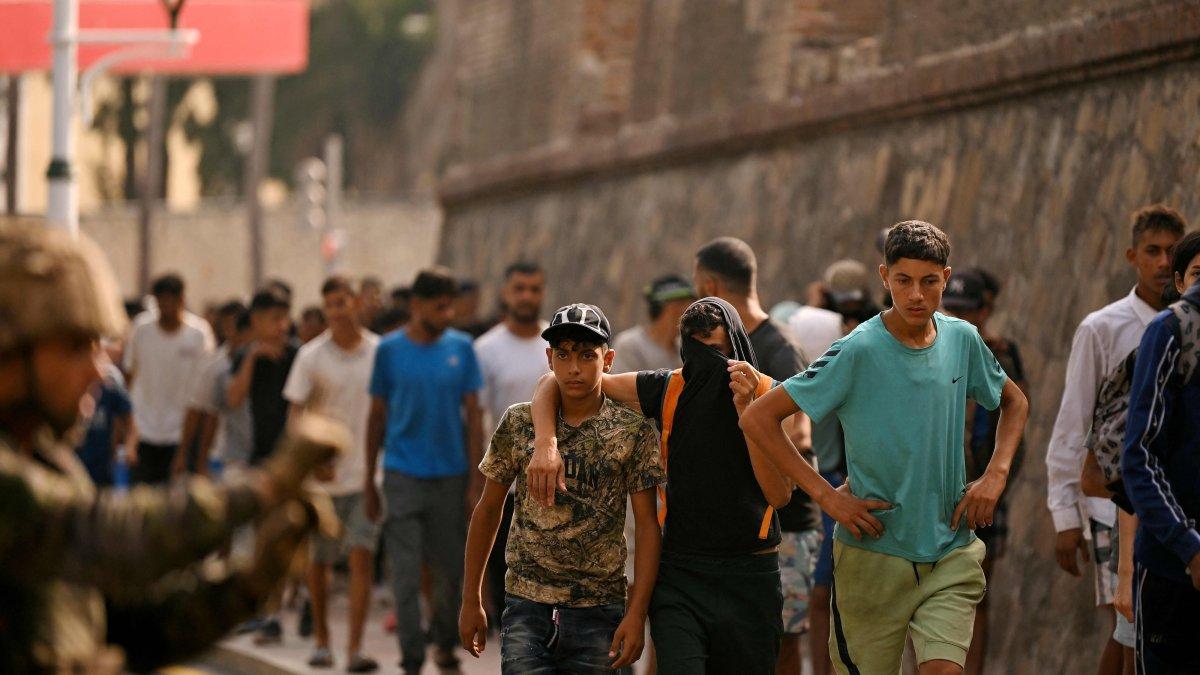
Social media fuels theories
The Daily Sabah account tied the surge to social media posts encouraging Moroccans to try to enter Ceuta days before it began, and it quoted Myriam Cherti saying, “They're doing it out of despair.”
Cherti also told The Associated Press that migrants are acting because “they feel an obligation to help and support their families,” while other participants described searching for missing loved ones in Ceuta.

JNS.org, meanwhile, described how conspiracy theories spread after the breach, saying that Spanish actor Javier Bardem shared a theory on who was behind the mass breach and that U.S. Ambassador to Israel Mike Huckabee called Bardem’s repost a “laughable new blood libel by another dim-witted actor.”
JNS.org also reported that Bardem’s posts blamed Israel for orchestrating the invasion 3,200 miles away from its territory to punish Spain’s government for its anti-Israel policies, and it said the posts were often accompanied by antisemitic rhetoric.
The Forward described the same online narrative as “fodder for anti-Israel conspiracy theorists,” saying there was no evidence for the claim that Israel engineered the incident and that the vast majority of surviving migrants have since been deported back to Morocco.
Europe stakes and politics
As the Ceuta crisis unfolded, the Daily Sabah account said the massive influx was equal to about 70% of Ceuta's resident population and prompted local authorities to call for additional police and military forces to restore order.
JNS.org framed the episode as a major political problem for Spanish Prime Minister Pedro Sánchez’s left-wing government, and it said critics argued the regularization incentivized immigrants to break in while advocates pointed outward to Morocco, Israel and the administration of U.S. President Donald Trump.
In the same vein, The Forward said the theory that Israel was behind the breach resonated widely on social media, pushed by pro-Palestinian celebrities like Hasan Piker and the actor Javier Bardem, and it cited a widely circulated post that claimed “Israel and America got the Moroccan government to send like 40,000 ppl into Spanish administered territory.”
The Forward also reported that Israel’s ambassador to the United Nations, Danny Danon, posted on X that “Spain, which never misses an opportunity to lecture Israel, has declared a state of emergency in Ceuta following the crisis over its immigration policy.”
Across the accounts, the stakes for Europe were tied to Spain’s border policy and the political fallout around Ceuta, with Daily Sabah describing Spanish authorities’ message to migrants and JNS.org describing the crisis as fueling conspiracy narratives in Spain and beyond.