Europe · 04 August, 2026 · 3 min read
Ursula Von Der Leyen Urges Spain To Reinforce EU Borders After Ceuta Migrant Crisis
Ursula von der Leyen urged stronger external EU borders in a letter to Sánchez. About 72,000 migrants entered Ceuta during the crisis.
EU stance on Spain’s regularisation policy after Ceuta.
8 of 10 outlets skipped it: spain began installing a 500-metre floating barrier.
24outlets compared
Same story, two versions
tap a side to read it in full
The Guardian
“criticised Spain’s plan to regularise undocumented migrants as “not a good signal””Read the original ↗
Cabo Mil Radio
“Von der Leyen ... planteó vigilancia permanente y el uso de “barreras físicas””Read the original ↗
The Guardian foregrounds EU criticism of Spain; Cabo Mil and others stress border measures.
Ceuta crisis triggers EU rift
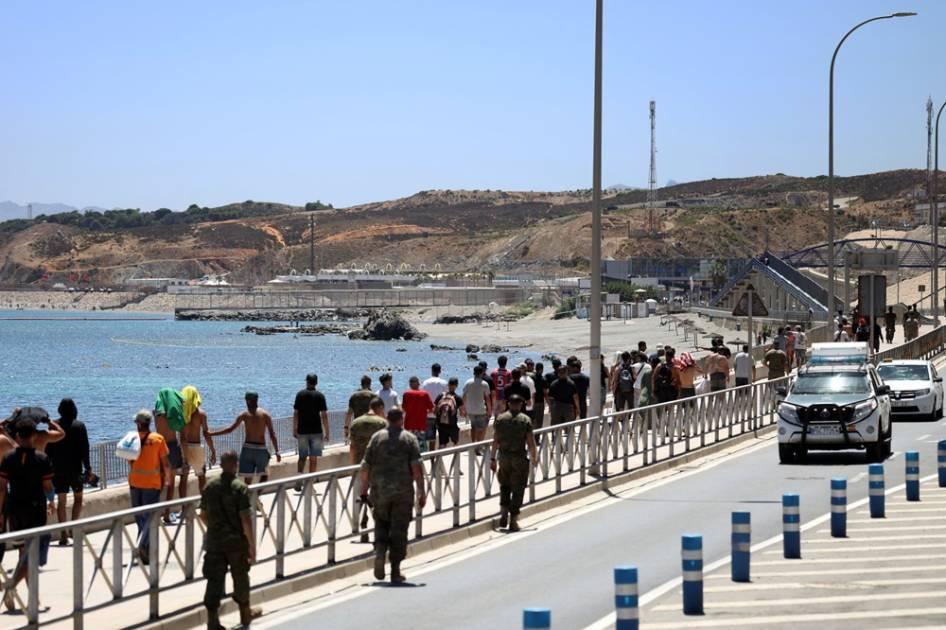
European Commission president Ursula von der Leyen urged Spanish Prime Minister Pedro Sánchez to reinforce the EU’s external borders after a mass entry of migrants into Ceuta, describing the need for “vigilant monitoring and the use of physical barriers where needed.”
“must do more to further strengthen our borders at critical points, including vigilant monitoring and the use of physical barriers where needed.”
In a letter sent to Sánchez, von der Leyen also proposed “five priority areas” including cooperation with third countries, reinforcement of external borders, early-warning systems, dismantling people-smuggling networks, and increasing returns for those without a right to stay in the EU.

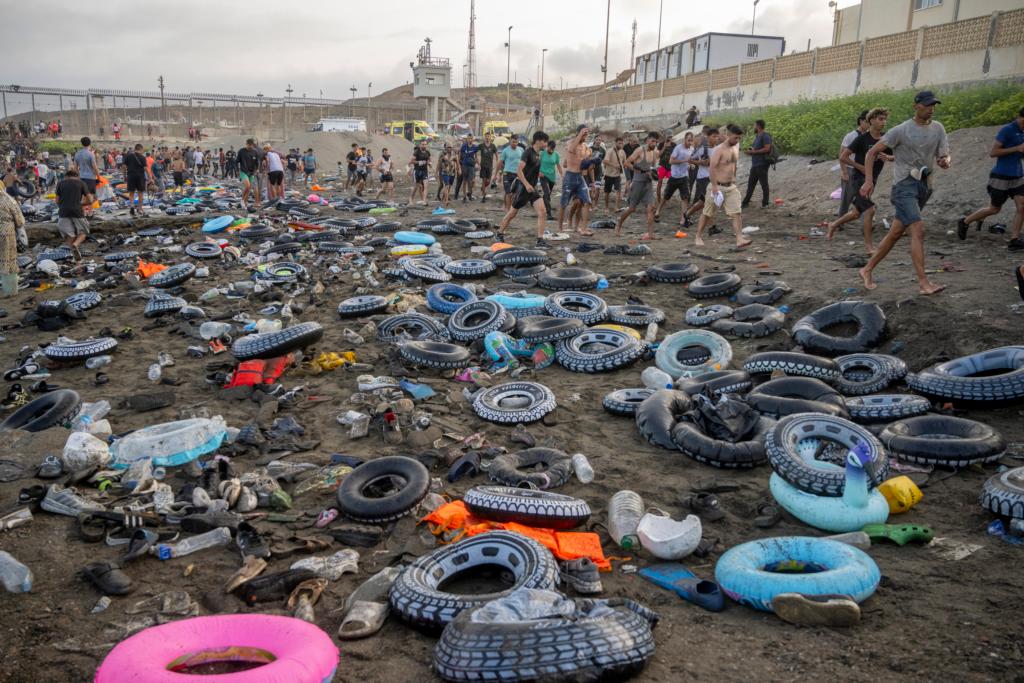
Spain’s interior minister Fernando Grande-Marlaska told reporters that about 70,000 of the 72,000 people who entered Ceuta had already returned to Morocco, while the official death toll was reported as 75 by Spain.
Ceuta authorities put the death toll at 88 and said at least 11 more deaths occurred on the Moroccan side of the border, as EU interior ministers held a hastily arranged video conference intended to draw a line under divisions.
The emergency meeting followed a wave that began on Thursday at one of the EU’s two land borders with Africa, both located on Moroccan territory, and it left Spain seeking to prevent further fallout across the Schengen zone.
Brunner and Nuñez clash
European commissioner for migration Magnus Brunner criticised Spain’s plan to regularise undocumented migrants as “not a good signal” for Europe, even as he said the EU could not currently see a direct link between Ceuta and Spain’s regularisation plan.
Brunner framed the days after the Ceuta crisis as “a test of our resilience” and the EU’s external border, while the Guardian reported that the Schengen zone had not been affected and no one had moved to mainland Spain.T
France’s interior minister Laurent Nuñez said EU ministers agreed the Schengen zone was “not the problem,” and he described the meeting as a moment of unity after divisions were “exploited by foreign countries.”
The Guardian also reported that 22 EU leaders signed a letter organised by Italy and Denmark that implicitly criticised Madrid’s plan to regularise 500,000 undocumented migrants and asylum seekers as a “pull factor” for “illegal migration.”T
Spain’s government said member states recognised Madrid’s “immediate and efficient” response, while Brunner declined to criticise Italy’s decision to reintroduce air and sea border checks with Spain for one month.
What the EU will do next
EU interior ministers agreed to reinforce the protection of the EU’s external borders and to create systems of early warning to prevent new crises after the mass arrival into Ceuta, with the Irish presidency describing the outcome as “firme solidaridad” with Spain.
“el seguimiento de las redes sociales para detectar posibles campañas de desinformación o movimientos coordinados”
Jim O’Callaghan said the EU was “unida y lista para apoyar a España” and stressed that “Las fronteras exteriores de la UE son una responsabilidad compartida,” linking the response to a unified European approach to illegal migration.
The ministers also backed stronger returns and tighter cooperation with countries outside the EU, while Europa Press said the conclusions included improving anticipation through early-warning systems and “el seguimiento de las redes sociales” to detect disinformation or coordinated movements.
DW quoted migration expert Gerald Knaus warning that the crisis should not be treated as proof of a structural increase in migration pressure, saying “Tenemos una crisis política, pero no es comparable a la de 2015.”
While Spain said 70,000 of the 72,000 people who entered Ceuta had returned to Morocco, the EU’s next steps were framed around fighting people-smuggling networks, strengthening returns, and developing early-warning and situational awareness tools for future emergencies.