Full story
Amman talks after strike
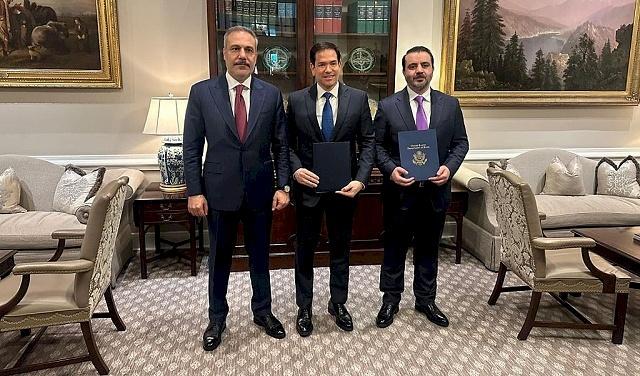
Syria and Israel held a high-level meeting in Amman, Jordan on Sunday, 23 August, bringing Syrian Foreign Minister Asaad al-Shaibani together with Israeli Mossad chief Roman Gofman under US mediation.
“The meeting that brought Syrian Foreign Minister Asaad al-Shaibani and Israeli Mossad chief Roman Gofman together in Jordan on Sunday, 23 August”
The talks came after the Israeli airstrike on Abu al-Duhur airbase in the Idlib countryside on 18 August, when Damascus said contacts had stopped and the meeting was described as the highest-level publicly announced direct contact since the start of the security track.

Damascus said the meeting focused on de-escalation and halting Israeli attacks, arrests and targeting operations, as well as discussing the revival of Syria-Israel negotiations to reach a security agreement.
Al-Shaibani told Reuters on Saturday that Damascus expected security negotiations with Israel to resume soon, while saying Syria’s priority was to stop Israeli attacks and that the security agreement would ultimately lead to an Israeli withdrawal from all Syrian territory seized after the fall of Bashar al-Assad's regime at the end of 2024.
Jordan also announced on Monday, 24 August, that it hosted the Sunday meeting to discuss de-escalation after the Israeli bombing of Syrian territory last week, with a Jordan News Agency quote saying, "The meeting was held at the request of our brothers in Syria".
Trust deficit and red lines
Al-Shaibani told Reuters on Monday that Syria expects negotiations with Israel regarding a security agreement to resume soon, even as he acknowledged that communications were cut off after the August 18 attack on Abu al-Duhur Air Base.
He framed the relationship in blunt terms, saying, "Syria currently does not trust Israel, and the priority is to stop its attacks on our territory," and he added, "Syria is extending a hand to diplomacy, and Israel should seize this historic opportunity."

Al Jazeera reported that Sana said the discussions focused on practical mechanisms to halt Israeli attacks, arrests and targeting operations, and on reviving negotiations for a lasting security agreement.
Al Jazeera also quoted Hassan Mneimneh, a political analyst and researcher at the Middle East Institute, saying the current round of talks was unlikely to de-escalate tensions because "Israel is likely to bring in more demands" while Americans negotiate them against expansion of Turkish presence.
In parallel, Al Jazeera said Israeli media reported the talks were "positive" and described Israeli red lines including preventing Turkish military activity in Syria and keeping the Syrian side of the Golan Heights demilitarised.
What the talks aim to lock
Sana, as cited by multiple outlets, said the Syrian side stressed that Syria is a sovereign state with the full right to rebuild and develop its national army and to determine its alliances and partnerships in line with its national interests, while rejecting arrangements that would restrict those rights.
“"almost everything"”
The discussions also reiterated Syria’s position that the occupied Golan is Syrian territory, with the immediate priority described as Israeli withdrawal to the lines that existed before 8 Dec. 2024 and the reactivation and full implementation of the 1974 disengagement agreement.
Al Jazeera reported that al-Shaibani said Syria and Israel had agreed on paper to "almost everything" around the beginning of the year, including arrangements for security zones in southern Syria and a buffer zone where only UN forces would be present.
The New Arab said the proposed agreement discussed earlier stages included establishing security zones in southern Syria, including a buffer zone where the United Nations would be the only presence, and other areas where Syrian forces would be deployed to varying degrees.
Kurdistan24 added that US Special Presidential Envoy Tom Barrack addressed the Abu al-Duhur strike and disclosed that Israeli jets had come within 80 kilometers of the Turkish border during strikes on Syrian military airports without warning, while also saying the United States has supervised five formal rounds of negotiations between the new Syrian government under President Ahmad al-Sharaa and Israel.