Syria’s Transitional Justice Commission Begins Houla Massacre Investigations in Homs Countryside
Key Takeaways
- Fieldwork began in al-Houla, Homs countryside, documenting testimonies.
- Survivors, relatives, and witnesses are being documented about the 2012 Houla massacre.
- Truth-seeking and justice-oriented process aims to uncover facts.
Houla hearings begin
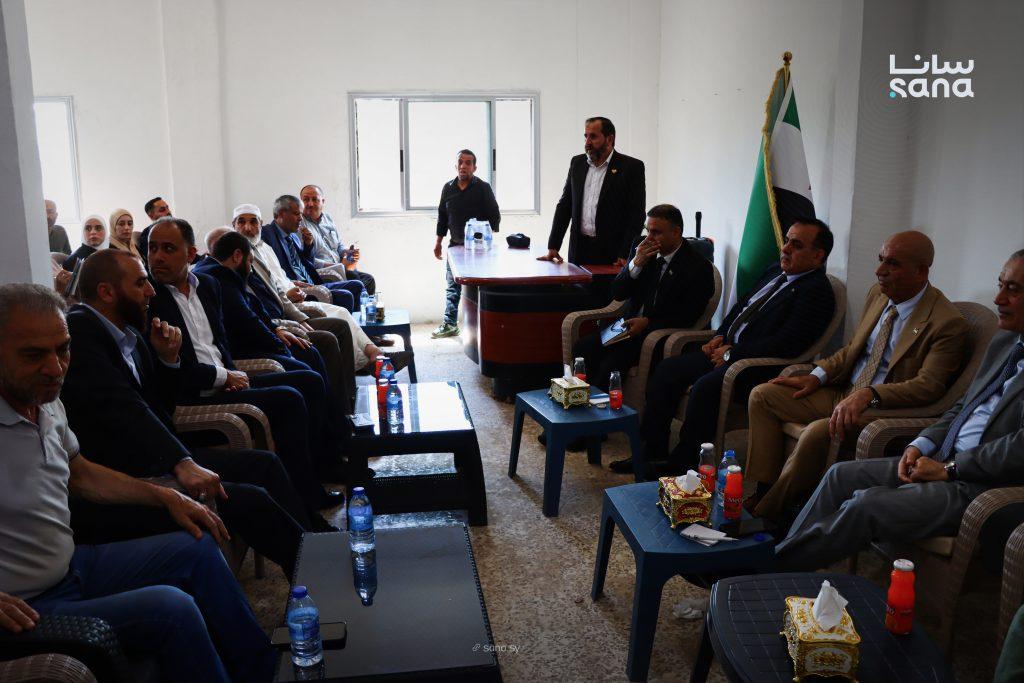
In the Homs countryside, the National Commission for Transitional Justice began fieldwork in the al-Houla area on Sunday, conducting meetings with survivors, relatives of victims, and witnesses to the Houla massacre as part of a truth-seeking and fact-finding process.
“The National Commission for Transitional Justice has begun listening to relatives of victims, survivors, and witnesses of the Houla massacre, which was carried out by elements loyal to the ousted Bashar al-Assad regime in 2012 in the countryside of the Homs Governorate, as part of the Commission's efforts to uncover the truth and deliver justice to the victims”
SANA said the commission’s head, Abdul Basit Abdul-Latif, was present as Dr. Ahmed Saifo described the visit as stemming from “the rights of the area's residents and all Syrians to know the truth of what happened,” and to see justice realized against those responsible for the massacre.

Al-Jazeera Net said the commission began listening to relatives of victims, survivors, and witnesses to the Houla massacre, which it described as carried out by elements loyal to the ousted Bashar al-Assad regime in 2012 in the countryside of the Homs Governorate.
Al-Jazeera Net also reported that the Houla massacre is considered one of the most brutal and largest massacres in Syria, committed by the so-called Shabiha loyal to the ousted regime on 25 May 2012, killing 107 civilians, including 49 children and 32 women, according to the Syrian Observatory for Human Rights.
Al-Jazeera Net added that the commission’s field investigation is imminent and that the head of the Commission announced the opening of a Commission center soon in the city of Homs.
Testimonies and alleged orders
During the hearing described by Al-Jazeera Net, one of the mothers of the victims recounted details of the raid on her family’s home, saying she heard the attackers issuing orders among themselves to kill the children before the adults.
Al-Jazeera Net quoted the gunman repeating the phrase “kill the child before the elder,” as the family tried to escape and the gunmen began killing everyone with bullets.

The same Al-Jazeera Net account said the woman tried to pull one of the young children to escape, but later the family received a call from a surviving girl telling them that her parents and all her siblings had died, saying “they all died.”
SANA said Dr. Ahmed Saifo described the commission’s work as not limited to documenting the crime, but also examining the causes and circumstances that led to its occurrence by directly listening to witnesses and victims.
SANA further said the commission will move in the near future to the field-investigation phase through the fact-finding team to meet victims’ families and witnesses to complete gathering testimonies related to the massacre.
Competing visions of justice
While SANA framed the commission’s work as preparing for continuing investigations related to the massacre, JINHAGENCY reported a critique of Syria’s transitional justice path as a selective process led by a party accused of committing massacres.
“In an interview with director Joe Hattab, Ahmad al-Charaa delivered a speech that sheds light on his vision of tomorrow's Syria”
JINHAGENCY said journalist Farah Al-Aql argued that transitional justice rests on four pillars—uncovering the truth, accountability, redress for harm, and guarantees of non-recurrence—but that the Interim Government leading this path is “essentially accused of undermining them.”
JINHAGENCY also said Farah Al-Aql argued that truth-seeking is illogical if one party is held to account without independent mechanisms, and she described the Suwayda community as calling for an international fact-finding commission and rejecting the national investigative committee.
JINHAGENCY further argued that accountability is not real justice because trials and the National Investigation Committee’s report on the Suwayda massacres are “propaganda and theatre,” and it said that, to date, none of the victims or their families have been compensated, neither financially nor morally.
SANA reported that since December 8, 2024, Syria has continued to advance the path of transitional justice, and it said President Ahmad al-Shara’ issued Decree No. 20 on May 17, 2025 ordering the formation of the National Commission for Transitional Justice.
More on Syria
Emmanuel Macron Arrives in Damascus for First Western European Visit Since Bashar al-Assad Toppled
17 sources compared
Syria Dispatches 7 Million Liters of Gasoline to Ease Fuel Demand Surge
13 sources compared
Emmanuel Macron Arrives In Syria For Talks With President Ahmed Al-Sharaa Ahead Of NATO Summit
61 sources compared

Bomb Kills 10 at Al-Mushairiya Cafe in Central Damascus, Wounds 22
11 sources compared