Full story
Bridge drill amid invasion fears
Taiwanese troops blocked the Danjiang Bridge near Taipei on Thursday in a night-time drill meant to stop invading Chinese forces from advancing on the capital during the second day of Taiwan’s annual “Han Kuang” military drills.
“Taiwanese troops used concrete barriers, barbed wire and Hesco walls to block a key bridge near Taipei on Thursday”
The bridge, which spans the mouth of the Tamsui River, was the stage for an hours-long exercise held as China claims Taiwan is part of its territory and has threatened to use force to seize the island of 23 million people.
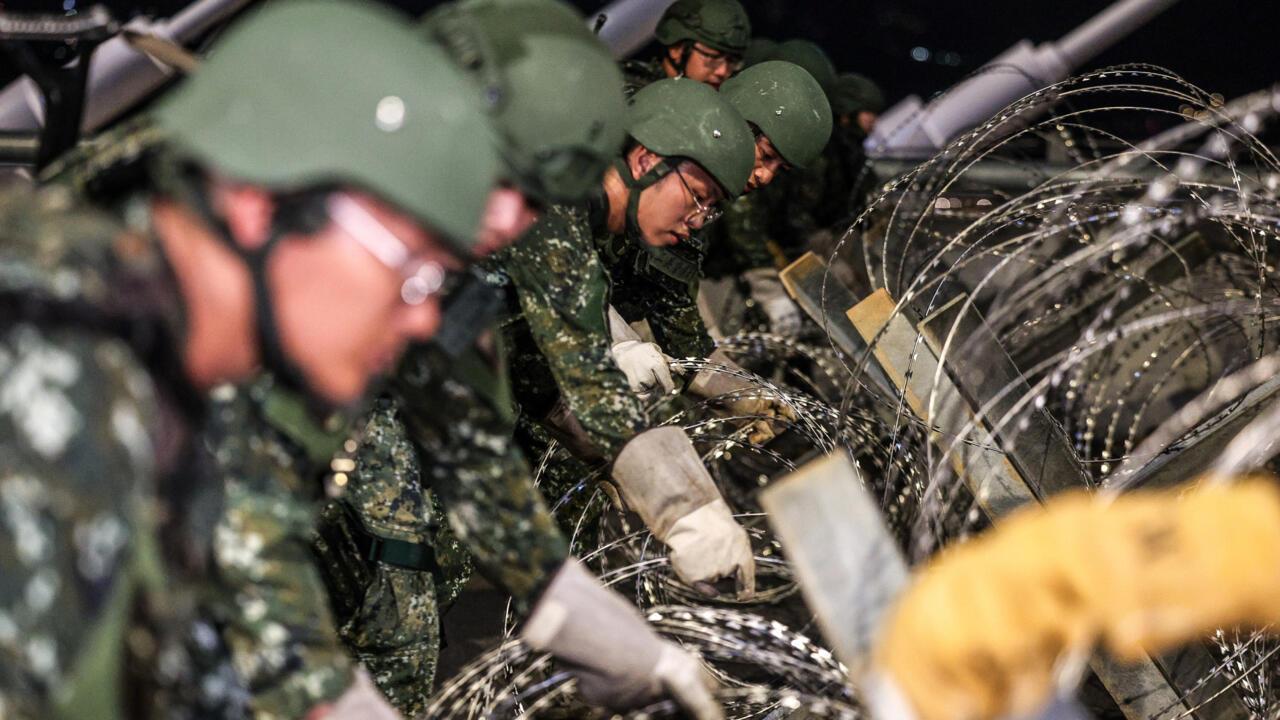
France 24 reported that Taiwanese engineers set up layers of concrete and steel barriers, barbed wire and Hesco walls along the nearly one-kilometre-long bridge to slow advancing Chinese forces and channel them into areas where Taiwanese troops have more firepower.
AFP quoted Tamkang University defence policy expert Chieh Chung saying, “Once the PLA controls the Danjiang Bridge and both sides of the Tamsui River estuary, that would also mean its troops could advance along both banks of the river,” as the drill was scheduled to end Friday morning before peak-hour traffic.
Residents and analysts weigh risks
The drill drew locals who watched from the street, including Hsu Lien-te, a 75-year-old retired public servant, who told AFP that “If we ever face an enemy attack, this drill will help us test how to defend it (the bridge), identify any weaknesses and what needs to be improved.”
Long-term care manager Kay Li, who was cycling across the bridge when the army told her to leave, said, “We could end up in a war,” as Taiwan’s annual “Han Kuang” exercises continued toward their end on August 14.

Reuters coverage through The Straits Times said soldiers erected barriers, barbed wire defences and sandbag positions during the late night exercise, while cyclists and pedestrians continued to pass through the unblocked part of the bridge.
Chieh Chung, described by The Straits Times as a researcher at Taiwan’s Institute for National Defence and Security Research, said in a Reuters quote that, “If the Danjiang Bridge remains open, its main forces could quickly cross it to reach the northern bank of the Tamsui River and then move into Taipei itself,” framing the bridge as a strategic chokepoint.
Wider war-game consequences
Beyond the bridge sealing drill, the scenario for this year’s “Han Kuang” exercises, as described by the South China Morning Post, assumes the PLA has completed preparations for an attack and begun crossing the Taiwan Strait.
“This year’s scenario assumes the PLA has completed preparations for an attack and begun crossing the Taiwan Strait”
The South China Morning Post said Taiwan’s defence ministry officials expected the armed forces to respond by raising combat readiness and conducting counter-landing operations, convoy escorts for critical supplies and joint counter-blockade missions.
The same report said the drills would test the wartime relocation of weapons production lines to safer locations and also include preparations for internet outages and adopting US ‘back briefs’ during Han Kuang.
In parallel, France 24 said the exercise was held hours after President Lai Ching-te visited the nearby Taipei Port to observe the loading of missiles and mines onto ships, and that as part of this year’s Han Kuang, Taiwanese and US-made surface-to-air missile systems were deployed in Taipei with a key focus on decentralising command and control.