
Britain · updated 1h ago · 2 min read
Thousands Block Orange Order March Through Garvaghy Road in Portadown After High Court Ruling
High Court authorized 28-year return of Orange Order march through Garvaghy Road. Thousands blocked the route through Portadown's Catholic-majority Garvaghy Road.
Whether the event is outrage and obstruction versus proportionate policing.
5 of 6 outlets skipped it: sky reports PSNI head Jon Boutcher's 'proportionate' police response promise.
14outlets compared
Same story, two versions
tap a side to read it in full
Sky
“not one hair on one head gets harmed and that everybody finds a place that they can, with dignity, walk away”Read the original ↗
Al Jazeera spotlights outrage and protesters blocking the route, while Sky emphasises PSNI de-escalation goals and proportionate policing.
Go-ahead for Garvaghy Road
Northern Ireland’s High Court permitted the Orange Order to march through a mainly Catholic area of Portadown on Sunday for the first time in 28 years, reviving a dispute over the Garvaghy Road route. The court rejected a final attempt by residents to stop the parade from passing through the Garvaghy Road after Northern Ireland’s Court of Appeal overturned a temporary injunction granted on Saturday.
Thousands of protesters blocked the route into the Catholic area, and Sinn Féin leader Mary Lou McDonald told reporters, “This is madness,” shortly after 8am (07:00 GMT) when the march was due to begin. Northern Ireland First Minister Michelle O’Neill urged the British government and police to intervene, and Jon Boutcher, the head of Northern Ireland police, called for “those with influence to encourage people to comply with the law.”
Protesters, police, and leaders
Michelle O’Neill joined the protest effort to curb the first Orange march permitted in 28 years, and she argued that “No sane person would take this decision,” while speaking to reporters flanked by Mary Lou McDonald.
Jon Boutcher said the police operation had helped ensure “there has been no violence or disturbances so far,” as police vans and riot officers managed the Garvaghy Road stand-off.
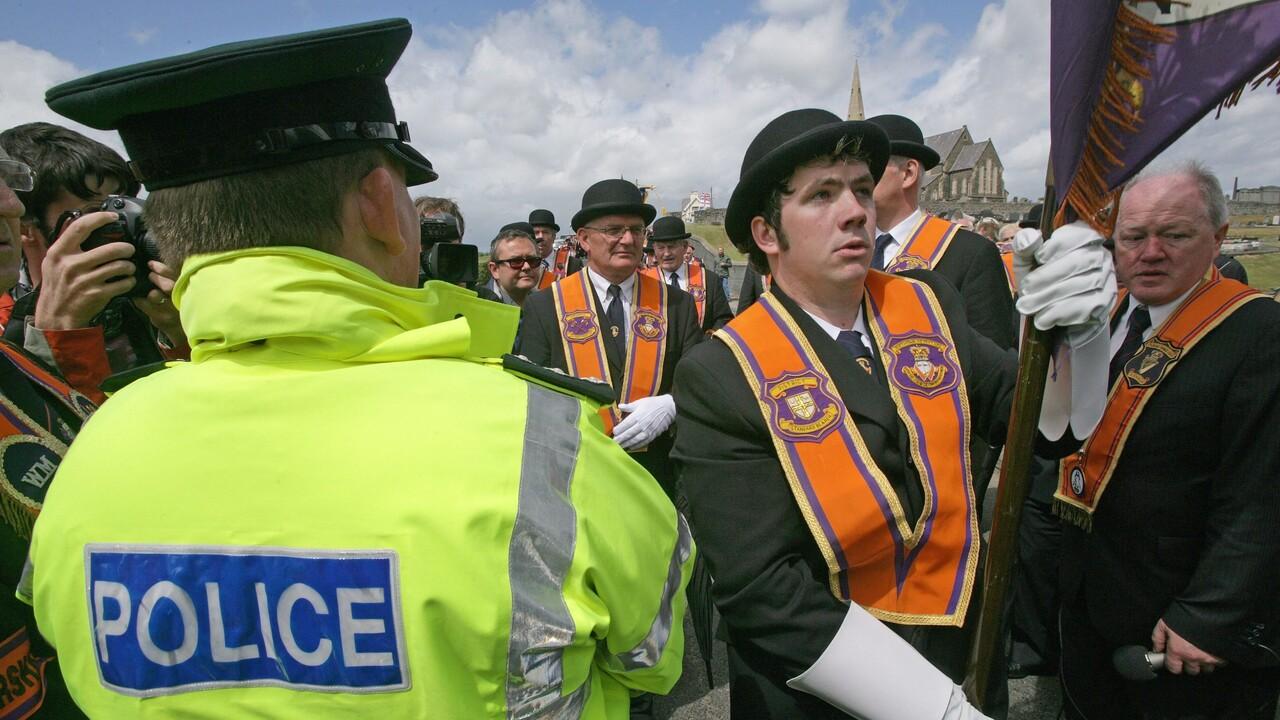
Andy Burnham told the BBC that “I know this is a tense situation. We ask all sides to stay calm,” and he said “Great progress has been made in Northern Ireland and we do not want to go back.”
The Parades Commission authorized the procession with a 35-person limit, barred bands and accompanying supporters, and required the march to finish by 9:30am (08:30 GMT).
What is at stake next
The BBC framed the Drumcree parade dispute as a clash of political cultures that could affect other parts of Northern Ireland and the power-sharing arrangements at Stormont, with “What happens at Drumcree never stays at Drumcree.” The Guardian reported that the Orange Order parade down Garvaghy Road was scheduled for 8am on Sunday after an overnight court ruling cleared it to proceed, and it said the march had been banned for 28 years due to widespread sectarian violence in 1998 outside Drumcree church.
“‘What happens at Drumcree never stays at Drumcree,’ was how one retired politician put it.”
Michelle O’Neill said after the appeal decision late on Saturday that “The decision tonight to overturn the court ruling, and force an unwanted orange march through the Garvaghy Road, is disgraceful.” The Guardian described the Parades Commission placing restrictions on the procession, including an 8am start and limiting the number of participants to 35 people, while it did not impose any restrictions on the route.