South Americaupdated 1h ago3 min read
Thousands Protest Colombia’s First National Strike Against President Abelardo De la Espriella
This article is an automated aggregation of coverage from news outlets. Our editorials offer in-depth analysis curated by the NewsCord team.
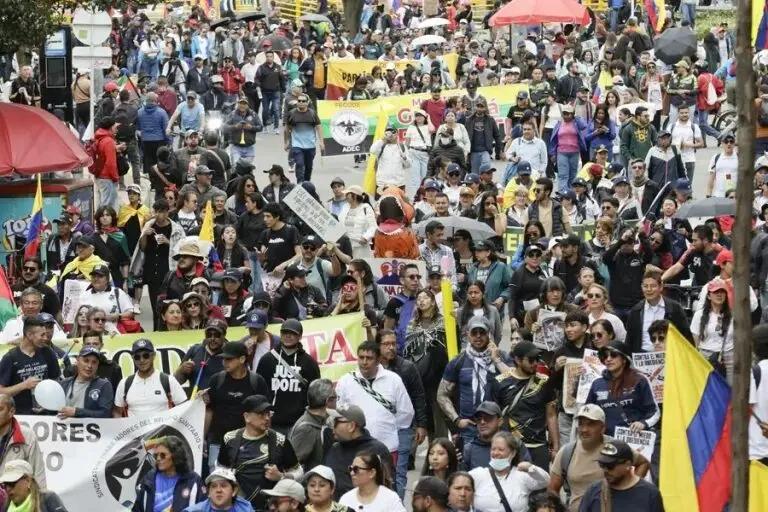
Thousands of Colombians join first national strike against President Abelardo de la Espriella. Protests across major cities, including Bogotá, organized by unions, opposition parties, and social movements.
5 outlets told this the same way.
Outlets did split on Brazil Police Kill Suspect After 13 Kindergarteners Held Hostage In Curitiba →
First national strike begins
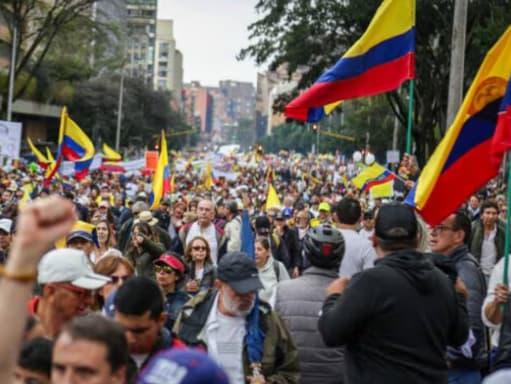
Thousands of Colombians took to the streets on Wednesday for the first national strike against President Abelardo de la Espriella’s government, with labor unions and opposition parties calling for the mobilization just two months after he took office. The protests unfolded in major cities including Bogota, where four marches began to move at 10:00 a.m. local time with the aim of gathering in Plaza de Bolívar. The demonstrations centered on demands related to labor, education, economy, and social issues, and they also questioned the first decisions of the national administration.
The protests coincided with the entry into force of Decree 1525 of 2026, signed on Tuesday, which regulates the intervention of authorities in the face of violent events during protests and generated controversy among political sectors. President de la Espriella framed the decree as compatible with peaceful dissent, saying, “The right to protest is respected, but there is no right to destroy, attack the security forces, assault others or sow chaos,” while opposition figures said the cuts and security changes put gains at risk.

Decree 1525 sparks dispute
Senator Wilson Arias told EFE that the strike call responded to cuts announced in entities such as the National Training Service (SENA) and the Agency for the Reincorporation of Former Combatants (ARN), along with the elimination of electricity subsidies, especially in the Caribbean region. A law student from the National Pedagogical University, who preferred to keep his identity private, said, “From now on it is time to oppose and defend human rights, free education, and the value of life,” and accused the De la Espriella government of “fascism.” Senator Iván Cepeda participated in Bogotá’s protests and accused the government of trying to “intimidate” citizens who exercise their right to protest.
Cepeda also argued that the decree’s approach would end the dialogue that opposition sectors said they had managed to keep “completely peaceful and problem-free,” and he compared the current situation with demonstrations during Iván Duque’s government. De la Espriella defended the decree by insisting that peaceful protest is a constitutional guarantee, warning that it “does not authorize harming other citizens, destroying property, threatening workers, or blocking the access of ambulances and emergency services.”
International labor warns of rollback
European trade unions backed the social mobilization days in Colombia and warned that the current administration could threaten social gains achieved under former President Gustavo Petro. teleSUR reported that British and Irish union movements affiliated with Justicia for Colombia, representing about 6 million workers, issued a solidarity statement that said, “We express our sincerest solidarity with our colleagues in Colombia on the occasion of their National Mobilization against the policies of the far-right government of Abelardo de la Espriella.” The unions’ statement warned that the De la Espriella government plans the privatization of education, a new labor statute, cuts to the minimum wage, and the withdrawal of the agrarian reform from the UN mission mandate.
“We express our sincerest solidarity with our colleagues in Colombia on the occasion of their National Mobilization against the policies of the far-right government of Abelardo de la Espriella.”
The statement also warned that a possible new anti-terrorism law could be used to suppress political opponents, and it referred to cuts in funding for the Jurisdiction for Peace (JEP) and modifications to the 2016 Peace Agreement. The unions concluded by calling for avoiding a return to violence and repression, saying, “too many advances have been made in recent years” and that the implementation of the Peace Agreement had produced benefits for the Colombian population.