USA26 March, 20262 min read
Trump Administration Moves Education Department To Leased 500 D Street SW, Moves Energy Into LBJ
This article is an automated aggregation of coverage from news outlets. Our editorials offer in-depth analysis curated by the NewsCord team.
ED will vacate the LBJ Building this summer and relocate to a smaller nearby facility. Energy Department will occupy the LBJ Building following ED's relocation.

Footprint swap as signal
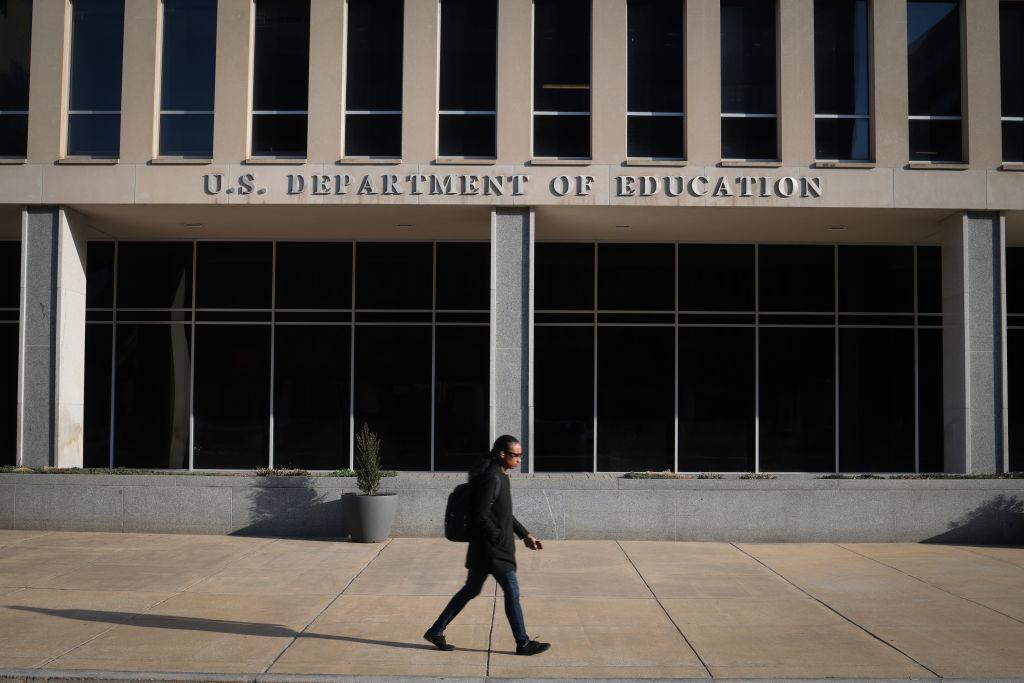
The single most important NEW development is the footprint swap that crystallizes the administration’s downsizing agenda: ED will vacate the LBJ Building, relocate staff to a leased site at 500 D Street SW, and DOE will move into the LBJ building. Officials frame this as a cost-cutting step—Education will save about $4.8 million annually in operating costs, Energy will avoid roughly $350 million in deferred maintenance costs by occupying ED’s former headquarters, and the LBJ structure is reportedly about 70% vacant. The transition is set to begin this summer, with ED staff moved to the smaller space about a block away as August approaches.
“The Energy Department will take over the Lyndon B. Johnson Building, which has been ED’s home since the agency was created in 1979.”
The broader framing ties the move to the Trump administration’s pledge to return education to the states and to a years-long project to shrink the department, with interagency transfers used to continue essential functions. This is being presented as a practical consolidation, but it sits inside a larger political narrative about dismantling the Education Department.
Implementation specifics
The ED staff will relocate to a smaller, leased space near the current headquarters, while the Energy Department will occupy the LBJ Building.
The move is described as a cost-saver for both agencies: about $4.8 million annually for Education and avoidance of approximately $350 million in deferred maintenance for Energy by taking over LBJ.

Framing and reactions
Democrats and labor advocates view the move as part of a broader downsizing campaign, not merely a real estate decision.
“The union representing Education Department workers pointed out that... 'education is next on the chopping block'.”
The Education Department union warned that the shift signals Education could be the next target for cuts.
Legal and governance context
The shift is framed as both a fiscal measure and a political signal about federal education governance, with Congress's role highlighted as decisive for any final closure of the department.
Analysts note potential governance challenges because ED’s responsibilities are not simply portable to another agency, raising questions about continuity of student aid, program oversight, and accountability.
Context and broader framing
Non-Western and alternative outlets stress the symbolic and strategic dimension of shrinking federal education authority, not just real estate changes.
“One year ago, President Trump signed one of the most consequential executive orders of his presidency — to break up the federal education bureaucracy and return education to the states.”
Coverage emphasizes the interagency coordination challenges and potential consequences for students and universities as programs move.
