USAupdated 1h ago2 min read
Archive photoTrump Allies Win Electoral Map Redraws After Supreme Court Blocks Louisiana Voting Rights Act Change
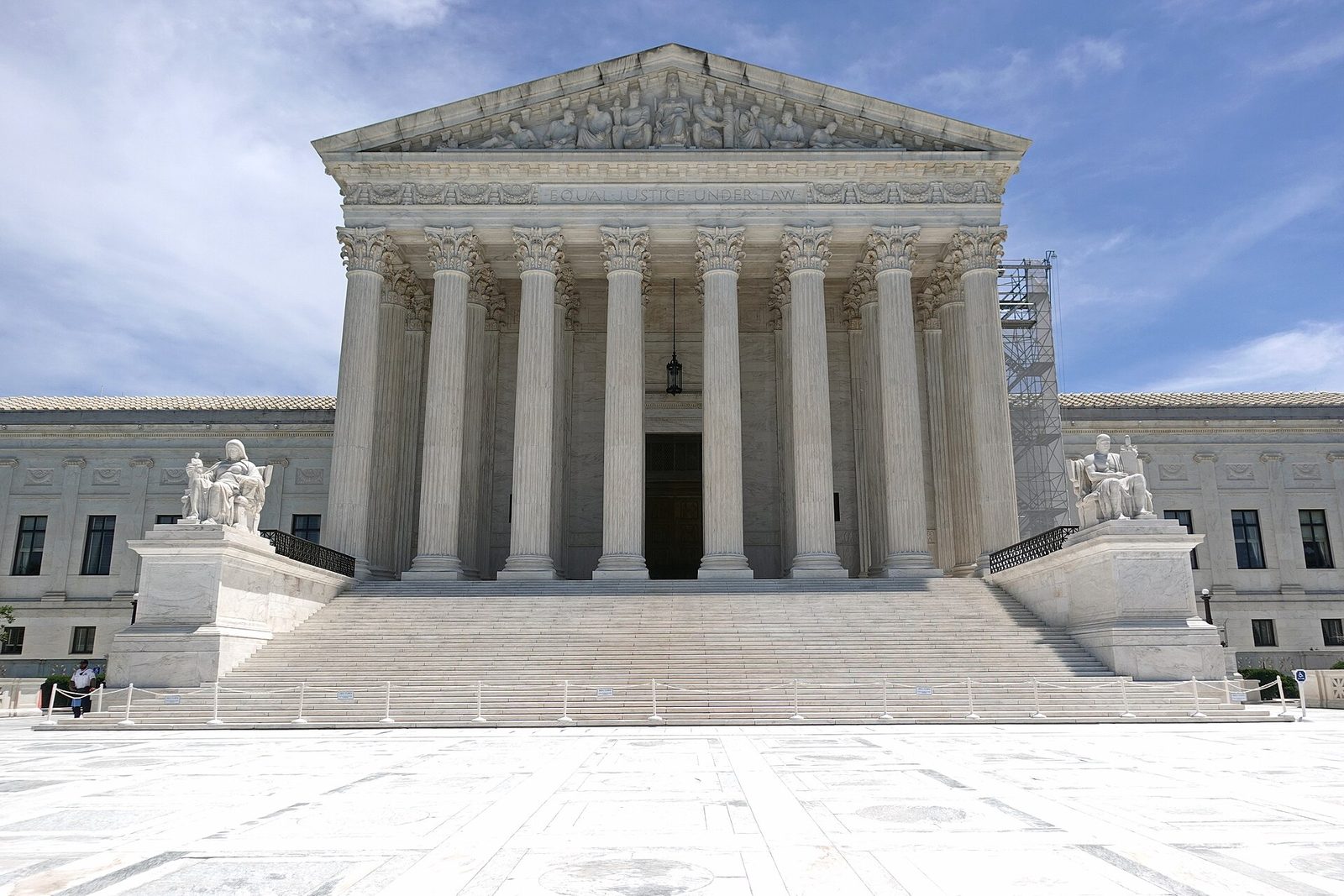
3 Western Mainstream1 Latin American1 OtherPhoto: Jarek Tuszyński / CC-BY-SA-3.0 & GDFL, CC BY-SA 3.0 · Cropped for layout
This article is an automated aggregation of coverage from news outlets. Our editorials offer in-depth analysis curated by the NewsCord team.
Trump allies won map redraws in several states, boosting Republican advantage in nine districts. Redistricting occurred without a new census, altering districts for partisan aims.
Save coverage image
5 outlets told this the same way.
Maps redrawn, Congress at stake
Donald Trump and his allies won the battle to redraw electoral maps in several states, creating conditions Republicans hope will help them win in nine districts more than Democrats. The expectation still points to defeat in the war for a majority in Congress in the elections this Tuesday (3), with the legislative election renewing the entire House of Representatives. The Supreme Court order that blocked Louisiana's attempt to change the Voting Rights Act, in practice, allows states to use the racial composition of the population as a valid criterion to redraw districts, a development described as a victory for Trump.
The New York Times analysis cited by Folha de S.Paulo put 204 districts in the Democrats' favor against 181 for Republicans, with 218 representatives needed for a simple majority. NBC News and Telemundo’s survey cited by Folha de S.Paulo said 59% of Latino voters prefer a Democratic-controlled Congress versus 35% for Republicans.
Candidates and polling pressure
James Talarico challenged Republican power in Texas by denouncing the Immigration and Customs Enforcement (ICE) as a "secret police" under the Trump administration. Abdul El-Sayed sought to become the first Muslim senator in the U.S. by questioning foreign policy, saying, "It is their illegal, unethical, unnecessary, and unjustifiable war in Iran,". Mary Peltola campaigned in Alaska by defending Native community representation, saying, "We are 20% of Alaska’s population, and all voices here should be heard."
Polls described by El País put only 37% of the population approving of Donald Trump, and they said Democrats were on track to win the majority in Congress and the Senate. El País also said the House is the barometer because its 435 seats are elected every two years and 218 are needed to govern.
How the outcome could shift
Republicans arrive with slim majorities, with four seats enough to lose control of the House and Democrats needing four net seats to win back the Senate. The Senate is described as confirming judges and high officials and as able to curb or boost the president’s agenda, making losing the upper chamber consequential for Donald Trump. Americans will elect the 435 members of the House and 35 of the 100 senators on Tuesday, November 3, with gubernatorial elections in 36 states.
Republicans enter with a very narrow majority in the House, citing a tally that put them at 218 seats to 214 Democrats plus an independent who typically votes with the Republican bloc and two vacant seats. Loyola University Chicago law professor Justin Levitt argued that there is no national body responsible for drawing electoral maps, saying, "I think we’re the only industrialized Western democracy that allows those running for office to draw the boundaries of the districts in which they will compete,".