Australia21 October, 20252 min read
Trump and Albanese Sign Minerals Deal to Militarize Indo-Pacific Against China
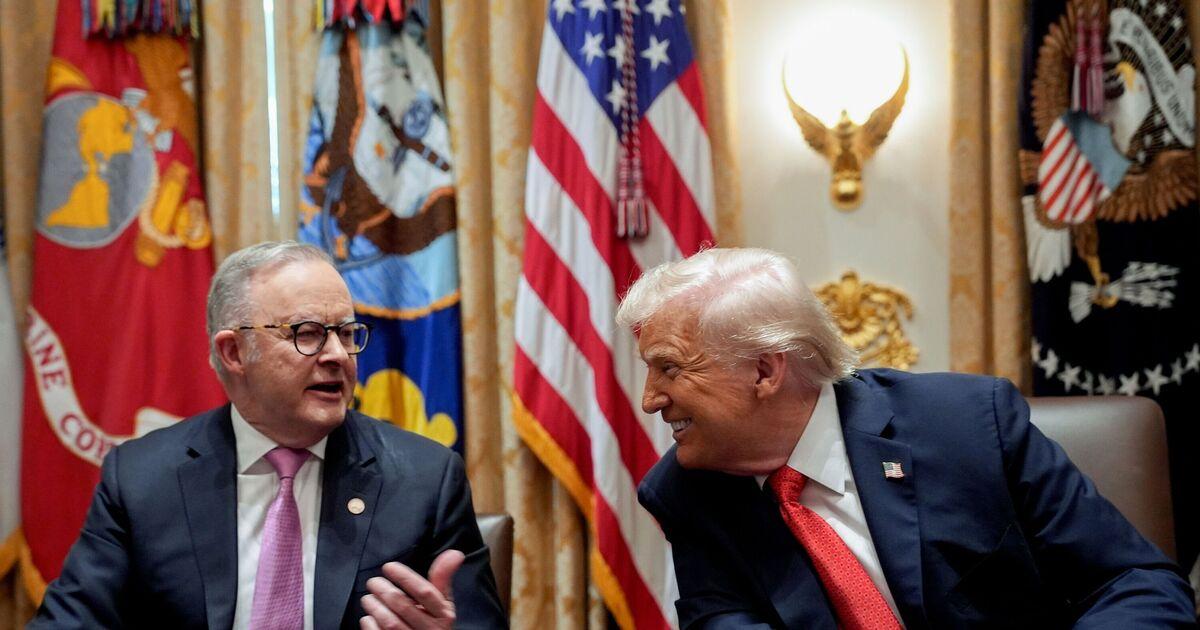
Trump and Albanese signed an $8.5 billion critical minerals and rare earths supply agreement. The deal includes joint $3 billion investment over six months in Australian critical mineral projects.
44 outlets told this the same way.
US-Australia Critical Minerals Pact
The White House summit between US President Donald Trump and Australian Prime Minister Anthony Albanese produced a sweeping critical minerals pact. The pact aims to secure rare earths and gallium supply chains and counter China’s dominance. Multiple outlets report overlapping but not identical figures and components of the deal.
“US President Donald Trump and Australian Prime Minister Anthony Albanese signed a new agreement to strengthen cooperation on rare earths and critical minerals, aiming to reduce reliance on China.”
Reports describe an $8.5 billion deal alongside a joint commitment of at least $1 billion each within six months for mining and processing. The agreement also includes Pentagon-backed construction of a gallium refinery in Australia. The pact is framed as both an economic de-risking measure and a strategic pillar tied to AUKUS and Indo-Pacific defense.

Trump praised Australia’s military capacity during the summit. Both leaders emphasized reducing reliance on China for processing vital inputs used in electric vehicles, aircraft engines, and advanced weapons.
Financing and Supply Chain Strategies
The financing architecture is multi-pronged, including near-term bilateral commitments and a prospective price floor welcomed by Western miners. Support from the US Export-Import Bank and project-specific builds, such as a gallium refinery, are also part of the strategy. Some sources mention an $8.5 billion pipeline project as part of the overall package.
Others highlight equity and reserve strategies, like Washington’s interest in stakes in Australian miners and Canberra’s exploration of selling shares in strategic reserves to allies. These measures aim to strengthen supply chains and reduce reliance on Chinese influence.

Indo-Pacific Military and Mineral Strategy
The minerals pact is strategically linked to Indo-Pacific militarization through AUKUS. Former President Trump reaffirmed support for Australia acquiring US nuclear-powered submarines. Multiple sources have confirmed a submarine deal while noting a review to align with "America First" priorities.
“They also confirmed that the submarine partnership between the two nations is advancing quickly and is ‘all set.’”
Reports vary from confident timelines indicating the sale of Virginia-class submarines to Australia to caution that details still require clarification. Australia is also investing to strengthen US shipbuilding capacity. Officials describe the pact as a measure to counter China’s regional military influence.
U.S.-China Trade and Minerals Pact
The minerals pact unfolds amid escalating U.S.-China trade tensions and competing narratives about power balances. Local Western outlets report that Trump has imposed 55% tariffs that could increase to 155% without a deal and threatened to double tariffs by November 1. These reports also link Australia’s role to securing alternatives following China’s new export restrictions on rare earths and magnets.
Other coverage highlights structural dependence on Chinese processing. Some Asian reports indicate that Trump publicly downplayed Beijing’s intentions toward Taiwan even as Taiwan and tariffs remain key issues in upcoming U.S.-China talks.

Summit Diplomacy and Tensions
Diplomacy around the summit mixed alliance messaging with sharp personal theatrics. Multiple outlets report Trump confronted Australia’s ambassador and former prime minister Kevin Rudd over past criticisms, telling him, “I don’t like you.”
“Despite this tense exchange, the meeting remained generally friendly and confirmed a submarine deal between the two countries.”
This confrontation occurred even as a submarine deal was confirmed and the visit otherwise stayed cordial. Coverage varies from describing a tense, hostile exchange that raised Australian concerns about alliance stability, to casting the moment as awkward but ultimately peripheral to a meeting that reaffirmed AUKUS and critical minerals cooperation.