Trump Extends Ceasefire While Continuing U.S. Naval Blockade of Strait of Hormuz
Key Takeaways
- Ceasefire extended; no end date announced; US awaiting Iran's proposal for talks.
- US maintains near-one-week blockade on Iran while awaiting Iran's proposal.
- Pakistan-led diplomacy pushes renewed talks; no agreement date yet.
Ceasefire Deadlines Shift
President Donald Trump has repeatedly set deadlines for launching massive attacks on critical Iranian infrastructure during the nearly eight-week war, then changed them to cut a deal, according to ABC News.
“Iran war: Trump's pattern of setting unenforced deadlines The latest ceasefire extension did not come with a new date”
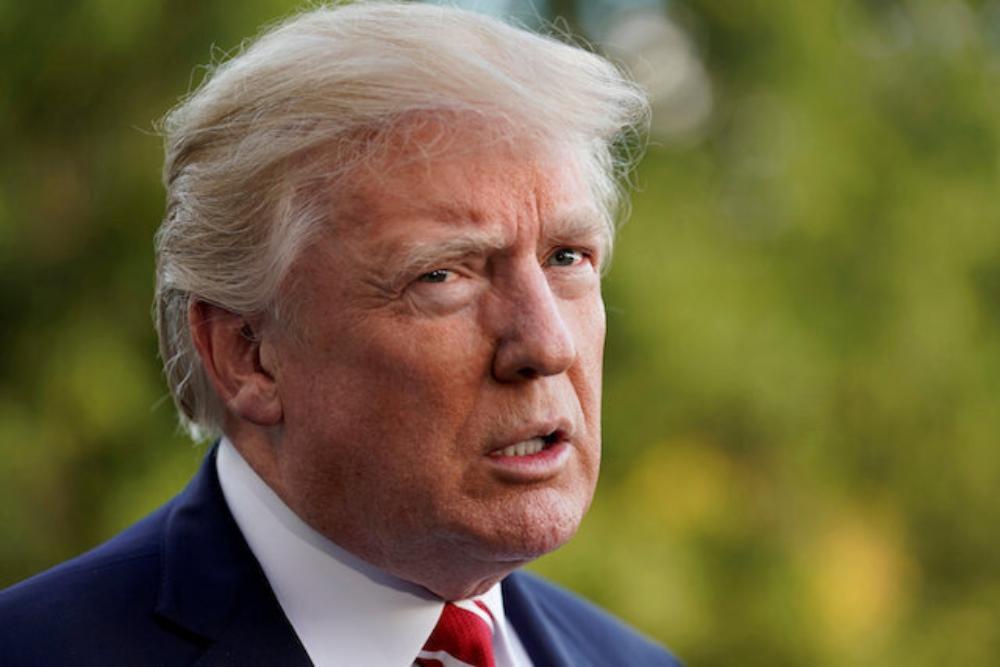
On Tuesday, Trump announced that he will “extend the Ceasefire until such time as [the Iranians'] proposal is submitted, and discussions are concluded, one way or the other,” while also continuing a U.S. naval blockade of the Strait of Hormuz as talks continue.

ABC News says Trump had told Bloomberg on Monday that he expected the ceasefire to expire on “Wednesday evening Washington time” and that it was “highly unlikely” he would extend that deadline.
Earlier, ABC News reports, Trump imposed his first deadline on the evening of March 21, sending Iran a 48-hour ultimatum to reopen the Strait of Hormuz.
In that social media post, Trump warned, “If Iran doesn't FULLY OPEN, WITHOUT THREAT, the Strait of Hormuz, within 48 HOURS from this exact point in time, the United States of America will hit and obliterate their various POWER PLANTS, STARTING WITH THE BIGGEST ONE FIRST!”
ABC News also recounts that on March 23 Trump ordered the Department of Defense to postpone all strikes on Iran's energy facilities for a five-day period after “GOOD AND PRODUCTIVE CONVERSATIONS” with Iran.
Just before that five-day period expired, Trump extended the pause again, saying, “I am pausing the period of Energy Plant destruction by 10 Days to Monday, April 6, 2026, at 8 P.M., Eastern Time,” and later pushed the Strait-of-Hormuz opening deadline to “Tuesday, 8:00 P.M. Eastern Time!” on April 5.
War Powers and Congress
As the ceasefire extension took effect without a new date for resuming talks, Al Jazeera reported that Trump did not provide a deadline for the resumption of talks, saying the U.S. would continue its near-one-week blockade on Tehran and wait for Iran’s “proposal” for further talks.
Al Jazeera then shifted to a separate deadline inside the United States, writing that Trump has until May 1 to obtain congressional approval under the War Powers Resolution.

The outlet explained that the law requires the president to limit deployments in any ongoing conflict after 60 days unless he is granted specific authorisation to continue, and that both the House of Representatives and the Senate must pass a joint resolution within that 60-day limit.
Al Jazeera quoted associate professor of law Maryam Jamshidi saying that to extend the 60-day window by 30 days, the president must certify, in writing, to Congress that the continuing use of armed force is a result of “unavoidable military necessity.”
Jamshidi also said, “Beyond this 90 [day] window, the president is required to terminate the deployment of US armed forces if Congress has not declared war or otherwise authorised continuing military action.”
Al Jazeera reported that on April 15 a fourth bipartisan bid in the US Senate to curb Trump’s authority to conduct military operations using the War Powers Resolution was defeated by 52-47, with members voting overwhelmingly along party lines.
Democrat Senator Chris Murphy said, “We should not fail to note how extraordinary it is that our Senate Republican leadership has declined to do any oversight of a war that is costing billions of dollars every week,” while Republican Senator John Curtis wrote, “I will not support ongoing military action beyond a 60-day window without congressional approval.”
Republican Congressman Don Bacon told US media, “By law, we’ve got to either approve continued operations or stop,” and added, “If it’s not approved, by law, they have to stop their operations.”
Blockade Standoff at Sea
While the ceasefire was extended, multiple outlets described continued pressure at sea and a widening maritime standoff around the Strait of Hormuz.
NBC News wrote that the U.S. military says it has boarded another tanker involved in smuggling Iranian oil, and that the intensifying maritime standoff leaves the key Strait of Hormuz trade route effectively shut.
NBC News also reported that Tehran attacked three commercial ships and seized two of them, and that Tehran said the U.S. naval blockade is a “main obstacle” to new peace talks.
In response, NBC News said President Donald Trump ordered the U.S. military to “shoot and kill” any Iranian boats laying mines in the strait, adding that the U.S. would intensify its efforts to clear mines that have helped choke off global shipping.
NBC News also reported that Trump said there is “no time pressure” in talks with Iran and “no time frame” on ending the war after he extended the ceasefire.
The BBC described the situation as a “war of blockades” over the Strait of Hormuz, with both sides using force to intercept and seize commercial vessels.
The BBC reported that the mood in one of the world’s most important waterways is “combustible,” and said Islamabad still waits for Iranian and American representatives to arrive for peace talks.
The BBC quoted Prime Minister Shehbaz Sharif posting on social media that Pakistan would “continue its earnest efforts for negotiated settlement of the conflict.”
Iran’s Legal and Diplomatic Position
Iran’s position on the blockade and the legal basis for its actions was presented through statements carried by The Guardian and NBC News.
In The Guardian’s live coverage, the Iranian ambassador to the UN in Geneva, Ali Bahreini, told BBC Radio 4’s World at One programme that the blockade is a “significant breach” of the ceasefire.

The Guardian also reported that Bahreini said they are not looking to negotiate in order to give a chance to the “other side to prepare more to attack Iran,” and he called for a “realistic approach from the United States by recognising Iran’s rights and Iran’s reasonable demands”.
The Guardian further included a UAE statement from Anwar Gargash at a World Policy Conference in France, where he said, “You can’t be attacked with 2,800 missiles and drones and then talk to me about trust. That will take ages and ages,” and added that “89 percent of the Iranian attacks targeted “civilians, civilian infrastructure, energy infrastructure”.
The Guardian also reported that Iran’s foreign minister Abbas Araqchi was set to travel to Pakistan, with Iranian state media saying the trip would include visits to Islamabad, Muscat and Moscow, and that the purpose was to discuss “current developments in the region, as well as the latest situation in the war imposed by the United States and the Israeli regime against Iran,” as IRNA put it.
NBC News carried Iran’s foreign ministry spokesperson Esmail Baghaei saying Iran has acted “entirely” lawfully regarding the Strait of Hormuz, quoting him: “From a legal perspective, both under international law and domestic law, the measures taken regarding the Strait of Hormuz are entirely lawful,” according to SNN.
NBC News also quoted Baghaei saying Iran has “the right to take the necessary measures to prevent misuse of this waterway” when national security is threatened.
NBC News added that Baghaei said Iran’s decisions were taken because Iran has “suffered serious damage as a result of misuse of this waterway,” and that “The aim of these measures is to create mechanisms to ensure safe and sustainable passage through the Strait of Hormuz.”
Retaliation, Rockets, and Casualties
As the ceasefire extension unfolded, NBC News and Fox News described ongoing military actions and political reactions that underscored how fragile the truce remained.
NBC News reported that shortly before Trump’s post extending the Israel-Lebanon ceasefire by three weeks, Hezbollah announced they had launched rockets at northern Israel that the Israel Defense Forces said they had intercepted.

NBC News also described the U.S. order to “shoot and kill” Iranian boats laying mines and said the maritime standoff left the Strait of Hormuz trade route effectively shut, while Tehran attacked three commercial ships and seized two of them.
NBC News quantified the human toll by reporting that Iran’s forensics chief said nearly 3,400 people had been killed in the country since U.S.-Israeli strikes began Feb. 28, and that more than 2,200 people had been killed in Lebanon, 32 had been killed in Gulf states, and 23 had died in Israel.
NBC News also said thirteen U.S. service members have been killed and two more died of noncombat causes.
In Fox News, Trump dismissed the idea of using a nuclear weapon against Iran, telling a reporter, “No, I wouldn’t. We don’t need it. Why do I need it? Why would a stupid question like that be asked?”
Fox News also quoted Trump saying, “Why would I use a nuclear weapon, when we’ve totally, in a very conventional way, decimated them without it.”
Fox News reported that Joe Rogan said on his podcast, “The Joe Rogan Experience,” that Trump’s strategy “doesn’t make sense,” and Rogan said, “no one f---ing knows.”
More on Iran

Trump Administration Sanctions Hengli Petrochemical And 40 Shippers Over Iranian Oil
16 sources compared

Iranian FM Abbas Araghchi Visits Pakistan as US-Iran Ceasefire Talks Stall
16 sources compared
U.S. Naval Blockade of Iranian Ports Pressures Tehran in Strait of Hormuz Standoff
14 sources compared
Iran Grants Russia Strait Of Hormuz Transit Fee Exemptions, Ambassador Kazem Jalali Says
16 sources compared