Full story
Trump reviews Iran plan
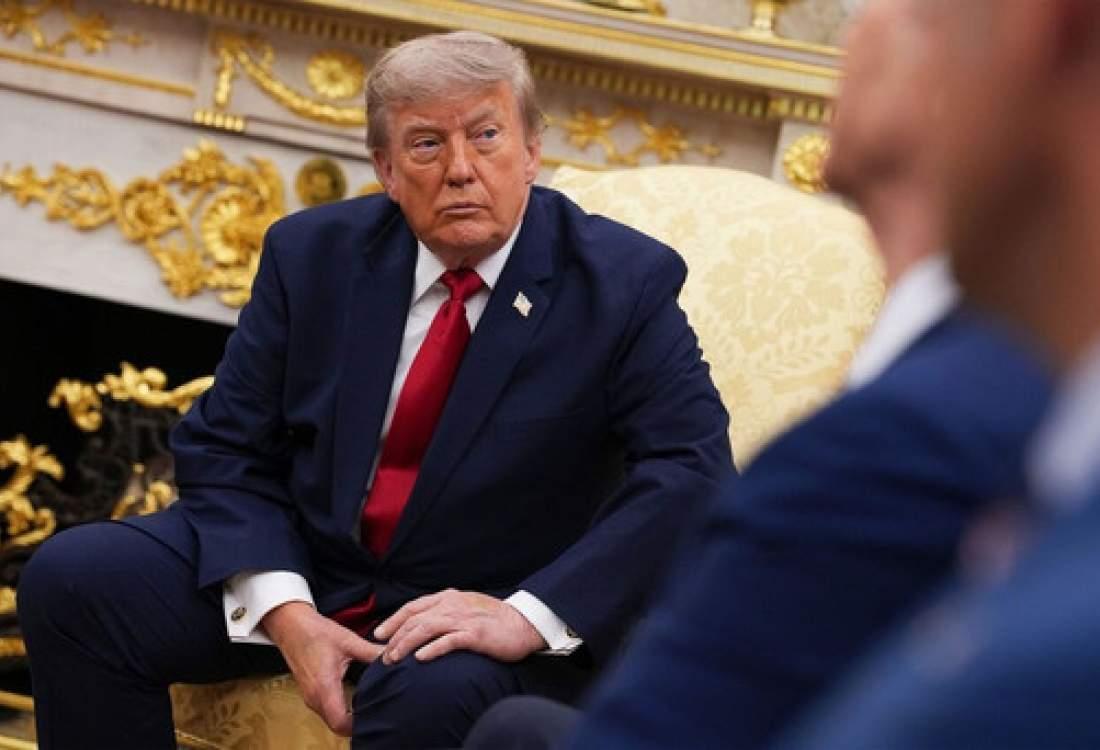
President Donald Trump said Saturday that he was reviewing a new Iranian proposal to end the war, after Iranian state media reported Tehran had delivered a 14-point plan to the United States.
“President Trump told reporters Saturday he is reviewing a new 14-point peace proposal that was submitted by Iran”
CBS News reported Trump told reporters he was “reviewing a new 14-point peace proposal that was submitted by Iran,” and CNN said Iran’s Islamic Revolutionary Guard Corps-affiliated Tasnim reported Tehran submitted the 14-point proposal.

Multiple outlets tied the proposal to a Pakistani intermediary, with CNN saying Iran’s proposal was “submitted through a Pakistani intermediary” and the Associated Press reporting Tasnim and Fars said Iran sent the 14-point proposal via Pakistan.
Trump told reporters on the tarmac at Palm Beach International Airport that he had not yet seen the document, saying, “I haven't seen it,” and “They’re going to give me the exact wording now.”
In a Truth Social post, Trump wrote he would “soon be reviewing the plan that Iran has just sent to us,” but “can’t imagine that it would be acceptable” because Iran had not “paid a big enough price” over “the last 47 years.”
The NPR report said Iran’s 14-point response demanded that “all issues” be resolved and that the war end within 30 days rather than observing a two-month ceasefire proposed by the United States.
While Trump signaled he would examine the proposal, he also left open the possibility of renewed force, telling reporters, “If they misbehave, if they do something bad. Right now, we’ll see. It’s a possibility that could happen, certainly,” according to USA Today.
What Iran’s 14 points say
Iran’s reported 14-point proposal lays out a package that repeatedly returns to ending the war quickly, lifting restrictions, and changing how the Strait of Hormuz is governed.
NPR said the plan’s key points included a demand to resolve all issues and end the war within 30 days, “instead of observing a two-month ceasefire as the U.S. had proposed,” and it listed guarantees against future military aggression and the withdrawal of U.S. forces from Iran’s periphery.

NPR also described demands for “an end to the naval blockade,” the release of frozen Iranian assets, payment of reparations, and the lifting of sanctions, along with “an end to fighting in Lebanon” and “a new mechanism governing the Strait of Hormuz.”
CNN added that Tasnim reported Iran’s response called for “ending the war on all fronts, including Lebanon,” and it said Tasnim reported the U.S. proposed a two-month ceasefire while Iran believed “the issues should be resolved within 30 days.”
The Guardian reported that Iranian media said the latest 14-point proposal included “the withdrawal of US forces from areas surrounding Iran,” “lifting the US blockade on the strait of Hormuz,” “releasing Iran’s frozen assets,” and “payment of compensation,” as well as “lifting sanctions” and “ending the war on all fronts, including Lebanon.”
The Guardian also said the proposal included “a new control mechanism for the strait,” and it described Trump’s skepticism, quoting him saying Iran had not yet “paid a big enough price.”
In addition to the reported diplomatic terms, the sources described how the standoff over the strait is already shaping shipping and enforcement, with The Arkansas Democrat-Gazette saying the U.S. warned shipping companies they could face sanctions for paying Iran to pass safely through the Strait of Hormuz.
Diplomacy vs. confrontation
Iran’s reported stance is framed in the sources as a choice between diplomacy and continued confrontation, with Iranian officials linking any shift to guarantees and sanctions relief.
“aimed at the permanent end”
CNN quoted Iran’s deputy foreign minister, Kazem Gharibabadi, saying Iran’s proposal was “aimed at the permanent end” of the war and that “Now the ball is in the United States’ court to choose either the path of diplomacy or continuation of a confrontational approach.”
NPR said an Iranian official told reporters Friday that the document had been handed to Pakistan, while Trump said Saturday he was reviewing the proposal.
The Guardian reported Gharibabadi told diplomats in Tehran that “the ball is in the United States’ court to choose the path of diplomacy or the continuation of a confrontational approach,” and it added that Iran was “prepared for both paths.”
Al Jazeera described the diplomatic opening while emphasizing that Trump did not rule out renewed hostilities, quoting him: “If they do something bad, there is a possibility it could happen,” and it said the Islamic Revolutionary Guard Corps (IRGC) was on standby for a return to war.
Al Jazeera also reported Iran’s Ministry of Foreign Affairs said Trump’s description of the U.S. capture of Iranian vessels as “piracy” was “a direct and damning admission of the criminal nature of their actions” against Tehran.
At the same time, the sources described how Trump’s own messaging keeps a military option visible, with NBC News quoting Trump’s Truth Social line that he “can’t imagine that it would be acceptable” and with USA Today saying renewed attacks remain “a possibility.”
Strait of Hormuz pressure
Across the reporting, the Strait of Hormuz is treated as the central operational pressure point, with Iranian actions described as effectively closing the waterway and the U.S. responding with enforcement and warnings.
The Guardian said Iran has maintained a “stranglehold on the strait since the war began,” choking “major flows of oil, gas and fertiliser,” and it said the U.S. responded with “a naval blockade of Iranian ports” that deprives Tehran of oil revenue.

The Arkansas Democrat-Gazette said the U.S. Office of Foreign Assets Control alert Friday warned shipping companies they could face sanctions for paying Iran to pass safely through the Strait of Hormuz, and it described the standoff over control of the strait at the mouth of the Persian Gulf.
CNN reported that Iran’s parliament is poised to approve a law restricting which vessels can pass through the critical waterway, with Israeli vessels “never be allowed through” and ships from “hostile countries” required to pay reparations to obtain a permit.
NBC News said Iran’s latest proposal would open shipping in the Strait of Hormuz and end the U.S. blockade, while pushing off talks on Iran’s nuclear programs for later.
The Al Jazeera day-65 update said the U.S. was seeking to form an international naval coalition called the Maritime Freedom Construct (MFC) to restore freedom of navigation in the Strait of Hormuz, which it said “in effect has been blocked by Iran since the US-Israel war on the country began on February 28.”
The Arkansas Democrat-Gazette added that the U.S. Central Command on Saturday said “48 commercial ships have been told to turn back,” and it said Iran closed the strait by attacking and threatening ships after the U.S. and Israel launched a war on Feb. 28.
Lebanon and wider escalation
While the diplomatic track centers on Iran’s 14-point proposal, the sources also show the conflict’s broader regional entanglement, especially in Lebanon, where Israel and Hezbollah continue exchanging strikes despite declared ceasefires.
“Hezbollah, an Iranian proxy”
CBS News said Israel and the Lebanon-based militant group Hezbollah, an Iranian proxy, have kept up their attacks despite a ceasefire in place since April 17, and it described Israeli military demolition of parts of a Catholic convent in the border village of Yaroun.

CBS quoted Gladys Sabbagh, the superior general of the Basilian Salvatorian Sisters, saying, “What we heard is that it was destroyed with bulldozers,” and it reported that the convent included a school closed since the 2006 Israel-Hezbollah war and a clinic moved to Rmeich.
CNN said Israel and Hezbollah continued to strike each other Saturday despite a declared ceasefire in Lebanon, and it reported that the day’s developments included the Iran peace proposal and U.S. fast-tracked $8 billion in arms sales to Middle East allies.
Al Jazeera’s day-65 update said that in Lebanon “At least 41 people have been killed as Israel launched 50 air strikes on southern Lebanon in 24 hours despite a ceasefire between Israel and Lebanon being in place since April 16,” and it said the death toll since the latest escalation began on March 2 had risen to 2,659 people.
NBC News said Israeli airstrikes on southern Lebanon continued, killing at least seven people on Saturday despite a ceasefire, and it added that on Sunday the Israeli military issued an evacuation warning to residents of 11 towns and villages.
In parallel, the sources described how the U.S. is also dealing with domestic and congressional constraints on the Iran war, with USA Today saying Friday marked the 60th day since Trump formally notified Congress and that the War Powers Resolution requires legislative approval after 60 days.