USA04 August, 20263 min read
Trump Threatens Iran, Iran Military Accuses Washington of Escalating US-Iran Tensions
This article is an automated aggregation of coverage from news outlets. Our editorials offer in-depth analysis curated by the NewsCord team.
Trump threatened major military action against Iran as diplomacy stalls. Iran's military accuses the United States of escalating tensions in the region.

Trump, Iran trade threats
Tensions between the United States and Iran escalated again after US President Donald Trump reiterated threats to hit Iran "very hard," prompting Iran’s military to accuse Washington of "escalating tensions" in the region. Ali Abdollahi, head of Iran's military central command, said in a statement read on state television, "The United States is rapidly moving down the path of escalating tensions in the region," and warned that any country serving as a defensive shield for the US would be engulfed by war. The Daily Star reported that US media said Trump was considering renewed heavy attacks as soon as this weekend, including against energy infrastructure targets.
The Daily Star also said Iran and the US resumed overnight exchanges of fire after a days-long lull, with no reported strikes overnight Friday to Saturday. The National added that negotiations remained stalled over uranium stockpiles, sanctions relief, and compensation for war-related damages, as Trump urged Tehran in a social media post to move quickly toward an agreement.
Uranium terms and shipping
News On AIR said Iranian media reported the US wants Iran to hand over 400 kilograms of enriched uranium to the US and keep only one nuclear facility active, while also dropping demands for war compensation and accepting that most frozen Iranian assets will stay blocked. News On AIR also said Tehran rejected those terms and set its own conditions for restarting talks, including that military operations in the region, especially in Lebanon, must stop, sanctions must be lifted, and frozen Iranian assets must be released. The National reported that Treasury Secretary Scott Bessent said a deal could be possible "today or tomorrow" to reopen the strait, and that any agreement would guarantee "freedom of movement" for commercial shipping without introducing a toll system.
The National further described a reported framework in which inbound traffic would use a northern lane in Iranian waters and outbound vessels would use a southern lane through Omani waters, with a plan to replace the current two-lane system with a single shared corridor after naval mines are cleared. The National said the key question was whether Iran would have the ability to block vessels it opposes, and that any agreement would require clear rules, independent oversight, and enforcement mechanisms to prevent selective restrictions on commercial shipping.
Qatar call and next steps
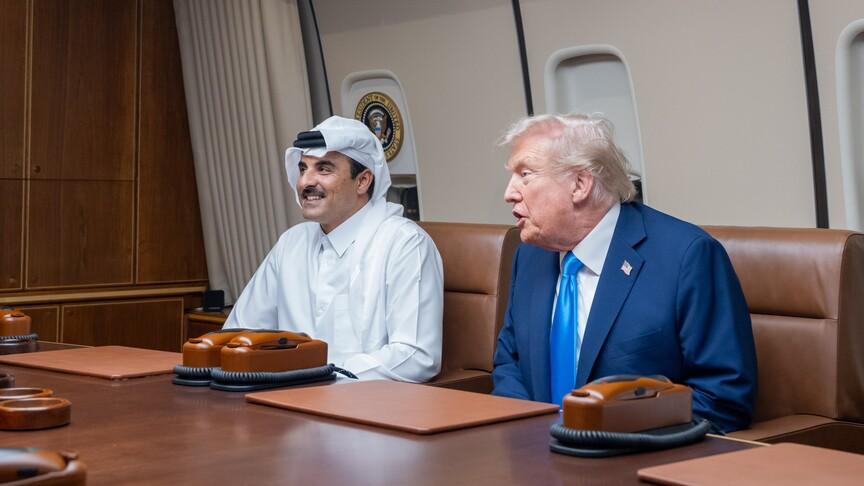
Anadolu Ajansı reported that Qatari Emir Sheikh Tamim bin Hamad Al Thani and US President Donald Trump discussed efforts to reduce tensions between Washington and Tehran during a phone call on Tuesday, with the Emiri Diwan saying the leaders reviewed efforts to de-escalate tensions and bring the two sides closer "in a way that would enhance prospects for a lasting diplomatic settlement." Anadolu Ajansı said Trump praised Qatar's role in supporting diplomatic efforts and facilitating dialogue, while Sheikh Tamim stressed the importance of continuing dialogue and relying on diplomatic means to address outstanding disputes. Anadolu Ajansı added that Pakistani government sources told Anadolu that mediators are preparing a document for reopening the Strait of Hormuz, and that indirect contacts between the US and Iran through Pakistani and Qatari mediators are in the "final stage" to finalize the document.
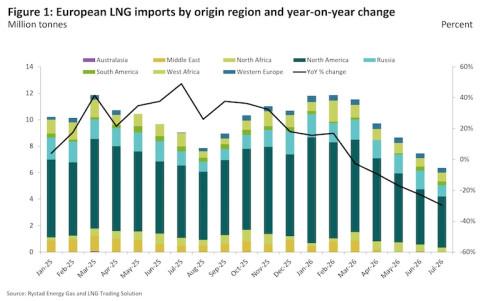
The Anadolu Ajansı report said the single-page document contains matters only related to the Strait of Hormuz, and that Iran will reopen the strait while the US will lift its blockade of the Iranian ports, according to the document. The American Journal of Transportation tied the broader US-Iran tension backdrop to energy markets, noting that US gas supply increased to an average of 119.1 billion cubic feet per day between 24 and 30 July, while LNG feedgas demand eased to 17 Bcfd on 2 August from 17.3 Bcfd a week earlier.