USA · updated 1h ago · 3 min read
Trump Urges Shield of the Americas Nations To Sanction 24 Crime Groups
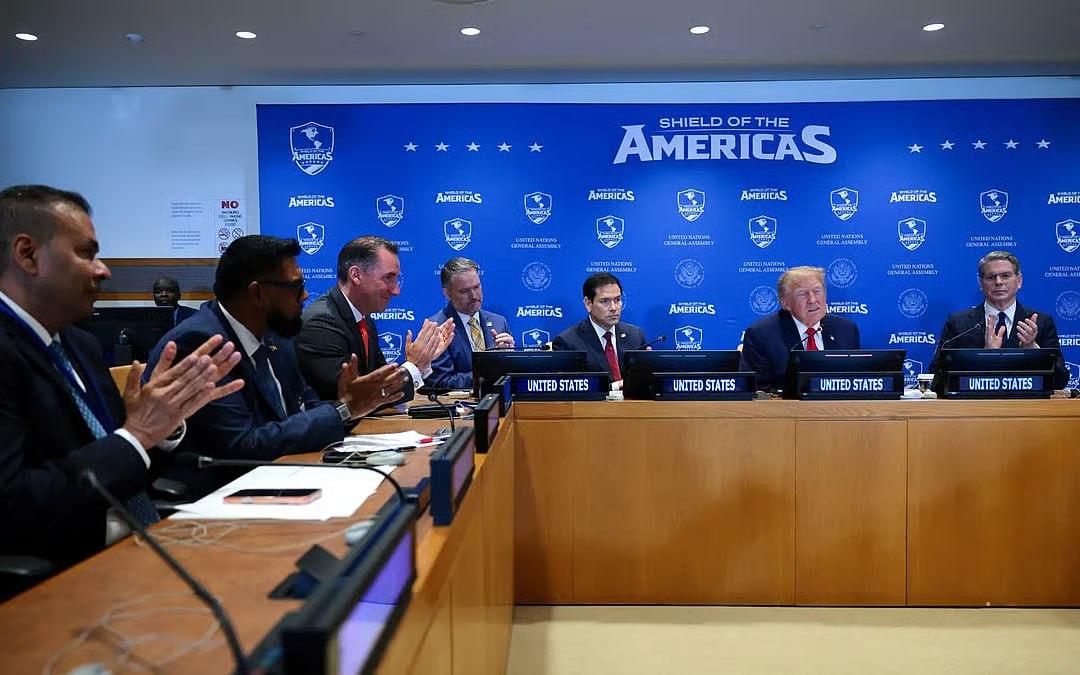
Trump urged Shield of the Americas to sanction 24 narco-terrorist groups. Meeting occurred on the sidelines of the UN General Assembly in New York.
13 outlets told this the same way.
Outlets did split on Donald Trump Approves New Fuel Economy Standards, Rolling Back Biden’s EV Mandate →
7 of 8 outlets skipped it: symbolic nature due to national legal procedures in Colombia.
13outlets compared
Trump pushes terror labels
President Donald Trump urged leaders at a meeting of the Shield of the Americas coalition on the sidelines of the United Nations General Assembly to designate 24 criminal organisations as common threats to stability and impose sanctions. Secretary of State Marco Rubio said Trump asked 18 Latin American and Caribbean nations to label two dozen crime groups and cartels as terrorist organizations, and Rubio told reporters, "Obviously, some countries are in the process of doing it." The coalition’s 15 governments later issued a joint statement saying they intended to impose asset freezes and visa restrictions and pursue criminal charges against members and supporters of the listed organizations.
The Shield of the Americas coalition includes the United States and governments from Argentina, Bolivia, Chile, Colombia, Costa Rica, the Dominican Republic, Ecuador, El Salvador, Guyana, Honduras, Panama, Paraguay, Peru, and Trinidad and Tobago, while Brazil and Mexico have not joined. The New York Times reported that the terrorist designations could help provide a public rationale for U.S. military strikes, even though the U.S. foreign terrorist organization designation does not provide a legal basis for military action.

Sanctions and the Rio Treaty
The Shield of the Americas joint statement said participating governments intended to freeze assets, impose visa restrictions, and pursue criminal liability for people who knowingly provide material support to the 24 organizations. Guyana said it would impose asset freezes and immigration and visa restrictions for members, associates, and supporters of the organizations, and it also described criminal liability for individuals providing logistical support. The coalition said it intends to co-sign a request to the Organization of American States Permanent Council for a meeting to consider establishing an Organ of Consultation under the Inter-American Treaty on Reciprocal Assistance, known as the Rio Treaty.
The Caribbean National Weekly said the three Caribbean countries of Guyana, Trinidad and Tobago, and the Dominican Republic signed a joint declaration on Tuesday alongside the United States and governments from Latin America at a meeting of the Shield of the Americas in New York. The Courrier international account described the coalition’s commitments as resting on information sharing, coordinated military operations, and a mutual assistance framework that allows member countries to request help from partners, notably the United States.

Who is targeted, and why
The joint statement named Mara Salvatrucha (MS-13) and Tren de Aragua at the top of the list, and it also included Brazil’s Primeiro Comando da Capital and Comando Vermelho, as well as Colombia’s ELN and FARC dissident groups. The Jerusalem Post said Trump cast drug cartels as "the ISIS of the Western Hemisphere" and urged a tougher response to transnational crime. The InSight Crime account said all 24 targeted groups are already US-designated Foreign Terrorist Organizations, and it described the Shield of the Americas as part of the Trump administration’s militarized anti-crime push into the region.
The Al Jazeera report said Trump pledged to use “unmatched military might” against drug cartels in the Western Hemisphere and urged member countries to join the U.S. in targeting 24 criminal organisations. The New York Times said the two dozen crime groups have already been designated foreign terrorist organizations by the State Department, and it noted that the designation gives the U.S. government power to restrict financial transactions but does not by itself authorize military action.