Technology and Science · updated 1h ago · 3 min read
UK and US Test-Fire Heavyweight Torpedo From Excalibur Uncrewed Submarine Drone
Mk 48 heavyweight torpedo fired from XV Excalibur uncrewed submarine in UK waters. First-ever torpedo test from an uncrewed vessel by UK and US under AUKUS.
Whether the trial proves operational capability.
9 of 10 outlets skipped it: next phase involves Project CUTLASS and Anduril Dive-XL.
12outlets compared
Same story, two versions
tap a side to read it in full
Baird Maritime
“It did not establish an operational capability or indicate that Excalibur selected a target or made an autonomous decision to fire.”Read the original ↗
TWZ
“this is a significant new step for the United States and the United Kingdom toward future operational fleets of armed UUVs.”Read the original ↗
One outlet stresses it is only proof, while another foregrounds operational fleet implications.
Historic torpedo from drone
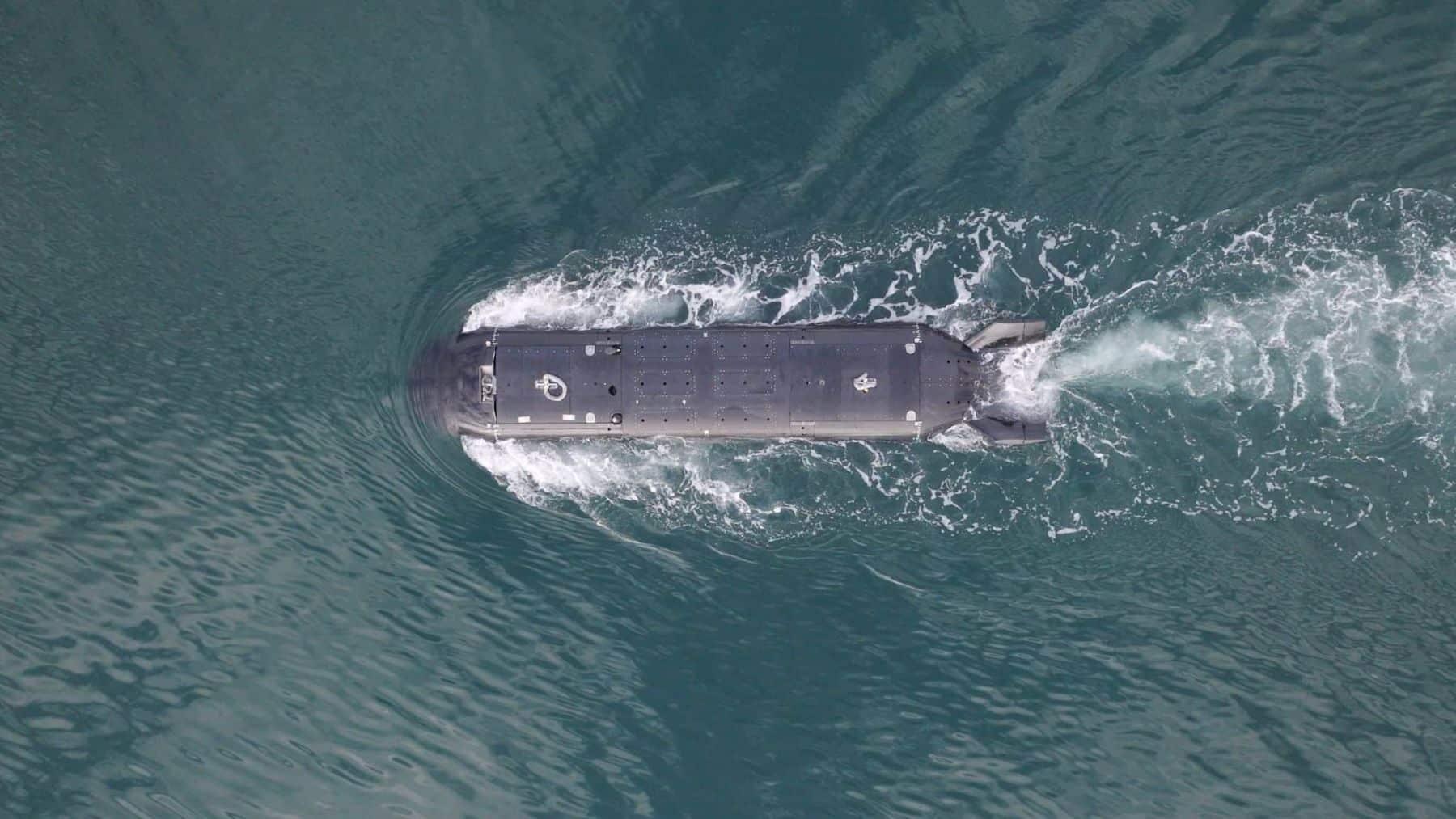
The United Kingdom and the United States test-fired a torpedo from an uncrewed underwater vessel for the first time, with the UK government saying the live firing took place in UK waters last week as part of the AUKUS alliance with Australia. The UK government said the test “marks a major advance in the future of submarine technology” for the three countries and described it as “a significant breakthrough for Euro-Atlantic security and NATO‘s undersea advantage”. The UK government said the heavyweight torpedo, jointly developed by the US and Australia, was launched from a 12-metre (40-ft) long undersea drone manufactured in Britain and named Excalibur.
Sidharth Kaushal, a senior research fellow at the RUSI think-tank, said the development was “noteworthy” and told AFP that “The employment of a lethal payload illustrates that uncrewed systems can play roles which extend beyond surveillance,”. The announcement came as UK Prime Minister Andy Burnham headed to New York for the United Nations General Assembly, where he was due to meet US President Donald Trump.
How Excalibur was used
The UK government said the torpedo was fired from Excalibur, a 12-metre-long underwater drone built in Britain, and it said the heavyweight torpedo was jointly developed by the United States and Australia. The Royal Navy described a separate Excalibur trial as “a big step forward in our ability to operate uncrewed systems interchangeably with Australia,” after an operating centre in Australia took remote control of the vessel more than 16,000 kilometres from Excalibur’s base in Plymouth. Baird Maritime said the firing showed that an XLUUV can carry and release a heavyweight weapon, while it also said the trial “did not establish an operational capability or indicate that Excalibur selected a target or made an autonomous decision to fire.”B
NavalToday said the UK and US fired a heavyweight torpedo from XV Excalibur in UK waters last week, and it said the trial represented the first time either country had launched a torpedo from an uncrewed undersea vessel rather than a crewed submarine. The Royal Navy said Excalibur does not have conventional torpedo tubes and that it is scheduled to continue sea trials as a testbed for payloads and operating concepts rather than entering operational service.
AI partnership and next steps
The UK government said Andy Burnham would use his trip to New York to “drive forward global work” on artificial intelligence and that he would announce “a new AI and autonomy partnership” with the US.
The UK government said the partnership would “help the UK protect critical national infrastructure, from sea lanes to air space,” and Burnham said he would make the case for closer international cooperation on AI.
NavalToday said the latest torpedo trial validated the mechanical, electrical, and software integration of a US kinetic payload onto an allied autonomous vessel, and it said the test was conducted under AUKUS Pillar 2.
TWZ said the test was carried out at the British Underwater Test & Evaluation Center (BUTEC) in Scotland on September 13, and it said the September 13 test “successfully validated the mechanical, electrical, and software integration of a U.S. kinetic payload onto an allied autonomous vessel”.T
TWZ said U.S. TNavy Adm. Daryl Caudle called the test “a historic first for allied undersea warfare,” and it said Luke Pollard told LBC that it was “a substantial increase in our lethality.”