Ukraine War07 March, 20262 min read
Ukrainian Forces Halt Russian Advance Toward Zaporizhzhia; HUR Claims 300 Russian Casualties
This article is an automated aggregation of coverage from news outlets. Our editorials offer in-depth analysis curated by the NewsCord team.
Defense Intelligence (HUR) and Ukrainian Defense Forces halted Russian offensive toward Zaporizhzhia after three-month operation HUR reported about 300 Russian troops killed or wounded
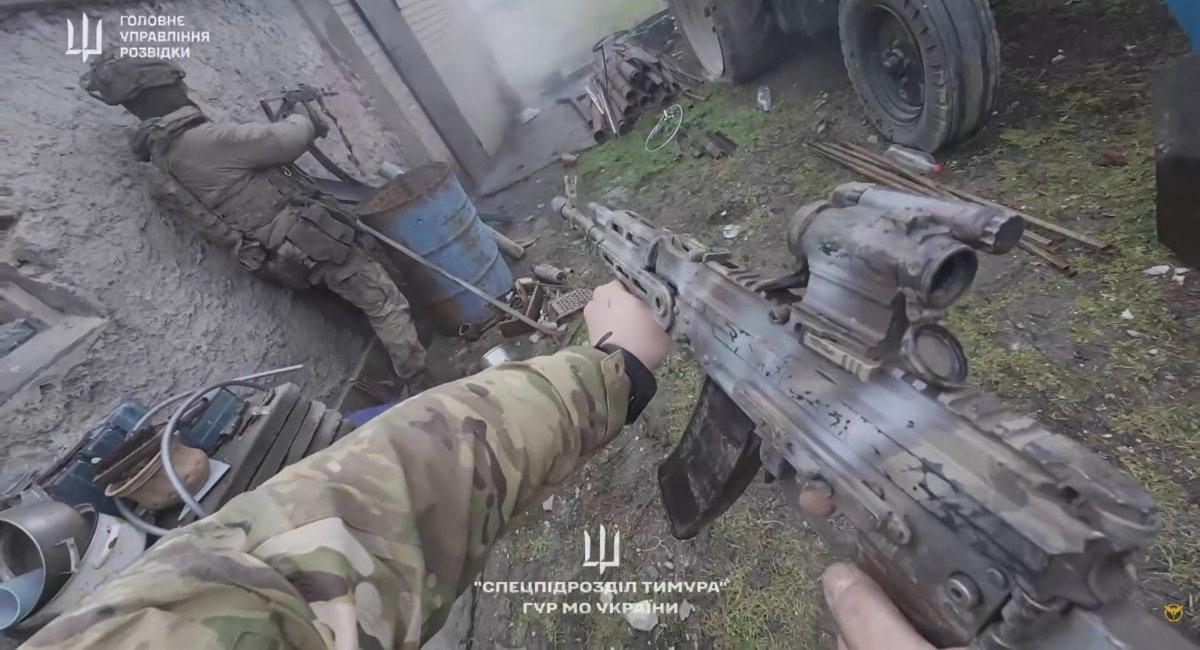
Zaporizhzhia defensive operation report
Ukraine's military intelligence (HUR) says its units, working with the Armed Forces, halted a Russian advance toward the regional centre of Zaporizhzhia after a sustained three-month defensive operation led by the Timur (Tymur) Special Unit. Multiple Ukrainian outlets report the intelligence claim that the operation "stopped a Russian advance toward the city of Zaporizhzhia during a three-month defensive operation in the south."
“Ukraine's military intelligence (HUR) said on March 7 that its units and the Armed Forces stopped a Russian advance toward the city of Zaporizhzhia during a three-month defensive operation in the south. HUR said its special forces unit Tymura killed or wounded more than 300 Russian troops and captured 39, without specifying the exact location of the engagement.”
The outlets also report that HUR said it "killed or wounded more than 300 Russian troops and captured 39," wording echoed in state and independent summaries of the agency's March 7 announcement. The reporting frames the outcome as stabilizing defensive positions around Zaporizhzhia and preventing an immediate threat to the regional capital.
Disrupting Russian logistics
Ukrainian reporting emphasizes disruption of Russian logistics and targeted strikes as central to the defensive success. HUR and allied units used precision drones and artillery to hit supply routes, degrading enemy combat effectiveness and forcing some enemy formations to decline assaults because of shortages. Several outlets summarize the intelligence line that these actions "degraded Russian supplies and reduced assault attempts," and that precision strikes systematically hit logistics to reduce assault activity and stabilize favorable defensive lines.
Timur Unit composition
Reports detail the composition of the Timur Special Unit as a coalition of multiple HUR detachments and volunteer formations. Multiple outlets list subunits by name — Chimera/Khymerya, Aratta, Brotherhood/Bratstvo, the Siberian Battalion and others. UNITED24 notes inclusion of foreign volunteer formations such as the Russian and Belarusian Volunteer Corps among affiliated groups, indicating a patchwork of specialised detachments and volunteer elements operating under the HUR campaign.
“The Timur Special Unit combined multiple specialized detachments and volunteer formations (including Chimera, Aratta, Guardians of Darkness, Brotherhood, Stugna, Paragon, the Russian Volunteer Corps, the Siberian Battalion, and the Belarusian Volunteer Corps), with support from units such as First Line, 1514, Raven Group, Art Division and the 6th Special Action Unit.”
Modern systems and tactics
Ukrainian outlets also point to modern systems and battlefield intelligence as force multipliers. UNITED24 published that HUR released footage showing use of high-end Ukrainian systems, like the Bohdana self-propelled howitzer, to maintain fire control, clear populated areas, and seize advantageous positions.
Defence Express reports Kyiv has sought to limit Russian units' access to Starlink to degrade coordination. Other summaries highlight the use of scouting and precision strikes to integrate those systems into the defensive campaign.
Casualty and equipment claims
The available accounts include additional claims and some differing or broader figures, and outlets note that the numbers are presented as intelligence assertions rather than independently verified facts. УНН records a separate DIU claim that "over the past day 1,010 occupiers and 44 artillery systems were eliminated," and Defence Express references earlier intelligence claims about "some 1,400 mercenaries from 36 African countries" fighting for Russia.
“The report also claims, separately, that over the past day 1,010 occupiers and 44 artillery systems were eliminated.”
Several outlets caution that these are reports issued by HUR or the General Staff. These variations underline that reported casualty and equipment tallies differ across releases and should be read as agency claims.