Full story
UN backs Equal Earth
The United Nations General Assembly voted Friday to adopt a new world map using the Equal Earth cartographic projection, with 164 countries in favor, the United States against it, and six abstentions.
“The resolution passed in the U.N. General Assembly by a vote of 164 to 1 with 6 abstentions.”
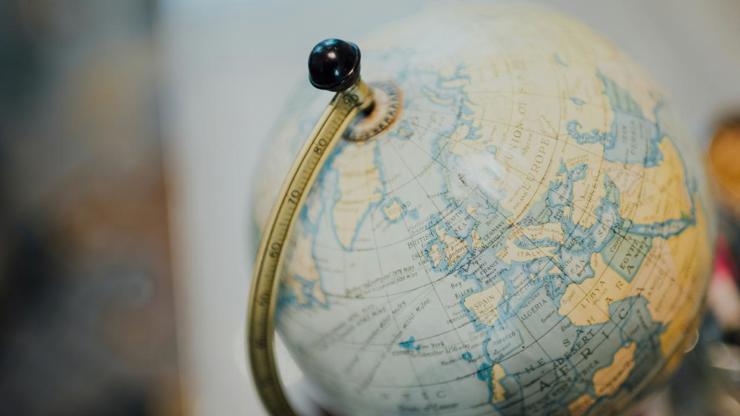
Reuters said the resolution was sponsored by African states and led by Togo, and it shifts away from the 16th-century Mercator global map toward one that more accurately reflects countries' true size.

The vote came with a stated aim to replace the traditional Mercator projection, which was created in 1569 by Flemish cartographer Gerardus Mercator, and the resolution promotes Equal Earth while noting it is not legally binding.
Reuters reported that the Togolese ministry said the resolution “in no way challenges the use of the Mercator projection for maritime and aerial navigation, for which it remains fully suited,” and it also said the Mercator map makes Greenland appear roughly the same size as Africa even though Africa is about 14 times larger.
Ahead of the vote, Togo’s Foreign Minister Robert Dussey told Reuters, “A fair world begins with a fair map.”
US calls it ideological
The United States cast the only vote against the resolution and said it promoted an “ideological agenda” and was a distraction from “genuine problems of international peace, prosperity or good relations,” according to Reuters.
In a statement ahead of the vote, Reuters reported that the United States said the UN was debating map projects from the 16th century and their role in promoting reparations and “cognitive justice,” with US representative Yaryna Ferencevych saying, “Instead of focusing on genuine problems... this body is debating map projects from the 16th century and their role in promoting reparations and cognitive justice.”

DW reported that France co-sponsored the resolution and said the Mercator projection gives “the United States, Russia and China take on a disproportionate visual prominence compared to Africa, Latin America or southeast Asia,” while “Greenland appears almost as big as Africa,” according to French Foreign Minister Jean-Noel Barrot.
France also said “Changing maps obviously doesn't change the world,” and DW quoted Barrot adding, “But correcting a distorted representation is already an act of truth.”
The BBC said the UN vote is non-binding and will see changes to maps used by institutions around the world, while the Mercator map remains in common use since the 16th century and is criticized for showing Africa as similar in size to Greenland despite Africa being 14 times larger.
Next steps and disputes
Reuters said Togo hopes to change its school geography materials by the end of the year and that “Togo will be the first country to change our own geography books,” with Dussey adding, “In the classroom, we need to change it to give an example to all the countries in the world.”
“Togo hopes to change its school geography materials by the end of the year”
Reuters also reported that Togo plans to meet African Union member states and supporters from other regions within the next six months to agree on how to promote wider adoption, and it said the discussion would need to include companies operating mapping, GPS and other location-based technologies.
The BBC said the resolution encourages governments and institutions to replace the traditional Mercator map with the Equal Earth projection, and it quoted Togo’s Foreign Minister Robert Dussey saying, “Maps shape our understanding of the world,” before the vote.
The BBC also quoted Africa No Filter campaign group leader Lerato Mogoatlhe saying, “Africa's misrepresentation on world maps is not just a cartographic error - it's a narrative issue,” and it said the group described it as part of efforts to stop the “world's longest misinformation and disinformation” about Africa.
CNN reported that the resolution notes “with concern that this distortion contributes to minimizing the perceived sizes of Africa, Latin America and South Asia,” and it said the UN resolution proposes replacing Mercator with Equal Earth as an “act of cognitive justice and memorial reparation.”