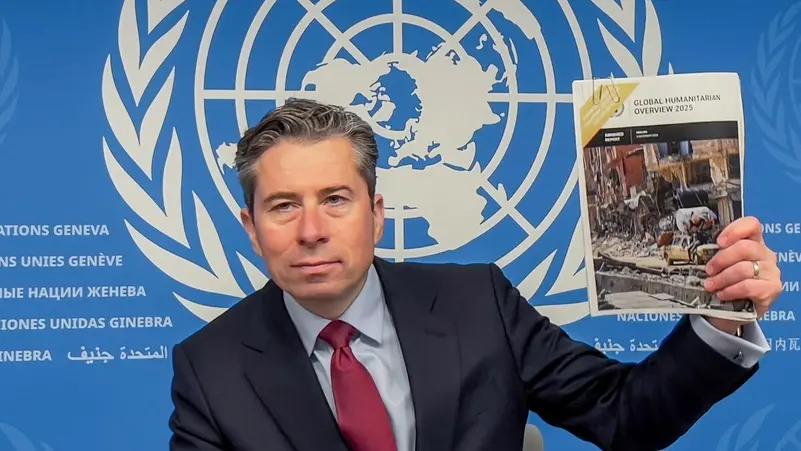
Africa
UN Says Gaza Tops Record Attacks on Aid Workers in 2025, 907 Killed, Injured, Kidnapped
Record attacks in 2025
The United Nations said a record number of aid workers faced violent attacks in 2025, with 907 aid workers killed, injured or kidnapped, as the Aid Worker Security Database compiled major incidents affecting humanitarian personnel.

Consistent coverage
Where the coverage agrees
No material differences: all outlets cite OCHA/OCHA-linked record attacks in 2025
At a glance
- 2025 saw a record 907 aid workers killed, injured, or kidnapped worldwide.
- Gaza remained the deadliest area for aid workers in 2025, with 186 killed.
- The increase was driven in part by the rising use of armed drones.
UN Secretary-General Antonio Guterres said the level of violence was appalling and urged states to respect the rules of war and hold perpetrators accountable, adding, "Serving others has become more dangerous than ever."
UN aid chief Tom Fletcher said the proliferation of cheap and adaptable armed drones in conflicts has increased the risks, and he pointed to March drone strikes that hit Goma in the eastern Democratic Republic of the Congo, killing at least three people including a French aid worker.
The UN said Gaza was by far the most deadly place for humanitarian workers in 2025 with 186 humanitarians killed there last year, followed by Sudan, as the database showed.
The UN also said the UN Palestinian refugee agency has reported at least 393 staff killed since the Israel-Gaza war began on October 7, 2023, while Israel said it goes to great lengths to avoid all civilian casualties.
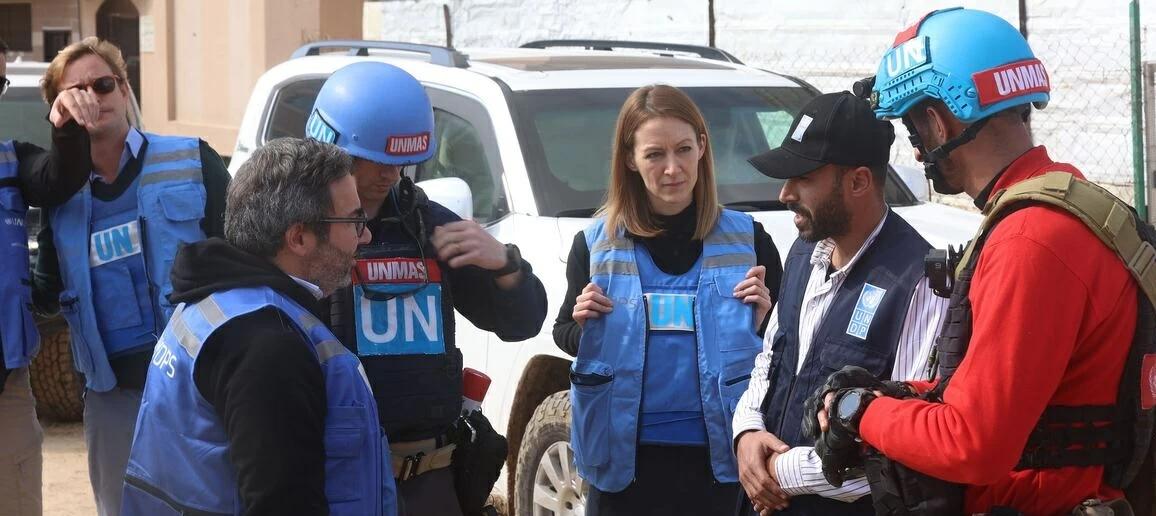
Drones reshape the threat
The UN warned that armed drones are reshaping battlefields worldwide, putting humanitarian teams increasingly in the line of fire, and it said 907 aid workers were victims of violence last year while carrying out lifesaving work.
UN Secretary-General António Guterres said, "Disinformation is eroding trust. Humanitarian funding is being cut. And humanitarian access is being restricted," as he honoured aid workers worldwide facing threats, arrest and detention.
Tom Fletcher said, "But just calling it out will not protect the next aid worker," and he urged states to uphold international humanitarian law and use every tool to protect civilians and humanitarian colleagues.
OCHA said in Sudan, armed drones were responsible for 80 per cent of civilian deaths in the first four months of 2026, striking places including markets and health facilities, while in Ukraine drones killed 80 civilians in April this year alone.
The UN also said the World Health Organization has recorded 639 attacks on healthcare this year already, and it cited March when an aid worker was killed when a drone struck a residential building in the Democratic Republic of the Congo.
Protection and consequences
The UN said violence against humanitarian workers has continued into 2026, with another 322 aid workers injured and 235 kidnapped so far, as the Humanitarian Outcomes’ Aid Worker Security Database tracked incidents.
Tom Fletcher said, "More than 1,000 aid workers have been killed in just three years and that is utterly unacceptable," and he added that for those who break the rules, there must be real consequences.
The UN said Gaza remained deadliest for the third consecutive year in 2025 with 186 killed, and it said in Sudan a record 71 aid workers were killed, mostly from small arms fire, as conflict drove fatalities for the fifth year in a row.
The UN warned that humanitarian organisations are working to reach 87 million people facing the most severe needs around the world this year, while calling for international humanitarian law to protect civilians and respect humanitarian personnel.
In a separate UN-linked framing, the European Union said attacks targeting humanitarian workers violate international law and referred to OCHA data confirming the killing of 82 humanitarian workers since the start of the year, abductions of 39, and injuries to 97 others.
Explore the original reporting
Compare all 21 sources
How each outlet frames it
Every outlet we compared, the headline it ran, and a link to the original article.
West Asian
Attacks on aid workers: United Nations warns of record numbers
17 August, 2026
Gaza and Sudan top the list of regions most deadly to aid workers
19 August, 2026
European Union: Targeting of humanitarian workers continues at alarming rates
19 August, 2026
With 186 humanitarian workers killed, Gaza remains the deadliest place for the third consecutive year
19 August, 2026
Killing of 350 humanitarian workers in 2025 with Gaza and Sudan leading
17 August, 2026
On World Humanitarian Day, Gaza leads as the most dangerous place for aid workers
19 August, 2026
Asian
Rising Threats: Escalating Violence Against Humanitarian Workers
19 August, 2026
Record high attacks on aid workers in 2025, UN reports
19 August, 2026
Other
Record violence against humanitarian staff: 907 dead, injured, or kidnapped in 2025
19 August, 2026
Los drones llevan la guerra hasta los trabajadores humanitarios con 350 asesinados en 2025
19 August, 2026
Attack on humanitarian workers reaches a record high in 2025, according to the UN
19 August, 2026
UN report: Gaza remains deadliest region for aid workers in 2025
19 August, 2026
On World Humanitarian Day, INEW warns that aid and health workers are being killed by explosive weapons in populated areas
18 August, 2026
Attacks against humanitarian personnel reached a historic high in 2025, according to the UN.
19 August, 2026
Western Mainstream
Protecting those who protect: the pending challenge of humanitarian action
19 August, 2026
Read stored source text: Akhbar as-Saʻūdiyya
The United Nations warned of a rising targeting of aid workers worldwide, with 907 workers killed or injured in 2025, amid international calls to activate humanitarian laws and hold perpetrators accountable. Publications Date published By The United Nations Office for the Coordination of Humanitarian Affairs (OCHA) expressed deep concern over the dangerous rise in attacks on aid workers around the world. In an official statement, the office announced a tragic toll of 907 victims, including those killed, injured, or abducted, among humanitarian workers during 2025. These shocking figures underscore that humanitarian staff face unprecedented threats while carrying out their duties in the world’s hottest conflict zones, threatening the collapse of the entire international aid system. According to data from the specialized research center humanitarian outcom(z? unclear) — the 2025 figure shows a new tragic record. While the number of deaths was slightly lower than 2024, which saw 377 aid workers killed, the overall toll remains terrifying. In 2024, 350 humanitarian workers were killed, including 186 in Gaza and 71 in Sudan, areas that topped the list of the world’s most dangerous for relief personnel. The bleeding did not stop with the new year; 2026 statistics indicate the killing of 82 humanitarian workers, injury of 97 others, and abduction of 39 people in various regions around the world, showing that the crisis continues and is taking a dangerous upward trajectory requiring urgent international intervention. The OCHA report pointed to a worrying technological development that directly contributed to more casualties: the widespread use of inexpensive, modifiable, weaponized drones. This technology has given multiple parties the ability to unleash deadly force easily and with little deterrence. In this context, Tom Fletcher, the UN Under-Secretary-General for Humanitarian Affairs, stated: “Armed drones have become the new face of an old danger—the deliberate or reckless targeting of civilians.” Fletcher added that “Technology may evolve, but the laws of war do not.” According to the data, these drones were responsible for 80% of civilian deaths in the first four months of 2026, with attacks focusing on markets and vital health facilities. Historically, relief workers enjoyed special protection under international humanitarian law and the Geneva Conventions, which require shielding civilians and humanitarian workers from armed conflicts. However, the last decade has seen a dangerous shift: these informal protections have eroded, turning aid workers from “facilitators of relief” into direct targets for political and military pressure. The lack of effective international accountability in past conflicts has paved the way for armed groups and states to violate these rules without fear of legal consequences. The continued attacks have grave implications at local, regional, and international levels. Locally, targeting medical and relief staff leads to the suspension of humanitarian operations, depriving millions of displaced people and refugees of food, medicine, and essential health care. Regionally and internationally, the collapse of relief work in countries like Sudan or the Gaza Strip threatens to trigger waves of migration and worsen security and economic crises in neighboring states. Fletcher emphasized that verbal condemnation is no longer sufficient to protect these heroes, calling on the international community to act immediately to compel states to abide by international humanitarian law and ensure accountability for those who commit these crimes as a deterrent to others. Wildfire fires in Greece: a downed helicopter kills 3 people Nuclear plant threat due to the Danube drought in Hungary Saudi Newsroom Hopes: Official materials and reports attributed to the newsroom, and the paper bears editorial responsibility for them. Your email address will not be published. Required fields are marked with an asterisk. Comment Name Email Website Save my name, email, and website in this browser for the next time I comment. Jeddah Municipality: Al-Harazat District outside land ownership decision Jeddah Municipality: Al-Harazat District outside land ownership decision Artificial intelligence use in Saudi Arabia: An unprecedented digital leap Hosting UNESCO Global Forum on AI Ethics 2026 Total solar eclipse tomorrow: Will Arab states and Saudi Arabia witness it? Artificial intelligence in Saudi Arabia: A historic digital leap for 2026 Rising clubs in the Roshen League 2026-2027 and the challenge for the giants Best alternatives to Google Chrome: 4 browsers that beat Chrome
Read stored source text: Al Jazeera
A record number of aid workers faced violent attacks last year, partly driven by the increased use of armed drones, the United Nations humanitarian office has said. According to an Aid Worker Security Database, a platform that compiles major incidents affecting humanitarian workers, 907 aid workers were killed, injured or kidnapped in 2025 alone. Recommended Stories list of 3 items- list 1 of 3Red Cross urges international aid as Sudan crisis deepens - list 2 of 3Disarmament, humanitarian aid at centre of new Gaza ‘working groups’ - list 3 of 3Eight countries denounce Israeli violations, attacks on healthcare in Gaza Of those, 350 were killed, down slightly from a record 387 in 2024. UN Secretary-General Antonio Guterres called the level of violence “appalling” and urged states to respect the rules of war and hold perpetrators accountable. “Serving others has become more dangerous than ever,” he said in a statement on Wednesday. UN aid chief Tom Fletcher said the proliferation of cheap and adaptable armed drones in conflicts has increased the risks. In March, drone attacks hit Goma in the eastern Democratic Republic of the Congo, killing at least three people including a French aid worker, while aid convoys in Sudan and Ukraine have been repeatedly hit. Gaza was by far the most deadly place for aid workers in 2025, with 186 humanitarians killed there last year, the database showed, followed by Sudan. In a post on X, Ramiz Alakbarov, the humanitarian coordinator of the UN Palestinian refugee agency, said “humanitarian workers are not a target and humanitarian assistance must be fully facilitated.” UNRWA’s former chief Philippe Lazzarini said earlier this year he was seeking a high-level panel to investigate staff deaths. Attacks on humanitarian workers are happening as funding for their work is increasingly being cut. In a statement, the European Commission said it would continue its donor obligations, adding “every aid worker killed is not only a personal tragedy; it is also a failure by the international community to uphold its most basic commitments.” Bushra Khalidi, global humanitarian policy lead at Oxfam, called for greater protections for aid workers, saying: “We’re witnessing an assault on humanitarian action itself.”
Read stored source text: Al-Jazeera Net
The United Nations has announced that 2025 set record levels of violence against humanitarian workers, with 907 aid workers killed, injured, or abducted. The Office for the Coordination of Humanitarian Affairs (OCHA), on the occasion of World Humanitarian Day, said that 350 humanitarian workers were killed during 2025, with Gaza remaining the deadliest area for aid workers for the third year in a row, recording 186 deaths, followed by Sudan, where 71 aid workers were killed. The office explained that the first months of 2026 saw 82 humanitarian workers killed and 97 others injured, in addition to 39 people abducted in conflict areas around the world. The statement quoted the Under-Secretary-General for Humanitarian Affairs and Emergency Relief Coordinator, Martin Griffiths, as saying, 'Killing more than a thousand humanitarian workers in just three years is absolutely unacceptable,' warning that mere condemnation will not protect the next worker. Griffiths added that states must 'uphold international humanitarian law and use all means available to protect civilians and humanitarian workers, and ensure accountability for anyone who violates the laws of war.' The Gaza genocide tops the list. The Palestinian Ministry of Foreign Affairs announced last year, on World Humanitarian Day, the killing of more than 500 humanitarian workers during Israel's genocidal war on the Gaza Strip. In early June this year, the UN Secretary-General António Guterres announced that the number of UN staff killed in Gaza exceeded the number the organization has ever lost in any conflict or disaster in its history. He added that some staff were killed alongside their family members in their homes or shelters, while others were killed while performing their duties in offices, shelters, and the communities they served. Extensive drone-targeting. The OCHA report noted that the rapid spread of low-cost, easily modifiable armed drones has increased the dangers faced by civilians and aid workers alike, as their use in armed conflicts expands. Griffiths said armed drones have become the new face of an old risk: disregarding civilian lives or intentionally targeting them. He added that technology may evolve, but the laws of war do not change. According to the United Nations, drones accounted for about 80% of civilian deaths in Sudan during the first four months of 2026, with markets and healthcare facilities being targeted. Similar attacks have caused dozens of civilian casualties in Ukraine, while drone attacks in Colombia tripled between 2024 and 2025. The office affirmed that humanitarian workers are increasingly at risk from these attacks, noting that one aid worker was killed in March after a drone strike hit a residential building in the Democratic Republic of the Congo, in addition to four humanitarian convoys being shelled in Ukraine within a week in May. This year, the United Nations marks World Humanitarian Day under the theme 'For Humanity,' honoring those who have lost their lives while carrying out humanitarian tasks and highlighting the increasing risks faced by aid workers worldwide.
Read stored source text: Anadolu Ajansı
European Union: Targeting of humanitarian workers continues at alarming rates On the occasion of World Humanitarian Day, observed on August 19 İbrahim Hamdi Hacıcaferoğlu, Zahir Sofuoğlu August 19, 2026 • Updated: August 19, 2026 ISTANBUL Istanbul/Anadolu The European Union confirmed on Wednesday that humanitarian workers are still being targeted, abducted, and killed at alarming rates in conflict-affected areas around the world. This was stated in a joint statement issued by High Representative of the Union for Foreign Affairs and Security Policy, Kadri Kalas (note: likely Kari Kalas in Turkish transliteration), and EU Commissioner for Equality, Preparedness, and Crisis Management, Khaija Habib, on the occasion of World Humanitarian Day on August 19. The statement clarified that attacks targeting humanitarian workers violate international law. It referred to data from the UN Office for the Coordination of Humanitarian Affairs (OCHA), which confirmed the killing of 82 humanitarian workers since the start of the year, abductions of 39, and injuries to 97 others. It added that attacks on humanitarian workers, hospitals, and civilian targets are not incidental incidents but violations of international humanitarian law. It stressed that the protection of civilians, including humanitarian workers, is a obligation imposed by international law, warning that perpetrators’ impunity will lead to more atrocities. The statement noted that Sudan is experiencing one of the world’s worst humanitarian crises, while suffering and devastation in Gaza continue on a catastrophic scale, and the war in Ukraine has disrupted food supply chains. Today, the United Nations announced that violence against humanitarian workers reached a record level in 2025, noting that Gaza remained the deadliest environment for the third year in a row after the death of 186 workers. OCHA published a new report earlier today in honor of World Humanitarian Day. The report stated that “907 humanitarian workers were killed, injured, or abducted during 2025—a new record high for violence targeting humanitarian workers.”
Read stored source text: Anadolu Ajansı
With 186 humanitarian workers killed, Gaza remains the deadliest place for the third consecutive year In 2026 so far, 82 humanitarian workers have died, 97 have been injured, and 39 have been kidnapped worldwide, according to the UN. Daniel Gallego August 19, 2026 • Updated: August 19, 2026 Istanbul The United Nations Office for the Coordination of Humanitarian Affairs (OCHA) said on Wednesday that 2025 marked another grim record of violence against humanitarian staff, with 907 colleagues killed, injured, or kidnapped. In a statement commemorating World Humanitarian Day, the office noted that although the death toll slightly decreased to 350 last year, the overall level of violence did not drop: 322 humanitarian workers survived attacks that caused injuries, while 235 were kidnapped, according to the Humanitarian Outcomes Humanitarian Staff Security Database. With 186 humanitarian workers murdered, Gaza remained the deadliest context for the third year in a row, followed by Sudan with 71 deaths. In 2026 so far, 82 humanitarian workers have died, 97 have been injured, and 39 have been kidnapped worldwide. “More than 1,000 humanitarian workers have died in just three years, and that is completely unacceptable,” said Tom Fletcher, Under-Secretary-General for Humanitarian Affairs and Emergency Relief Coordinator. “But simply speaking out about it will not protect the next humanitarian worker. States must respect international humanitarian law and use all means at their disposal to safeguard civilians and our colleagues. And those who violate the rules must face real consequences,” he added. The proliferation of armed, cheap, and adaptable drones that put lethal power in the hands of more and more people and send more explosive weapons to towns and cities is particularly worrisome. In Sudan, armed drones caused 80% of civilian deaths in the first four months of 2026, impacting markets and healthcare facilities. In Ukraine, drones killed 80 civilians in April alone this year, while in the Russian Federation there have been deaths of civilians and damage to civilian infrastructure from drone attacks. In Colombia, attacks with armed drones quadrupled between 2024 and 2025. Humanitarian workers are increasingly in the crosshairs of armed drones. In March this year, a humanitarian worker was killed in a drone attack on a residential building in the Democratic Republic of Congo. In just one week in May, four humanitarian convoys were attacked in Ukraine. “Armed drones have become the new face of an old danger: the deliberate or reckless destruction of civilian lives,” Fletcher said, adding that “technology can change, but the laws of war do not.” This year’s global campaign, Act for Humanity, highlights humanitarian workers who have lost their lives through interviews with their families. Behind every statistic is a family whose world has been shattered.
Read stored source text: Devdiscourse
Rising Threats: Escalating Violence Against Humanitarian Workers A record number of humanitarian workers were attacked in 2025 as the use of armed drones in conflicts rose. The United Nations has labeled this trend as disturbing. With increased attacks in regions like Gaza, the international community urges stronger protections and accountability for the perpetrators. A record number of humanitarian workers were attacked last year, partly due to the increased use of armed drones, the United Nations reported on Wednesday, describing the trend as 'appalling'. In 2025, 907 aid workers were killed, injured, or kidnapped, up from 833 the previous year, as reported by the Aid Worker Security Database. Among these, 350 workers lost their lives, a decrease from the 387 fatalities reported in 2024. UN Secretary-General Antonio Guterres condemned the violence and urged nations to uphold wartime rules and hold violators accountable. He noted the growing dangers in humanitarian service as U.N. aid chief Tom Fletcher highlighted the risks posed by drones. Areas like Gaza and Sudan have been particularly deadly for aid workers. (With inputs from agencies.)
Read stored source text: El Boletín
Gaza and Sudan concentrated much of the victims as the United Nations warns that attacks continue in 2026. Violence against humanitarian workers reached record levels in 2025, with 907 workers killed, injured, or kidnapped. The UN warns that the situation continues to deteriorate in several conflicts during 2026. The work of those who provide assistance in wars and humanitarian crises has become an increasingly dangerous activity. The balance published on World Humanitarian Day, celebrated every August 19, reflects a surge in attacks, kidnappings, and detentions that especially affects local on-the-ground staff. The UN considers the last three years the deadliest on record for humanitarian workers. Attacks left a total of 907 humanitarian workers dead, injured, or kidnapped worldwide in 2025. The Aid Worker Security Database, produced by Humanitarian Outcomes, counted 350 humanitarian workers killed during 2025. Although this figure represents a decrease from the 387 deaths recorded in 2024, other forms of violence rose and drove the total number of people affected to a new high. Specifically, another 322 workers were injured and 235 were kidnapped, bringing the death, injury, and kidnapping total to 907. The database also counts 280 detained, bringing the total number of workers affected by serious incidents to 1,187, compared with 936 in 2024. The data thus show that the drop in fatalities did not translate into a reduction in insecurity. The sharp increase in kidnappings and detentions pushed the global number of workers affected during the year to a new high. Gaza again proved the deadliest arena for humanitarian workers, followed by the conflict in Sudan. The Gaza Strip was the scene with the highest number of fatalities for the third year in a row, with 186 humanitarian workers killed during 2025, according to the balance published by OCHA. Sudan ranked second, with 71 deaths. The deterioration of security in both conflicts is part of a broader trend. UN humanitarian chief Martin Griffiths noted in April that more than 1,000 humanitarian workers had died in the previous three years, a figure nearly triple that recorded in the preceding three-year period. The United Nations has repeatedly urged the parties to the conflict to respect International Humanitarian Law and ensure the protection of staff distributing food, providing health care, or carrying out emergency tasks. The Security Council approved in May 2024 Resolution 2730, focused specifically on strengthening the protection of humanitarian workers and demanding investigations into attacks. The violence did not stop in 2026, and the first months of the year again leave hundreds of workers affected. The provisional balance released by OCHA shows that since the beginning of 2026 another 82 humanitarian workers have died, while 97 have been injured and 39 have been kidnapped. The situation also unfolds against a backdrop of growing difficulty in delivering aid. OCHA has warned that the humanitarian system faces simultaneously more dangerous conflicts, access restrictions, and a sharp drop in funding. In 2025, despite these difficulties, humanitarian organizations managed to provide some form of assistance to about 98 million people worldwide. One of the elements most concerning to the United Nations is the expanding use of armed drones in conflict zones. Their lower cost and ease of adaptation allow attacks to reach areas increasingly distant from traditional fronts. The proliferation of drones is widening the reach of attacks against civilians, infrastructure, and humanitarian operations. The Sudan case has become one of the most serious examples. The United Nations estimates that drones caused more than 80% of civilian deaths related to the conflict during the first four months of 2026, with at least 880 deaths. Attacks have reached markets, health centers, and other civilian infrastructure. The Sudan crisis also maintains exceptional dimensions. OCHA calculates that 33.7 million people need humanitarian assistance in the country during 2026 and that organizations aim to reach 20.4 million of them. The United Nations insists that the increase in casualties cannot be normalized and demands accountability for those who violate international protection norms. Griffiths warned that the deaths of more than 1,000 humanitarian workers in just three years reflect an unprecedented erosion of the safeguards that should allow these organizations to work in war zones. World Humanitarian Day is commemorated every August 19 in memory of the 2003 bombing of the United Nations headquarters at the Canal Hotel in Baghdad, in which 22 humanitarian workers died, including the UN special representative in Iraq, Sergio Vieira de Mello. More than two decades later, the protection of those who provide aid remains among the main challenges of the international humanitarian system. Get more news from Al-Bulletin on Google. Add Al-Bulletin as a preferred source and don’t miss our content. Click, check the box, and you’re done.
Read stored source text: EL PAÍS
More than 1,000 humanitarian workers have lost their lives in the last three years, according to United Nations data, and in 2025 alone at least 326 humanitarian professionals died while carrying out their work. A few days ago, on August 4, Acción contra el Hambre (Action Against Hunger) commemorated the twentieth anniversary of one of the most painful episodes in our history: the murder of 17 colleagues at our office in Muttur, Sri Lanka. They were local humanitarian workers who chose to stay alongside the communities they supported amid a severe crisis. Twenty years later, their names remain part of our collective memory and of the history of humanitarian action. One might think Muttur belongs to the past—that it was an exceptional tragedy tied to a specific context. I wish that were true. However, two decades later, the reality forces us to recognize that the risks faced by those who provide humanitarian aid have not diminished. In many places around the world, helping remains a dangerous activity. Acción contra el Hambre knows this well. Last summer we lost four colleagues from our teams in Gaza. Like so many other humanitarian organizations, we have seen dedicated professionals whose mission is to save lives end up becoming victims of the very conflicts they sought to alleviate. Behind every figure are names, stories, and families bearing an irrecoverable loss. The data are eloquent. More than 1,000 humanitarian workers have died in the last three years, and in 2025 alone at least 326 humanitarian professionals died while performing their work, according to the United Nations. We should never become accustomed to these figures. Each of them represents a collective failure to protect those who dedicate their work to saving lives. World Humanitarian Day, celebrated every August 19, was created to honor those who have lost their lives while providing aid and to recognize the work of millions of humanitarian workers worldwide. This year, however, the commemoration comes at a particularly worrying moment. The quality and sustainability of access to assistance are undergoing significant deterioration. It is increasingly difficult to reach the people in need. Conflicts are longer, more complex, and more fragmented. In addition to armed violence, there are the effects of climate change, economic crises, mass population displacements, and the weakening of institutions that are no longer able to protect the most vulnerable communities. But there is another less visible phenomenon that worsens this situation. In many contexts, acceptance of humanitarian organizations is eroding. The security narrative and the fight against terrorism have gained ground in political agendas and, far too often, prevail over humanitarian considerations. The organizations that operate under the principles of neutrality, impartiality, and independence find themselves working in environments where humanitarian space is progressively shrinking. The consequences are evident. Security incidents against humanitarian teams are increasing. Administrative restrictions are growing. Visa procedures are made more difficult. Access permissions to certain areas are delayed or blocked. Financial and regulatory obstacles are imposed that slow down the arrival of aid precisely when the need is most urgent. Each of these barriers translates into less capacity to serve those who need help most. And yet, faced with this scenario, there are reasons for hope. Every day, thousands of local and international professionals continue to work in Gaza, Sudan, the Democratic Republic of Congo, the Sahel, and dozens of forgotten contexts. They continue distributing food, ensuring access to drinking water, treating child malnutrition, rehabilitating essential infrastructure, and accompanying communities that have lost almost everything. Therefore, on this World Humanitarian Day, the best tribute we can pay to those we lost in Muttur, in Gaza, and in so many other places around the world is to reaffirm our commitment to the principles that make our work possible: neutrality, impartiality, and independence. It is these principles that allow us to stand by people when they need us most. The best way to honor those who are no longer with us is to ensure that those who remain on the front lines today can do their work with the protection, respect, and safety they deserve. Because when a humanitarian worker is attacked, not only is a life at risk, but the aid upon which thousands depend is also at risk. Defending humanitarian action is, ultimately, defending our shared humanity. Manuel Sánchez-Montes, general director of Acción contra el Hambre Spain.
Read stored source text: Estrella Digital
Los trabajadores humanitarios siguen pagando un precio cada vez más alto por trabajar en zonas de conflicto. En 2025,907 fueron víctimas de algún acto de violencia mientras desempeñaban su labor,según la Oficina deNaciones Unidaspara la Coordinación de Asuntos Humanitarios. De ellos,350 fueron asesinados, la segunda cifra más elevada desde que existen registros. La violencia tampoco se ha frenado este año. En los primeros meses de 2026,82 trabajadores humanitarios han muerto, 97 han resultado heridos y otros 39 han sido secuestrados. Un escenario que preocupa especialmente a Naciones Unidas anteel aumento de los ataquesy la dificultad creciente para acceder a las zonas donde la población necesita ayuda. Amenazas, detenciones, secuestros y ataquesforman parte de una realidad que se ha agravado en algunos de los principales escenarios de guerra. Gazafue por tercer año consecutivo el escenario con más trabajadores humanitarios asesinados, con186 víctimas durante 2025. El 68% de esas muertes se produjo como consecuencia de bombardeos aéreos. Sudán ocupó el segundo lugar en este trágico balance, con 71trabajadores humanitarios muertos, la cifra más alta registrada en el país y el quinto año consecutivo en el que aumentan los fallecimientos. En este caso, la mayoría de las víctimas murió por disparos de armas ligeras. Ucrania, Etiopía, Siria, Haití, Chad y Camerún también aparecenentre los lugares donde los trabajadores humanitarios afrontaron mayores riesgos durante el pasado año. Los secuestros y los ataques aéreos fueron algunas de las formas de violencia más habituales. A esta situación se suma una amenaza que se ha extendido rápidamente en los conflictos,los drones armados. Su bajo coste y su facilidad de utilizaciónhan permitido que este tipo de tecnología tenga cada vez mayor presencia en los campos de batalla y pueda emplearse para atacar objetivos a mayor distancia. Colombiaes uno de los ejemplos más claros. Los ataques con drones armadospasaron de 61 en 2024 a 333 en 2025, más de cuatro veces más, según los datos del Servicio de las Naciones Unidas de Acción contra las Minas. En Sudán, el impacto es todavía más grave. Los drones armados fueron responsables del80% de las muertes de civiles registradasdurante los primeros cuatro meses de 2026, incluidosataques contra mercados y centros sanitarios. Ucrania también ha sufrido las consecuencias de esta evolución. Solo durante abril,los drones provocaron la muerte de 80 civiles. La amenaza afecta igualmente al personal sanitario. LaOrganización Mundial de la Saludha contabilizado639 ataques contra instalaciones y servicios sanitarios en lo que va de año. Puedes seguir a Estrella Digital enX,Instagram,TikTokyLinkedIn
Read stored source text: https
Home»Reports»The United Nations reveals the killing of 350 humanitarian workers in 2025 and warns of the rising threat of unmanned aerial vehicles Kauthar Bougual The United Nations has disclosed a heavy toll of violence against humanitarian workers in 2025, with 350 killed, including 186 in Gaza, 71 in Sudan, while the international organization warned that threats would continue this year and that the use of armed drones in conflict areas would rise. The UN Office for the Coordination of Humanitarian Affairs (OCHA) reported on Monday that 2025 registered another high level of attacks on humanitarian workers, with 907 people killed, injured, or kidnapped. These figures indicate the ongoing dangerous environment in which relief teams operate, especially in open war zones, where reaching civilians and delivering food, medicine, and care becomes a mission that could put the workers themselves at risk or place them in the midst of military operations. According to data from the UN Office for the Coordination of Humanitarian Affairs, 350 humanitarian workers were killed in 2025 across various regions of the world. Although this figure is lower than the 2024 toll of 377 killed, the United Nations considered the level of violence recorded in the previous year to be exceptionally high. The danger is not limited to killing; injuries and kidnapping are also included in the data, bringing the total number of victims of various forms of violence to 907 in a single year. The figures are based on data from the humanitarian research center “Humanitarian Outcomes,” which tracks assaults on humanitarian workers. Gaza accounted for the largest share of deaths recorded in 2025, with 186 humanitarian workers losing their lives there. This represents more than half of the total deaths announced for the year, highlighting the magnitude of the risks faced by humanitarian teams operating in the sector. Humanitarian organizations operate in Gaza under highly complex conditions, where widespread needs intersect with ongoing military operations and restricted access to some areas. The report’s data do not distinguish between agencies where the victims worked or the circumstances of each death, so not all cases can be attributed to a single cause or side without additional details. But the figure alone reflects the magnitude of the danger faced by workers tasked with providing aid in a densely conflict-ridden environment. Sudan ranked second in the toll announced by the United Nations, with 71 humanitarian workers killed in 2025. The Sudanese crisis continues to pose major challenges to relief operations amid armed conflict and expanding humanitarian needs. UN figures indicate that the risk to workers did not ease as 2026 began; killings, injuries, and kidnappings continued in several areas. OCHA also linked part of the new risks to the widening use of armed drones, especially in Sudan. The United Nations reported that since the beginning of 2026, 82 humanitarian workers were killed worldwide. 97 people were injured and 39 others abducted during the same period. These figures show that the threat remains despite a relatively lower number of deaths compared to the previous year. The start of 2026 does not necessarily mean the year will record a higher or lower toll than 2025, as it will depend on conflict developments and parties’ ability to comply with international humanitarian law. But the ongoing reporting of dozens of deaths, injuries, and kidnappings in just a few months indicates that the humanitarian work environment remains highly dangerous. Tom Fletcher, head of humanitarian affairs at the United Nations, said that more than a thousand humanitarian workers were killed in just three years. He described this figure as unacceptable, stressing that merely condemning attacks does not provide real protection for workers. He urged states to respect international humanitarian law and to use available tools to protect civilians and humanitarian workers. He also called for accountability for those who violate the rules, noting that the absence of consequences encourages continued assaults. This message carries political and legal tone beyond simply presenting statistics, as the UN seeks to turn numbers into leverage on states and armed parties to raise protection levels for aid workers. The OCHA highlighted part of its warning about the rise of armed drones. It said the spread of cheap, adaptable drones is a major concern because it enables more actors to unleash deadly force at relatively low cost. These tools differ from traditional military systems in ease of spread, adaptability, and use by various actors. This does not mean that all incidents involving humanitarian workers are drone-related, but the UN sees expanding use as adding a new layer of risk in conflict zones. According to OCHA, armed drones accounted for 80 percent of civilian deaths in the four months of early 2026 in Sudan. The office noted targeted markets and health facilities in particular. This figure signals a change in the nature of risks to civilians, as threats no longer are limited to ground clashes or conventional shelling. As drones gain the ability to reach multiple sites, hospital staff, medical centers, and aid distribution sites are also at risk if civilian areas are targeted. However, the figure refers to civilian deaths in Sudan during the stated period, not exclusively to humanitarian workers. Tom Fletcher summarized the UN’s position on the rise of these technologies by saying armed drones are the “new face of an old risk.” He stressed that the evolution of military means does not change the rules of international humanitarian law. The core idea is that the emergence of new technologies does not erase obligations to distinguish between military targets and civilians, nor does it exempt parties from protecting humanitarian workers and medical facilities. The UN seeks to emphasize that technological advancement should not become a legal vacuum or pretext to lessen responsibility. Humanitarian work should be based on neutrality, independence, and impartiality, but those working in conflict zones are exposed to multiple risks. They operate near front lines, hospitals, camps, and aid distribution sites—areas that can also become theaters of confrontation or bombardment. Some humanitarian operations require passing through territories controlled by different parties, adding challenges to ensuring team safety and access. The 2025 figures show that the theoretical protection offered by international law is not enough by itself if ground parties do not comply with it. The impact of the killing or injury of humanitarian workers extends beyond the victims and their families. Every attack on a relief team can suspend a program, halt food distribution, close a health facility, or cause a organization to withdraw from a region. Thus a single incident can affect thousands of civilians who rely on those services. Protecting workers becomes a fundamental part of protecting the population itself, because an organization’s ability to reach those in need is directly linked to the safety of its staff. The UN’s message focuses on the idea that political condemnation alone is no longer sufficient. Fletcher urged states to use their tools to ensure adherence to international law of humanitarian law, and to make those who violate the rules face legal and political consequences. This call reflects frustration at continued high figures despite repeated warnings in recent years. It also indicates that the international organization views protecting humanitarian workers as a matter of accountability, not only field security measures. Despite the drop in deaths from 377 in 2024 to 350 in 2025, the UN does not consider this decline a sufficient signal of improvement. A total of 907 people were killed, injured, or kidnapped, while casualties continued into 2026. Also, more than half of last year’s deaths occurred in Gaza, with Sudan in second place, reflecting the scale of risks in conflicts tied to large humanitarian crises. Concerns grow with the expanding use of armed drones and their easy access to civilian, health, and humanitarian sites. Among 350 people killed in 2025, and more than a thousand humanitarian workers who lost their lives over three years, and dozens of new casualties since early 2026, the United Nations is sounding a new alarm about the safety of aid workers, stressing that protecting those who aid civilians cannot remain a written principle unless it becomes an actual commitment with clear accountability in conflict zones. You will not publish your email address. Required fields are marked with an asterisk Comment* Name* Email* Website Save my name, email, and website in this browser for the next time I comment. Latest News National News International News Policy Economy Society About Us Terms and Conditions Privacy Policy
Read stored source text: İlke Haber Ajansı
Güneşli Wednesday, August 19, 2026 The United Nations has warned that humanitarian workers are facing increasingly deadly risks as armed conflicts intensify and weaponized drones reshape battlefields around the world. Marking World Humanitarian Day on August 19, the UN Office for the Coordination of Humanitarian Affairs (OCHA) said 907 aid workers were victims of violence in 2025 while carrying out lifesaving operations in conflict zones. Although the number of deaths declined from the previous year, 350 humanitarian workers were killed in 2025, making it the second-deadliest year ever recorded for aid workers. The violence has continued into 2026. According to the Aid Worker Security Database, 322 humanitarian workers have been injured and 235 kidnapped so far this year. UN Secretary-General António Guterres paid tribute to humanitarian workers facing threats, arrest and detention, while warning that disinformation, shrinking humanitarian funding and restrictions on access are making their work increasingly difficult. “Humanitarian funding is being cut. And humanitarian access is being restricted,” Guterres said, urging UN member states to protect aid workers who are assisting millions of people around the world. Gaza Remains Deadliest for Aid Workers Gaza remained the deadliest environment for humanitarian workers in 2025 for the third consecutive year, with 186 aid workers killed. According to OCHA, 68% of those deaths were caused by aerial bombardment. Sudan recorded the second-highest toll, with 71 humanitarian workers killed as the country continued to experience intense armed conflict. Most of the deaths there were attributed to small-arms fire. Other countries identified as high-risk environments for humanitarian personnel included Ukraine, Ethiopia, Syria, Haiti, Chad and Cameroon, where kidnappings and aerial attacks were among the most common forms of violence. So far in 2026, 82 aid workers have been killed, 97 injured and 39 kidnapped worldwide, according to the latest figures cited by the UN. “More than 1,000 aid workers have been killed in just three years and that is utterly unacceptable,” said Tom Fletcher, the UN humanitarian affairs and emergency relief coordinator. Fletcher called on states to uphold international humanitarian law and take concrete measures to protect civilians and humanitarian personnel. Armed Drones Create New Threat The UN also warned that the rapid proliferation of inexpensive and adaptable armed drones is creating a new and increasingly lethal threat for civilians and humanitarian workers. OCHA reported that armed drones were responsible for 80% of civilian deaths in Sudan during the first four months of 2026, with attacks hitting civilian locations including markets and health facilities. In Ukraine, drone attacks killed 80 civilians in April alone, while drone strikes in Russia have also resulted in civilian deaths and damage to civilian infrastructure. Colombia recorded a fourfold increase in attacks involving weaponized drones between 2024 and 2025. Humanitarian workers are increasingly caught up in these attacks. The World Health Organization has recorded 639 attacks on healthcare facilities and personnel so far this year. In March, an aid worker was killed when a drone struck a residential building in the Democratic Republic of the Congo. In Ukraine, four humanitarian convoys were reportedly hit in attacks within a single week in May. “Weaponised drones have become the new face of an old danger: the deliberate or reckless destruction of civilian life,” Fletcher said, stressing that advances in military technology do not change the obligations imposed by international humanitarian law. Aid Workers Continue Despite Risks This year’s World Humanitarian Day campaign, titled“Act for Humanity,”is focusing on the people behind the statistics and highlighting the personal sacrifices of humanitarian workers and their families. In the Democratic Republic of the Congo, humanitarian driver Emmanuel Madragule, who has more than two decades of field experience, survived an armed-group attack during a mission in June 2024. Despite the risks, Madragule returned to the field and continued working with communities affected by conflict. “I cannot leave my colleagues like this. I have to stay with my colleagues,” he told UN News. His decision was also shaped by personal experience. In 2008, humanitarian workers helped save his uncle after he was shot. The UN stressed that international humanitarian law requires parties to armed conflicts to protect civilians and respect humanitarian personnel working to provide assistance. Humanitarian organizations are currently working to reach an estimated 87 million people facing the most severe humanitarian needs worldwide. World Humanitarian Day World Humanitarian Day is observed annually on August 19 to commemorate the victims of the 2003 bombing of the Canal Hotel in Baghdad, Iraq. Twenty-two UN staff members were killed in the attack, including Sergio Vieira de Mello, the UN Secretary-General’s Special Representative for Iraq. Five years later, the UN General Assembly designated August 19 as World Humanitarian Day. This year, the UN is using the occasion to renew its call for governments and other actors with influence over conflicts to“Act for Humanity”and ensure that humanitarian workers can carry out their lifesaving work without becoming targets.(ILKHA) LEGAL WARNING: All rights of the published news, photos and videos are reserved by İlke Haber Ajansı Basın Yayın San. Trade A.Ş. Under no circumstances can all or part of the news, photos and videos be used without a written contract or subscription. LEGAL WARNING: All rights of the published news, photos and videos are reserved by İlke Haber Ajansı Basın Yayın San. Trade A.Ş. Under no circumstances can all or part of the news, photos and videos be used without a written contract or subscription. Download Download Whatsapp Hamas on Wednesday accused Israel of deliberately escalating violence in Gaza after an Israeli drone strike on a café at Gaza City's port killed six Palestinians, including a child, and wounded 14 others, according to the Palestinian Health Ministry. The United States has dramatically escalated its campaign against the International Criminal Court (ICC), imposing sanctions on the court’s president and a senior trial lawyer in a move that critics say represents a brazen attempt by Washington to intimidate international justice and shield powerful allies from accountability. The United States has imposed sanctions on two senior officials of the International Criminal Court (ICC) over the court's investigations into alleged war crimes involving officials of the Israeli occupation regime, Secretary of State Marco Rubio announced. Syria has formally complained to the United Nations over what it described as Israeli airstrikes on the Abu al-Duhur Military Airbase in Idlib province, calling the attack a clear violation of its sovereignty and territorial integrity and urging the international community to take action against Israel. İlke Haber Ajansı Basın Yayın Sanayi Ticaret A.Ş. Download Download Whatsapp © 2021 İlke Haber Ajansı [İLKHA]
Read stored source text: MarketScreener España
A record number of humanitarian workers were attacked last year, driven in part by the greater use of armed drones, according to the United Nations, which called this trend "horrific." About 907 aid workers were killed, injured, or abducted in 2025, up from 833 in the previous year, according to data from the Aid Worker Security Database, a Canada- and Australia-funded platform that collects the major security incidents affecting humanitarian personnel. Of those, 350 people died, a slight decrease from the 387 who died in 2024. UN Secretary-General Antonio Guterres said the level of violence is atrocious and urged states to respect the laws of war and to hold perpetrators accountable. "Serving others has become more dangerous than ever," he said ahead of UN ceremonies planned for World Humanitarian Day, during which flags will be flown at half-mast in New York and Geneva in memory of the dead. UN humanitarian affairs chief Martin Griffiths noted that the proliferation of cheap, adaptable armed drones in conflicts has increased risks. In March, several drone strikes hit Goma, in eastern Democratic Republic of the Congo, killing at least three people, including a French aid worker, while various aid convoys in Sudan and Ukraine have repeatedly been targeted. Gaza was, by far, the deadliest place for humanitarian workers in 2025, with 186 deaths last year, followed by Sudan, according to the database. The UN refugee agency for Palestinians has reported the death of at least 393 staff members since the Israel-Hamas war began on October 7, 2023. Israel, which is fighting Hamas militias in Gaza, has said it is doing everything possible to avoid civilian casualties. Earlier this year, the former head of UNRWA, Philippe Lazzarini, indicated he was pushing to create a high-level panel to investigate deaths among his staff. Bushra Khalidi, Oxfam’s head of global humanitarian policy, called for greater protection for aid workers and warned: "We are witnessing an assault on humanitarian action itself."
Read stored source text: Masrawy
UN warns of an unprecedented escalation in targeting aid workers in conflict zones United Nations On Wednesday, the United Nations revealed unprecedented levels of attacks against humanitarian teams over the past year, describing the overall scene as "terrifying" amid increasing use of armed drones in hotspots. Record numbers of attacks on aid workers Reuters, citing the Secretary-General's database on aid worker security—an international platform funded by Canada and Australia to monitor on-the-ground violations—reported that 2025 saw about 907 aid workers either killed, injured, or abducted, compared with 833 documented in the previous year. The death toll reached 350, with Gaza accounting for more than half of the fatalities, a slight decline from the 2024 record of 387 victims. UN Secretary-General Antonio Guterres called the level of violence against humanitarian workers "terrifying," urging governments to enforce international law and bring perpetrators to justice. Guterres said, "Working to help others has become more dangerous than ever before." These remarks come as the UN makes arrangements to mark World Humanitarian Day by lowering flags at its New York and Geneva headquarters in memory of those who were lost. Drones deepen the crisis of targeting aid workers The UN Under-Secretary-General for Humanitarian Affairs, Martin Griffiths, warned that the ease of deploying drones and their low cost in conflicts pose severe security challenges, citing March incidents when drones hit the city of Goma in eastern Congo, killing at least three people, including a French aid worker, along with a string of attacks on aid convoys in Sudan and Ukraine. Gaza topped the regions most dangerous for humanitarian workers in 2025, with 186 aid workers killed on its soil, followed by Sudan. The UNRWA, the UN agency for Palestinian refugees, noted its human losses surpassed 393 staff since the outbreak of the war between Israel and Gaza on October 7, 2023. Basma Al-Khaldi, Global Humanitarian Policy Lead at Oxfam, called for stringent international protection of field teams, saying, "We are witnessing an assault on humanitarian work itself."
Read stored source text: Operativ Məlumat Mərkəzi
The United Nations Office for the Coordination of Humanitarian Affairs (UNOCHA) has released a new report detailing the escalating security threats facing humanitarian aid workers globally. According to the Operative Information Center-OMM, the report, published ahead of World Humanitarian Day on August 19, reveals that violence against humanitarian mission personnel reached record levels in 2025. The data indicates that a total of 907 aid workers were killed, injured, or abducted throughout the previous year. Of these, 350 lost their lives, 322 were injured in attacks, and 235 were abducted. The report identifies the Gaza Strip as the most dangerous region in the world for humanitarian aid workers. In 2025 alone, 186 aid workers were killed in Gaza, marking the third consecutive year the territory has ranked first in this grim statistic. Sudan follows in the list, with 71 aid workers losing their lives there last year. Furthermore, data from the first months of 2026 indicates that 82 humanitarian workers have already been killed, 97 injured, and 39 abducted globally. The UN report also draws specific attention to the dangers posed by armed unmanned aerial vehicles (UAVs). The targeting of aid convoys, markets, and medical facilities via drone strikes in conflict zones such as the Democratic Republic of the Congo, Ukraine, and Sudan remains a matter of grave concern. Tom Fletcher, UN Under-Secretary-General for Humanitarian Affairs and Emergency Relief Coordinator, strongly condemned the attacks on aid workers. "The killing of more than 1,000 aid workers in just three years is unacceptable," Fletcher stated. He urged nations to uphold international humanitarian law and utilize all available means to protect civilians and humanitarian personnel. World Humanitarian Day, observed annually on August 19, commemorates the 2003 bombing of the UN headquarters in Baghdad, which claimed the lives of 22 aid workers. The day serves as a global platform to advocate for the safety and security of humanitarian personnel who operate in some of the world's most volatile conflict zones.
Read stored source text: ReliefWeb
Skip to main content Attachments World Humanitarian Day is marked each year on the anniversary of the 2003 bombing of the Canal Hotel in Baghdad, an explosive weapon attack that killed 22 aid workers. Twenty-three years on, humanitarian workers and civilians are still being killed by the same means, in the towns and cities where they work. The Explosive Weapons Monitor, found that attacks affecting humanitarian aid operations increased 52% in 2025 compared to the previous year. According to the Explosive Weapons Monitor 2025, the research initiative of the International Network on Explosive Weapons. Since 2022, Insecurity Insight has recorded more than 1,000 aid workers killed or injured by explosive weapons in populated areas: Attacks affecting humanitarian aid operations increased by 52 percent in 2025, to 2,541 incidents across 17 countries and territories, while a further 1,272 damaged or destroyed health facilities and ambulances or killed health workers. Almost 90 percent of the attacks on aid were recorded in Palestine, while incidents tripled in Myanmar and increased by 80 percent in Sudan. In Gaza, the most dangerous environment for aid workers, they were killed in convoys, in warehouses and in displacement camps and while distributing aid; health and rescue workers were killed in “double tap” strikes that hit those attending the casualties of an earlier attack. Attacks delivered from the air are becoming increasingly common: incidents in which aid workers were killed or injured by air-delivered explosive weapons increased from fewer than 30 in 2023 to more than 195 in 2025. The increasing use of these systems is shrinking humanitarian space, constraining humanitarian access, and heightening risks for aid workers, with civilians ultimately bearing the consequences through reduced access to essential assistance and protection. Related Content
Read stored source text: Reuters
GENEVA, Aug 19 (Reuters) - A record number of humanitarian workers were attacked last year, driven partly by increased use of armed drones, the United Nations said on Wednesday, calling the trend "appalling". Some 907 aid workers were killed, injured or kidnapped in 2025 versus 833 the year before, according to the Aid Worker Security Database, a platform funded by Canada and Australia that compiles major security incidents affecting aid workers. Sign up here. Of those, 350 were killed, down slightly from a record 387 in 2024. United Nations Secretary-General Antonio Guterres said the level of violence was appalling and urged states to respect the rules of war and hold perpetrators accountable. "Serving others has become more dangerous than ever," he said, ahead of U.N. ceremonies planned for World Humanitarian Day with flags at half-staff in New York and Geneva in honour of those killed. U.N. aid chief Tom Fletcher said the proliferation of cheap and adaptable armed drones in conflicts has increased the risks. In March, drone strikes hit Goma in the eastern Democratic Republic of Congo, killing at least three people including a French aid worker, while aid convoys in Sudan and Ukraine have been repeatedly hit. Gaza was by far the most deadly place for aid workers in 2025 with 186 humanitarians killed there last year, the database showed, followed by Sudan. The U.N. Palestinian refugee agency has reported at least 393 staff killed there since the Israel-Gaza war began on October 7, 2023. Israel, which is fighting Hamas militants in Gaza, has said it goes to great lengths to avoid all civilian casualties. UNRWA's former chief Philippe Lazzarini said earlier this year he was seeking a high-level panel to investigate staff deaths. Bushra Khalidi, global humanitarian policy lead at Oxfam, called for greater protections for aid workers, saying: "We're witnessing an assault on humanitarian action itself." Reporting by Emma Farge; Editing by Edmund Klamann Our Standards: The Thomson Reuters Trust Principles.
Read stored source text: The Straits Times
Attacks on aid workers hit record high in 2025, UN says AI generated GENEVA – A record number of humanitarian workers were attacked in 2025, driven partly by the increased use of armed drones, the United Nations said on Aug 19, calling the trend “appalling”. Some 907 aid workers were killed, injured or kidnapped in 2025 compared with 833 the year before, according to the Aid Worker Security Database, a platform funded by Canada and Australia that compiles major security incidents affecting aid workers. Of those, 350 were killed, down slightly from a record 387 in 2024. United Nations Secretary-General Antonio Guterres said the level of violence was appalling and urged states to respect the rules of war and hold perpetrators accountable. “Serving others has become more dangerous than ever,” he said, ahead of UN ceremonies planned for World Humanitarian Day with flags at half-staff in New York and Geneva, Switzerland, in honour of those killed. UN aid chief Tom Fletcher said the proliferation of cheap and adaptable armed drones in conflicts has increased the risks. In March, drone strikes hit Goma in the eastern Democratic Republic of Congo, killing at least three people including a French aid worker, while aid convoys in Sudan and Ukraine have been repeatedly hit. Gaza was by far the most deadly place for aid workers in 2025 with 186 humanitarians killed there in 2025, the database showed, followed by Sudan. UNRWA, the UN Palestinian refugee agency, has reported at least 393 staff killed there since the Israel-Gaza war began on Oct 7, 2023. Israel, which is fighting Hamas militants in Gaza, has said it goes to great lengths to avoid all civilian casualties. UNRWA’s former chief Philippe Lazzarini said earlier in 2026 he was seeking a high-level panel to investigate staff deaths. Bushra Khalidi, global humanitarian policy lead at Oxfam – the non-governmental organisation which tackles poverty and injustice – called for greater protections for aid workers, saying: “We're witnessing an assault on humanitarian action itself.” REUTERS
Read stored source text: Ultima Hora
HUMAN RIGHTS Attacks on humanitarian personnel reached a historic high in 2025, according to the UN. Gaza was, by far, the deadliest place for humanitarian workers in 2025, with 186 killed. World Central Kitchen workers remove the bodies of their colleagues killed by Israel in Gaza. | Photo: HAITHAM IMAD Last year saw a record number of attacks against humanitarian workers, partly due to the greater use of armed drones, the United Nations said on Wednesday, calling this trend “horrific.” Also in News - Travel agencies call for two weeks' advance sales of Imserso trips - One dead by drowning and several injured after a vessel capsized in s’Estanyol - The family affected by the tragic nautical accident had rented a vessel that does not require a license - The Vista Alegre bar is for sale: “I’ve been looking for someone to continue making 'llonguets' for a year; only foreigners showed interest” - Soccer coach Jaume Mut will enter politics as the PP candidate for mayor of Manacor
Read stored source text: UN News
Aid workers under fire as drones reshape warfare The UN is warning that aid workers face a deadly and evolving threat, with armed drones reshaping battlefields worldwide – putting humanitarian teams increasingly in the line of fire. In a stark new assessment, the UN aid coordination office (OCHA) marked World Humanitarian Day on Wednesday warning that 907 aid workers were victims of violence last year simply going about their lifesaving work in the face of increasing danger in conflict zones. Fatalities fell in 2025 but remained historically high, with 350 humanitarian staff killed – the second-highest toll ever recorded. The wider pattern of violence has shown no sign of easing this year, with another 322 aid workers injured and 235 kidnapped so far, according to the Humanitarian Outcomes’ Aid Worker Security Database, which is funded by the Australian and Canadian Governments. In his message for the day, UN Secretary-General António Guterres honoured aid workers worldwide, who face threats, arrest and detention. “Disinformation is eroding trust. Humanitarian funding is being cut. And humanitarian access is being restricted,” he said, calling on Member States to stand up for them as they stand up for the millions who rely on their assistance across the world. Gaza still deadliest Despite the declaration of a ceasefire last October, Gaza remained the deadliest context for aid workers in 2025, for the third consecutive year, with 186 killed, 68 per cent by aerial bombardment. In Sudan, continued intense conflict drove up fatalities for the fifth year in a row, with a record 71 aid workers killed, mostly from small arms fire. Other high-insecurity contexts in 2025 included Ukraine, Ethiopia, Syria, Haiti, Chad and Cameroon, where the most common forms of violence were kidnappings and aerial bombardment. So far in 2026, 82 aid workers have been killed, 97 injured and 39 kidnapped around the world. “More than 1,000 aid workers have been killed in just three years and that is utterly unacceptable,” said Tom Fletcher, UN Humanitarian Affairs and Emergency Relief Coordinator. “But just calling it out will not protect the next aid worker. States must uphold international humanitarian law and use every tool to protect civilians and our colleagues. And for those who break the rules, there must be real consequences”, he added. Death from the sky Humanitarian organisations are also confronting a rapidly changing battlefield, where cheap and adaptable armed drones are putting lethal capabilities into more hands and allowing explosive attacks to reach deeper into towns and cities. In Sudan, armed drones were responsible for 80 per cent of civilian deaths in the first four months of 2026, striking places including markets and health facilities, according to OCHA. In Ukraine, drones killed 80 civilians in April this year alone. In Russia, drone attacks have also killed civilians and damaged civilian infrastructure. In Colombia, attacks involving weaponised drones quadrupled between 2024 and 2025. Aid workers are increasingly being caught in the same threat. Health and aid workers are increasingly targeted. The World Health Organization, WHO, has recorded 639 attacks on healthcare this year already. In March, an aid worker was killed when a drone struck a residential building in the Democratic Republic of the Congo. In Ukraine, four humanitarian convoys were hit by attacks in a single week in May. “Weaponised drones have become the new face of an old danger: the deliberate or reckless destruction of civilian life,” Mr. Fletcher said. “The technology may change, but the laws of war do not.” DR Congo: ‘I have to stay’ This year's World Humanitarian Day campaign, Act for Humanity, puts a focus on the people behind the statistics. Through interviews with relatives, the campaign tells the stories of aid workers who were killed while helping others, and of the families left behind. Emmanuel Madragule, a humanitarian driver with more than two decades of experience, survived an armed-group attack during a field mission in eastern DR Congo in June 2024. Despite the danger, he returned to the field, driven by his commitment to helping communities in crisis. “I cannot leave my colleagues like this. I have to stay with my colleagues,” he told UN News. His motivation comes partly from personal experience: in 2008, humanitarian workers saved his uncle's life after he was shot. His story highlights the growing risks and sacrifices faced by humanitarian workers in DRC. Call for protection International humanitarian law requires parties to armed conflicts to protect civilians and respect the humanitarian personnel working to assist them. Humanitarian organizations are working to reach 87 million people facing the most severe needs around the world this year. Remembering the Canal Hotel The international day is observed every year on 19 August, marking the anniversary of the 2003 bombing of the Canal Hotel in Baghdad, Iraq. Twenty-two UN staffers died, including the UN's Special Representative of the Secretary-General for Iraq, Sergio Vieira de Mello. Five years later, the UN General Assembly designated 19 August World Humanitarian Day. This year, the UN is urging those with power to #ActForHumanity.
Read stored source text: Wikālat Shuhāb al-Akhbāriyya
UN data have revealed an unprecedented rise in violence against humanitarian workers worldwide during 2025, recording 907 killings, injuries, and abductions. The Gaza Strip emerged as the most dangerous place in the world for aid workers, with 186 humanitarian workers killed in that year. This tally means more than half of the humanitarian workers killed globally in 2025 were in Gaza alone, which topped the list of the most deadly areas for humanitarian workers for the third consecutive year, far ahead of Sudan, which recorded 71 fatalities. A humanitarian perspective The UN figures do not capture the full extent of the losses suffered by humanitarian workers in Gaza; behind every number is a name, a story, and a mission ended by death. One of the most revealing incidents about the dangers of humanitarian work in the sector was the killing of seven staff from the World Central Kitchen on April 2, 2024, while they were returning from a mission to deliver aid. Among the deceased was American-Canadian Jacob Fleckenberg, alongside Australian Laleh Zomi Frankkom, Polish Damian Subol, and Britons John Chapman and James “Jim” Henderson, James “Jim” Kirby, and Palestinian Said Abu Taha. The team had been delivering food and aid to Palestinians in Gaza, at a time when military operations and movement restrictions made humanitarian work highly risky. The killing of the team drew wide international attention not only because of the victims’ diverse nationalities, but because it provided a clear picture of the risks humanitarian workers now face while performing their duties inside the Strip, where the distance to be traversed to reach civilians in need of help is the only barrier between them and shelling and danger zones. Fleckenberg and his colleagues’ story is recalled today as one of the narratives that give victims’ numbers a human face; they were not in Gaza to fight, but to provide food and assistance to civilians, and yet their mission ended in their deaths. In Gaza, where humanitarian workers have led the list of violence victims worldwide for the third year in a row, the paradox is even harsher: those who go out to deliver food, medicine, and aid to civilians find themselves needing protection that international law is supposed to provide for those working in humanitarian settings. These figures come as the Israeli war on Gaza continues, with aid workers operating under bombardment, in extremely dangerous field conditions, amidst widespread destruction of humanitarian and medical facilities, shortages of fuel, water, and supplies, and difficulties reaching populations whose millions rely on aid to survive. Losses are not limited to local staff in Gaza; UN staff, international aid organizations, relief teams, and medical personnel have also been targeted, continuing to provide assistance to residents despite the increasing risks surrounding every field operation. In the line of fire According to data from the Humanitarian Security Database, the number of humanitarian workers killed worldwide in 2025 was about 350, including 186 in Gaza, making the sector the leading region in conflict zones in terms of humanitarian worker fatalities while performing their duties. The Gaza figures underscore the exceptional nature of the situation compared with other conflict zones; after 186 deaths in the sector, Sudan recorded 71, amid ongoing war since 2023, while other areas such as South Sudan, Ukraine, and the Democratic Republic of the Congo reported far lower numbers. Gaza’s figures derive from the nature of humanitarian work in the strip, where danger is not limited to moving between areas or reaching civilians, but the workers themselves have become targets while at their workplaces or en route to provide aid. In a besieged and devastated sector, humanitarian workers are forced to operate through areas that have endured bombardment, on roads destroyed and crowded with displaced people, amid repeated fuel, electricity, and communications outages, while humanitarian needs continue to rise with ongoing displacement and the destruction of homes and essential facilities. Humanitarian and medical facilities in the sector also sustained broad damage, making aid delivery even more difficult and forcing relief teams to work under conditions lacking basic safety provisions. The UN had documented, during years of conflict, a large number of humanitarian workers killed in Gaza, including UN staff and staff from international aid agencies, in one of the largest losses suffered by humanitarian workers in a single conflict in recent years. In a briefing to the Security Council, Acting UN Under-Secretary-General for Humanitarian Affairs and Emergency Relief Coordinator Martin Griffiths said more than a thousand humanitarian workers were killed in the last three years, describing this figure as “unacceptable” and urging accountability for those responsible for abuses and protection for humanitarian workers. Death is not the only risk Griffiths noted that more than 560 of the workers killed in the last three years occurred in Gaza and the West Bank, placing the Palestinian territories at the forefront of areas where humanitarian workers paid the highest price while carrying out their duties. The death toll alone does not reflect the magnitude of the risks facing humanitarian workers; the global 2025 tally also included injuries and abductions, at a time when threats to relief teams in conflict zones are increasing. The UN warns especially about the expanding use of armed unmanned aerial vehicles, which pose an additional threat to workers and aid convoys, particularly in places like Sudan, where identifying danger zones and securing safe routes is difficult. In Sudan, which ranked second after Gaza in humanitarian worker fatalities in 2025, the war disrupted relief operations and hindered aid delivery to millions of civilians, while risks of killing, kidnapping, and targeting rose. Yet the gap between Gaza and other conflict arenas becomes clear in the scale of losses; Gaza remains at the top for the third consecutive year, even as the sector operates in a densely populated area with widespread destruction, ongoing displacement, and enormous humanitarian needs. The UN reiterated the need for all parties to comply with international humanitarian law, ensure protection for humanitarian workers and facilities, and hold accountable those who target them. The latest tally indicates that aid workers are no longer facing only the risk of death while reaching civilians, but they have become direct victims of the conflicts themselves. In Gaza, the picture is even harsher: 186 humanitarian workers were killed in one year, while millions of Palestinians still need aid, and the workers who are supposed to bring them food, water, and medicine find themselves working under the same danger faced by the population. Thus, UN figures reveal not only a protection crisis for humanitarian workers but also the scale of the humanitarian catastrophe in Gaza, where reaching civilians to aid them has become a deadly mission, as the sector remains the most deadly in the world for those attempting to provide assistance for the third year in a row.
Read stored source text: سانا
Nueva York, 18 ago (SANA) La Oficina de las Naciones Unidas para la Coordinación de Asuntos Humanitarios (OCHA) informó de que 350 trabajadores humanitarios murieron durante 2025, entre ellos 186 en Gaza y 71 en Sudán. En un comunicado difundido el lunes a través de su cuenta en la plataforma X, OCHA señaló que 2025 volvió a marcar un récord trágico de violencia contra el personal humanitario, con 907 trabajadores muertos, heridos o secuestrados. Según datos del centro de investigación especializado Humanitarian Outcomes, el número de fallecidos fue ligeramente inferior al registrado en 2024, cuando murieron 377 trabajadores humanitarios. El centro indicó además que, desde comienzos de este año, 82 trabajadores humanitarios han muerto, 97 han resultado heridos y 39 han sido secuestrados en distintas partes del mundo. Por su parte, el jefe de Asuntos Humanitarios de la ONU, Tom Fletcher, advirtió de que más de 1.000 trabajadores humanitarios han muerto en solo tres años, una cifra que calificó de totalmente inaceptable. Fletcher subrayó que las condenas por sí solas no bastan para proteger al personal humanitario e instó a los Estados a respetar el derecho internacional humanitario, proteger a la población civil y garantizar que los responsables de las violaciones rindan cuentas. La ONU conmemora cada 19 de agosto el Día Mundial de la Asistencia Humanitaria, en recuerdo de los 22 trabajadores humanitarios que murieron en el atentado contra el Hotel Canal de Bagdad en 2003, entre ellos el representante especial del secretario general de Naciones Unidas en Irak. El secretario general de la ONU, António Guterres, ya había reclamado el año pasado, con motivo de esta jornada, medidas más firmes para proteger a los trabajadores humanitarios, reforzar la rendición de cuentas, llevar a los responsables ante la justicia y frenar el flujo de armas hacia las partes que vulneran el derecho internacional. rr