Full story
Straw poll begins
The UN Security Council began the process of selecting the next secretary-general by holding a first informal "straw poll" among its 15 members to gauge support for seven candidates to succeed António Guterres, whose term ends on December 31, 2026.
“holding a first "straw poll" to gauge the seven candidates' support”
In the first round, Rebeca Grynspan of Costa Rica emerged as the frontrunner, with Carolyn Rodrigues-Birkett of Guyana in second place and Rafael Grossi of Argentina in third place, as the council tested the waters behind closed doors.
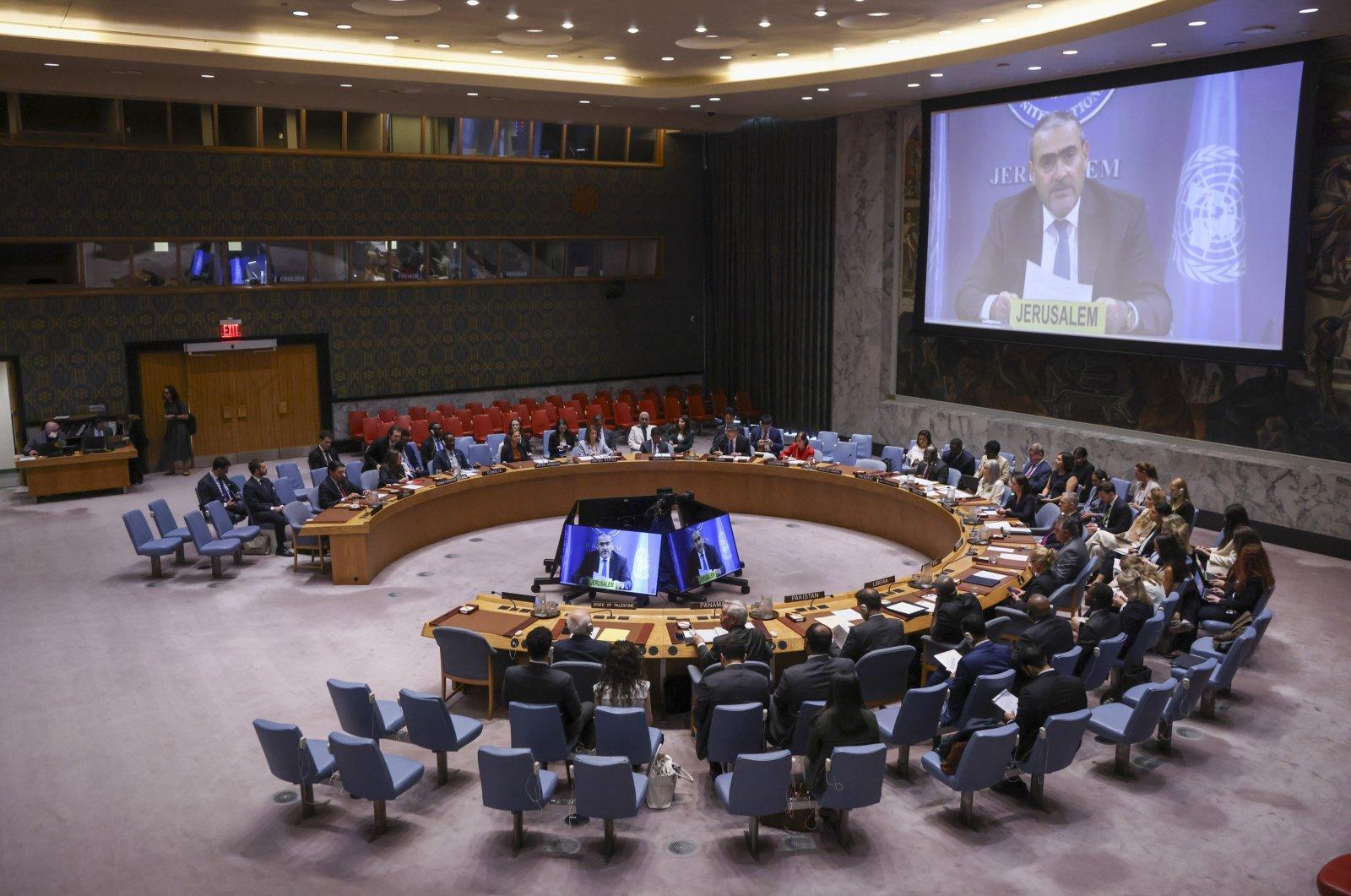
GMA Network reported that the council’s 15 members were meeting to assess the seven candidates, including Michelle Bachelet of Chile, Maria Fernanda Espinosa of Ecuador, Olara Otunnu of Uganda, and Macky Sall of Senegal.
The process uses anonymous labels of "encourage," "discourage," or "no opinion," with the results communicated to candidates’ nominating countries rather than publicly announced, according to GMA Network and Daily Sabah.
Daily Sabah also reported that even if a candidate receives the required nine votes from the 15 Security Council members, they must still avoid a veto by the five permanent members, which are the United States, Russia, China, France, and the United Kingdom.
Grynspan leads early
Multiple outlets described the early numerical outcome of the first straw poll, with The National saying Costa Rica's Rebeca Grynspan received 10 “encourage” votes, nine for Guyana's Carolyn Rodrigues-Birkett and seven for Argentina's Rafael Grossi.
PassBlue reported that the first secret straw poll on Thursday morning gave Grynspan 10 “encourage,” one “discourage” and four “no opinion” votes, while Rodrigues-Birkett received nine encourage, two discourage and four no opinions, and Grossi placed third with seven encourage, two discourage and six no opinions.

PassBlue also listed Michelle Bachelet of Chile with six encourage votes, five discourage and four “no opinion” ballots, and Macky Sall of Senegal with six encourage, seven discourage and two no opinions.
The National said Pakistan’s ambassador to the UN, Asim Ahmad, called the vote “an important start of the process,” and it quoted Security Council President Zenon Mukongo Ngay saying the council had not yet agreed on the timing of the next round.
PassBlue added that the results did not reveal which candidates may be facing a veto by a permanent Council member, even as it said the five permanent members’ preferences were not yet visible through the straw poll mechanism.
Reform pressure and next steps
As the selection process moves from the first straw poll toward later rounds, Mike Waltz, the U.S. ambassador to the UN, told reporters that the Security Council would come to its conclusions “in the coming months” and argued that the next secretary-general must pursue reform.
“We need a secretary-general that is going to reform this institution”
PassBlue quoted Waltz saying, “We need a secretary-general that is going to reform this institution, that is going to make it leaner and more fit for purpose, more relevant on the international stage,” linking the job to institutional change.
The Globe and Mail reported that the winning candidate will need support of at least nine members of the 15-member Security Council and must avoid a veto by any of the council’s five permanent members: Britain, France, China, Russia and the United States.
Globe and Mail also said a series of straw votes over the coming months is expected to narrow the field and identify a consensus candidate to succeed António Guterres of Portugal, who steps down at the end of December after 10 years in the post.
GMA Network said the next straw poll is expected in August, and it described how the UN’s leaders must navigate a process that requires a candidate to clear the nine-vote threshold and avoid a veto before the name goes to the General Assembly for confirmation.