UN Warns RSF Reinforcements Intensify Fighting In El Obeid, Threatening Civilians
Key Takeaways
- Tens of thousands displaced to El Obeid and Damazin amid fighting.
- UN warns El Obeid front risks broader escalation and worsening humanitarian crisis.
- Regional spillover risk as fighting expands beyond El Obeid, including Blue Nile front.
El Obeid escalation fears
The UN said the window to prevent a broader escalation in El Obeid was closing quickly as drone attacks by both sides intensified and the Rapid Support Forces (RSF) strengthened their presence around the city, according to Rosemary DiCarlo during a briefing to the Security Council.
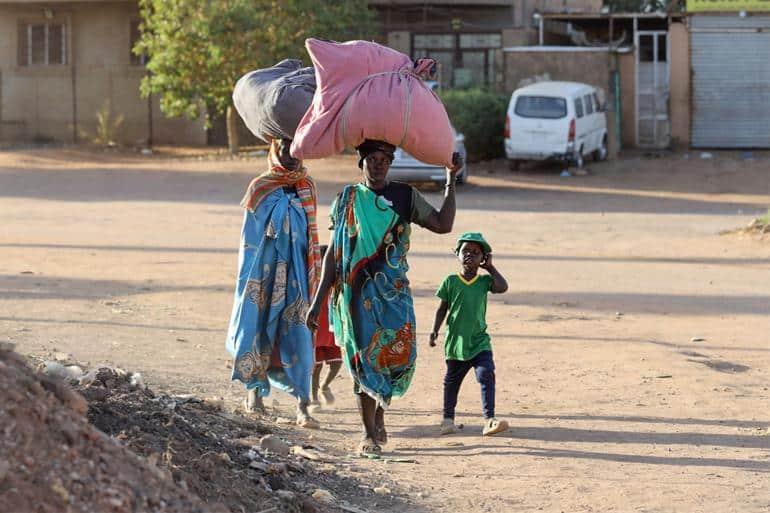
“The humanitarian crisis in Sudan is worsening as waves of forced displacement continue toward the cities of Al-Ubayyid and Damazin, where tens of thousands of people fleeing the brutality of fighting and abuses face highly complex living conditions, in tandem with a sharp shortage of basic needs and environmental and health risks imposed by the autumn season inside the camps”
The UN Secretary-General’s Special Envoy for Sudan, Pekka Haavisto, warned that a new military escalation could endanger thousands of civilians and worsen the already devastating humanitarian crisis in Sudan.

UN agencies warned that the deterioration of the security situation in El Obeid in the Kordofan region was depriving populations of essential care and vital humanitarian aid, with violence hindering humanitarian access.
The UN Security Council warned of an imminent risk of mass atrocities in El Obeid following the deployment of RSF reinforcements around the city.
The UN chief said he was deeply concerned by the intensification of fighting in and around El Obeid, capital of North Kordofan state, warning of a humanitarian catastrophe and new atrocities against civilians.
Kurmuk offensive and displacement
In Blue Nile State, the Sudanese army launched a large-scale offensive to retake Kurmuk, a strategic town near the border with Ethiopia that had been occupied since March by the RSF and the SPLM-N.
Anadolu Ajansı said the forces clashed on Friday with the RSF and their allies from the Sudan People's Liberation Movement-North (SPLM-N) in the vicinity of Kurmuk, and that the army carried out an intensive assault against RSF frontline positions around the town.

The article said Kurmuk lies near the Ethiopian border and controls essential supply lines, military communication routes, and land access to Ethiopia and South Sudan.
Anadolu Ajansı also said the RSF and the SPLM-N had seized Kurmuk on March 24 and that, since April 2023, the Sudanese army and the RSF have been at war, triggering one of the world’s worst humanitarian crises.
In a separate Al-Jazeera Net report, the humanitarian crisis was described as worsening as waves of forced displacement continued toward Al-Ubayyid and Damazin, with the state Commissioner for Humanitarian Aid, Mohammed Ismail, telling Al Jazeera that Al-Ubayyid had received more than 55,000 displaced people since March.
Humanitarian collapse risks
Al Jazeera Net described displacement camps in Damazin, Blue Nile State, including the Karama 6 camp that “alone houses about 29,000 families,” where evacuees live amid a sharp shortage of food, clothing, and tents and a severe shortage of clean drinking water.
“The Sudanese army is fighting to retake a strategic town near the border with Ethiopia”
The report said water containers are lined up in long queues in search of a drop of water, and that humanitarian risks are amplified with the onset of autumn as diseases and epidemics spread and venomous insects, snakes, and scorpions pose direct threats.
It also reported that the Sudan Doctors Network warned of a sharp and rapid deterioration in humanitarian and health conditions in the western Barra areas of North Kordofan, confirming that more than 200,000 people, including more than 20,000 children, are facing tragic conditions due to severe shortages of food and medicine and the spread of cholera and measles.
In El Obeid, Alencontre reported that drone strikes attributed to the RSF have hit El-Obeid several times since June 9, killing more than 40 people and wounding dozens, while most service stations have been destroyed and the power plant has been hit.
Alencontre also said a barrel of water now costs up to 30,000 Sudanese pounds—about $10—driving up prices of food and medicines and pushing the city toward humanitarian collapse as the threat of a large-scale ground offensive grows.
More on Sudan

Qatar Airways Launches First Port Sudan Flights From Doha With Airbus A320
10 sources compared

Rapid Support Forces Impose Siege Conditions, Intensify Drone Strikes on El Obeid, Sudan
18 sources compared
Amnesty Accuses Sudan’s RSF of Crimes Against Humanity and Ethnic Cleansing in El Fasher
21 sources compared

Sudanese Army Retakes Kulbus Near Chad Border, Seizes Magaja and Sarkam in Blue Nile
12 sources compared