Full story
Education ban deepens
Five years after the Taliban returned to power in Afghanistan on August 15, 2021, UNESCO says about 2.4 million Afghan girls remain deprived of secondary education, with Afghanistan described as the only country in the world to formally prohibit education for girls and women beyond elementary school.
“About 2.4 million Afghan girls remain deprived of secondary education”
UNESCO warned that the impact of Taliban policies has spread beyond classrooms to the labor market, where women are barred from most jobs that require presence in public spaces, and it also cited strict travel restrictions without a male family guardian.
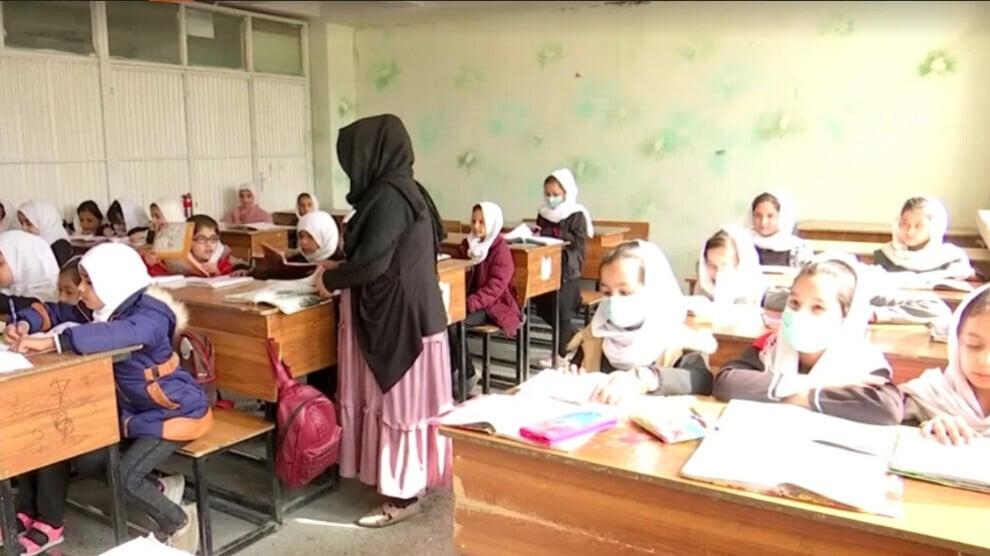
UNESCO’s Huda Habearyan said five years “is not a temporary interruption in a child’s education,” noting that it essentially represents a full cycle of secondary education.
The UN culture agency also warned that depriving girls of education while restricting women’s ability to work could worsen Afghanistan’s severe economic crisis, noting that about half the country’s population lives below the poverty line.
UNESCO said it is calling for the right to education to be restored “immediately and without conditions,” emphasizing that Afghan girls and women “have the right to education, work, and freely move about and shape their own futures.”
Boys’ crisis too
NPR reported that by Grade 11, Hashmat Mubariz had stopped attending school regularly even though he was still officially enrolled, describing how the school he once attended no longer felt like a place of learning after the Taliban takeover on August 15, 2021.
Mubariz told NPR, "Many people believe that only girls' education is affected," and he added, "But boys are also facing a serious education crisis."
NPR said it spoke to 15 middle and high school students in Kabul, Herat, Helmand, Ghazni, Ghor, Mazar-e-Sharif and Bamiyan, where students described similar experiences including less attention to science and languages such as English and Persian.
The Taliban’s Ministry of Education did not respond to messages from NPR seeking comment, while NPR reported that the ministry says it oversees 22,972 religious education centers compared to about 5,000 registered under the previous government.
NPR also quoted Shabana Basij-Rasikh, an Afghan educator and co-founder of the School of Leadership Afghanistan "SOLAx", saying, "Their only normal is not seeing girls in school."
Aid, mental health, and risk
UN News said de facto authorities have issued more than 100 decrees curbing education, work and freedom of movement, and it linked the restrictions to deep cuts to aid on the ground.
“De facto authorities have issued more than 100 decrees curbing education, work and freedom of movement”
UN News reported that UN Women warned the exclusion of women and girls has triggered a mental health crisis, adding that shorter life expectancy, higher risks of maternal death, child marriage and gender-based violence alongside the loss of education and work have also contributed.
UN News said that as of 2026, an estimated 2.4 million girls remain excluded from secondary education, and it quoted UNESCO that Afghanistan is the only country in the world to formally prohibit access to education for girls and women beyond the primary level.
UN News also reported that nearly three-quarters of women-led organizations surveyed in Afghanistan experienced funding cuts in 2025, and it cited UN Humanitarian Coordinator for Afghanistan Bruno Lemarquis warning that funding gaps could force health centre closures.
Against that backdrop, UN News said the UN World Food Programme warned last week that devastating funding cuts will affect food deliveries to the most hungry at a time when a hunger crisis is affecting 14 million Afghans, while UNESCO called for the full restoration of the right to education for Afghan girls and women.