Iran · 07 September, 2026 · 3 min read
United States Implements Ship-To-Ship Policy, Targets Two Iranian Oil Tankers in Strait of Hormuz
U.S. launches ship-for-ship policy, strikes two Iranian oil tankers in Hormuz. Strait of Hormuz traffic remains well below ten-day average amid tensions.
Whether US strikes are retaliation or blockade-enforcement.
3 of 4 outlets skipped it: iran’s PGSA threatens STS links to listed ships.
The Jerusalem Post was read line by line by the Watchdog: 5.0. See the score →
100outlets compared
Same story, two versions
tap a side to read it in full
YYoum7
“This was the first time the U.S. military attacked Iranian oil tankers in response to attacks on ships in the Strait of Hormuz, and not to prevent them from violating the maritime blockade.”Read the original ↗
Aajil
“Preliminary shipping data released today, Friday, showed four bulk carriers crossing the Hormuz Strait yesterday, Thursday, marking a decline from nine ships the day before”
Translated from the original.
Read the original ↗Youm7 frames the tanker hits as retaliation rather than blockade enforcement. Aajil economy frames the same episode through shipping-volume declines.
Ship-to-ship strikes begin
The United States began implementing a new “ship-to-ship” policy against Iran, targeting two oil tankers belonging to the Iranian government in the Strait of Hormuz as American officials said the confrontation had moved to a new level.
“an Iranian oil tanker would be targeted for every ship Iran attacks”
Aajil, citing Axios, said the strike on the two tankers came within a wave of broad attacks carried out by American forces on Tuesday inside Iran, targeting about 100 military objectives, and that the drones hit the engine rooms.A
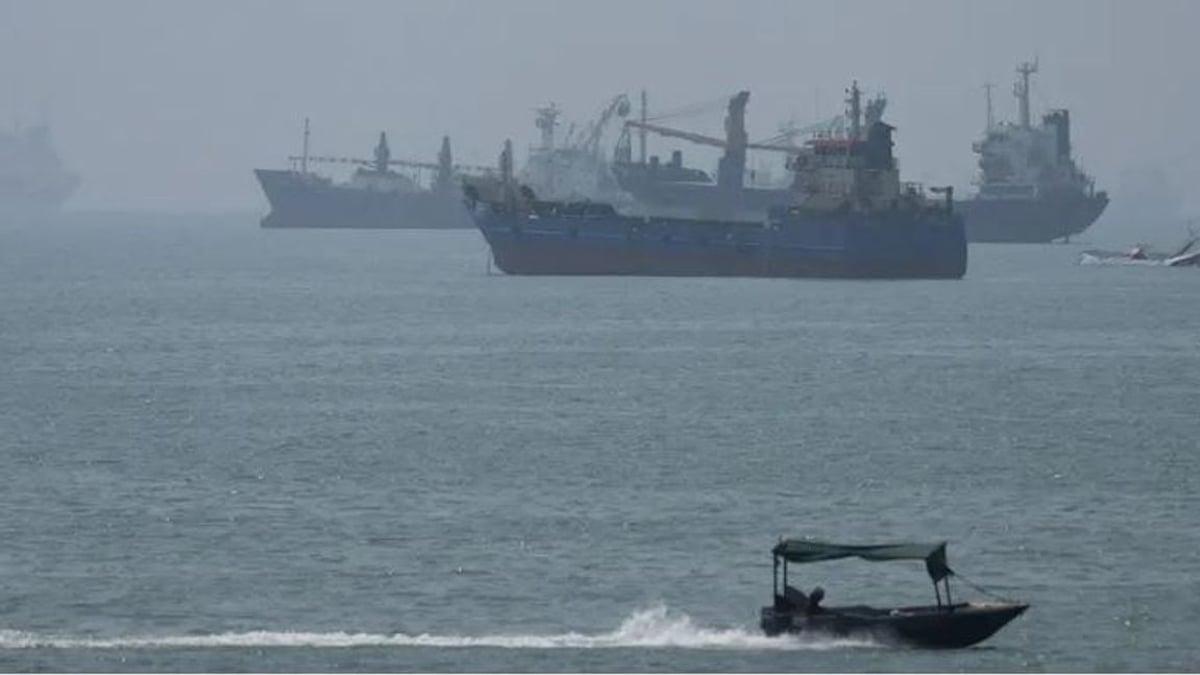
Aajil also reported that President Donald Trump approved the new policy to deter Tehran from attacking oil tankers and commercial ships transiting the Strait of Hormuz, and that under this policy “an Iranian oil tanker would be targeted for every ship Iran attacks.”A
The strikes were described as the first time the United States struck Iranian tankers as retaliation for attacks on ships in the Strait of Hormuz, and Aajil said the broader operation targeted sites of the IRGC, including air defenses, radar systems, facilities and sea assets.A
In parallel, Aajil said Iran responded to the American strikes by launching ballistic missiles and drones at American sites in Jordan, Kuwait, Bahrain, and Iraq.A
Traffic numbers clash
As tensions escalated between the United States and Iran, Aajil said preliminary shipping data released on Friday showed four bulk carriers crossing the Hormuz Strait on Thursday, down from nine the day before and well below the 10-day average of about 15 vessels.A
Aajil reported that Kpler data showed that only two of the giant crude oil tankers had crossed the strait so far this week, and that the figures do not include ships that may have passed with AIS transmissions’ turned off to avoid detection.A
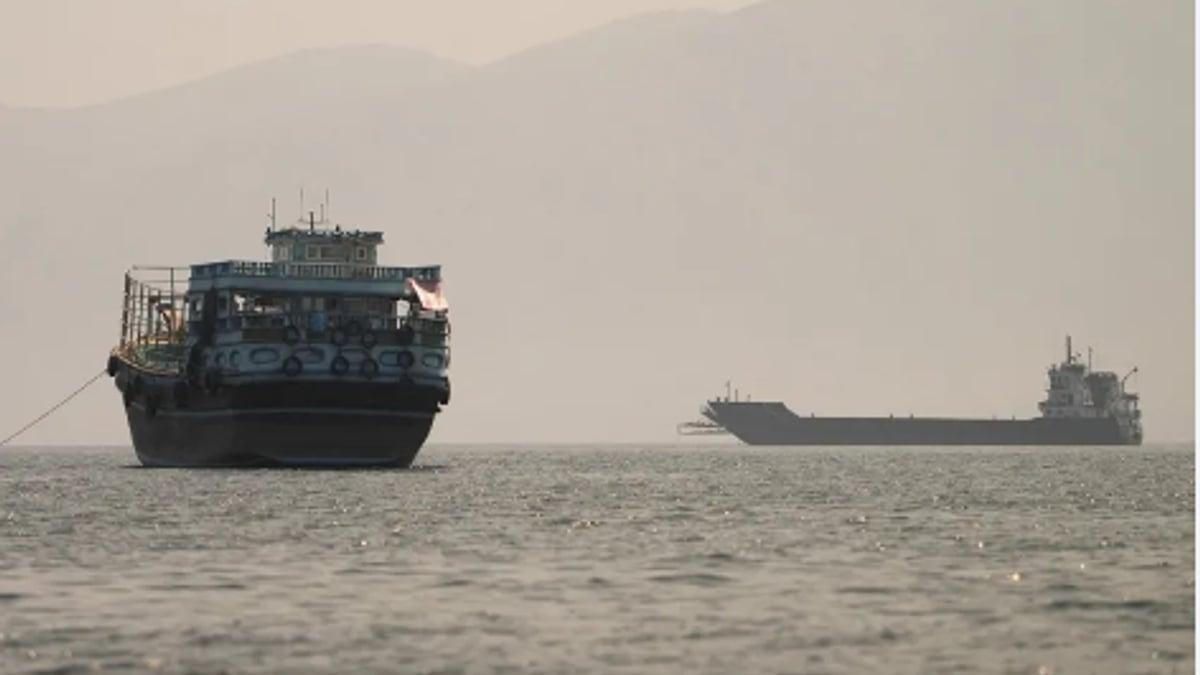
Aajil also framed the broader stakes by saying that before the outbreak of the war with Iran on February 28, about 125 large commercial ships passed through the strait daily, representing about one-fifth of global daily oil and LNG supplies.A
In a separate account, Al-Sharq Lil-Akhbar said preliminary data released on Wednesday showed four basic-commodity vessels passing through the Hormuz Strait on Tuesday, down from ten ships the day before and below the previous ten-day average of about 13 vessels.
Al-Sharq Lil-Akhbar added that the United States said it carried out a series of air strikes on Iran on Tuesday, prompting Iran’s Revolutionary Guard Corps to warn the attacks would lead to a ‘squeeze’ of the Hormuz Strait.
Blacklists and shipping risk
Iran’s Persian Gulf Strait Affairs Authority (PGSA) published and updated a blacklist of 45 vessels it said violated Hormuz Strait transit rules, warning that it would punish non-compliant ships with fines, detention, or seizure.
“shall face restrictions on future passages, including fines, detention, or confiscation”
Al-Manar TV Lebanon said the PGSA told cargo owners shipping to or from the Persian Gulf to review the list prior to chartering in order to avoid potential issues, and that any vessel cooperating with listed vessels via STS or transshipment would be added to the list.
Reuters, as carried by Al-Manar TV Lebanon, reported that at least three Indian oil refiners and a global energy major planned to stop using vessels on Iran’s new blacklist, including for ship-to-ship transfers, due to security concerns.
Al-Manar TV Lebanon also quoted a trade risk analyst at shiptracking firm Kpler saying the most compliance-sensitive buyers are expected to avoid these vessels moving forward, but that trade is more likely to reroute through alternative tonnage, counterparties or transfer locations than disappear altogether.
Meanwhile, Al-Manar TV Lebanon said the PGSA updated the list on Wednesday and thanked those providing information voluntarily submitted by the public, with the authority stating non-compliant vessels “shall face restrictions on future passages, including fines, detention, or confiscation.”