Iran12 July, 20263 min read
United States Launches Another Round Of Strikes On Iran After IRGC Attacks Commercial Vessel
This article is an automated aggregation of coverage from news outlets. Our editorials offer in-depth analysis curated by the NewsCord team.
The U.S. launched a new round of strikes on Iran after the shipping attack. Iran claimed the Strait of Hormuz was closed; the U.S. said it remained open.
The Guardian was read line by line by the Watchdog: 4.2. See the score →
Strikes, counterstrikes, Hormuz
The United States launched another round of strikes on Iran on Sunday, hours after it said it mounted a major air assault that hit dozens of Iranian military targets, as Tehran fired a wave of attacks targeting US military bases in the region this weekend.
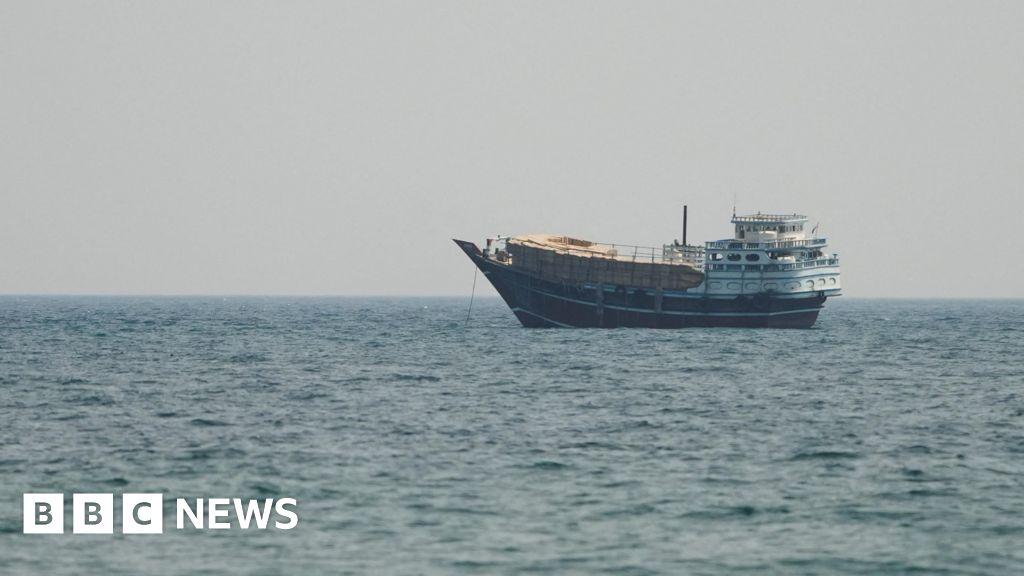
A US military spokesperson said the new strikes came after Iran’s Islamic Revolutionary Guard Corps fired at another commercial vessel in the waterway, where Washington and Tehran have been making contradictory claims about the status of marine traffic.
Iranian official media reported explosions late Sunday in several locations across Hormozgan province in southern Iran, including Jask, Qeshm, Bandar Abbas and Sirik, and Hormozgan Governorate Public Relations Office said no civilian casualties or damage to infrastructure had been reported so far.
The US Central Command said President Donald Trump directed the strikes to hold Iranian forces accountable, and it said at 5 p.m. ET it began launching more strikes to continue degrading their ability to attack civilian mariners and commercial ships freely transiting the Strait of Hormuz.
CNN reported that President Donald Trump insisted in an interview with CNN that the strait remains open, while Iran claims to have clamped down on marine traffic, with tracking data showing traffic reduced to a trickle Sundayday.
Gulf reactions and competing claims
As the standoff escalated, US allies in the region said they faced Iranian fire during the weekend, with Kuwait saying strikes hit border posts and an oil rig, while Qatar reported injuries from interceptions. AP reported that Iran responded with attacks on Bahrain, Kuwait, Qatar, Jordan and Oman, after the US launched several waves of strikes on Iran on Sunday over an Iranian attack on a container ship in the Strait of Hormuz that set it ablaze and left a crew member missing. The US military said it was seeking “to degrade” Iran’s “ability to attack commercial ships freely transiting” the critical strait, and AP said Iranian state media acknowledged the latest round early Monday but reported no casualties or damage to civilian infrastructure near the strait.
In a direct exchange of claims, CNN said President Donald Trump insisted the strait remains open while Iran claims it has clamped down on marine traffic, and AP said the US disagrees with Iran’s claim that the strait is closed. AP also quoted UN Secretary-General António Guterres warning that “A return to full-scale hostilities would have catastrophic consequences,” as the two sides neared the midway point of the 60-day period of their interim deal.
Negotiations at risk
The renewed fire put in jeopardy an interim ceasefire agreement signed last month, which aimed to reopen the Strait and eventually bring a permanent end to the conflict, the BBC said. BBC reported that on Sunday evening Centcom announced another round of strikes against Iran starting at 17:00 ET (22:00 BST) and that it would “continue degrading their ability to attack civilian mariners and commercial ships freely transiting the Strait of Hormuz”. The BBC also said Iran’s IRNA news agency reported missiles were launched by the “enemy” towards Qeshm Island, and it described the renewed hostilities as a blow to the memorandum of understanding that had been intended to reopen the strait.
In parallel, CNN said key mediator Pakistan expressed concern Sunday over recent escalations, urging “all sides to exercise restraint” and uphold the commitments made as part of the memorandum of understanding signed by the US and Iran last month. CNN framed the dispute as a diplomatic breakdown, noting that President Donald Trump directed strikes to hold Iranian forces accountable while Iran’s Islamic Revolutionary Guard Corps fired again at commercial shipping in the Strait of Hormuz.