Full story
US delists Syria Monday
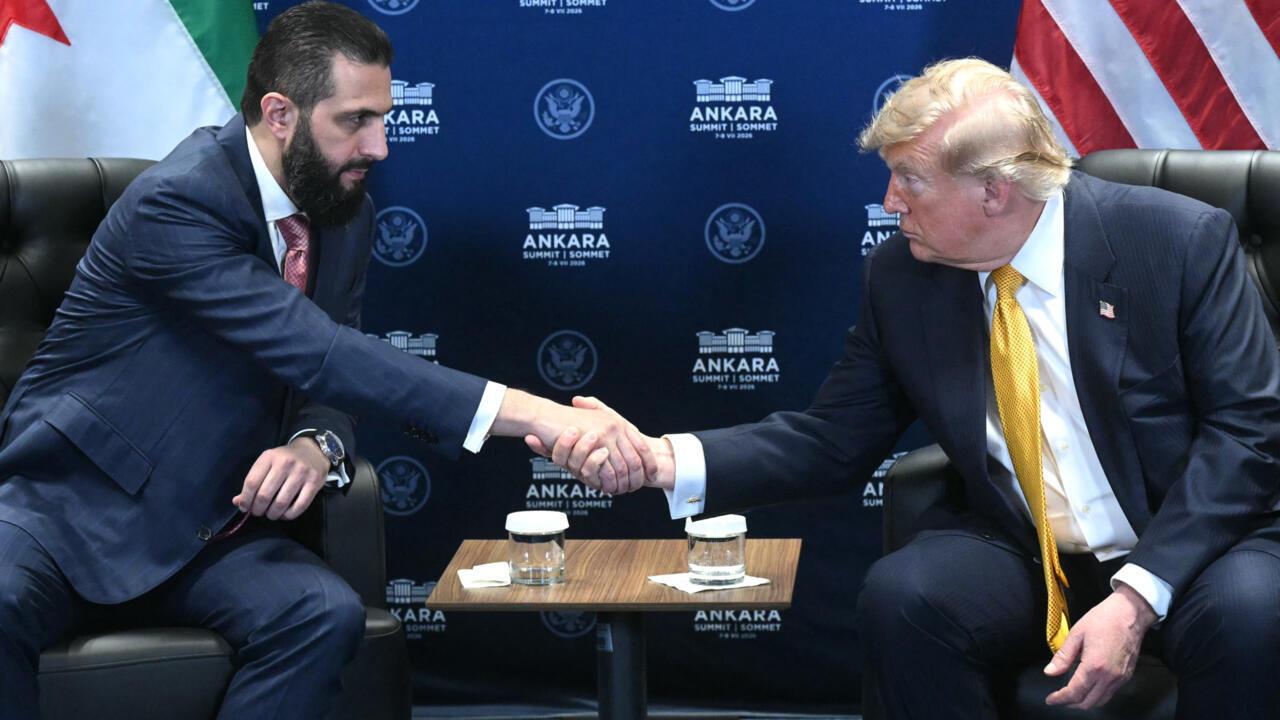
The United States removed Syria from its list of state sponsors of terrorism on Monday, ending a designation imposed in 1979 and taking effect after a 45-day congressional review following President Donald Trump's July notice of intent to rescind the designation.
“The removal, posted on the U.S. Treasury's website, took effect after a 45-day congressional review period”
U.S. Secretary of State Marco Rubio said the move recognized “positive actions and further commitments by the Syrian government under President Ahmed al-Sharaa to fully distance Syria from acts of international terrorism,” and the Reuters report said Syrian Foreign Minister Asaad al-Shibani told Reuters the change would remove the “last obstacle” to investment.

Reuters reported the delisting also removed the designation of the Nusrah Front as a Specially Designated Global Terrorist organization, leaving Cuba, Iran and North Korea as the three countries designated by Washington as state sponsors of terrorism.
The Reuters account tied the decision to Damascus’s efforts to reconnect Syria to the global financial and economic system after Trump’s administration terminated comprehensive U.S. sanctions on Syria in July 2025 while maintaining targeted sanctions against Assad and his associates, rights abusers, drug traffickers, Islamic State and al Qaeda affiliates and Iranian proxies.
Turkish Minute said Turkey welcomed the U.S. decision, with the Turkish Foreign Ministry arguing the step would help Syria rebuild and reintegrate into the international community and describing the delisting as removing “one of the major obstacles” to Syria’s economic recovery and reconstruction.
Rubio, Shibani, and Turkey
Rubio framed the delisting as a pathway for investment, saying the actions “eliminates the final major barriers for private sector investment in Syria and promotes Syria’s economic recovery and reintegration into the global economy,” while Reuters reported Asaad al-Shibani told Reuters that “There is no longer any obstacle to investment, doing business and rebuilding economic life in Syria.”
Turkish Minute quoted the Turkish Foreign Ministry statement saying it believed “this decision will give further impetus to efforts to strengthen Syria’s ties with the international community and establish lasting security and stability in the country,” and it also called on the international community to help build a prosperous Syria and “put an end to aggressive actions” that threaten that goal.

Newser described the move as “a new era of US-Syrian relations,” and it said the U.S. also removed al-Sharaa's former militant group, Hayat Tahrir al-Sham, from the specially designated global terrorist list.
Euronews reported that Ahmed al-Sharab congratulated his people and said: “O great Syrian people, you have done it again! Sanctions have been lifted and restrictions removed. Syria is shedding a heavy burden and turning the painful page of its past to embark on the path of development, reconstruction, and building.”
In the same Reuters coverage, the designation’s restrictions were described as carrying limits on U.S. foreign assistance, defense exports and certain financial transactions, and Reuters said the terrorism designation remained a source of legal and compliance risk for firms considering entering Syria even after broader sanctions were dismantled.
Rebuilding, investment, and remaining risks
Reuters said the delisting lifted what Damascus described as the last major impediment to investing in the country as Washington deepens ties to the new Syrian government, and it reported that Syria’s finance ministry said Finance Minister Mohammad Yisr Barnieh held talks with Bank of America executives over potential cooperation.
“Syria's finance ministry said this month that Finance Minister Mohammad Yisr Barnieh held talks with Bank of America (BAC.N) executives”
Reuters also reported that Mastercard announced in May that it was working with QNB Group and Syria's central bank to prepare infrastructure for international card payments in the country, and it said the company described itself as an early investor in Syria and wanted to help connect Syrian consumers and businesses to global payment networks.
Turkish Minute said the U.S. decision removed “one of the major obstacles” to Syria’s economic recovery and reconstruction and praised the U.S. administration and Congress for supporting the process, while it called on the international community to help build a prosperous Syria and “put an end to aggressive actions” that threaten that goal.
NewsNation said the removal of the SST designation provides “enormous sanctions relief for Syria and the ability for Damascus to fully rejoin the international financial system,” and it quoted Rubio saying the rescission and delisting “eliminates the final major barriers for private sector investment in Syria.”
Even as the delisting proceeded, Reuters reported that the U.S. Treasury said American financial institutions can provide services to Syria, process payments involving Syrian banks and establish correspondent banking relationships with them, provided sanctioned parties are not involved, and it noted the terrorism designation had remained a deterrent for banks and investors.