
Full story
Natufians ate reptiles
A study published in the Proceedings of the National Academy of Sciences, led by archaeologists from the University of Haifa in Israel, found that lizards and snakes were a mainstay in the diets of human ancestors in the Middle East.
“nearly 3,000 bones belonging to snakes and lizards”
The Natufian site of el-Wad Terrace in Israel was inhabited from about 15,000 to 11,700 years ago, and archaeologists excavated sediment layers representing several thousand years of Natufian life.
The Times of India said that at el-Wad Terrace, archaeologists identified marks and patterns of damage consistent with human handling and consumption, pointing to people in the region eating at least some of the reptiles.
The Times of India also reported that excavations produced nearly 3,000 bones belonging to snakes and lizards, and that squamate remains accounted for about a third of the animal bones recovered from the site.
Bone evidence and experiments
The Times of India said the study, published in the journal Scientific Reports, titled ‘ Squamate bone taphonomy: A new experimental framework and its application to the Natufian zooarchaeological record’ examined reptile bones from the 15,000-year-old el-Wad Terrace site in Israel.
It reported that the researchers carried out experiments using modern squamate bones, exposing them to processes including weathering, burning, trampling and digestion by birds of prey.

The Times of India said that when the el-Wad bones were examined against those experimental patterns, several vertebrae from large whip snakes carried cut marks in similar positions.
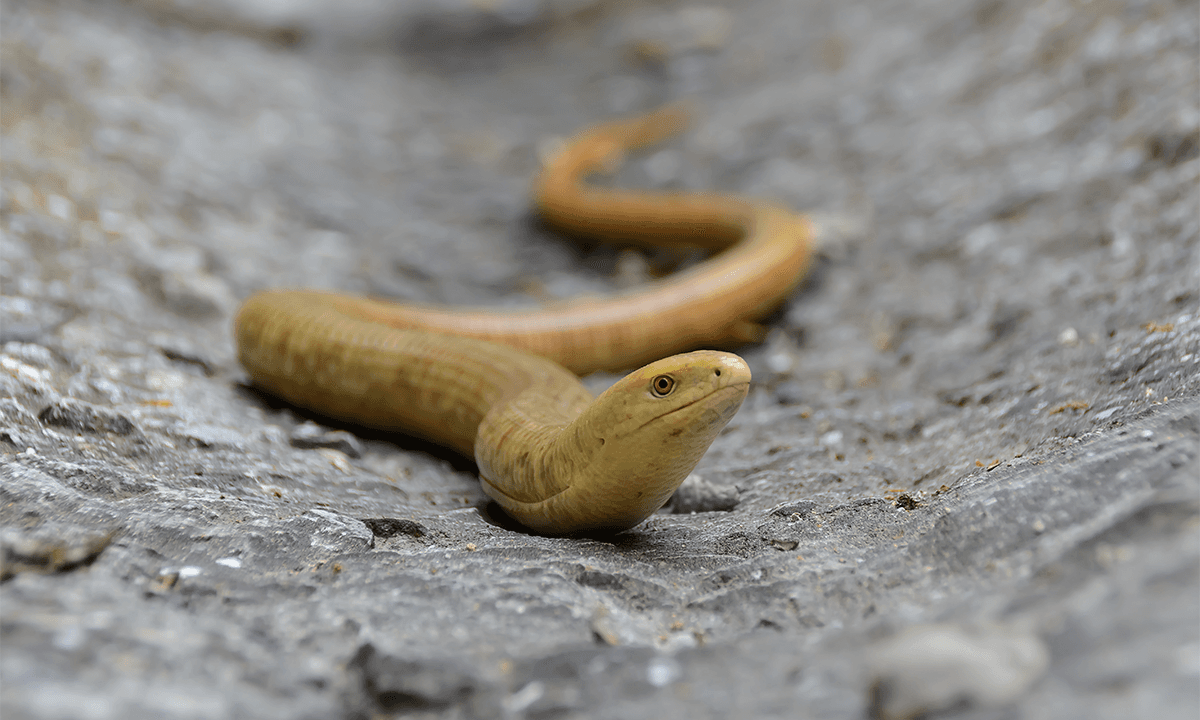
Nautilus described the Natufian reptile menu with specific counts and species, including about 1,000 remains of European glass lizards (Pseudopus apodus) and around 900 remains of whip snakes (Dolichophis jugularis).
What the diet implies
The Times of India said the case was strengthened by what was missing from many of the bones, noting that large whip snake and glass lizard remains generally did not show the digestion damage expected if birds of prey had swallowed the animals.
“large whip snake and glass lizard remains generally did not show the digestion damage”
It also cautioned that the archaeological record was more complicated, saying some smaller snakes and lizards, along with many eastern Montpellier snakes and vipers, appear to have been brought into the cave by raptors or arrived through other natural processes.
Nautilus described the broader Natufian diet as an eat-what-you-can-catch approach that included mountain gazelles and small mammals such as mole-rats and hares, plus the occasional aquatic bird or tortoise.
Together, the sources frame el-Wad Terrace as a place where Natufian communities lived seasonally and hunted and gathered locally, with reptiles forming a meaningful share of the food pile bones.