Iran03 March, 20263 min read
US and Israel Assassinate Iran's Supreme Leader Khamenei, Ignite Regional War
US and Israeli strikes killed Iran's supreme leader, Ayatollah Ali Khamenei Iran launched attacks on Israel and US-allied Gulf states, hitting civilian and energy infrastructure

10 outlets told this the same way.
Reports on Khamenei's death
Multiple outlets reported that U.S. and Israeli strikes killed Iran’s Supreme Leader Ayatollah Ali Khamenei. Those reports said the strikes triggered a broad regional war and prompted public claims of joint U.S.-Israel military action. PBS wrote that "the Middle East war is intensifying after the U.S. and Israel killed Iran’s Supreme Leader Ayatollah Ali Khamenei."
“The article reports that the Middle East war is intensifying after the U.S. and Israel killed Iran’s Supreme Leader Ayatollah Ali Khamenei.”
CNN described events as "After US-Israeli strikes that killed Iran’s supreme leader." Ynetnews reported "President Trump announced the start of joint U.S.-Israel military action against Iran."

The BBC refers to Khamenei’s death as a "reported assassination," noting it as the catalyst for retaliatory moves by Iran’s allies. The language used across outlets highlights differing emphases about the killing’s reporting and its immediate implications.
Regional escalation after killing
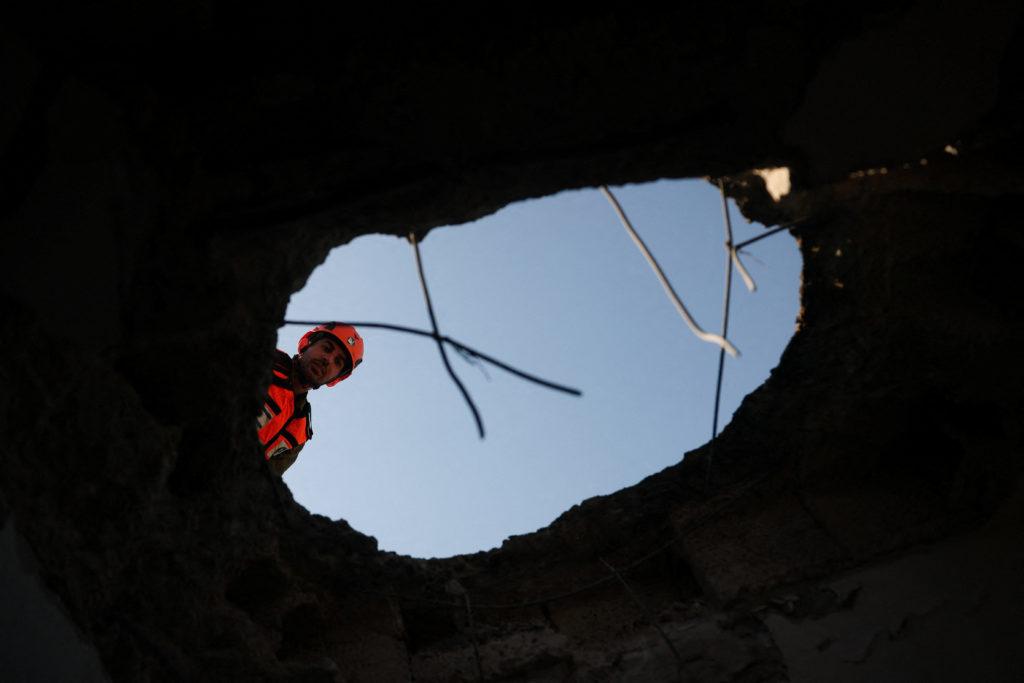
The killing quickly expanded the battlefield: exchanges of fire opened a new front in Lebanon and strikes and explosions were reported across Tehran and the Gulf.
The BBC said “Israeli strikes hit Beirut and parts of southern Lebanon” after Hezbollah fired rockets, and that more than 30,000 people had been displaced by the escalation.
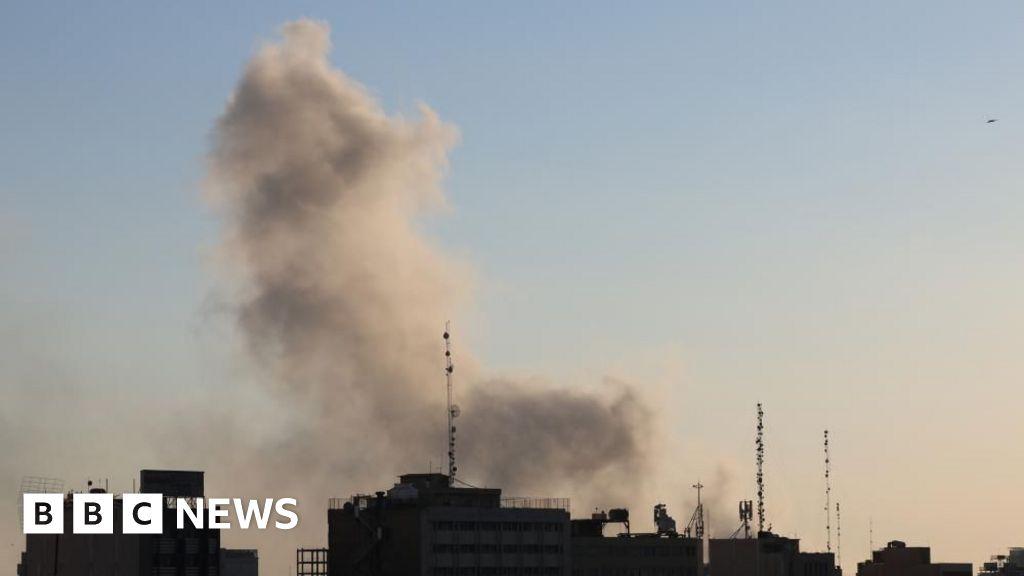
PBS reported that “explosions were heard across Tehran as Iran and its allies launched retaliatory strikes on Israel, neighboring Gulf states and energy infrastructure.”
CBS summarized Day 3 developments including that “Strikes have killed at least 11 people in Israel” and that the “U.S. Embassy in Riyadh was struck by two drones, causing minor damage.”
Al Jazeera also described intense retaliatory strikes and political ramification inside Iran and abroad.
U.S. military posture
Washington massively reinforced its regional military posture and described a high-intensity campaign with no fixed short exit plan.
“President Donald Trump said the U.S. can sustain military operations against Iran beyond a previously projected four-to-five-week timeframe.”
CNN reported that after the strikes the U.S. deployed its largest Middle East force in decades and launched Operation Epic Fury, and provided a CENTCOM inventory including B-2 stealth bombers, LUCAS one-way drones, carriers (USS Abraham Lincoln and USS Gerald R. Ford), Tomahawk strikes from destroyers, and Patriot and THAAD defenses.
PBS quoted President Donald Trump saying the U.S. can sustain military operations against Iran beyond a previously projected four-to-five-week timeframe.
CBS relayed a U.S. official calling the campaign the 'last best chance' and saying it 'could last 4-5 weeks (with capacity to go longer).'
Regional energy and shipping impacts
The war has already disrupted energy and economic flows across the region, with shipping, ports and major producers affected. The BBC said regional instability is "already hitting the global economy." The BBC reported accusations that Iran struck ships in the Gulf and said those actions have "effectively closed the Strait of Hormuz, a chokepoint carrying roughly 20% of global oil and gas flows."
The BBC cited reported attacks at Oman's Duqm port and the UAE's Fujairah terminal and reported production suspensions including "Qatar's LNG facilities and Saudi Arabia's largest domestic refinery." PBS also noted attacks on "energy infrastructure." CNN documented the large U.S. and naval deployments operating in the same maritime areas as the strikes and counter-strikes.

Iran leadership and reactions
Political fallout inside Iran and abroad is uncertain and contested, with questions about succession, internal opposition, and the U.S. approach to regime change remaining prominent but unresolved. The BBC outlined the constitutional process, saying "under Iran’s constitution the Assembly of Experts — a body of elected clerics — is responsible for appointing and supervising the Supreme Leader," and warned the choice could provoke factional jockeying and uncertainty. Al Jazeera reported President Trump's public comments that some opposition figures "may be dead," that he would prefer a moderate figure from within Iran, and that he gave mild praise to Reza Pahlavi as someone who "looks like a very nice person."
“How Khamenei’s successor would be chosen: under Iran’s constitution the Assembly of Experts — a body of elected clerics — is responsible for appointing and supervising the Supreme Leader. The new leader is generally expected to be a senior Islamic jurist with clerical and political credentials. In practice the choice would be shaped by Iran’s political establishment (including senior clerics, the IRGC and other power centers), and could provoke factional jockeying; the Assembly could also consider alternative arrangements (such as a leadership council) if consensus is lacking. The timing and outcome would therefore be uncertain and politically sensitive.”
Ynetnews said Trump urged Iranians to "rise up" and "take over your government," advocating support for internal opposition. PBS highlighted that the attacks' intensity, the lack of a clear exit plan, and conflicting statements from the U.S. and Israel about the war's objectives raise the prospect of a prolonged and politically sensitive conflict.