Iran-Israel03 March, 20264 min read
US and Israel Kill Iran's Supreme Leader
U.S. and Israeli forces carried out coordinated strikes on Iranian cities and military sites Iran’s supreme leader was killed during the strikes
15 outlets told this the same way.
Outlets did split on U.S. Intercepts Iran Message Activating Sleeper Cells After U.S.-Israel Strike Kills Khamenei →
Strikes in Iran, reported killing
On February 28, U.S. and Israeli forces carried out a coordinated series of strikes inside Iran that targeted major cities, military bases and command centres. Multiple outlets reported those strikes included the killing of Iran’s supreme leader, Ayatollah Ali Khamenei, which Iranian state media and several international news organizations cited. Caliber.Az reported that "On February 28, the US and Israel carried out a series of strikes inside Iran, hitting major cities and military sites including bases and command centres."
“On February 28, the US and Israel carried out a series of strikes inside Iran, hitting major cities and military sites including bases and command centres.”
Sky News described the event as including the "killing of Supreme Leader Ayatollah Ali Khamenei in his Tehran compound." The Christian Science Monitor noted that "The reported killing of Iran’s supreme leader, Ali Khamenei, has added further uncertainty."
Operation Epic Fury reporting
Reporting depicts the U.S.-Israeli campaign as a high-intensity, multi-day operation given different names and with differing tallies. Several outlets identify a campaign called Operation Epic Fury, rendered in Spanish-language coverage as Furia Épica, and describe hundreds to nearly two thousand strikes in the opening phases. Sky News referred to a four-day campaign called Operation Epic Fury and described the weapons used, saying it used a range of precision-guided munitions including air-delivered AGM-154 JSOW, 'Blue Sparrow' series air-launched ballistic missiles, and 500–2,000 lb bombs, plus sea-launched Tomahawks and land-based PrSMs.
GB News reported that the US has carried out hundreds of strikes under Operation Epic Fury and said about 1,700 strikes had occurred since the operation began. The Guardian summarized the intensity differently, saying the U.S. military reported nearly 2,000 targets hit in the first 24 hours. El Mundo noted the operation name as well, writing that the U.S. operation was named Furia Épica.
Regional missile and drone surge
Iran and allied groups responded with a wide regional surge of missiles, drones and cross-border actions. Tehran launched strikes at Israeli territory and expanded attacks to Gulf states’ facilities and airspace, while militia forces including Hezbollah engaged along the Lebanon–Israel front. Caliber.Az reported that Iran responded with missile strikes against Israel and also targeted facilities or airspace in the United Arab Emirates, Jordan, Iraq and Syria.
“Iran responded with missile strikes against Israel and also targeted facilities or airspace in the United Arab Emirates, Jordan, Iraq and Syria.”
Sky News said Iran has been retaliating with missiles and drones against multiple states — Israel, UAE, Bahrain, Jordan, Oman and Qatar. NPR recorded that Iran broadened attacks to regional energy infrastructure, noting drones struck Saudi Arabia’s Ras Tanura refinery and that debris from intercepted drones injured two workers at Kuwait’s Ahmadi refinery. NPR also said Hezbollah fired missiles from Lebanon into Israel and that Israel retaliated with strikes in Lebanon.
Civilian casualties and responses
Reports show significant civilian harm but also clear inconsistencies between sources on casualty totals and impact; at the same time, diplomatic and consular responses were extensive. The Associated Press noted that “The Red Crescent reported that U.S.-Israeli strikes have killed at least 787 people in Iran” and also summarized regional civilian deaths—“In Lebanon, Israeli strikes on Hezbollah positions left at least 50 dead (including seven children); Kuwait reported an 11-year-old girl killed by shrapnel; the UAE reported three deaths and Bahrain one.”
By contrast, NPR recorded Lebanon’s health ministry as saying Israeli strikes “killed at least 31 people and wounded 149,” a differing figure for the same theatre, which underscores conflicting counts across outlets. The AP also reported that “U.S. closed embassies in Saudi Arabia, Kuwait and Lebanon to the public and ordered evacuation of nonemergency personnel/families from Kuwait, Bahrain, Iraq, Qatar, Jordan and the UAE.”

Market, energy, intelligence impacts
The crisis immediately rippled through markets, energy production and intelligence practices: oil and gas production and shipping were disrupted, equities and futures plunged, and private geospatial and AI activity was highlighted as part of the broader information and targeting environment. The Christian Science Monitor said "oil jumped—Brent crude rose more than 7% toward $80 a barrel" and that the "Strait has effectively been closed to commercial traffic." NBC News reported that "QatarEnergy halted LNG production and suspended other outputs," while describing steep equity declines as "global equity markets sold off heavily."
“QatarEnergy halted LNG production and suspended other outputs, sparking a sharp market reaction.”
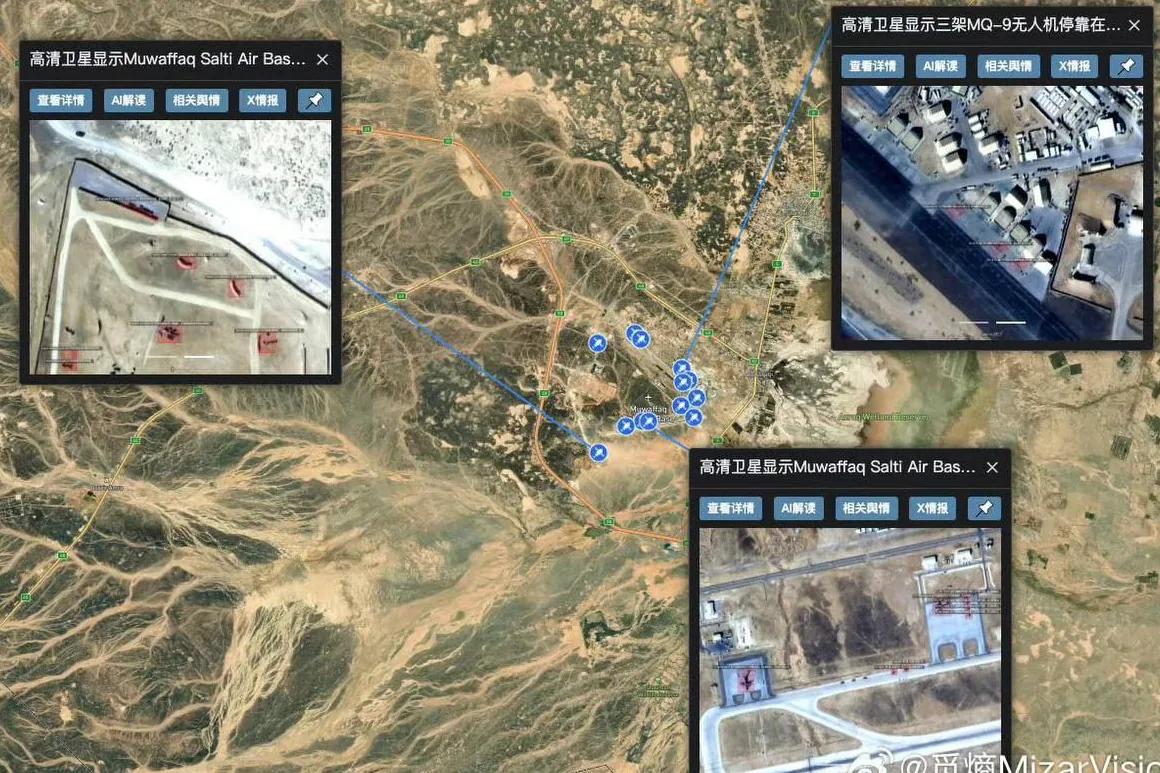
The Guardian and others noted stock-market falls, saying "Tokyo’s Nikkei fell about 3.9% and Seoul’s Kospi plunged 8.1%." El Mundo and FlightGlobal warned about private firms and AI-assisted satellite analysis, with El Mundo reporting that "Private geospatial firm MizarVision has been publishing high-resolution satellite imagery and detailed analyses of military assets" and FlightGlobal describing a Chinese company "using AI to rapidly analyze thousands of satellite photos to identify and geolocate key U.S. military assets."