Full story
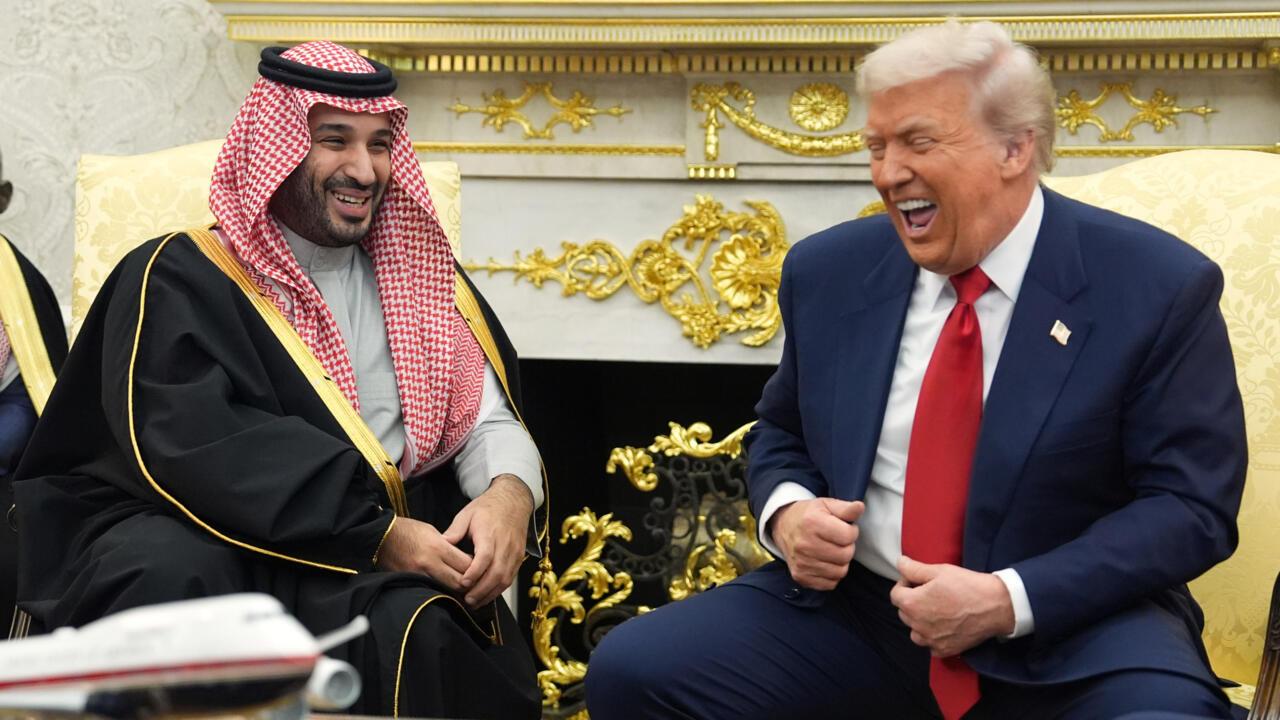
U.S.-Saudi nuclear deal signed
The U.S. Department of Energy announced that U.S. Secretary of Energy Chris Wright and Saudi Minister of Energy Abdulaziz bin Salman signed a peaceful nuclear cooperation agreement, commonly known as a 123 agreement, alongside an accompanying bilateral safeguards agreement on Wednesday.
“Trump approves US-Saudi civil nuclear energy agreement, officials say The deal means that Saudi Arabia could enrich uranium itself in the future”
NBC News reported that the deal “will next go to Congress for a mandatory review period,” while the Department of Energy said the agreements “lay the legal foundation for a decades-long, multi-billion-dollar partnership.”

The agreement is described as advancing “several priority economic and strategic objectives, including nuclear nonproliferation,” but multiple outlets tied it to a reported pathway for Saudi Arabia to enrich uranium on its soil after a joint U.S.-Saudi study.
CBC said the framework could potentially provide Saudi Arabia with uranium enrichment capability for its civilian nuclear program, and it quoted Wright saying, “Rest assured, these agreements uphold the highest standards of nuclear safety and non-proliferation.”
Rubio, experts raise safeguards
Secretary of State Marco Rubio said the U.S. would not “reach any agreement with any country in the world that leads to the risk of proliferation,” as he sought to head off criticism of the decision while traveling in the Philippines.
CNN reported that the deal could allow Saudi Arabia to enrich its own fuel for civilian reactors “without adopting the ‘gold standard’ of international oversight,” and it said the kingdom is not required to sign the Additional Protocol with the International Atomic Energy Agency.

The BBC said nuclear experts and former officials in Israel voiced concern the plan could ultimately lead to Saudi Arabia developing a nuclear weapon, and it noted the agreement would be sent to Congress for review.
In the Guardian, Rosemary Kelanic warned that “Giving Saudi Arabia uranium enrichment technology is a terrible idea on many counts,” and she questioned the timing “in the middle of a war over Iran’s nuclear programme.”
Congress, proliferation stakes
The agreement’s next step is congressional review, with NBC News saying Congress would need a veto-proof majority to block it, while NPR reported Congress has 90 days to consider the deal.
“The news has set off a reaction”
NPR said the cooperation agreement gives American companies priority access to the Saudi nuclear energy program, but it also said the memo seen by NPR found the deal does not include provisions known as the “gold standard” and does not require Saudi Arabia to adopt terms that would lead to greater oversight from the International Atomic Energy Agency.
The Washington Post said the signed agreement “gives that country a pathway to enrich nuclear fuel” and warned it would spark heated debate in Congress over exporting enrichment capabilities that lawmakers fear could lead to nuclear arms.
In parallel, the NPR interview with Matthew Bunn, a nuclear proliferation expert at Harvard’s Kennedy School of Government, said it “may make negotiating a reasonable deal with Iran more difficult,” because Iran would be less likely to sign an agreement involving intrusive inspections if Saudi Arabia was not also committing to such agreements.