Full story
Third Night Strikes
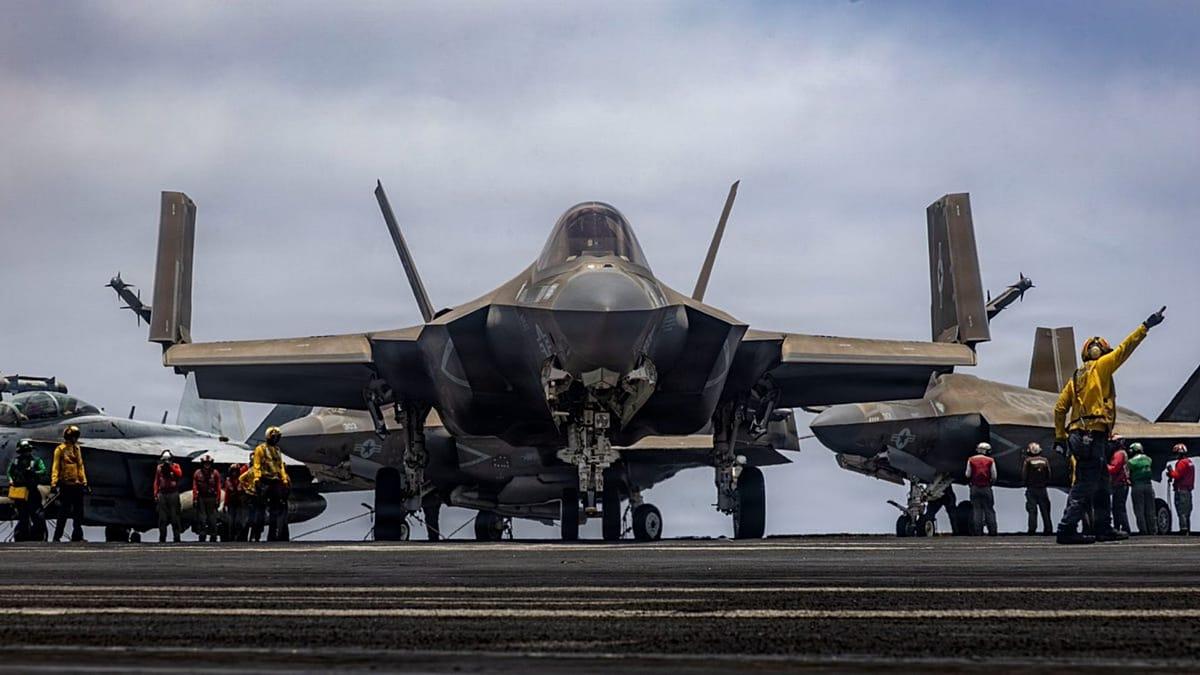
The United States began a third consecutive night of strikes against Iran, with U.S. Central Command saying it started at 4:45 p.m. ET on Monday at President Donald Trump’s direction.
Trump told the Hugh Hewitt program that “Iran would face strong strikes today and tomorrow,” hours after he announced reimposing a maritime blockade on Iranian ports in the region of the Strait of Hormuz.

Iran’s official state television quoted the army as saying that Iran targeted American military facilities and equipment in Kuwait using drones, while Iranian military sources said the IRGC air defense systems shot down an MQ-1 American drone over the Strait of Hormuz.
The escalation also included reports of explosions on Iranian Gulf islands including Kish and Qeshm and Abu Musa Island, and Iranian authorities announced the killing of two people and injuries to others in an American attack on scattered sites from Abadan in the southwest of Iran.
In parallel, the Joint Maritime Information Center, led by the U.S. Navy, said the blockade would begin enforcing on all Iranian ports and coastal areas at 8:00 PM GMT on Tuesday and that it would allow humanitarian shipments to pass subject to inspection.
Memorandum in Crisis
Hours after the renewed U.S. strikes, Iran announced that the memorandum of understanding with Washington had entered a crisis phase, with Iran’s Foreign Ministry spokesperson Ismail Bagheri saying the United States violated the terms of the memorandum reached last month through mediation by Pakistan and Qatar.
Bagheri said at a press conference in Tehran that the United States “violated the terms of the memorandum reached last month through mediation by Pakistan and Qatar,” and he added that Iran would not fulfill obligations as long as Washington continued to violate it.
The BBC reported Trump accused Tehran of failing to honor previous understandings, saying that “the memorandum of understanding with Iran was a test, and they did not respect it,” while the Euronews account framed Iran’s response as a claim that Washington breached its obligations under the agreement.
The dispute over navigation in the Strait of Hormuz also shaped the diplomatic tone, with Bagheri stressing that Iran has the right to take whatever measures it deems appropriate in the Strait of Hormuz and that the United States and Israel cannot be allowed to control it.
Euronews further reported that Bagheri denied that Iran had carried out attacks on any country in the region, insisting that what he called Iran's defensive attacks target only American bases.
Strait Stakes and Next Steps
Trump said the United States would “reimpose the blockade on Iran,” and he added that the United States has decided to reimpose the maritime blockade on Iranian ports and collect a 20% fee on all goods shipped through the Strait of Hormuz.
Abbas Araghchi responded that Iran “has been and will remain the guardian of the Strait,” while NPR reported Araghchi wrote on social media that “20% is of course too much. We will be fair.”
The U.S. military said it would resume enforcing the blockade of Iranian ports Tuesday at 4 p.m. EDT, and the Joint Maritime Information Center said the blockade covers the entire Iranian coast including ports and oil facilities.
In the background of the military escalation, ABC News reported the Persian Gulf Strait Authority said passage through the Strait is currently unfeasible, adding that “Due to recent hostile actions by the U.S. forces, passage through the Strait of Hormuz is currently unfeasible.”
The stakes described across the accounts included the risk of wider conflict and the future of negotiations, with ABC News noting that the White House notified Congress on July 10 that “United States ground forces are not involved in these strikes” and that they would be “limited, measured, planned, and executed in a manner designed to minimize civilian casualties.”