Iran20 April, 20267 min read
US Forces Seize Iranian Cargo Vessel Touska After Six-Hour Standoff Near Bandar Abbas
U.S. forces seized Iranian-flagged cargo ship Touska after a six-hour stand-off near Strait of Hormuz CENTCOM released video showing Marines boarding the vessel after disabling it
Al Jazeera was read line by line by the Watchdog: 5.0. See the score →
Touska Seizure
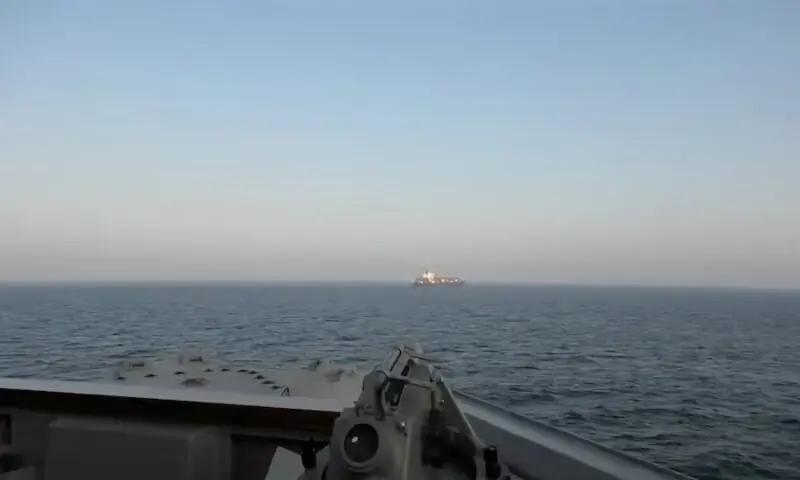
US forces seized an Iranian-flagged cargo vessel, the M/V Touska, in the Arabian Sea in a high-risk operation after a six-hour standoff, according to US Central Command (CENTCOM) and reporting that cited CENTCOM’s account. The Times of India said the interception took place on April 19 when the guided-missile destroyer USS Spruance tracked the vessel as it sailed towards Bandar Abbas at speed. CENTCOM said American forces issued repeated warnings to the crew over a six-hour period, informing them they were in violation of the blockade, and when the vessel failed to comply, the destroyer took decisive action.
The Times of India quoted CENTCOM that “Spruance disabled Touska’s propulsion by firing several rounds from the destroyer’s 5-inch MK 45 Gun into Touska’s engine room.” After the strike, the boarding operation was launched from the amphibious assault ship USS Tripoli, with Marines rappelling onto the deck after the ship was disabled, as shown in visuals released by CENTCOM.

The Times of India also reported that Trump described the action on social media, saying the Navy “stopped them right in their tracks by blowing a hole in the engineroom” and that US forces were now “seeing what’s on board.” The Times of India added that it remained unclear whether there were any casualties during the operation and that CENTCOM had not provided further details on the condition of the crew.
Blockade and Ceasefire
The Touska seizure unfolded against a backdrop of US blockade measures targeting Iranian ports, with the incident described as the first such interception after the blockade began. The Times of India said the incident “marks the first such interception since the United States launched its blockade of Iranian ports last week,” and it linked the move to “a broader escalation in the Gulf region.” It also said the timing of the operation added to uncertainty surrounding planned diplomatic efforts, noting that President Trump had announced that US negotiators would travel to Pakistan for a new round of talks with Iran.
In the same account, Iranian response was described as coming quickly, with Iran’s joint military command condemning the seizure as “piracy” and a violation of an “already fragile ceasefire.” PressTV and WGY both framed the US action as aggression and tied it to ceasefire conditions, with PressTV saying Iran’s military vowed “decisive action” after an American attack on an Iranian commercial vessel in the Sea of Oman.
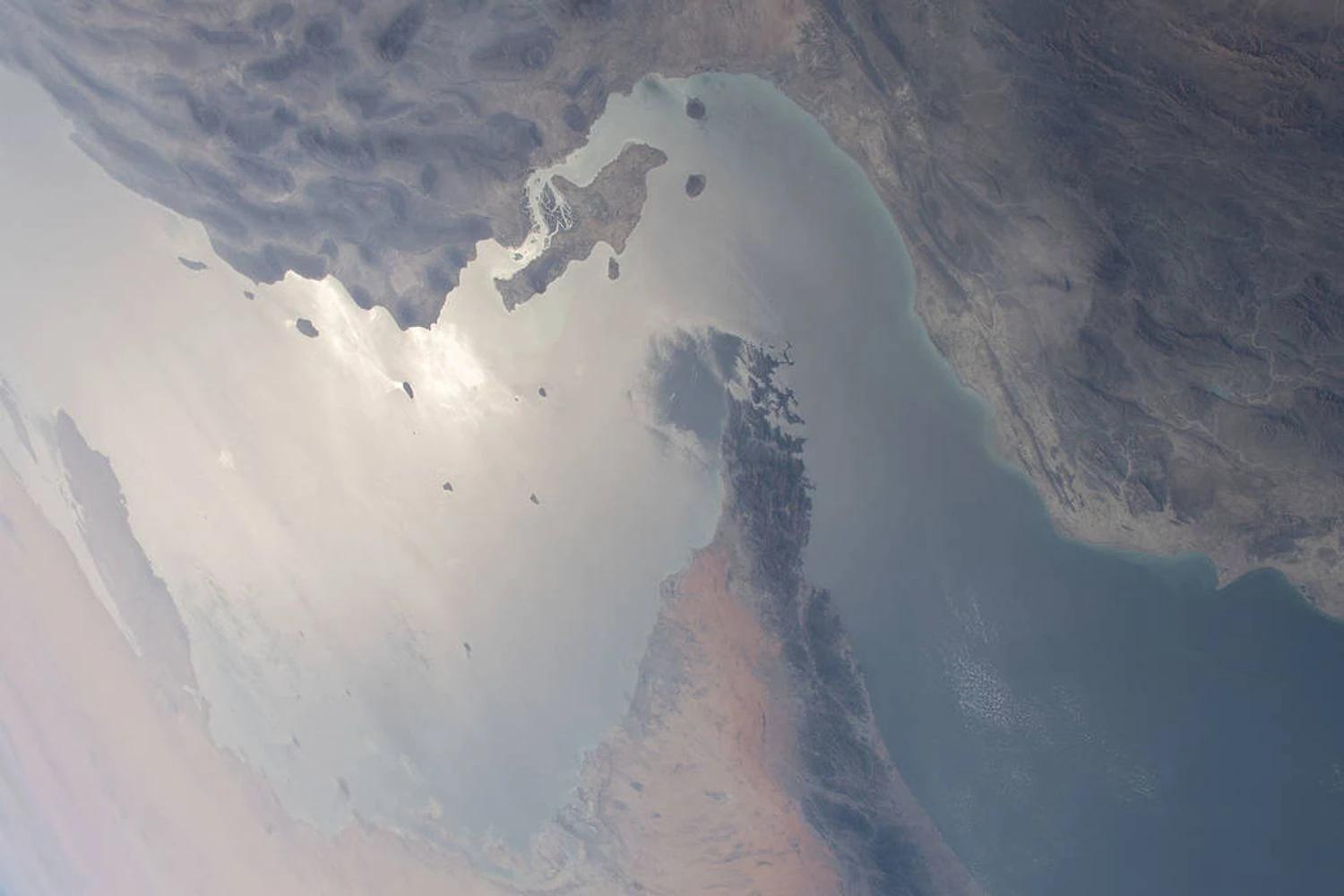
PressTV further asserted that Iran had declared the Strait was open to commercial shipping on Friday and later closed down the Strait of Hormuz after the United States retained its blockade of Iranian ports in violation of a two-week ceasefire announced by Trump. WGY reported that Iran vowed retaliation but said it was “constrained in order to preserve their lives and security which were in danger at any moment,” and it also stated that Iran reaffirmed its decision to once again close the Strait of Hormuz.
Iranian Vows and US Warnings
Iranian officials and media accounts portrayed the seizure as an attack that required retaliation, while US officials emphasized enforcement of the blockade. PressTV quoted Lieutenant-Colonel Ebrahim Zolfaghari, spokesperson for the Khatam al-Anbiya Central Headquarters, saying that after “the blatant aggression by US terrorist commandos against an Iranian commercial ship in the waters of the Sea of Oman,” Iran’s armed forces were “ready to deal decisively with the American aggressor forces.” PressTV also said Zolfaghari explained that “due to the presence of several family members of the ship's crew — whose lives and safety were at constant risk — they faced certain limitations,” and he added: “Given the current situation, once the safety of the families and crew of the vessel targeted by American aggression is ensured, the powerful armed forces of the Islamic Republic of Iran will take the necessary action against the terrorist US Army.”
Aaj English TV carried a similar line from Lieutenant-Colonel Ebrahim Zolfaghari, warning: “The Islamic Republic of Iran will soon retaliate against this act of armed piracy by the US military,” and it quoted him saying the US “violated the ceasefire and engaged in maritime piracy by opening fire on an Iranian merchant vessel in the Sea of Oman.” WGY described Iran’s Khatam al-Anbiya military command spokesperson saying it would take “necessary action” after ensuring crew and family safety, and it quoted the spokesperson: “The powerful armed forces of the Islamic Republic of Iran will carry out the necessary action against the American terrorist army.”
On the US side, The Times of India described CENTCOM’s warnings to the crew over six hours and said the destroyer acted after the vessel failed to comply, while Trump’s social media remarks were captured as “seeing what’s on board.” Marine Insight added that Iran’s Khatam al-Anbiya accused America of violating the ceasefire and called it an act of “armed piracy,” and it said an Iranian official also said the US disabled the ship’s navigation system before boarding.
Talks, Mediation, and China
As the standoff over the Strait of Hormuz intensified, reporting also described competing signals about diplomacy and mediation, including statements about whether Iran would participate in a second round of talks. The Times of India said the timing of the operation added to uncertainty surrounding planned diplomatic efforts and noted that Trump had announced US negotiators would travel to Pakistan for a new round of talks with Iran, while Iranian state media indicated there were “currently no plans to participate.” WGY said Trump had previously announced that negotiations with his envoy would be in Pakistan in hopes of extending the ceasefire agreement even after a standoff over the Strait of Hormuz, and it quoted Iranian parliamentary Speaker Mohammed Bagher Qalibaf saying: “It is impossible for others to pass through the Strait of Hormuz while we cannot.”
Radio Free Europe/Radio Liberty reported that Iran’s Foreign Ministry spokesman Esmail Baqaei said, “We have no plans for the next round of negotiation, and no decision has been made in this regard,” and it described a Reuters report that Tehran was “positively reviewing its participation” but had not made a final decision. RFE/RL also reported on the US side that Trump told the New York Post that a delegation led by Vice President JD Vance was due to arrive in Pakistan “tonight,” while Reuters cited two unnamed sources saying Vance had not yet departed.

Marine Insight added that Pakistan, which was mediating, ramped up preparations for a planned second round of talks, while it described confusion over whether JD Vance would lead talks in Islamabad. Separately, Radio Free Europe/Radio Liberty reported that Xi Jinping told Saudi Crown Prince Mohammed bin Salman on April 20 that “the Strait of Hormuz should remain open to traffic.”
Escalation Risks and Costs
The sources linked the Touska seizure and subsequent Iranian responses to broader risks for the region’s shipping and to the fragility of the ceasefire. The Times of India said the standoff was centred on control of the Strait of Hormuz and quoted Iran warning it may continue to restrict access with “the choice is clear: either a free oil market for all, or the risk of significant costs for everyone.” PressTV and Marine Insight both described Iranian strikes after the seizure, with PressTV saying Iranian forces struck back with drone attacks and Marine Insight saying “Iran launched drone strikes targeting U.S warships in the Sea of Oman.”
Aaj English TV said Iran declared the full closure of the Strait of Hormuz and warned that any vessel attempting to pass without authorization would face decisive action, while WGY said Iran reaffirmed its decision to once again close the Strait of Hormuz. Radio Free Europe/Radio Liberty added a domestic dimension by reporting that Iran’s internet shutdown had surpassed “1,248 hours or 52 days,” and it said NetBlocks described it as “unsurpassed in scale and severity in a connected society.”

The same RFE/RL account said cross-border Internet traffic remained below 1 percent of the country’s pre-shutdown average for nearly the entire period, making access outside the country “effectively impossible” for most Iranians. Marine Insight said the developments led to doubts over the continuance of the fragile ceasefire and reported that Trump warned he would target Iranian bridges, ports and power plants as Iran responded it would strike desalination plants and critical infrastructure of its Gulf neighbours housing US bases.