Lebanonupdated 14m ago3 min read
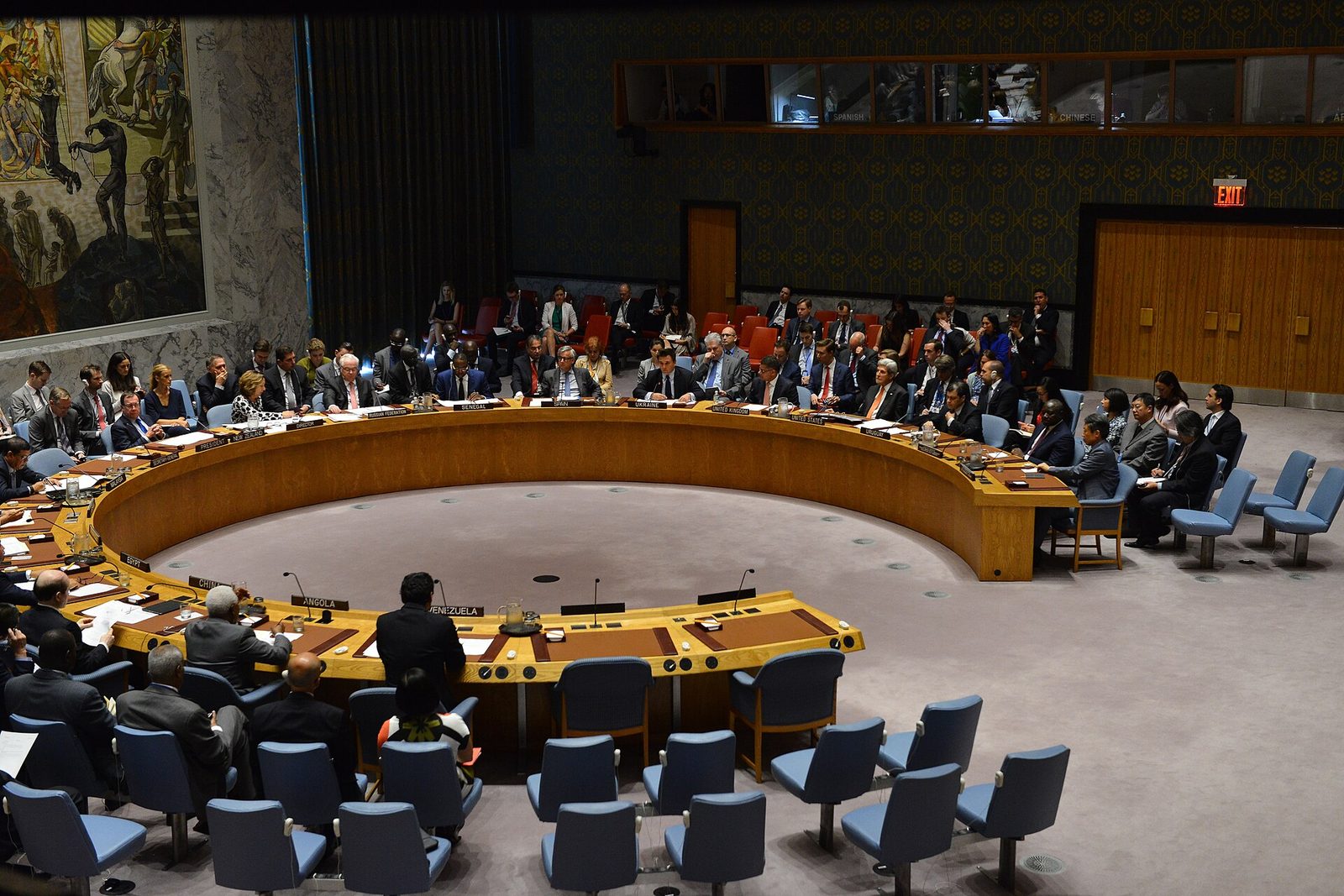
Archive photo · 23 September 2016US Pushes UNIFIL Changes as Lebanon Awaits Security Council Talks on Replacement Force
4 West Asian1 IsraeliPhoto: U.S. Department of State from United States / US federal government, Public domain · Cropped for layout
This article is an automated aggregation of coverage from news outlets. Our editorials offer in-depth analysis curated by the NewsCord team.
US pushes changes to UN Security Council-backed replacement framework for UNIFIL in Lebanon. France plans to present UN with a new international force to replace UNIFIL.
Save coverage image
The Jerusalem Post was read line by line by the Watchdog: 6.0. See the score →
UNIFIL’s end nears
UNIFIL’s mandate in southern Lebanon is nearing its end later this year, with no agreed mechanism yet to replace its monitoring and coordination functions.
Washington is pushing for changes to UN Security Council Resolution 1701 and a new arrangement with a different structure and mandate, while Beirut insists that any future international presence remain under a UN umbrella.
U.S. Ambassador to the UN Mike Waltz told Lebanese President Joseph Aoun, Parliament Speaker Nabih Berri and Prime Minister Nawaf Salam that Resolution 1701 must be amended as discussions continue over a new international mechanism with a different structure and responsibilities.
Analysts speaking to Anadolu warned that a potential security and operational vacuum could emerge if UNIFIL’s mandate expires without an agreement on a successor mechanism, and political analyst Ghassan Rifi said a decision on any replacement force had become urgent.
Rodolph Haykal did not meet Waltz despite the military’s central role in any future security arrangements, and Waltz cited time constraints and said he prioritized meetings with UN officials and political leaders.
Competing US and France
France is set to present its proposal for a new international force to replace UNIFIL at United Nations headquarters in New York, with a closed-door UN Security Council meeting expected to discuss the initiative. The Jerusalem Post said France’s plan would seek an international coalition comprising thousands of European troops, primarily from France, Italy, and Spain, operating in close coordination with the Lebanese Armed Forces in southern Lebanon. Washington is advancing a competing proposal that envisions a considerably smaller international monitoring presence, and the Jerusalem Post said Waltz presented an alternative concept centered on a limited international monitoring mission.
The Jerusalem Post reported that UNIFIL’s mandate is set to expire on December 31, 2026, less than six weeks away, and that the Lebanese government has sought to preserve a substantial international presence amid concerns about a security vacuum along the border with Israel. The dispute is framed around three questions, who will monitor security arrangements in southern Lebanon, under whose authority, and with what forces, as France and the United States differ over the scope, composition, and authority of any international presence.
Vacuum fears and next steps
Lebanon’s political debate over the post-UNIFIL period is tied to the timeline that UNIFIL’s mandate would expire on December 31, 2026, with withdrawal operations beginning Jan. 1, 2027, and potentially continuing until the end of that year.
Political analyst Wael Najm told Anadolu that UNIFIL could continue performing some functions during the withdrawal period, but he warned of a possible security and operational vacuum.
Najm said the vacuum risk is heightened because the Lebanese army rejects Israeli conditions for guarding the border or serving as a border force protecting Israel’s security interests, and he added that Israel also demands specific coordination mechanisms before agreeing to any such arrangement.
Anadolu reported that Ghassan Rifi said Washington does not favor deploying another international force in southern Lebanon, aligning with Israel’s preference for only the Lebanese and Israeli militaries to remain in the area.
Rifi also said US Secretary of State Marco Rubio raised the possibility of using civilian entities to monitor the border, including the controversial private security company Blackwater, an idea rejected by Beirut and Hezbollah.