Lebanon04 November, 20262 min read
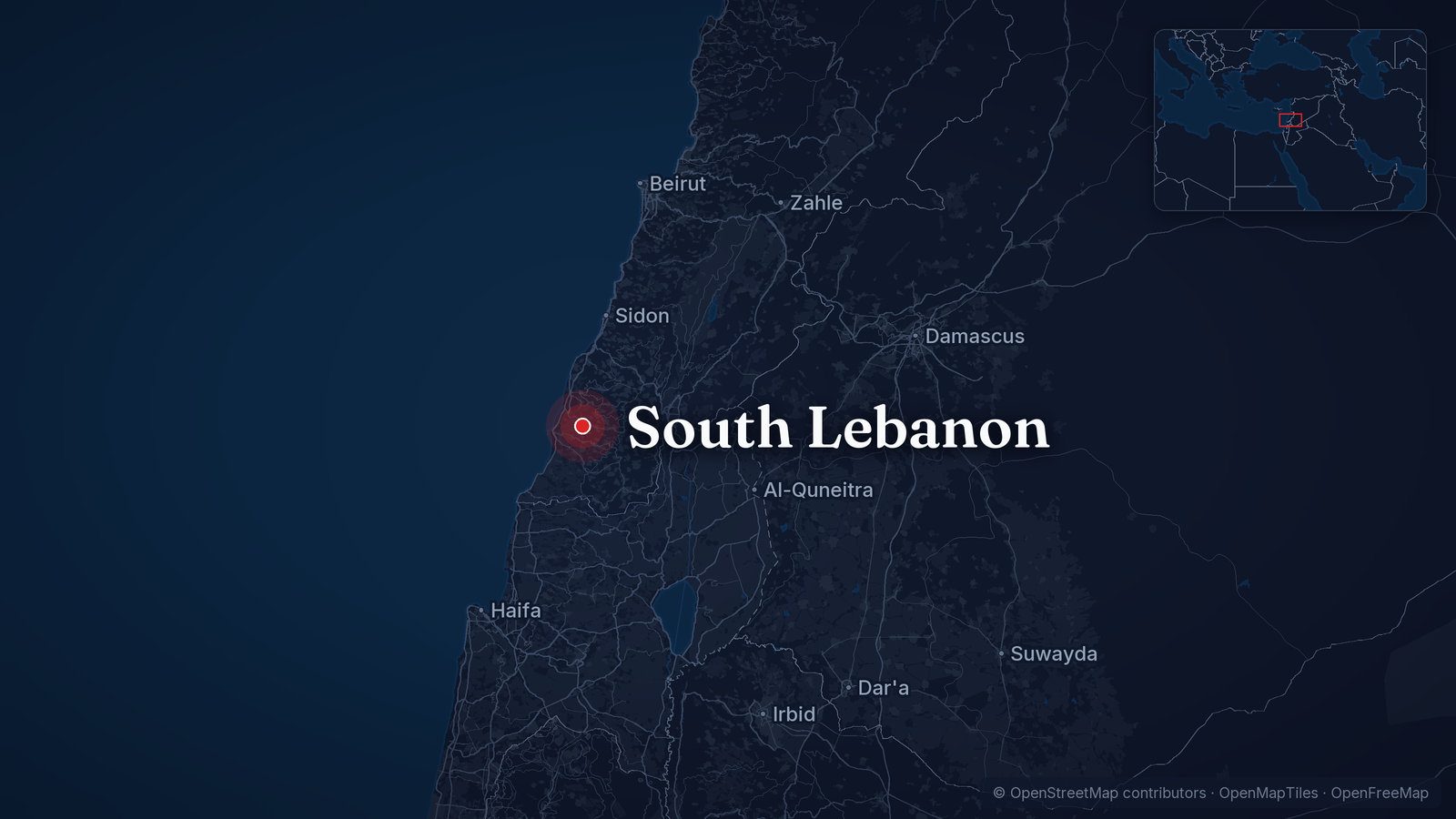
MapUNIFIL Starts leaving South Lebanon When Mandate Ends Dec. 31, Lacroix Warns of Security Vacuum
1 Israeli1 West Asian1 Western MainstreamMap: © OpenStreetMap contributors, ODbL · Cropped for layout
This article is an automated aggregation of coverage from news outlets. Our editorials offer in-depth analysis curated by the NewsCord team.
UNIFIL will start withdrawing from south Lebanon as its mandate expires December 31. UN warns withdrawal risks a dangerous security vacuum in Lebanon.
Save coverage image
3 outlets in this story. Read their headlines below.
Outlets did split on Israeli Artillery Pounds Khiam, Zibqin, Kfar Chouba; Drone Sound Bomb Over Kfar Chouba →
The Times of Israel was read line by line by the Watchdog: 3.0. See the score →
UNIFIL drawdown begins
UNIFIL confirmed it will start leaving south Lebanon when its mandate ends on Dec. 31, after the UN Security Council voted last year not to extend the force’s nearly 50-year-old mandate.
“What happens when there is no longer a third-party presence between the Lebanese army and the Israel Defense Forces?”
UNIFIL said that under Security Council resolution 2790 (2025), its mandate in Lebanon will end on 31 December 2026 and that it will then begin the process of its drawdown and withdrawal.
UNIFIL added that until the mandate ends, peacekeepers from 45 countries will continue daily operations across south Lebanon, including monitoring and reporting developments, liaising with the parties, supporting the Lebanese Army, and facilitating humanitarian missions.
Jean-Pierre Lacroix asked, “What happens when there is no longer a third-party presence between the Lebanese army and the Israel Defense Forces?” as he warned of a security vacuum.
President Joseph Aoun and Prime Minister Nawaf Salam told Jean-Pierre Lacroix they feared a “security vacuum” once the peacekeepers leave.
Lacroix warns of vacuum
Jean-Pierre Lacroix warned in New York on Nov. 4 that the withdrawal of UNIFIL risks a security vacuum in southern Lebanon, with the United Nations losing monitoring and de-escalation capabilities.
Without a new international presence, the Lebanese and Israeli armies could find themselves face to face, placing responsibility squarely on the Security Council.
Jean-Pierre Lacroix said the UN was losing some of its longest-standing military deployments, with no guarantee the countries concerned could maintain stability on their own.
UNIFIL’s role as a go-between for the Lebanese and Israeli armies, monitoring violations and helping humanitarian aid get through, also raised questions over the future of the Blue Line.
Jean-Pierre Lacroix offered a cautious estimate that about 10,000 people are still living between the Blue Line and the forward defence line Israel has set up inside Lebanese territory, and that their access to aid depends heavily on UNIFIL.
After UNIFIL, Security Council
UNIFIL said the Security Council is considering options for the period after UNIFIL’s mandate ends, including future monitoring and reporting along the Blue Line, while adding that decisions on any future arrangements rest with the Security Council. António Guterres put forward options in June, but the Security Council has yet to agree on any follow-on arrangement, leaving the future of the third-party presence unresolved. Lebanese officials warned UNIFIL’s withdrawal could leave a vacuum in the country’s south, where Israel maintains a self-declared “security zone” that runs around 10 kilometers inside southern Lebanon along the border.
Israel accused UNIFIL of letting Hezbollah infrastructure proliferate, and it tied those accusations to Hezbollah’s extensive construction of border-area military infrastructure. Jean-Pierre Lacroix framed the issue as “political responsibility,” saying, “political responsibility” is above all what determines the answer, not a purely technical fix.