U.S. Sanctions Lebanese Officers Samir Hamadi and Khattar Nassereddine Over Hezbollah Intelligence
Key Takeaways
- US sanctioned two Lebanese security officers and nine Hezbollah-linked officials.
- Targets include Hezbollah-affiliated MPs and security officials within Lebanon's institutions.
- Washington aims to curb Hezbollah influence amid broader Lebanon security and political pressure.
US sanctions target officers
The United States announced sanctions on Thursday against Lebanese officers and figures accused of sharing intelligence with Hezbollah, including army colonel Samir Hamadi and General Security officer Khattar Nassereddine, in what the U.S. said was their “shared important intelligence” with Hezbollah “during the ongoing conflict.”
“US sanctions Lebanese lawmakers, security officials over Hezbollah influence The U”
The sanctions also covered Iran's ambassador to Lebanon, three Hezbollah lawmakers and a former minister, as well as two figures from the Hezbollah-allied Amal Movement, with Washington calling it the first time it had sanctioned Lebanese officers.

Lebanese Army and General Security officials responded by affirming loyalty to their institutions and orders without political “considerations or pressures,” while the sanctions arrived as Israel continued strikes and Lebanon prepared for security talks at the Pentagon scheduled for May 29.
Military expert Riad Kahwaji said the U.S. move would have “significant repercussions within Lebanon” as “the prestige that was given to the Lebanese Army has been removed.”
Hezbollah and Amal denounce
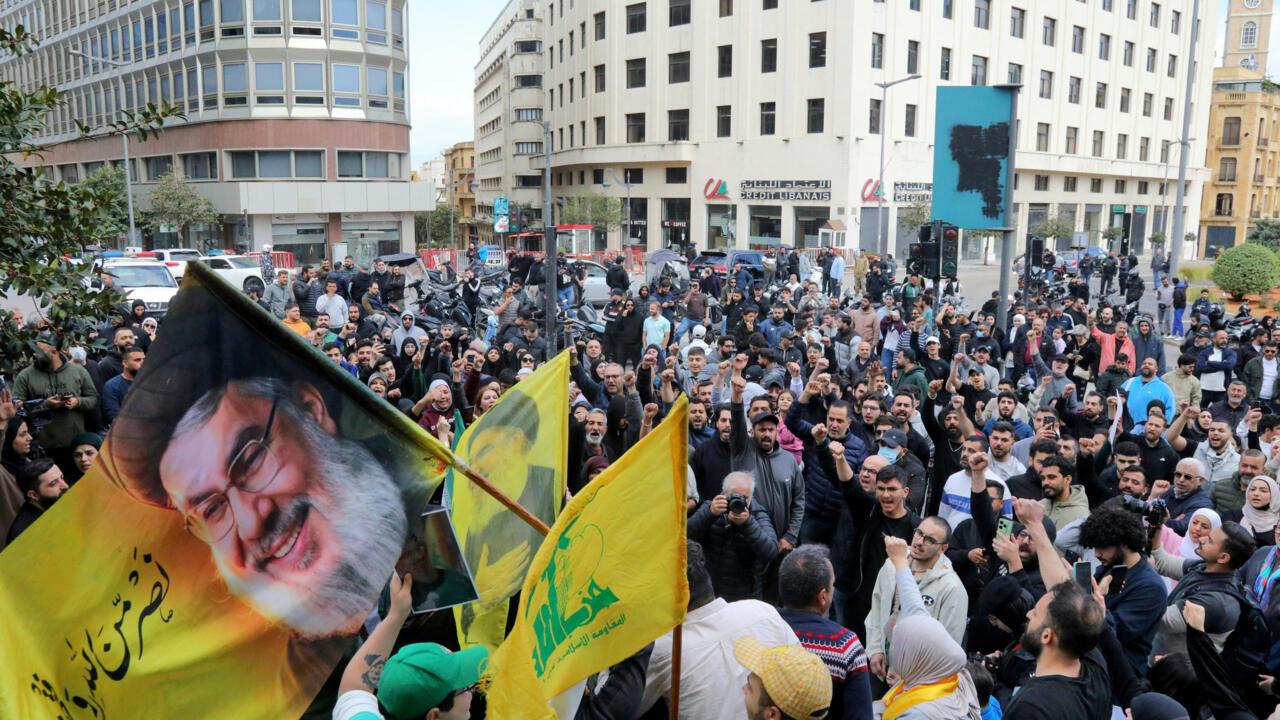
Hezbollah and the Amal Movement condemned the sanctions, with Hezbollah’s parliamentary bloc describing the decision as “an assault by the US administration on our country’s sovereignty through its unjust decision.”
Hezbollah’s parliamentary bloc also said its MPs would “continue to carry out their legislative and oversight roles,” while Amal Movement MP Kassem Hashem told Arab News that the sanctions “constitute a message not to one specific party, but to Lebanon as a whole.”

In Lebanon’s official response, Interior Minister Ahmad al-Hajjar said he had asked General Security Director General Maj. Gen. Hassan Choucair to investigate any violations, and General Security sources said the army and General Security had learned of the measures through statements and the media rather than official channels.
The BBC also reported that on the eve of the U.S. sanctions, the Lebanese army and General Security reiterated that soldiers’ loyalty is to their official institutions alone, and that the American side had not informed them of the sanctions before they were announced.
Pentagon talks and fallout
The sanctions were imposed as Lebanon and Israel prepared for a May 29 meeting at the Pentagon to launch the security track of direct negotiations under Washington’s sponsorship, which Hezbollah and Parliament Speaker Nabih Berri oppose.
“BEIRUT: The new US sanctions imposed by Washington on Thursday against Lebanese political and military figures cannot be separated from the broader context of political pressure being exerted on Lebanon through its official and military institutions”
Lebanese ministerial sources told Asharq Al-Awsat that Beirut was awaiting an Israeli response, through the United States, to its request that Washington pressure Israel to comply with the ceasefire agreement, while the sources said Tel Aviv had neither responded nor adhered to the deal.
French President Emmanuel Macron’s special envoy to Lebanon, Jean-Yves Le Drian, warned Thursday that Lebanon faces “a dangerous situation regarding its unity and territorial integrity,” while welcoming the continuation of the truce as it opens “a 45-day horizon for continuing discussions.”
The National reported that the U.S. sanctions “have struck at the heart of the country's security apparatus,” and that Washington had for the first time included state security officials accused of supporting Hezbollah logistically, alongside figures close to Nabih Berri.
More on Lebanon
Israel Announces Rome Talks With Lebanon July 15-16, Italy Welcomes Dialogue
11 sources compared

Walid Jumblatt Says Israel Imposed Lebanon Framework Agreement, Peace With Israel Is Impossible
10 sources compared

Israeli Drone Strike Kills Four, Including School Principal Esperanza Ghandour, In Nabatieh Al-Fawqa
27 sources compared

Netanyahu Claims Christian Villages Sought Annexation; Marjayoun Leaders Reject It
10 sources compared