Full story
Seventh Night Strikes
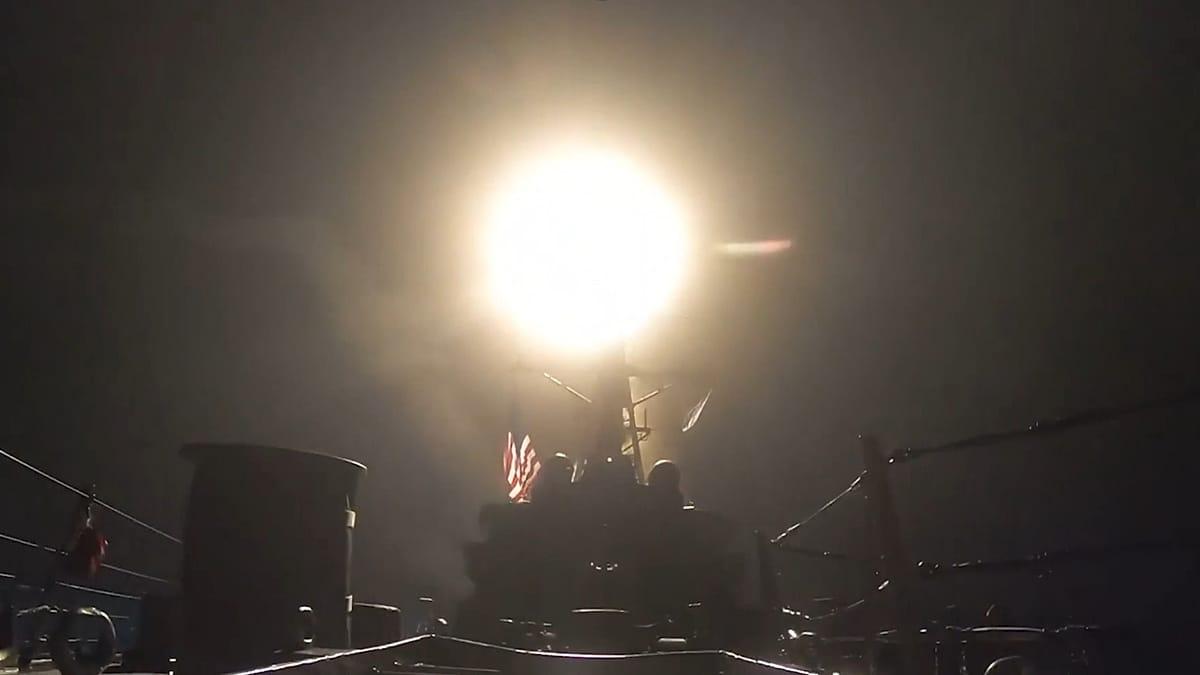
The United States launched a seventh consecutive night of strikes on Iran on Friday night, with US Central Command saying the attacks began at 7pm GMT and were designed to “continue degrading Iranian military capabilities”.
“US hits more bridges in Iran in an expansion of its airstrike campaign US hits more bridges in Iran in an expansion of its airstrike campaign DUBAI, United Arab Emirates (AP) — The United States expanded its airstrike campaign against Iran early Friday by increasingly hitting bridges, part of U”
The Guardian reported that earlier on Friday US airstrikes hit bridges in Iran’s southern Hormozgan province, killing at least seven people, and that the bridges were a key transit point for Bandar Abbas, Iran’s main port.
NBC News said the U.S. attacked bridges and other key infrastructure in southern Iran overnight into Friday, capping nearly a week of strikes aimed at intensifying pressure on Tehran to give up control of the Strait of Hormuz.
NBC News also reported that Iranian state media said at least eight people were killed and 20 others injured in the strikes, and that it said early Friday that at least six bridges were hit, including one that was under construction.
The BBC described the seventh night as continuing with reports of a U.S. missile attack around Ahvaz, while Mehr News Agency reported hearing an explosion on the southern outskirts of Lar and several consecutive explosion sounds in Yazd.
Threats and Counterattacks
Iran’s response included threats and retaliatory strikes across the region, with the IRGC warning a “devastating price” for countries hosting US bases if American attacks against infrastructure continued.
The Guardian quoted the IRGC as saying, “The American enemy and the hosts of its bases in the region should know that crossing red lines and attacking civilians and civilian infrastructure will have a very severe and devastating price to pay,” as Iran’s military responded to US strikes by targeting Bahrain, Kuwait, Jordan, Oman and Qatar.
CNN reported that Mohsen Rezaei warned the United States of a “full-scale” attack if it continued launching military strikes, saying, “If American attacks continue for another two or three days, we will enter a phase of comprehensive offensive operations.”
CNN also said Rezaei warned that “there will be no safe political boundaries for Iranian offensive forces,” and that Iran accused the United States of “attacks on civilian infrastructure,” an accusation denied by the United States.
In parallel, the BBC said Tehran claimed it had targeted an American vessel, while also describing reports of explosions heard in Lar and Yazd and unconfirmed messages about sounds in Yazd, Taft, and the Yazd Mountain Park area.
Strait of Hormuz at Risk
The fighting has centered on the Strait of Hormuz, which the Guardian said handled about a fifth of the world’s oil and gas supply before the war, and it said Iran shut the strait while the US reimposed its blockade of Iranian ports and ships on Wednesday.
“US President Donald Trump has returned in recent days to his threats to target Iranian power stations and bridges to try to compel Iran to loosen its hold on the Strait of Hormuz”
The Guardian reported that the renewed fighting undermined an interim deal meant to keep the strait open and give room for negotiations to lead to a permanent truce, and that shipping in the waterway was drastically reduced as violence escalated.
NBC News said the collapse of the ceasefire and interim agreement led to days of strikes and counterstrikes across the region, with traffic in the crucial waterway once again largely halted as the two sides battle over it.
NBC News reported that Daily traffic dwindled to only a dozen or so ships this week, and that on Thursday just 8 ships transited the Strait of Hormuz, down from 15 the day before.
The Guardian added that the US president reportedly met senior department heads to discuss an expanded aerial campaign to force Iran to reopen the strait of Hormuz, while Iran asked its allies in Yemen, the Houthis, to be prepared to close the oil route through the Red Sea if the US targets Iranian energy infrastructure.