Full story
High Court Greenlights
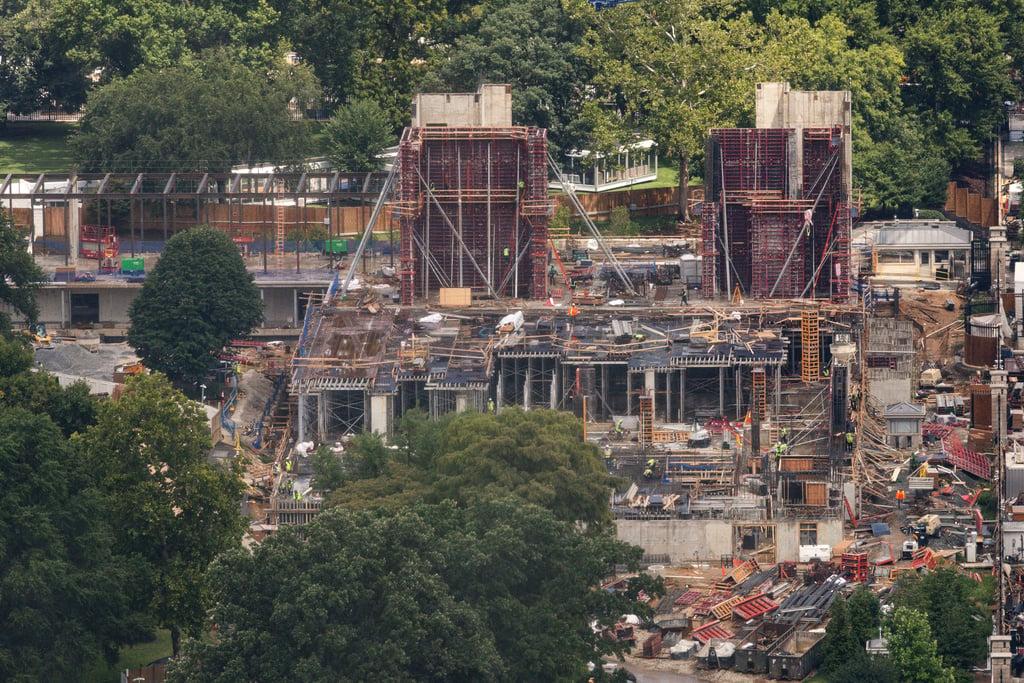
The U.S. Supreme Court ruled 5-4 that President Donald Trump can continue construction of a $400m White House ballroom, granting the Trump administration’s emergency request that blocked lower court rulings halting the above-ground portion of the project.
“"construction is likely unlawful"”
Chief Justice John Roberts dissented, writing that "construction is likely unlawful" because Congress has not approved the project, while the majority said it was not deciding whether the ballroom project was lawful.

The National Trust for Historic Preservation had challenged the work, arguing the president did not have unilateral authority to proceed, and the court majority said the group "lacks standing" to sue.
The White House said the project will be "substantially" finished by November and fully completed by August 2028, and Trump celebrated the decision in a post on Truth Social saying he was "pleased" the "baseless" lawsuit had failed to halt construction.
Standing vs Merits
The majority’s unsigned, eight-page decision emphasized that the National Trust for Historic Preservation likely lacked the legal right known as standing, and it concluded that lower courts had "likely exceeded" their authority in blocking the ballroom.
In dissent, Roberts argued that "Today's decision is no victory for the separation of powers," while CNN reported that the court did not say whether the ballroom project was in fact lawful.

The National Trust’s case rested on a declaration by Alison Hoagland, who said she would "suffer both professional and personal injuries" if a ballroom of the proposed form and scale were constructed, and the Supreme Court majority said it had repeatedly held that "mere offense, disagreement, or distaste" does not qualify as a concrete and particularized injury.
Brent Leggs, president and CEO of the National Trust for Historic Preservation, said the trust was "deeply disappointed" and noted that the majority did not weigh in on whether the ballroom project was in fact legal.
What Comes Next
With the above-ground work allowed to continue, the Supreme Court ruling raised the prospect that the project could be finished, or nearly so, by the time the dispute is finally resolved, after Chief Justice John Roberts issued a temporary order on Aug. 21 to keep construction moving.
“construction was 65% complete as of Aug. 24”
NBC News reported that the administration said construction was 65% complete as of Aug. 24, with a 250-person crew working 20 hours a day, seven days a week, while the White House said the $400 million project would be funded entirely by private donations.
Trump said the ballroom is necessary for national security reasons because it will include state-of-the-art features intended to protect the White House from an attack, and the court’s majority said the government would suffer "irreparable harm" if construction is stopped.
The decision did not resolve whether Trump exceeded his authority by acting without congressional approval, but it kept the litigation over the project alive in lower courts while the administration continued advancing its "massive new ballroom" at the White House.