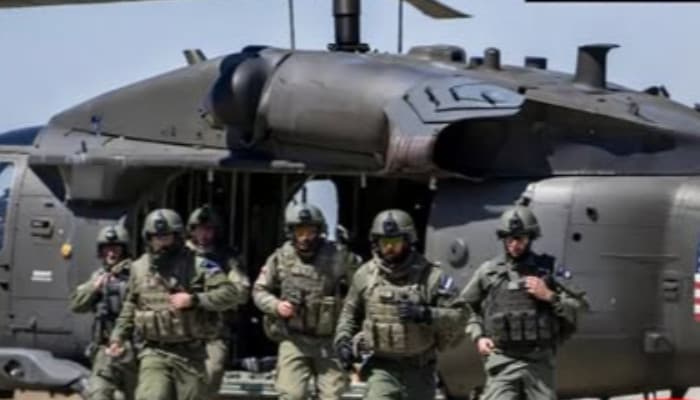
US to deploy thousands more soldiers to the Middle East
Key Takeaways
- Around 3,000 troops from the 82nd Airborne to the Middle East.
- Deployment would include ground forces and a command element from the 82nd.
- Formal deployment orders anticipated within hours as planning proceeds.
Deployment Announcement
The Pentagon is preparing to deploy thousands of soldiers from the US Army's elite 82nd Airborne Division to the Middle East, marking a significant escalation in the military buildup amid ongoing tensions with Iran.
“Donald Trump says the United States is in negotiations with Iran to end the war as the Pentagon reportedly prepares to deploy thousands more troops to the Middle East”
According to multiple sources, approximately 3,000-4,000 troops from the division based at Fort Bragg, North Carolina, are expected to deploy to the region, though officials have not specified the exact destination or timeline for their arrival.
The deployment follows recent reports of additional forces being sent to the Middle East, including Marines aboard the USS Boxer amphibious assault ship and accompanying warships, as part of what has been termed Operation Epic Fury.
The announcement comes amid conflicting signals from Washington regarding potential diplomatic engagement with Tehran, even as military preparations continue to intensify.
Military Buildup Context
The planned deployment represents the third surge of US forces to the Middle East since the US-Israel war against Iran began in late February, significantly expanding American military presence in the region.
Prior to this additional deployment, approximately 50,000 US troops were already stationed across the Middle East under US Central Command, creating one of the largest American military buildups in recent history.

The buildup includes not only the 82nd Airborne troops but also thousands of Marines, with sources reporting that two Marine Expeditionary Units totaling around 4,700 troops are en route to the region aboard amphibious assault ships including the USS Boxer, USS Tripoli, and USS New Orleans.
This rapid expansion of forces has raised concerns about potential escalation and the possibility of American ground troops entering Iranian territory, though officials have stressed that no such decision has been made at this time.
82nd Airborne Capabilities
The 82nd Airborne Division represents one of the US military's most capable rapid response units, specifically designed for swift deployment in crisis situations.
“The diplomats spoke on condition of anonymity to disclose private negotiations”
The division's Immediate Response Force, consisting of approximately 3,000 soldiers, is capable of deploying anywhere in the world within 18 hours, with previous deployments including missions to the Middle East in 2020 following the Baghdad embassy attack, to Afghanistan during evacuation operations in 2021, and to Eastern Europe in 2022.
Military sources indicate that these elite paratroopers are trained to parachute into hostile or contested territory to secure key objectives, including airfields and strategic infrastructure.
Potential missions under consideration reportedly include seizing Kharg Island, Iran's primary oil export hub through which 90% of the country's oil exports flow, or securing the Strait of Hormuz, one of the world's most important oil shipping routes that has been largely closed since the conflict began.
The deployment would include not only combat troops but also a command element responsible for operational planning and logistics coordination.
Diplomatic Context
The military buildup occurs amid increasingly complex diplomatic signals, with President Donald Trump claiming that the US is engaged in "very good and productive conversations" with Iranian leadership regarding a "complete and total resolution of hostilities in the Middle East."
However, these claims have been directly contradicted by Iranian officials, who have consistently denied that any negotiations are taking place, describing Trump's assertions as "fake news."

The apparent disconnect between Washington's diplomatic pronouncements and its military preparations has created confusion among international observers.
Meanwhile, Pakistan has emerged as a potential mediator, with Prime Minister Shehbaz Sharif offering to host talks between the US and Iran, while other countries including Egypt and Qatar have also been involved in diplomatic efforts to de-escalate tensions.
The diplomatic uncertainty comes as global oil prices continue to surge due to disruptions in shipping through the Strait of Hormuz, which handles approximately 20% of the world's oil and liquefied natural gas supplies.
International Reactions
The international community has reacted with concern to the escalating tensions, with multiple warnings about the potential consequences of further military escalation.
“With thousands more U”
The United Nations nuclear watchdog has expressed alarm about airstrikes hitting Iran's only nuclear power plant, calling on military leaders to exercise "maximum restraint" to avoid nuclear safety risks.

Meanwhile, energy markets remain volatile as the conflict disrupts global oil supplies, with countries like the Philippines declaring national energy emergencies and Bangladesh hiking jet fuel prices by 79% since the war began.
China has urged peaceful resolution, with its top diplomat telling his Iranian counterpart that "talking is always better" than fighting, while the European Union has expressed deep concern about the humanitarian impact of the conflict.
The combination of military buildup, diplomatic uncertainty, and economic disruption has created what analysts describe as an increasingly precarious situation in the Middle East, with the potential for both immediate military confrontation and broader regional instability.
More on Iran

Trump Postpones Planned Strikes on Iran's Power Grid After Talks; Iran Denies Talks Occurred.
17 sources compared

President Trump says talks underway to end war with Iran; Iran denies talks.
15 sources compared

President Donald Trump threatens to obliterate Iran's energy infrastructure after 48-hour Strait of Hormuz deadline.
10 sources compared

President Trump Says Iran Offered Deal; Pakistan Is Ready to Host US-Iran Talks
27 sources compared