Published

Iran

USS Abraham Lincoln Docks in Thailand After 286 Days at Sea During US-Israeli War With Iran

Image via سانا

At a glance

  1. USS Lincoln arrives at Laem Chabang, Thailand after 286 days at sea.
  2. USS George Washington arrives in Middle East to relieve Lincoln's long deployment.
  3. Reported mental health and supply concerns aboard Lincoln prompt calls for investigation.

Lincoln docks after 9 months

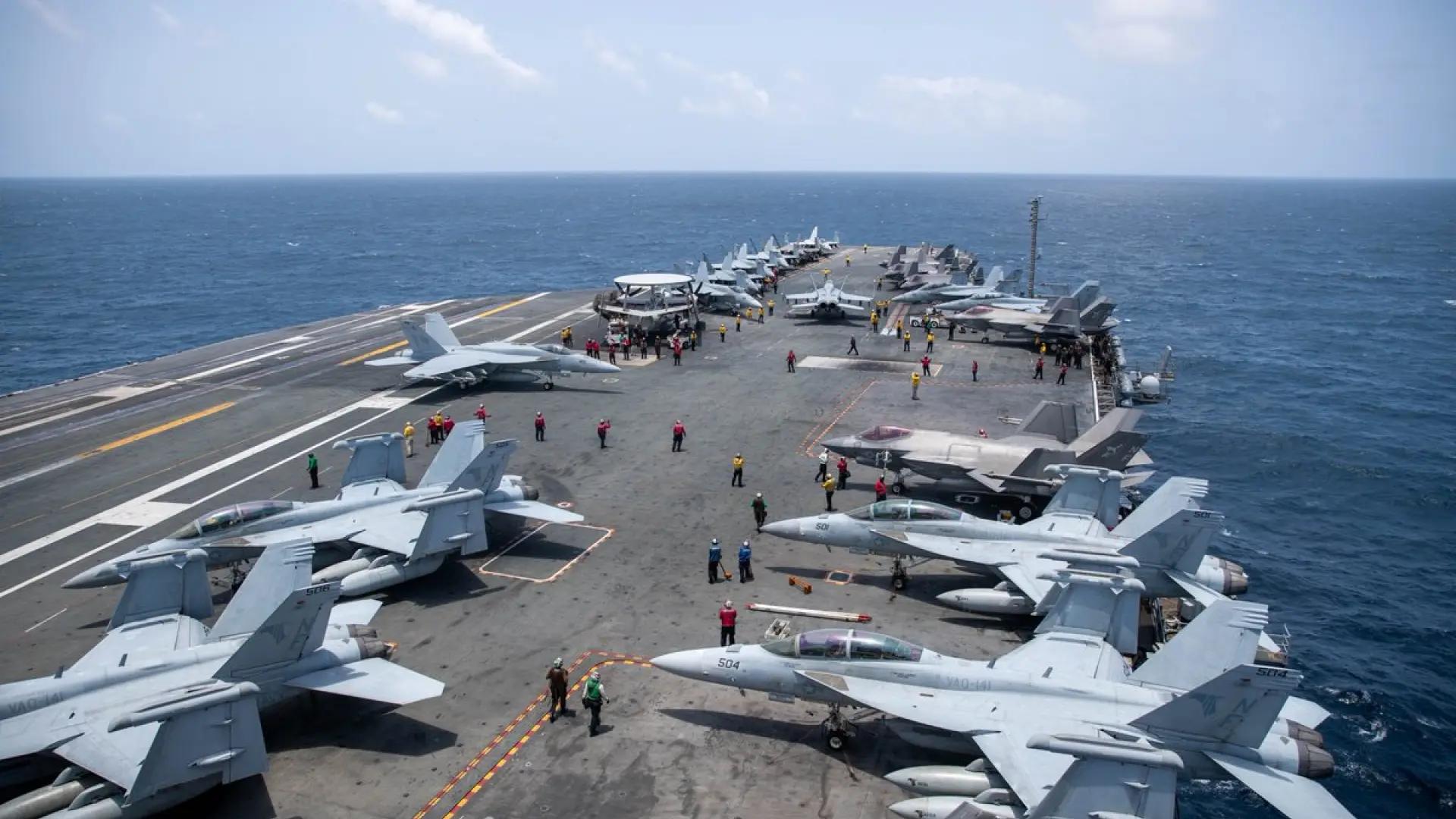
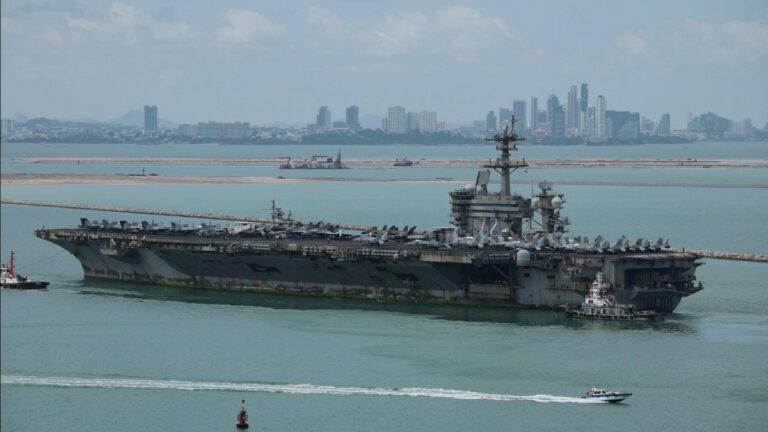
The USS Abraham Lincoln, a nuclear-powered Nimitz-class aircraft carrier, docked in eastern Thailand at Laem Chabang port in Chonburi province after a record 286 days at sea during its deployment in the Middle East amid the US-Israeli war with Iran.

The ship carried a crew of 5,000 and arrived early on Wednesday, with the destroyer USS Frank E Petersen Jr sailing past the area accompanied by other US naval vessels, according to Al Jazeera.

Across the sources

Al Jazeera treats reported Lincoln conditions as evidence of US navy limits, while ABC News highlights Hegseth’s rebuttal as misrepresentation.

ABC News

Defense Secretary Pete Hegseth dismissed the reports as "completely misrepresented"
Read the original ↗

Al Jazeera

Poor planning or the harsh reality of war?
Read the original ↗

Read the source excerpts alongside the original reporting.

In a statement released by the U.S. Embassy and Consulate in Thailand, Rear Adm. Robert E. Loughran said, "Our arrival in Laem Chabang provides a well-deserved opportunity for our Sailors and Marines to rest and recharge," as the Lincoln was expected to be docked for several days before heading to its home base in San Diego.

Al Jazeera reported that the Lincoln had been anchoring the US naval blockade and combat operations during the US-Israeli war on Iran, and that its weathered hull showed large rust patches along the waterline and the edge of the flight deck.

When asked about the aircraft carrier’s lacklustre appearance, Captain Dan Keeler replied, "it is normal for a long deployment" and declined to comment further, as the crew remained out of reach for comment.

Debate over conditions and leadership

Democratic Sen. Ruben Gallego told ABC News that reports of poor conditions aboard the USS Abraham Lincoln reflect what he called "a true lack of leadership" and said the war with Iran and the Trump administration’s planning failures were central to the problem.

Gallego said, "It really goes to the deep, deep, deep problem here is that this administration did not plan for this war," and he argued that the comments from Defense Secretary Pete Hegseth and President Donald Trump could discourage service members from re-enlisting.
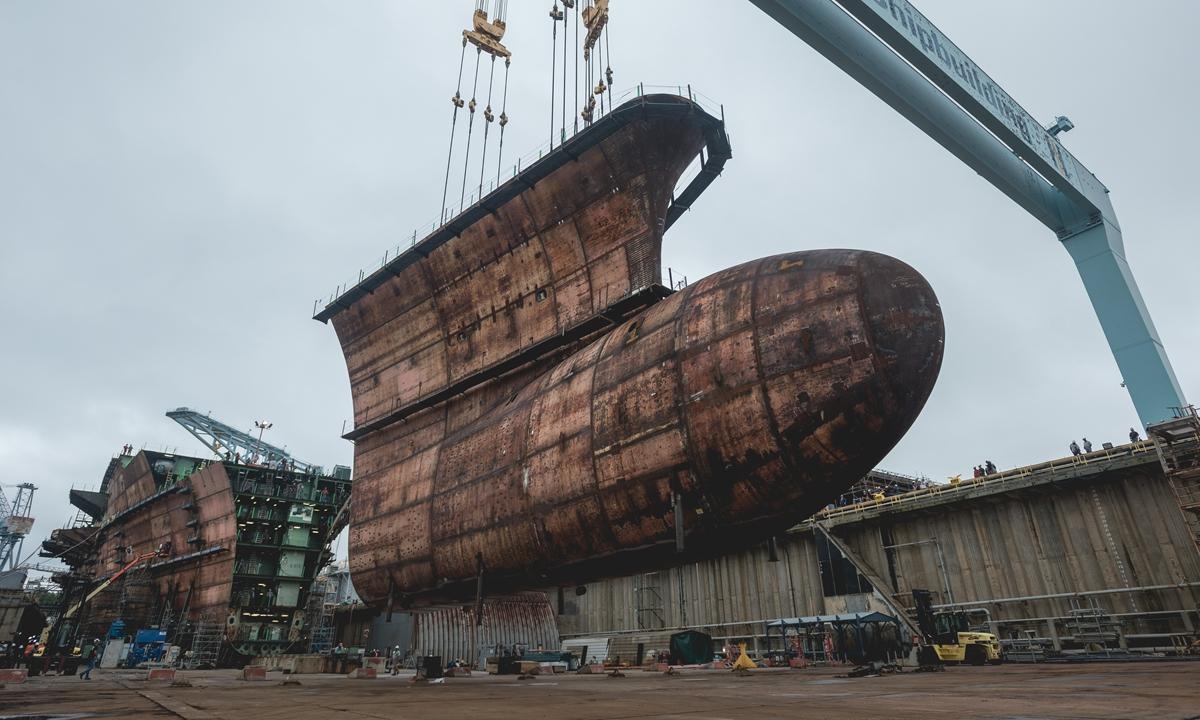
ABC News reported that retired Adm. Mike Mullen said he spoke with U.S. Central Command commander Brad Cooper on Saturday evening and was told that any poor conditions aboard the Lincoln have been addressed and that morale improved after the crew learned it would be returning home.

Mullen told Raddatz that "One of the positives of Cooper's visit yesterday is he announced to the crew that they're going home" and said morale was up significantly from where it was just a few days earlier.

ABC News also quoted Trump dismissing the length of the deployment, saying it is "not nearly long enough," while Defense Secretary Pete Hegseth described reports of poor conditions as "completely misrepresented."

Replacement and wider stakes

The USS George Washington is expected to replace the USS Abraham Lincoln, with ABC News reporting that the George Washington departed from its station in the Pacific Ocean last week and is expected to replace the Lincoln.

Al Jazeera reported that acting US Navy Secretary Hung Cao announced the aircraft carrier would soon return home and that the USS George Washington began travelling from the western Pacific to the Middle East, leaving no aircraft carrier in the western Pacific region.

Al Jazeera added that the shift leaves no aircraft carrier in the western Pacific region, long a strategic priority for the US, and said the navy had not yet announced plans to replace the USS Washington.

In the same Al Jazeera account, Bradley Martin, a retired US Navy captain and senior policy researcher at the RAND Corporation, warned that "The end state is that you will encounter readiness issues," linking the debate over Lincoln’s reported conditions to broader limits in prolonged operations.

Al Jazeera also quoted Alexandru Hudisteanu saying, "They say that amateurs talk strategies, while professionals talk logistics," as he described the burden of logistics for aircraft carriers and cited a closest resupply base described as "a little island somewhere 2,000 miles [3,220km] south of Iran."

Explore the original reporting

Compare all 261 sources

How each outlet frames it

Every outlet we compared, the headline it ran, and a link to the original article.

We scored these line by line

Our Watchdog read these 2 articles sentence by sentence. 0 means no framing found, 10 means severe. How we score.

MS NOW
MS NOW4.4 / 10

Navy scrambles to deploy an aircraft carrier to relieve the USS Lincoln in the Iran war

14 August, 2026

Al Jazeera
Al Jazeera4.2 / 10

USS Lincoln woes highlight US Navy limits in prolonged Iran war: Experts

19 August, 2026

Western Mainstream

20Minutos
20Minutos

US to send the George Washington aircraft carrier to the Middle East to relieve the Abraham Lincoln nine months later.

20 August, 2026

ABC
ABC

Los marines estadounidenses del USS Abraham Lincoln llegan a Tailandia tras seis meses en Oriente Medio

02 September, 2026

ABC News
ABC News

Democrats demand answers about conditions aboard USS Lincoln

14 August, 2026

ABC News
ABC News

Trump says record USS Lincoln deployment 'not nearly long enough'

16 August, 2026

ABC News
ABC News

Gallego blames Trump administration for USS Lincoln conditions: 'A true lack of leadership'

16 August, 2026

ABC News
ABC News

Iran live updates: Hegseth says USS Abraham Lincoln deployment has been 'tough'

25 August, 2026

ABC News
ABC News

Family members speak out as USS Lincoln docks in Thailand after record 9 months at sea

03 September, 2026

AP News
AP News

The USS Abraham Lincoln docks near Thai beach city of Pattaya after its Middle East deployment

02 September, 2026

AP News
AP News

Thailand's Pattaya anticipates USS Abraham Lincoln visit following its Middle East deployment

02 September, 2026

Associated Press
Associated Press

US pulls last aircraft carrier in Asia as Trump focuses on Iran and the Western Hemisphere

15 August, 2026

Associated Press
Associated Press

USS Lincoln crew hits the streets of Thai beach city after lengthy Middle East deployment

03 September, 2026

Associated Press
Associated Press

USS Abraham Lincoln sails past Singapore on its way home from Middle East

30 August, 2026

BBC
BBC

The Concerning Conditions Aboard the U.S. Aircraft Carrier That Has Spent More Than 250 Days at Sea Due to the Iran War

13 August, 2026

BBC
BBC

US aircraft carrier on way to relieve USS Abraham Lincoln after issues reported on board

14 August, 2026

BBC
BBC

USS Abraham Lincoln: US sailors arrive in Thailand's Pattaya after record 250 days at sea

02 September, 2026

CBC
CBC

U.S. sailors hit the streets of Thailand after record-setting Middle East deployment

04 September, 2026

CBS News
CBS News

New aircraft carrier heads to Middle East amid concerns about USS Lincoln conditions

14 August, 2026

CBS News
CBS News

Vance says war in "new phase" of economic pressure as Iran dismisses Trump threat

21 August, 2026

CBS News
CBS News

USS Lincoln sails past Singapore on its way from the Middle East after grueling 9-month deployment

30 August, 2026

CBS News
CBS News

USS Abraham Lincoln docks in Thailand after more than 9 months at sea

03 September, 2026

CBS News
CBS News

Mother of USS Abraham Lincoln sailor "so relieved" son has arrived in Thailand after record deployment

03 September, 2026

CNBC
CNBC

Top U.S. commander acknowledges mental health issues on USS Lincoln

16 August, 2026

CNN
CNN

Sailors on carriers like the USS Abraham Lincoln feel the strain as Navy deployments stretch longer

15 August, 2026

CNN
CNN

Democratic senators demand review of conditions on the USS Abraham Lincoln, other US warships participating in Iran blockade

24 August, 2026

CNN
CNN

Aircraft carrier USS Abraham Lincoln arrives in Thailand after months of combat in Middle East

01 September, 2026

CNN
CNN

Rusty USS Lincoln docks in Thailand

03 September, 2026

CNN en Español
CNN en Español

Calls for answers about conditions and mental health on the USS Abraham Lincoln: sailor fell overboard this month

13 August, 2026

CNN en Español
CNN en Español

El portaviones USS Abraham Lincoln llega a Tailandia tras meses de combates en Medio Oriente

02 September, 2026

DW
DW

US disputes reports of trying conditions on carrier in Gulf

13 August, 2026

DW
DW

The Pentagon denies any poor conditions aboard the aircraft carrier Abraham Lincoln.

14 August, 2026

El Mundo
El Mundo

The United States leaves the Pacific without aircraft carriers while China shows military muscle

18 August, 2026

El País
El País

The U.S. aircraft carrier that will relieve the beleaguered ‘Abraham Lincoln’ arrives in the Middle East

20 August, 2026

EL PAÍS
EL PAÍS

The Abraham Lincoln aircraft carrier deployed in the Gulf returns to the United States after news of the poor conditions suffered by its crew

14 August, 2026

EL PAÍS
EL PAÍS

The aircraft carrier ‘Abraham Lincoln’ arrives in Thailand after a 286-day mission marked by the deterioration of its crew’s mental health.

02 September, 2026

elDiario.es
elDiario.es

Mental health crisis aboard the USS Lincoln: reports of suicide attempts after nine months of deployment due to the Iran war

13 August, 2026

Euronews
Euronews

New US carrier strike group arrives in Middle East to relieve long-deployed USS Abraham Lincoln

20 August, 2026

Euronews
Euronews

New American carrier arrives in the Middle East.. what happened to Lincoln’s crew after 260 days at sea?

21 August, 2026

Euronews
Euronews

US aircraft carrier arrives in Thailand after record deployment

02 September, 2026

Forbes
Forbes

What To Know About The Mental Health Crisis Aboard The USS Abraham Lincoln

13 August, 2026

Fox News
Fox News

The CENTCOM commander highlights the USS Abraham Lincoln’s mental health record after more than 260 days at sea without docking at any port

16 August, 2026

France 24
France 24

What is happening on the USS Abraham Lincoln? The alarm over the conditions of its 5,000 crew

14 August, 2026

France 24
France 24

USS Abraham Lincoln aircraft carrier docks in Thailand after nine months at sea

02 September, 2026

France 24
France 24

USS Lincoln crew hits the streets of Thailand's Pattaya after nine-month deployment

04 September, 2026

Ideastream
Ideastream

New aircraft carrier heads toward Mideast after reports of issues on long-deployed USS Lincoln

14 August, 2026

Le Devoir
Le Devoir

The aircraft carrier Abraham Lincoln in Thailand after nine months at sea

02 September, 2026

Le Figaro
Le Figaro

Deployed for 270 days, the American aircraft carrier USS Abraham Lincoln makes a stop in Pattaya amid fears related to sex tourism.

02 September, 2026

Marine Insight
Marine Insight

U.S Navy Prepares Aircraft Carrier USS Theodore Roosevelt For Middle East Deployment To Relieve USS George Washington

29 August, 2026

Marine Insight
Marine Insight

U.S Navy’s Carrier Abraham Lincoln Docks At Thai Port Before Heading Home After 250-Day Middle East Deployment

02 September, 2026

Military
Military

Father of Navy Sailor Deployed on USS Abraham Lincoln Detained by ICE

24 August, 2026

Military Times
Military Times

After over 200 days at sea, USS Abraham Lincoln arrives in Thailand

02 September, 2026

MUNDIARIO
MUNDIARIO

USS George Washington Relieves the Abraham Lincoln After a Deployment Taken to the Limit

21 August, 2026

NBC News
NBC News

Trump dismisses military families’ concerns about grim conditions on USS Lincoln

14 August, 2026

NBC News
NBC News

Families concerned about reports of mental health crisis on USS Lincoln

13 August, 2026

NBC News
NBC News

Top admiral praises USS Lincoln crew after reports of worsening conditions

17 August, 2026

NBC News
NBC News

USS Lincoln’s thousands of service personnel swap boots for flip-flops during Thailand R&R

03 September, 2026

NBC News
NBC News

USS Abraham Lincoln arrives in Thailand after extended Iran deployment

02 September, 2026

New York Post
New York Post

USS Lincoln gets relief from record-smashing deployment with arrival of USS Washington

20 August, 2026

NewsNation
NewsNation

Sailor mental strain peaks aboard USS Lincoln: Reports

14 August, 2026

Newsweek
Newsweek

Xi, Putin, Kim Flex Muscles in Pacific as Trump Pulls Last Aircraft Carrier

18 August, 2026

NPR
NPR

New aircraft carrier heads toward Mideast after reports of issues on long-deployed USS Lincoln

14 August, 2026

NPR
NPR

Reports about mental health, supply issues aboard USS Lincoln raise concerns

14 August, 2026

NPR
NPR

As USS Lincoln heads home, mental health experts tally the stressors of life at sea

21 August, 2026

NPR
NPR

Sen. Mark Kelly says USS Lincoln sailors 'can't get basic needs met'

17 August, 2026

Ouest-France
Ouest-France

The American aircraft carrier Abraham Lincoln, which was operating in the Middle East, is making a stop in Thailand after nine months at sea.

02 September, 2026

Reuters
Reuters

Admiral praises USS Lincoln crew amid reports of worsening conditions during long deployment

16 August, 2026

Reuters
Reuters

After 286 days at sea, US aircraft carrier visits Thailand for 'well-deserved' R&R

02 September, 2026

RTVE.es
RTVE.es

El portaaviones de EE.UU. George Washington llega a Oriente Medio para relevar al Abraham Lincoln

20 August, 2026

Stars and Stripes
Stars and Stripes

USS George Washington arrives in Middle East to relieve USS Abraham Lincoln

20 August, 2026

Stars and Stripes
Stars and Stripes

USS Abraham Lincoln arrives in Thailand for first full port visit after 286 days at sea

01 September, 2026

Task & Purpose
Task & Purpose

Top Navy officer says sailors should expect ‘longer deployments’ despite 7-month goal

01 September, 2026

TF1 Info
TF1 Info

USS Abraham Lincoln on a layover in Pattaya: why the arrival of 5,000 American sailors in Thailand is generating so much talk

03 September, 2026

The Economic Times
The Economic Times

USS Abraham Lincoln arrives in Thailand after record 200-plus days at sea

02 September, 2026

The Guardian
The Guardian

US aircraft carrier arrives in Middle East to relieve troubled USS Lincoln

20 August, 2026

The Guardian
The Guardian

US aircraft carrier arrives in Middle East to relieve troubled USS Lincoln

20 August, 2026

The Guardian
The Guardian

Trump downplays concerns about sailors onboard USS Abraham Lincoln amid record deployment

15 August, 2026

The Guardian
The Guardian

Democrats demand answers from Trump on USS Abraham Lincoln conditions

17 August, 2026

The Guardian
The Guardian

Father of USS Lincoln sailor taken into ICE detention while son deployed in Middle East

25 August, 2026

The Guardian
The Guardian

USS Abraham Lincoln arrives at Thai port after gruelling 270 days at sea

02 September, 2026

The Guardian
The Guardian

USS Abraham Lincoln’s crew of 5,000 arrive at notorious Thai resort after 270 days at sea

02 September, 2026

The Hill
The Hill

Trump: USS Abraham Lincoln family members not concerned about conditions

14 August, 2026

The Hill
The Hill

Aircraft carrier arrives in Middle East to relieve USS Abraham Lincoln after lengthy deployment

20 August, 2026

The Hill
The Hill

Former Joint Chiefs chair: Truth about issues on USS Abraham Lincoln ‘somewhere in the middle’

16 August, 2026

The Hill
The Hill

Centcom commander addresses mental health concerns for troops on USS Abraham Lincoln

16 August, 2026

The Hill
The Hill

USS Abraham Lincoln headed for port in Thailand after 250 days at sea

25 August, 2026

The Independent
The Independent

Relief for USS Abraham Lincoln after a record 250 days at sea

20 August, 2026

The Independent
The Independent

US military chief visits USS Abraham Lincoln amid worries over ‘appalling’ conditions

16 August, 2026

The Independent
The Independent

Thai prostitution warning as 5,000 US sailors arrive in town after 200 days at sea

01 September, 2026

The Independent
The Independent

5,000 US sailors arrive in Thailand for first real break after 286 days at sea

02 September, 2026

The Independent
The Independent

USS Lincoln docks with rusted metal and chipped paint after record-setting stint at sea

02 September, 2026

The Independent
The Independent

Sailors on USS Abraham Lincoln describe ‘the worst deployment’ as they dock

03 September, 2026

The New York Times
The New York Times

Trump Dismisses Reports About Dire Conditions Aboard U.S.S. Abraham Lincoln

14 August, 2026

The New York Times
The New York Times

Jefe del Comando Central de EE. UU. admite dificultades tras su visita al USS Lincoln

17 August, 2026

The New York Times
The New York Times

U.S.S. Abraham Lincoln Sailor Says Father Was Arrested by Border Patrol

24 August, 2026

The New York Times
The New York Times

In Thailand, Weary U.S. Warship Crew Gets First Break in Months

02 September, 2026

Time Magazine
Time Magazine

What to Know About the Growing Concerns Over Conditions on the Long-Deployed USS Abraham Lincoln

14 August, 2026

TODAY
TODAY

Reports Emerge on Mental Health Crisis on USS Abraham Lincoln

13 August, 2026

U.S. News & World Report

After 286 Days at Sea, US Aircraft Carrier Visits Thailand for 'Well-Deserved' R&R

01 September, 2026

USA Today
USA Today

Families of USS Abraham Lincoln crew upset over Trump, Hegseth remarks

22 August, 2026

Washingtonpost
Washingtonpost

Crew of USS Abraham Lincoln spends a few days in Thailand after nine months at sea - The Washington Post

05 September, 2026

Asian

@globaltimesnews
@globaltimesnews

US Navy fleet development faces mounting setbacks, exposing decline in shipbuilding capacity and eroding military hegemony: expert - Global Times

17 August, 2026

Chosunbiz
Chosunbiz

Centcom chief visits USS Lincoln, urges crew mental health amid extended Mideast deployment

17 August, 2026

CNA
CNA

New US carrier arrives in Mideast to relieve long-deployed ship

21 August, 2026

Defence Security Asia

U.S. Pulls Its Last Asia-Based Carrier as Iran War Exposes Pacific Gap

17 August, 2026

Defence Security Asia

Iran Strikes Push US Navy Logistics to Diego Garcia as USS Abraham Lincoln Strains

15 August, 2026

Free Malaysia Today
Free Malaysia Today

After 286 days at sea, US aircraft carrier arrives in Thailand

02 September, 2026

Global Times
Global Times

The USS Abraham Lincoln is rusting. So is US hegemonic power

03 September, 2026

Hindustan Times
Hindustan Times

New US carrier arrives in Middle East amid reports of relief to long-deployed USS Abraham Lincoln | World News

20 August, 2026

India Today
India Today

USS George Washington heads to Middle East as USS Lincoln strain grows

14 August, 2026

India Today
India Today

After 9 months at sea, US warship leaves Middle East amid mental health concerns

21 August, 2026

India Today
India Today

Raids on Pattaya sex workers as US ship with 5,000 soldiers arrives in Thailand

01 September, 2026

PGurus
PGurus

Beyond the battlefield: USS Abraham Lincoln faces sailor welfare crisis after record deployment

14 August, 2026

South China Morning Post

Iran war: Trump dismisses concerns over conditions on USS Abraham Lincoln aircraft carrier

15 August, 2026

The Business Standard

After over 200 days at sea, US aircraft carrier arrives in Thailand

02 September, 2026

The Indian Express
The Indian Express

Rust, 286 days at sea and ‘shocked observers’: USS Abraham Lincoln’s before and after images

03 September, 2026

The Straits Times
The Straits Times

After more than 200 days at sea, US aircraft carrier arrives in Thailand from Middle East

02 September, 2026

The Straits Times
The Straits Times

US sailors descend on Thai resort town Pattaya after months at sea

02 September, 2026

The Times of India
The Times of India

US rushes new carrier to Middle East amid reports of mental health crisis on USS Lincoln

14 August, 2026

The Times of India
The Times of India

USS Abraham Lincoln sails past Singapore on way home after gruelling Middle East deployment

30 August, 2026

The Times of India
The Times of India

After 286 days at sea, USS Abraham Lincoln arrives in Thailand; authorities raid sex workers

02 September, 2026

The Times of India
The Times of India

Rust streaks, faded paint and 5,000 tired sailors: War-weary USS Lincoln docks in Thailand

03 September, 2026

Vietnam.vn
Vietnam.vn

The United States denies reports of dire conditions aboard its aircraft carrier in the Gulf.

13 August, 2026

Vietnam.vn
Vietnam.vn

A U.S. aircraft carrier docks in Thailand after 286 days deployed in the Middle East.

02 September, 2026

Vietnam.vn
Vietnam.vn

The U.S. aircraft carrier docked in Thailand after 286 days of deployment in the Middle East.

02 September, 2026

West Asian

Aarabi21
Aarabi21

"Bread and Gunpowder Syndrome": Does Fleet Exhaustion Signal the End of Pax Americana?

18 August, 2026

Akhir Khabar
Akhir Khabar

The Pentagon denies poor conditions aboard the USS Abraham Lincoln.

13 August, 2026

Akhir khabar
Akhir khabar

America’s carriers under pressure.. Iran’s war is draining them and China is watching

18 August, 2026

Al Jazeera
Al Jazeera

Trump dismisses mental health concerns on USS Lincoln aircraft carrier

14 August, 2026

Al Jazeera
Al Jazeera

What we know about the crisis aboard the USS Lincoln | US-Israel war on Iran

15 August, 2026

Al Jazeera
Al Jazeera

US admiral praises USS Lincoln crew amid reported mental health concerns

16 August, 2026

Al Jazeera
Al Jazeera

USS Abraham Lincoln reaches Thailand after 9 months at sea

02 September, 2026

Al Jazeera
Al Jazeera

5,000 US sailors descend on Thailand as USS Abraham Lincoln docks | US-Israel war on Iran News

02 September, 2026

Al-Ain Al-Akhbariyah

"USS Abraham Lincoln".. Reports of harsh conditions aboard the carrier and the Pentagon responds

13 August, 2026

Al-Bawaba News
Al-Bawaba News

5000 sailors in a moving graveyard… what is happening on the U.S. aircraft carrier Abraham Lincoln?

14 August, 2026

Al-Jazeera Net
Al-Jazeera Net

Suicides and food shortages... Why did Lincoln leave the Middle East?

20 August, 2026

Al-Jazira Net
Al-Jazira Net

Amid a long mission, questions grew about the Lincoln’s prolonged deployment. Democratic members of the U.S. Congress last Wednesday called for clarifications about the conditions aboard the Lincoln after reports of food shortages, plumbing failures, and mental health crises among its crew during its longest deployment in its history. In a letter to the Secretary of War, Senator Richard Blumenthal urged the Navy to clarify conditions aboard a carrier that "has spent more than 250 days on deployment without landing for more than 200 days, setting a record for consecutive days at sea." The concern extended from politics to the sailors’ families, who rose up in opposition to the Pentagon, expressing worries about their children’s mental health as the carrier continues its longest deployment in the war against Iran, with no clear return date to the United States. The worry turned into a heated confrontation Thursday night with the U.S. Navy leadership at North Island Naval Air Station in San Diego, California, where relatives demanded clarifications from Acting Secretary of the Navy Hong Hao about the crew’s living conditions. Among the most alarming reports were accounts from sailors’ families about attempts by sailors to jump from the ship into the sea; the U.S. Army said it recovered a sailor who had fallen overboard on August 3. The Abraham Lincoln carrier includes five chaplains, a psychologist, a social worker, a prevention coordinator, and a trained dog to support crew morale and mental health. The outrage spilled into a later virtual meeting that night, where the U.S. Navy leadership faced questions and criticism from families of about 5,000 sailors and Marines aboard Lincoln, demanding clarifications about their children’s fate amid the conflict. The USS Abraham Lincoln left San Diego, California, on November 21, 2025, for a mission to the South China Sea before being redirected to the Middle East ahead of the U.S.-Israel attacks on Iran that began on February 28.

15 August, 2026

Al-Khaleej
Al-Khaleej

Trump: No worry about the crew of the Abraham Lincoln aircraft carrier

14 August, 2026

Al-Khaleej
Al-Khaleej

The U.S. Army announces the arrival of the aircraft carrier George Washington in the Middle East

20 August, 2026

Al-Masri al-Yawm
Al-Masri al-Yawm

“Floating cities far from the sun”.. Why are the sailors of the American aircraft carrier Lincoln under severe psychological pressure?

14 August, 2026

Al-Sharq li-l-Akhbar

As the Iran war persists, shortages of supplies deepen the crisis facing American sailors on a aircraft carrier.

14 August, 2026

Al-Talafazyun al-ʿArabi

After more than 200 days at sea and political controversy… Abraham Lincoln arrives in Thailand

02 September, 2026

Al-Yawm al-Sabea
Al-Yawm al-Sabea

To align with Trump’s aesthetic vision, the Navy is studying a redesign of its warships.

16 August, 2026

Al-Yawm al-Sabi'
Al-Yawm al-Sabi'

Suicide attempts aboard an aircraft carrier… what’s happening on the Abraham Lincoln?

13 August, 2026

Al-Youm Al-Sabea
Al-Youm Al-Sabea

“I hope I don’t wake up tomorrow”… Messages from Trump’s soldiers to their wives from Abraham Lincoln

14 August, 2026

Anadolu Ajansı
Anadolu Ajansı

USS Abraham Lincoln has among lowest mental health case levels: CENTCOM chief

16 August, 2026

Ash-Shuruq Online
Ash-Shuruq Online

The aircraft carrier Abraham Lincoln leaves the Middle East.. and this is its destination

25 August, 2026

Ayn Libya
Ayn Libya

"Abraham Lincoln" leaves the Middle East.. Trump: We have more ammunition than any country in the world

21 August, 2026

CNN Arabic
CNN Arabic

First reaction from Trump to the situation aboard the Abraham Lincoln

14 August, 2026

Daily Sabah
Daily Sabah

New US carrier arrives in Mideast to relieve long-deployed USS Lincoln

20 August, 2026

Gulf News
Gulf News

US sends USS George Washington to Middle East as 9-month USS Lincoln deployment sparks crew-welfare crisis

14 August, 2026

Independent en Español

The United States sends another aircraft carrier to the Middle East after complaints about the USS Lincoln.

13 August, 2026

Independent en Español

AP Exclusive: Church lawyer in China flees to Taiwan after pressure to dissolve her law firm

03 September, 2026

Independent en Español

Sailors of the USS Abraham Lincoln describe “the worst deployment” as they dock

04 September, 2026

JO24
JO24

When Washington deploys an aircraft carrier from Asia to the Gulf… who pays the price of war with Iran?

15 August, 2026

Khabar-e-yi Fars
Khabar-e-yi Fars

Text translated from: Farsnews | The Abraham Lincoln Carrier Crisis: U.S. Navy Under Congressional Criticism

16 August, 2026

Masrawy
Masrawy

Democrats in Congress call on the Trump administration for clarifications about the status of the aircraft carrier Abraham Lincoln

13 August, 2026

Masrawy
Masrawy

CENTCOM Commander Praises Lincoln Carrier Crew and Says Sea Service Is Not Suitable for Everyone

16 August, 2026

Masrawy
Masrawy

After 286 days of deployment… the Abraham Lincoln arrives in Thailand on the way back

02 September, 2026

Mont Karlo al-Dawliya

Trump threatens: We will declare Hormuz American soil.. and an unprecedented crisis faces the US fleet

15 August, 2026

Mont Karlo al-Duwaliyyah

The US aircraft carrier Abraham Lincoln reaches Thailand after months at sea

02 September, 2026

Monte Carlo Internacional

Mental collapse, food shortages, lack of sanitation, and suicide attempts.. what’s happening aboard the Abraham Lincoln?

14 August, 2026

Sawt Beirut International

Thai official: The American aircraft carrier Abraham Lincoln will dock in Thailand next week

25 August, 2026

Sky News Arabia
Sky News Arabia

Rotation of U.S. aircraft carriers in the Middle East

20 August, 2026

Sky News Arabia
Sky News Arabia

The Lincoln aircraft carrier departs the Middle East for Thailand.

25 August, 2026

Tasnim
Tasnim

The American Navy Department is under congressional criticism over the Abraham Lincoln aircraft carrier scandal.

16 August, 2026

TRT World
TRT World

Trump confirms USS Lincoln being replaced, dismisses concerns over record 250-day deployment

14 August, 2026

Türkiye Today
Türkiye Today

Trump dismisses concerns over conditions on USS Abraham Lincoln

14 August, 2026

Türkiye Today
Türkiye Today

USS George Washington arrives in Middle East to relieve Abraham Lincoln

20 August, 2026

Wakālatu Waṭan lil-Akhbār

Following reports of the Abraham Lincoln carrier crisis… the George Washington is heading to the Middle East

14 August, 2026

سانا
سانا

Head of CENTCOM inspects the USS Abraham Lincoln aircraft carrier in the Arabian Sea

16 August, 2026

سانا
سانا

Portaaviones estadounidense Abraham Lincoln llega a Tailandia tras meses en alta mar

02 September, 2026

Other

ABC Color
ABC Color

Thailand will receive 5,000 U.S. military personnel who are returning to their country from the Middle East.

01 September, 2026

ABC7 Bay Area
ABC7 Bay Area

USS George Washington heads toward Mideast after reports of issues during long deployment of Abraham Lincoln aircraft carrier

14 August, 2026

Agencia Atlas
Agencia Atlas

United States unveils the new aircraft carrier that will replace the USS Abraham Lincoln in the Iran war

19 August, 2026

Alcanzando el Conocimiento

Jefe del Comando Central de EU defiende condiciones del USS Abraham Lincoln

16 August, 2026

ANSA Latina
ANSA Latina

USS George Washington llegó a Medio Oriente

20 August, 2026

ANSA Latina
ANSA Latina

The Lincoln aircraft carrier returns to the U.S. after 260 days of controversy

15 August, 2026

ANSA Latina
ANSA Latina

U.S. reconfigures its naval force due to the Iran conflict

16 August, 2026

Antena 3 Noticias
Antena 3 Noticias

Several sailors aboard the USS Abraham Lincoln aircraft carrier would have attempted to throw themselves into the sea after nine months deployed

14 August, 2026

ASHARQ AL-AWSAT English

US Pulls Last Aircraft Carrier in Asia as Trump Focuses on Iran and the Western Hemisphere

16 August, 2026

Audacy
Audacy

Another US aircraft carrier heads toward Arabian Sea after reports of issues on long-deployed USS Lincoln

13 August, 2026

C7F (.mil)
C7F (.mil)

Abraham Lincoln Carrier Strike Group arrives in Thailand

02 September, 2026

Cadena SER
Cadena SER

Thousands of sailors at the limit on an aircraft carrier: they have spent 200 days without setting foot in port on the USS Abraham Lincoln.

14 August, 2026

Cadena SER
Cadena SER

The United States relieves the Abraham Lincoln from the Middle East after nine months of military operation and amid crew allegations.

20 August, 2026

Canal 9 Bío Bío Televisión

Portaaviones de EE. UU. arriba a Medio Oriente tras quejas por condiciones en el USS Abraham Lincoln

20 August, 2026

Clarin
Clarin

Desperation on a U.S. aircraft carrier: showers covered in mold, food shortages, and suicide attempts

13 August, 2026

Clarin
Clarin

Growing concern about the mental health of the crew of the USS Abraham Lincoln aircraft carrier

20 August, 2026

Demócrata
Demócrata

CENTCOM denies a psychological crisis on the Abraham Lincoln despite its prolonged mission in the Gulf

16 August, 2026

El Comercio de Colorado

Estalla crisis de salud mental en portaaviones Lincoln en medio oriente

14 August, 2026

El Debate
El Debate

Un portaaviones de EE.UU. desembarca en una zona de ocio nocturno de Tailandia tras un despliegue extremo de 6 meses

04 September, 2026

El Español
El Español

5,000 sailors take Pattaya, Thailand’s ‘Gomorrah,’ after 286 days aboard the Abraham Lincoln

03 September, 2026

El Imparcial
El Imparcial

"They say to join the Navy, right?" Video attributed to the USS Abraham Lincoln shows dirty bathrooms as allegations grow about conditions aboard

16 August, 2026

Escenario Mundial
Escenario Mundial

286 days at sea in a row: the USS Abraham Lincoln aircraft carrier arrives in Thailand after a record deployment tied to the war with Iran.

02 September, 2026

Fort Bragg Advocate-News

The USS Abraham Lincoln arrives in Thailand following its Middle East deployment

02 September, 2026

Herts Advertiser
Herts Advertiser

US pulls last aircraft carrier in Asia as Trump focuses on Iran

15 August, 2026

Informat.ro
Informat.ro

Medidas en una ciudad de Tailandia antes de la llegada de 5000 marineros estadounidenses

01 September, 2026

Internazionale
Internazionale

After 286 days at sea, US aircraft carrier arrives in Thailand

02 September, 2026

KTAR News 92.3 FM
KTAR News 92.3 FM

250 days at sea: The USS Abraham Lincoln crisis

15 August, 2026

La Silla Rota
La Silla Rota

EU said there was no crisis, but it has already relieved the aircraft carrier Abraham Lincoln.

20 August, 2026

La Silla Rota
La Silla Rota

The aircraft carrier USS Abraham Lincoln has been at sea for more than 250 days, and its crew faces a humanitarian crisis.

14 August, 2026

La Silla Rota
La Silla Rota

From a war zone to the “city of sin”: the USS Abraham Lincoln’s unexpected destination

03 September, 2026

LancasterOnline
LancasterOnline

USS Abraham Lincoln crew rests in Thailand after long months at sea

02 September, 2026

MiGFlug
MiGFlug

286 Days at Sea: The Rusty US Carrier That Broke the Internet

03 September, 2026

N+
N+

USS Abraham Lincoln Crew Resting in Thailand After 9 Months at Sea

02 September, 2026

Negocios
Negocios

High combat alert: U.S. sends the USS George Washington aircraft carrier to the Middle East.

20 August, 2026

Negocios
Negocios

EEUU mueve un portaaviones y China puede haber visto el hueco que esperaba

18 August, 2026

Negocios
Negocios

Maximum war alert: the United States sends the aircraft carrier USS George Washington to the Middle East

20 August, 2026

Negocios
Negocios

U.S. gives the Lincoln a rest after eight months of extreme deployment

02 September, 2026

New Castle News
New Castle News

USS Lincoln crew hits the streets of Thai beach city after lengthy Middle East deployment

03 September, 2026

News of the United States

USS Abraham Lincoln Arrives at Thailand Port After Nine Months at Sea

02 September, 2026

NTN24
NTN24

Head of the U.S. Central Command says his visit to the aircraft carrier USS Abraham Lincoln was "impressive" and he referred to the crew's mental health

16 August, 2026

NTN24
NTN24

"Rusty and Deteriorated" USS Abraham Lincoln aircraft carrier arrived in Thailand after more than 250 days deployed in the Middle East

02 September, 2026

qpasó
qpasó

The war with Iran leaves the United States without a key aircraft carrier in the Pacific

15 August, 2026

Reforma
Reforma

Llega nuevo portaaviones de EU a Medio Oriente

20 August, 2026

Reforma
Reforma

Avistan portaviones USS Abraham Lincoln en Tailandia

02 September, 2026

RTv Noticias Morelos

Crisis de salud mental en el USS Abraham Lincoln tras nueve meses de despliegue

13 August, 2026

Small Wars Journal
Small Wars Journal

The Pacific’s Carrier Gap = Win for China

18 August, 2026

Straight Arrow
Straight Arrow

USS Abraham Lincoln reaches Thailand after record-setting stretch at sea

02 September, 2026

Síntesis Tv
Síntesis Tv

Denuncian deterioro en condiciones y salud mental a bordo del USS Abraham Lincoln

13 August, 2026

TWZ
TWZ

USS Abraham Lincoln Is Getting A Badly Needed Scrubbing While In Thailand

04 September, 2026

U.S. Senate (.gov)
U.S. Senate (.gov)

ICYMI: Kelly Blasts Hegseth's Dismissiveness on Mental Health Crisis Aboard USS Lincoln, Calls for Sailors to Get Immediate Help

15 August, 2026

UnoTV
UnoTV

EE. UU. despliega el portaaviones USS George Washington en Medio Oriente para relevar al USS Abraham Lincoln

20 August, 2026

WBAL News Radio
WBAL News Radio

USS Abraham Lincoln sails past Singapore on its way home from Middle East

30 August, 2026

Local Western

ABC30 Fresno
ABC30 Fresno

Gallego blames Trump administration for USS Lincoln conditions: 'A true lack of leadership'

16 August, 2026

Gloucester Daily Times

US pulls last aircraft carrier in Asia as Trump focuses on Iran and the Western Hemisphere

15 August, 2026

Houston Chronicle
Houston Chronicle

The Latest: Trump orders Pentagon to scale back joint exercises with South Korea

17 August, 2026

Houston Chronicle
Houston Chronicle

Crew of the USS Lincoln hits the streets of Pattaya after a long Middle East deployment

03 September, 2026

Informat.ro
Informat.ro

The USS Abraham Lincoln aircraft carrier docked in Pattaya for a five-day layover, but the crew has access bans to the seedy areas. Local authorities hope for a positive economic impact.

02 September, 2026

ladepeche.fr
ladepeche.fr

After 286 days at sea, the USS Abraham Lincoln docks in Pattaya, Thailand: the arrival of American sailors fuels economic hopes and raises concerns about the risk of sex tourism

02 September, 2026

NBC 7 San Diego
NBC 7 San Diego

New aircraft carrier heads toward Mideast after reports of issues on long-deployed USS Lincoln

13 August, 2026

NBC 7 San Diego
NBC 7 San Diego

USS Lincoln headed back to San Diego after replacement arrives in Middle East

20 August, 2026

seMissourian
seMissourian

USS Abraham Lincoln crew visits Thailand’s Pattaya, in photo...

02 September, 2026

The New Republic
The New Republic

Hegseth Covered Up the Real Reason the USS Lincoln Wasn’t Resupplied

19 August, 2026

The Spokesman-Review

USS Abraham Lincoln headed for port in Thailand after 250 days at sea

24 August, 2026

WFLA
WFLA

The USS Abraham Lincoln headed to port in Thailand after 250 days at sea

25 August, 2026

WJBF
WJBF

China may soon pose a threat in Western Pacific, lawmakers warn

18 August, 2026

WSBT
WSBT

'You always worry': USS Lincoln returning to families amid stress of long deployment

20 August, 2026

WSLS
WSLS

After more than 9 months at sea, the USS Abraham Lincoln arrives in Thailand

02 September, 2026

Western Alternative

Al-Monitor
Al-Monitor

Trump dismisses concerns over conditions on US aircraft carrier

14 August, 2026

Al-Monitor
Al-Monitor

After 286 days at sea, US aircraft carrier arrives in Thailand

02 September, 2026

Democracy Now!
Democracy Now!

The Pentagon is sending a new aircraft carrier to relieve the USS Abraham Lincoln amid the growing mental health crisis affecting its crew

14 August, 2026

Salon
Salon

USS Lincoln sailors endured 260 days. Trump says that’s “not nearly long enough”

16 August, 2026

The Nation
The Nation

Trump’s Loose Grip on Reality Could Sink the Navy’s Ships

17 August, 2026

Tippah News
Tippah News

USS Abraham Lincoln headed to Thailand after 250 days at sea, USA Today says

25 August, 2026

WION
WION

'Toilets out of service': USS Abraham Lincoln to return after 250 days, but Trump says 'not long enough'

16 August, 2026

Latin American

Cadena 3 Argentina
Cadena 3 Argentina

EEUU despliega el portaaviones USS George Washington hacia Oriente Medio en medio de crisis a bordo de otro buque

13 August, 2026

Cadena 3 Argentina
Cadena 3 Argentina

Marineros del USS Abraham Lincoln disfrutan de Pattaya tras despliegue en Oriente Medio

03 September, 2026

Cadena 3 Argentina
Cadena 3 Argentina

Pattaya prepares to receive the USS Abraham Lincoln after its mission in the Middle East

01 September, 2026

CiberCuba
CiberCuba

US sends another aircraft carrier to the Middle East after reports of mental health crisis aboard crew

14 August, 2026

El Comercio Perú
El Comercio Perú

The poor conditions that the crew of the Abraham Lincoln aircraft carrier, deployed for war in Iran, suffers

19 August, 2026

Europa Press
Europa Press

The aircraft carrier USS Abraham Lincoln arrives in Thailand after eight months deployed in the Middle East.

02 September, 2026

Infobae
Infobae

CENTCOM says there is no psychological crisis on the Abraham Lincoln due to its long Gulf deployment

16 August, 2026

Infobae
Infobae

Los marines del Lincoln amarran en Tailandia tras seis meses desplegados en Oriente Medio

02 September, 2026

La Nación
La Nación

Crisis a bordo de un portaaviones de EE.UU.: marineros agotados, problemas de salud mental y denuncias de intentos de suicidio

13 August, 2026

La Nación
La Nación

After reports of suicide attempts, the head of the United States Central Command visited the USS Abraham Lincoln.

16 August, 2026

Univision
Univision

Two sailors from the USS Abraham Lincoln, the U.S. aircraft carrier, are expelled from a Thai tourist city after a fight.

04 September, 2026

Israeli

The Jerusalem Post
The Jerusalem Post

Rusted USS Abraham Lincoin reaches Thailand for troops resting day

03 September, 2026

The Jerusalem Post
The Jerusalem Post

US aircraft carrier makes port in Pattaya after Iran war deployment

02 September, 2026

Ynetnews
Ynetnews

5,000 US sailors descend on Pattaya as Thai police tighten prostitution crackdown

02 September, 2026

Western Tabloid

TMZ
TMZ

Top U.S. Commander Pushes Back on USS Abraham Lincoln Complaints

16 August, 2026

Read stored source text: 20Minutos

Based on facts observed and directly verified by our journalists or by informed sources. The ship is already in the waters of the Arabian Sea, according to published reports by Centcom this Thursday. The aircraft carrier USS George Washington and its strike group are already in the Middle East to relieve the USS Abraham Lincoln after a nine-month deployment, confirmed this Thursday by the United States Central Command (CENTCOM). Both are nuclear-powered carriers of the Nimitz class. "The George Washington carrier strike group is operating in the Middle East during a scheduled deployment, after arriving yesterday to CENTCOM’s area of operations," the U.S. military command wrote on X. The message is accompanied by a photo dated August 20 showing how the USS George Washington’s crew were working on the flight deck as the ship moved through the Arabian Sea, according to CENTCOM. U.S. President Donald Trump confirmed last week the sending of a new ship to replace the USS Abraham Lincoln after reports by Marines’ family members about shortages of supplies, water contamination, and a generalized decline in crew mental health. Democratic senators also called for explanations about reports suggesting several crew members have attempted to jump overboard. Lincoln has only replenished once in 9 months The USS Abraham Lincoln left the San Diego port on the West Coast in November 2025 and, after crossing the Pacific, arrived in the Indian Ocean at the beginning of this year. Since then, it has only completed two very short resupply stops in Guam (December 2025) and Oman (July 2026). Trump downplayed the complaints about conditions aboard and said last Friday that the USS Abraham Lincoln "is not anywhere near deployed long enough." Defense Secretary Pete Hegseth asserted that the information about the aircraft carrier has been "distorted" and stated that the Pentagon ensures "that every ship, every crew, and every captain has everything they can offer at all times." Washington maintains a naval blockade of Iran’s coasts and ports as part of the war it has waged against the Islamic Republic for almost six months, amid stalled peace talks and Tehran’s closure of traffic through the strategic Strait of Hormuz as retaliation.

Read stored source text: @globaltimesnews

Cranes lift a section of the aircraft carrier USS John F. Kennedy into place at the Huntington Ingalls Industries shipyard in Newport News, Virginia, the US on September 28, 2018. Photo: IC Some recent developments of US Navy, including low morale on carriers, have dealt a series of heavy blow to the force, exposing mounting challenges across its carrier fleet and broader shipbuilding programs. These symptoms of a deeper decline in US shipbuilding capacity, if unchecked, may erode the US Navy's readiness, undermine the US' credibility with allies, and weaken the foundation of its global military hegemony, said a military affairs expert. CNBC reported on Sunday that challenges aboard the USS Abraham Lincoln, which has been deployed for more than eight months, are affecting the mental health of US soldiers, as the Middle East conflict drags on. A crew member described morale on the ship as very low and said they had heard repeatedly about suicidal ideation by fellow crew members. There were regular strains on essential amenities - toilets and water fountains around the ship frequently closed and hot water often unavailable, the crew member said, according to a CNN report. Experts told CNN that on extended missions, components wear out and repairs at sea serve as temporary band aids. Other minor issues also begin to compound: arresting cables that catch landing aircraft begin to fray, and saltwater seeps into shipboard systems, among others. While the Lincoln's various problems reflect the widespread difficulties facing US Navy aircraft carriers, the recently deployed USS John F. Kennedy, the second Ford-class carrier, represents the struggles of the US' next-generation carrier program. USS Abraham Lincoln The Kennedy "left Wednesday afternoon for acceptance trials after years of delays, and US Navy and congressionally mandated equipment changes to the ship," reported USNI News on August 12. Earlier, due to the USS Gerald R. Ford's ongoing deployment malfunctions, many critical components already installed on the Kennedy, including HMI screens and motor controllers, were repeatedly "donated" to the Ford, delaying the Kennedy's construction schedule, USNI News reported in November 2021. Beyond delayed commissioning, the incumbent US administration has allowed the US Navy to build ships overseas and ordered the fourth Ford-class carrier to abandon a more complex for launching jet fighters - Electromagnetic Aircraft Launch System (EMALS) as installed on previous three vessels - and instead return to using steam catapults, the White House said on Thursday, according to Reuters. "The replacement on a Ford-class carrier already designed around electromagnetic launches not only represents a technological setback, but could also turn an attempt to reduce risk into a new source of engineering and system-integration risk," Zhang Junshe, a Chinese military affairs expert, told the Global Times. Beyond carrier issues, a destroyer also suffered a major failure, adding to the US Navy's recent setbacks. USNI News reported on Saturday that back in July, the guided-missile destroyer USS Benfold spent four days in the South China Sea without power after an engineering failure. The US Navy is investigating the cause, according to the report. Aircraft carriers are the core pillar of US global hegemony. Without the deterrent power of carriers, the US can hardly claim to be a global power, Song Zhongping, a Chinese military affairs expert, told the Global Times on Monday. The US still has 11 nuclear-powered carriers in service, but only a minority are in a state of operational readiness. The early Nimitz-class ships, having been in service for over 40 years, facing high maintenance costs and low availability rates. Though the lead Ford-class ship has achieved initial operational capability, critical systems such as the electromagnetic catapult still have reliability issues. The subsequent vessels Kennedy, Enterprise and Miller are facing severe construction delays, and the US Navy is confronting a structural gap in carrier power - a shortage of new ships to replace aging ones, Song explained. Song said, in the past, the US could simultaneously deploy three to four carrier strike groups to deter adversaries and reassure allies. But now, the US can at most dispatch two carrier groups to hotspots, while others remain either in overhaul or preparation, showing the US Navy is clearly overstretched. Song supposed that allies might be fully aware of this and have significantly lost confidence in the US. Combined with the rapid development of other countries' carriers and anti-carrier capabilities, the US aircraft carrier is no longer the unchallenged maritime hegemon it once was. At the same time, the US military-industrial complex is in visible decline. Only one or two shipyards remain capable of building aircraft carriers and nuclear submarines, and overall military shipbuilding capacity has sharply diminished. The Ford-class carriers were planned and built early but have been slow to achieve operational capability, with many problems remain unresolved, Song said. Facing insufficient shipbuilding capacity, high costs and delivery delays, the US administration has pinned its hopes on leveraging allied shipbuilding capabilities, particularly South Korea's, to accelerate US naval construction. Recently, US President Donald Trump signed a national security presidential memorandum allowing qualified foreign shipyards to build up to two US naval vessels abroad. However, the Korea Times reported on Friday that it remains uncertain whether the memorandum will lead to immediate orders, as some US lawmakers oppose allowing US Navy ships to be built at foreign shipyards. This internal division will not only make overseas shipbuilding plans difficult to realize, but also lead allies to question the credibility of US security commitments, Song said. The expert pointed out that if the US cannot even build its own large surface vessels and must rely on allies to do so, then the core of its military hegemony - technological and scientific supremacy - will also diminish. If US shipbuilding capacity and military-industrial base continue to decline, its global maritime supremacy will be increasingly difficult to sustain, Song added.

Read stored source text: Aarabi21

In the late second century CE, the Roman Empire faced one of its most exhausting military phases. Marcus Aurelius’s wars stretched across distant frontiers, and maintaining armies, supply routes, and the ability to finance war became part of the battle itself. The problem was not always Rome’s capacity to wage war, but the cost of keeping the war machine running for a long time. After about eighteen centuries, the historical irony is striking: the world’s greatest power can still project enormous military force, but it faces a different and more complex question: how long can it keep operating the global power apparatus at the same level on multiple fronts without letting the cost of superiority become a burden to superiority itself? Hence, recent reports about food, supplies, and fatigue aboard the American aircraft carrier USS Abraham Lincoln gain significance beyond their immediate news value. The carrier spent over 250 days at sea, while crew members and their families spoke of food and water shortages, mail disruptions, long working hours, and limited rest periods. These conditions have become a matter of inquiry by members of the American Senate. The importance of what happens aboard a carrier like Lincoln becomes clear: if a carrier can be deployed for more than eight months, with over 250 consecutive days at sea, to generate broad complaints about food, water, rest, and mental health, the issue ceases to be a mere welfare matter for soldiers and raises a question about the human limits of long-term military deployment. However, turning these facts into direct evidence of an “American Navy collapse” would be a hasty conclusion. The more important issue is not the meal itself, but what long deployments can reveal about the relationship between combat power and logistical and human sustainability. Here emerges again the thesis of British historian Paul Kennedy about strategic overreach: great powers do not necessarily retreat when they lose a decisive battle; rather, erosion may begin when their military and strategic commitments exceed what their resources can sustainably allocate. When powder becomes a test of a system’s ability to produce it, it is easy to view American military power in terms of raw numbers: aircraft carriers, nuclear submarines, advanced aircraft, precision missiles, overseas bases, and an unparalleled spending power. Yet military power is not measured solely by what a state possesses, but also by what it can sustain and reproduce. Here lies one of the most intriguing weaknesses in the current American case. The U.S. Government Accountability Office (GAO) found that the Navy still faces ongoing issues in sustaining its surface combatant ships, including limited spare parts, a shortage of qualified maintenance personnel, and a continuous need to defer maintenance work. The report notes that the Navy spent about $25.9 billion on maintenance of surface combatants during fiscal years 2020–2023, yet sustainability problems persisted. In another report, the same office concluded that the Navy had not succeeded in increasing the size of its fleet over the past two decades as planned, even as the shipbuilding budget neared double in the same period. Shipbuilding programs also suffered from high costs and delivery delays, while large investments in shipyards and the workforce did not deliver the hoped-for speed. These are not signs of the collapse of the American Navy; rather, they are signs of something strategically more important: the rising cost of turning theoretical superiority into actual, sustainable readiness. Readiness: a problem that goes beyond food In March 2026, the GAO released an extensive report on American military readiness across air, sea, land, and space domains, concluding that American military readiness has declined over the past two decades due to ongoing operational requirements, aging of some systems, and challenges in updating forces. It also noted that the Department of Defense remains obligated to address a large number of recommendations aimed at improving readiness. More importantly, the report treats readiness not as a mere tally of weapons in stock but as an integrated capability that includes equipment, personnel, maintenance, support, supply, and the ability to keep troops mission-ready. Here again the importance of what happens aboard a carrier like Lincoln is evident: if an aircraft carrier can be deployed for more than eight months, with more than 250 consecutive days at sea, it may generate broad complaints about food, water, rest, and mental health, but the issue is not merely a welfare matter for soldiers; it raises questions about the human limits of long-term military deployment. The modern army is not a metal machine operating without pause; behind every round, there is a crew; behind every aircraft, maintenance; behind every ship, a supply system; behind every long deployment, thousands of people who need food, water, rest, care, and maintenance. Here the “loaf” begins to appear as an essential part of military power, not its opposite. Iran War and the test of industrial depth The war with Iran pushed this dilemma under greater pressure. According to an analysis by the Center for Strategic and International Studies (CSIS), the war depleted significant American stockpiles of several munitions and missiles, while the United States remained capable of continuing combat during the war itself. But the problem highlighted by the analysis is not the ability to launch missiles today, but the speed of replenishing stockpiles in preparation for the next war. In another analysis published by the center in May 2026, estimates were made of the time the United States would need to restore several missile stockpiles to pre-war levels, given production and delivery rates. The analysis shows that some types of munitions require relatively long periods before stockpiles return to their previous levels. Here the paradox appears: the United States may be able to destroy thousands of targets in a short period, but reproducing what was consumed is not as fast. This is a core point in modern attritional warfare; in traditional, high-intensity war the question was: who has the larger army? In high-technology industrial warfare, the question becomes: who can produce missiles? Who can repair ships? Who can supply spare parts, train crews, and rebuild stockpiles? And who can finance all of it if the war lasts longer or coincides with another war? It is a war of “loaf and gunpowder.” From the ability to strike to the ability to endure The United States’ historical strength lies in its exceptional ability to combine economy, technology, finance, naval power, and alliances, but this same strength faces a new dilemma. The fleet deployed in the Middle East, the Indian Ocean, and the Pacific requires maintenance; aircraft performing thousands of sorties require spare parts; missile defense systems launched within days or weeks require high-rate production; and carriers do not operate in a vacuum—they depend on a full network of ships, aircraft, fuel, munitions, personnel, and ports. Thus military superiority becomes an industrial and logistical system before it is a combat system. This is why the shipbuilding problems for the U.S. are more important than the delay of any single weapons program: GAO notes that current shipbuilding practices repeatedly raise costs and delay deliveries, and constraints in infrastructure and the number of skilled workers exacerbate the problem, warning that continuing the status quo could render the fleet’s capacity less than what strategic competition demands. Therefore the real question is not: Can the United States send a carrier to a region of conflict? Of course it can; the harder question is: how many times can it do so, on how many fronts, for how long, and at what cost, before it must reorder its priorities? Kennedy revisited from a different door This is the point that makes Paul Kennedy’s thesis worth rereading. The issue is not simply that a state that spends heavily on defense will collapse; military power can protect economic power, secure trade routes, sustain alliances, and support the international order from which the state benefits. But danger begins when military and strategic commitments exceed the economy, industry, and institutions’ capacity to sustain them, or when the breadth of commitments drains the resources needed to maintain the power base itself. In other words, the problem is not the powder itself, but the relationship between the gunpowder and the loaf. There are no serious signs that the United States has reached a stage of economic or military collapse; indeed, the opposite is true. According to SIPRI, in 2025 the United States remained far and away the world’s largest military spender, with an expenditure of about $954 billion, roughly 33 percent of global military spending. So we are not talking about a state that has lost its military capacity, but a state that spends more than any other, and still possesses vast military capabilities, yet faces growing issues in readiness, maintenance, shipbuilding, and the reconfiguration of some ammunition stockpiles. This very paradox deserves study. The “base” network: power or burden? The figure of about 750 U.S. military bases is often cited in discussions of global deployment, but the figure requires methodological caution. The Quiney Institute estimates about 750 US military sites in around 80 countries and territories, based on open lists and multiple sources, and stresses that the number is approximate and that the Department of Defense has not published a comprehensive overseas-base list since 2018 for direct comparison with previous estimates; therefore the number should not be presented as an official Pentagon figure. But the difference in counting does not negate an essential truth: the United States possesses an unparalleled global military footprint in breadth, and this network is a tremendous source of power, but also a high-stress cost. Every military site implies protection, supply, maintenance, personnel, fuel, and infrastructure; every aircraft carrier requires a support network that is at least as important as the carrier itself; every new region Washington enters adds a new commitment to an existing list. Here, expansion becomes a matter of arithmetic as much as geopolitics. Are we facing the end of “Pax Americana”? The easy answer would be yes, but it would also be hasty. The United States still retains enormous superiority in air power, naval power, technology, and finance, and the dollar remains central in the global financial system; there is no justification for talking about an imminent fall of the American system. But something else may be taking shape: the international system does not necessarily transition from American hegemony to Chinese or Russian dominance; it may move from unipolarity to a more complex multipolarity before a rival power can inherit the entire system. This is the most delicate phase: if the United States’ ability to manage multiple crises simultaneously declines before another power can offer a viable alternative security system, the world enters a gray zone. In this zone, the American pole does not disappear, but becomes more selective. The United States does not necessarily withdraw from the world; it chooses where to fight, where to negotiate, and where to ask allies to bear a larger share of the burden. This shift is more realistic and profound than the simplistic “American withdrawal” hypothesis. From direct hegemony to burden-sharing The rational Arab option is not a break with the United States, nor a blind shift to another bloc, but strategic hedging: diversifying economic, technological, and security ties; building self-reliant capabilities; improving intra-Arab relations; and reducing conflicts that make states in the region overly dependent on external intervention to solve them. American policy toward allies reveals an important trend: Washington does not seem necessarily willing to relinquish its security networks, but it is increasingly pushing toward greater burden-sharing and greater responsibility for defense onto partners. This shift matters because it means the form of “Pax Americana” could change even without a sharp decline in American power. The system in which Washington bore the largest share of global security costs could gradually become a system where allies contribute more to spending, weaponry, and deployment. The result is not “America withdrawing,” but an American re-engineering of hegemony. What does this mean for the Arab region? The issue becomes more important than the future of the American navy itself. For decades, many Arab states based much of their security calculations on the assumption that the American shield would remain as strong as before. But a potential shift does not mean Washington will exit the Middle East entirely; it may remain influential, but with a stronger emphasis on burden-sharing, greater selectivity in using force, and greater reliance on local and regional partners. Thus the rational Arab option is not to break with the United States, nor to blindly move to another bloc, but to hedge strategically: diversify economic, technological, and security ties; develop autonomous capabilities; strengthen intra-Arab relations; and reduce conflicts that make the region overly dependent on external intervention to solve them. A state with more than one international partner is less exposed to shifts in global power dynamics, and a state with a strong economy and domestic defense and industrial capabilities is less reliant on importing security. Three future scenarios Three scenarios can be imagined in light of these shifts: - U.S. rebalancing: Washington could respond to sustainability pressures by reorganizing its global posture, concentrating superiority in the most important regions while nudging allies to shoulder more defense costs in other areas. This scenario does not signify the end of “Pax Americana,” but its transition to greater reliance on networks, alliances, and burden-sharing. - Multisector attrition: if Middle East crises coincide with a major crisis in Europe or the Pacific, the question would not be whether the United States can fight one war, but whether it can handle multiple crises without draining industrial and logistical stockpiles. Here, munitions, maintenance, and supply chains become deterrents as important as aircraft carriers themselves. - Move to a multipolar system: in this scenario the United States does not collapse, but its monopoly on setting the rules diminishes. China and Russia and other regional powers gain space, while mid-sized states expand their maneuvering between great powers. This scenario may be the most plausible in the long run: not America’s fall, but the end of its ability to be everywhere, all the time, at the same cost. The Arab lesson: do not wait for collapse The biggest mistake Arab states can make is waiting for “America’s collapse” to guide their decisions. Great powers do not normally disappear in a single day; they reallocate commitments, withdraw from some locations, require allies to pay more, and choose battles more carefully. A genuine strategic shift may begin before the word “collapse” appears in a headline. For Arabs, the goal is not to replace one dependency with another, but to shift from imported security to the capacity to produce a larger share of autonomous security. This means building real defense industries, strengthening economic integration, developing joint naval and security capabilities, expanding international partnerships, investing in technology, and most importantly reducing the number of crises that push the region to rely on external intervention for resolution. The coming power will not necessarily be defined by the number of aircraft carriers, but by the ability to produce, repair, finance, supply, and replenish those assets after war. Bread before gunpowder In the end, food shortages or maintenance or living conditions aboard a single carrier do not prove the end of American power, and it may be unwise to turn a food or maintenance crisis on one ship into a direct indicator of the empire’s collapse. Yet the value of these events lies in something else: they remind us that the world’s greatest fleets remain tethered to a human and material chain that begins at the factory and does not end in the ship’s operations room. Food must reach, spare parts must be produced, ships must be repaired, missiles must be returned to stock, personnel must receive rest and training, and budgets must bear the cost. And as wars lengthen, the question of enduring capability becomes more important than the question of delivering the first strike. This may not be the beginning of “the end of America,” but rather the beginning of the end of something more specific: the belief that American power alone can be the permanent guarantor of everything, everywhere, at all times. This paradox makes “bread and gunpowder” a fitting metaphor for understanding the American moment. America has not lost its ability to fire; the question is how costly the ability to keep firing will be in a world of proliferating fronts, adversaries, and commitments. And perhaps this is not the start of the end of America, but the start of the end of something more precise: the belief that American strength alone can be the perpetual guarantor of all things, everywhere, at all times. The distinction is twofold: Pax Americana may not end with a sudden collapse, but may gradually shift from a centralized system to a multi-centered one, with Washington retaining the strongest position but no longer able to bear the burden alone.

Read stored source text: ABC

Chonburi (Tailandia), 2 sep (EFE/EPA).- Los alrededor de 5.000 militares estadounidenses que han estado más de seis meses desplegados en Oriente Medio a bordo del portaaviones USS Abraham Lincoln amarraron este miércoles en el puerto de Laem Chabang, este de Tailandia, para realizar ... una escala de cinco días de regreso a Estados Unidos que se espera que genere millones de dólares en el país. Con varios cazas en su cubierta, entre ellos F-35, el portaaviones, que muestra partes del casco con manchas de óxido, llegó junto a un barco escolta a Laem Chabang, a unos 25 kilómetros de la turística ciudad costera de Pattaya, afamada por su desenfrenado ocio nocturno y situada al sureste de la capitalina Bangkok. IMÁGENES: RUNGROJ YONGRIT. IMÁGENES DE LA LLEGADA DEL PORTAAVIONES DE PROPULSIÓN NUCLEAR DE LA ARMADA DE LOS ESTADOS UNIDOS, EL USS ABRAHAM LINCOLN, AL PUERTO DE AGUAS PROFUNDAS DE LAEM CHABANG, EN LA PROVINCIA DE CHONBURI, TAILANDIA. Lo más leído - 1. Mercadona implanta una nueva hora de cierre en todos sus supermercados desde el martes 1 de septiembre - 2. Anticorrupción cree que las joyas de Zapatero son un «pago en especie» de su red internacional - 3. Crisis en Ceuta hoy, en directo: manifestaciones, enfrentamientos y última hora de la entrada masiva de inmigrantes - 4. El Gobierno pone trabas a las concentraciones en Madrid y Santander en apoyo a Ceuta - 5. Marlaska dice no saber nada y pide explicaciones a sus subordinados por el informe que implica a Marruecos - 6. La juez que investiga la avalancha de Ceuta lleva más de un año reclamando ayuda de Marruecos por el narcotúnel - 7. Aumenta el número de alcaldes del PSOE que desobedecerán a Ferraz en las concentraciones por Ceuta - 8. Alcaldes socialistas se rebelan contra las órdenes de Ferraz de no secundar la protesta por Ceuta - 9. Doble crimen de Tauste: Carlota, embarazada, fue la gran «impulsora» del delito - 10. Piden al Tribunal de Cuentas que no aplique la amnistía sin rastrear el origen de los 5 millones malversados el 1-O

Read stored source text: ABC Color

It is planned that the aircraft carrier USS Abraham Lincoln, whose crew have spent 200 days in a combat zone, and a escort ship will moor on Wednesday at Laem Chabang Port, about 25 kilometers from Pattaya, located southeast of Bangkok. The spokesperson for Thailand’s Ministry of Defense, Surasan Kongsiri, clarified last week to the press that the U.S. Marines will make a rest and recreation stop that will extend until Sunday, before continuing their journey back to the United States, where they are expected to arrive in mid-September. “When we learned that U.S. Marines would be coming, we all got excited thinking they would help stimulate the economy during our off-season,” Lisa Hamilton, president of the Pattaya Entertainment and Tourism Association, told EFE. With the influx of U.S. personnel, city authorities have coordinated protocols to “ensure the well-being of the military” and prevent conflicts that could arise with other tourists, said the mayor, Poramet Ngampichet, to EFE, who estimates that the Marines could leave about 100 million baht (more than 3 million dollars) in the city’s establishments during the stop. The USS Abraham Lincoln sailed last November from the U.S. city of San Diego and was deployed in late January in the waters of the Persian Gulf, according to the U.S. Navy, amid rising tensions between the United States and Iran. During the war that began on February 28 and continues six months later, Lincoln’s Marines carried out patrol, blockade, and air operations missions, according to the Pentagon. In mid-August, after 266 days of operations, the U.S. Navy gave the aircraft carrier permission to “return home.” Secretary of the Navy, Hung Cao, confirmed that during the mission there were “a small number of cases of mental health issues,” while underscoring that no lives were lost during the deployment, amid reports—weights of which the White House dismissed this August—that questioned conditions aboard. Once a tranquil fishing village, Pattaya accelerated its development in the 1960s following the arrival of U.S. soldiers at the nearby U-Tapao air base and naval bases, during the peak of the Vietnam War. The region became one of the main resting places for American troops. Under the war’s protection, a cluster of businesses, many linked to nightlife, flourished, radically transforming the local landscape. After U.S. forces withdrew in the 1970s, the city, far from declining, leveraged the infrastructure created to reinvent itself as one of Southeast Asia’s pioneering mass-tourism centers. In recent years, Pattaya, home to one of Asia’s largest red-light districts, has sought to shed the sexual tourism label to attract families and affluent visitors.

Read stored source text: ABC News

Gallego blames Trump administration for USS Lincoln conditions: 'A true lack of leadership' Adm. Mullen says morale has improved since the crew learned it's going home. Democratic Sen. Ruben Gallego reacted to reports of poor conditions aboard the USS Abraham Lincoln on Sunday, saying they are ongoing and blaming the Trump administration's leadership and the war with Iran for the ship's extended deployment. "I was just speaking to a spouse just about three days ago and this is the current problems right now," Gallego told ABC News' "This Week" co-anchor Martha Raddatz. "It really goes to the deep, deep, deep problem here is that this administration did not plan for this war, did not plan how to get out of this war, did not really understand how this war was going to escalate." Gallego's comments come as concerns grow over the extended deployment of the Lincoln, a Navy aircraft carrier deployed to the Middle East which has been at sea for nearly nine months and gone more than 200 days without a port call. Democrats are demanding an investigation into the conditions aboard the Lincoln after reports of low morale among sailors during the extended mission. Defense Secretary Pete Hegseth dismissed the reports as "completely misrepresented" and President Donald Trump, when asked about the length of the deployment, said it is "not nearly long enough." Gallego, a former Marine, said that the comments from Hegseth and Trump might discourage service members from wanting to remain in the military going forward. "When they get back to home, when they start having that conversation with their wife or with their husband -- is it worth rejoining? They're going to have to think twice because look at how this leadership is treating them, and that again is ... a true lack of leadership from [the] secretary of Defense as well as the president," Gallego said. Retired Adm. Mike Mullen, a former chair of the Joint Chiefs of Staff, told Raddatz that extended deployments of aircraft carriers is common, often beyond the stated time frame. But responding to Trump's suggestion that the deployment hasn't gone long enough, Mullen said deployments of this length take a toll on the crew. "We learned in Vietnam, we deployed for a year at a time there. That's just too long. You wear yourself out," Mullen said. "These ships, these people, these families need to basically come back." Mullen said that he spoke with U.S. Central Command commander Brad Cooper Saturday evening and was told that any poor conditions aboard the Lincoln have been addressed and that morale improved among the crew after it learned it would be returning home. "One of the positives of Cooper's visit yesterday is he announced to the crew that they're going home ... and so the morale is up significantly from where it was just a few days ago," Mullen said. The USS George Washington departed from its station in the Pacific Ocean last week and is expected to replace the Lincoln, a U.S. official told ABC News.

Read stored source text: ABC News

State Department preparing to return personnel to Middle East, officials say The State Department is preparing to send more diplomats and other personnel that were evacuated from the Middle East in the early days of the war with Iran back to their posts as soon as this week, two officials familiar with the matter told ABC News. Missions across the region have now been on ordered or authorized departure for nearly six months -- evacuation statuses that are not supposed to extend beyond 180 days, per State Department rules. Still, the officials said that staffing levels at most impacted posts are not expected to return to pre-conflict levels in the near term, and many diplomats will be heading back to their assigned countries without their families due to elevated risks. Around the time the Memorandum of Understanding with Iran was signed in June, the State Department quietly shifted some personnel evacuated earlier this year back to posts in the Middle East and was preparing to lift departure orders, but those plans were halted amid renewed escalation in July. -ABC News' Shannon K. Kingston

Read stored source text: ABC News

Family members speak out as USS Lincoln docks in Thailand after record 9 months at sea The USS Lincoln docked in Thailand on Wednesday after 286 days at sea. Family members of some of the sailors aboard the USS Lincoln spoke out Wednesday after the ship docked in Thailand after a record 286 days at sea. The visit marks the ship's first full port stop since the start of its deployment to the Middle East in November 2025. The USS Lincoln will be docked for several days before heading to its home base in San Diego. "Our arrival in Laem Chabang provides a well-deserved opportunity for our Sailors and Marines to rest and recharge," Rear Adm. Robert E. Loughran, commander, Carrier Strike Group 3, said in a statement released by the U.S. Embassy and Consulate in Thailand. In active combat, the Lincoln faced repeated missile and drone attacks, said Defense Secretary Pete Hegseth. During the carrier's record-breaking deployment, Democrats raised concerns in a letter to defense officials over alleged food shortages, plumbing problems and declining mental health among crew members. Arriving in Thailand on Wednesday, the Lincoln's hull was seen covered in rust due to prolonged exposure to the elements. The Navy dismissed concerns over the conditions aboard, and President Donald Trump said that the deployment was "not nearly long enough." Hegseth said the reports of poor conditions were "completely misrepresented." Kelly Lattig, the father of Trayoni (Tray) Daniels, 20, an airman deployed on the USS Abraham Lincoln said that while he does not support the war, he does support his son and his service. "Imagine if you're Tray or any of the other 5,000 kids, and the president comes on and says that you haven't been on the ship nearly long enough," said Lattig. "Well, gee, how does that make you feel? It's just terrible messaging, and frustrating and makes America look weak and stupid. Frustrating, and I can't imagine that helping their morale any." The approximately 5,000 sailors with the Lincoln will spend some free time during the stop in Pattaya, Thailand, a beach city known for its nightlife. Kendra Carver, Daniels' mother said she hasn't been able to call her son since he was first deployed. She said he relayed via Instagram messages some issues of supplies getting to the ship in April, but did not indicate that he was impacted by it. "Just knowing when he's going to get back. I think that's probably the biggest thing," Carver said. Cristi McGarey, a Chicago-based mother of a sailor aboard the Lincoln said she felt "so relieved," when she received a message this morning from her son that they were being ported. She said she's had trouble reaching her son since he was first deployed on the Lincoln and that she had been worried about the conditions aboard. "They can't say this job sucks and leave. To have the people in power neglect them to take care of them, when they are running out of food that is unacceptable," McGarey said. The Lincoln has been replaced by the USS George Washington, which is operating in the Middle East as of Aug. 20, according to the U.S. Central Command.

Read stored source text: Agencia Atlas

August 19, 2026 - 09:40 Far from its end, the war in Iran still seems likely to last a long time. The latest agreement between the United States and the Iranian regime expired last Monday, and new accusations and actions have occurred that do not seem to be aimed at peace, such as Trump's attempt to seize the Strait of Hormuz. Additionally, the U.S. military is going to replace the aircraft carrier USS Abraham Lincoln, criticized for the terrible conditions aboard that have caused a wave of suicides among the crew, with a new ship. Footage shows the USS Washington sailing through the Strait of Malacca and launching aircraft. Related topics August 19, 2026 - 09:40 Far from its end, the war in Iran still seems to last a long time. The latest agreement between the United States and the Iranian regime expired last Monday, and new accusations and actions have occurred that do not seem to be aimed at peace, such as Trump’s attempt to seize the Strait of Hormuz. The U.S. military is also going to replace the aircraft carrier USS Abraham Lincoln, criticized for the terrible conditions aboard that have caused a wave of suicides among the crew, with a new vessel. Images show the USS Washington navigating the Strait of Malacca and launching aircraft. Related topics More videos Aug 19, 2026 - 18:59 Aug 19, 2026 - 18:57 Aug 19, 2026 - 18:54 Aug 19, 2026 - 18:51 Aug 19, 2026 - 18:50 News Aug 19, 2026 - 21:19 Aug 19, 2026 - 21:15 Aug 19, 2026 - 21:11 Aug 19, 2026 - 20:59 Aug 19, 2026 - 20:34

Read stored source text: Akhir khabar

Iran war reveals a cost that goes beyond the direct battlefield; American reports depict a draining of aircraft carriers and their crews, and the fleet’s readiness and ability to continue deployments, with military operations extending over long periods. In this context, analyses warn that moving the aircraft carrier USS George Washington to the Middle East to replace USS Abraham Lincoln could leave a temporary gap in American presence in the Pacific, giving China more room to bolster its military presence. How does Iran’s war drain American aircraft carriers? What cost does Washington pay to keep this force at sea for extended periods? And how might China benefit from the US Navy’s distraction in the Middle East? The conditions aboard the aircraft carrier USS Abraham Lincoln illustrate the pressures from prolonged deployments; The Wall Street Journal notes that the U.S. military is preparing to replace Lincoln with George Washington in the Middle East, amid growing concerns about living conditions aboard and the strain on the crew during the Iran war. The newspaper adds that several American lawmakers have expressed concern over reports of food shortages, personal supplies, and issues with sanitation systems aboard Abraham Lincoln as its deployment entered its ninth month. According to Democratic Senator Richard Blumenthal, Lincoln has spent more than 250 days deployed, including 200 days without docking at any port, setting a record for consecutive days at sea. In a letter to Secretary of Defense Lloyd Austin, Blumenthal—who sits on the Senate Armed Services Committee—requested more details about the carrier’s deployment schedule and how the Navy handles crew morale and safety. Conversely, weighed down by the concerns about Lincoln, Defense Secretary Lloyd Austin argued that the concerns were “completely mischaracterized” during remarks to reporters aboard a U.S. Navy ship in Panama City last Thursday. The Wall Street Journal, citing officials and analysts, notes that replacing Lincoln with George Washington raises concerns about the Navy’s ability to respond to global events and sustain operations over the long term; the Navy has 11 active aircraft carriers that require maintenance after returning from deployments. The report quotes Brian Clark, a former Navy officer and senior fellow at the Hudson Institute, who says the implications of Iran’s war could require the fleet to regain optimal readiness over roughly three years. The long deployments carry not only implications for fleet readiness and crew welfare but also significant financial costs to keep carriers at sea; Newsweek quotes experts saying that every day Lincoln spends at sea adds millions of dollars to its deployment cost. Newsweek cites Ellen McAsker, a former financial observer at the Department of Defense, stating that, based on Congressional Budget Office estimates, operating the carrier and its air wing costs about $5.5 million per day, roughly $1.5 billion for its 269-day mission. These costs rise in combat conditions; Jennifer Cai, a senior researcher and director of military analysis at Defense Priorities, notes that daily costs could reach up to $12 million during a period of “conflict or emergency.” The magazine adds, based on U.S. Navy estimates, that Lincoln spent 200 days of its 269-day mission in the “combat area” at sea, with its crew flying more than 10,000 sorties during that period. But the burden of deployment could extend beyond current expenditures, as Newsweek quotes Brad Martin, a former Navy captain and senior researcher at the RAND Corporation, predicting a “significant long-term cost” due to postponed maintenance and declining crew morale, warning that the repercussions will accumulate. Yet easing the pressure on Abraham Lincoln comes at a strategic cost in another region; Axios notes that the transfer of USS George Washington from Japan to the Middle East would leave the United States without an aircraft carrier in the Western Pacific, parallel to adversaries demonstrating their capabilities. The site explains that temporary gaps in carrier presence are not unusual, but the absence of an American carrier in the Pacific reveals the extent to which Middle East developments affect U.S. military policy and raises questions about Washington’s ability to maintain a strong military presence in both regions simultaneously. Colonel Mark Cancian, a retired Marine Corps strategist and senior fellow at the CSIS, says the absence of a U.S. aircraft carrier from the Pacific has happened before, noting that China has exploited similar gaps by moving its naval groups closer to Washington’s partners, such as Taiwan and Japan. The retired colonel believes that, although a large-scale Chinese invasion is unlikely, Beijing could exploit the current gap to bolster its presence in the region. Although the report notes there is no official U.S. government retreat from the Indian Ocean and Pacific region, the simultaneous absence of a carrier and Trump’s scaling back of joint exercise with South Korea could support Beijing’s narrative that Washington’s security commitments “cannot be relied on.” In the same context, Clark warns that continuing this pattern could lead regional governments to question whether the United States will truly stand with them in a crisis.

Read stored source text: Al Jazeera

Washington, DC – Poor planning or the harsh reality of war? Reported conditions on the USS Abraham Lincoln aircraft carrier during its record-breaking deployment have sparked the latest front of debate over how the administration of US President Donald Trump is handling the US-Israeli war with Iran. The recent attention, experts told Al Jazeera, has underscored the limits of US naval might amid the conflict, which has entered a grinding stalemate and shown no signs of a more complete cessation after nearly six months. Recommended Stories list of 3 items- list 1 of 3War on Iran: Trump threatens to bomb US ally Oman - list 2 of 3Trump says no talks planned with Iran amid anger over Iran-Oman Hormuz deal - list 3 of 3Democrats call for USS Lincoln probe, question US Navy’s readiness The situation has highlighted issues of resupply in a region where US military sites have been bombarded throughout the war; provoked questions over the navy’s constraints in a prolonged asymmetrical conflict; and added to growing signs of military strain that experts warn could harm US deterrence in other arenas. “The end state is that you will encounter readiness issues,” Bradley Martin, a retired US Navy captain and senior policy researcher at the RAND Corporation, told Al Jazeera. “The navy exists to project power, and it exists to fill gaps, but you do have to deal with the fact that there are limits,” he said. ‘Not adapting quickly enough?’ Unlike the reported shortages of both key offensive and defensive munitions stockpiles, the reported conditions on board the USS Lincoln have related to crew morale, shortages of basic supplies, and maintenance issues. Several family members have recounted concerns over loved ones’ wellbeing to US media, including troubling instances of personnel attempting to jump overboard. Democratic lawmakers have charged that this has been a “pattern” throughout the Trump administration’s leadership during the war, with similar conditions reported on the USS Gerald Ford, which was deployed for 326 days before its rotation in May, and the USS Lincoln, which has been deployed since November 2025, during which time it broke the naval record for the longest period without a port stop. In a letter published on Tuesday, Democratic lawmakers charged the circumstances “leave both Congress and the public concerned that the Department is not adapting quickly enough to the conditions in the CENTCOM area of responsibility, nor taking the appropriate steps to mitigate the continued challenges in our fleet”. A widely circulated New York Times report has tied the supply shortages to Iranian attacks on US military sites in the Middle East, notably the heavy damage inflicted on the naval base in Bahrain in the early days of the war. A US military official told the newspaper that the navy has been forced to use the Indian Ocean island of Diego Garcia as its main supply hub. The island is located about 3,540km (2,200 miles) away from where the USS Lincoln and a second aircraft carrier, the USS George HW Bush, have been operating near Iran. ‘Professionals talk logistics’ Speaking to Al Jazeera, Alexandru Hudisteanu, a maritime security expert and former Romanian naval officer, said the situation has underscored the burdens of US global power projection, which has long been based on its naval capacity, and in particular, its 11 active aircraft carriers. Such carriers are the lynchpin of naval fleets, which typically include one cruiser, four to six destroyers, 75 aircraft, and 7,500 sailors and US Marines as part of a carrier strike group. “There’s a maxim that’s quite famous in the industry of military,” Hudisteanu said. “They say that amateurs talk strategies, while professionals talk logistics.” “All these types of power projection assets, especially aircraft carriers, carry with them the burden of logistics,” he said. “The logic of basing for the US was to never be more than a couple of days away from a resupply base somewhere. But with the base in Bahrain being out of order, the closest one is a little island somewhere 2,000 miles [3,220km] south of Iran.” The Pentagon and White House have pushed back on the characterisation of conditions aboard the USS Lincoln as dire, instead acknowledging the demanding circumstances and austere environment to be expected in war. Nevertheless, in the wake of the recent reports, acting US Navy Secretary Hung Cao announced the aircraft carrier would soon return home. In its place, the USS George Washington, which has been primarily based in Japan, began travelling from the western Pacific to the Middle East. The shift leaves no aircraft carrier in the western Pacific region, long a strategic priority for the US. The navy has not yet announced plans to replace the USS Washington. Beyond the three aircraft carriers currently deployed, the USS Lincoln, the USS Bush and the USS Washington, all others are currently based in the US. At least one, the San Diego-based USS Theodore Roosevelt, is expected to deploy in September, with two others expected to be available by the end of 2026 or early 2027, according to the Washington, DC-based Center for the National Interest think tank. Asymmetrical conflict Harlan Ullman, a former naval officer and chairman of the Killowen Group advisory firm, agreed the reported conditions aboard the USS Lincoln, in part, reflect the demands of a prolonged conflict under an administration that appeared to believe the military campaign against Iran would be swift. “One of the things that we don’t realise is that Iran has now put two US naval aircraft carriers out of commission for what could be a year, the Ford and Lincoln,” he said, noting that post-deployment refit periods typically take at least seven months, but are known to stretch on. “So we’ve lost two aircraft carriers for a long period of time to fight this war,” he said. Ullman linked the conditions on the aircraft carrier to the grinding nature of the conflict, reflecting the constraints of using air power alone to achieve US objectives. Despite degrading Iran’s limited navy and setting back its ballistic missile programme, military experts agree that any efforts to staunch Iran’s nuclear programme would likely require boots on the ground. The Trump administration has more recently tailored its war aims, focusing primarily on the reopening of the Strait of Hormuz while vowing an “indefinite” continuation of its blockade of Iranian ports. But even those more limited aims are limited by what the current make-up of the navy can achieve at sea when facing asymmetrical threats, according to former US Navy Captain Martin, with Iran relying heavily on inexpensive drones and smaller vessels to assert influence over the strait. While the US Navy has a relatively small number of advanced assets, it lacks a “small ship force structure to credibly deal with a prolonged blockade-type of operation”, he said. “An aircraft carrier is a very capable platform for a lot of purposes, but for most of what we were dealing with with Iran, it is not,” he said. “It’s not a matter of having a really good air wing. It’s a matter of persistence, and it’s a matter of being able to rotate.” “The problem is, frankly, that the navy just is not big enough to meet all the demands that have come as a result of this war and every other commitment that the navy is trying to keep.” ‘Embodies the broader challenge’ Mona Yacoubian, the director and senior adviser of the Middle East Program at the Center for Strategic and International Studies (CSIS), said the stresses on the US Navy fit into the “emerging nature” of a new type of drone-driven warfare. She drew a parallel to Ukraine’s ability to largely combat Russia’s vast navy in the Black Sea with drones, despite having no significant naval fleet of its own. The war with Iran has, in turn, led to a reckoning of US posture in the Middle East, and its constellation of bases largely established amid the “global war on terror” in the early 2000s, she said. On Tuesday, the Washington Post reported that the Pentagon is considering a plan that could see it pull back troops from the region, particularly the Persian Gulf, although an official review of US posture has not been ordered. In the nearer term, the renewed emphasis on naval stresses opens yet another politically vulnerable front in a war that has been met with widespread disapproval from the US public, Yacoubian said. “I think in some ways the reporting regarding the deterioration of conditions on the USS Abraham Lincoln really embodies the broader challenge that the US faces with respect to this conflict,” she said. “It brings up questions over ‘What’s the strategy? What’s the end game?'” Yacoubian said. “How sustainable is our posture in the region? What are our contingency plans?”

Read stored source text: Al Jazeera

United States Navy aircraft carrier USS Abraham Lincoln made port in eastern Thailand in the crew’s first port call after nine and a half months at sea, following a taxing deployment in the Middle East amid reports of supply issues, deteriorating mental health conditions and low morale on board. Carrying a crew of 5,000, the nuclear-powered aircraft carrier was seen making its way into the Laem Chabang port in Chonburi province early on Wednesday, shortly after the destroyer USS Frank E Petersen Jr sailed past the area, accompanied by other US naval vessels. Recommended Stories list of 3 items- list 1 of 3New US sanctions signal Trump desperation on Iran, experts say - list 2 of 3Fired Stars and Stripes journalists sue Trump administration for censorship - list 3 of 35,000 US sailors descend on Thailand as USS Abraham Lincoln docks By afternoon, busloads of plainclothes sailors and Marines arrived at a resort hotel in Pattaya, a coastal city 150 kilometres (93 miles) southeast of Bangkok. Thai officials have said the Lincoln’s stop would be for rest and recovery before returning to its US base. The Lincoln had been anchoring the US naval blockade and combat operations during the US-Israeli war on Iran. While crew members remained out of reach for comment, the ship’s weathered hull was noticeable, and the ship itself looked due for at least a new paint job, according to The Associated Press (AP) journalists who were present on-site. Large rust patches blemished the exterior, particularly along the waterline and the edge of the flight deck where fighters and helicopters sat parked. When asked about the aircraft carrier’s lacklustre appearance, Captain Dan Keeler, the Lincoln’s commanding officer, replied that “it is normal for a long deployment” and declined to comment further. US President Donald Trump rejected concerns raised by families of the Lincoln’s crew members over the aircraft carrier’s winding deployment for weeks. Standard naval deployments span six to nine months, extending only during periods of heightened conflict. Weeks ago at Joint Base Andrews, the home base for Air Force One, reporters had asked the president if the Lincoln had been at sea for too long. He responded, “No, not nearly long enough.” Questioned about his thoughts regarding Trump’s earlier remarks, the commanding officer said: “So, the president speaks for himself.” He told AP, “That is what I think about that.” The sailors and Marines are expected to rest in Thailand for several days. “Our arrival in Laem Chabang provides a well-deserved opportunity for our Sailors and Marines to rest and recharge,” the commander of Carrier Strike Group 3, Rear Admiral Robert E Loughran, said in a statement. “What this strike group has accomplished is truly historic. I could not be prouder of the exceptional professionalism and expertise demonstrated by every member of this team during our operations.” During his second term, Trump pledged to steer clear of protracted, high-cost military conflicts. And after launching a joint war with Israel against Iran, the president and his advisers said the conflict would only last a matter of weeks. The war has now entered its seventh month.

Read stored source text: Al Jazeera

Toggle Play 5,000 US sailors descend on Thailand as USS Abraham Lincoln docks Thailand’s Pattaya is expecting a business boost as 5,000 US sailors arrive after spending nine months at sea aboard the USS Abraham Lincoln. The carrier supported the US war on Iran, while its record deployment was marked by deteriorating conditions on board. Published On 2 Sep 20262 Sep 2026 Save Share 5,000 US sailors descend on Thailand as USS Abraham Lincoln docks on social media share-nodes Share googleAdd Al Jazeera on Googleinfo More from the same show Argentina serves up a Messi-shaped schnitzel as fans say goodbye Video Duration 01 minutes 51 seconds play-arrow01:51 Charlie Kirk murder suspect pleads not guilty to murder charge !Robinson Video Duration 02 minutes 49 seconds play-arrow02:49 Bodies excavated from worst flood-hit district near Nepal-China border Video Duration 01 minutes 35 seconds play-arrow01:35 Palestinian landowners confront bulldozers using their hands Video Duration 00 minutes 28 seconds play-arrow00:28 Video: Chinese President Xi makes first visit to Egypt in a decade Video Duration 00 minutes 35 seconds play-arrow00:35 What we know about jailed HK activist Joshua Wong’s latest charge Video Duration 01 minutes 38 seconds play-arrow01:38 Video: US energy chief in Venezuela to sign controversial oil deal Video Duration 00 minutes 49 seconds play-arrow00:49 [](https://www.aljazeera.com/) Your browser does not support the audio element. audio-rewind audio-play audio-forward * audio-volume-mute close You rely on Al Jazeera for truth and transparency We and our 1019 partners store and access personal data, like browsing data or unique identifiers, on your device. Selecting Allow all enables tracking technologies to support the purposes shown under we and our partners process data to provide. Selecting Reject all or withdrawing your consent will disable them. If trackers are disabled, some content and ads you see may not be as relevant to you. You can resurface this menu to change your choices or withdraw consent at any time by clicking the Manage preferences link on the bottom of the webpage. Your choices will have effect within our Website. For more details, refer to our Privacy Policy. We and our partners process data to provide: Use precise geolocation data. Actively scan device characteristics for identification. Store and/or access information on a device. Personalised advertising and content, advertising and content measurement, audience research and services development. List of Partners (vendors) Allow all Reject all Manage preferences

Read stored source text: Al-Jazeera Net

Finally, the American aircraft carrier USS Abraham Lincoln leaves the Middle East region after a wide controversy that erupted in recent days, making room for its sister ship named after another former American president, George Washington. The U.S. military announced today, Thursday, that it has reached the region. The controversy over the departing carrier intensified after Democratic lawmakers in the U.S. Congress revealed a few days ago that Lincoln had spent more than 250 days at sea, 200 of which were without docking at any port, a period unprecedented in modern times according to these lawmakers. Under pressure, President Donald Trump announced that Lincoln would be withdrawn and replaced by another aircraft carrier, in reference to George Washington, which had been operating in the Pacific and is stationed in Japan. However, it seems that the movement of George Washington will spark a new crisis of a different kind, because its transfer would mean there would be no American aircraft carriers in that region, which could be a gain for China, whose influence there is expanding. The long journey begins On November 21 of last year, the aircraft carrier Abraham Lincoln departed from San Diego, California, toward the South China Sea, but it returned and moved to the Middle East before the war that the United States and Israel waged on Iran beginning February 28. Upon its arrival in the region, the carrier joined its sister ship USS Gerald R. Ford, which is the largest in the world and was forced to leave later after experiencing problems, most notably a fire that broke out in the main laundry room in March, injuring two sailors and causing material damage. Meanwhile, during this voyage, American media reported diverse information about Lincoln, most notably: - Lincoln entered service in 1989 and is the fifth Nimitz-class aircraft carrier in the U.S. Navy, which operates a fleet of 10 ships of this class. - The length of Nimitz carriers is about 1,100 feet, and their displacement exceeds 100,000 tons (displacement is measured by the amount of water displaced), making them among the largest warships in the world, with only the Ford-class carriers surpassing them in size, of which only one has entered service so far. - Lincoln houses two nuclear reactors that drive four steam turbines powering four propeller shafts, giving it a top speed of about 35 miles per hour. - The carrier carries more than 5,000 sailors and flight crews, housing about 90 aircraft, including fighters, electronic warfare aircraft, airborne early warning and control aircraft, and beyond, including transport and logistical support aircraft and a fleet of helicopters. - The aircraft take off from the carrier using four steam catapults, capable of accelerating aircraft from zero to 180 miles per hour in about 3 seconds, on a flight deck whose area is nearly 20,000 square meters. - The ship produces its own freshwater, housing four desalination units that produce about 400,000 gallons of seawater per day. What happened? After completing its eighth month at sea, criticism intensified, focusing mainly on sailors’ and military personnel’ living conditions aboard Lincoln. The French press agency, AFP, quoted Jonathan Sholden, director of research at the Center for Maritime Analysis, saying that aircraft carrier missions typically do not exceed six months to safeguard sailors, and to avoid a cascade of problems that the navy would have to deal with later, including maintenance costs. Sholden noted that even in peacetime, living conditions aboard an aircraft carrier are harsh; long workdays, food is not good, it is hard to get clean air, exercise, or simply sleep properly. He also added, 'In addition to the pressure from combat operations under which the ship faces ongoing threats... you will realize how difficult life is for the sailors aboard.' The crisis gained a new dimension when Senator Robin Gallego called for an official oversight visit by a bipartisan Senate delegation to the Lincoln to investigate the troubling conditions reported. Senator Richard Blumenthal also expressed concern about such a long mission, citing reports of shortages of basic supplies, water contamination, plumbing issues, deteriorating mental health, and concerns about the ship’s deck safety, among others. Suicides Meanwhile, Navy Times, a specialized newspaper, sparked tensions by reporting that two crew members on Lincoln attempted to commit suicide by jumping into the sea. Meanwhile, MSNow reported that family members of service members aboard Lincoln verbally clashed in two recent meetings with U.S. Navy leaders over the difficult conditions faced by about 5,000 sailors and Marines aboard the carrier, including food shortages. In response to rising criticism, U.S. Central Command (CENTCOM) had to respond, confirming a week ago that there were no fatalities among service members aboard the carrier, and that the only sailor who fell into the sea on August 3 was quickly and safely rescued. CENTCOM added that Lincoln’s sailors and Marines in the amphibious task group maintain their resilience and steadfast determination after more than 260 days at sea. Similarly, CENTCOM Commander Brad Cooper said last Sunday that the recent visit to Lincoln was 'inspiring' and praised the crew’s resilience after reports of concerns for their mental health and the worsening conditions aboard the carrier. As Democrats push for accountability at the Pentagon, Defense Secretary Mark Esper responded firmly, stating that reports of poor conditions aboard Lincoln in the Middle East were 'a completely misleading picture.' Esper stressed that the military is keen to ensure that 'every ship, its crew, and its commander have everything we can provide for them, at every moment,' while praising the sailors and noting that what they do on the high seas, in these tough circumstances with few port calls, is 'incredible.' Then-President Trump weighed in to improve the image, speaking last Friday and dismissing concerns about negative effects on the sailors after more than 260 days at sea without docking at any port. Trump rejected describing this period as long but revealed that Lincoln would soon be replaced by another aircraft carrier. The mission dictated that In a special report on this issue, AFP noted that Lincoln carries five priests, a mental health specialist, a social worker, a 'prevention coordinator,' and a trained dog to support crew morale and psychology. The agency quoted acting Secretary of the Navy Thomas W. Knox as saying that 'a small number of mental health cases were handled without loss of life,' accusing the media of 'portraying our troops as victims.' Knox justified the extension of Lincoln’s deployment by saying the mission necessitated it, adding that the success of the forces depends on their ability to adapt, while acknowledging that adapting to life at sea can be difficult. The matter ended with Lincoln’s departure back to the Middle East, with USS George Washington taking its place, while Reuters quoted an unnamed U.S. official confirming that the move had been planned in advance. According to CNN, George Washington visited the port of Da Nang in Vietnam on August 5, before U.S. Central Command announced its crossing of the Arabian Sea, and that it has been in the command’s area of operation since yesterday. The region is witnessing heightened tensions that have not paused since the start of the U.S.-Israeli war on Iran on February 28, characterized by phases of escalation and ceasefire, as well as a memorandum of understanding signed on June 18 that recently stalled due to disagreements over the Strait of Hormuz.

Read stored source text: Al-Khaleej

Arabs and the World The U.S. Army announces arrival of the aircraft carrier George Washington in the Middle East August 20, 2026 6:40 PM | Last updated: August 20 at 6:53 PM 2026 Reading time: 1 minute !CopyLink !Mail !Linkedin !whatsapp !X !facebook Share !share The U.S. Army announces the arrival of the aircraft carrier George Washington in the Middle East !icon !icon Washington - (AP) The U.S. Army announced on Thursday that a new aircraft carrier has reached the Middle East, to replace the USS Abraham Lincoln, which had raised concerns among the crew after being deployed for many months, amid criticisms of President Donald Trump’s administration over the war on Iran. CENTCOM (U.S. Central Command) said in a statement on X that “the George Washington carrier strike group is operating in the Middle East as part of a scheduled deployment after its arrival to the theater of operations of CENTCOM.” Aircraft carrier (American) !logo Read more USA unemployment benefits decline as labor market remains steady National Media takes legal action against a resident who insulted Emirati women Dow Jones falls 400 points as US Treasury yields rise We Recommend Most Read Today 7 days 30 days 1 Mohamed bin Rashid funds treatment for Kaatia, a child with spinal muscular atrophy (video) 2 Gold price today in Egypt Friday, August 21, 2026… will alloy 21 rise continue? 3 50-km long… Dubai International Airport prepares for largest automated passenger transport system in the world 4 Foiled ISIS plot to blow up the Capitol building in New York 5 UAE calls on its citizens in Vietnam to beware of the storm

Read stored source text: Al-Monitor

After 286 days at sea, US aircraft carrier arrives in Thailand By Thomas Suen and Chalinee Thirasupa LAEM CHABANG, Thailand, Sept 2 (Reuters) - U.S. Navy aircraft carrier Abraham Lincoln steamed into Thailand's Laem Chabang on Wednesday after 286 days at sea, including a lengthy deployment in the Middle East, amid reports of mental health concerns anddeteriorating conditions on board. The Lincoln, with roughly 5,000 sailors and Marines, was involved in the U.S. naval blockade and combat operations in the war with Iran.It set a modern-day record for consecutive days at sea, according to Democratic lawmakers. Accompanied by other U.S. naval vessels, the nuclear-powered aircraft carrier's stop in Thailand — the United States' only treaty partner in mainland Southeast Asia — will be forrest and recuperation and will last five days, according to Thai officials. The Lincoln was deployed in November last year. Typically naval deployments are for between six and nine months, but those can be extended during times of conflict. 'TRULY HISTORIC' ACCOMPLISHMENTS "Our arrival inLaem Chabang provides a well-deserved opportunity for our Sailors and Marines to rest and recharge," the commander of Carrier Strike Group 3, Rear Admiral Robert E. Loughran, said in a statement. "What this strike group has accomplished is truly historic. I could not be prouder of the exceptional professionalism and expertise demonstrated by every member of this team during our operations." Thailand became a U.S. treaty ally in 1954, before being designated a major non-NATO ally in 2003. Both countries' militaries maintain strong relations and hold annual joint exercises. Bangkok has made clear the visit isnot connected to the conflict in the Middle East and the port call is for rest and recuperation and logistics, in line with treaty commitments. The Lincoln, its broad flight deck packed with helicopters and warplanes, including the latest F-35 fighter jets, arrived in Laem Chabang early on Wednesday. The guided-missile destroyer USS Frank E. Petersen Jr. docked in Sri Racha, about 10 km (6.2 miles) away. Both vessels were streaked with rust and showed mottled paint along the waterlines. The crew remained on board as of early afternoon. The arrival of thousands of military personnel has raisedhopes of an economic boost for the nearby resort city of Pattaya, which also has a long-standing reputation as a sex tourism destination. A fleet of around 40 buses will ferry the military personnel between Pattaya and the port at Laem Chabang where the vessels will dock, Pattaya Mayor Poramase Ngampiches said. Pattaya sits on the Gulf of Thailand, about 150 km southeast of Bangkok. "There are certain places and activities that the personnel are prohibited from participating in, such as all kinds of water sports, jet skiing, bungee jumping, wrestling, and boxing," he told Reuters. 'DRINKS, HAVING FUN, AND LETTING LOOSE' Police will deploy additional patrols around Pattaya's main beachfront and nightlife district, following raids over the weekend that led to 40 to 50 people being detained for suspected prostitution, officials said. Although illegal in Thailand, the sex industry operates openly in tourism hubs, including in Bangkok, Phuket and Pattaya, despite occasional crackdowns. On the eve of the Lincoln's arrival,Pattaya street vendors near the city's infamous "Walking Street" nightlife zone were excited by the prospect of a boost in sales. "It's been so quiet these days," said clothes seller Kadsalin Ketpa, 43, who stocked up onbasketball vests and elephant-patterned trousers ahead of the port visit. "I hope with their arrival they would drive my sales up. I've prepared some products for them, I don't know if they will like them." Food seller Saroch, 45, said port visits by the U.S. military were good for business and always something to look forward to. "They're here for drinks, having fun, and letting loose," Saroch said. ($1 = 33.3200 baht) (Reporting by Thomas Suen, Chalinee Thirasupa, Juarawee kittisilpa and Panarat Thepgumpanat; Writing by Devjyot Ghoshal; Editing by John Mair, Martin Petty and Kate Mayberry)

Read stored source text: Al-Talafazyun al-ʿArabi

The American aircraft carrier Abraham Lincoln arrived in Thailand on Wednesday, concluding more than 200 days at sea, amid political controversy in the United States over the living conditions and mental health of its crew during the long deployment that included the Middle East. The carrier crew, which includes about 5,000 sailors and a Marine unit, will get their first opportunity to disembark since November after the nuclear-powered ship reached the Lam Chabang port near Pattaya, a coastal town south of Bangkok. The debate intensified after American reports described worsening conditions aboard and concerns about mental health, including suicide attempts, drawing criticism of the aggression led by President Donald Trump against Iran. Abraham Lincoln departed California in November 2025 to carry out missions in the South China Sea, before diverting its course to the Middle East ahead of the start of the American-Israeli aggression against Iran six months ago. Naval deployments by U.S. ships typically range from six to nine months, with potential extensions during wars. Thai officials said the carrier, accompanied by other U.S. Navy ships, will stay in Thailand for five days to allow crew members a period of rest and recreation. Thailand is the United States’ only partner in a defense treaty on the main land Southeast Asia, and Pattaya City—long a Vietnam War-era popular destination for rest and recreation for American forces—has stepped up security measures in preparation for welcoming thousands of sailors and Marines. Pattaya Mayor Poramasee Ngamibochai said about 40 buses were reserved to shuttle U.S. forces between Lam Chabang port and the city, with arrangements to return them to the ship on Sunday, the day it is scheduled to depart. Ngamibochai said, in comments to Reuters, that U.S. personnel will be barred from participating in certain activities, including all types of water sports, jet-skiing, rope jumping, wrestling, and boxing. The arrival of thousands of American service members has raised hopes for an economic boost in Pattaya, the coastal city near the port. The city has long been popular with foreign tourists and is known for its beaches and nightlife, which have sparked debate and scrutiny over the years due to ties to sex tourism. Some local facilities began preparing to welcome the crew, with a sign outside a bar reading: “Welcome all U.S. military personnel. Thank you for your service.” The carrier’s stay in Thailand is expected to end on Sunday, after five days during which thousands of sailors and Marines will enjoy their first land-based rest since the mission began in November.

Read stored source text: Al-Yawm al-Sabea

The U.S. Navy is studying a redesign of the new aircraft carriers to better align with the aesthetic vision of American President Donald Trump. According to a report published by The Washington Post on Saturday, the naval branch is considering making this change to Ford-class ships to match the president's desire for the new aircraft carriers to resemble World War II-era models. Sources said these changes, including moving the multi-story command center to the middle of the carrier, would cost billions of dollars and would exacerbate chronic delays. Officials told The Washington Post that moving the command center to the center would deprive the ship of three major advantages: providing additional space to park aircraft, reducing takeoff time, and lowering the likelihood of air disturbances during landing. It is noted that the construction schedule for aircraft carriers is long, as the construction of the USS Gerald R. Ford, the lead ship of the Ford class, took 17 years due to delays in integrating new technologies. The ship deployed the Electromagnetic Aircraft Launch System (EMALS), which the Navy described as highly effective. The White House issued a national security memorandum on Thursday outlining other changes, including converting another ship’s EMALS to a steam-powered system, to “address long-standing shipbuilding issues in the Navy.” General Atomics, based in California and winner of a $1.2 billion contract to build the EMALS for the other ship, said that the decision not to proceed with using this system on that ship “warrants careful reconsideration.” The company added on Thursday, “With nearly 50% of production completed, changing course now would pose significant cost, schedule, and integration risks.” Brian Clark, a senior fellow and director of the Defense Concepts and Technologies Center at the Hudson Institute, noted that steam munitions are no longer manufactured and the Navy bought its last set 20 years ago. The anticipated changes would lead to delays at a time when demand for ships has surged due to the ongoing war in Iran. The U.S. aircraft carrier USS Abraham Lincoln has been anchored in the Middle East for more than 260 days amid questions from Democratic members of the Senate and House about conditions aboard the ship.

Read stored source text: ANSA Latina

(ANSA) - NUEVA YORK 20 AGO - El portaaviones estadounidense USS George Washington llegó a Medio Oriente para reemplazar al USS Abraham Lincoln, confirmó hoy el Comando Central de Estados Unidos (CENTCOM). "El grupo de ataque del portaaviones George Washington comenzó a operar en Medio Oriente como parte de un despliegue programado, después de llegar ayer al área de responsabilidad del CENTCOM", informó el comando militar. El George Washington se encuentra transitando por el mar Arábigo tras ingresar el miércoles a la región. El despliegue permitirá relevar al USS Abraham Lincoln, que lleva más de 270 días desplegado y tuvo un papel central en las operaciones militares estadounidenses contra Irán. La prolongada misión del Lincoln había generado preocupación entre familiares de los aproximadamente 5.000 marineros e infantes de Marina a bordo y legisladores estadounidenses por las condiciones de vida y el impacto del extenso período en el mar sobre la tripulación. La llegada del George Washington forma parte de la rotación de fuerzas de la Marina estadounidense en Medio Oriente en medio de la prolongada tensión con Irán. (ANSA). Lea la noticia completa en Ansa Latina "El grupo de ataque del portaaviones George Washington comenzó a operar en Medio Oriente como parte de un despliegue programado, después de llegar ayer al área de responsabilidad del CENTCOM", informó el comando militar. El George Washington se encuentra transitando por el mar Arábigo tras ingresar el miércoles a la región. El despliegue permitirá relevar al USS Abraham Lincoln, que lleva más de 270 días desplegado y tuvo un papel central en las operaciones militares estadounidenses contra Irán. La prolongada misión del Lincoln había generado preocupación entre familiares de los aproximadamente 5.000 marineros e infantes de Marina a bordo y legisladores estadounidenses por las condiciones de vida y el impacto del extenso período en el mar sobre la tripulación. La llegada del George Washington forma parte de la rotación de fuerzas de la Marina estadounidense en Medio Oriente en medio de la prolongada tensión con Irán. (ANSA). Lea la noticia completa en Ansa Latina

Read stored source text: AP News

The USS Abraham Lincoln docks near Thai beach city of Pattaya after its Middle East deployment The USS Abraham Lincoln docks near Thai beach city of Pattaya after its Middle East deployment LAEM CHABANG, Thailand (AP) — The USS Abraham Lincoln aircraft carrier docked at a port in eastern Thailand on Wednesday after its grueling deployment in the Middle East. Associated Press journalists watched the Lincoln, which is carrying about 5,000 service members, as it made its way into the Laem Chabang port in Chonburi province shortly after the destroyer USS Frank E. Petersen Jr. sailed past the area. The Lincoln has been supporting the U.S. war against Iran. Its deployment included a record-setting uninterrupted time at sea of more than 250 days. Concerns have grown about the Lincoln’s lengthy deployment following reports of deteriorating mental health among the crew and shortages of supplies including food and hygiene products. Crew members were not immediately accessible to media, but the ship itself looked due for at least a new paint job, with large blotches of what appeared to be rust on the hull, especially just above the waterline and at the edge of the flight desk, where fighter aircraft and helicopters were parked. When asked about the aircraft carrier’s appearance, Capt. Dan Keeler, the Lincoln’s commanding officer, replied that “it is normal for a long deployment and we’re not going to make further comments.” Asked for his thoughts about about U.S. President Donald Trump’s comment that the Lincoln’s record-setting deployment was “not nearly long enough,” he was similarly terse. “So, the President speaks for himself,” he said. ‘“That is what I think about that.” A U.S. Embassy statement said the Lincoln’s strike group arrived in Laem Chabang, while the destroyer USS Frank E. Petersen Jr. docked at the nearby port of Sriracha, and the guided-missile cruiser USS Robert Smalls is in Map Ta Phut in neighboring Rayong province. The visit marked the Lincoln’s first full port stop after 286 days at sea from the start of the deployment in 2025, the statement said. “Abraham Lincoln’s visit to Laem Chabang is a clear demonstration of our enduring commitment to our allies and partners in Thailand, and we are all very excited to make Thailand the first port visit on our historic deployment,” Keeler said earlier in a prepared statement. The usually Asia-based USS George Washington relieved the long-deployed Lincoln in the Middle East in August. Many of the service members are expected to make a visit to Pattaya, a nearby popular beach town. Thai officials have said the Lincoln’s stop would be for rest and recovery before returning to its U.S. base. Pattaya officials said they welcomed the visit and the potential boost to the local economy. Authorities said they are stepping up security to ensure a smooth visit. Shakeira Fairfax, the mother of a crew member, traveled to Thailand to meet her daughter Jada. “I’m excited. I’m so full of emotion. I can’t wait to hold her. I can’t wait to snuggle up next to her,” said the mom, who hails from Paterson, New Jersey. She spoke to The Associated Press outside a hotel in the resort city of Pattaya where crew members are set to spend their leaves. Shakeira said her daughter, an entry-level seaman, finished basic training in October and shipped out for the Lincoln’s deployment in mid-November, later celebrating her 25th birthday on board. Shakeira said she worried most just after the U.S. launched its initial attack on Iran at the end of February and she was unable to connect with Jada for awhile. “It was an uncertain time. It was a scary time. It was difficult — definitely difficult. But she has a support system. Her friends reached out to me. In fact, one of her good childhood friends is here as well. It was a time for us to stick together and trust and believe that she would be OK.” She also recalled how her daughter sought her support when morale aboard the ship was reportedly low. “I asked, “What can I do? What can I do?” She said, “Just tell me old stories.” Being able to share stories, laugh and look at photographs — to take that walk down memory lane — was really nice. It was really nice.” ___ This story has been edited to correct the spelling of Shakeira Fairfax’s name.

Read stored source text: AP News

Thailand’s Pattaya anticipates USS Abraham Lincoln visit following its Middle East deployment Thailand’s Pattaya anticipates USS Abraham Lincoln visit following its Middle East deployment PATTAYA, Thailand (AP) — Thousands of American service members are about to descend on eastern Thailand, as the USS Abraham Lincoln makes a port call near the city of Pattaya, famous for its beaches and nightlife. The aircraft carrier sailed past Singapore over the weekend on its way back to the U.S. after a lengthy deployment in the Middle East as part of the U.S. war against Iran. The Lincoln is expected to dock at a port in Chonburi province this week, according to Thai officials. More than 5,000 American service members are onboard and many are expected to visit Pattaya, according to the city’s Mayor Poramet Ngampichet, who hopes the port call will boost the local economy. He said destroyer USS Frank E. Petersen Jr. will dock at a different port. “For Pattaya to be seen as an important vacation spot is something that we have aimed for,” Poramet said. “We welcome more visits of the troops in the future, whether for a drill or a vacation, before they go back to the U.S.” After meeting with American officials Monday, Poramet shared that the service members will be banned from certain recreational activities such as parasailing and marijuana use. Medical cannabis was legalized in Thailand in 2022 and dispensaries have become common in Thai cities. Pattaya hopes for economic boost Poramet said the visit is particularly welcome as international tourism has declined worldwide due to soaring gas prices as a result of the conflict in the Middle East. Government officials are warning local businesses not to overcharge American sailors and there will be a greater police presence in popular areas along Pattaya Beach and the city’s Walking Street, he said. Pattaya, a popular beach destination about 150 kilometers (93 miles) southeast of Bangkok, is also known for its seedier night scene. In recent years, though, the city has tried to promote its image instead for natural and cultural attractions. Law enforcement agencies have been ordered to step up security measures to prevent undesirable situations, city police Chief Anek Srathongyoo said. He said that if any U.S. service members break Thai law, they will be prosecuted accordingly. Local business owners feeling the tourism slump from the Iran war are eager for the new arrivals — a banner hung over a local bar near a beach reading “Welcome all US military personnel Thank you for your service.” Some, however, are more skeptical. Somkiet Noree, who runs a souvenir shop on Walking Street, said he knows about the upcoming visit but isn’t sure if that will boost sales. “Pattaya is quiet at the moment,” he said. “I hope they will come here and buy things.” Bar employee Bualuang Ponok said she has seen American service members stroll Walking Street during past visits, but she doesn’t expect many of them will be spending. “They said 5,000 people will come here, but how many will reach us?” she said, unsure of where service members will choose to go. Thailand port call follows Middle East deployment Earlier in August, the usually Asia-based USS George Washington relieved the long-deployed Lincoln in the Middle East. The Lincoln, one of the U.S. Navy’s largest warships, was part of American efforts in the Iran war, which flared back up over the weekend for the first time in a month. This deployment included a record-setting uninterrupted time at sea of more than 250 days, which caused concerns following reports of deteriorating mental health among the crew and shortages of supplies including food and hygiene products. U.S. President Donald Trump later downplayed these concerns and said that the deployment was “not nearly long enough.” Thai officials have said the Lincoln will return to the U.S. after its port call in Thailand.

Read stored source text: Ash-Shuruq Online

The aircraft carrier Abraham Lincoln leaves the Middle East... and this is its destination The American aircraft carrier Abraham Lincoln has left the Middle East after a lengthy military mission, heading toward Thailand after spending more than 200 consecutive days at sea without docking at any port. The carrier is expected to reach Thailand within the next week, where its crew—comprising about 5,000 sailors and a unit of Marines—will have a period of rest and recreation after the lengthy naval mission. Abraham Lincoln had departed the Middle East after a deployment of around seven months in the region, as part of U.S. military operations linked to the war with Iran, before entering the area of operations of the U.S. Seventh Fleet on its way to its new destination. The American aircraft carrier George Washington has arrived in the Middle East to assume duties as part of the U.S. military deployment, within the framework of a carrier swap operation after the long mission undertaken by Abraham Lincoln. The extended stay of the carrier at sea also sparked a domestic debate in the United States over the conditions of its crew members, particularly with reports of declining morale among some sailors and challenges related to the length of the deployment, while American officials rejected characterizing those reports as reflecting the carrier’s full situation on board. Lincoln has arrived in the Middle East on Sunday evening, January 25, after rerouting from the Indian Ocean and Pacific region, in the context of strengthening the U.S. military presence in the area. Since then, it has participated in American operations related to the war with Iran.

Read stored source text: ASHARQ AL-AWSAT English

President Donald Trump's war against Iran is stretching the limits of US aircraft carriers and leaving the western Pacific without one of the key American warships as China shows more signs of aggression. The USS George Washington is departing the Pacific and expected to replace the USS Abraham Lincoln in the Middle East amid growing concerns about mental health and supply issues aboard the long-deployed carrier. The Lincoln has had its time at sea extended from its original May return date to support operations against Iran. The lack of a US carrier in the Pacific may be short-lived if the Navy deploys another in the next couple of months. But it shows how the open-ended operations with Iran are running some American sailors ragged, analysts say, while the Trump administration further retreats from the Asia-Pacific region and focuses on the Western Hemisphere. “The administration says that the Pacific is supposed to be the most important behind the Western Hemisphere,” said Greg Poling, director of the Southeast Asia Program at the Center for Strategic and International Studies. Instead, the US is "doing the exact opposite" of its previously expressed goal of pulling out of the Middle East. American allies in the Pacific are unsettled over the unpredictability of the Republican administration, Poling said, while Beijing “is quite happy with US distraction, with the frustration of US allies and partners." China may take advantage of US carrier's absence Beijing sees the US military presence in the region as a threat to China’s rise and an obstacle to its ambition to seize Taiwan, the self-governing island it claims as its own. But the United States has argued that the Pacific region is too important economically to lose. No one expects China to invade Taiwan because an American aircraft carrier has left the region. But the carrier's absence gives the Chinese another opportunity to show its strength, said Bryan Clark, a former Navy submariner who is a defense analyst at the Hudson Institute. “They’re using this as part of the narrative to demonstrate to the Philippines, to Japan, to Indonesia and others that the US is not the big dog in the western Pacific anymore,” Clark said. “They would just prefer that countries in the region decide that China is the bigger power and the US is not able to guarantee their security anymore.” China conducted naval exercises this week with Indonesia and recently has shown signs of aggression toward Japan and the Philippines, two key US allies that also have territorial disputes with Beijing. China carried out military drills this month near the Scarborough Shoal in the South China Sea. Both China and the Philippines have claims over the shoal. Last month, a Chinese guided-missile destroyer conducted a live-fire exercise off Japan’s southernmost island of Okinotori. Adm. Frank Bradley, head of the US Special Operations Command, has been trying to reassure regional allies of Washington’s commitment. He was in Manila on Thursday, telling his Filipino counterparts that US special operations forces are ready to step up joint exercises to strengthen the countries' alliance. He also is expected to travel to Japan. “We have the ability to project force, the United States, anywhere on the globe,” Bradley told The Associated Press. “And when the threat in the region of the Middle East has been attended to, we will redeploy and reorient and be able to project that force wherever else it might be required.” “I also feel very confident in the Armed Forces of the Philippines’ ability to protect their sovereignty here and for us to remain close with them,” he said. Evan Sankey, a policy analyst at the Cato Institute who focuses on US policy toward China, said aircraft carriers provide psychological assurance to US allies. The absence of carriers in the region, he said, “adds to the general sense that the US is distracted by events in the Middle East.” Trump has relied on aircraft carriers for military actions Trump has relied heavily on aircraft carriers to support military operations during his second term. For example, the USS Gerald R. Ford returned home in mid-May after an 11-month deployment, the longest since the Vietnam War, during which it supported the US fight against Iran and the capture of Venezuela's then-leader, Nicolás Maduro. The Ford had experienced a fire in a laundry space that forced the carrier to turn around and return to the Mediterranean Sea for repairs and left hundreds of sailors without places to sleep. Meanwhile, the Lincoln has spent a record uninterrupted time at sea of more than 240 days. Democratic lawmakers have been calling for investigations and greater visibility into conditions aboard the ship. Warships and their crews can only handle so much, said Robert Farley, who teaches national security and diplomacy at the University of Kentucky and often writes about aircraft carriers. “People don’t get enough rest. It's psychologically exhausting. And R&R is part of keeping the crew healthy,” Farley said. “Sometimes it’s framed as, ‘These people haven’t had a vacation.’ But we are dealing with well-known limits on the capacity of a crew to operate at top efficiency over time. And that just declines." Clark, of the Hudson Institute, said the squeeze on the nation's aircraft carriers stems from the lack of preparation and planning for the Iran war. “If we were going to mobilize to do this kind of conflict, and we anticipated it might go this long, we might have done some changes to the carrier schedule to make sure more would be available,” Clark said. Clark said the Navy has 11 aircraft carriers and typically deploys two or three at a time. But it could soon deploy four if the USS Theodore Roosevelt leaves San Diego for the Middle East, allowing the Washington to return to Pacific. But the massive warships will need maintenance, likely causing a bottleneck at the nation's only two carrier shipyards. “We’ll end up with a maintenance debt that needs to be paid for the next few years,” Clark said. “We’ll probably have less carrier presence than we’ve had in the previous years because carriers will be lined up to get into the shipyard.” There are questions about the use of aircraft carriers in modern warfare Michael Swaine, a senior research fellow in the Quincy Institute’s East Asia Program, questions the future need for aircraft carriers as warfare rapidly changes. Carriers can be more easily targeted with drones and missiles, particularly by an adversary such as China, Swaine said, while smaller ships and submarines can be as effective in striking targets as the fighter jets that launch off a carrier. Top Navy officials have indicated a desire to move away from a heavy reliance on carriers. Adm. Daryl Caudle, chief of naval operations, told The Associated Press in February that he wants to convince commanders to use smaller, newer ships and other assets instead of consistently turning to huge aircraft carriers.

Read stored source text: Associated Press

USS Lincoln crew hits the streets of Thai beach city after lengthy Middle East deployment USS Lincoln crew hits the streets of Thai beach city after lengthy Middle East deployment PATTAYA, Thailand (AP) — Buses carrying crew members of the USS Abraham Lincoln aircraft carrier streamed into Thailand’s seaside resort city of Pattaya on Thursday, as part of a port call after a lengthy deployment to the Middle East. The Lincoln was supporting the U.S. war against Iran, and its deployment included a record-setting uninterrupted time at sea of more than 260 days. Its lengthy deployment drew concerns last month about deteriorating mental health among the crew as well as shortages of key food supplies aboard. The Navy downplayed any problems, and President Donald Trump commented that the deployment was “not nearly long enough.” The ship has been deployed for a total of 286 days, according to the U.S. Embassy in Bangkok. Its total uninterrupted time at sea before Wednesday’s arrival in Chonburi province was 264 days. The ship is expected to depart Thailand this weekend and continue its journey back to the U.S. After clambering down from buses, laden with luggage, several service members told The Associated Press they were excited to be in Thailand. Vendors and travel agents gathered outside the Hard Rock Hotel, the designated pickup and drop-off point for troops traveling from the Lincoln, which is docked nearby at Laem Chabang port. They swarmed service members as they arrived, offering a range of souvenirs and services. Many sailors waved them away while waiting for their rides. Two other ships from the Lincoln’s strike group are docked elsewhere in Thailand, with the destroyer USS Frank E. Petersen Jr. at Chonburi’s Sriracha port and the cruiser USS Robert Smalls in Map Ta Phut in neighboring Rayong province. A-ngoon Sombat traveled 200 kilometers between Pattaya and the central province of Ayutthaya to sell colorful braided bracelets to the visiting crew, as she does every time she hears a U.S. ship is coming for a port call in Chonburi province. She set up opposite the hotel entrance and had managed to make some sales, but said she is still unsure if business will be good this week. “There are many vendors around. It’s really up to how lucky each of us are,” she said. Ship crews take shelter from heat in a mall Dozens of service members could be spotted strolling around Pattaya’s Terminal 21 mall with shopping bags in their hands as the afternoon sun was blazing outside. A 20-year-old serving as a navigator aboard the Petersen, who declined to give his name because he was told not to speak to media while ashore, said the morale among his crew members was really high now that they had arrived in Thailand. The sailor said it was his first deployment for the U.S. Navy. He said it was a bit of an ordeal but he was happy to finally be on his way home. He declined to comment when asked about the reports about the conditions on the Lincoln. Small crowd gathers to spot the Lincoln A spot just outside the Laem Chabang port had turned into a small attraction by Wednesday evening, as people gathered to catch a glimpse of the Lincoln. People arrived by car and motorcycle to peer through a mesh fence at the ship, which is as long as about three American football fields. They took photos and videos, excitedly chatted with strangers about their chance to see the vessel. American Keith Eldridge, who has lived in Thailand for five years, traveled from the neighboring province of Chachoengsao just to see the ship. He was too late to catch the Lincoln docking but found the viewing spot through a recommendation from other enthusiasts he met along the way. He said it was impressive for him to get to lay his eyes on this “engineering marvel.” “When you get to look at something so big, wrapped up with so much technology, the radars, the sonars, the weapon systems, the propulsion systems, it is truly amazing that we can build it, float it, and we fight from it,” he said. The Lincoln’s commanding officer, Capt. Dan Keeler, said the ship will be heading home soon, but may make further supply stops. He declined to comment on the exact date the strike group is expected back in the U.S.

Read stored source text: Associated Press

USS Abraham Lincoln sails past Singapore on its way home from Middle East USS Abraham Lincoln sails past Singapore on its way home from Middle East BATAM, Indonesia (AP) — The U.S. aircraft carrier USS Abraham Lincoln sailed past Singapore early on Sunday as it headed home after a grueling deployment in the Middle East. It’s expected to stop in Thailand for a port visit. Associated Press journalists on the Indonesian island of Batam, across the Singapore Strait, spotted the massive vessel as it transited waters near Singapore just after 1 a.m. local time. The Lincoln, one of the U.S. Navy’s largest warships, was supporting the U.S. war against Iran. Its deployment included a record-setting uninterrupted time at sea of more than 250 days. Concerns have grown about the Lincoln’s lengthy deployment following reports of deteriorating mental health among the crew and shortages of supplies including food and hygiene products. Thai officials have said the Lincoln will stop in Thailand for rest and recovery before returning to its U.S. base.

Read stored source text: Ayn Libya

The American aircraft carrier USS Abraham Lincoln is leaving the Middle East region, ending a deployment that lasted about nine months, according to an American official, as the mission’s end coincided with media reports that raised concerns about the health and psychological conditions of its crew members. The American aircraft carrier USS George Washington, home-ported in Japan, has replaced Lincoln in the area as part of a rotating process of U.S. naval forces. Lincoln’s return to the United States comes amid controversy over service conditions during the lengthy deployment, after media reports cited concerns related to sailors’ mental health, in addition to health issues and food shortages aboard the carrier, concerns reportedly shared by some sailors’ family members with the media. These reports drew the attention of members of Congress and compelled American officials to address the issues raised about sailors’ conditions during the nine-month deployment. Despite attempts by U.S. Defense Secretary Jim Mattis and U.S. President Donald Trump to downplay these concerns, acting Secretary of the Navy Thomas Modly described the media coverage of the carrier’s conditions as “untrue.” In contrast, Commander of U.S. Central Command Admiral Brad Cooper visited the Lincoln to review sailors’ conditions. Cooper acknowledged that long deployments at sea pose a particular challenge to sailors and stressed that mental health requires a level of attention comparable to that given to physical health. The U.S. Navy denied recording an increase in suicide attempts or suicidal ideation aboard the carrier, while also confirming it is investigating the August 3 incident in which a sailor fell overboard before being rescued. Amid ongoing debate about crew conditions, the parents of several sailors expressed a desire for their children to return home after the lengthy deployment. Jefferson Kelly, one of the sailors’ fathers, said that the families are eager for their sons to come home and that they are willing to do anything to bring them back to their families. Lincoln’s voyage back to its home port in San Diego is expected to take about three weeks after the deployment to the Middle East ends. The Lincoln’s return is part of the U.S. Navy’s regional force rotation, with the George Washington arriving to replace it. The Pentagon denies an ammunition shortage in the United States and calls for accelerated defense production. Pentagon spokesperson Sean Spicer denied reports of a shortage in U.S. ammunition stocks, affirming that the U.S. military has the capabilities needed to carry out strikes decided by the president at the designated time and place. In an interview with The Wall Street Journal, Spicer said the claims of depleted ammunition were “false,” stressing that the U.S. military remains “the strongest fighting force on Earth.” The Pentagon’s comments followed a Reuters report stating that the U.S. military exhausted most of its long-range precision missiles during the five-month war with Iran, and that about 65% of Patriot interceptor missiles were used from February to July. President Donald Trump stated that the United States possesses “more ammunition than any country in the world,” adding that defense contractors are working to ramp up production and expand facilities to meet military needs. In the same vein, the Pentagon asked leaders of defense industry companies to draft plans within 21 days to speed up weapon delivery and increase production of vital military capabilities. The department emphasized that weapon development and production cycles that take years are no longer acceptable given the need to accelerate production and strengthen the readiness of the American defense industrial base.

Read stored source text: BBC

US sailors arrive in Thailand's Pattaya after record 250 days at sea After a record 250 days at sea without a port stop, the nuclear-powered aircraft carrier USS Abraham Lincoln has docked in Thailand, giving its nearly 5,000 crew members a much-needed break. The ship is docking close to the beach resort of Pattaya, known for its raucous nightlife and for sex tourism. For the US it also carries strong historical echoes. When the weary sailors walk into the city's bars and restaurants, they will be treading in the footsteps of the hundreds of thousands of US troops who came here for R&R – rest and relaxation - during the Vietnam War. They transformed it from a sleepy fishing village to one of the world's most famous and frenetic party towns. Today the neon-lit alleys running down to the beach are much quieter than usual. The bars in the city's famous Walking Street still screen videos on their walls of pole-dancing women, trying to lure customers inside. But there are not many of those customers, and most seem to be family groups from the Middle East more interested in the Turkish ice-cream vendor than the go-go bars. The Iran War, which has affected tourism and consumer spending, has hit businesses hard here. The prospect of thousands of American sailors, with nine months of salary unspent while at sea, offers a rare opportunity to local businesses. The US carrier left San Diego last November on what was supposed to be a six-month assignment in the Pacific and South China Sea. However, the ship was diverted to the Gulf after the US and Israel began military operations against Iran in late February. Recently some members of Congress raised concern about reports of food shortages, broken toilets and mental stress among the crew. The US Navy acknowledged that working conditions have been tough, but said the crew were sufficiently well-supported. It would not, however, comment to the BBC on the carrier docking at Pattaya, citing operational security. Despite its close relationship with China, Thailand is a treaty ally of the US, and port visits by US Navy ships are a familiar occurrence. But this is probably the largest number of US military personnel coming straight from a war zone to Pattaya since the fall of Saigon in 1975. "This visit could be our best hope," said Anon Saiteer, who sells gems in a shop near Walking Street, which has put up a large sign welcoming the US sailors and marines and offering them a special discount. "We have nothing to lose – we just hope they will spend some money here." But US and Thai officials are trying to ensure this happens without any of the salacious headlines for which Pattaya has become known. The Thai authorities have said there are a few places where the US servicemen and women will not be allowed to go. One of them is Soi 6, which runs down to the main beach, and is known for its concentration of racy go-go bars. While the Thai police have reminded their US visitors that prostitution is technically illegal in Thailand, there are actually thought to be 25,000 to 50,000 sex workers in the city. Many of them work in Soi 6, where they stand outside the bars imploring men to come inside. The many cannabis shops in Pattaya are also off-limits to US crew members, along with sea-sports like paragliding and jet-skis. "It is their decision," Mayor Poramase Ngampiches told the BBC. "The US military have done their homework." US Naval Attache Kristopher Robinson rebuffed questions from the BBC about activities that soldiers were banned from doing. Instead, he said the US troops would "conduct themselves in accordance with US law, US naval regulations, and the laws of Thailand". "We're trying to give the sailors as much opportunity for rest as they can," he said. The US Navy has organised shuttle buses from the port into Pattaya running from 5am to 2am every day the carrier is here in Thailand. Two hotels have been designated suitable for those US crew members who want to splash out on a night onshore. The Thai authorities have deployed hundreds of police officers to keep an eye on the city's entertainment zones, and warned local businesses not to overcharge their American guests. "The visits of US military men 50-60 years ago introduced Pattaya to the world and turned it into a tourist attraction," says Mayor Poramase. "We have to be frank, the city has a reputation for bar girls. We understand the stereotypes. We can't stop that. "What we can do is to show that Pattaya has changed, that we now have other things, such as sports, seminars, wellness and family-friendly activities. It's a mixture of everything." Both countries hope that by the time the USS Abraham Lincoln begins the long journey home across the Pacific on 6 September, it will be with a refreshed and rested crew. With additional reporting from Nongnapat Patcham.

Read stored source text: C7F (.mil)

Official websites use .mil Secure .mil websites use HTTPS By USS Abraham Lincoln Public Affairs Elements of the Abraham Lincoln Carrier Strike Group (ABECSG), including Nimitz-class aircraft carrier USS Abraham Lincoln (CVN 72), the embarked staffs of CSG-3, Carrier Air Wing (CVW) 9, and Destroyer Squadron (DESRON) 21, and the nine squadrons of CVW-9 arrived in Laem Chabang, Thailand, while Arleigh Burke-class guided-missile destroyer USS Frank E. Petersen Jr. (DDG 121) docked in nearby Sriracha, for scheduled port visits, Sept. 2, 2026. Escort Ticonderoga-class guided-missile cruiser USS Robert Smalls (CG 62) also arrived in Map Ta Phut, Thailand for their own scheduled port visit. “Our arrival in Laem Chabang provides a well-deserved opportunity for our Sailors and Marines to rest and recharge. It also underscores the strong and enduring partnership and alliance between the United States and Thailand,” said Rear Adm. Robert E. Loughran, commander, Carrier Strike Group 3. “What this strike group has accomplished is truly historic. I could not be prouder of the exceptional professionalism and expertise demonstrated by every member of this team during our operations in the U.S. Central Command area of responsibility.” Thailand is our oldest partner in the region, spanning 193 years since the 1833 Treaty of Amity and Commerce. Thailand is also our only treaty ally in mainland southeast Asia. The U.S.-Thai relationship, especially in the maritime domain, is instrumental in maintaining peace through strength in the Indo-Pacific region. This relationship is further strengthened by bilateral and multinational exercises like Cobra Gold and by port visits like this. “Abraham Lincoln’s visit to Laem Chabang is a clear demonstration of our enduring commitment to our allies and partners in Thailand, and we are all very excited to make Thailand the first port visit on our historic deployment,” said Capt. Dan Keeler, Abraham Lincoln’s commanding officer. “This port visit will help us gain a deeper understanding of one another, demonstrate our mutual commitment to the security of the region, and allow our crew to enjoy this beautiful and historic country.” The visit marks Abraham Lincoln’s first full port stop since the start of their deployment in November 2025, which includes 286 days at sea. It also comes after nearly seven months of operations in the U.S. Central Command area of responsibility, where the strike group and multiple other U.S. Navy and Marine Corps assets conducted combat operations in support of Operation Epic Fury and enforced the largest naval blockade in decades. The Abraham Lincoln Carrier Strike Group is conducting routine operations in the U.S. 7th Fleet area of operations. The strike group, alongside our allies and partners, is committed to an Indo-Pacific that is free and open, connected, prosperous, secure, and resilient for all nations. For more information on Carrier Strike Group 3 and USS Abraham Lincoln’s current deployment, please visithttps://www.dvidshub.net/feature/ABECSGand visit our social media pages at www.facebook.com/usslincoln and http://www.instagram.com/ussabrahamlincolnofficial. Google Translation Disclaimer This is an official U.S. Navy web site and the official web site for the U.S. 7th Fleet. Contact the Webmaster viae-mailor Unit 25104; FPO AP 96601-6003. Freedom of Information Act|​​​​​​Please read our Privacy Policy notice| ​​​​​​​​External Links Disclaimer

Read stored source text: Cadena 3 Argentina

Marineros del USS Abraham Lincoln disfrutan de Pattaya tras despliegue en Oriente Medio La tripulación del portaaviones USS Abraham Lincoln llega a Pattaya después de un extenso despliegue en el Medio Oriente, donde se enfrentaron a desafíos de salud mental y escasez de suministros. PATTAYA, Tailandia — La tripulación del portaaviones USS Abraham Lincoln desembarcó el jueves en la ciudad costera de Pattaya, marcando una pausa en su prolongado despliegue en el Medio Oriente. Este viaje incluyó un récord de más de 260 días sin tocar puerto, lo que generó preocupaciones sobre la salud mental de los marineros y la falta de alimentos esenciales a bordo. El Lincoln, que ha estado de servicio durante un total de 286 días, estuvo involucrado en las operaciones militares de Estados Unidos en la región. Según datos de la embajada estadounidense en Bangkok, el tiempo ininterrumpido en el mar antes de su llegada a Chonburi fue de 264 días. A pesar de las preocupaciones, la Marina minimizó los problemas y el presidente Donald Trump afirmó que el despliegue "no fue ni de lejos lo suficientemente largo". Se prevé que el portaaviones zarpe de Tailandia este fin de semana y continúe su viaje de regreso a Estados Unidos. Al llegar, varios marineros expresaron su alegría por estar en Tailandia, aunque algunos prefirieron no comentar sobre el largo periodo en el mar. Vendedores ambulantes y agentes de viajes se reunieron en el Hard Rock Hotel, el punto de recogida de las tropas, mientras el Lincoln se encontraba atracado en el puerto de Laem Chabang. Otros buques del grupo de ataque, como el destructor USS Frank E. Petersen Jr. y el crucero USS Robert Smalls, también están en la región, en puertos cercanos. La venta de recuerdos y servicios comenzó rápidamente, con muchos marinos siendo abordados por los vendedores al llegar. A-ngoon Sombat, una vendedora que recorrió 200 kilómetros desde Ayutthaya, comentó que espera hacer buenas ventas como lo hace cada vez que un buque estadounidense visita la zona. Sin embargo, reconoció que la competencia es feroz y que depende de la suerte. Una pequeña multitud se reúne para ver al Lincoln La llegada del Lincoln atrajo la atención de muchos curiosos que se congregaron en las cercanías del puerto, ansiosos por observar el buque. Algunos llegaron en coche y moto, mientras otros tomaron fotos y videos, compartiendo la experiencia con extraños. Keith Eldridge, un estadounidense residente en Tailandia, se desplazó desde Chachoengsao para ver el portaaviones. Aunque llegó tarde para su atraco, encontró un lugar adecuado para observar el imponente buque. Para él, fue impresionante ver una "maravilla de la ingeniería" tan cargada de tecnología. El capitán Dan Keeler, al mando del Lincoln, mencionó que el buque regresará a casa pronto, aunque podría hacer más paradas para reabastecerse. Sin embargo, se negó a proporcionar detalles sobre la fecha exacta de regreso del grupo de ataque a Estados Unidos. ___ Esta historia fue traducida del inglés por un editor de AP con la ayuda de una herramienta de inteligencia artificial generativa. Lectura rápida ¿Dónde desembarcó la tripulación del USS Abraham Lincoln? En Pattaya, Tailandia. ¿Cuánto tiempo estuvo en despliegue el USS Abraham Lincoln? Más de 260 días sin tocar puerto. ¿Qué preocupaciones surgieron durante el despliegue? Problemas de salud mental y escasez de suministros alimentarios. ¿Qué otros buques acompañan al Lincoln? El USS Frank E. Petersen Jr. y el USS Robert Smalls. ¿Cuál fue la reacción de los marineros al llegar a Tailandia? Expresaron entusiasmo, aunque algunos prefirieron no comentar sobre el largo despliegue. [Fuente: AP]

Read stored source text: Cadena 3 Argentina

Pattaya prepares to receive the USS Abraham Lincoln after its mission in the Middle East The USS Abraham Lincoln, with more than 5,000 service members aboard, will make a port call in Pattaya, Thailand, after its long deployment in the Middle East. The arrival is seen as an opportunity to revitalize local tourism. PATTAYA, Thailand — The coastal city of Pattaya is preparing to welcome thousands of American military personnel with the arrival of the aircraft carrier USS Abraham Lincoln, which will dock at a port near this popular destination, known for its beaches and nightlife. The aircraft carrier, which recently passed in front of Singapore, returns to the United States after an extensive deployment in the Middle East as part of the U.S. military strategy in the region, especially in the fight against Iran. It is anticipated that the Lincoln will dock at a port in Chonburi Province this week, according to Thai authorities. With more than 5,000 service members aboard, it is expected that many will visit Pattaya, something that the city’s mayor, Poramet Ngampichet, considers essential to boost the local economy. In addition, the destroyer USS Frank E. Petersen Jr. will also dock at another nearby port. “Having Pattaya seen as an important vacation destination is something we have aspired to,” Poramet said. “We welcome more troop visits in the future, whether for exercises or for vacations, before they return to the United States.” In a recent meeting with American officials, Poramet indicated that restrictions would be imposed on certain recreational activities for the military, such as parasailing and the use of marijuana. Although medicinal cannabis was legalized in Thailand in 2022, safeguards are being taken to ensure safety during the visit. Pattaya anticipates an economic boost The mayor stressed that the Lincoln’s arrival is particularly timely, given that international tourism has suffered a significant drop worldwide due to rising fuel prices in the context of the Middle East conflict. Local authorities have warned businesses to avoid abusive practices with American sailors and have increased police presence in the more crowded areas, such as Pattaya Beach and Walking Street. Pattaya, located about 150 kilometers (93 miles) southeast of Bangkok, has attempted to shift its image toward a focus on its natural and cultural attractions. However, the city’s nightlife remains famous and often criticized. The local police chief, Anek Srathongyoo, has stated that security measures will be strengthened to prevent undesired incidents during the military visit. Local business owners are excited about the arrival of the military, which is expected to revitalize tourism in the area. A beach-adjacent bar even placed a sign that reads: “Welcome to all United States military personnel. Thank you for your service.” However, not everyone is convinced that this visit will boost sales. Somkiet Noree, a souvenir vendor on Walking Street, expressed skepticism, noting that despite expectations, Pattaya feels quiet at the moment. Regarding the deployment, the USS Abraham Lincoln has been at sea for more than 250 days, which raised concerns about the crew’s mental health and supply shortages. President Donald Trump minimized these concerns, stating that the deployment was “not even remotely long enough.” Thai officials have confirmed that the Lincoln will return to the United States after its stop in Thailand. Quick read Which ship will visit Pattaya? The USS Abraham Lincoln will make a port call in Pattaya, Thailand. How many service members are arriving? More than 5,000 American service members are aboard the aircraft carrier. What is the purpose of the visit? The visit aims to boost the local economy and revitalize tourism in Pattaya. What restrictions will there be for the military? Activities such as parasailing and marijuana use will be prohibited. How has the war affected Pattaya? Tourism has declined due to rising fuel prices tied to the Middle East conflict. [Source: AP]

Read stored source text: Cadena SER

A new group of American warships has arrived in the Middle East, led by the aircraft carrier George Washington, according to the military. This change follows onboard conditions aboard the USS Lincoln, which has been deployed for nine months, that drew criticism of President Donald Trump’s war against Iran. "The George Washington Carrier Strike Group is operating in the Middle East during a deployment scheduled after yesterday’s arrival to the CENTCOM theater of operations," says Central Command, which oversees U.S. forces in the Middle East, in a post on X. The Lincoln aircraft carrier has broken the record for the longest deployment of a U.S. carrier far from its home port, with a mission of more than nine months that has raised concerns among family members amid reports of suicidal ideation and crew members who had to be rescued from the water. Iranian attacks had disrupted the supply chain through Bahrain at the start of the war, which forced a rationing period on the carrier, something sailors still vividly remember and, later, caused a shortage of fresh food for several months. So these reports of stress on the crew and mental health issues, as well as shortages of supplies, including food and hygiene products, have led to the relief of the American navy. Several Democratic lawmakers have pressured the Department of Defense to account for the conditions aboard the Lincoln, which, according to Secretary of Defense Pete Hegseth, were "completely distorted." Hegseth spoke with the Lincoln crew last week and Admiral Brad Cooper, head of United States Central Command, visited them last weekend. In an editorial published on Sunday by The Wall Street Journal, Cooper stated that the crew "performed a remarkable feat, and they are now returning home." Prolonged aircraft carrier deployments take a toll on service members who stay away from home for long periods and place pressure on the ship and its equipment. While hostilities between the United States and Iran have subsided in recent weeks, the Navy maintains a reimposed blockade in Iranian ports of the Strait of Hormuz, and the Trump administration has not clarified how it intends to end the war. The United States leaves Asia without an aircraft carrier strike group. The USS Washington joins the USS George H.W. Bush in the Middle East, leaving Asia without an American aircraft carrier strike group at a time when China has shown more signs of aggression. The absence of an American aircraft carrier in the Pacific could be temporary if the Navy deploys another one in the coming months. However, according to analysts, this demonstrates the wear and tear some American sailors are suffering due to the prolonged operations against Iran, while the Trump administration is increasingly withdrawing from the Asia-Pacific region and is located in the Western Hemisphere. Victoria García In La SER, for almost three decades, with some gaps. Formerly on Antena3 Radio and TV. I worked at the UN, at the OSCE, I was Head of Communications for the OHR in Bosnia and Herzegovina. Collaborations in Tiempo, Diarion16, Diario Ya, Interviu. Contributor to VOA and Martí. Always covering international news. Journalist.

Read stored source text: Canal 9 Bío Bío Televisión

El portaaviones USS George Washington de Estados Unidos arribó al Medio Oriente para sustituir al USS Abraham Lincoln, que acumula nueve meses de misión en alta mar y está bajo escrutinio por presuntas malas condiciones de vida y trabajo de su tripulación, según denuncias. El Comando Central de Estados Unidos (CENTCOM) informó este jueves, mediante un comunicado, que el USS George Washington ya navega en el mar Arábigo. “Marineros estadounidenses trabajan en la pista de aterrizaje del USS George Washington (CVN 73), el 20 de agosto, mientras el portaaviones atraviesa el mar Arábigo”, señaló el Ejército estadounidense. CENTCOM precisó que el portaaviones y los buques que lo escoltan “operan en Oriente Próximo” como parte de un despliegue planificado tras su arribo al “teatro de operaciones”. U.S. Sailors work on the flight deck of USS George Washington (CVN 73), Aug. 20, as the aircraft carrier transits the Arabian Sea. The George Washington Carrier Strike Group is operating in Middle East during a scheduled deployment after arriving in the CENTCOM theater yesterday. pic.twitter.com/DEkHHukHeI — U.S. Central Command (@CENTCOM) August 20, 2026 El cambio de relevo ocurre en medio de quejas de familiares de marineros del USS Abraham Lincoln, quienes denuncian falta de suministros, agua contaminada y un deterioro notable en la salud mental de la dotación. De acuerdo con reportes de medios como Military Times, varios efectivos estarían experimentando crisis de estrés, e incluso se han registrado intentos de suicidio. CNN informó que a inicios de agosto un marinero cayó por la borda del portaaviones. Tras su rescate, fue atendido en la clínica de a bordo. La Armada de Estados Unidos catalogó el episodio como un “incidente de salud mental”, según el citado medio. El presidente Donald Trump minimizó las quejas sobre las condiciones a bordo, afirmando el viernes que el USS Abraham Lincoln “ni de lejos lleva (desplegado) el tiempo suficiente”. A su vez, el secretario de Guerra, Pete Hegseth, sostuvo que los reportes sobre el portaaviones han sido “tergiversados” y aseguró que el Pentágono vela “porque cada barco, cada tripulación y cada capitán cuenten en todo momento con todo lo que se les pueda proporcionar”. Tanto el USS George Washington como el USS Abraham Lincoln son portaaviones de propulsión nuclear de la clase Nimitz. El USS Abraham Lincoln zarpó de San Diego, en la costa oeste de Estados Unidos, en noviembre de 2025, cruzó el Pacífico y alcanzó el Índico a comienzos de este año.

Read stored source text: CBC

Buses carrying crew members of the USS Abraham Lincoln aircraft carrier streamed into Thailand's seaside resort city of Pattaya on Thursday as part of a port call after a lengthy deployment to the Middle East. The Lincoln was supporting the U.S. war against Iran, and its deployment included arecord-setting uninterrupted time at seaof more than 260 days. This drew concerns last month aboutdeteriorating mental healthamong the crew as well as shortages of key food supplies on board. The U.S. Navy downplayed any problems, and President Donald Trump said the deployment was"not nearly long enough." The ship has been deployed for a total of 286 days, according to the U.S. Embassy in Bangkok. Its total uninterrupted time at sea before Wednesday's arrival in Chonburi province was 264 days. The ship is expected to depart Thailand this weekend and continue its journey back to the U.S. After clambering down from buses, laden with luggage, several service members told The Associated Press they were excited to be in Thailand. Vendors and travel agents gathered outside the Hard Rock Hotel, the designated pickup and drop-off point for troops travelling from the Lincoln, which is docked nearby at Laem Chabang Port. They swarmed service members as they arrived, offering a range of souvenirs and services. Many sailors waved them away while waiting for their rides. Two other ships from the Lincoln's strike group are docked elsewhere in Thailand, with the destroyer USS Frank E. Petersen Jr. at Chonburi's Sriracha port and the cruiser USS Robert Smalls in Map Ta Phut in neighbouring Rayong province. A-ngoon Sombat travelled 200 kilometres between Pattaya and the central province of Ayutthaya to sell colourful braided bracelets to the visiting crew, as she does every time she hears a U.S. ship is coming for a port call in Chonburi province. She set up opposite the hotel entrance and had managed to make some sales, but said she is still unsure if business will be good this week. "There are many vendors around. It's really up to how lucky each of us are," she said. Dozens of service members could be spotted strolling around Pattaya's Terminal 21 mall with shopping bags in their hands as the afternoon sun was blazing outside. A 20-year-old serving as a navigator aboard the Petersen, who declined to give his name because he was told not to speak to media while ashore, said the morale among his crew members was really high now that they had arrived in Thailand. The sailor said it was his first deployment for the U.S. Navy. He said it was a bit of an ordeal but he was happy to finally be on his way home. Hegseth pushes back on reports of poor conditions on USS Abraham Lincoln in Middle East Can Trump's 'gunboat diplomacy' stop Iran from blocking the flow of oil? Not likely, say experts He declined to comment when asked about the reports about the conditions on the Lincoln. A spot just outside the Laem Chabang Port had turned into a small attraction by Wednesday evening, as people gathered to catch a glimpse of the Lincoln. People arrived by car and motorcycle to peer through a mesh fence at the ship, which is as long as about three American football fields. They took photos and videos and excitedly chatted with strangers about their chance to see the vessel. American Keith Eldridge, who has lived in Thailand for five years, travelled from the neighbouring province of Chachoengsao to see the ship. He was too late to catch the Lincoln docking but found the viewing spot through a recommendation from other enthusiasts he met along the way. He said it was impressive to be able to lay his eyes on this "engineering marvel." "When you get to look at something so big, wrapped up with so much technology, the radars, the sonars, the weapon systems, the propulsion systems, it is truly amazing that we can build it, float it, and we fight from it," he said. The Lincoln's commanding officer, Capt. Dan Keeler, said the ship will be heading home soon, but may make further supply stops. He declined to comment on the exact date the strike group is expected back in the U.S.

Read stored source text: CBS News

Follow . See earlier developments below.What to know about the Iran war: - Iran's foreign minister on Thursday dismissed President to wield "Economic Warfare and Isolation on an unprecedented scale" as a diversion from the burgeoning U.S. and a "doubling down on failed policies." Mr. Trump threatened Iran on Wednesday with "an economic D-Day." - Vice President JD Vance said Thursday that the war with Iran has entered a "new phase" of economic pressure. "We're going to keep that going because we think that's the best way to ultimately accomplish the final objective here," he said on "The Clay Travis & Buck Sexton Show." - The aircraft carrier started heading home after a nine-month deployment, a U.S. official confirmed to CBS News. The aircraft carrier arrived in the Middle East on Wednesday. China says U.S. "sanctions and pressure" on Iran won't work China said on Friday that U.S. "sanctions and pressure" wouldn't resolve the Middle East conflict, after Washington urged governments including Beijing to join efforts to isolate Iran's economy. "Sanctions and pressure will not help resolve the issue," Chinese foreign ministry spokesman Lin Jian told reporters at a news briefing, calling on "all relevant parties to take responsible measures and resolve the problem through political and diplomatic means." President Trump threatened Iran with "economic D-Day" on Wednesday, vowing to wield " ." Iran quickly dismissed the threat as a distraction and said it would backfire.Treasury Secretary Scott Bessent underlined in an interview with CNBC on Thursday that Washington expects both allies and rivals to join the ramped-up campaign against Iran. "This is going to be the greatest coordinated economic isolation in the history of the world. And we are going to them and saying you are either with us or against us," he added in a message to allies. Asked whether the United States would pressure China, Bessent said "many conversations are best to have in private," but called on Beijing to "get with the program." CBS/AFP 6 European countries and Canada condemn Israel's planned West Bank settlement project Six European countries along with Canada condemned the latest development in a contentious Israeli settlement project near Jerusalem that would effectively cut the occupied West Bank in two. Israel's Ministry of Construction and Housing issued a tender for constructing several compounds with more than 1,200 homes in total in an open tract of land east of Jerusalem. It's the latest step in a project under consideration for more than two decades, which critics say would prevent the establishment of a contiguous Palestinian state in the territory. The joint statement from the leaders of the U.K., France, Germany, Italy, the Netherlands, Norway and Canada said international law is clear the settlement is illegal and noted "unprecedented levels of violence by settlers against civilians." "We urge the government of Israel to retract these plans immediately and end its expansion of settlements in the West Bank. Not only will they take us further from peace, but they further undermine Israel's international standing," the countries wrote. Egypt and Jordan also condemned Israel's move. Israeli Foreign Minister Gideon Saar responded on Thursday by defending "the historic right of the Jewish people to reestablish their national home in the Land of Israel — including in the area in question." Saar criticized the U.K. government for "blaming only Israel while ignoring Palestinian extremism." USS Abraham Lincoln leaves Middle East, U.S. official says A U.S. official confirmed to CBS News that the USS Abraham Lincoln aircraft carrier is headed home after a nine-month deployment. It could still take several weeks for it to get back to its home port in San Diego, California. The USS George Washington arrived in the Middle East Wednesday. In recent weeks, family members of Lincoln service members about deteriorating mental health conditions aboard the ship, as well as sanitary conditions and food shortages.. Vance says war is in "new phase" using economic pressure Vice President JD Vance on Thursday said the war with Iran has entered a "new phase where the most effective tool that we have is the economic pressure that we can apply to them." In an interview on "The Clay Travis & Buck Sexton Show," Vance noted the "delicate dance" involved. "We apply economic pressure to them, they're going to try to apply economic pressure to us," the vice president said. "But what has been true over the last couple of weeks is they felt a lot more pressure than we have. We're going to keep that going because we think that's the best way to ultimately accomplish the final objective here." U.S. increases sanctions on network smuggling millions in cash to Hezbollah Ten people smuggling millions of dollars in cash to the Iran-backed Hezbollah militia in Lebanon have been sanctioned by the U.S. Treasury Department. The network was previously led by Iranian Gen. Behnam Shahriyari, however, he was killed in an Israeli airstrike in western Iran in June. The same network is now being targeted with sanctions, including against the person who manages the network of couriers, Turkish businessman Yunus Alper Yilmaz, according to the Treasury Department. Yilmaz is accused of abusing Turkey-based exchange houses as fronts for business dealings with Iran's Islamic Revolutionary Guard Corps, or IRGC. The other nine people included in the sanctions are the actual couriers who would collect the money from the exchange houses and deliver it to Hezbollah. The sanctions release also notes the information on the couriers as evidence of the IRGC's involvement in coordinating attacks by Hezbollah, which is currently fighting a war with Israel in Lebanon and "deep involvement in directing Hizballah's political decision-making." U.S. blockade on Strait of Hormuz redirects 2 more ships, military says The blockade on commercial ships entering and exiting Iranian ports via the Strait of Hormuz was up to 67 through Thursday, after two more ships were stopped in the last day, according to U.S. Central Command. The blockade was reinstated on July 14 after a brief period when a larger number of ships were able to get through following the signing of the U.S.-Iran memorandum of understanding. The Trump administration has shown no inclination to call off the blockade anytime soon, with Treasury Secretary Scott Bessent touting it on Thursday. "It is a one-two punch," Bessent told CNBC. "We have the blockade, and we are going to have the toughest sanctions in history." The USS George Washington and its strike group have now arrived in the region, CENTCOM said on Thursday, and will begin taking part in the blockade. The aircraft carrier will replace the USS Abraham Lincoln, which has been on a record-long deployment. Safe passage through Strait of Hormuz can only be guaranteed with lasting regional peace, Oman says Security for vessels passing through the Strait of Hormuz is only possible once lasting peace is reached in the Middle East, Oman's foreign minister said Thursday. "Achieving sustainable security in the Strait of Hormuz requires establishing lasting peace in the region, through restraint, diplomacy and continuous engagement to address the underlying causes of instability, including policies of exclusion and failure to comply with international law," Omani Foreign Minister Badr Albusaidi said, according to the state-owned Oman News Agency. Albusaidi's comments came in a joint press conference with Japanese Foreign Minister Toshimitsu Motegi. Japan is currently negotiating a trade agreement with the Gulf Cooperation Council. The talks between Oman and Iran over a route of passage through the Strait of Hormuz have broken down. However, Albusaidi said Oman has an "aspiration to conduct more constructive talks to reduce escalation as soon as possible, ensure freedom of navigation in the Straits of Hormuz and Bab al-Mandab, and strengthen coordination between the two countries in this regard." President Trump has repeatedly said the U.S. controls the strait, and touted secretive efforts to get millions of barrels out per day, but the number of commercial ships exiting the Strait of Hormuz has often dwindled to single digits lately. U.S. plans to sell refueling planes to Qatar The United States on Thursday approved a potential $4.5 billion sale of refueling aircraft to Qatar, which has acted as a mediator in Washington's war with Iran, the State Department announced. Qatar had asked to purchase up to four KC-46A aircraft, equipped with missile-warning sensors, the department said in a statement. The sale, which was sent to Congress for its approval, will help support U.S. national security by "helping to improve the security of a strategic regional partner," it said. The deal will "increase Qatar's capability to meet current and future threats by enhancing its defense capabilities and interoperability with U.S. and allied forces," it added. Bessent tells China to "get with the program" when asked about countries helping Iran The U.S. is not excluding China from its warnings to get on board with President Trump's new campaign to isolate the Iranian economy and "collapse" the government in Tehran. Treasury Secretary Scott Bessent underlined in an interview with CNBC that Washington expects both allies and rivals to join the ramped-up campaign on Iran. "This is going to be the greatest coordinated economic isolation in the history of the world. And we are going to them and saying you are either with us or against us," he added in a message to allies. Asked whether the United States would pressure China, Bessent said "many conversations are best to have in private," but called on Beijing to "get with the program." Chinese President Xi Jinping is due to visit the White House on Sept. 24 when the topic of Iran is sure to come up, as it did when Mr. Trump traveled to Beijing for a summit in May. CBS/AFP Bessent says pressure on Iran makes "large-scale" war less likely, and he's "not sure why oil has popped up" Treasury Secretary Scott Bessent said Thursday the new U.S. policy of "maximum economic pressure" on Iran makes a "large scale" war less likely. He told CNBC that global oil markets, on which prices have been rising for several weeks, were wrongly interpreting the new policy. President Trump threatened Iran with "economic D-Day" on Wednesday, vowing to wield " ."Iran quickly dismissed the threat as a distraction and said it would backfire. As the price of a barrel of Brent crude, the global benchmark, hovered around a three-week high of $93 on Thursday, Bessent said, "I think oil markets are misinterpreting what this economic pressure means." "We have asymmetric information, and I'm not sure why oil has popped up on this," he said. "If we are doing the maximum economic pressure, then that means that likely there will not be a large-scale kinetic restart." Yemeni government forces say 81 operations against Houthis carried out in 24 hours The armed forces of Yemen's Saudi and Western-backed government have carried out 81 military operations against the Iran-allied Houthi forces in a 24-hour period, Col. Majed al-Nazili, spokesman for the Yemeni Armed Forces, said Thursday. In a statement posted on X, al-Nazili said the operations "across all fronts" resulted in "the neutralization of leaders and fighters, as well as the destruction of equipment and vehicles." He said the operations were a response to what he called repeated Houthi attacks on civilian infrastructure and a "siege" on Yemen's civilian population. He cited the targeting of Al-Dhabba port and the forced halt of oil exports, the destruction of Sanaa airport and Yemenia aircraft, and attacks on the ports of Hodeidah, Salif and Ras Isa. Al-Nazili also accused the Houthis of continuing to target Mokha port, Al-Ardi anchorage, food-carrying vessels and displacement camps in Marib, saying the attacks demonstrated an effort by the Iranian proxy group to "starve the Yemeni people." In 2015, Saudi Arabia led an international coalition to intervene on the side of the Yemeni government in its civil war against the Houthis, who control a vast swath of western Yemen, including the capital Sanaa. A fragile ceasefire signed in 2022 had held until last month, when the Iranian-backed rebels attacked Saudi vessels in the Red Sea and attempted to blockade Saudi ports, wading overtly for the first time into the regional conflict sparked by the joint U.S.-Israeli attack on Iran. Oil prices continue rising amid uncertainty over Iran war A rise in oil prices on Thursday sent worries about inflation and yields in the bond market higher, erasing some of the relief the U.S. Treasury Department created the day before. A drop for Walmart following its latest profit report helped drag the U.S. stock market lower. The S&P 500 slipped 0.4% and is on track for a fourth loss in the five days since setting its all-time high last week. The Dow Jones Industrial Average was down 430 points, or 0.8%, as of 10:15 a.m. Eastern time, and the Nasdaq composite was 0.7% lower. The bond market remains the center of action after yields charged higher through the summer on worries about high inflation, gargantuan government debts and other factors. Treasury Secretary Scott Bessent made a move Wednesday that jolted financial markets to at least double the size of his department's planned purchases of longer-term Treasurys from Sept. 9 through Nov. 4, but more signals arrived quickly to push worries higher. The U.S. government's Wednesday, a staggering record that arrived just months after the national debt first blew past the $39 trillion mark in April, because Washington continues to spend far more money than it brings in.The price for a barrel of Brent crude, considered the international benchmark, climbed almost 2% Thursday to $93.90 per barrel. U.S. staple West Texas Intermediate crude was also up about 2%, trading at about $86. Oil prices have been rising steadily since the beginning of August amid growing uncertainty about when the war with Iran will allow oil tankers to freely exit the Persian Gulf again. CBS/AP Vatican says it has "serious concerns" over Israel-Lebanon deal implementation The Vatican expressed "serious concerns" Thursday about problems with the implementation of a U.S.-brokered ceasefire agreement between Israel and Lebanon, following a meeting between Pope Leo XIV and Lebanese President Joseph Aoun. During a private, 30-minute meeting at the Vatican, Aoun urged the pontiff to support Beirut's push to secure the withdrawal of Israeli forces from south Lebanon envisaged under the agreement, the Lebanese presidency said in a statement posted on X. "The Holy See, whilst welcoming the signing of the document, has expressed serious concerns about the difficulties being encountered in implementing it, and has pledged its support for efforts to that end," the Vatican said in a statement, according to the AFP news agency. Lebanon and Israel engaged in U.S.-sponsored talks after the Iranian-backed militant group Hezbollah drew Lebanon into the war in March by attacking Israel. Israel responded with massive airstrikes and a subsequent, ongoing ground invasion. The framework agreement reached in June calls for the disarmament of Hezbollah, a gradual withdrawal of Israeli forces and the deployment of the Lebanese army to the currently-Israeli-occupied region of southern Lebanon, starting in "pilot zones." Despite a weeks-long lull in fighting, Israel has kept

Read stored source text: CBS News

The U.S. aircraft carrier sailed past Singapore early on Sunday as it headed home after a grueling deployment in the Middle East. It's expected to stop in Thailand for a port visit.Associated Press journalists on the Indonesian island of Batam, across the Singapore Strait, spotted the massive vessel as it transited waters near Singapore just after 1 a.m. local time. The , another U.S. aircraft carrier, arrived earlier this month in the Middle East to replace the USS Lincoln.The Lincoln, one of the U.S. Navy's largest warships, was supporting the U.S. war against Iran. Its deployment included a record-setting uninterrupted time at sea of more than 250 days. Concerns have grown about the Lincoln's lengthy deployment following reports of deteriorating mental health among the crew and shortages of supplies including food and hygiene products. Thai officials have said the Lincoln will stop in Thailand for rest and recovery before returning to its U.S. base. The USS Abraham Lincoln and its roughly 5,000 crew members left San Diego on Nov. 21. , which began in February, extended the mission and intensified their workload. The ship has served as a launch point for thousands of aircraft flights supporting the strikes.Family members have where a sailor fell overboard and was recovered remain under investigation, according to a Navy statement. Defense Secretary Pete Hegseth said at the time that reports of issues onboard the aircraft carried had been "misrepresented." about deteriorating sanitary and mental health conditions, and alleged food shortages. U.S. Central Command said reports of increased suicidal ideation among the crew were false, and said there have been no deaths aboard the vessel. The circumstances of an incident on Aug. 3Jefferson Kelley, whose son Jackson is aboard the Lincoln on his first-ever deployment, " earlier this month that he would "get on a plane or helicopter tonight to get shipped out to the Lincoln if it meant bringing him home to his mom and his siblings and his family.""They should not be deployed this long," Kelley said. "These are old ships. It's not like they're even state-of-the-art. And they take a lot of maintenance, a lot of work. It's around the clock."

Read stored source text: CBS News

Laem Chabang, Thailand — The docked at a port in eastern Thailand on Wednesday after its grueling deployment in the Middle East that kept the ship at sea for more than 250 days.Associated Press journalists watched the Lincoln, which is carrying about 5,000 service members, as it made its way into the Laem Chabang port in Chonburi province shortly after the destroyer USS Frank E. Petersen Jr. sailed past the area. The Lincoln has been supporting the U.S. . Its deployment included a record-setting uninterrupted time at sea. Concerns have grown about the Lincoln's lengthy deployment following among the crew and shortages of supplies including food and hygiene products.Crew members were not immediately accessible to media, but the ship itself looked due for at least a new paint job, with large blotches of what appeared to be rust on the hull, especially just above the waterline and at the edge of the flight deck, where fighter aircraft and helicopters were parked. When asked about the aircraft carrier's appearance, Capt. Dan Keeler, the Lincoln's commanding officer, replied that "it is normal for a long deployment and we're not going to make further comments." Asked for his thoughts about President Trump's comment that the Lincoln's record-setting deployment was "not nearly long enough," he was similarly terse. "So, the president speaks for himself," he said. "That is what I think about that." A U.S. Embassy statement said the Lincoln's strike group arrived in Laem Chabang, while the Petersen Jr. docked at the nearby port of Sriracha, and the guided-missile cruiser USS Robert Smalls is in Map Ta Phut in neighboring Rayong province. The visit marked the Lincoln's first full port stop after 286 days, or more than nine months, at sea from the start of the deployment in 2025, the statement said. "Abraham Lincoln's visit to Laem Chabang is a clear demonstration of our enduring commitment to our allies and partners in Thailand, and we are all very excited to make Thailand the first port visit on our historic deployment," Keeler said earlier in a prepared statement. The father of one sailor about the families' concerns about those on board the carrier."They should not be deployed this long," said Jefferson Kelley, whose son Jackson was on the Lincoln on his first-ever deployment. "These are old ships. It's not like they're even state-of-the-art. And they take a lot of maintenance, a lot of work. It's around the clock." Another sailor's father was briefly by Immigration and Customs Enforcement before being last week.The usually Asia-based USS George Washington relieved the long-deployed Lincoln in the Middle East in August. Many of the service members are expected to make a visit to Pattaya, a popular beach town nearby. Thai officials have said the Lincoln's stop would be for rest and recovery before returning to its U.S. base. Pattaya officials said they welcomed the visit and the potential boost to the local economy. Authorities said they are stepping up security to ensure a smooth visit. Shakeira Fairfax traveled to Thailand to meet her daughter Jada, a crew member on the Lincoln. "I'm excited. I'm so full of emotion. I can't wait to hold her. I can't wait to snuggle up next to her," said the mom, who hails from Paterson, New Jersey. She spoke to The Associated Press outside a hotel in Pattaya where crew members are set to spend their leaves. Shakeira said her daughter, an entry-level seaman, finished basic training in October and shipped out for the Lincoln's deployment in mid-November, later celebrating her 25th birthday on board. Shakeira said she worried most just after the U.S. launched its initial attack on Iran at the end of February and she was unable to connect with Jada for a while. "It was an uncertain time. It was a scary time. It was difficult — definitely difficult. But she has a support system. Her friends reached out to me. In fact, one of her good childhood friends is here as well. It was a time for us to stick together and trust and believe that she would be OK." She also recalled how her daughter sought her support when morale aboard the ship was reportedly low. "I asked, 'What can I do? What can I do?' She said, 'Just tell me old stories.' Being able to share stories, laugh and look at photographs — to take that walk down memory lane — was really nice. It was really nice."

Read stored source text: CBS News

Sailors from the USS Abraham Lincoln are for beaches, bars and a few days of much-needed rest after landing in Thailand. And after a record nine months at sea, parents of the sailors are just happy they are on solid ground after the grueling deployment."I'm certain that his feet have touched the ground, and I'm really so relieved, so relieved," Christi McGarey, whose son Marshall Ludwig is a sailor on the ship, told CBS News. "Those ports are really important, and there's a reason why things like this don't happen, because since that particular vessel has been in commission there's never been this many consecutive days at sea." Some 5,000 sailors, Marines and crew departed the nuclear-powered aircraft carrier after spending the last six months involved in the .During that time, there have been ongoing reports of due to a lack of supplies from U.S. bases in the region that were repeatedly targeted by Iranian strikes — as well as a decline in the of the crew.CBS News spoke to several sailors as they arrived in Laem Chabang, but none wanted to comment on the conditions on board the ship. They all said they were excited to be on solid ground in Thailand, though. McGarey said her son, who is on his second deployment, believed the concerns were "overblown." "I don't know if he was trying to make mom feel better. He said he knew about one person that had jumped overboard, but that that was all that he was aware of," McGarey said. "I won't speak for my son, and I don't want to do that. I also know that what his experiences can be very different than somebody that's in a different department, or you know where that landing strip is and the noise and the chaos." There was an incident of a sailor going overboard in August that is being investigated, according to the Navy. The sailor was rescued safely and left the ship for follow-on care. The circumstances of how and why the sailor fell overboard are unclear and part of the investigation. The father of one sailor about the families' concerns about those on board the carrier."They should not be deployed this long," said Jefferson Kelley, whose son Jackson was on the Lincoln on his first-ever deployment. "These are old ships. It's not like they're even state-of-the-art. And they take a lot of maintenance, a lot of work. It's around the clock." McGarey said she'd had very little communication with her son over the last six months as the crew was involved in strikes on Iran. The crew was also part of the U.S. blockade preventing ships into or out of Iranian ports. "They just set off on regular deployment, no idea that a war would break out in the area they were in," she said. "So just knowing that today his heart is lighter, today he had fun. Gosh, I just, I can't even tell you. I can't even explain to you how that feels for me." The USS George Washington carrier group the Lincoln in the Middle East. The USS Lincoln will return to its home port in San Diego after spending a few days in Thailand.

Read stored source text: Clarin

Thanks to its nuclear propulsion and the supply of food and other essentials from other ships, one of the world's most powerful aircraft carriers, the USS Abraham Lincoln, can stay at sea indefinitely. However, for the crew this could affect their mental health. In 2020, the USS Dwight D. Eisenhower spent 206 consecutive days at sea and set a stay-at-sea record. That record has just been surpassed by the Abraham Lincoln, which has logged more than 266 consecutive days under way. The milestone raises concerns about the mental health of its nearly 5,000 crew members. Since January, the Nimitz-class aircraft carrier has been in the Arabian Sea to protect commercial navigation in the Strait of Hormuz and to support U.S. military operations against Iran. On November 21, 2025, it had departed from its base in San Diego, California, for a routine deployment. After remaining at its Guam base in the Pacific between December 10 and 12, it was sent toward the Middle East. The technical stop in Guam was the last time the ship touched land. Anxiety, Depression, and Stress Crews on these kinds of ships are usually prepared to remain at sea for several months. But, according to information released by the defense-focused site Stars and Stripes, some sailors have told their families of deep emotional exhaustion after so many months of continuous operations. These extended operations force work shifts to stretch for many hours, with few opportunities for rest and no possibility of leaving the ship to recover psychologically. The defense site Infodefense adds that the U.S. armed forces have increased psychological support programs for their personnel, especially after detecting a rise in cases of anxiety, depression, and stress. However, situations like Lincoln’s once again highlight the difficulties of maintaining the emotional well‑being of thousands of people confined for months in an environment of high demand. Military medicine specialists say that the combination of isolation, accumulated fatigue, constant pressure, and lack of contact with everyday life can affect operational performance and increase the risk of mental health problems. According to El Debate, by June 30, 2026, the United States had deployed near Iran, in addition to the Lincoln, the aircraft carrier USS George H. W. Bush and the USS Tripoli Amphibious Readiness Group. In total, there are 19 warships and 28 aircraft, with about 50,000 personnel. Newsletter Clarín

Read stored source text: CNA

New US carrier arrives in Mideast to relieve long-deployed ship The USS George Washington carrier strike group has arrived in the Middle East to replace the USS Abraham Lincoln, after reports of poor conditions aboard the long-deployed carrier. "The George Washington Carrier Strike Group is operating in Middle East during a scheduled deployment after arriving in the CENTCOM theatre yesterday," Central Command (CENTCOM), which oversees US forces in the Middle East, said in a post on X. The update comes just days after media reports on grim conditions aboard the USS Abraham Lincoln carrier - deployed since November 2025 - had created an unwelcome distraction for Trump in his attempt to sell the already unpopular war. Several outlets, including specialist military publications, quoted relatives of crew members as saying that living conditions had deteriorated on the Lincoln, with food shortages and broken plumbing. Notably, there have been reports of several suicide attempts. Trump dismissed the concerns but confirmed another carrier would swap out with the Lincoln. The Japan-based USS George Washington had been operating in the Pacific. Its transfer means there is no longer any US aircraft carrier in that region - a boon for an assertive China. The Lincoln had departed California in November 2025 for duty in the South China Sea and was rerouted to the Middle East before US-Israeli attacks on Iran that began in late February.

Read stored source text: CNN

Two influential Democratic senators are demanding that the Pentagon investigate quality-of-life issues aboard Navy ships participating in the standoff with Iran, according to a letter shared exclusively with CNN. In the letter sent Monday to Defense Secretary Pete Hegseth and acting Navy Secretary Hung Cao, the lawmakers requested “an immediate independent strategic review” of the recent deployments of the USS Abraham Lincoln and USS Gerald R. Ford aircraft carriers and the USS Benfold destroyer, which spent four days last month without power in the South China Sea after an engineering failure. The two carriers experienced extended deployments, with the well-being of crew members on the Lincoln gaining scrutiny earlier this month amid reports of difficult conditions. The demand for an investigation came from the top Democrats on the Senate Appropriations Committee — Patty Murray of Washington, the committee vice chair, and Chris Coons of Delaware, who is also the top Democrat on the committee’s defense panel. The committee is considered powerful because it writes federal budget laws. The requested independent review, the senators wrote, “should examine readiness issues related to operations, manning, quality of life, including mental health, and culture on the ships as well as communications with the crews’ families.” The senators asked that the review, if authorized, provide recommendations “to improve future extended deployments for sailors and Marines.” The Ford recently completed a record-long deployment that included combat missions against Venezuela and Iran. The Lincoln is on its way home to San Diego to end a similarly long deployment that has featured virtually no shore time for sailors since a December 2025 stopover in Guam. CNN previously reported that extended deployments beyond the Navy’s own seven-month target length have become increasingly common in recent years, with the median length of US-based aircraft carrier deployments steadily increasing since 2020. Both the Ford and Lincoln experienced issues impacting their crew members, and the senators asked that the Navy detail plans to prevent similar issues in the future. The Ford suffered a major fire that started in the ship’s laundry department and required 30 hours to defeat, leading to roughly 600 sailors losing access to their bunks. And CNN previously reported that sailors aboard the Lincoln experienced disruptions to the mail system and intermittent shortages of supplies such as hygiene items and fresh food. Cao, in an August 14 statement on the Lincoln’s deployment, praised the crew’s endurance and argued that “our young men and women have been pushed to their limits — but they have never broken.” Davis Winkie’s work at CNN is supported by a partnership between Outrider Foundation and Journalism Funding Partners (JFP). CNN retains full editorial control of the reporting.

Read stored source text: CNN

The aircraft carrier USS Abraham Lincoln arrived in Thailand on Wednesday, its first regular port call in more than eight months, ending a marathon stint at sea in the Middle East that raised concerns about the welfare of its crew. The Lincoln, the length of its hull stained by rust from the extended time at sea, pulled into the port of Laem Chabang, not far from the city of Pattaya, a prime destination for US military rest-and-relaxation visits since the Vietnam War. The 100,000-ton ship departed San Diego last November, and when it returns to Southern California later this year it will have completed one of the longest deployments in US Navy history. “We are all very excited to make Thailand the first port visit on our historic deployment,” said Capt. Dan Keeler, the Lincoln’s commanding officer, in a statement. The Lincoln has set a modern-day record for consecutive days at sea during combat and blockade duty in the war with Iran, according to US Sen. Richard Blumenthal. The extended deployment has led to morale problems amid supply shortages, and at least one possible suicide attempt among its crew of 5,000, CNN has reported. Blumenthal, a Democrat from Connecticut and a member of the Armed Services Committee, wrote to Defense Secretary Pete Hegseth and the acting secretary of the Navy last month to express “serious concern” about the increasing length of deployments and demand answers about living conditions aboard the carrier. “There have been widespread reports of shortages of basic supplies, water contamination, plumbing issues, deteriorating mental health, deck safety concerns,” aboard the ship, he said in the letter, as well as “disruptions in the mail system, which have caused many care packages in route to the ship to be lost in transit for months.” Hegseth later said that conditions on the Lincoln had been “completely misrepresented” though he did not specify his concerns with the reporting. US President Donald Trump, when asked about the lengthy deployment, dismissed concerns, saying it was “not nearly long enough.” But soon after the reported problems aboard the carrier went public, the Pentagon announced the Japan-based carrier USS George Washington was being dispatched to the Middle East to replace the Lincoln. It has since taken up station there along with the USS George H.W. Bush, keeping a two-carrier presence for the US Navy as hostilities continue with Iran. Critics said the departure of the George Washington from the east Asia area shone a light on capacity problems in the Navy, leaving the service without one of its largest warships to show support for allies and deterrence to adversaries like China and North Korea. Speaking to reporters in Virginia last week, US Chief of Naval Operations Adm. Daryle Caudle acknowledged the stress extended deployments have placed on the Navy, its sailors and their families. He said the service would try to put more certainty into deployment times, but combat demands can make that difficult. “I would prefer, you know, seven-month deployments. I typically am not a big fan of extensions, and I push back hard on that. But the enemy gets a vote,” USNI News quoted Caudle as saying. The Lincoln is joined in Thailand by two other US warships, the guided-missile destroyer USS USS Frank E. Petersen Jr., which docked Wednesday in Sriracha, not far from Laem Chabang, and the guided-missile cruiser USS Robert Smalls, which arrived in Map Ta Phut, east of Pattaya. Pattaya born of the Vietnam War In calling in a port near Pattaya, the Lincoln is coming to a rest-and-relaxation spot made famous during the Vietnam War-era as a raucous destination for US servicemembers to unwind from the pressures of war. Pattaya sits less than an hour’s drive north of U-Tapao, where an airbase hosted dozens of US B-52 bombers during the Vietnam War. The base enabled the eight-engine bombers to reach North Vietnam in three to four hours, providing substantial time and fuel savings from the other main launch point for B-52s, Andersen Air Force Base on Guam in the Pacific. At the height of the war, some 50,000 Americans were stationed at U-Tapao and other bases in Thailand. As a US treaty ally, Thailand provided a logical place where troops fighting in Vietnam could rest. According to a 2017 report from the Institute of Labor Economics, 11% to 16% of all visitors to Thailand in 1966-67 were US servicemembers on leave from Vietnam. Around the US bases and at beach spots like Pattaya, the sex trade grew, in some ways facilitated by US and Thai authorities, according to the institute. In 1966, Thailand passed the Service Establishment Act, which “permitted entertainment establishments throughout the country to employ women who would offer ‘special services,’” the report says. “Massage parlors, bars and teahouses where clients could request these services were legalized under a license.” A year later Thailand and the US set the “Rest & Recreation Treaty, which formalized the agreement of Thai authorities to authorize entertainment services for U.S. servicemen,” the report says. The treaty arrangement is widely regarded as the beginning of the sex tourism industry in Thailand. Though the US presence in Thailand quickly wound down after the Vietnam War ended in 1975, the sex industry survived, and places like Walking Street in Pattaya are busy today with massage parlors, bars and clubs. Prostitution on the street or in brothels is illegal, though activists have long argued it unfairly criminalizes vulnerable sex workers. Even before the Lincoln’s arrival, Thai authorities were publicizing a clampdown on alleged sex workers operating outside of licensed establishments. According to local news reports, police in Pattaya over the weekend apprehended at least 25 individuals suspected of soliciting for prostitution, an offense punishable by fines. Local authorities say rules have been set by US authorities barring personnel from visiting cannabis dispensaries and taking part in watersports including jet skiing and parasailing. Pattaya City Mayor Poramet Ngampichet said he hopes the Lincoln’s port call will boost the local economy. “For Pattaya to be seen as an important vacation spot is something that we have aimed for,” Poramet said, according to the Associated Press. “We welcome more visits of the troops in the future, whether for a drill or a vacation, before they go back to the US.”

Read stored source text: CNN

The USS Abraham Lincoln docked in Thailand this week covered in rust after 286 days at sea, including months of combat operations against Iran. A former Navy captain says the damage is normal, but not easy to fix. © 2026 Cable News Network. A Warner Bros. Discovery Company. All Rights Reserved.CNN Sans ™ & © 2016 Cable News Network. Scan the QR code to download the CNN app on Google Play. Scan the QR code to download the CNN app from the Apple Store. Settings Newsletters Topics you follow Sign out Settings Newsletters Topics you follow Sign out WorldAfricaAmericasAsiaAustraliaChinaEuropeIndiaMiddle EastUnited Kingdom Africa Americas Asia Australia China Europe India Middle East United Kingdom US PoliticsElections 2026TrumpFacts FirstCNN PollsRedistricting TrackerEpstein Files Elections 2026 Trump Facts First CNN Polls Redistricting Tracker Epstein Files BusinessTechMediaCalculatorsVideos Tech Media Calculators Videos MarketsPre-marketsAfter-HoursFear & GreedInvesting Pre-markets After-Hours Fear & Greed Investing HealthLife, But BetterFitnessFoodSleepMindfulnessRelationships Life, But Better Fitness Food Sleep Mindfulness Relationships EntertainmentMoviesTelevisionCelebrity Movies Television Celebrity TechInnovate Innovate StyleArtsDesignFashionArchitectureLuxuryBeautyVideo Arts Design Fashion Architecture Luxury Beauty Video TravelDestinationsFood & DrinkStayNewsVideos Destinations Food & Drink Stay News Videos SportsFootballTennisGolfMotorsportUS SportsOlympics Football Tennis Golf Motorsport US Sports Olympics ScienceSpaceLifeUnearthed Space Life Unearthed ClimateSolutionsWeather Solutions Weather WeatherVideoClimate Video Climate Ukraine-Russia War Israel-Hamas War FeaturesAs EqualsCall to EarthFreedom ProjectImpact Your WorldInside AfricaCNN Heroes As Equals Call to Earth Freedom Project Impact Your World Inside Africa CNN Heroes WatchLive TVFeaturedCNN FastShows A-ZCNN 10CNN TV Schedule Live TV Featured CNN Fast Shows A-Z CNN 10 CNN TV Schedule ListenAll There Is with Anderson CooperChasing Life with Dr. Sanjay GuptaThe Assignment with Audie CornishTerms of Service with Clare DuffyCNN 5 ThingsAll CNN Podcasts All There Is with Anderson Cooper Chasing Life with Dr. Sanjay Gupta The Assignment with Audie Cornish Terms of Service with Clare Duffy CNN 5 Things All CNN Podcasts GamesDaily CrosswordJumble CrosswordPhoto ShuffleSudoblockSudoku5 Things Quiz Daily Crossword Jumble Crossword Photo Shuffle Sudoblock Sudoku 5 Things Quiz About CNNPhotosInvestigationsCNN ProfilesCNN LeadershipCNN NewslettersWork for CNN Photos Investigations CNN Profiles CNN Leadership CNN Newsletters Work for CNN Africa Americas Asia Australia China Europe India Middle East United Kingdom Elections 2026 Trump Facts First CNN Polls Redistricting Tracker Epstein Files Tech Media Calculators Videos Pre-markets After-Hours Fear & Greed Investing Life, But Better Fitness Food Sleep Mindfulness Relationships Movies Television Celebrity Innovate Arts Design Fashion Architecture Luxury Beauty Video Destinations Food & Drink Stay News Videos Football Tennis Golf Motorsport US Sports Olympics Space Life Unearthed Solutions Weather Video Climate As Equals Call to Earth Freedom Project Impact Your World Inside Africa CNN Heroes Live TV Featured CNN Fast Shows A-Z CNN 10 CNN TV Schedule All There Is with Anderson Cooper Chasing Life with Dr. Sanjay Gupta The Assignment with Audie Cornish Terms of Service with Clare Duffy CNN 5 Things All CNN Podcasts Daily Crossword Jumble Crossword Photo Shuffle Sudoblock Sudoku 5 Things Quiz Photos Investigations CNN Profiles CNN Leadership CNN Newsletters Work for CNN Settings Newsletters Topics you follow Sign out Settings Newsletters Topics you follow Sign out USCrime & JusticeImmigrationEducationTransportationRace & Identity Crime & Justice Immigration Education Transportation Race & Identity WorldAfricaAmericasAsiaAustraliaChinaEuropeIndiaMiddle EastUnited Kingdom Africa Americas Asia Australia China Europe India Middle East United Kingdom PoliticsElections 2026TrumpFacts FirstCNN PollsRedistricting TrackerEpstein Files Elections 2026 Trump Facts First CNN Polls Redistricting Tracker Epstein Files BusinessTechMediaCalculatorsVideos Tech Media Calculators Videos MarketsPre-marketsAfter-HoursFear & GreedInvesting Pre-markets After-Hours Fear & Greed Investing HealthLife, But BetterFitnessFoodSleepMindfulnessRelationships Life, But Better Fitness Food Sleep Mindfulness Relationships CNN UnderscoredElectronicsFashionBeautyHealth & FitnessHomeReviewsDealsMoneyGiftsTravelOutdoorsPets Electronics Fashion Beauty Health & Fitness Home Reviews Deals Money Gifts Travel Outdoors Pets EntertainmentMoviesTelevisionCelebrity Movies Television Celebrity TechInnovate Innovate StyleArtsDesignFashionArchitectureLuxuryBeautyVideo Arts Design Fashion Architecture Luxury Beauty Video TravelDestinationsFood & DrinkStayVideos Destinations Food & Drink Stay Videos SportsNFLNBAMLBWNBAGolfSoccerTennisMotorsportCollege SportsOlympicsBleacher Report NFL NBA MLB WNBA Golf Soccer Tennis Motorsport College Sports Olympics Bleacher Report ScienceSpaceLifeUnearthed Space Life Unearthed ClimateSolutionsWeather Solutions Weather WeatherVideoClimate Video Climate Ukraine-Russia War Israel-Hamas War WatchFeaturedShows & FilmsNetwork TVClipsCNN HeadlinesShows A-ZCNN 10CNN TV Schedule Featured Shows & Films Network TV Clips CNN Headlines Shows A-Z CNN 10 CNN TV Schedule ListenAll There Is with Anderson CooperChasing Life with Dr. Sanjay GuptaThe Assignment with Audie CornishTerms of Service with Clare DuffyCNN 5 ThingsAll CNN Podcasts All There Is with Anderson Cooper Chasing Life with Dr. Sanjay Gupta The Assignment with Audie Cornish Terms of Service with Clare Duffy CNN 5 Things All CNN Podcasts GamesDaily CrosswordJumble CrosswordPhoto ShuffleSudoblockSudoku5 Things Quiz Daily Crossword Jumble Crossword Photo Shuffle Sudoblock Sudoku 5 Things Quiz Labor Day Sales About CNNSubscribePhotosInvestigationsCNN ProfilesCNN LeadershipCNN NewslettersWork for CNN Subscribe Photos Investigations CNN Profiles CNN Leadership CNN Newsletters Work for CNN Crime & Justice Immigration Education Transportation Race & Identity Africa Americas Asia Australia China Europe India Middle East United Kingdom Elections 2026 Trump Facts First CNN Polls Redistricting Tracker Epstein Files Tech Media Calculators Videos Pre-markets After-Hours Fear & Greed Investing Life, But Better Fitness Food Sleep Mindfulness Relationships Electronics Fashion Beauty Health & Fitness Home Reviews Deals Money Gifts Travel Outdoors Pets Movies Television Celebrity Innovate Arts Design Fashion Architecture Luxury Beauty Video Destinations Food & Drink Stay Videos NFL NBA MLB WNBA Golf Soccer Tennis Motorsport College Sports Olympics Bleacher Report Space Life Unearthed Solutions Weather Video Climate Featured Shows & Films Network TV Clips CNN Headlines Shows A-Z CNN 10 CNN TV Schedule All There Is with Anderson Cooper Chasing Life with Dr. Sanjay Gupta The Assignment with Audie Cornish Terms of Service with Clare Duffy CNN 5 Things All CNN Podcasts Daily Crossword Jumble Crossword Photo Shuffle Sudoblock Sudoku 5 Things Quiz Subscribe Photos Investigations CNN Profiles CNN Leadership CNN Newsletters Work for CNN Settings Newsletters Topics you follow Sign out Settings Newsletters Topics you follow Sign out US International Arabic Español WorldAfricaAmericasAsiaAustraliaChinaEuropeIndiaMiddle EastUnited Kingdom Africa Americas Asia Australia China Europe India Middle East United Kingdom US PoliticsElections 2026TrumpFacts FirstCNN PollsRedistricting TrackerEpstein Files Elections 2026 Trump Facts First CNN Polls Redistricting Tracker Epstein Files BusinessTechMediaCalculatorsVideos Tech Media Calculators Videos MarketsPre-marketsAfter-HoursFear & GreedInvesting Pre-markets After-Hours Fear & Greed Investing HealthLife, But BetterFitnessFoodSleepMindfulnessRelationships Life, But Better Fitness Food Sleep Mindfulness Relationships EntertainmentMoviesTelevisionCelebrity Movies Television Celebrity TechInnovate Innovate StyleArtsDesignFashionArchitectureLuxuryBeautyVideo Arts Design Fashion Architecture Luxury Beauty Video TravelDestinationsFood & DrinkStayNewsVideos Destinations Food & Drink Stay News Videos SportsFootballTennisGolfMotorsportUS SportsOlympics Football Tennis Golf Motorsport US Sports Olympics ScienceSpaceLifeUnearthed Space Life Unearthed ClimateSolutionsWeather Solutions Weather WeatherVideoClimate Video Climate Ukraine-Russia War Israel-Hamas War FeaturesAs EqualsCall to EarthFreedom ProjectImpact Your WorldInside AfricaCNN Heroes As Equals Call to Earth Freedom Project Impact Your World Inside Africa CNN Heroes WatchLive TVFeaturedCNN FastShows A-ZCNN 10CNN TV Schedule Live TV Featured CNN Fast Shows A-Z CNN 10 CNN TV Schedule ListenAll There Is with Anderson CooperChasing Life with Dr. Sanjay GuptaThe Assignment with Audie CornishTerms of Service with Clare DuffyCNN 5 ThingsAll CNN Podcasts All There Is with Anderson Cooper Chasing Life with Dr. Sanjay Gupta The Assignment with Audie Cornish Terms of Service with Clare Duffy CNN 5 Things All CNN Podcasts GamesDaily CrosswordJumble CrosswordPhoto ShuffleSudoblockSudoku5 Things Quiz Daily Crossword Jumble Crossword Photo Shuffle Sudoblock Sudoku 5 Things Quiz About CNNPhotosInvestigationsCNN ProfilesCNN LeadershipCNN NewslettersWork for CNN Photos Investigations CNN Profiles CNN Leadership CNN Newsletters Work for CNN Africa Americas Asia Australia China Europe India Middle East United Kingdom Elections 2026 Trump Facts First CNN Polls Redistricting Tracker Epstein Files Tech Media Calculators Videos Pre-markets After-Hours Fear & Greed Investing Life, But Better Fitness Food Sleep Mindfulness Relationships Movies Television Celebrity Innovate Arts Design Fashion Architecture Luxury Beauty Video Destinations Food & Drink Stay News Videos Football Tennis Golf Motorsport US Sports Olympics Space Life Unearthed Solutions Weather Video Climate As Equals Call to Earth Freedom Project Impact Your World Inside Africa CNN Heroes Live TV Featured CNN Fast Shows A-Z CNN 10 CNN TV Schedule All There Is with Anderson Cooper Chasing Life with Dr. Sanjay Gupta The Assignment with Audie Cornish Terms of Service with Clare Duffy CNN 5 Things All CNN Podcasts Daily Crossword Jumble Crossword Photo Shuffle Sudoblock Sudoku 5 Things Quiz Photos Investigations CNN Profiles CNN Leadership CNN Newsletters Work for CNN Featured Shows & Films Network TV Settings Newsletters Topics you follow Sign out WorldAfricaAmericasAsiaAustraliaChinaEuropeIndiaMiddle EastUnited Kingdom Africa Americas Asia Australia China Europe India Middle East United Kingdom US PoliticsTrumpFacts FirstCNN PollsElections 2026Redistricting TrackerEpstein Files Trump Facts First CNN Polls Elections 2026 Redistricting Tracker Epstein Files BusinessTechMediaCalculatorsVideos Tech Media Calculators Videos MarketsPre-marketsAfter-HoursFear & GreedInvesting Pre-markets After-Hours Fear & Greed Investing HealthLife, But BetterFitnessFoodSleepMindfulnessRelationships Life, But Better Fitness Food Sleep Mindfulness Relationships EntertainmentMoviesTelevisionCelebrity Movies Television Celebrity TechInnovate Innovate StyleArtsDesignFashionArchitectureLuxuryBeautyVideo Arts Design Fashion Architecture Luxury Beauty Video TravelDestinationsFood & DrinkStayNewsVideos Destinations Food & Drink Stay News Videos SportsFootballTennisGolfMotorsportUS SportsOlympics Football Tennis Golf Motorsport US Sports Olympics ScienceSpaceLifeUnearthed Space Life Unearthed ClimateSolutionsWeather Solutions Weather WeatherVideoClimate Video Climate Ukraine-Russia War Israel-Hamas War FeaturesAs EqualsCall to EarthFreedom ProjectImpact Your WorldInside AfricaCNN Heroes As Equals Call to Earth Freedom Project Impact Your World Inside Africa CNN Heroes WatchLive TVFeaturedCNN HeadlinesShows A-ZCNN 10CNN TV Schedule Live TV Featured CNN Headlines Shows A-Z CNN 10 CNN TV Schedule ListenAll There Is with Anderson CooperChasing Life with Dr. Sanjay GuptaThe Assignment with Audie CornishTerms of Service with Clare DuffyCNN 5 ThingsAll CNN Podcasts All There Is with Anderson Cooper Chasing Life with Dr. Sanjay Gupta The Assignment with Audie Cornish Terms of Service with Clare Duffy CNN 5 Things All CNN Podcasts GamesDaily CrosswordJumble CrosswordPhoto ShuffleSudoblockSudoku5 Things Quiz Daily Crossword Jumble Crossword Photo Shuffle Sudoblock Sudoku 5 Things Quiz About CNNPhotosInvestigationsCNN ProfilesCNN LeadershipCNN NewslettersWork for CNN Photos Investigations CNN Profiles CNN Leadership CNN Newsletters Work for CNN Africa Americas Asia Australia China Europe India Middle East United Kingdom Trump Facts First CNN Polls Elections 2026 Redistricting Tracker Epstein Files Tech Media Calculators Videos Pre-markets After-Hours Fear & Greed Investing Life, But Better Fitness Food Sleep Mindfulness Relationships Movies Television Celebrity Innovate Arts Design Fashion Architecture Luxury Beauty Video Destinations Food & Drink Stay News Videos Football Tennis Golf Motorsport US Sports Olympics Space Life Unearthed Solutions Weather Video Climate As Equals Call to Earth Freedom Project Impact Your World Inside Africa CNN Heroes Live TV Featured CNN Headlines Shows A-Z CNN 10 CNN TV Schedule All There Is with Anderson Cooper Chasing Life with Dr. Sanjay Gupta The Assignment with Audie Cornish Terms of Service with Clare Duffy CNN 5 Things All CNN Podcasts Daily Crossword Jumble Crossword Photo Shuffle Sudoblock Sudoku 5 Things Quiz Photos Investigations CNN Profiles CNN Leadership CNN Newsletters Work for CNN Settings Newsletters Topics you follow Sign out

Read stored source text: CNN en Español

El portaaviones USS Abraham Lincoln llegó a Tailandia el miércoles, en su primera escala en puerto en más de ocho meses, poniendo fin a una larga travesía en el mar por Medio Oriente que generó preocupación por el bienestar de su tripulación. El Lincoln, con el casco manchado de óxido tras pasar mucho tiempo en el mar, atracó en el puerto de Laem Chabang, no lejos de la ciudad de Pattaya, un destino principal para las visitas de descanso y relajación de los militares estadounidenses desde la guerra de Vietnam. El buque de 100.000 toneladas zarpó de San Diego el pasado mes de noviembre, y cuando regrese al sur de California a finales de este año habrá completado uno de los despliegues más largos de la historia de la Armada de Estados Unidos. “Estamos todos muy entusiasmados de que Tailandia sea la primera escala portuaria de nuestro histórico despliegue”, declaró el capitán Dan Keeler, comandante del Lincoln, en un comunicado. Según el senador estadounidense Richard Blumenthal, el Lincoln ha establecido un récord moderno de días consecutivos en el mar durante misiones de combate y bloqueo en la guerra contra Irán. Según ha informado CNN, el despliegue prolongado ha provocado problemas de moral debido a la escasez de suministros y al menos un posible intento de suicidio entre sus 5.000 tripulantes. Blumenthal, demócrata de Connecticut y miembro de la Comisión de Servicios Armados, escribió el mes pasado al secretario de Defensa, Pete Hegseth, y al secretario interino de la Marina para expresar su “seria preocupación” por la creciente duración de los despliegues y exigir respuestas sobre las condiciones de vida a bordo del portaaviones. “Se han reportado numerosos casos de escasez de suministros básicos, contaminación del agua, problemas de plomería, deterioro de la salud mental y problemas de seguridad en la cubierta” a bordo del barco, apuntó en la carta, así como “interrupciones en el sistema postal, que han provocado que muchos paquetes de ayuda destinados al barco se pierdan en tránsito durante meses”. Hegseth declaró posteriormente que las condiciones del Lincoln habían sido “completamente tergiversadas”, aunque no especificó sus preocupaciones respecto a la información publicada. Cuando se le preguntó al presidente Donald Trump sobre la duración del despliegue, desestimó las preocupaciones, diciendo que “no era ni de lejos lo suficientemente largo”. Pero poco después de que se hicieran públicos los problemas a bordo del barco, el Pentágono anunció que el portaaviones USS George Washington, con base en Japón, sería enviado a Medio Oriente para reemplazar al Lincoln. Desde entonces, se ha estacionado allí junto con el USS George H.W. Bush, manteniendo así una presencia de dos portaaviones para la Armada de Estados Unidos mientras continúan las hostilidades con Irán. Según los críticos, la retirada del George Washington de la zona del este de Asia puso de manifiesto los problemas de capacidad de la Armada, dejando al servicio sin uno de sus mayores buques de guerra para mostrar apoyo a los aliados y disuadir a adversarios como China y Corea del Norte. En declaraciones a la prensa en Virginia la semana pasada, el jefe de operaciones navales de Estados Unidos, el almirante Daryle Caudle, reconoció el estrés que los despliegues prolongados han supuesto para la Armada, sus marineros y sus familias. Manifestó que el servicio intentaría dar mayor certeza a los tiempos de despliegue, pero las exigencias del combate pueden dificultarlo. “Preferiría despliegues de siete meses. Normalmente no soy partidario de las prórrogas y me opongo firmemente a ellas. Pero el enemigo tiene voz y voto”, declaró Caudle, según USNI News. Al Lincoln se le unen en Tailandia otros dos buques de guerra estadounidenses: el destructor de misiles guiados USS Frank E. Petersen Jr., que atracó el miércoles en Sriracha, no lejos de Laem Chabang, y el crucero de misiles guiados USS Robert Smalls, que llegó a Map Ta Phut, al este de Pattaya. Pattaya nació de la guerra de Vietnam Al hacer escala en un puerto cercano a Pattaya, el Lincoln llega a un lugar de descanso y relajación que se hizo famoso durante la época de la guerra de Vietnam como un destino bullicioso donde los militares estadounidenses podían desconectar de las presiones de la guerra. Pattaya se encuentra a menos de una hora en coche al norte de U-Tapao, donde una base aérea albergó a decenas de bombarderos B-52 estadounidenses durante la Guerra de Vietnam. La base permitía a los bombarderos de ocho motores llegar a Vietnam del Norte en tres o cuatro horas, lo que suponía un ahorro considerable de tiempo y combustible en comparación con el otro punto de partida principal para los B-52, la base aérea Andersen en Guam, en el Pacífico. En el punto álgido de la guerra, unos 50.000 estadounidenses estaban destinados en U-Tapao y otras bases en Tailandia. Como aliado de Estados Unidos en virtud de un tratado, Tailandia ofrecía un lugar lógico para el descanso de las tropas que combatían en Vietnam. Según un informe de 2017 del Instituto de Economía Laboral, entre el 11 % y el 16 % de todos los visitantes a Tailandia en 1966-67 eran militares estadounidenses de permiso procedentes de Vietnam. Según el instituto, el comercio sexual creció en los alrededores de las bases estadounidenses y en lugares costeros como Pattaya, en parte facilitado por las autoridades estadounidenses y tailandesas. En 1966, Tailandia aprobó la Ley de Establecimientos de Servicios, que “permitía a los establecimientos de entretenimiento de todo el país emplear a mujeres que ofrecieran ‘servicios especiales’”, según el informe. “Los salones de masajes, bares y casas de té donde los clientes podían solicitar estos servicios fueron legalizados bajo una licencia”, agrega. Un año después, Tailandia y Estados Unidos firmaron el “Tratado de Descanso y Recreación”, que formalizó el acuerdo de las autoridades tailandesas para autorizar servicios de entretenimiento para los militares estadounidenses, indica el informe. El acuerdo alcanzado mediante este tratado es ampliamente considerado como el inicio de la industria del turismo sexual en Tailandia. Aunque la presencia estadounidense en Tailandia disminuyó rápidamente tras el fin de la guerra de Vietnam en 1975, la industria del sexo sobrevivió, y lugares como Walking Street en Pattaya siguen repletos de salones de masajes, bares y clubes. La prostitución callejera o en burdeles es ilegal, si bien los activistas llevan tiempo argumentando que criminaliza injustamente a las trabajadoras sexuales vulnerables. Incluso antes de la llegada del Lincoln, las autoridades tailandesas ya estaban haciendo pública una ofensiva contra las presuntas trabajadoras sexuales que ejercían fuera de los establecimientos autorizados. Según informes de la prensa local, la policía de Pattaya detuvo durante el fin de semana al menos a 25 personas sospechosas de solicitar servicios de prostitución, un delito castigado con multas. Las autoridades locales afirman que los mandos militares estadounidenses han establecido normas que prohíben al personal visitar dispensarios de cannabis y participar en deportes acuáticos como el esquí acuático y el parapente. El alcalde de la ciudad de Pattaya, Poramet Ngampichet, declaró que espera que la escala del Lincoln en el puerto impulse la economía local. “Nuestro objetivo ha sido que Pattaya sea reconocida como un importante destino vacacional”, comentó Poramet, según la agencia Associated Press. “Esperamos con agrado más visitas de las tropas en el futuro, ya sea para ejercicios militares o vacaciones, antes de que regresen a Estados Unidos”.

Read stored source text: Daily Sabah

A new U.S. aircraft carrier strike group has arrived in the Middle East, the military announced Thursday, after conditions aboard a long-deployed carrier provoked fresh criticism of President Donald Trump's war against Iran. "The George Washington Carrier Strike Group is operating in Middle East during a scheduled deployment after arriving in the CENTCOM theater yesterday," Central Command (CENTCOM), which oversees U.S. forces in the Middle East, said in a post on the social media platform X. The update comes just days after media reports on grim conditions aboard the USS Abraham Lincoln carrier had created an unwelcome distraction for Trump in his attempt to sell the already unpopular war. The Lincoln's deployment has included a record-setting uninterrupted time at sea of more than 240 days. Several outlets, including specialist military publications, quoted relatives of crew members as saying that living conditions had deteriorated on the carrier, with food shortages and broken plumbing. Notably, there have been reports of several suicide attempts. Trump dismissed the concerns but confirmed another carrier would swap out with the Lincoln. Several Democratic lawmakers are pressing for accountability from the Pentagon over conditions aboard the carrier, which Defense Secretary Pete Hegseth on Thursday said were “completely misrepresented." While renewed hostilities between the U.S. and Iran have calmed in recent weeks, the U.S. Navy has reimposed a blockade on Iranian ports in the crucial Strait of Hormuz, and the Trump administration has offered no clarity on how it intends to wind down the war. Hegseth told reporters that the U.S. can maintain the blockade "indefinitely." The Japan-based USS George Washington had been operating in the Pacific. Its transfer means there is no longer any U.S. aircraft carrier in that region – a boon for an assertive China. The Lincoln had departed California in November 2025 for duty in the South China Sea and was rerouted to the Middle East before U.S.-Israeli attacks on Iran that began in late February.

Read stored source text: Defence Security Asia

(DEFENCE SECURITY ASIA) — The United States is shifting USS George Washington from the western Pacific toward the Middle East, temporarily removing its only forward-deployed aircraft carrier from Asia while the continuing Iran war consumes American naval capacity. With USS George Washington now deployed to the Middle East, the United States no longer has an aircraft carrier in the Indo-Pacific to counter China’s rising maritime power—an exceptionally rare development. The nuclear-powered carrier and its accompanying strike group are expected to relieve USS Abraham Lincoln, whose extraordinarily prolonged deployment illustrates how sustained combat operations are disrupting planned rotations, maintenance cycles, and global force posture. USS George Washington recently completed a Vietnamese port visit, operated in the South China Sea, and subsequently transited westward through the Singapore Strait and Strait of Malacca toward the strategically critical Indian Ocean. Although operational-security restrictions prevent detailed official confirmation, open-source tracking and reports citing American officials collectively indicate the carrier is heading toward the Arabian Sea, where United States forces remain engaged against Iran. Its departure creates a temporary carrier gap across the western Pacific, removing Washington’s most visible sea-based instrument for deterring China, reassuring regional allies, and responding rapidly to crises involving Taiwan or North Korea. The movement does not eliminate American airpower from Asia, but it reduces immediately available carrier aviation, airborne surveillance, electronic warfare, missile defence, and long-range strike capacity during an increasingly contested regional security environment. China could exploit the temporary absence operationally through intensified patrols, exercises, or coercive maritime activity, while politically portraying the redeployment as evidence that Middle Eastern commitments are weakening Washington’s Indo-Pacific deterrence architecture. For Japan, the Philippines, and other security partners, the decisive issue is not whether American forces remain regionally present, but whether reinforcements can arrive quickly enough during simultaneous or deliberately coordinated contingencies. Defence Secretary Pete Hegseth has argued that American naval posture around Iran can be sustained “indefinitely” through rotations, yet George Washington’s reassignment reveals the finite carrier availability underlying that strategically expansive declaration. President Donald Trump similarly dismissed concerns surrounding Lincoln’s extended deployment as “not nearly long enough,” separating political confidence from the accumulating human, logistical, maintenance, and readiness costs borne by the carrier force. The rotation therefore represents more than replacing one warship with another because it exposes the operational trade-offs confronting an eleven-carrier fleet whose deployable strength remains constrained by maintenance, training, certification, and shipyard capacity. Washington’s decision changes the battlespace by transferring concentrated naval airpower toward Iran while accepting temporary strategic exposure in Asia, the theatre officially considered central to long-term competition with China. USS George Washington, designated CVN-73 and normally homeported at Yokosuka, Japan, provides permanently forward-deployed carrier aviation without requiring the lengthy trans-Pacific movement demanded of strike groups based on the United States mainland. Its recent operations around Vietnam and the South China Sea had placed the carrier near contested waters where Chinese naval, coastguard, maritime-militia, and air forces increasingly employ coordinated pressure against neighbouring states. The subsequent passage through Singapore and Malacca moved the strike group through maritime chokepoints connecting the Pacific and Indian Oceans, visibly demonstrating how a single deployment can redistribute strategic mass between competing regional commands. Once positioned near the Arabian Sea, George Washington can contribute combat aircraft, electronic-attack platforms, airborne early-warning coverage, aerial refuelling, surface escorts, submarines, and layered missile defence to continuing operations involving Iran. Those capabilities can sustain strike packages, protect maritime formations, enforce sea-denial measures, and support surveillance around Iranian ports and the Strait of Hormuz, where escalation could disrupt globally significant energy and commercial shipping routes. However, every escort, aircraft, weapons detachment, and logistics vessel moving westward also becomes temporarily unavailable for Indo-Pacific contingencies, demonstrating that carrier redeployment involves an entire operational ecosystem rather than one symbolic hull. The transit reportedly requires approximately one week from the mid-August tracking period, but combat integration, replenishment, intelligence preparation, and command handover could extend the interval before Washington achieves complete operational effectiveness. During that transition, American commanders must preserve deterrence across two theatres while avoiding predictable force patterns that adversaries could exploit through grey-zone coercion, missile demonstrations, cyber operations, or coordinated military exercises. The Pentagon may describe the movement as a planned rotation accelerated by Lincoln’s prolonged deployment, although its strategic effect remains unchanged: Middle Eastern combat requirements are temporarily consuming the Indo-Pacific’s foremost naval aviation asset. This redistribution confirms that global power projection depends not merely upon fleet totals, but upon geography, readiness, transit time, escort availability, munitions inventories, and the logistical capacity supporting sustained combat operations far from home. USS Abraham Lincoln departed San Diego on November 21, 2025, initially for Pacific operations, before being redirected toward the Middle East during January 2026 as hostilities with Iran intensified substantially. By mid-August, the carrier had remained deployed approximately 260 to 268 days, including more than 240 consecutive days at sea with severely restricted port access and exceptionally limited opportunities for meaningful crew recovery. Its embarked air wing has reportedly generated thousands of sorties supporting strikes, surveillance, maritime interdiction, and blockade-related missions, imposing sustained demand upon airframes, engines, flight-deck crews, weapons handlers, and maintenance personnel. Such operational tempo accelerates component wear and compresses inspection schedules because aircraft carriers function as integrated combat systems whose effectiveness depends upon thousands of interdependent mechanical, aviation, communications, and human processes. Reports described shortages involving food, toiletries, mail deliveries, and essential services, alongside plumbing problems, mould concerns, limited rest, declining morale, and serious mental-health pressures among approximately 5,000 sailors and Marines. A sailor reportedly went overboard during early August and was recovered, while accounts alleging suicidal thoughts or attempts generated political scrutiny, family concern, and demands for greater transparency regarding conditions aboard Lincoln. The Navy and United States Central Command disputed characterisations of deteriorating conditions, asserting that reports had misrepresented circumstances, mental-health resources remained available, and observed suicidal incidents had not increased during the deployment. Additional counsellors were reportedly dispatched, but institutional reassurance cannot remove the cumulative effects of interrupted sleep, relentless flight operations, combat exposure, family separation, confined living conditions, and uncertain deployment timelines. George Washington’s arrival therefore addresses an urgent readiness requirement by allowing Lincoln’s crew and machinery to enter recovery, repair, certification, and maintenance phases that prolonged combat employment has repeatedly deferred. Yet relief for Lincoln transfers comparable pressure onto another forward-deployed crew, revealing how carrier rotations redistribute operational strain rather than eliminate the underlying mismatch between global commitments and immediately deployable naval capacity. The continuing United States-Israeli campaign against Iran, associated with Operation Epic Fury, escalated through major strikes during late February 2026 and had approached roughly 170 days by the middle of August. Operations have included attacks against Iranian targets, pressure upon maritime infrastructure, and measures affecting Iranian ports and the Strait of Hormuz, combining airpower, naval presence, surveillance, and economic coercion within one campaign. Carrier aviation provides commanders with sovereign, mobile airfields that can reposition without host-nation approval, complicating Iranian targeting while generating strike, escort, electronic-warfare, reconnaissance, and defensive counter-air missions from international waters. USS George H.W. Bush has also operated around the Arabian Sea, meaning George Washington’s arrival could sustain a two-carrier posture, replace exhausted capacity, or preserve operational redundancy against Iranian missiles and drones. Dual-carrier availability expands sortie generation and defensive coverage, but simultaneously concentrates scarce aviation assets inside a missile-threat environment where Iranian ballistic, cruise, anti-ship, and unmanned systems could impose substantial defensive expenditure. A carrier strike group must therefore maintain layered protection through combat air patrols, electronic warfare, escort radars, interceptor missiles, decoys, manoeuvre, and continuous intelligence collection, significantly increasing its logistics and munitions footprint. Sustaining those defences requires frequent replenishment of aviation fuel, ship fuel, precision weapons, defensive missiles, food, spare parts, and technical personnel across long supply routes connecting regional bases and support vessels. The campaign’s duration transforms logistics from a supporting function into a strategic constraint because operational success depends upon replenishment ships, secure ports, maintenance access, airlift, sealift, and uninterrupted command networks. Iran may interpret the incoming carrier as evidence of American resolve, but it could equally frame the deployment as confirmation that asymmetric pressure around Hormuz can divert high-value forces from Washington’s priority theatre. Consequently, George Washington’s reassignment strengthens immediate Middle Eastern combat power while potentially rewarding Iran strategically by compelling the United States to dilute its visible carrier presence near China, Taiwan, and allied Asian territory. The carrier gap does not create an undefended western Pacific because American submarines, bombers, fighters, surface combatants, land-based missiles, surveillance aircraft, and allied forces continue operating throughout the wider region. Nevertheless, aircraft carriers provide distinctive political and operational weight by combining sustained tactical aviation, command facilities, organic surveillance, escort firepower, and highly visible signalling within a rapidly repositionable maritime formation. China could exploit the absence through expanded operations near Taiwan, the Philippines, Japan, or contested South China Sea features, testing whether American responses rely upon distant mainland aircraft or politically sensitive allied bases. Such activity need not become open conflict because calibrated coastguard patrols, maritime-militia deployments, air-defence identification zone incursions, naval exercises, and missile tests could generate strategic pressure while remaining below established intervention thresholds. Beijing could also amplify information operations portraying George Washington’s departure as American retreat, seeking to weaken regional confidence even if Washington retains sufficient military capability to reinforce Asia during an emergency. The distinction between capability and perception becomes decisive because deterrence depends upon adversary calculations and allied confidence, not merely classified inventories or assurances concerning reinforcements located thousands of kilometres away. Japan may view the temporary removal of its Yokosuka-based carrier as particularly consequential because forward deployment reduces response time, strengthens integrated operations, and signals enduring American commitment within the alliance’s immediate geography. The Philippines could similarly assess the gap against continuing maritime confrontations, especially where Chinese vessels can create faits accomplis before distant American forces mobilise, transit, integrate, and establish persistent air coverage. North Korea may also observe reduced carrier availability while evaluating missile activity or military demonstrations, forcing Washington, Seoul, and Tokyo to preserve deterrence through land-based aircraft, missile defences, and joint readiness measures. No evidence establishes that China or North Korea will exploit the opening, but military planners must treat temporary force gaps as potential opportunities because adversaries design operations around predictable readiness and deployment cycles. The United States possesses eleven aircraft carriers, yet only two or three are commonly deployed simultaneously because others undergo maintenance, overhaul, training, certification, crew preparation, or post-deployment recovery at any given time. This availability equation explains why a globally dominant fleet can still confront regional gaps, particularly when combat operations extend beyond planned timelines and consume carriers originally assigned to deterrence or training elsewhere. Carrier readiness cannot be generated rapidly because nuclear propulsion maintenance, flight-deck certification, air-wing integration, escort preparation, weapons loading, and crew proficiency require sequential processes governed by safety and engineering limitations. Limited shipyard capacity further magnifies disruption because delayed maintenance on one carrier can cascade through future deployment schedules, reducing surge options and creating readiness consequences extending years beyond the immediate crisis. Previous extended deployments, including USS Gerald R. Ford’s operations earlier in 2026, have already increased pressure upon sailors, aircraft, escorts, maintenance facilities, and the replenishment network supporting American naval commitments worldwide. USS Theodore Roosevelt, which participated in RIMPAC 2026 near Hawaii before returning toward San Diego, could eventually restore Pacific carrier coverage if readiness preparations permit deployment around September as anticipated. That possibility suggests the gap may remain short, although deployment forecasts depend upon certification, maintenance completion, air-wing readiness, escort availability, and strategic decisions that can change rapidly during active hostilities. Even a brief absence matters because simultaneous crises could require immediate choices between protecting Taiwan-related deterrence, supporting allies facing maritime coercion, monitoring North Korea, and sustaining combat operations against Iran. The central vulnerability is therefore not carrier numbers alone, but the absence of strategic slack within a fleet expected to deter multiple nuclear-armed adversaries while maintaining prolonged conventional combat operations. George Washington’s transfer exposes the difference between nominal force structure and usable combat capacity, demonstrating why maintenance resilience, logistics depth, munitions production, and crew sustainability determine genuine global naval power. American officials can reassure Indo-Pacific partners through bomber deployments, submarine operations, regional exercises, fighter rotations, and accelerated Theodore Roosevelt readiness, thereby demonstrating that carrier absence does not equal strategic abandonment. However, reassurance becomes credible only when supported by observable force posture, reliable access agreements, pre-positioned munitions, resilient logistics, integrated command structures, and demonstrated capacity to respond during simultaneous crises. China will measure American commitment through deployment behaviour rather than statements, examining how quickly Washington replaces George Washington and whether Iran operations delay exercises, patrols, or regional readiness objectives. Allies will conduct similar assessments because extended Middle Eastern commitments could force them to increase national defence spending, expand missile inventories, improve base resilience, and assume greater responsibility for immediate deterrence. The episode may accelerate distributed Indo-Pacific force posture centred upon submarines, bombers, unmanned systems, land-based anti-ship missiles, dispersed airfields, and allied facilities less vulnerable to the absence of one carrier. Such adaptation would reduce reliance upon concentrated naval aviation, although no substitute completely replicates a carrier strike group’s mobility, sustained sortie generation, command capacity, and ability to signal escalation without permanent basing. The Iran conflict consequently tests whether Washington can execute global deterrence under simultaneous pressure, rather than merely dominate one theatre through overwhelming concentration of aircraft, ships, weapons, and supporting infrastructure. If Theodore Roosevelt restores coverage quickly, the episode may represent a manageable rotation problem; if the gap persists, it could reveal deeper readiness constraints affecting American credibility across the Indo-Pacific. Uncertainty remains regarding George Washington’s exact destination, arrival schedule, operational assignment, and replacement arrangements because official disclosure remains restricted, making open-source assessments provisional rather than definitive confirmation. The decisive strategic outcome will depend upon whether Washington can relieve Lincoln, sustain pressure against Iran, restore Pacific carrier presence, and protect long-term readiness without allowing temporary necessity to become structural overextension.

Read stored source text: El Comercio Perú

The USS Abraham Lincoln, a symbol of the United States' military power, is enduring an exceptionally prolonged deployment that is pushing it to the limit. Supply, water, and maintenance problems, long work shifts, uncertainty about when they will be able to return home, and growing concerns about the mental health of some sailors have increased pressure on the 5,000 military personnel and crew aboard. The aircraft carrier has accumulated more than 250 days deployed, in one of the longest missions for a vessel of that type. The mission began on November 21, 2025, when the USS Abraham Lincoln departed San Diego, California, with its carrier strike group. Initially, the deployment was planned to last about seven months and aimed at the Indo-Pacific, but developments in the Middle East altered the plans and the carrier was redirected to the region and ended up involved in the war started by the United States against Iran on February 28. Under normal conditions, the U.S. Navy recommends maximum deployments of seven months or 210 days, according to CNN. During all this time, the aircraft carrier made only two very brief resupply stops in Guam (December 2025) and Oman (July 2026). On August 12, after complaints about poor conditions from the crew’s families, Democratic members of the U.S. Congress demanded answers from the government. Some family members even reported serious mental health problems and suicide attempts aboard. Senator Ruben Gallego then called for “an official oversight visit with the bipartisan Senate delegation to the USS Lincoln to investigate the alarming conditions reported.” “The stories of crew members threatening to jump overboard are a terrifying alarm signal about how grave the situation has become: moldy showers, intermittent hot water, rationed meals and soap, broken toilets, and exhausting 12 to 16-hour shifts with no days off,” Gallego wrote on X. In response, on Friday the U.S. president, Donald Trump, confirmed that the USS Abraham Lincoln would soon be relieved by another aircraft carrier. The replacement is the USS George Washington, which is being moved from the Indo-Pacific. At the same time, the president denied any concerns about the crew’s living conditions. When asked whether the deployment had not been too long, Trump replied: “No, no, no. It’s far from being too long.” The problems of the USS Abraham Lincoln According to a CNN report, what is happening with the USS Abraham Lincoln is part of a growing problem for the United States Navy, which must cope with increasingly longer deployments, a situation that is generating tension among sailors, their families, and affecting the operation of the carriers themselves. After speaking with the crew and their families, CNN listed concrete problems on the USS Abraham Lincoln: intermittent food shortages, restrictions on purchasing hygiene products, problems in the water system, bathrooms out of service or flooded, difficulties with hot water, family packages arriving months late or getting lost, long workdays and exhaustion, absence of port calls, among others. The report highlights that these calls are especially important because ports allow resupply, repair problems on the aircraft carrier, and rest for the crews. One of the most sensitive aspects relates to the mental health of the crew. CNN collected testimonies from sailors describing low morale and frequent conversations about suicidal thoughts. The report notes that two sailors linked to the USS Abraham Lincoln strike group jumped overboard in recent months and were rescued alive. The Navy, for its part, rejected that there is an increase in suicidal thoughts or attempts aboard and stated that it has medical, religious, and mental health professionals available. Regarding the carrier itself, experts consulted by CNN warned that prolonged deployments cause cumulative wear on the ship’s systems. They mentioned braking cables that deteriorate, saltwater leaks in systems, components requiring repairs, etc. The specialists argued that the main concern is that small technical problems can end up increasing the risk of larger incidents. Changes in objectives that take a toll For defense and intelligence expert Andrés Gómez de la Torre, the Lincoln’s situation must be understood within the evolution of U.S. operations against Iran and the changes that the carrier’s mission has experienced in recent months. He recalls that this carrier has had a long operational history. It participated in the Gulf War of 1991 and subsequently in humanitarian and support operations in Somalia, in addition to involvement in the 2003 invasion of Iraq. One of the main problems, according to Gómez de la Torre, is related to the evolution of the political objectives of the war in Iran. The expert argues that the use of military force responds to political objectives and that when these change, the role assigned to deployed forces can also change. In the case of the USS Abraham Lincoln, he notes that the mission has not been completely stable. “Initially, the presence of American force was related to the support they planned to provide to Iranian opposition protesters seeking regime change. Subsequently, the focus shifted to denuclearization and neutralization of Iran’s military-purpose nuclear technology capabilities.” Recently, he maintains, the carrier and the rest of the strike group have taken on a role of supporting the naval blockade that the United States enforces against Iran. For the analyst, that evolution of objectives can have consequences for those who remain at sea for months. The crew faces uncertainty about how long the mission will last and what its ultimate purpose will be, he emphasizes. “There is crew pressure due to this ambiguity of the conflict, of the role, of the objectives. This creates stress,” he states. Is there a shortage of aircraft carriers? The Lincoln’s situation also coincides with a broader U.S. discussion about how the Navy deploys its carrier groups, explains Gómez de la Torre. He notes that there is currently a debate to revise the so-called “predictable cycles,” a model aimed at establishing more predictable deployment, maintenance, and rest periods for ships and their crews. The Lincoln case, according to the specialist, shows the difficulties of that model when military needs extend and the objectives of an operation change. “The consequence is growing pressure on the U.S. military structure, which must keep its aircraft carriers operating for longer periods to meet its strategic commitments,” he states. Although President Trump has denied that there is a problem with the deployment, Gómez de la Torre insists that Lincoln’s situation shows an operational difficulty that cannot be ignored and must be resolved quickly. Finally, Gómez de la Torre considers that the USS Abraham Lincoln’s situation cannot be explained simply by a supposed lack of aircraft carriers in the U.S. fleet. He notes that the United States has 11 aircraft carriers, a force that, in principle, allows it to maintain military presence in different regions of the world. “The problem is not so much the quantity, but precisely how each of them is used and the rotation, which is complicated,” he notes. For the specialist, the challenge lies in how to distribute and rotate those ships when military needs in different scenarios increase simultaneously. Information based on facts and verified firsthand by the reporter, or reported and verified by expert sources.

Read stored source text: El Debate

Fuerzas Armadas Un portaaviones de EE.UU. desembarca en una zona de ocio nocturno de Tailandia tras un despliegue extremo de 6 meses El gigantesco portaaviones estadounidense USS Abraham Lincoln (CVN-72) ha iniciado la última etapa de uno de los despliegues más prolongados de su trayectoria. El portaaviones nuclear de la US Navy llegó el 2 de septiembre al puerto tailandés de Laem Chabang, acompañado por elementos de su grupo de ataque, en una escala programada antes de emprender el regreso a su base de San Diego. La parada permitirá a los aproximadamente 5.000 marineros e infantes de Marina embarcados descansar después de una misión que ha acumulado 266 días de despliegue, de ellos 200 en una zona de combate. La llegada a Tailandia no supone el final de la actividad del grupo de ataque. La US Navy ha señalado que los elementos del Abraham Lincoln Carrier Strike Group presentes en el país incluyen el propio portaaviones, el estado mayor del Carrier Strike Group 3, el Carrier Air Wing 9, el Destroyer Squadron 21 y los nueve escuadrones que integran el ala aérea embarcada. El destructor de la clase Arleigh Burke USS Frank E. Petersen Jr. realizó su propia escala en la cercana Sriracha, mientras que el crucero USS Robert Smalls hizo lo propio en Map Ta Phut. Con varios cazas en su cubierta, entre ellos F-35, el portaaviones, que muestra partes del casco con manchas de óxido, llegó junto a un barco escolta a Laem Chabang, a unos 25 kilómetros de la turística ciudad costera de Pattaya, afamada por su desenfrenado ocio nocturno y situada al sureste de la capitalina Bangkok, informa Efe Sus tripulantes, que han pasado 200 días desplegados en zona de combate, en el marco de la guerra de EE. UU. e Irán, estarán cinco días en Tailandia, antes de continuar el domingo con su viaje de vuelta a casa, a donde se espera que lleguen a mediados de septiembre. La escala podría llegar a dejar en los establecimientos de la urbe hasta 100 millones de bat (más de 3 millones de dólares), aseguró la víspera el alcalde de Pattaya, Poramet Ngampichet. El Ejército tailandés definió la parada de los marines como de «descanso y recreación». Ante la afluencia del personal estadounidense, las autoridades de Pattaya –con uno de los distritos rojos más grandes de Asia– han coordinado protocolos para «asegurar el bienestar de los militares» y prevenir conflictos que puedan surgir con otros turistas, explicó Ngampichet, quien fue a recibir al USS Abraham Lincoln a su llegada, informa Efe. El USS Abraham Lincoln zarpó el pasado noviembre de San Diego (California, EE. UU.) y fue desplegado a finales de enero en aguas del golfo Pérsico. Durante el despliegue que ahora llega a su fase final, el Abraham Lincoln ha operado en el área de responsabilidad del Mando Central estadounidense. El buque desarrolló operaciones en la zona de la Quinta Flota y que mantuvo actividad operacional durante el verano. Imágenes oficiales muestran al F/A-18E Super Hornet del Strike Fighter Squadron 151 realizando operaciones desde el portaaviones el 22 de agosto, pocas semanas antes de la llegada a Tailandia. Más de 10.000 salidas Las cifras oficiales proporcionadas por Estados Unidos permiten dimensionar el volumen de actividad acumulado durante la misión: más de 10.000 salidas y aproximadamente 1,5 millones de libras de munición empleada. El dato convierte el despliegue en algo más que una prolongada presencia naval: refleja el nivel de actividad alcanzado por un grupo de ataque de portaaviones cuando permanece durante meses en un escenario operacional exigente. La duración del despliegue también ha tenido consecuencias sobre las dotaciones. El secretario interino de la Marina, Hung Cao, reconoció que durante la misión se trataron un «pequeño número de casos» relacionados con la salud mental, aunque destacó que no se produjo ninguna muerte. También señaló las dificultades derivadas de las condiciones operativas, incluida la necesidad de adaptar la alimentación cuando no era posible disponer de determinados suministros frescos y las restricciones para realizar llamadas a casa cuando el nivel de amenaza lo desaconsejaba. F-35C Lightning II El Abraham Lincoln es el quinto portaaviones de la clase Nimitz construido para la Marina estadounidense y tiene su base permanente en San Diego. Como los restantes buques de esta clase, su principal característica es la combinación de propulsión nuclear, gran autonomía y capacidad para operar de manera sostenida con un ala aérea de combate desde el mar. La propulsión nuclear elimina la necesidad de realizar repostajes de combustible convencionales para mantener en funcionamiento el buque durante largos periodos. Esto no significa que el portaaviones pueda operar de manera indefinida sin apoyo logístico: necesita recibir alimentos, munición, repuestos y otros suministros. La diferencia está en que su fuente de energía permite mantener la plataforma en el mar durante periodos muy prolongados sin quedar condicionada por la disponibilidad de combustible para sus reactores. El verdadero elemento de combate del Lincoln, sin embargo, se encuentra sobre su cubierta de vuelo. El portaaviones actúa como una base aérea móvil capaz de desplazar un conjunto de aeronaves de combate, helicópteros y plataformas de apoyo hasta zonas situadas a miles de kilómetros del territorio estadounidense. En el despliegue de 2026, el Carrier Air Wing 9 ha formado parte del grupo embarcado, mientras que entre las aeronaves que han operado desde el portaaviones se encuentra el F-35C Lightning II. La Marina estadounidense documentó operaciones del F-35C del VMFA-314 desde el Abraham Lincoln en el mar Arábigo en febrero. El F-35C introduce además una capacidad particularmente relevante para un portaaviones de este tipo: la combinación de baja observabilidad, sensores avanzados, fusión de información y capacidad para actuar como plataforma de ataque y reconocimiento. Su integración con el resto del ala aérea permite que el portaaviones no dependa únicamente de la potencia de fuego convencional de sus cazas, sino que disponga de aeronaves capaces de penetrar en espacios aéreos disputados y proporcionar información al conjunto de la fuerza. El ala aérea se integra, a su vez, en un sistema mucho más amplio. Un portaaviones de la clase Nimitz no opera aislado, sino protegido por un grupo de ataque compuesto por escoltas de superficie y otros elementos capaces de proporcionar defensa aérea, guerra antisubmarina, ataque contra objetivos de superficie y protección frente a amenazas procedentes del mar y del aire. La llegada a Laem Chabang se produce además mientras el portaaviones entra nuevamente en el área de operaciones de la Séptima Flota La escala en Tailandia adquiere así un significado diferente al de una simple visita de cortesía. La propia Marina estadounidense la define como una oportunidad para que los marineros e infantes de Marina descansen y recuperen fuerzas antes de continuar el tránsito. El comandante del Carrier Strike Group 3, contralmirante Robert E. Loughran, destacó además el carácter excepcional de lo conseguido durante las operaciones en el área de responsabilidad del Mando Central. La llegada a Laem Chabang se produce además mientras el portaaviones entra nuevamente en el área de operaciones de la Séptima Flota estadounidense. La Marina lo encuadra actualmente en operaciones rutinarias en esa zona, antes de completar el tránsito hacia Estados Unidos.

Read stored source text: El Español

The U.S. Navy aircraft carrier Abraham Lincoln has docked in Pattaya Port on the eastern coast of Thailand, after 286 days at sea. This is a record deployment that included moving it from the Caribbean to the Middle East, and it has been marked by complaints about mental health problems and the deterioration of onboard conditions. Lincoln, a nuclear-powered carrier with about 5,000 crew aboard, took part in the U.S. naval blockade of Iranian ports and in combat operations. Several Democratic lawmakers have lamented what they’ve called an excessive number of consecutive days on duty and without a break in port. Accompanied by other U.S. Navy ships, the Lincoln arrived early Wednesday in Thailand, based on the treaty the two countries maintain for a period of “rest and recuperation.” The visit, according to Thai authorities, will last five days. Reuters cameras were on hand to witness buses full of sailors and Marines dressed in civvies arriving at Pattaya’s Hard Rock Hotel, many smiling and waving, about 150 km southeast of Bangkok. A truly historic achievement"Our arrival at Laem Chabang Port is a very well-deserved opportunity for our sailors and Marines to rest and recharge,” said in a statement the commander of Carrier Strike Group 3, Rear Admiral Robert E. Loughran. “What this carrier group has accomplished is truly historic. I could not be more proud of the exceptional professionalism and experience demonstrated by every member of this team during our operations.” Lincoln began its deployment last November. Typically, rotations last six to nine months, but they can be extended in times of conflict. Shakeira Fairfax flew from New Jersey to reunite in Pattaya with her daughter Jade, 25, a member of the Lincoln crew. Fairfax said there were moments during the long military deployment in the Mediterranean Sea, the Red Sea, and the Gulf of Oman when morale was low, contact was limited, and she feared for her daughter’s safety. “There was a period of silence,” she told Reuters. “It was a time of uncertainty and fear. It was difficult, but she has a support network,” she added, moved. “I can’t wait to see her smile. I’m looking forward to hearing her say ‘Mom.’” Eastern Thailand is accustomed to U.S. Navy port visits. The relationship goes back to the Vietnam War, when Pattaya was a quiet seaside town near a naval base and an airfield used by U.S. bombers. Thailand became a U.S. ally under the 1954 treaty, before being designated an important external ally to NATO in 2003. The armed forces of both countries maintain close ties and carry out annual joint exercises. Lincoln, with its wide flight deck filled with helicopters and combat aircraft—including the latest-generation F-35 fighters—arrived at Laem Chabang early Wednesday. Its escort, the guided-missile destroyer USS Frank E. Petersen Jr., docked at nearby Sri Racha. Both ships showed signs of rust and worn paint along the waterline. A third ship, the guided-missile cruiser USS Robert Smalls, arrived at Map Tha Phut port. “Toasts, fun, and relief” The port visit has sparked hopes of an economic boost for Pattaya, which also has a long-standing reputation as a sexual tourism destination. The city’s mayor, Poramase Ngampiches, welcomed the Lincoln commander and noted that American authorities had imposed restrictions on crew activities during the stay. Sailors would be barred from visiting cannabis clubs and Soi 6 Street, famous for its brothels and sex workers who engage with customers on the street. It is claimed this is to avoid “a negative image.” Thai police will deploy additional patrols in Pattaya’s main maritime and nightlife area, Walking Street, after weekend raids and the detention of between 40 and 50 people on suspicion of prostitution. Although illegal in Thailand, the sex industry operates openly in tourist centers, including Bangkok, Phuket, and Pattaya, despite occasional police operations. On the eve of Lincoln’s arrival, Pattaya street vendors near the famous Walking Street were excited at the prospect of doing business. “It’s been very quiet these days,” lamented Kadsalin Ketpa, a 43-year-old clothing vendor. “I hope my sales increase with their arrival.” Saroch, 45, who runs a food stall, also told Reuters that visits by the U.S. Navy were good for his business. “They come to have drinks, to have fun, and to unwind.”

Read stored source text: El Mundo

During the last few weeks, the USS George Washington has sailed through some of the theaters where the United States has spent years trying to remind China who remains the leading military power in the Pacific. The American aircraft carrier crossed the South China Sea, stopped in Vietnam, and, accompanied by missile destroyers, ended up steering into the Strait of Malacca. But this time it was not sailing toward another display of force in front of Beijing. It was leaving. The George Washington, the only permanently deployed U.S. aircraft carrier in Asia based in Yokosuka (Japan), has received orders to leave the Pacific and head to the Middle East to relieve the USS Abraham Lincoln. For a period still difficult to specify, the U.S. will be without any of its 11 aircraft carriers in the region where the Pentagon has spent years insisting that its great strategic competition of this century will be decided. The reason for this move lies in the prolongation of the war against Iran, which is subjecting the American military machine to increasing pressure. The case of the Abraham Lincoln sums up that wear and tear. American media have explained that the ship has been deployed for more than 250 days and spent around 200 without a port call. American lawmakers have denounced shortages of food and basic goods, plumbing problems, and a deterioration in crew mental health. Another of these ships, the USS Gerald R. Ford, completed in May an 11-month deployment, the longest for a U.S. aircraft carrier since the end of the Cold War. Although the U.S. has 11 aircraft carriers, several are always under maintenance or in training, which limits the number available to sustain prolonged operations. In Washington they have recalled that they possess submarines, bombers, destroyers, and tens of thousands of soldiers spread across Japan, South Korea, Guam, and other points in the Indo-Pacific. But at a moment when military symbols matter almost as much as real capabilities, the American aircraft carrier departs just as Chinese ships sail farther and farther. China's military pressure In early August, the Chinese military conducted joint air and naval combat patrols around Scarborough Reef, a disputed atoll in the South China Sea with the Philippines. The objective, according to the Chinese military command, was to improve its ability to defend its territorial sovereignty and maritime rights. A few weeks earlier, a Chinese destroyer conducted live-fire exercises about 180 kilometers from Okinotori, inside what Japan considers its exclusive economic zone, while sailing alongside Russian ships. It was the first time Tokyo made public a Chinese exercise of this kind in those waters. Last week another uncomfortable photo for Washington arrived: China conducted naval maneuvers with Indonesia east of Taiwan. Jakarta tried to downplay its importance, saying it was a routine transit exercise with no combat component. Beijing presented it as a joint navigation exercise. Taipei called it a direct military provocation. China already possesses the world's largest navy by number of ships. And aircraft carriers are the most visible showcase of that leap. For decades, the Asian giant could hardly observe American carrier groups sailing along its coasts. Now it has three. In November last year, the Fujian officially entered service, the most advanced, with more than 80,000 tons of displacement and electromagnetic catapults capable of launching heavier aircraft with greater fuel and armament loads. In June 2025, Japan first detected the other two carriers, Liaoning and Shandong, operating simultaneously in different areas of the Pacific. One of them managed to penetrate into the second island chain, beyond the belt formed by Japan, Taiwan, and the Philippines that for decades had geographically contained the Chinese navy. "Crossing from the first island chain to the second sends a clear political message," warned then Taiwan's Defense Minister Wellington Koo. This year, Liaoning again demonstrated how far Beijing intends to go. At the end of May it was located east of the Philippine island of Luzon, where its planes and helicopters performed around 170 takeoffs and landings in just three days. The departure of the aircraft carrier George Washington also coincides with Donald Trump's order to substantially reduce large joint military exercises with South Korea, a decision announced while the president seeks to reopen dialogue with Kim Jong-un and prepares a forthcoming meeting in September with Xi Jinping. For Japan, the Philippines, South Korea, and, especially, Taiwan, the question is not only how many ships its ally the United States keeps in the region, but where they will be if a conflict someday erupts at their doors.

Read stored source text: El País

The crew has accumulated seven months of service during the war against Iran, with reports of a serious deterioration in their sanitary conditions, mental health, and food. The U.S. aircraft carrier George Washington and its strike group have arrived this Thursday in the Middle East to relieve the beleaguered Abraham Lincoln, which has seven months of service in the area, and whose sailors’ families report a grave deterioration in the sanitary, food, and mental health conditions of its sailors. In a post on the social network X, the United States Central Command (CENTCOM), responsible for the country’s military operations in the Middle East, confirmed the ship’s arrival. “George Washington’s combat group is operating in the Middle East on a scheduled deployment, after having arrived yesterday in CENTCOM’s theater,” the military command wrote. The text is accompanied by a photograph showing U.S. sailors working on the flight deck of the aircraft carrier. U.S. Sailors work on the flight deck of USS George Washington (CVN 73), Aug. 20, as the aircraft carrier transits the Arabian Sea. The George Washington Carrier Strike Group is operating in the Middle East during a scheduled deployment after arriving in the CENTCOM theater yesterday. pic.twitter.com/DEkHHukHeI Last week, the U.S. Navy announced that Lincoln would end its deployment and return to the United States for repairs and crew rest. The voyage of that nuclear-powered Nimitz-class aircraft carrier has been much longer than usual: the ship sailed from its base in San Diego, California, in November of last year and was deployed in the Asia-Pacific region before receiving orders to head to the Persian Gulf. The ship arrived in the Gulf of Oman a month before the United States and Israel launched the first attacks on Iran on February 28. Its mission in that area has completed a deployment time record: 272 days, without docking in a port except for two brief resupply stops. One in December in Guam and another in Oman in July. Besides the unusually long deployment, damage from Iranian attacks on the naval base the United States maintains in Bahrain, which hosts the Fifth Fleet and is the logistical hub of the U.S. forces in the Persian Gulf, has taken its toll. Last week a series of reports about the dire conditions aboard leaked. The lengthy deployment had triggered maintenance problems and shortages of food and hygiene products. The lack of port access and the conflict situation had prevented days of rest. Several Democratic opposition lawmakers expressed concern about the situation of the nearly 5,000 crew members. Senator Richard Blumenthal wrote a letter to Secretary of Defense Pete Hegseth and Secretary of the Navy Hung Cao to seek explanations about the shortage of basic supplies, water contamination, drainage system issues, and the deterioration of soldiers’ mental health. Some family accounts, gathered by military publications Stars and Stripes and Navy Times, reported that several crew members had contemplated jumping overboard to commit suicide, driven by desperation. Three U.S. officials also told CNN that a sailor fell overboard earlier this month; he was rescued in less than an hour, wearing a life jacket, and was not injured. According to the sources cited by the American outlet, the Navy considers the incident related to mental health. In a post on social media last Friday, Cao denied the problems reported by the media, but acknowledged some incidents: “There were a small number of mental health cases, with no loss of lives.” He also admitted that there had to be a “retooling” of food plans “when fresh products could not be restocked,” but stressed that there was never “a single meal missing.” And he added: “Calls home were limited when the operational threat was too high.” After the George Washington arrived in the Middle East, Lincoln will finally be able to return home. But it won’t happen immediately: the return journey is about 22,000 kilometers, a distance the ship can take about four to five weeks to cover. Lincoln is not the only aircraft carrier that has suffered problems due to its long deployment. Gerald Ford, the largest in the world, which also participated in naval operations near Iranian waters, had to leave the area and head to the Mediterranean for urgent repairs after a serious onboard fire that destroyed several crew dormitories and damaged basic equipment. The George Washington carrier, a Nimitz-class like the Lincoln, has its permanent base in Japan. It is the only U.S. aircraft carrier permanently assigned to the Asia-Pacific region. But given the demands of rotations in the fleet of these ships — the United States has 11 nuclear-powered aircraft carriers in service — the need for repairs and crew rest on some of them, and the prolongation of the war in Iran, the Pentagon has decided to forego that protection in Asian waters temporarily. It is not the only military asset the Pentagon has pulled from its Asia-Pacific bases — the area that for two decades its strategists have considered a priority in response to China’s military rise — to use in the war against Iran. An expeditionary unit (MEU, for its English initials), led by the destroyer Tri-Poli and with a crew of 2,500, received orders to move to the waters of the Gulf of Oman in March. The Defense Department has also turned to its Asian arsenals to replenish ammunition, interceptors, and air defense equipment in the conflict in the Persian Gulf.

Read stored source text: EL PAÍS

The American aircraft carrier USS Abraham Lincoln has finally arrived at port this Wednesday after weeks of reports about the deteriorating sanitary, food, and mental health conditions of its sailors. The vessel has docked in the Thai city of Laem Chabang, southeast of the country, after 286 consecutive days at sea. The stopover, which Captain Dan Keeler says will last until Sunday, will allow the crew to rest before returning to the United States, reports Reuters. The ship, with about 5,000 sailors and Marines aboard, left San Diego on November 21, 2025 bound for the Pacific, but was diverted toward the Middle East to support U.S. operations during the war against Iran, which began on February 28. In August, Democratic Senator Richard Blumenthal warned in a letter addressed to U.S. Defense Secretary Pete Hegseth and Secretary of the Navy Hung Cao about shortages of supplies, water contamination, drainage system complications, and the crew’s mental health problems. Specifically, and according to family accounts collected by military publications Stars and Stripes and Navy Times, several sailors in desperate situations had wanted to jump overboard. Cao acknowledged that some cases of mental health issues had been recorded, and Hegseth, who had initially questioned the reports, later admitted that it had been a difficult deployment. The Abraham Lincoln has only made two stops during its mission, but only for resupply: in December, on the U.S. island of Guam in the Pacific, and in July, in Oman. The aircraft carrier’s captain confirmed that the stop in Thailand is the first full port of call since its deployment. The Abraham Lincoln has been relieved in the region by the USS George Washington and will begin the journey back to San Diego on Sunday, a distance of about 22,000 kilometers that could take four to five weeks. Its return to the United States comes at a time when Washington and Tehran have resumed hostilities. On Tuesday, the United States bombed Iranian military targets. Tehran responded on Wednesday by targeting several Persian Gulf countries hosting U.S. military facilities or personnel, including Jordan, Bahrain, and Kuwait.

Read stored source text: Escenario Mundial

The British Army received instructions to suspend large joint training exercises to save approximately 30 million pounds, a... Several US Air Force B-52H bombers landed at RAF Tindal in Australia? Wait, Tindal is in Australia (Northern Territory) operated by the Royal Australian Air Force. The text continues: Taiwan presented a defense budget of 145.7 billion Taiwan dollars (about US$4.59 billion) for 2026, aiming to accelerate the... The aircraft carrier USS Abraham Lincoln, a Nimitz-class carrier of the United States Navy, is sailing toward the Laem Chabang port before docking for a rest stop after a long deployment in the Middle East, with the Pattaya horizon as a backdrop, in Chonburi province, Thailand, on September 2, 2026. REUTERS/Chalinee Thirasupa The US aircraft carrier USS Abraham Lincoln arrived this Wednesday at Thailand’s Laem Chabang port after spending 286 consecutive days at sea, a feat that US lawmakers described as a modern record for a US Navy aircraft carrier. The ship, with about 5,000 sailors and marines aboard, thus completes one of the most demanding operational extensions of recent years, marred by combat operations against Iran and allegations of deteriorating conditions for its crew. The US Navy confirmed that the carrier strike group arrived in Thailand on September 2 for a scheduled rest and recovery stop. Along with the Abraham Lincoln, other elements of Carrier Strike Group 3 arrived, while the destroyer USS Frank E. Petersen Jr. and the cruiser USS Robert Smalls made port calls nearby. Lincoln had departed San Diego on November 21, 2025 for a deployment initially oriented toward the Indo-Pacific. However, the war with Iran altered its plans and led Washington to keep the aircraft carrier at sea for months in the Middle East to participate in both combat operations and the U.S.-led naval blockade. The result was an extraordinarily prolonged stay at sea. US carrier deployments typically last six to nine months. Lincoln’s deployment not only surpassed that period but accumulated 286 consecutive days at sea before finally arriving in Thailand. The record was accompanied by growing warnings about the human costs of keeping thousands of people aboard for so long without a prolonged stopover. During August, US lawmakers demanded explanations from the Department of Defense regarding shortages of basic goods, water and plumbing problems, mail system difficulties, and deteriorating mental health among crew members. Senator Richard Blumenthal, a member of the Armed Services Committee, also raised a broader question: whether the Navy currently has enough carriers available to sustain Washington’s operational demands without repeatedly extending crew missions. In a letter to Defense Secretary Pete Hegseth, Blumenthal argued that onboard issues with the Lincoln should be analyzed alongside the Navy’s capacity to generate carrier forces in a sustainable manner. Subsequently, a broader group of senators again sought information from the Pentagon and cited reports of exhaustion, shortages of food and water, and mental health crises among crew members. The Department of Defense rejected parts of the versions about onboard conditions, and Hegseth said some of those reports had been misrepresented. The duration of the deployment, however, is not in dispute. World Scene had already reported in late August that Thailand was preparing a rest-and-recovery stop specifically for the carrier group after more than 250 days at sea. The arrival this Wednesday now allows the definitive figure: 286 days. Lincoln’s return became possible after the United States mobilized another aircraft carrier to cover naval presence in the Middle East. The USS George Washington, normally deployed from Yokosuka, Japan, left the Western Pacific during August and sailed to the Middle East to replace the Lincoln. The move showed that the wear and tear generated by the war with Iran was not limited to a single ship. George Washington’s deployment forced the United States to temporarily pull one of its main air-sea platforms from the Indo-Pacific, precisely the region Washington identifies as its primary arena of strategic competition with China. Now the George Washington has taken over the duties that the Abraham Lincoln had been carrying out in the Middle East, while the latter begins the final phase of its return to the United States. The rotation exposes one of the most visible operational consequences of a prolonged war: maintaining a carrier in a region over an extended period requires having another ship, another carrier air wing, and thousands of personnel capable of substituting for it. You may also be interested: US removes the USS George Washington aircraft carrier from the Pacific and sends it to the Middle East to relieve the Abraham Lincoln Scenarios World is the team of journalists and analysts at the site, specializing in defense, international security, and geopolitics, focused on news, context, and risk analysis. Contact: [email protected] The British Army received instructions to suspend large joint training exercises to save approximately 30 million pounds, a... Several US Air Force B-52H bombers landed at RAF Tindal in the Royal Australian Air Force? The lines appear duplicated and interleaved with the original site’s footer and contact information. Your email address will not be published. Required fields are marked with * Comment * Name * Email * Website Subscribe to comment updates. © World Scenario is a Blue Field Media brand. All rights reserved. DNDA registration 02986459.

Read stored source text: Euronews

US media quoted relatives of crew members saying living conditions had deteriorated on the USS Abraham Lincoln and there were also reports of several suicide attempts. A new US aircraft carrier strike group has arrived in the Middle East, the US military announced on Thursday, after conditions aboard a long-deployed carrier provoked fresh criticism of President Donald Trump's war against Iran. "The George Washington Carrier Strike Group is operating in Middle East during a scheduled deployment after arriving in the CENTCOM theatre yesterday," Central Command (CENTCOM), which oversees US forces in the Middle East, said in a post on X. The update comes just days after media reports on grim conditions aboard the USS Abraham Lincoln carrier, deployed since November 2025, had created an unwelcome distraction for Trump in his attempt to sell the already unpopular war. Trump dismissed concerns last Friday over living conditions and the mental health of service members on the Lincoln, while confirming the ship would soon rotate out. Asked by reporters whether family members were worried about the situation on the USS Abraham Lincoln, Trump said "no, they're not." The president confirmed reports that the ship was due to be swapped out with another aircraft carrier, as the United States remains locked in a stalemate with Iran over control of the Strait of Hormuz and the country's nuclear programme. "That ship is moving right now or very shortly and it's being replaced with another very similar ship," Trump said. US media, including specialist military publications, quoted multiple relatives of crew members saying living conditions had deteriorated on the Lincoln. There were also reports of several suicide attempts. Among details emerging from accounts by sailors' families was that two sailors had tried to jump overboard. The US military has said that one sailor who fell into the sea on 3 August was recovered. "A small number of mental health cases were treated with no loss of life," acting Navy Secretary Hung Cao said in a statement, blaming the media for "trying to paint our warriors as victims." Democratic lawmakers are calling for an investigation. Jonathan Schroden, chief research officer at the Centre for Naval Analyses, told the AFP news agency that carrier strike groups are generally designed for six-month deployments for reasons including sailor welfare. The Japan-based USS George Washington had been operating in the Pacific and its transfer means there is no longer any US aircraft carrier in that region. The Lincoln had departed California in November 2025 for duty in the South China Sea and was rerouted to the Middle East before US-Israeli attacks on Iran that began in late February.

Read stored source text: Euronews

An American official told CNN that the aircraft carrier Lincoln remains within the U.S. Fifth Fleet’s area of operation, meaning it has not yet left the Central Command’s responsibility area, even though it has begun moving on its voyage back. The U.S. Central Command (CENTCOM) announced on Thursday that the carrier strike group USS George Washington has arrived in the Middle East as part of a planned deployment, with the mission gradually shifting to take over from USS Abraham Lincoln, which spent about nine months in the region amid the war with Iran. CENTCOM, in a post on X (formerly Twitter), said the strike group arrived on Wednesday in CENTCOM’s theater of operations, noting that American sailors were carrying out duties aboard the carrier while it crossed the Arabian Sea on August 20. Lincoln begins its journey home. The arrival of George Washington coinces with Abraham Lincoln’s start of its return to the United States, according to a source familiar with the matter, a move aimed at reducing the burden on the carrier’s crew after a prolonged deployment beyond the usual duration for U.S. carrier strike groups. An American official told CNN that Lincoln remains within the Fifth Fleet’s operations area, meaning it has not yet left Central Command’s area of responsibility, even as it began its return journey. The U.S. military confirmed on Thursday that the George Washington carrier has arrived in the region in preparation to take over Lincoln’s duties as part of the transfer between aircraft carriers. Retired U.S. Navy Admiral Andrew Lieweli, speaking to CNN, said Lincoln’s voyage back to its home base in San Diego covers about 13,000 miles and could take around a month. He added that the transfer phase will provide the crew with a welcome break after a long period at sea, as the ship and aircraft are prepared to return to normal operations. Long deployment, mounting pressures The rotation between the two carriers comes as American reports about the conditions experienced by Abraham Lincoln’s crew during the extended deployment intensify. The length of the deployment has raised growing concerns among sailors’ families and members of Congress, especially with repeated extensions of the return date, exchanges reported by U.S. media indicating that this affected the crew’s and their families’ mental state. Lieweli told CNN that announcing a return date gives sailors a strong sense of relief, noting that delaying the date after being told earlier dates imposed repeated emotional fluctuations while waiting to learn the actual return date to their families. He noted that the crew spent about nine months at sea, adding that part of the deployment relied on supplies coming from Diego Garcia in the Indian Ocean rather than the usual base at Bahrain due to security conditions linked to the Strait of Hormuz. He also observed that the long distances between resupply points affected mail and packages reaching crew members, potentially impacting their morale, and expressed hope that communication and supplies will improve during the voyage home. Families of sailors confront the Navy leadership A growing chorus of criticism emerged during a meeting in San Diego attended by about 200 crew families and Marines aboard Abraham Lincoln. The Stars and Stripes reported that families raised their concerns directly to Acting Secretary of the Navy Hong S. Ha, as well as senior Navy officials, amid worries about the psychological impact of the long deployment and the difficulty of communicating with crew members, and the lack of clarity about return dates. At the meeting, one wife said her husband texted her expressing hope that he wouldn’t wake up the next day, reflecting the anxiety some families feel. Attendees also directed criticisms at Navy leadership; one woman told Ha, per the newspaper, that the Navy “has broken the trust between us and the leadership.” Reports of attempts to jump from the carrier Reports of concerns were accompanied by reports of incidents involving Abraham Lincoln’s crew during the current deployment. The Navy Times reported that sailors tried to jump from the carrier, quoting Annabelle Lomax as saying her husband attempted to jump overboard after repeated extensions of his service aboard the ship, noting that he fears the fatigue will affect his 13-year military career. The newspaper also quoted another sailor’s wife who said her husband intervened to stop a fellow sailor from jumping, managing to grab him and pull him back onto the ship. CNN previously reported that two Lincoln sailors jumped from the ship in recent months, with American officials saying they survived after being rescued. By contrast, the military confirmed that one sailor fell into the sea from Abraham Lincoln on August 3 and was rescued. Navy responds, Trump downplays concerns In response to reports about the crew’s mental state, acting Secretary of the Navy Hong Hao said that “a small number of mental health cases were handled without loss of life.” President Donald Trump also dismissed concerns about the carrier’s lengthy deployment; Defense Secretary James Mattis stated that the ship’s condition was mischaracterized. The U.S. Navy typically recommends deploying carrier strike groups for about seven months, making Lincoln’s recent deployment longer than usual, while the war with Iran and regional security conditions have added pressure on U.S. Navy operations. Complaints from sailors and families extended beyond mental health to living conditions aboard the carrier, including issues related to medical facilities, shortages of some supplies, and disruptions to laundry, meals, and water services. Deployment duration The U.S. Navy had denied in April reports of food shortages aboard Abraham Lincoln, calling them “false.” The transfer comes as Lincoln remains deployed at sea for more than 260 days, one of the longest continuous carrier deployments in modern times. Lincoln left San Diego on November 21 and was initially slated to head toward the Pacific, but was redirected to the Middle East as the conflict with Iran erupted. The deployment was initially to end in May, but it was extended multiple times as military operations continued. According to The Guardian, citing media reports, more than 5,000 people comprise the carrier’s crew who have only been able to spend two short periods on land since leaving the United States, first in Guam in December and then in Oman in July.

Read stored source text: Euronews

Democratic lawmakers have called for an investigation into conditions on the USS Abraham Lincoln following reports of food shortages, broken plumbing and mental health crises. A US aircraft carrier at the centre of controversy over conditions on board arrived in Thailand on Wednesday for its first port call in nine months. The 5,000 sailors and Marines on board the USS Abraham Lincoln, arriving from the war in the Middle East, are headed for the Thai resort of Pattaya, a rest-and-recreation stop for US troops since the Vietnam War. Tugs guided the huge nuclear-powered carrier, dozens of warplanes lined up on its flight deck, towards the port of Laem Chabang on Wednesday morning, reporters saw. "Our arrival in Laem Chabang provides a well-deserved opportunity for our Sailors and Marines to rest and recharge," Rear Admiral Robert Loughran, commander of the US Carrier Strike Group 3, said in a statement. The Lincoln's commanding officer, Captain Dan Keeler, added that its first port visit of the "historic deployment," after 286 days at sea, would allow "our crew to enjoy this beautiful and historic country." An official in Pattaya said it was due to dock shortly before lunchtime. The Lincoln left California in November 2025 for duty in the South China Sea and was rerouted to the Middle East before US-Israeli attacks on Iran that began six months ago. Reports of deteriorating living conditions and poor mental health on board, including attempted suicides, made headlines in the United States and provoked criticism of President Donald Trump's war against Iran. Pattaya is hugely popular with foreign tourists, known for its beaches and a nightlife scene that has long drawn scrutiny over sex tourism. Pattaya's mayor, Poramase Ngampiches, told the AFP news agency this week that there had been a recent crackdown on sex workers but denied it was linked to the US arrivals. Outside one bar in the resort on Tuesday was a sign saying "Welcome all US military personnel. Thank you for your service." Safety and fair pricing The mayor said buses have been laid on to transport the sailors from the ship to Pattaya and back until the carrier departs on Sunday. "They come to relax," Poramase said in a video posted on Facebook. "Our preparations will focus on safety and ensuring fair pricing, so we don't take advantage of them." He said the sailors have been banned from water sports such as jet skis and from taking advantage of Thailand's lax cannabis laws. But he encouraged them to enjoy the city's many other attractions, from malls to religious sites. "We're happy to get business from anybody," Nicko, the French owner of a go-go bar in Pattaya, said this week. "We'll have to be careful because as we know, things can get out of hand with alcohol involved." Democratic lawmakers have called for an investigation into conditions on the USS Abraham Lincoln following reports of food shortages, broken plumbing and mental health crises. But Trump dismissed the concerns, as well as the suggestion the ship had been deployed for too long. "A small number of mental health cases were treated with no loss of life," acting Navy Secretary Hung Cao said in mid-August, blaming the media for "trying to paint our warriors as victims." The carrier was replaced in the Middle East by the USS George Washington, which had been in Japan, as the US-Israel war with Iran drags on. That ship in turn will be relieved by the USS Theodore Roosevelt, which will sail from San Diego in the coming weeks, according to private military association the US Naval Institute. The US has maintained an aircraft carrier in the Arabian Sea for strike missions over Iran since the US and Israel launched the war at the end of February and subsequently to enforce a naval blockade of Iranian ports.

Read stored source text: Europa Press

File - Archive image of the aircraft carrier USS Abraham Lincoln. - U.S. Navy / Zuma Press / Europa Press / Co MADRID 2 Sep. (EUROPA PRESS) - The aircraft carrier USS Abraham Lincoln arrived this Wednesday in Thailand on its first port call after more than eight months of deployment in the Middle East as part of the offensive launched in February by the United States and Israel against Iran, marking the end of a long voyage that has raised serious concern for the welfare of the ship’s crew. The vessel docked at Laem Chabang port, near the city of Pattaya, south of Bangkok, the country’s capital. "Our arrival in Laem Chabang provides a well-deserved opportunity for our sailors and Marines to rest and recharge. It also underscores the strong and enduring partnership and alliance between the United States and Thailand," said Rear Admiral Robert E. Loughran in a statement from the United States Seventh Fleet. "What this carrier strike group has accomplished is truly historic. I could not be more proud of the exceptional professionalism and experience demonstrated by every member of this team during our area of responsibility operations for United States Central Command," he emphasized. In this regard, he noted that Thailand is "the oldest ally in the region" and the "only one that has a treaty with the United States in all of Southeast Asia." "The relationship between the United States and Thailand, especially in the maritime domain, is vital to maintaining peace in the Indo-Pacific region," he added. "The visit of the USS Abraham Lincoln to Laem Chabang is a clear demonstration of our firm commitment to our allies and partners in Thailand, and we are very excited that Thailand is the first port of call in our historic deployment," said Captain Dan Keeler, the ship’s commander. "This port visit will allow us to better understand each other, demonstrate our mutual commitment to regional security, and enable our crew to enjoy this beautiful and historic country," he explained. The visit marks the aircraft carrier’s first full port call since the start of its deployment in November 2025, totaling 286 days at sea. It also comes after nearly seven months of operations under United States Central Command, where the strike group and other U.S. Navy and Marine Corps personnel have conducted combat operations in support of the Iran offensive and the largest naval blockade in decades.

Read stored source text: Fort Bragg Advocate-News

By SAKCHAI LALIT and ANTON L. DELGADO LAEM CHABANG, Thailand (AP) — The USS Abraham Lincoln aircraft carrier docked at a port in eastern Thailand on Wednesday after its grueling deployment in the Middle East that kept the ship at sea for more than 250 days. Associated Press journalists watched the Lincoln, which is carrying about 5,000 service members, as it made its way into the Laem Chabang port in Chonburi province shortly after the destroyer USS Frank E. Petersen Jr. sailed past the area. The Lincoln has been supporting the U.S. war against Iran. Its deployment included a record-setting uninterrupted time at sea of more than 250 days. Concerns have grown about the Lincoln’s lengthy deployment following reports of deteriorating mental health among the crew and shortages of supplies including food and hygiene products. Crew members were not immediately accessible to media, but the ship itself looked due for at least a new paint job, with large blotches of what appeared to be rust on the hull, especially just above the waterline and at the edge of the flight desk, where fighter aircraft and helicopters were parked. When asked about the aircraft carrier’s appearance, Capt. Dan Keeler, the Lincoln’s commanding officer, replied that “it is normal for a long deployment and we’re not going to make further comments.” Asked for his thoughts about about President Donald Trump’s comment that the Lincoln’s record-setting deployment was “not nearly long enough,” he was similarly terse. “So, the President speaks for himself,” he said. ‘”That is what I think about that.” A U.S. Embassy statement said the Lincoln’s strike group arrived in Laem Chabang, while the destroyer USS Frank E. Petersen Jr. docked at the nearby port of Sriracha, and the guided-missile cruiser USS Robert Smalls is in Map Ta Phut in neighboring Rayong province. The visit marked the Lincoln’s first full port stop after 286 days at sea from the start of the deployment in 2025, the statement said. “Abraham Lincoln’s visit to Laem Chabang is a clear demonstration of our enduring commitment to our allies and partners in Thailand, and we are all very excited to make Thailand the first port visit on our historic deployment,” Keeler said earlier in a prepared statement. The usually Asia-based USS George Washington relieved the long-deployed Lincoln in the Middle East in August. Many of the service members are expected to make a visit to Pattaya, a nearby popular beach town. Thai officials have said the Lincoln’s stop would be for rest and recovery before returning to its U.S. base. Pattaya officials said they welcomed the visit and the potential boost to the local economy. Authorities said they are stepping up security to ensure a smooth visit. Shakeira Fairfax, the mother of a crew member, traveled to Thailand to meet her daughter Jada. “I’m excited. I’m so full of emotion. I can’t wait to hold her. I can’t wait to snuggle up next to her,” said the mom, who hails from Paterson, New Jersey. She spoke to The Associated Press outside a hotel in the resort city of Pattaya where crew members are set to spend their leaves. Shakeira said her daughter, an entry-level seaman, finished basic training in October and shipped out for the Lincoln’s deployment in mid-November, later celebrating her 25th birthday on board. Shakeira said she worried most just after the U.S. launched its initial attack on Iran at the end of February and she was unable to connect with Jada for awhile. “It was an uncertain time. It was a scary time. It was difficult — definitely difficult. But she has a support system. Her friends reached out to me. In fact, one of her good childhood friends is here as well. It was a time for us to stick together and trust and believe that she would be OK.” She also recalled how her daughter sought her support when morale aboard the ship was reportedly low. “I asked, “What can I do? What can I do?” She said, “Just tell me old stories.” Being able to share stories, laugh and look at photographs — to take that walk down memory lane — was really nice. It was really nice.”

Read stored source text: France 24

USS Abraham Lincoln aircraft carrier docks in Thailand after nine months at sea More than 5,000 US sailors and Marines arrived in Thailand Wednesday after nine months at sea on the USS Abraham Lincoln aircraft carrier. The carrier's long deployment in the Middle East during the US-Israeli war on Iran sparked reports of worsening mental health crises on board, including attempted suicides. The USS Abraham Lincoln aircraft carrier steamed into Thailand's Laem Chabang on Wednesday after more than nine months at sea, including a long deployment in the Middle East marred by reports of sailors' worsening mental health and deteriorating conditions on board. The 5,000 sailors and Marines on board the ship are headed for the Thai resort of Pattaya, a rest-and-recreation stop for US troops since the Vietnam War. Tugs guided the huge nuclear-powered carrier, dozens of warplanes lined up on its flight deck, towards the port of Laem Chabang on Wednesday morning, AFP reporters saw. "Our arrival in Laem Chabang provides a well-deserved opportunity for our Sailors and Marines to rest and recharge," Rear Admiral Robert Loughran, commander of the US Carrier Strike Group 3, said in a statement. Read moreMiddle East live: Iran says latest US strikes kill 11 people The Lincoln's commanding officer, Captain Dan Keeler, added that its first port visit of the "historic deployment" – after 286 days at sea – would allow "our crew to enjoy this beautiful and historic country". An official in Pattaya said it was due to dock shortly before lunchtime. The Lincoln left California in November 2025 for duty in the South China Sea and was rerouted to the Middle East before US-Israeli attacks on Iran that began six months ago. Reports of deteriorating living conditions and poor mental health on board – including attempted suicides – made headlines in the United States and provoked criticism of President Donald Trump's war against Iran. Thailand became a US treaty ally in 1954, before being designated a major non-NATO ally in 2003. Thailand's armed forces have long been reliant on US defence hardware and both countries' militaries maintain strong relations and hold annual exercises together. Bangkok has made clear the visit is for logistics and rest and recuperation in line with its treaty commitments and is not connected to the conflict in the Middle East. Pattaya is hugely popular with foreign tourists, known for its beaches and a nightlife scene that has long drawn scrutiny over sex tourism. Although illegal in Thailand, the sex industry operates openly in major tourism hubs, including parts of Bangkok and Pattaya. Pattaya's mayor, Poramase Ngampiches, told AFP this week that there had been a recent crackdown on sex workers but denied it was linked to the US arrivals. Outside one bar in the resort on Tuesday was a sign saying "Welcome all US military personnel. Thank you for your service". 'Things can get out of hand' The mayor said buses have been laid on to transport the sailors from the ship to Pattaya and back until the carrier departs on Sunday. "They come to relax," Poramase said in a video posted on Facebook. "Our preparations will focus on safety and ensuring fair pricing, so we don't take advantage of them." He said the sailors have been banned from water sports such as jet skis, and from taking advantage of Thailand's lax cannabis laws. But he encouraged them to enjoy the city's many other attractions, from malls to religious sites. "We're happy to get business from anybody," Nicko, the French owner of a go-go bar in Pattaya, told AFP this week. "We'll have to be careful because as we know, things can get out of hand with alcohol involved." Democratic lawmakers have called for an investigation into conditions on the USS Abraham Lincoln following reports of food shortages, broken plumbing and mental health crises. But Trump dismissed the concerns, as well as the suggestion the ship had been deployed for too long. "A small number of mental health cases were treated with no loss of life," acting Navy Secretary Hung Cao said in mid-August, blaming the media for "trying to paint our warriors as victims". The carrier was replaced in the Middle East by the USS George Washington, which had been in Japan, as the US-Israel war with Iran drags on. That ship in turn will be relieved by the USS Theodore Roosevelt, which will sail from San Diego in the coming weeks, according to private military association the US Naval Institute. The US has maintained an aircraft carrier in the Arabian Sea for strike missions over Iran since the US and Israel launched the war at the end of February, and subsequently to enforce a naval blockade of Iranian ports. (FRANCE 24 with AFP and Reuters)

Read stored source text: France 24

USS Lincoln crew hits the streets of Thailand's Pattaya after nine-month deployment US sailors and Marines streamed into the Thai resort city of Pattaya Thursday after a record-breaking nine months at sea. Local police said there had so far been no major incidents connected to the 5,000-strong contingent of US service members, though two sailors were sent back to the ship after a drunken bar brawl. Buses carrying crew members of the USS Abraham Lincoln aircraft carrier streamed into Thailand’s seaside resort city of Pattaya on Thursday, as part of a port call after a lengthy deployment to the Middle East. Read moreUSS Lincoln carrier docks near Thailand's Pattaya resort after nine months at sea The Lincoln was supporting the US-Israeli war against Iran, and its deployment included a record-setting uninterrupted time at sea of more than 260 days. Its lengthy deployment drew concerns last month about deteriorating mental health among the crew, including reported attempted suicides, as well as shortages of key food supplies aboard. The Navy downplayed any problems, and US President Donald Trump maintained that the deployment was “not nearly long enough”. The ship has been deployed for a total of 286 days, according to the US Embassy in Bangkok. Its total uninterrupted time at sea before Wednesday’s arrival in Chonburi province was 264 days. The ship is expected to depart Thailand this weekend and continue its journey back to the US. Pattaya draws in huge crowds of foreign tourists, both for its beach resorts and its nightlife. The seaside city has come under heavy scrutiny for its widespread sex tourism industry. Thai authorities launched a crackdown on sex workers ahead of the ship's visit, although they denied it was linked to the sailors' arrival. Shore leave After clambering down from buses, laden with luggage, several service members told the Associated Press they were excited to be in Thailand. Vendors and travel agents gathered outside the Hard Rock Hotel, the designated pickup and drop-off point for troops travelling from the Lincoln, which is docked nearby at Laem Chabang port. They swarmed service members as they arrived, offering a range of souvenirs and services. Many sailors waved them away while waiting for their rides. Two other ships from the Lincoln’s strike group are docked elsewhere in Thailand, with the destroyer USS Frank E. Petersen Jr. at Chonburi’s Sriracha port and the cruiser USS Robert Smalls in Map Ta Phut in neighbouring Rayong province. A-ngoon Sombat travelled 200 kilometres between Pattaya and the central province of Ayutthaya to sell colourful braided bracelets to the visiting crew, as she does every time she hears a US ship is coming for a port call in Chonburi province. She set up opposite the hotel entrance and had managed to make some sales, but said she is still unsure if business will be good this week. “There are many vendors around. It’s really up to how lucky each of us are,” she said. Dozens of service members could be spotted strolling around Pattaya's Terminal 21 mall with shopping bags in their hands as the afternoon sun was blazing outside. A 20-year-old serving as a navigator aboard the Petersen, who declined to give his name because he was told not to speak to media while ashore, said the morale among his crew members was really high now that they had arrived in Thailand. The sailor said it was his first deployment for the US Navy. He said it was a bit of an ordeal but he was happy to finally be on his way home. He declined to comment when asked about the reports about the conditions on the Lincoln. Other service members seem to have been less restrained. Two sailors were sent back to the ship after a drunken altercation, Thai police said Friday. Police were alerted to a "small scuffle" involving the sailors in the early hours of Thursday near Pattaya's nightlife hotspot Walking Street, city police chief Colonel Anek Srathongyoo told AFP. "The sailors were drunk and they were fighting, making loud noise," he said. To display this content from YouTube, you must enable advertisement tracking and audience measurement. One of your browser extensions seems to be blocking the video player from loading. To watch this content, you may need to disable it on this site. He described the incident as "trivial" and said local residents had only called police to prevent it from escalating. The unidentified sailors were not charged as "they did not violate any Thai law", Anek said. The US Navy sent the pair back to the ship, he added. The police chief said there had been no other notable incidents since the Lincoln docked, and one Pattaya masseuse said it had been calmer than previous military port calls. 'Engineering marvel' A spot just outside the Laem Chabang port had turned into a small attraction by Wednesday evening, as people gathered to catch a glimpse of the Lincoln. People arrived by car and motorcycle to peer through a mesh fence at the ship, which is as long as about three American football fields. They took photos and videos, excitedly chatted with strangers about their chance to see the vessel. American Keith Eldridge, who has lived in Thailand for five years, travelled from the neighbouring province of Chachoengsao just to see the ship. He was too late to catch the Lincoln docking but found the viewing spot through a recommendation from other enthusiasts he met along the way. He said it was impressive for him to get to lay his eyes on this “engineering marvel”. “When you get to look at something so big, wrapped up with so much technology, the radars, the sonars, the weapon systems, the propulsion systems, it is truly amazing that we can build it, float it, and we fight from it,” he said. The Lincoln’s commanding officer, Captain Dan Keeler, said the ship will be heading home soon, but may make further supply stops. He declined to comment on the exact date the strike group is expected back in the US. (FRANCE 24 with AP and AFP)

Read stored source text: Free Malaysia Today

LatestHeadlines breaking newsPAS motion on cooperation could put pressure on Umno, says analystjust inReturn funds within 30 days or face action, Negeri Sembilan PH reps toldbusinessBursa ends higher on bargain-hunting ahead of BNM rate decisionopinionWhat does RM500 say about how we see child marriage?worldIsrael says prepared to ‘respond with great force’ if Iran attacksLifestyleCMCF, Finas to meet ‘Madu atau Racun’ producers over ‘deviant’ elementssportsDjokovic falls in US Open first round, earliest Grand Slam exit in 20 yearsberitaUmno negeri diberi ruang, bukan autonomi penuh, kata penganalisis NewsletterNewsletter Sign In Toggle theme !404 The page you are looking for might have been removed, had its name changed, or is temporarily unavailable. Return Home

Read stored source text: Global Times

USS Abraham Lincoln and rusting US hegemony. Illustration: Liu Rui/GT After 286 days at sea, the US Navy aircraft carrier Abraham Lincoln reportedly finally pulled into port, giving the outside world a close look at the carrier that has drawn widespread attention for months. What cameras captured was startling: a massive warship covered in rust, visibly exhausted. The rust was not just on the hull. It made visible the hidden costs and mounting strain of America's overextended hegemony. On Wednesday, the Abraham Lincoln pulled into Laem Chabang in Thailand after a grueling and record-setting deployment in the Middle East. It was the carrier's first port call since November last year. The crew is expected to use the stop to "rest and recharge" amid media reports of their deteriorating mental health concerns before returning to the home port in San Diego. Yet when the Lincoln sailed into port, photos released by Thai media caught many observers by surprise. The almost 1,100-foot-long warship was heavily covered in rust from bow to stern. On social media, some users joked that it had "barely escaped with its hide from the Persian Gulf," while others asked whether it was headed to the junkyard. Even the ship's captain acknowledged to the media that the carrier "looks like a dirty car in a parking lot." Zhang Junshe, a Chinese military affairs expert, told the Global Times that while the harsh marine environment can accelerate corrosion, the Lincoln's extensive rust is a consequence of its prolonged, high-intensity deployment. With four of its total 11 carriers deployed to the Middle East for Washington's war against Iran and others tied up in lengthy maintenance, the US Navy is forced to keep ships in service longer than it's necessary. Zhang further pointed to broader problems facing the US Navy, including limited shipyard capacity, weakened maintenance capabilities and a shortage of skilled workers, which worsened the situation. For decades, the US has maintained a massive military footprint across key regions, including the Asia-Pacific, Europe and the Middle East. In its bid to sustain so-called "global leadership" through a far-flung network of military deployments, Washington has placed ever-heavier burdens on its vessels, personnel, and logistics systems. But the Lincoln's prolonged deployment in the Middle East, mounting maintenance delays and crew fatigue point to something far bigger than the condition of a single carrier. Together, they reveal the strain on a global military machine that has been running at full throttle for far too long. This is why the Lincoln's rust appears so glaring. Shen Yi, director of the International Research Institute of Global Cyberspace Governance at Fudan University, said the carrier's current appearance stands in stark contrast to the hegemonic image long associated with US aircraft carriers and the US Navy as a whole. On the surface, the Lincoln's rust seems a matter of equipment upkeep, but at a deeper level, it reflects serious problems in military morale, organizational capacity, and even the foundational support for US military power. It's a tangible manifestation of American hegemony's "muscle atrophy," exposing a widening disconnect between its hegemonic ambitions and actual capabilities, Shen said. Aircraft carriers are more than just weapons of warfare. Former US Secretary of State Henry Kissinger once hailed US aircraft carriers as being "100,000 tons of diplomacy," highlighting their role in exerting pressure, enhancing deterrence, and projecting American global power. This is why the US has frequently dispatched carriers to other regions to flex its military muscle and send deterrent signals to the world. Today, however, this very "muscle" that once symbolized American military might is covered in rust. The Lincoln's rust serves as a reminder that each overseas military deployment exacts a heavy toll. Hegemonic expansion is never cost-free. When military power is overused, and when maintenance, logistics, and personnel support increasingly lag behind ever-expanding strategic ambitions, hegemony can transform from a source of strength into a burden on itself, eventually consuming and undermining the very power it was meant to project. The USS Abraham Lincoln may be used to project strength to the world. But this time, the carrier appears to be projecting a different kind of power - the power of overextension, overuse and exhaustion. Rust can be scrubbed away and paint can be reapplied. But the structural fatigue of a system that relies excessively on military hegemony to sustain its global influence cannot be covered up with a fresh coat of paint. The rust may be on the hull of the aircraft carrier, but it reflects the deeper predicament of an American hegemony stretched too far. Rust is contagious. Muscles weaken. And hegemonic ambition can consume the very power that feeds it.

Read stored source text: Hindustan Times

New US carrier arrives in Middle East amid reports of relief to long-deployed USS Abraham Lincoln Several reports had recently surfaced over grim conditions aboard USS Abraham Lincoln. While Trump had dismissed the concerns, he said a swap would take place. A new US aircraft carrier strike group has arrived in the Middle East, the US military announced Thursday, after conditions aboard a long-deployed carrier provoked fresh criticism of President Donald Trump's war against Iran. "The George Washington Carrier Strike Group is operating in Middle East during a scheduled deployment after arriving in the CENTCOM theater yesterday," Central Command (CENTCOM), which oversees US forces in the Middle East, said in a post on X. The update comes just days after media reports on grim conditions aboard the USS Abraham Lincoln carrier -- deployed since November 2025 -- had created an unwelcome distraction for Trump in his attempt to sell the already unpopular war. Several outlets, including specialist military publications, quoted relatives of crew members as saying that living conditions had deteriorated on the Lincoln, with food shortages and broken plumbing. Notably, there have been reports of several suicide attempts. Trump dismissed the concerns but confirmed another carrier would swap out with the Lincoln. The Japan-based USS George Washington had been operating in the Pacific. Its transfer means there is no longer any US aircraft carrier in that region -- a boon for an assertive China. The Lincoln had departed California in November 2025 for duty in the South China Sea and was rerouted to the Middle East before US-Israeli attacks on Iran that began in late February. Get the latest World News, breaking headlines and global updates from the US, UK, Pakistan, Bangladesh, Russia and other countries. Follow major international events on Hindustan Times. Home/World News/New US Carrier Arrives In Middle East Amid Reports Of Relief To Long-deployed USS Abraham Lincoln

Read stored source text: Houston Chronicle

President Donald Trump downplayed reports about conditions on the USS Abraham Lincoln to reporters in the Oval Office on Monday. The aircraft carrier has been the subject of escalating concern over mental health and supply issues for American sailors enduring a record-setting uninterrupted time at sea of more than 240 days. Trump said a retired, unnamed, admiral assured him that the Lincoln is “beautifully maintained and beautifully taken care of.” After ordering the Pentagon to scale back annual joint military exercises with South Korea, claiming the nation declined to help with the United States’ war against Iran, Trump said that he has spoken with North Korean leader Kim Jong Un about a scheduled conversation. Trump’s son-in-law and Mideast negotiator Jared Kushner held hourslong meetings with Israel’s Prime Minister Benjamin Netanyahu on Monday after talking with Hamas chief Khalil al-Hayya in Egypt on disarmament. Netanyahu rejected a 15-point, U.S.-backed road map to move the truce deal forward in Gaza. Hamas says it has agreed to the road map, which includes disarmament. Advertisement Article continues below this ad The Latest: ICE pitches legal insurance to help shield local officers who make immigration arrests U.S. Immigration and Customs Enforcement is pitching a plan to help shield local police officers who make immigration arrests from possible financial consequences if they are accused of on-duty misconduct. The agency is proposing to subsidize liability insurance for state and local officers who are trained and deputized to enforce federal immigration laws, according to a planning document published Friday. Advertisement Article continues below this ad ICE’s partnerships with local departments have soared since Trump returned to the White House last year and may get an additional boost with liability insurance by removing a hurdle that has made some local police departments reluctant to join. The Associated Press is the first to report on this insurance proposal. Under the plan, officers would purchase insurance covering up to $500,000 in personal liability, which typically funds legal fees, settlements and judgments. Officers would be reimbursed up to $250 annually — roughly what the insurance is expected to cost. ▶ Read more Lawmaker apologizes for ‘personal mistakes’ and will cooperate with Ethics probe Gomez’s office issued the statement after the Ethics committee announced it was investigating allegations that he may have engaged in sexual misconduct, including inappropriate sexual conduct with a House staff member. Advertisement Article continues below this ad “I made personal mistakes outside my marriage. Although my actions were consensual in nature and haven’t violated the law or House Ethics rules, that doesn’t diminish the impact that these mistakes have made on those I care about the most,” Gomez said in a statement. “I take full responsibility,” he said. “I have and continue to sincerely apologize to my family, friends, and the people that I have the privilege to serve. I am deeply sorry to my wife for the pain and embarrassment that I have brought into our lives.” Gomez noted that he respects the committee’s process and is ready to cooperate with the inquiry. Activists welcome Big Bend construction pause but say it’s only a first step Activists rallying support against the Trump administration’s border construction plans in Texas welcomed news that the administration is pausing construction in Big Bend National Park but say the real question is what comes next. Advertisement Article continues below this ad Bob Krumenaker was the former superintendent of the Big Bend National Park from 2018 to 2023 and now chairs the organization “Keep Big Bend Wild.” “It shows that they are paying attention to all of the objections that have been raised across the political spectrum,” he said. But Krumenaker said it’s unlikely that Customs and Border Protection will entirely abandon its plans. He wants to see equipment like the bulldozers removed from the park and damage repaired and he’ll be looking to see how transparent the agency is in outlining a plan going forward. Laiken Jordahl with the Center for Biological Diversity said in a statement that the it was “welcome news” but warned that construction could resume “at any moment.” Senator to file War Powers Resolution to halt Trump’s threats against Oman Sen. Tim Kaine said Trump “is increasingly deranged in his one-man campaign to threaten and initiate wars all over the globe.” Advertisement Article continues below this ad The Virginia Democrat said Trump’s threats against Oman, a country the U.S. has diplomatic and trade relationships with, makes adversaries like China and Russia “rub their hands with glee.” The senator said he would file a War Powers Resolution to prohibit military action against Oman as soon as lawmakers return to Washington from summer recess. House Ethics committee investigating lawmaker for potential sexual misconduct The House Ethics Committee says it is reviewing allegations that Democratic Rep. Jimmy Gomez of California may have engaged in sexual misconduct in violation of the code of official conduct. In a release Monday, the committee said it is reviewing the allegations including inappropriate sexual contact with a House staff member. It noted that the fact that it is investigating the allegations, and publicly disclosing its review, does not itself indicate that any violation has occurred. The congressman’s office did not immediately respond to a request for comment. It comes as the House is pursuing claims of misconduct and lawmakers have stepped aside this year during investigations of improper behavior. Melania Trump helped reunite child and family separated by the war in Ukraine According to the first lady’s office, it was the latest of 34 children that Melania Trump has helped reunite with their families after Russia’s invasion of Ukraine. Last year, the first lady penned a letter calling for peace to Russian President Vladimir Putin, which, she said at the time, led to an “open channel of communication” about the welfare of children caught up in the war. “There is nothing more powerful than reuniting a mother with her child after an extended period of time,” Melania Trump said in a statement Monday. ‘I like the idea of declaring’ the Strait of Hormuz a territory The president was asked about an offhand comment he made last week about the waterway crucial to oil shipping that’s become a centerpiece of negotiations over the war with Iran. “I like the idea of declaring it a territory,” Trump said on Monday, without providing further details. It’s not the first time Trump has toyed with the idea of expanding American territory. He has previously mused about taking over Greenland, Canada and Venezuela. Trump likens his sentiment toward South Korea to his feelings about NATO The U.S. president further explained his decision to scale back joint military exercises with South Korea, likening his relationship with Seoul to his often-frayed ties with the trans-Atlantic alliance. Trump said the U.S. keeps tens of thousands of troops in South Korea for its protection, and was rebuffed when it asked Seoul for assistance regarding the war in Iran earlier this year. As he discussed his decision on South Korea, Trump said “look at NATO” and later added, “all I want is fairness.” “We can’t go around and protect all of these countries, especially when they’re not there to help us,” Trump said. Trump says concerns about conditions on USS Lincoln are ‘fake’ Trump downplayed reports about conditions on the USS Abraham Lincoln to reporters in the Oval Office. The aircraft carrier has been the subject of escalating concern over mental health and supply issues for American sailors enduring nearly nine months at sea. Trump called it a “good period of time” but added that “over the years, we’ve had them out there much longer.” The carrier has had a record-setting uninterrupted time at sea of more than 240 days. But Trump said he spoke with a retired admiral over the weekend who recounted being on ships for “much longer.” Trump said the admiral assured him that the Lincoln is “beautifully maintained and beautifully taken care of.” Trump did not name the admiral. Trump administration pauses contentious border construction in Texas’ Big Bend National Park The Trump administration says it is temporarily pausing construction of a controversial border construction project in the Big Bend National Park while the head of the agency tasked with building the wall visits Texas to do an “on-the-ground evaluation.” The project through the national park in southern Texas has faced fierce bipartisan opposition by critics who say it is marring a pristine environmental area and that the region’s rugged and remote terrain already serves as a deterrent to migrants and smugglers. Rodney Scott, who heads Customs and Border Protection which is tasked with building the wall, said in an announcement on X that he was visiting Texas to do an evaluation. “CBP is pausing all construction activity in Big Bend National Park while I visit and conduct a personal, on-the-ground evaluation,” Scott said. ▶ Read more Trump calls UK prime minister’s text exchange a ‘miscommunication’ The U.S. president was asked about a report that said new British Prime Minister Andy Burnham exchanged messages with someone posing as Susie Wiles, the White House chief of staff. “I’m sure that he had a miscommunication,” Trump told reporters in the Oval Office. The report from Politico said Burnham thought he was messaging with Wiles before he became suspicious and cut off communications. Earlier Monday, the White House said the incident had nothing to do with Wiles’ devices being hacked. Trump says North Korea’s Kim has responded to request for a conversation The U.S. president was pressed on whether he has had a conversation with the North Korean leader. Trump said “yeah he has” responded to Trump’s request to have a conversation, referring to Kim Jong Un. Trump offered no other details, but noted later during the Oval Office appearance that “I get along with him very well.” Trump says his administration is taking a look at Flock cameras The president said there are pros and cons to Flock Safety cameras, which have come under scrutiny from civil rights groups and lawmakers in both parties. “It’s being studied right now,” Trump said when asked about the subject Monday at an Oval Office event. “We’ll have an answer soon as to our views on it.” The company’s nationwide network of cameras record the license plate numbers and other characteristics of passing vehicles. Thousands of police agencies can use Flock data to support investigations, and advocates call it an important crime-fighting tool. Critics say it amounts to needless mass surveillance. Trump sits with 10-year-old and his lifeguard rescuer in Oval Office Nathaniel Rai had been swept off his feet along the California coast, was rescued by a 16-year-old lifeguard and was now sitting in the Oval Office. Rai wore a dark suit and maroon tie and sat on a gold couch aside his father and the president of the United States. Across from Rai was his rescuer Ryder Williams, both of whom watched Trump speak of their ordeal, a video of which went viral. “He’s a real hero. I don’t know if I’d do it,” said Trump. “I wouldn’t probably. You’re lucky I wasn’t on the service that day.” Trump meeting with teenage lifeguard who saved boy in dramatic viral video A teenage lifeguard who saved a 10-year-old boy from pounding waves off the California last month is being honored at the White House on Monday. President Donald Trump is meeting Ryder Williams after saying the teen deserved a civilian honor. Trump previously said on social media that he would be inviting Williams to the White House to reward his bravery. Dramatic video of the rescue went viral last month. It showed Williams clinging to Nathaniel Rai as waves repeatedly crash over them. The pair disappeared from view and reemerged after several seconds as the wave receded. A second lifeguard was eventually able to help get them both back to shore at Seabright Beach in Santa Cruz. Trump initially commented on the video in response to a post from his son, Eric Trump, who said Williams deserved “the highest civilian honor.” After killing hundreds in boat strikes, US military expands campaign on land The Trump administration says it is seeking to expand its lethal campaign of bombing boats off Latin America’s Caribbean and Pacific coasts onto land. It will be “like you saw with the strikes on the drug boats,” Defense Secretary Pete Hegseth said during a military drill in the jungle in Panama last week. “Same effect on land.” The government has lined up regional allies to let the U.S. military operate within their borders in a campaign to assert what it calls “American dominance over the Western Hemisphere.” Critics say the expansion could pave the way for more civilian casualties and anger toward Washington that may outlast the Trump administration. ▶ Read more Trump dwarfs his predecessors in ultra-rich appointees Wealth, perhaps second only to loyalty, has been a prized attribute for Donald Trump during his second presidency. The number of people worth at least $100 million whom the Republican president has appointed to his administration is more than four times the combined total of his three predecessors, according to a report from Public Citizen. The consumer advocacy group’s report Monday says 57 Trump officials are worth at least $100 million, including 17 ambassadors and eight of his Cabinet members. Treasury Secretary Howard Lutnick and Education Secretary Linda McMahon are billionaires. The president, himself a billionaire, has described his deference to the financial success of the ultrawealthy. Yet Trump owes his White House comeback to support from middle-income working Americans drawn to his pledge to lower everyday costs, and now faces an electorate decidedly less keen on his handling of the economy. ▶ Read more Public Citizen says ultra-wealthy White House can lead to corruption Trump’s views are well established: Financial success is evidence of executive mastery and negotiating strength. And to encourage billionaires to deliver future economic growth, Trump has pursued policies on artificial intelligence and financial regulation that could benefit wealthy people, along with tax cuts and reduced regulatory burdens for large-scale investments. But a government populated by so many of the economic elite presents potential problems, the report’s authors said. “When the people holding the reins of government are drawn overwhelmingly from the ranks of the ultra-rich, it leads to misplaced incentives and corruption, and begs the question, ’Whose interests they are truly serving?” said Lisa Gilbert, Public Citizen’s co-president. Trump’s scaling back military training with South Korea is ‘inane,’ senator says Sen. Jack Reed, the top Democrat on the Senate Armed Services Committee, said Trump appears to be appeasing North Korea’s dictator Kim Jong Un while worsening relations with U.S. allies. “This is another inane, haphazard decision by President Trump and his chaotic administration,” Reed said in a statement. “America’s alliances are built on trust and strength,” he said. “When President Trump cuts military exercises to flatter a dictator or punishes South Korea for declining to join a war he started, all of our allies — and adversaries — think that America’s

Read stored source text: Houston Chronicle

PATTAYA, Thailand (AP) — The buses carrying crew members from the aircraft carrier USS Abraham Lincoln arrived Thursday in the coastal resort city of Pattaya, as part of a port call after a long deployment in the Middle East. Lincoln was providing support to the U.S. war effort with Iran, and its deployment included a record-long, uninterrupted time at sea of more than 260 days. Last month, this raised concerns about the crew’s mental health, as well as about shortages of key food supplies aboard. The Navy downplayed any problems, and President Donald Trump commented that the deployment “was not even close to long enough.” The ship has been in service a total of 286 days, according to the U.S. Embassy in Bangkok. The total uninterrupted time at sea before arriving Wednesday in Chonburi Province was 264 days. It is expected that the carrier will depart Thailand this weekend and continue its journey back to the United States. After getting off the buses with their luggage, several service members told The Associated Press they were excited to be in Thailand. Street vendors and travel agents gathered outside the Hard Rock Hotel, the designated pick-up and transfer point for Lincoln troops, which is docked nearby at Laem Chabang port. They crowded the soldiers on arrival, offering a variety of souvenirs and services. Many sailors moved them aside with gestures while waiting for their vehicles. Two other ships in the Lincoln strike group are docked at other locations in Thailand: the destroyer USS Frank E. Petersen Jr. at the port of Sriracha in Chonburi, and the USS Robert Smalls cruiser in Map Ta Phut, in the neighboring Rayong Province. A-ngoon Sombat traveled 200 kilometers between Pattaya and central Ayutthaya Province to sell colorfully woven bracelets to the visiting crew, as he does whenever he learns a U.S. ship will be making a port call in Chonburi Province. He set up in front of the hotel entrance and had managed to make some sales, but said he is still unsure whether business will go well this week. “There are many vendors around here. It really depends on the luck each of us has,” he said. The crew sheltered from the heat in a shopping mall Dozens of service members could be seen strolling through Pattaya’s Terminal 21 Shopping Mall with shopping bags in hand as the afternoon sun blazed outside. A 20-year-old man aboard Petersen — who declined to give his name saying he was told not to speak to the press while on land — said morale among his crew members was really high now that they had arrived in Thailand. He said this was his first mission for the U.S. Navy. He said it had been a somewhat tough experience, but he was glad to be on the way home. He refused to answer questions about reports on conditions aboard the Lincoln. A small crowd gathered to see the Lincoln A small spot just outside Laem Chabang port had become a minor attraction on Wednesday night, as people gathered there to catch a glimpse of the ship. Curious onlookers arrived in cars and motorcycles to peer over a chain-link fence at the vessel, which is about the same size as three football fields. They took photos and videos, and chatted enthusiastically with strangers about the chance to see it. American Keith Eldridge, who has lived in Thailand for five years, traveled from neighboring Chachoengsao Province just to see the aircraft carrier. He arrived too late to see it dock, but found the viewing point thanks to recommendations from other enthusiasts he met along the way. For him, it was impressive to behold this “engineering marvel,” he said. “When you can look at something so big, loaded with so much technology — radars, sonars, weapon systems, propulsion systems — it’s truly amazing that we can build it, have it float, and fight from it,” he said. The Lincoln’s commanding officer, Captain Dan Keeler, said the ship would head home soon but might make more stops for replenishment. He declined to comment on the exact date on which the strike group is expected to return to the United States. ___ This story was translated from English by an AP editor with the help of a generative artificial intelligence tool.

Read stored source text: Independent en Español

A Chinese lawyer who defended a prominent underground church in Beijing fled to Taiwan and is seeking help to resettle, after increasing pressure from Chinese authorities on her law firm and colleagues. Ruth Wang, partner at VDoor Law Firm, was part of a legal team that represented pastors and other members of the Zion Church in Beijing since October 2025. Wang said Thursday in an exclusive interview with The Associated Press that she now faces direct pressure from Chinese authorities. She said she was told that she and her colleagues must dissolve their firm or, otherwise, the authorities would shut it down. Authorities arrested 18 members of the Zion Church in China in October, including its founder, Pastor Ezra Jin, in what was one of the largest campaigns by China against a single church in decades. Jin was released two months ago after U.S. President Donald Trump brought his case to Chinese President Xi Jinping during a May meeting. “If I, as a partner at the firm, do not cooperate and do not sign to dissolve it, what will happen next?” Wang asked in a video interview online from Taiwan, where she is staying briefly while seeking help to determine her next steps. “I believe, without a doubt, this will seriously impact my professional development and other aspects of my life.” Her situation underscores that pressure from China against the church and those linked to it continues, despite Jin’s release. The Zion Church, founded by Jin in 2007, is one of the largest among what are called underground or house churches that are not registered with Chinese authorities. They challenge the government’s restrictions, which require believers to worship only in registered congregations. Sean Long, a Chinese pastor of Zion Church who is currently studying in the United States, estimated last year that the congregation comprises about 5,000 people, with more than 100 places of worship in apartments, restaurants, and even karaoke bars in around 40 cities in China. Under Beijing’s increasingly tight control, lawyers who help people the authorities consider dissidents have also faced pressure. Wang’s firm has faced ongoing threats from Chinese authorities. VDoor has recently run into a series of difficulties. Zhang Kai, founder of the firm and mentor to Wang, had his license revoked and was prohibited from leaving the country; other lawyers at the firm had their licenses suspended for six months, Wang said. Judicial authorities have asked the firm’s lawyers to stop taking cases related to the Zion Church and to leave the firm, she said. When some lawyers at the firm wanted to move to other offices, they faced restrictions, she added. Wang recounted that, while on summer vacation in Japan with her family last month, Chinese authorities called her and asked to meet in person. She replied that she could not because she was not in Beijing, and then decided not to return. Bob Fu, founder of ChinaAid, a U.S.-based nonprofit human rights organization, said Wang’s case demonstrates the enormous pressure faced by lawyers who dare to defend persecuted Christians and “other prisoners of conscience.” “Lawyer Wang sought to fulfill the most basic duty of a lawyer,” he stated. “However, since some of her clients are detained leaders associated with Beijing’s Zion Church, she came to fear that she herself could become the next target.” Fu urged the Taiwan government to protect Wang’s family and ensure they are not forcibly returned to mainland China. He also asked the United States and other democratic governments to prepare to help Taiwan find a solution. So far, China’s Public Security Bureau has not commented. When asked about the case, Beijing Municipal Bureau of Justice, which oversees legal licenses, said it was not authorized to deal with international media. The American Institute in Taiwan, the United States’ de facto embassy on the island, also did not respond to a request for comment. Wang hopes to resettle in the United States or elsewhere Upon arrival with her family at a Taiwanese airport, Wang sought help from local authorities and asked for permission to stay while contacting other countries. Although Taiwanese authorities allowed her to stay temporarily on the island, they told her that Taiwan could not accept political asylum cases from mainland China due to tensions between the Chinese government and the ruling Democratic Progressive Party. Taiwan, which China considers part of its territory, does not have an official refugee policy. As relations between Beijing and Taiwan have grown more strained, the island has also become more cautious about security risks posed by China. It has denied permanent residence to some people seeking to move from Hong Kong due to Beijing’s growing control of the city, and has increased scrutiny of people from China who married and immigrated to Taiwan. In an email response, the Taiwan Mainland Affairs Council said that even though Taiwan does not have a law for handling political asylum, it has a mechanism to respond to such cases and would attend to them accordingly. Wang said she is exploring resettlement options, including studying in the United States or Canada as a path for her family to relocate. If that is not possible, they would seek asylum abroad. “I feel that our family currently faces an uncertain future, and we do not know what will happen next, or if there is any place that can take us,” she said. Wang referred to a Bible story and said God sent Boaz, a wealthy relative, to help Ruth when she faced an uncertain future after moving to a new place. “I also believe God will give me such a person,” Wang said. ___ Wu reported from Bangkok. ___ This story was translated from English by an AP editor with the help of a generative AI tool.

Read stored source text: Independent en Español

U.S. military personnel assigned to the USS Abraham Lincoln are reporting a record deployment of nearly nine months at sea, during which they supported the ongoing war against Iran. The Nimitz-class aircraft carrier, part of whose crew reportedly suffered mental health deterioration, anchored off the coast of Thailand this week, allowing its 5,000 sailors and Marines to make their first port call in 286 days. During their stay in the tourist city of Pattaya, some service members spoke with Priya Sridhar, MS NOW’s Pentagon correspondent, who recounted their conversations with them in a video-recorded interview. “Many told me that this was, in fact, the worst deployment they had ever experienced,” Sridhar, a former Naval Reserve officer, told Mediaite. “It was incredibly hard, and many expressed that they would actually have preferred not to call at any port.” “They wanted to go straight home,” she continued. “And another thing they told me is that they fear that, because of this war, these long unbroken deployments without port calls could become normal.” She added that some service members fear this situation could have an “enormous impact” on Navy retention rates, especially for lower-ranking sailors. In Pattaya, where the service members are staying through the weekend, there are many opportunities to unwind, including beaches, nightclubs, and fast-food restaurants with a homely touch. However, according to Sridhar, many sailors and Marines are more focused on reconnecting with loved ones. “The primary priority they told me they wanted to fulfill while ashore was to video call to see their children, partners, and parents,” the journalist said. “So they finally had the chance to do so after nine and a half months.” The Independent reached out to the Navy for comment. The Abraham Lincoln, a nuclear-powered aircraft carrier, began its deployment in November, sailing from San Diego toward the Indo-Pacific region. Earlier this year, it was diverted to the Middle East to support the ongoing war against Iran. The ship drew national attention after reports of food shortages and mental health issues among the 5,000 sailors and Marines aboard. Several service members even attempted to jump overboard, relatives told Military Times. Last month, Secretary of Defense Pete Hegseth characterized reports of poor conditions as “completely distorted.” The ship will head back to the United States after its port call in Thailand. Translation by Olivia Gorsin

Read stored source text: India Today

After 9 months at sea, US warship leaves Middle East amid mental health concerns The USS Abraham Lincoln departed San Diego in November 2025, and was later diverted to the Middle East after the war with Iran began in February. The carrier became a key launch platform for thousands of aircraft sorties supporting US military operations, significantly increasing the demands placed on its crew. The USS Abraham Lincoln is leaving the Middle East after an extended deployment of more than nine months amid the Iran conflict, as concerns mount over sailors’ mental health, exhaustion and reported food shortages aboard the vessel. A US official confirmed to CBS News on Thursday that the sailors and Marines are now beginning their journey back home. Meanwhile, the Japan-based USS George Washington has arrived in the region to take over the Lincoln's role, marking the end of an unusually prolonged deployment for the San Diego-based aircraft carrier and its roughly 5,000-strong crew. The Lincoln departed San Diego on November 21, 2025, and was later diverted to the Middle East after the war with Iran began in February. The carrier became a key launch platform for thousands of aircraft sorties supporting US military operations, significantly increasing the demands placed on its crew. Its departure comes amid growing concerns raised by sailors' relatives about conditions aboard the ship, including reports of deteriorating mental health, exhaustion and food shortages. Some families have alleged that sailors became increasingly distressed during the deployment. One relative told the BBC that a sailor aboard the carrier had lost 29 kg and was suffering from exhaustion, which the family attributed to prolonged exposure to noise, vibration and the demands of life at sea. The concerns have drawn attention from Democratic lawmakers in Washington, who have sought answers about the welfare of sailors aboard the carrier. The Lincoln had reportedly gone more than 200 days without a port call, which lawmakers described as a modern-era record for consecutive days at sea. US military officials have disputed claims that conditions aboard the carrier have reached the level suggested by some media reports. Defence Secretary Pete Hegseth has called reports of deteriorating conditions "completely misrepresented", while Acting Navy Secretary Hung Cao accused media coverage of being "dishonest". President Donald Trump also rejected the suggestion that the deployment had lasted too long. Asked on August 14 whether more than 260 days at sea was excessive, Trump said it was "not nearly long enough" and pointed to the arrival of another US aircraft carrier to replace the Lincoln. US Central Command chief Admiral Brad Cooper visited the Lincoln over the weekend as concerns about the crew continued to attract attention. In a statement on August 16, Cooper described the visit as "awe-inspiring" and praised the crew's resilience. Cooper said the Lincoln had the lowest number of reported mental health cases among the US Navy's 11 active aircraft carriers and credited its leadership with prioritising crew welfare and resilience. He nevertheless acknowledged the particular strain of prolonged deployments. "Deployment at sea is uniquely challenging and tough," Cooper said, adding that people respond differently to stress. The Navy has said it has not recorded an increase in reported suicide attempts or suicidal thoughts aboard the carrier. It is, however, investigating an August 3 incident in which a sailor fell overboard and was subsequently recovered. For families waiting for the carrier's return, the end of the deployment has brought relief after months of uncertainty. Jefferson Kelley, whose son Jackson is serving on the Lincoln during his first deployment, told CBS News that he had been desperate to see his son return home. The carrier's journey back to San Diego is expected to take about three weeks. The USS Abraham Lincoln is leaving the Middle East after an extended deployment of more than nine months amid the Iran conflict, as concerns mount over sailors’ mental health, exhaustion and reported food shortages aboard the vessel. A US official confirmed to CBS News on Thursday that the sailors and Marines are now beginning their journey back home. Meanwhile, the Japan-based USS George Washington has arrived in the region to take over the Lincoln's role, marking the end of an unusually prolonged deployment for the San Diego-based aircraft carrier and its roughly 5,000-strong crew. The Lincoln departed San Diego on November 21, 2025, and was later diverted to the Middle East after the war with Iran began in February. The carrier became a key launch platform for thousands of aircraft sorties supporting US military operations, significantly increasing the demands placed on its crew. Its departure comes amid growing concerns raised by sailors' relatives about conditions aboard the ship, including reports of deteriorating mental health, exhaustion and food shortages. Some families have alleged that sailors became increasingly distressed during the deployment. One relative told the BBC that a sailor aboard the carrier had lost 29 kg and was suffering from exhaustion, which the family attributed to prolonged exposure to noise, vibration and the demands of life at sea. The concerns have drawn attention from Democratic lawmakers in Washington, who have sought answers about the welfare of sailors aboard the carrier. The Lincoln had reportedly gone more than 200 days without a port call, which lawmakers described as a modern-era record for consecutive days at sea. US military officials have disputed claims that conditions aboard the carrier have reached the level suggested by some media reports. Defence Secretary Pete Hegseth has called reports of deteriorating conditions "completely misrepresented", while Acting Navy Secretary Hung Cao accused media coverage of being "dishonest". President Donald Trump also rejected the suggestion that the deployment had lasted too long. Asked on August 14 whether more than 260 days at sea was excessive, Trump said it was "not nearly long enough" and pointed to the arrival of another US aircraft carrier to replace the Lincoln. US Central Command chief Admiral Brad Cooper visited the Lincoln over the weekend as concerns about the crew continued to attract attention. In a statement on August 16, Cooper described the visit as "awe-inspiring" and praised the crew's resilience. Cooper said the Lincoln had the lowest number of reported mental health cases among the US Navy's 11 active aircraft carriers and credited its leadership with prioritising crew welfare and resilience. He nevertheless acknowledged the particular strain of prolonged deployments. "Deployment at sea is uniquely challenging and tough," Cooper said, adding that people respond differently to stress. The Navy has said it has not recorded an increase in reported suicide attempts or suicidal thoughts aboard the carrier. It is, however, investigating an August 3 incident in which a sailor fell overboard and was subsequently recovered. For families waiting for the carrier's return, the end of the deployment has brought relief after months of uncertainty. Jefferson Kelley, whose son Jackson is serving on the Lincoln during his first deployment, told CBS News that he had been desperate to see his son return home. The carrier's journey back to San Diego is expected to take about three weeks. The USS Abraham Lincoln is leaving the Middle East after an extended deployment of more than nine months amid the Iran conflict, as concerns mount over sailors’ mental health, exhaustion and reported food shortages aboard the vessel. A US official confirmed to CBS News on Thursday that the sailors and Marines are now beginning their journey back home. Meanwhile, the Japan-based USS George Washington has arrived in the region to take over the Lincoln's role, marking the end of an unusually prolonged deployment for the San Diego-based aircraft carrier and its roughly 5,000-strong crew. The Lincoln departed San Diego on November 21, 2025, and was later diverted to the Middle East after the war with Iran began in February. The carrier became a key launch platform for thousands of aircraft sorties supporting US military operations, significantly increasing the demands placed on its crew. Its departure comes amid growing concerns raised by sailors' relatives about conditions aboard the ship, including reports of deteriorating mental health, exhaustion and food shortages. Some families have alleged that sailors became increasingly distressed during the deployment. One relative told the BBC that a sailor aboard the carrier had lost 29 kg and was suffering from exhaustion, which the family attributed to prolonged exposure to noise, vibration and the demands of life at sea. The concerns have drawn attention from Democratic lawmakers in Washington, who have sought answers about the welfare of sailors aboard the carrier. The Lincoln had reportedly gone more than 200 days without a port call, which lawmakers described as a modern-era record for consecutive days at sea. US military officials have disputed claims that conditions aboard the carrier have reached the level suggested by some media reports. Defence Secretary Pete Hegseth has called reports of deteriorating conditions "completely misrepresented", while Acting Navy Secretary Hung Cao accused media coverage of being "dishonest". President Donald Trump also rejected the suggestion that the deployment had lasted too long. Asked on August 14 whether more than 260 days at sea was excessive, Trump said it was "not nearly long enough" and pointed to the arrival of another US aircraft carrier to replace the Lincoln. US Central Command chief Admiral Brad Cooper visited the Lincoln over the weekend as concerns about the crew continued to attract attention. In a statement on August 16, Cooper described the visit as "awe-inspiring" and praised the crew's resilience. Cooper said the Lincoln had the lowest number of reported mental health cases among the US Navy's 11 active aircraft carriers and credited its leadership with prioritising crew welfare and resilience. He nevertheless acknowledged the particular strain of prolonged deployments. "Deployment at sea is uniquely challenging and tough," Cooper said, adding that people respond differently to stress. The Navy has said it has not recorded an increase in reported suicide attempts or suicidal thoughts aboard the carrier. It is, however, investigating an August 3 incident in which a sailor fell overboard and was subsequently recovered. For families waiting for the carrier's return, the end of the deployment has brought relief after months of uncertainty. Jefferson Kelley, whose son Jackson is serving on the Lincoln during his first deployment, told CBS News that he had been desperate to see his son return home. The carrier's journey back to San Diego is expected to take about three weeks.

Read stored source text: India Today

Raids on Pattaya sex workers as US ship with 5,000 soldiers arrives in Thailand As many as 5,000 US military personnel descended on the Thai city of Pattaya after spending more than 250 days at sea supporting American military operations against Iran. Ahead of their arrival on USS Abraham Lincoln and two other warships, Thai authorities have detained several sex workers as part of a crackdown on the city's illegal prostitution networks. Authorities in the Thai city of Pattaya launched a city-wide crackdown on sex workers and prostitution networks ahead of the arrival of the US Navy aircraft carrier, USS Abraham Lincoln, which has spent a record 250 consecutive days at sea. The warship steamed into Thailand's Laem Chabang on Wednesday morning, with around 5,000 US sailors, Marines and pilots who are set to spend five days ashore in Pattaya from September 2 to 6 after months of supporting operations against Iran in the Middle East. Prostitution is, at least on paper, illegal in Thailand, with laws prohibiting activities such as public solicitation, operating brothels and profiting off sex work. In practice, though, it is widespread and tolerated, especially in Pattaya, a popular tourist destination which the US' FBI had previously labelled as "one of the world's leading sex tourism destinations." That being said, according to reports in Thai media outlets, authorities have launched crackdowns on these prostitution networks ahead of the USS Abraham Lincoln's arrival, which has seen up to 50 individuals, including prostitutes, detained across the city. The crackdown came even as businesses in Pattaya hope the arrival of 5,000 US service members will revive its sluggish tourism economy, which has been hit since the commencement of the war in the Middle East on February 28. CRACKDOWN ON SEX WORKERS AHEAD OF USS ABRAHAM LINCOLN'S ARRIVAL The crackdown by Pattaya police on sex workers began ahead of the USS Abraham Lincoln's arrival in the city. The aircraft carrier, which left San Diego on the US' western coast in November last year, has spent more than 250 days out at sea, supporting US military operations against Iran. During the prolonged deployment, conditions aboard the vessel reportedly deteriorated severely, with crew members alleging shortages of basic supplies, deteriorating facilities, gruelling work hours and even attempted suicides. The Lincoln is now making a port call at Laem Chabang, near Pattaya, offering some much-needed shore leave for its beleaguered crew of 5,000 sailors, Marines and pilots. Media outlet Thai PBS reported that Pattaya officials, police and US military representatives had met at City Hall on August 31 to finalise security arrangements for about 5,000 sailors and Marines who arrived on the USS Abraham Lincoln on September 2. The outlet reported that the visiting service members will be barred from cannabis outlets, drug stores, as well as some water sports. They can visit Walking Street (a red-light district in Pattaya) but have been advised not to remain at beer bars or other nightlife venues after 2 am. All tourism-related businesses have been instructed not to provide "commercial sex services", particularly "child sex services" to the service members, reported Thai PBS. Authorities also warned businesses not to take advantage of the visitors or overcharge them for services. DOZENS OF PROSTITUTES HELD ACROSS PATTAYA, POLICE PATROLS STEPPED UP Pattaya, on the eastern coast of the Gulf of Thailand, grew from a small fishing village into a tourist hotspot. Its growth was fuelled in part by US servicemen seeking shore leave during the Vietnam War (1955-1975). Now, many in the city hope the arrival of 5,000 US service members will revive its sluggish tourism economy. "Each US military personnel could spend 1,000 to 3,000 baht ($30–$90 at current exchange rates) per day, depending on how long they stay ashore and whether they stay overnight," Thai news outlet, The Bangkok Post reported Pattaya Mayor Poramase Ngampiches as saying. Similarly, Lisa Hamilton, the president of the Pattaya Nightlife Business Association, was reported by the Thai news outlet, The Nation, as describing the news of the port call as a source of hope for local operators. She said business conditions in 2026 were the weakest she had witnessed during more than 20 years in the city. But many are also concerned that money from US service members may also flow into the unseemly part of Pattaya's illegal network of prostitutes. "The risk to health and safety, as the influx of a large number of customers may increase the likelihood of sexual exploitation and the spread of sexually transmitted diseases," Pipatpong Fakfare, an associate professor at Bangkok University's School of Humanities and Tourism Management was quoted as saying by the Bangkok Post. As such, police in Pattaya were increasingly stepping up patrols along the city's beachfront and nightlife districts, and were cracking down on prostitution networks. The Nation reported on Tuesday that between 40 and 50 individuals had been held in Pattaya on prostitution-related offences. One police operation on August 29 along Pattaya beach detained at least 25 women for alleged street prostitution, including 18 Thai, five Lao and two Ugandan women, reported the Bangkok Post. Pattaya Police chief Anek Srathongyoo said enforcement remained difficult because sex workers could "solicit in public areas without the knowledge of the authorities." "We are doing our best, but it is difficult," Srathongyoo was quoted as saying by the Bangkok Post. So, the American port call promises a much-needed boost for Pattaya's struggling tourism economy, but it has also put the city's illicit sex trade under renewed scrutiny. Authorities are now welcoming thousands of US personnel while working to prevent exploitation and enforce laws that have long been loosely applied.

Read stored source text: Infobae

Bangkok, 2 sep (EFE).- Los alrededor de 5.000 militares estadounidenses que han estado más de seis meses desplegados en Oriente Medio a bordo del portaaviones USS Abraham Lincoln amarraron este miércoles en el puerto de Laem Chabang, este de Tailandia, para realizar una escala de cinco días de regreso a Estados Unidos que se espera que genere millones de dólares en el país. Con varios cazas en su cubierta, entre ellos F-35, el portaaviones, que muestra partes del casco con manchas de óxido, llegó junto a un barco escolta a Laem Chabang, a unos 25 kilómetros de la turística ciudad costera de Pattaya, afamada por su desenfrenado ocio nocturno y situada al sureste de la capitalina Bangkok. PUBLICIDAD Sus tripulantes, que han pasado 200 días desplegados en zona de combate, en el marco de la guerra de EE. UU. e Irán, estarán cinco días en Tailandia, antes de continuar el domingo con su viaje de vuelta a casa, a donde se espera que lleguen a mediados de septiembre. La escala podría llegar a dejar en los establecimientos de la urbe hasta 100 millones de bat (más de 3 millones de dólares), aseguró la víspera a EFE el alcalde de Pattaya, Poramet Ngampichet. El Ejército tailandés definió la parada de los marines como de "descanso y recreación". Ante la afluencia del personal estadounidense, las autoridades de Pattaya –con uno de los distritos rojos más grandes de Asia– han coordinado protocolos para "asegurar el bienestar de los militares" y prevenir conflictos que puedan surgir con otros turistas, explicó Ngampichet, quien dijo que iría a recibir hoy al USS Abraham Lincoln a su llegada. PUBLICIDAD "Nuestra llegada a Laem Chabang ofrece una merecida oportunidad para que nuestros marineros e infantes de marina descansen y recuperen energías", declaró el comandante del Grupo de Ataque de Portaaviones 3, Robert E. Loughran, citado por la prensa tailandesa. El USS Abraham Lincoln zarpó el pasado noviembre de San Diego (California, EE. UU.) y fue desplegado a finales de enero en aguas del golfo Pérsico, según la Marina estadounidense, en medio del aumento de tensiones entre Washington y Teherán. Durante la guerra iniciada el 28 de febrero, y que continúa seis meses después, los marines del Lincoln llevaron a cabo misiones de patrulla, bloqueo y operaciones aéreas, de acuerdo con el Pentágono. PUBLICIDAD A mediados de agosto y tras 266 días de operaciones, el portaaviones obtuvo el permiso para "regresar a casa". Su larga travesía por Oriente Medio desató preocupaciones –a las que la Casa Blanca quitó peso recientemente– sobre las condiciones a bordo y el estado de los militares, ante lo cual el secretario de la Marina, Hung Cao, admitió que se registraron "un pequeño número de casos de (problemas de) salud mental" durante la misión, si bien remarcó que nadie perdió la vida durante el despliegue. Otrora una tranquila aldea de pescadores, Pattaya aceleró su desarrollo en la década de los 60 a raíz de la llegada de soldados estadounidenses a la cercana base aérea de U-Tapao y bases navales, en pleno auge de la guerra de Vietnam, y se convirtió así en uno de los principales lugares de reposo para las tropas norteamericanas. PUBLICIDAD Al amparo de la guerra floreció un ramillete de negocios, muchos vinculados al ocio nocturno, aunque, en los últimos años, la ciudad ha tratado de desprenderse de la etiqueta de destino de turismo sexual. EFE (foto)(vídeo) PUBLICIDAD

Read stored source text: Informat.ro

Stay updated with our news on Google The American aircraft carrier USS Abraham Lincoln docked on Wednesday in Pattaya, Thailand, after 286 days at sea. The crew, made up of about 5,000 members, is enjoying a rest period but faces strict bans, including access to the seedy quarters. Pattaya authorities have stepped up measures against prostitution, arresting between 40 and 50 people suspected of illegal activities. Although prostitution is illegal in Thailand, it remains a visible issue in tourist cities. Local authorities hope the sailors will contribute to the city’s economy, estimating spending of $30 to $90 per day per sailor. However, their arrival is viewed as a potential public health risk due to possible sexual exploitation and the spread of sexually transmitted diseases. 22:49 22:19 21:55 21:32 21:02 See more news

Read stored source text: Informat.ro

Ve siempre nuestras noticias en Google Las autoridades locales de Pattaya, una ciudad turística en Tailandia, han iniciado una campaña contra la prostitución antes de la visita del portaaviones USS Abraham Lincoln, que traerá a 5,000 marineros y infantes de marina que han estado en el mar durante más de 200 días. La policía ha intensificado las patrullas y ha realizado redadas, deteniendo a 40-50 personas sospechosas de prostitución. Aunque la prostitución es ilegal en Tailandia, es prevalente en las zonas turísticas. Existen preocupaciones relacionadas con la salud y la seguridad pública, teniendo en cuenta los riesgos de explotación sexual y la propagación de enfermedades. El alcalde de la ciudad estima ingresos de 100 millones de baht de esta visita, pero ha pedido a los comerciantes que no se aprovechen de la situación. 13:03 12:56 12:46 12:39 12:27 Ver más noticias

Read stored source text: Internazionale

By Thomas Suen and Chalinee Thirasupa LAEM CHABANG, Thailand, Sept 2 (Reuters) - U.S. Navy aircraft carrier Abraham Lincoln arrived in port in eastern Thailand on Wednesday after 286 days at sea, including a lengthy deployment in the Middle East, amid reports of mental health concerns and deteriorating conditions on board. The nuclear-powered Lincoln, with roughly 5,000 personnel, was involved in the U.S. naval blockade and combat operations in the war with Iran and — according to Democratic lawmakers — set a modern-day record for consecutive days at sea. Accompanied by other U.S. naval vessels, the Lincoln arrived early Wednesday in Thailand, the United States’ only treaty partner in mainland Southeast Asia, for rest and recuperation during a visit that Thai officials said would last five days. By afternoon, busloads of sailors and Marines wearing civilian clothes, many smiling and waving, started arriving at a hotel in the resort city of Pattaya, about 150 km (93 miles) southeast of Bangkok. ‘TRULY HISTORIC’ ACCOMPLISHMENTS “Our arrival in Laem Chabang provides a well-deserved opportunity for our Sailors and Marines to rest and recharge,” the commander of Carrier Strike Group 3, Rear Admiral Robert E. Loughran, said in a statement. “What this strike group has accomplished is truly historic. I could not be prouder of the exceptional professionalism and expertise demonstrated by every member of this team during our operations.” The Lincoln was deployed last November. Typically naval deployments are for between six and nine months, but those can be extended during times of conflict. Shakeira Fairfax flew in from New Jersey and was waiting outside the Pattaya hotel to meet her 25-year-old daughter Jade, a crew member on the Lincoln. Fairfax said there were moments during the long deployment after the start of the Iran war when morale was low, when contact was limited and she feared for her daughter’s safety. ”There was a period of silence,” she said. “It was an uncertain time, it was a scary time. It was difficult, it was definitely difficult, but she has a support system,” she told reporters. “I just can’t wait to see her smile. I can’t wait to hear ‘Mom’, I know that’s the first thing she’s gonna say.” Eastern Thailand is long accustomed to port visits by the U.S. Navy and has a relationship going back to the Vietnam War, when Pattaya was a sleepy beach town close to a naval base and an airfield used by U.S. bombers, with thousands of U.S. personnel based in the area. Thailand became a U.S. treaty ally in 1954 before being designated a major non-NATO ally in 2003. The two countries’ militaries maintain strong ties and hold joint exercises every year. The Lincoln, its broad flight deck packed with helicopters and warplanes, including the latest F-35 fighter jets, arrived in Laem Chabang early on Wednesday and the guided-missile destroyer USS Frank E. Petersen Jr. docked in nearby Sri Racha. Both vessels were streaked with rust and showed mottled paint along the waterlines. A third ship, the guided-missile cruiser USS Robert Smalls, arrived in the port of Map Tha Phut. ‘DRINKS, HAVING FUN, AND LETTING LOOSE’ The port visit has raised hopes of an economic boost for Pattaya, which also has a long-standing reputation as a sex tourism destination. The city’s mayor, Poramase Ngampiches, met the commander of the Lincoln on Wednesday and said U.S. officials had placed restrictions on the crew’s activities during the stay, including on water sports and visiting certain entertainment zones after sunset, which he said could present a negative image. Police will deploy additional patrols around Pattaya’s main beachfront and nightlife district, following raids over the weekend and the arrest of 40 to 50 people for suspected prostitution. Although illegal in Thailand, the sex industry operates openly in tourism hubs, including in Bangkok, Phuket and Pattaya, despite occasional crackdowns. On the eve of the Lincoln’s arrival, Pattaya street vendors near the city’s infamous “Walking Street” nightlife zone were excited by the prospect of a boost in sales. “It’s been so quiet these days,” said clothes seller Kadsalin Ketpa, 43. “I hope with their arrival they would drive my sales up.” Food seller Saroch, 45, said port visits by the U.S. military were good for business. “They’re here for drinks, having fun, and letting loose,” Saroch said. (Reporting by Thomas Suen, Chalinee Thirasupa, Juarawee kittisilpa and Panarat Thepgumpanat; Writing by Devjyot Ghoshal; Editing by John Mair, Martin Petty, Kate Mayberry and Gareth Jones)

Read stored source text: Khabar-e-yi Fars

The Abraham Lincoln Carrier Crisis: U.S. Navy Under Congressional Criticism Several Democratic members of the U.S. House of Representatives expressed concern about the conditions aboard the aircraft carrier Abraham Lincoln and asked the acting U.S. secretary of the Navy to clarify the physical and mental state of the sailors on board. In a letter to Hong Kao, the acting secretary of the Navy, Democratic lawmakers in the House asked for an investigation into the conditions aboard the USS Abraham Lincoln, which began its mission in support of the U.S. war against Iran on November 21 and has been deployed in the Middle East for more than 260 days. Based on reports of deteriorating living conditions and crew morale, the lawmakers questioned the Navy’s actions to mitigate the psychological strain of this long deployment. They also inquired about chronic health issues, cleanliness standards, and the possibility of food shortages on the ship. The Lincoln carries about 5,000 sailors and Marines, and the ship’s long deployment during wartime has raised concerns about the crew’s health and safety. Some family members of sailors reported that several crew members attempted to jump from the ship or were prevented from doing so during the long mission. Nevertheless, officials from the U.S. Navy and Donald Trump denied an increase in suicide attempts on the ship. U.S. Defense Secretary Lloyd Austin described the reports about the Lincoln’s condition as “completely distorted.” In contrast, Hong Kao stated on Friday that the Lincoln crew would soon return home as part of a rotation with the USS George Washington, stressing that the safety of sailors and Marines remains a top priority, as he said. This is not the first time Congress has expressed concern about the Lincoln’s condition; Democratic Senators Hagerty and Kao had previously called for clarification about the ship’s state, citing reports of safety concerns on board. 09:30 - 25 Mordad 1405 (Persian calendar)

Read stored source text: La Silla Rota

The USS George Washington and its carrier strike group are already in the Middle East to relieve the USS Abraham Lincoln, which has been deployed for more than 250 days and whose crew has been at the center of questions about the conditions they face aboard. The United States Central Command (CENTCOM) confirmed this Thursday, August 20, that the group led by the George Washington arrived Wednesday in its area of operations and is conducting a scheduled deployment. The confirmation comes after relatives of members of the Abraham Lincoln crew reported food and basic goods shortages, problems with water and sanitation facilities, and a deterioration in the mental health of some sailors. American lawmakers have also called on the Donald Trump administration to explain. The relief also occurs after Trump himself defended the length of the Abraham Lincoln deployment and last week claimed that the aircraft carrier had not been deployed “even remotely” long enough. Defense Secretary Pete Hegseth rejected the versions about the ship’s conditions and said the reports had been distorted. The George Washington is now in the Middle East. The new carrier strike group is led by the USS George Washington, a nuclear-powered aircraft carrier of the Nimitz class. CENTCOM said the ship arrived in the command’s area of responsibility after transiting the Arabian Sea. The group also includes the cruiser USS Robert Smalls and the destroyer USS Shoup. The arrival of the George Washington will allow the relief of the Abraham Lincoln, although American military authorities have framed the movement as part of a previously scheduled deployment. The change of ships comes as U.S. operations related to the Iran conflict and the naval blockade of its coasts and ports continue. The Abraham Lincoln has accumulated more than 250 days of deployment. The USS Abraham Lincoln left San Diego in November 2025 and was subsequently sent to the Middle East, where it participated in U.S. operations against Iran. The aircraft carrier has remained deployed for more than 250 days and accumulated more than 200 days without a port call, according to information reported by Stars and Stripes. For a crew of this type, port visits are usually conducted roughly every 30 to 45 days, although operational needs can modify those times. During this period, sailors’ families have reported problems with food, water, sanitation facilities, and basic hygiene products. Concerns about the mental health of crew members have also been reported. Democratic lawmakers have called for investigations and explanations from the Department of Defense about the conditions under which the deployment has been kept. One situation that generated particular concern occurred on August 3, when a sailor fell overboard from the aircraft carrier. According to reports cited by U.S. media, he was wearing a life jacket, was located and rescued by a helicopter, and was subsequently transported for medical treatment. Trump and Hegseth rejected that there is a crisis. The complaints about the onboard situation prompted questions about the Donald Trump administration. The president downplayed the criticisms of the deployment’s duration and defended that the Abraham Lincoln had not spent enough time in the area. Hegseth, for his part, said that the information about the carrier’s conditions had been “distorted” and defended the Pentagon’s actions. The U.S. Navy has also rejected claims of an increase in cases of suicidal ideation aboard and says sailors have access to mental health professionals, medical staff, and support services. Even so, sailors’ families and lawmakers have continued to question and have called for a direct review of the ship’s conditions. What happens now with the Abraham Lincoln? With the George Washington’s arrival, the Abraham Lincoln can begin the process of leaving the area after one of the longest deployments of an American aircraft carrier in recent times. The change does not mean the United States will withdraw its naval presence from the Middle East. In fact, the George Washington is joining a zone where other U.S. ships already operate, while tensions with Iran continue. The relief also has implications for the U.S. military presence in other regions. The transfer of the George Washington to the Middle East temporarily leaves the Western Pacific without an American aircraft carrier, a situation that has drawn attention due to the strategic importance of that region. For now, Washington maintains its position that the relief is part of a planned rotation, while the allegations about the Abraham Lincoln’s conditions remain under scrutiny by American lawmakers. Context The USS George Washington (CVN-73) entered service in 1992 and is the sixth aircraft carrier in the Nimitz class. It is about 333 meters long and can operate with a crew of several thousand, in addition to having a flight wing embarked. The Abraham Lincoln belongs to the same class and entered service in 1989. Aircraft carriers in this category are designed to remain in operation for decades and function as mobile centers from which aircraft can take off and land. The rotation of these ships is part of the usual deployment structure of the U.S. Navy. However, the case of the Abraham Lincoln has gained prominence due to the duration of its time at sea and public complaints by crew family members. The relief also comes at a time of military and diplomatic tension between the United States and Iran, with shipping through the Strait of Hormuz still restricted and negotiations between Washington and Tehran without a final agreement.

Read stored source text: La Silla Rota

Pattaya, a Thai city known worldwide for its nightlife and sex tourism, welcomed the American aircraft carrier USS Abraham Lincoln, which arrived after spending 250 days at sea without calling at any port. The ship’s arrival provides a break for nearly 5,000 crew members, but it also represents an economic opportunity for businesses in a city whose image is closely linked to bars, nightlife, and sex tourism. According to the BBC, Pattaya has been known as “the city of sin,” a nickname local authorities reject. However, its fame has a historical relationship with the presence of American military personnel in Thailand, particularly during the Vietnam War. “The visits of American service members 50 or 60 years ago brought Pattaya to the world and made it a tourist attraction,” said Mayor Poramase Ngampiches. Both countries hope that when the USS Abraham Lincoln embarks on the long journey home, its crew will be rested and ready, without the scandalous headlines for which Pattaya has become known. “Let’s be frank: the city is known for the girls in the bars. We understand the stereotypes. We can’t avoid them,” the mayor acknowledged. “What we can do is show that Pattaya has changed and that now we offer other options such as sports, seminars, wellness, and family-friendly activities. It’s a mix of everything.” Pattaya awaits thousands of military personnel in its neon-lit streets. Tourism, consumer spending, and local business in Pattaya have been affected by the U.S. war on Iran, so the arrival of the USS Abraham Lincoln represents an opportunity for the city’s economy. The crew has spent nine months at sea and has had few opportunities to spend their salary on land, so local merchants hope to benefit from the visit. Anon Saiteer, a gemstone dealer, believes the arrival of the military could become his greatest hope. His shop is already prepared with a large sign welcoming American sailors and Marines. “We have nothing to lose; we simply hope they spend some money here,” he told the press. The BBC notes that this could be the largest American military contingent to arrive in Pattaya since the war in that region ended in 1975. ALSO READ: USS Abraham Lincoln aircraft carrier: 250 days at sea, a psychological crisis in Iran. Areas of Pattaya that American service members will not be able to visit. Thai authorities have pointed out that there are places American military personnel will not be allowed to go. One of them is Soi 6, a street known for its concentration of go-go bars and its risqué atmosphere. Although prostitution is technically illegal in Thailand, it is estimated that Pattaya has between 25,000 and 50,000 sex workers, many concentrated in that area. The city’s numerous cannabis shops are also off-limits to U.S. crews, as are some water activities, such as parasailing and jet skiing. “It’s their decision,” the mayor Poramase Ngampiches told the BBC. U.S. Navy liaison officer Kristopher Robinson dodged the press questions about activities that service members were prohibited from undertaking and stated that American troops “will conduct themselves in accordance with U.S. laws, U.S. Navy regulations, and Thai law.” The U.S. Navy had already organized a shuttle bus service between the port and Pattaya, operating from 5:00 a.m. to 2:00 a.m. during the aircraft carrier’s stay in Thailand. Additionally, two hotels were opened for crew members who want to spend the night on land. Meanwhile, Thai authorities deployed hundreds of police officers to monitor the city’s entertainment districts and warned local businesses not to overcharge American visitors. The Vietnam War that forever changed Pattaya. Pattaya’s fame as a nightlife and sex tourism destination cannot be separated from its history as a resting place for American service members. Located 100 kilometers southeast of Bangkok, Pattaya was a fishing village in the mid-20th century. The first American service members arrived in 1959 and used its beaches to rest, according to municipal records cited in a 2024 study by Thammasat and Chulalongkorn Universities. But it was during the Vietnam War that the American military presence began to profoundly transform the locality. Pattaya lay near the Sattahip naval base and the U-Tapao airstrip, which housed U.S. Air Force bombers. Its location made the city a destination for rest and recreation for soldiers stationed in Thailand or arriving from Vietnam. Between 1963 and 1976, about 700,000 military personnel passed through the U.S. bases. At the peak of deployment there were about 50,000 American military personnel in Thailand, according to research from the Centre for Economic Performance at the London School of Economics (LSE). In 1966 and 1967, U.S. service members on leave represented between 11% and 16% of all visitors to the country, with annual spending between $6.8 million and $10.9 million. That money flow facilitated the opening of hotels, bars, nightclubs, and massage parlors. In 1966, a law allowed entertainment establishments to employ women who offered “special services,” creating a legal loophole despite prostitution being prohibited since 1960. When the troops withdrew in 1976, the infrastructure remained and facilitated the transition to massive civilian tourism. Thailand established itself as a tourist destination, with national and foreign tourist numbers increasing from 200,000 in 1960 to 5 million in 1980. During that decade, an agricultural crisis spurred the migration of young rural women to the cities, according to an LSE study. By the 1990s, districts near the former bases used by the United States concentrated five times more sex workers than those near bases that had not been used by U.S. forces. Over the years and with the end of the Cold War, the clientele initially formed by American military personnel was largely replaced by European travelers and, more recently, by Russian and Chinese tourists. Context: The long journey of the USS Abraham Lincoln to Pattaya. The USS Abraham Lincoln departed from San Diego last November for a mission that was initially planned to last six months in the Pacific and the South China Sea. However, the aircraft carrier was diverted to the Gulf due to military actions that the United States and Israel began against Iran. Recently, some members of Congress expressed concern after reports that its crew faced food shortages, contaminated water, plumbing problems, and a serious decline in mental health. Although the U.S. Navy acknowledged that working conditions had been tough, it stated that the crew had adequate support. Now, after 250 days without calling at any port, its arrival in Pattaya offers nearly 5,000 sailors the chance to rest on land before beginning the journey home. JL

Read stored source text: ladepeche.fr

After 286 days at sea, the USS Abraham Lincoln docks in Pattaya, Thailand: the arrival of American sailors fuels economic hopes and raises concerns about the risk of sex tourism The arrival of the USS Abraham Lincoln in Pattaya, after more than nine months of deployment, is being watched closely in Thailand. While local authorities hope for significant economic spillovers, they are also tightening controls in this seaside resort known for sex tourism. After a long deployment, an American aircraft carrier will dock in Thailand. A stopover that raises economic hopes while leading to intensified checks due to fears related to sex tourism, reports Reuters. The nuclear-powered aircraft carrier Abraham Lincoln, at the center of controversy over life aboard after more than nine months at sea, arrived in Thailand this Wednesday for a stopover, according to journalists. The ship’s roughly 5,000 crew members are to stay in the seaside resort of Pattaya, where American soldiers on leave used to go during the Vietnam War. Boats guided the warship and dozens of fighter jets were stationed on its flight deck as it headed toward Laem Chabang port on Wednesday morning, according to AFP journalists. According to a Pattaya official, the Abraham Lincoln is due to arrive at the quay just before lunch, after 286 days at sea. The resort city is preparing to welcome the aircraft carrier’s crew and has mobilized about 600 officers “to ensure security and provide the necessary assistance,” Narit Niramaiwong, governor of Chonburi province, told AFP. Economic hopes The ship’s arrival is generating financial expectations among local stakeholders. Pattaya Mayor Poramase Ngampiches estimates that each service member could spend between 1,000 and 3,000 bahts (roughly 25 to 78 euros) per day. Lisa Hamilton, president of the Pattaya Nightlife Professionals Association, calls this visit a source of hope. Meanwhile, law enforcement has intensified surveillance along the waterfront. Weekend raids led to the detention of 40 to 50 people suspected of prostitution. “We are doing our best, but it’s difficult,” Pattaya police chief Anek Srathongyoo said on Monday. Health concerns are also being raised by experts. Pipatpong Fakfare, a lecturer at Bangkok University, warns that a mass influx of customers could increase the risk of sexual exploitation and the spread of sexually transmitted diseases. Hard conditions aboard The USS Lincoln left San Diego, California, on November 21, 2025 for a mission in the South China Sea and was redirected to the Middle East before the United States and Israel launched the war against Iran on February 28. News of food shortages, plumbing problems, and desperate sailors threatening to jump overboard sparked criticism in the United States, where the conflict is growing increasingly unpopular. Democratic lawmakers called for an investigation into life aboard the USS Abraham Lincoln. According to the defense-focused Navy Times, at least two sailors reportedly attempted suicide by jumping overboard. But President Donald Trump dismissed the concerns, as well as questions about the unusually long deployment time of the aircraft carrier. Hung Cao, the acting-assistant secretary of the Navy, acknowledged that “a small number of mental health cases had been treated,” but that “no deaths” had been reported. Epicenter of sex tourism The USS Abraham Lincoln is expected to stay docked until Sunday, according to Pattaya Mayor Poramase Ngampiches, who hopes for 100 million bahts ($2.6 million) in economic benefits. “Crew members have not spent money for 200 days,” he notes, stressing safety and urging merchants not to inflate prices to “avoid exploiting” the sailors. Formerly a peaceful fishing village, Pattaya transformed during the Vietnam War in the 1960s when American soldiers came to unwind on its palm-fringed beaches. Located two hours’ drive from Bangkok, the seaside resort has since become one of the world’s epicenters of sex tourism, a image it would like to shake off. The Pattaya mayor told AFP this week that authorities had recently cracked down on sex workers, while stressing that this did not have anything to do with the arrival of the American ship.

Read stored source text: LancasterOnline

U.S. military personnel from the USS Abraham Lincoln carrier strike group arrive at a hotel in Pattaya, Thailand, on Wednesday, September 2, 2026. PATTAYA, Thailand (AP) — The aircraft carrier USS Abraham Lincoln, which spent nearly nine months at sea supporting U.S. operations against Iran, docked at an eastern Thailand port Wednesday to give the crew, about 5,000 people, a chance to rest and recover near the beach. Sailors and Marines aboard the nuclear-powered ship had not set foot on land in more than 260 days, and last month there were reports of mental health deterioration among the crew, as well as shortages of key food supplies aboard. The Navy minimized any problems, and President Donald Trump commented that the Lincoln’s extended deployment was “not even close to long enough.” The Lincoln, launched in 1988 and about the length of three football fields, entered Laem Chabang port in Chonburi Province, eastern Thailand, on Wednesday morning, shortly after destroyer USS Frank E. Petersen Jr., one of several ships in its strike group, sailed in front of the area. Another of them, the guided-missile cruiser USS Robert Smalls, headed to Map Ta Phut in neighboring Rayong Province. Later, Lincoln crew members disembarked to spend their free time in nearby Pattaya, a coastal tourist city that U.S. military personnel have frequented since the Vietnam War era. The crew members were not immediately available to the media, but the ship itself appeared to need at least a fresh coat of paint, with large rust-like stains on the hull, especially just above the waterline and at the edge of the flight deck where fighters and helicopters were stationed. The U.S. Embassy said the ship has been deployed for a total of 286 days since November, and that Thailand was its first full port-of-call during that period. Its total uninterrupted time at sea before Wednesday’s arrival was 264 days. When asked about the aircraft carrier’s appearance, Captain Dan Keeler, Lincoln’s commander, replied that it is “normal for a long deployment, and we’re not going to comment further.” “It looks like what it is: a ship that has been continuously at sea for 286 days,” Euan Graham, defense expert at the Australian National Security College, told The Associated Press after reviewing photos of the ship. “And the Abraham Lincoln has been on a prolonged combat deployment during which it was denied normal port calls. “So it becomes a tempting symbol of strategic overreach and Navy fatigue,” he added. “However, what’s also notable is the impressive condition of the air wing. So perhaps the backstory is also one of resilience under extreme stress.” The Navy had dismissed reports of sailors aboard dealing with mental health issues. A Navy official said a Lincoln sailor fell overboard in early August but was quickly recovered, attended to by the ship’s medical department, and moved off the ship for further care. The official did not say whether it was considered a suicide attempt. In Pattaya, welcome banners hung outside restaurants and bars, and a local jewelry store advertised what it described as special offers. A huge LED sign in front of the city’s famous Walking Street, a nightlife hub, displayed a welcome message with images of the Lincoln as well as the flags of Thailand and the United States. Pattaya Mayor Poramet Ngampichet said he expected the visit to bring in around 100 million baht ($3 million) for the city. Previously known mainly as a rough-and-tumble city of bars and massage parlors offering sexual services, the city has moderated its image in recent years to become more of a family destination, with attractions like theme parks and golf courses. Jaroon Kasemsantitham has run a beachfront restaurant there for more than 30 years. He noted that September is usually the worst month for business, and that 2026 was especially bad due to tourism downturn caused by the Iran war. It takes reporters, editors, and resources to do this work right. Your donation keeps that work alive. The 66-year-old man put up a welcome banner featuring the U.S. flag motif and the silhouette of an aircraft carrier, and the words “ALL WELCOME.” Politics were not something he liked to talk about, he told AP. “I do business, so I want many customers,” Jaroon said. “When we heard the news, we were excited… I sent a video to my employees and told them: ‘Look, Americans are coming.’” Among those visiting Pattaya on Wednesday was Shakeira Fairfax, mother of a crew member who traveled to Thailand to meet her daughter Jada. “I’m excited. I’m full of emotion. I can’t wait to hug her. I can’t wait to snuggle next to her,” Shakeira, a Paterson, New Jersey, native, told AP outside Pattaya’s Hard Rock Hotel, where city officials welcomed dozens of sailors arriving by bus. She said her daughter, a beginner seaman, completed basic training in October and boarded for the Lincoln deployment in mid-November, later celebrating her 25th birthday aboard. She said she became more worried after the United States launched its initial strike against Iran in late February and she could not communicate with Jada for a time. “It was a time of uncertainty. It was a scary moment. It was hard, definitely hard. But she has a support system. Her friends reached out to me. In fact, one of her childhood friends is here too,” she recounted. “It was a time to stay united and to trust and believe that she would be okay.” Another aircraft carrier, the USS George Washington, which is usually based in Asia, relieved the Lincoln in the Middle East in August. The Lincoln is headed home soon, its commander Captain Keeler said. “There are no major delays about when we’ll get home,” he stated. “We need to make periodic stops to refuel.” And about future deployments? “They move us where we’re needed,” he concluded. This story was translated from English by an AP editor with the help of a generative artificial intelligence tool. Copyright 2026 The Associated Press. All rights reserved. This material may not be published, broadcast, rewritten, or redistributed without permission.

Read stored source text: Le Devoir

The American aircraft carrier Abraham Lincoln, at the center of a controversy over living conditions aboard after more than nine months at sea, docked in Thailand on Wednesday for a layover, according to AFP reporters. The ship’s about 5,000-strong crew will stay in Pattaya, the seaside resort where American servicemen on leave used to go during the Vietnam War. The USS Abraham Lincoln moored north of the city for five days of rest and recreation after 286 days at sea, the last portion spent in the Middle East. The resort town mobilized about 600 officers “to ensure security and provide the necessary assistance,” Narit Niramaiwong, governor of Chonburi province, told AFP. “We’re all very excited; it should be very lively,” said Anthony “AJ” Jones, a 60-year-old New Zealand musician who performs each night at the M’s Mojito beach bar. “It will be a boon for local businesses,” he told AFP, quickly revising American repertoire classics. Local press reports say Pattaya authorities have prohibited crew members from accessing the city’s seedier streets, as Pattaya seeks to shed its image as one of the world’s centers of sex tourism. In a famous street, young women wore sailor outfits. The military will be barred from engaging in water sports such as jet-skiing and from consuming cannabis, warned Pattaya mayor Poramase Ngampiches, who emphasizes “safety.” The elected official told AFP this week that authorities had recently cracked down on sex workers, while insisting this had nothing to do with the ship’s arrival. The USS Abraham Lincoln is expected to stay docked until Sunday, according to Poramase Ngampiches, who hopes for about 100 million baht (around 4 million Canadian dollars) in economic spillover. “A rebound in activity.” The ship left California on November 21, 2025 for a mission in the South China Sea and was redirected to the Middle East before the United States and Israel launched the war against Iran on February 28. Reports of food shortages, plumbing problems, and desperate sailors have sparked criticism in the United States, where the conflict is increasingly unpopular. In Thailand, several servicemen in shorts and civilian shirts were welcomed at a city-center ceremony. Their priorities: “food, sleep, water,” they told the press. “It’s well-deserved downtime for the entire crew,” said Captain Dan Keeler, the ship’s captain. What was once a peaceful fishing village, Pattaya transformed during the Vietnam War when American soldiers came to unwind on its beaches. Outside a bar, a banner read “Welcome all American servicemen,” AFP observed. A call for an inquiry. After nine months apart, American Shakeira Fairfax said she can’t wait to hold her daughter Jada, a service member who celebrated her 25th birthday aboard the Lincoln in June. The mother of two traveled all the way from New Jersey to Pattaya. “This is the first time she has been in a confined space that long. I can barely imagine it,” Fairfax said, adding that Jada told her mother she had three goals in the Thai city: a manicure, a pedicure, and a massage. In anticipation of the sailors’ arrival, a tailor posted a sign in his shop window offering custom-made clothing “especially for the US Navy: ready in 24 hours.” In the United States, Democratic lawmakers have called for an investigation into the ship’s living conditions. According to the Navy Times, at least two sailors reportedly attempted suicide by jumping overboard. But President Donald Trump dismissed the concerns, as well as questions about the unusually long deployment time of the aircraft carrier. Secretary of the Navy Carlos Del Toro acknowledged that a “small number of mental health cases had been treated,” but that “no deaths” had been reported. The USS Abraham Lincoln was replaced in the Middle East by another carrier, the George Washington, previously stationed in Japan, as the conflict between the United States and Iran continues, with new Iranian attacks on U.S. bases in the Gulf on Wednesday.

Read stored source text: Le Figaro

Deployed for 270 days, the American aircraft carrier USS Abraham Lincoln makes a stop in Pattaya against a backdrop of concerns about sex tourism. Nearly 5,000 American sailors and Marines are set to dock in Thailand after more than 200 days at sea. A potential windfall for local businesses, but one that raises fears of increased sexual exploitation and health risks. The USS Abraham Lincoln, at the center of controversy over life aboard after more than nine months at sea, is due to arrive in Thailand on Tuesday night to Wednesday for a recreational stop. The seaside resort of Pattaya, where American servicemen on leave used to go during the Vietnam War, is preparing to welcome its roughly 5,000 crew members. "About 600 officers will be mobilized to ensure security and provide the necessary assistance," Narit Niramaiwong, governor of Chonburi province, told AFP. The nuclear-powered vessel left San Diego, California, on November 21, 2025 for a mission in the South China Sea and was redirected toward the Middle East before the United States and Israel launched war on Iran on February 28. Reports of food shortages, plumbing problems, and sailors desperate enough to jump overboard have sparked criticism in the United States, where the conflict has grown increasingly unpopular. "This should bring a small uptick in activity" After more than 270 days at sea, the USS Abraham Lincoln is due to dock just after midnight (7:01 PM Paris time on Tuesday) at Laem Chabang port and remain there until Sunday evening, according to Pattaya mayor Poramase Ngampiches, who hopes for 100 million baht ($2.6 million) in economic windfall. "The crew members haven’t spent any money in 200 days," he noted, emphasizing "safety" and urging merchants not to inflate prices to "not exploit" the sailors. What was once a peaceful fishing village, Pattaya transformed during the Vietnam War in the 1960s when American soldiers came to relax on palm-lined beaches. Located two hours’ drive from Bangkok, the resort has since become one of the world’s epicenters of sex tourism, an image it would like to shed. In the off-peak tourist season, the aircraft carrier’s stopover is a boon for local businesses. "Everything helps. It should bring a small uptick in activity," confirms Nicko, a French owner of a go-go bar. "Afterwards, we’ll have to watch for excesses because, with alcohol involved, things can quickly go wrong." Each American service member could spend between 1,000 and 3,000 baht per day (about $30 to $91), depending on time ashore and whether they spend the night on site, according to Pattaya mayor Poramase Ngampiches. Onshore permissions will be staggered so not all military personnel disembark at the same time. "This should help stimulate Pattaya’s economy in the short term," Poramase said. However, American sailors will be prohibited from engaging in water sports like jet-skiing and from consuming cannabis, the elected official added. Sex industry Ahead of the carrier’s arrival, police plan to intensify patrols around Pattaya’s main beach and nightlife district. These measures follow raids conducted this weekend that resulted in 40 to 50 people being detained on suspicion of prostitution, authorities said. "We’re doing our best, but it’s hard," Pattaya Police Chief Anek Srathongyoo said on Monday. He explained that sex workers could approach clients in public places without authorities’ knowledge. Prostitution is illegal in Thailand. Despite periodic crackdowns, the sex industry remains highly visible in the country’s main tourist hubs, notably in some Bangkok and Pattaya neighborhoods. The influx of money could also benefit Pattaya’s more risqué entertainment sector, whose scale led the FBI about a decade ago to call the city "one of the world’s leading destinations for sex tourism." "The arrival of a large number of clients could heighten health and safety risks, notably by promoting sexual exploitation and the spread of sexually transmitted infections," said Pipatpong Fakfare, associate professor at the School of Humanities and Tourism Management at Bangkok University. The overall economic impact of this stopover on Pattaya, which has more than 300,000 rooms, will depend in particular on where service members choose to spend their time. Some may travel to Bangkok, the capital, said Thanet Supornsahasrungsi, president of the Chonburi Tourism Associations Federation. "When we learned that an American warship would dock in Pattaya, it gave us hope," said Lisa Hamilton, president of Pattaya’s Nightlife Business Association. "I’ve lived in Pattaya for over 20 years and I’ve never seen a year as quiet as this one."

Read stored source text: Marine Insight

The U.S Navy is planning to send its 4th Nimitz-class Aircraft Carrier, the USS Theodore Roosevelt, to the Middle East to continue its naval blockade against Iran in the Arabian Sea. The warship will also replace another carrier, the USS George Washington. According to sources, Roosevelt would remain in the region for 7 months; however, its commanding officer has told the sailors that they should be prepared for a longer stay extending to even 8 months. The carrier has been preparing for this deployment for the entire month after leading the largest maritime exercise, the Rim of the Pacific 2026, off Hawaii. Longer Middle East Deployments, have, however, taken a toll on the mental health of U.S Navy sailors. The 5000 personnel on the carrier USS Abraham Lincoln, which remained in the Gulf waters for over 5 months, almost 250 days without a port call, reported several such cases. One sailor even attempted to jump from the warship. The families of the sailors spoke to the Naval Secretary about shortage of food, clean water, delay in mail, clogged toilets, which exacerbated their anxiety. Now similar concerns are being raised about the deployment of USS Theodore Roosevelt, though officials said it would make a port call in Thailand so sailors might relax and rejuvenate. Chief of Naval Operations Adm. Daryl Caudle said that the Navy is trying to streamline the processes and supply chains so it can avoid the issues it met with the Abraham Lincoln carrier. As the Navy is preparing to rotate its vessels in Middle Eastern waters, Treasury Secretary Scott Bessent has announced an economic D-Day to further pressure Iran and isolate it by preventing its oil exports, which would force it to get back on the negotiating table with Washington. RELATED POSTS RELATED POSTS Disclaimer : The information on this website is for general purposes only. While efforts are made to ensure accuracy, we make no warranties of any kind regarding completeness, reliability, or suitability. Any reliance you place on such information is at your own risk. We are not liable for any loss or damage arising from the use of this website. Disclaimer : The information on this website is for general purposes only. While efforts are made to ensure accuracy, we make no warranties of any kind regarding completeness, reliability, or suitability. Any reliance you place on such information is at your own risk. We are not liable for any loss or damage arising from the use of this website.

Read stored source text: Marine Insight

The U.S. Navy’s 5th Nimitz-class aircraft carrier and one of the biggest warships in the world, the USS Abraham Lincoln, is set to dock in Thailand following its lengthy deployment in the Middle East. After this port call, the carrier will set sail for the United States. During the visit, around 5000 sailors would disembark in more than 250 days and explore the eastern part of Thailand. The carrier is going to dock at a port near Pattaya, known for its vibrant nightlife, cultural attractions and culinary experiences. The Mayor of Pattaya, Poramet Ngampichet, said that the port call will boost the economy, adding that another U.S naval ship, USS Frank E. Petersen Jr., will arrive at another port. He added that Thailand wants to boost tourism, especially in Pattaya, which is a popular vacation spot, though visits have declined due to an increase in oil and gas prices, which has led to inflation globally after the U.S-Iran war. He also said that Pattaya would always be open to welcome troops, be it for a naval drill, an exercise or simply a vacation after a long deployment. The mayor met U.S. Navy officials and said that the personnel would be prohibited from some activities like parasailing and consuming marijuana for security reasons and to ensure their safety before they return home to their families. Thai Police and Government officials have also instructed business owners in the city not to overcharge the U.S troops during their visit and to display the best hospitality. One cafe in Pattaya already put up a poster to welcome the carrier and thank the sailors for their service, in hopes of boosting sales. According to sources, Police and special security teams would be deployed in popular places close to Pattaya Beach and Walking Street. Other Law Enforcement Firms are also working with the officials to prevent undesirable situations, according to Police Chief Anek Srathongyoo, who added that if any personnel break the law, they would be punished. Lincoln was relieved as the navy received several complaints from the family and friends of the sailors who spent over 250 days at sea. This had led to worsening mental health, suicidal tendencies among some crew members, unhygienic conditions, shortage of food and water, clogged toilets, delays in receiving and sending mail, etc, most of which have been denied by the U.S Naval Secretary and top naval officials. U.S President Donald Trump even brushed off the complaints and concerns and said that the deployment was not that long. RELATED POSTS RELATED POSTS Disclaimer : The information on this website is for general purposes only. While efforts are made to ensure accuracy, we make no warranties of any kind regarding completeness, reliability, or suitability. Any reliance you place on such information is at your own risk. We are not liable for any loss or damage arising from the use of this website. Disclaimer : The information on this website is for general purposes only. While efforts are made to ensure accuracy, we make no warranties of any kind regarding completeness, reliability, or suitability. Any reliance you place on such information is at your own risk. We are not liable for any loss or damage arising from the use of this website.

Read stored source text: Masrawy

CENTCOM Commander Praises Lincoln Carrier Crew and Says Sea Service Is Not Suitable for Everyone CENTCOM The commander of the U.S. Central Command (CENTCOM), Admiral Brad Cooper, on Sunday praised what he described as the “resilience” of the crew of the aircraft carrier Abraham Lincoln, calling his latest visit there “inspiring and awe-inspiring,” after reports of increasing concerns about mental health and morale waning aboard the ship. Details of Cooper’s visit to the carrier The visit came as part of a 10-day tour of the Middle East during which concerns about sailors’ and Marines’ mental states rose, including reports of suicide ideation during a near nine-month operational deployment at sea. Cooper said in a statement released by the U.S. Central Command a day after inspecting the ship that remaining in naval service for long periods imposes extraordinary pressures, adding: “This does not mean that everything is perfect. If you look at any one of roughly 4 million former U.S. Navy veterans today and they would likely tell you that sea duty for long periods is not suitable for everyone. It’s a challenge and a uniquely harsh test, and each of us, including me, responds to the pressures in different ways.” Assessment of mental health conditions aboard the Lincoln Cooper affirmed that the Abraham Lincoln aircraft carrier currently records one of the lowest numbers of mental health-related cases among the 11 active carriers in the Navy, praising the ship’s leaders for prioritizing crew safety, resilience, and the ability to cope with daily burdens. Cooper stressed the centrality of mental health care within the military, stating: “I’ve long believed that mental health is another aspect of overall health and requires our attention just as much as physical health and spiritual health.” He urged sailors and Marines aboard the ship to continue performing, saying: “Keep up the excellent work, and I wish you favorable winds and cooperative seas on your journey home.”

Read stored source text: Masrawy

The American aircraft carrier USS Abraham Lincoln arrived in Thailand on Wednesday for a long-awaited stop at a port after 286 days of deployment, carrying about 5,000 U.S. armed forces personnel. The carrier docked at Laem Chabang Port in eastern Thailand, after leaving San Diego last November en route to the Pacific region, before the war with Iran prompted a change in its deployment. The carrier later moved to the Middle East region to support U.S. operations in the war with Iran, before being relieved by the aircraft carrier USS George Washington in August, which allowed Lincoln to begin its journey back to the United States. Long deployment draws increasing scrutiny The months that passed without the carrier making a full port call heightened interest in life on board. Published reports documented shortages of food and hygiene products, as well as concerns about the crew’s mental health during the long deployment. The U.S. Navy confirmed that its personnel receive the necessary support during extended deployments. A Navy official, in a statement to Street Arc, said the Navy schedules maintenance, training, and carrier group deployment operations within a standard 36-month operating cycle. The official added that the Navy is “fully committed to the sailors’ psychological, emotional, and spiritual welfare,” and provides them support before, during, and after deployments. Lincoln’s stay in Thailand is scheduled to last four days before it continues its voyage back to San Diego. Crew members from the USS Abraham Lincoln arrived in Pattaya, Thailand, on Wednesday for a long-awaited break after more than 250 days deployed in the Middle East. — CBS News (@CBSNews) September 2, 2026 Hundreds of sailors stepped off buses carrying their bags as they began several days of shore leave. The carrier’s… pic.twitter.com/eGms410fiq Pattaya gears up to welcome thousands of visitors Many U.S. service members are expected to spend part of the rest period in Pattaya, a city about 40 minutes from the port. Local officials estimate the visit could inject about $3 million into the city’s economy, which is heavily dependent on tourism. Thai authorities also strengthened security measures around the carrier group’s presence in the area, including increased police patrols and road checks in the surroundings of Pattaya.

Read stored source text: MiGFlug

Sep 3, 2026|Military Aviation,News Polish fighters intercepted a Russian Il-20 reconnaissance aircraft 40 km north of Ustka on 3 September 2026, the second Baltic scramble in four days. The aircraft flew with its transponder off; no airspace violation. Sep 3, 2026|Aviation World,Military Aviation F-22, F-35, F-15, Typhoon, Rafale or Gripen? We run the contest category by category, with the combat numbers and what the pilots who fly them actually say. Sep 3, 2026|Aviation World,History & Legends Short Brothers designed the Skyvan around a rectangular hole. Sixty years on, skydivers and freight operators still fly it because nothing else opens at the back like it does.

Read stored source text: Military

A sailor deployed aboard the USS Abraham Lincoln said his father was detained by immigration authorities in Florida over the weekend, while the sailor was at sea in the Middle East nine months into his deployment. Luis Manuel Aviles Roa, 48, was detained Saturday shortly after 11 a.m. in Key West, Fla., where he lives. His wife, Argelia Aviles, told the Associated Press that he was arrested after leaving home to take his car to a mechanic. The Department of Homeland Security (DHS) confirmed the arrest, telling Military.com on Monday that the suspect "entered the country illegally on an unknown date and location" and will remain in U.S. Immigration and Customs Enforcement proceedings, or ICE, custody pending removal proceedings. The circumstances of Aviles' immigration status are disputed. His family said he is originally from Nicaragua and has lived in the United States for about 19 years. He works as a repair man and holds a work permit, a Social Security card, and a driver's license. He was reportedly waiting for a green card to be approved. Word Reached Son at Sea Joshua Aviles, the man's son, said he learned of the detention while deployed aboard the Lincoln. He described his sentiments in a Facebook post. "I've been deployed for over nine months, out at sea in the Middle East aboard the USS Abraham Lincoln, fighting for a country that has given me everything," he wrote. "I just got a call that my dad was taken by ICE." He described his father as a hardworking and humble man, saying he was doing everything he could to secure his release. "I love you with all my heart. Please stay strong. I'm coming home, Dad," he wrote. Joshua Aviles told NBC News he has limited internet access at sea and described the strain of working while worrying about his father. A stepsister, Katty Delgado, told the network that she knew of no arrest history or criminal allegations against Aviles. DHS 'Simply Enforcing Laws' DHS defended the arrest as a matter of law. “Having a family member in the military is not a free pass to violate our nation’s laws," a DHS spokesperson told Military.com. "Military service by an immediate relative does not automatically grant parole, lawful status, or immunity from immigration enforcement. “We are simply enforcing the laws passed by Congress. This administration does not pick and choose which laws to enforce." The detention comes amid a broad expansion of immigration enforcement under President Donald Trump, which has included the arrests of relatives of other service members. Trump has backed the enforcement effort and his administration's approach. Joshua Aviles' deployment aboard the Lincoln was extended by the war against Iran. Relatives of sailors aboard the carrier have described reports of shortages of clean water, food and supplies, along with low morale, during the prolonged deployment. Defense Secretary Pete Hegseth has said claims about conditions aboard the ship have been "completely misrepresented." The Navy said Saturday that the Lincoln had left the Middle East and was headed for the West Coast, which could take a month or more.

Read stored source text: Military Times

U.S. Navy aircraft carrier Abraham Lincoln steamed into Thailand’s Laem Chabang on Wednesday morning after more than 200 days at sea, including a long deployment in the Middle East, amid reports of mental health concerns and deteriorating conditions aboard. The Lincoln, with roughly 5,000 sailors and Marines aboard, has set a modern-day record for consecutive days at sea, according to Democratic lawmakers. Typically, naval deployments last between six and nine months, but during times of conflict that can be extended. Accompanied by other U.S. naval vessels, the aircraft carrier will stop in Thailand — the United States’ only treaty partner in mainland Southeast Asia — for rest and recuperation for five days, according to Thai officials. The arrival of thousands of military personnel has raised hopes of an economic boost in the nearby resort city of Pattaya, which also has a long-standing reputation as a sex tourism destination. RELATED A fleet of around 40 buses will ferry the military personnel between Pattaya and the port at Laem Chabang where the vessels will dock, Pattaya Mayor Poramase Ngampiches said. “There are certain places and activities that the personnel are prohibited from participating in, such as all kinds of water sports, jet skiing, bungee jumping, wrestling, and boxing,” he told Reuters. Police will deploy additional patrols around Pattaya’s main beachfront and nightlife district, following raids over the weekend that led to 40 to 50 people being detained for suspected prostitution, officials said. Although illegal in Thailand, the sex industry is openly visible in major tourism hubs, including parts of Bangkok and Pattaya, despite occasional crackdowns.

Read stored source text: Mont Karlo al-Duwaliyyah

The US aircraft carrier Abraham Lincoln reaches Thailand after months at sea Pattaya, Thailand (AFP) – The US aircraft carrier Abraham Lincoln, which had been at the center of political controversy over living conditions aboard after spending months on the open sea, arrived off a Thai port Wednesday, according to reporters from Agence France-Prench (AFP). Published in: The ship’s 5,000-strong crew is planned to spend their leave at the coastal Pattaya resort, the same place where American soldiers used to vacation during the Vietnam War. AFP reporters saw the nuclear-powered giant dock at Laem Chabang port near Pattaya in southern Bangkok, where the crew will spend their first five-day break after 286 days at sea. As part of preparations to welcome the crew, Nongkhon Niramaiwong, the governor of Chonburi Province, said 600 security personnel had been mobilized to "ensure their safety and provide the necessary assistance." Anthony "AJ" Jones, a 60-year-old New Zealand musician who plays every night at a beachfront bar, said, "We are all very excited, as the area is expected to see a lot of activity." Speaking to AFP, he added while briefly reviewing American classical music repertoire that "the businesses will reap big profits from this visit." Local media reported that Pattaya authorities prohibited crew members from going to some controversial streets in the city, which has become globally known as a leading destination for sex tourism, as the city seeks to shed this image. In turn, Pattaya City Mayor Poramase Ngammbichais announced a ban on water sports such as jet skiing and smoking hashish among crew members. He urged them instead to visit shopping centers and religious sites, stressing the need for safety. Earlier this week, AFP reported that authorities intensified their crackdown on those involved in sexual activities, noting that these measures preceded the arrival of the US aircraft carrier. Abraham Lincoln is scheduled to remain docked until Sunday, Ngammbichais said, expressing hope that the city would reap economic returns of up to 100 million Thai baht (2.6 million euros), especially since "the crew members have not spent any money in 200 days," as he put it. -Additional movement- The ship left California in November 2025 to conduct operations in the South China Sea, later redirected toward the Middle East before the US-Israeli strikes on Iran began six months ago. Reports of food shortages and sanitation problems, as well as deteriorating crew morale and attempts by some to commit suicide, sparked widespread criticism in the United States, where opposition to the war with Iran is growing. Admiral Robert Loghran, commander of the Abraham Lincoln’s carrier strike group, said in a statement that "our arrival at Laem Chabang gives our sailors a well-deserved break." Captain Dan Keller said that "the first onshore station for our crew after a historic long deployment at sea will allow our crew to enjoy this beautiful country rich in history." During the Vietnam War in the 1960s, Pattaya transformed from a quiet fishing village into a destination for American soldiers who visited to relax on its palm-shaded beaches. Outside one bar, a welcoming sign read: "All American soldiers welcome." Nico, a French bar owner, said, "Their arrival will be good for us. We expect the town to get a little busier," adding, "But we must be vigilant for any possible excesses, especially since things can quickly get out of hand under the influence of alcohol." - suicide attempts- In the United States, Democratic lawmakers called for an investigation into living conditions aboard the Abraham Lincoln in light of reports published by Navy Times, which cited at least two sailors attempting suicide by jumping from the ship. President Donald Trump downplayed these concerns about the ship’s unusually long voyage. Acting US Secretary of the Navy H. Kaoh acknowledged that "some mental health cases were handled," noting that there was "no reported death." The carrier George Washington moved to the Middle East after being stationed in Japan, amid ongoing U.S.-Iran tensions. According to a report by the United States Naval Institute, the carrier Theodore Roosevelt strike group is expected to depart San Diego on the West Coast in coming weeks to replace the George Washington at a later date. © 2026 AFP

Read stored source text: MUNDIARIO

The arrival of the USS George Washington to the Middle East marks the start of the turnover of one of the United States Navy’s longest deployments. The nuclear-powered aircraft carrier has entered the U.S. Central Command’s area of operations to replace the USS Abraham Lincoln, which has been deployed for more than nine months and has remained at sea for over 250 days with barely two brief stopovers. The move has a strictly military reading: the United States needs to maintain air-sea capability in the Middle East while it continues its war with Iran, but it also comes after family members of Lincoln’s crew denounced conditions that, according to their testimonies, have severely deteriorated over the months. While the White House repeatedly denies the precarious state of its military forces, the debate is not only about who is replacing whom. This turnover, in fact, allows observing how far a prolonged military operation can simultaneously strain logistical capacity, the maintenance of a aircraft carrier, and the physical and psychological state of its crew. The USS Abraham Lincoln left San Diego on November 21, 2025, accompanied by its carrier strike group. Initially, the deployment was planned to last about seven months and had the Indo-Pacific as a reference. The evolution of the international situation completely changed that calendar. The war started by the United States against Iran on February 28 pushed the carrier toward the Middle East, where its presence acquired a strategic value far greater than initially expected. The problem is that prolonging a mission is not only about keeping the ship sailing. A Nimitz-class aircraft carrier carries thousands of service members, maintains continuous air operations, and requires a steady flow of fuel, food, parts, water, medical supplies, and maintenance equipment. Moreover, the crew works under particularly demanding rhythms when the ship participates in military operations. Under normal circumstances, the U.S. Navy handles deployments of around seven months. The Lincoln has far exceeded that horizon. During its mission it made only two brief resupply stops: one in Guam in December 2025, and another in Oman, barely in July 2026. The warnings that lit the alarms The human crisis within the U.S. Armed Forces has intensified after the relatives of nearly 5,000 crew members spoke out. Family complaints point to severe food rations, moldy showers, intermittent hot water, inoperative washing machines, and shortages of basic hygiene products like toothpaste and deodorant. However, the greatest social alarm concerns the crew’s mental health; families reported desperate attempts by sailors to jump overboard and crises of extreme psychological fatigue. This situation led Democratic Senator Richard Blumenthal to send a formal letter demanding urgent explanations from Defense Secretary Pete Hegseth, and calling for direct Pentagon oversight of the ship’s conditions. Although Admiral Brad Cooper and the Pentagon have argued that suicide ideation rates have not spiked and that water outages have been resolved, the seriousness of the reports and the intense Washington debate about sailors attempting to jump into the sea hastened the dispatch of the USS George Washington to relieve the exhausted Lincoln crew in an emergency. However, the Navy rejects the notion of a generalized mental health crisis and has assured that the crew has access to medical, religious, and psychological care. The administration of President Donald Trump and the Pentagon have strongly rejected the charges about the critical living conditions and the crew’s psychological strain aboard the USS Abraham Lincoln. Secretary Hegseth told the Senate Armed Services Committee that alerts about supply shortages and hot water problems have been “grossly misrepresented” by media and opposition lawmakers. Washington denies a crisis but accelerates the turnover The Pentagon presents the move as a planned rotation, not as an emergency evacuation or as a direct consequence of the allegations. Navy Secretary Hung Cao stated that the Abraham Lincoln had “completed its deployment” and would return to the United States soon. But despite the official normalization rhetoric, the Pentagon ordered the deployment of the George Washington (CVN-73) to relieve the ship. This decision is interpreted in Washington as an implicit admission that Lincoln has surpassed its operational limits after accumulating a historic ongoing deployment at sea. Aircraft carriers are true floating cities. Their propulsion, aviation, communications, climate control, supply, and maintenance systems operate constantly. The air operations also subject certain components to considerable wear. An overly prolonged deployment can turn minor maintenance problems into more complex difficulties. Braking cables, hydraulic systems, pipes, electrical equipment, and numerous components require periodic inspections. Port calls are not just for rest. They also allow replenishing supplies, performing repairs, and conducting maintenance work that is far more difficult while the ship remains deployed. Therefore, the George Washington’s arrival carries importance that transcends the turnover of a tired crew. The new deployment maintains U.S. military pressure on the region, but it has another strategic consequence: the USS George Washington arrives from Japan, temporarily leaving the United States without an aircraft carrier in the Indo-Pacific area. The U.S. Navy has a fleet designed precisely to move its carrier strike groups between different theaters. But that flexibility has limits. Each aircraft carrier kept for months in one region stops being available for another. The turnover therefore partially resolves the Lincoln’s problem but does not eliminate the structural tension created by maintaining simultaneous military commitments in the Middle East, Europe, and the Indo-Pacific. @mundiario

Read stored source text: N+

Listen to this article Listen to this article The USS Abraham Lincoln, a U.S. aircraft carrier that sparked controversy over the living conditions aboard for more than nine months at sea, arrived this Wednesday at a Thai port. The giant nuclear-powered warship arrived at Laem Chabang port, south of Bangkok, after 286 days at sea, according to AFP journalists. Its almost 5,000 crew members have permission to spend five days in the nearby resort town of Pattaya, a common rest destination for U.S. troops since the Vietnam War. The USS Abraham Lincoln left California in November 2025 to fulfill a mission in the South China Sea and was diverted to the Middle East before the joint United States–Israel attacks against Iran, which unleashed the regional war six months ago. Reports about the deterioration of living conditions and mental health problems aboard, including suicide attempts, have made headlines in the United States, prompting renewed criticism of the conflict launched by President Donald Trump against the Islamic Republic. The tourist town of Pattaya is preparing to receive the sailors and Marines. Authorities deployed around 600 officers to “ensure security and provide the necessary assistance,” Narit Niramaiwong, governor of Chon Buri province, told AFP. “We’re all very excited; there’s going to be a lot of movement,” said Anthony “AJ” Jones, a 60-year-old New Zealand musician who performs every night at the M’s Mojito beach bar. “It will be a boon for business,” he told AFP while quickly reviewing classic American repertoire. According to local press, Pattaya authorities barred crew members from accessing the city’s best-known nightlife areas, one of the world’s main destinations for sex tourism and which has long tried to distance itself from that reputation. Sailors will also be prohibited from engaging in water sports and from consuming marijuana, warned Pattaya’s mayor, Poramase Ngampiches, who stressed the importance of “security” and encouraged them to visit shopping centers and religious sites. The mayor told AFP this week that a crackdown on sex workers had recently been carried out, but he denied it was connected to the arrival of the Americans. The huge aircraft carrier will remain in Laem Chabang until Sunday, according to the city councilman, who expects an economic impact of about 100 million bahts (about $3.1 million). In the United States, Democratic lawmakers have called for an investigation into the living conditions aboard the USS Abraham Lincoln, after reports of alleged food shortages, infrastructure problems, and mental health issues. According to the Navy Times, at least two sailors reportedly attempted suicide by jumping overboard. However, Donald Trump downplayed these reports, as well as questions about the unusually prolonged deployment of the aircraft carrier. Hung Cao, acting assistant secretary of the Navy, acknowledged that a “small number of cases related to mental health” had been handled, though he asserted that there had been no “deaths.” “Our arrival in Laem Chabang offers our crew a well-deserved opportunity to rest,” said Rear Admiral Robert Loughran in a statement. The carrier’s commander, Captain Dan Keeler, added that this first stop of a “historical deployment” will allow the crew to “enjoy this beautiful country full of history.” Pattaya, once a quiet fishing village, transformed during the Vietnam War in the 1960s when American soldiers would go there to rest on its paradisiacal beaches. Outside a bar, a sign read: “Welcome all U.S. military personnel. Thank you for your service,” AFP journalists observed. ASJ

Read stored source text: NBC 7 San Diego

You are watching NBC San Diego 24/7 News in the player above, which includes today's top stories, weather and more. The San Diego-based USS Abraham Lincoln is on its way home after a historic deployment that included more than 200 consecutive days at sea and reports of mental health challenges and shortages aboard while it was supporting the Iran war. A U.S. official told NBC News the Lincoln has been sailing home for a few days and will be back in San Diego in a few weeks. The Lincoln was relieved by the Asia-based USS George Washington aircraft carrier, which arrived in the region Wednesday and was now operating in the Middle East, according to U.S. Central Command. In an op-ed published Sunday in The Wall Street Journal, Adm. Brad Cooper, head of U.S. Central Command, said he visited the Lincoln a day earlier and announced to the crew they were returning home. “I delivered the words every deployed sailor and Marine longs to hear: ‘You have delivered a performance for the ages, and now you are going home,’” Cooper wrote. It was not clear when the Lincoln would arrive back in the U.S. or whether it would make a port stop along the way, but the journey takes just over a month. The Washington arrived as concerns have grown about the Lincoln's extended nine-month deployment about reports of crew stress and poor mental health, as well as supply shortages, including food and hygiene products. Several Democratic lawmakers have pressed the Department of Defense for accountability over conditions aboard the Lincoln, which Defense Secretary Pete Hegseth has said were “completely misrepresented.” Extended deployments of carriers wear on service members who are away from home for long periods and increase strain on the ship and its equipment. While renewed hostilities between the U.S. and Iran calmed in recent weeks, the Navy is enforcing a reimposed blockade on Iranian ports in the Strait of Hormuz, and the Trump administration has offered no clarity on how it intends to wind down the war. Hegseth has said the U.S. can maintain the blockade “indefinitely.” President Donald Trump this week downplayed reports about conditions on the Lincoln, which left its homeport in San Diego in November and arrived in the Middle East in January. Trump called the nearly nine months at sea that the sailors endured a “good period of time” but added that “over the years, we’ve had them out there much longer.” Trump told reporters Monday that he spoke with a retired admiral over the weekend who recounted being on ships for “much longer.” Trump said the admiral assured him that the Lincoln is “beautifully maintained and beautifully taken care of.” Trump did not name the admiral. In a statement Sunday after visiting the Lincoln, Cooper praised the carrier's leaders for prioritizing mental health and resilience. “History will record this deployment as one of the most operationally intense and consequential of the modern era,” Cooper said. The Washington joins the USS George H.W. Bush in the Middle East, leaving Asia without an American carrier strike group at a time when China has shown more signs of aggression. The lack of a U.S. carrier in the Pacific may be short-lived if the Navy deploys another in the next couple of months. But it shows how the open-ended operations with Iran are running some American sailors ragged, analysts say, while the Trump administration further retreats from the Asia-Pacific region and focuses on the Western Hemisphere.

Read stored source text: NBC News

The leader of U.S. Central Command, Adm. Brad Cooper, wrote Sunday that his recent visit to the USS Abraham Lincoln was “awe-inspiring” and hailed the crew’s “resilience” following rising concerns about mental health and deteriorating conditions aboard the aircraft carrier. Loved ones of some of the thousands aboard the ship have described to NBC News and other news organizations a lack of supplies and food and an overall deteriorating mental health situation with multiple sailors having attempted to jump overboard. The ship has not made a port call in more than 200 days, setting a modern-day record for consecutive days at sea, according to Democratic lawmakers who have called for answers. Cooper wrote in a statement posted on social media on Sunday that the Lincoln had the lowest number of mental health cases of the Navy’s 11 active aircraft carriers. But he did seem to acknowledge the difficulty of the deployment. “This doesn’t mean that all is perfect. Find any of the nearly 4 million Navy veterans in America today and they will likely tell you that service at sea for long periods isn’t for everyone. It is uniquely challenging and tough, and every single one of us, including me, reacts to stressors in different ways,” he said in a post on X. “I’ve long believed that mental health is another aspect of individual health and requires our attention just like physical health and spiritual health. I applaud Lincoln’s leadership — the senior enlisted leaders in the Chief Petty Officers Mess in particular — for stepping up and making mental health and crew resilience a leadership priority. “ The Lincoln left its home port of San Diego in November and was later redirected to the Middle East to support U.S. military operations in the war with Iran. The carrier has roughly 5,000 sailors and Marines aboard. Defense Secretary Pete Hegseth said earlier this week that reports about conditions on the ship “completely misrepresented“ the situation. President Donald Trump on Friday dismissed concerns about the length of the ship’s deployment, saying it was “not nearly long enough.” The USS George Washington is expected to replace the Lincoln in the Middle East, a U.S. official told NBC News. It could take several weeks for the replacement of the Lincoln by the George Washington to be complete. It will likely take at least two weeks for the Lincoln to return to its home base of San Diego.

Read stored source text: NBC News

IE 11 is not supported. For an optimal experience visit our site on another browser. Skip to Content !Thailand US Carrier Pattaya Mayor Poramet Ngampichet giving souvenirs to U.S. service members at a hotel on Wednesday.Sakchai Lalit / AP Share Sept. 3, 2026, 2:33 AM UTC / Updated Sept. 3, 2026, 2:59 AM UTC By Courtney Kube, Mithil Aggarwal, Nat Sumon, Mosheh Gains and Sam Winslade PATTAYA, Thailand — After nine months at sea, the sailors and Marines of the USS Abraham Lincoln are trading their cargo pants and boots for shorts and flip-flops. The relief was palpable in the Thai resort city of Pattaya on Wednesday as service members disembarked for a night on the town. For Subscribers FOR SUBSCRIBERS[](https://www.nbcnews.com/world/ukraine/ukraines-underground-school-shielding-children-russian-bombs-rcna595872) FOR SUBSCRIBERS[](https://www.nbcnews.com/tech/security/fbi-investigates-alleged-breach-ids-hackers-claim-hegseth-drivers-lice-rcna595871) FOR SUBSCRIBERS[](https://www.nbcnews.com/news/us-news/gloria-steinems-magazine-became-voice-womens-movement-rcna595874) FOR SUBSCRIBERS[](https://www.nbcnews.com/sports/nba/nba-punishes-clippers-league-insiders-debate-whether-penalties-enough-rcna595855) FOR SUBSCRIBERS[](https://www.nbcnews.com/world/iran/iran-us-strike-wedding-party-rcna595661) FOR SUBSCRIBERS[](https://www.nbcnews.com/world/latin-america/hungry-scavenging-trash-cubas-elderly-increasingly-rely-havanas-cathol-rcna595764) FOR SUBSCRIBERS[](https://www.nbcnews.com/tech/tech-news/ai-midterm-chatbot-voting-election-chatgpt-meta-google-rcna595735) FOR SUBSCRIBERS[](https://www.nbcnews.com/politics/2026-election/republicans-midterm-message-raising-alarm-muslims-abdul-el-sayed-rcna595562) FOR SUBSCRIBERS[](https://www.nbcnews.com/politics/congress/democrats-vow-aggressive-investigations-trump-corruption-election-rcna595621) FOR SUBSCRIBERS[](https://www.nbcnews.com/health/mens-health/glp-1-hair-loss-male-pattern-baldness-shedding-study-rcna595577) FOR SUBSCRIBERS[](https://www.nbcnews.com/news/us-news/know-man-accused-killing-two-people-arizona-gay-bar-rcna595757) FOR SUBSCRIBERS[](https://www.nbcnews.com/politics/elections/presented-bleak-polling-white-house-moves-make-midterms-trump-rcna594583) FOR SUBSCRIBERS[](https://www.nbcnews.com/world/iran/human-cost-war-iran-rcna595782) FOR SUBSCRIBERS[](https://www.nbcnews.com/health/cold-and-flu/bad-will-flu-covid-winter-rcna595787) FOR SUBSCRIBERS[](https://www.nbcnews.com/world/ukraine/send-questions-richard-engel-ukraine-rcna594551)

Read stored source text: NBC News

LAEM CHABANG, Thailand — The USS Abraham Lincoln aircraft carrier arrived Wednesday at a port in eastern Thailand, where thousands of U.S. sailors and Marines are disembarking for the first time in more than 280 days after a record-setting deployment in the Middle East. The toll of the more than nine-month deployment, most of it spent supporting military operations in the U.S.-Israeli war with Iran, was visible on the carrier as it pulled into Laem Chabang Port in Chonburi province. Paint has worn off and the metal underneath is rusted on the 1,092-foot warship, which is one of the largest in the world. The Lincoln is in Thailand for a four-day “rest and relaxation” stop on its way home to San Diego after having spent weeks in the headlines as the lengthy deployment raised concerns about supply shortages and the effect on sailors’ mental health. The U.S. Navy confirmed the ship’s arrival in a statement, saying the Lincoln strike group arrived in Laem Chabang while the destroyer USS Frank E. Petersen Jr. docked in nearby Sriracha and the guided-missile cruiser USS Robert Smalls went to Map Ta Phut in neighboring Rayong province. The Navy said it was the Lincoln’s first full port stop after 286 days at sea since the deployment began in November. “Our arrival in Laem Chabang provides a well-deserved opportunity for our sailors and Marines to rest and recharge,” said Rear Adm. Robert E. Loughran, commander of Carrier Strike Group 3. “It also underscores the strong and enduring partnership and alliance between the United States and Thailand.” About 5,000 sailors and Marines are expected to hit the streets of Pattaya, a nearby coastal resort city that is one of the most popular tourist destinations in Thailand. Each service member will get three “liberty days” and one day of duty aboard the ship, a U.S. military official said. Upon the Lincoln’s arrival in the morning, service members could be seen working aboard the deck as loudspeakers played announcements about the process for disembarkation. A whistle could be heard ringing across the deck, a Navy tradition that signals coming ashore. Thai police crackdown on sex workers Around 1 p.m. local time (2 a.m. ET), service members began disembarking from the ship in civilian clothes, some carrying backpacks. One service member was carrying his golf clubs. Waiting for them across the way were dozens of Ford pickup trucks and buses lined up in columns to take them into town. “Please be on your best behavior,” a commanding officer could be heard saying over loudspeaker. Locals in tourism-dependent Pattaya have eagerly awaited the arrival of the Lincoln, which pulled into sight from the shore after sunrise before it made a wide turn and harbored itself at a major cargo terminal. Officials in Pattaya, where international tourist arrivals have dropped because of travel disruptions and soaring fuel prices stemming from the conflict in the Middle East, say the visit is expected to inject about $3 million into the local economy. Authorities in Pattaya have stepped up security, with heightened police patrols and checks along the roads. Businesses here are also trying to woo the sailors, with some putting up banners to welcome them. Wichai Yuankham, 35, a factory worker who came to watch the ships arrive, said the naval visit was a welcome boost to the local economy. “I am just excited to see the destroyer docking,” he said. “This is my first time seeing the destroyer, and I feel good seeing it, and we can boast to our neighboring countries about this.”

Read stored source text: Negocios

The USS George Washington has already arrived in the Middle East to relieve the Abraham Lincoln after more than 260 days of deployment, in the midst of tension with Iran and with the Strait of Hormuz turned into the main point of maritime friction. The United States has just carried out one of its most sensitive naval moves in recent months. The George Washington, a nuclear-powered aircraft carrier of the Nimitz class, has arrived in the Middle East to relieve the USS Abraham Lincoln, whose mission has already surpassed 260 days and has become one of the most demanding in the recent history of the American Navy. The movement increases pressure on Tehran and guarantees American air-sea presence around the Strait of Hormuz. But it carries an unexpected strategic cost: Washington temporarily leaves the Western Pacific without a deployed U.S. aircraft carrier. The transfer of the George Washington formally responds to a planned rotation, although the circumstances surrounding the Abraham Lincoln have greatly elevated the relevance of the operation. The carrier left the United States in November 2025 and has accumulated more than eight months on mission, with more than 260 days at sea and exceptional air activity. CENTCOM asserts that its group has flown 10,000 sorties and used approximately 1.5 million pounds of ammunition during the deployment. The intensity has ultimately prompted questions in Congress about crew conditions, while military families have reported logistical and welfare issues. The Pentagon rejects that there is a generalized crisis. The arrival of the George Washington allows the United States to practically preserve its ability to project air power from the sea. The ship operates alongside Carrier Air Wing Five, prepared for air superiority missions, strikes against land targets, electronic warfare, early warning, maritime surveillance, and anti-submarine operations. The strike group also includes escort units such as the cruiser USS Robert Smalls and destroyers equipped with air defense systems and long-range missiles. The signal addressed to Tehran is difficult to ignore: the United States can rotate its large platforms without substantially reducing its operational capacity in the Middle East. The real critical point remains the Strait of Hormuz, a mandatory passage for a fundamental portion of the Persian Gulf’s energy exports. The United States Fifth Fleet operates over a maritime area of about 2.5 million square miles, which also includes the Red Sea, the Gulf of Oman, and Bab El Mandeb. Any significant deterioration of security in Hormuz would have consequences that would immediately transcend the military sphere. Maritime transport, insurance, oil, and gas would be exposed to new risk premiums. Precisely for that reason, the permanent presence of a group of aircraft carriers functions both as effective military capability and as a dissuasion instrument. The movement, however, carries a second, much more uncomfortable reading for Washington. The George Washington was the primary U.S. aircraft carrier deployed forward in Japan and a key piece of the military posture against China. Its transfer temporarily leaves the Western Pacific without a U.S. aircraft carrier, just as Beijing is increasing its military activity in the region. The Philippine government has tried to downplay the move and says that defensive cooperation with the United States will continue unchanged, but the redistribution shows how much the Middle East is absorbing resources originally intended for the Indo-Pacific. The United States has 11 aircraft carriers, but that figure does not mean eleven ships available simultaneously. Maintenance, repairs, training, and crew readiness substantially reduce the number of units ready for long deployments. This is where one of the main strategic problems lies. Extending a mission for eight or nine months can cover an immediate crisis, but later it requires recovering the ship, its air wing, and thousands of personnel. The Wall Street Journal has warned that the rotations associated with the Iranian conflict could end up shifting, for years, part of that pressure onto the Navy’s maintenance schedules. The relief prevents the Abraham Lincoln’s return from being interpreted as a withdrawal. It is probably the most important political element of the whole maneuver. A carrier leaves, but another immediately arrives. The consequence is almost total continuity of U.S. military pressure while Washington reorganizes a naval force subjected to exceptional wear. The George Washington guarantees that continuity against Iran; at the same time, its departure from Asia shows that even the world’s largest navy must choose where to concentrate its most valuable assets. In a period of simultaneous tension in the Middle East and the Indo-Pacific, that decision may end up being as important as the deployment itself.

Read stored source text: Negocios

Estados Unidos afronta una de esas decisiones militares que revelan mucho más que un simple cambio de posición en el mapa. ElUSS George Washington, uno de sus portaaviones desplegados en Asia, se dirige hacia Oriente Medio para relevar alUSS Abraham Lincoln, sometido a una misión extraordinariamente prolongada en el conflicto con Irán. La consecuencia es inmediata:el Pacífico occidental queda temporalmente sin un portaaviones estadounidense desplegado, en un momento de creciente actividad militar china. No implica que Washington abandone Asia, pero sí evidencia un problema cada vez más difícil de ocultar: incluso la primera potencia militar mundial tiene límites cuando intenta cubrir simultáneamente Oriente Medio, Europa y el Indo-Pacífico. El relevo responde en buena medida al desgaste acumulado por el USS Abraham Lincoln. El portaaviones ha superado los240 días de despliegue, con periodos extraordinariamente largos sin tocar puerto y una carga operativa asociada directamente a la guerra con Irán. El problema no es únicamente mecánico. Tripulaciones sometidas durante meses a operaciones intensivas sufren también un deterioro físico y psicológico que termina afectando a la disponibilidad real del buque. El caso del Lincoln demuestra quetener 11 portaaviones no equivale a disponer de 11 portaaviones utilizables al mismo tiempo. Algunos están en mantenimiento, otros entrenando y otros recuperándose de despliegues. Ese equilibrio convierte cualquier crisis prolongada en una presión sobre toda la estructura naval estadounidense. Pekín no necesita enfrentarse directamente a Estados Unidos para beneficiarse de este movimiento. Le basta con aprovechar el vacío de percepción. China ha incrementado durante los últimos años su presencia militar alrededor de Taiwán, Japón y Filipinas, mientras expande su flota y desarrolla sistemas específicamente diseñados para complicar las operaciones estadounidenses en la región. La salida del George Washington coincide, además, con una reducción de determinados ejercicios conjuntos entre Estados Unidos y Corea del Sur, lo que incrementa las dudas entre algunos aliados acerca de las prioridades reales de Washington. No significa que China vaya a realizar una acción inmediata. Perocada periodo de menor presencia estadounidense amplía el margen de Pekín para ensayar presión, vigilancia o demostraciones de fuerza. Japón y Filipinas sí mantienen alianzas formales de defensa con Estados Unidos. Taiwán, en cambio, recibe respaldo político y militar estadounidense, pero no dispone de un tratado equivalente. Esta distinción resulta importante porque la credibilidad de Washington depende tanto de sus capacidades como de la percepción de que acudirá cuando sea necesario. Un portaaviones representa precisamente eso: capacidad visible, rápida y políticamente difícil de ignorar. La ausencia temporal del George Washington no deja a la región indefensa. Estados Unidos conserva destructores, submarinos, aviación, bases y fuerzas anfibias. El USS Tripoli, por ejemplo, operaba recientemente en el mar de China Meridional. Sin embargo,la señal política de un grupo de combate de portaaviones continúa siendo difícil de sustituir. La gran cuestión estratégica es si estas enormes plataformas siguen ofreciendo la misma ventaja que durante la Guerra Fría. China lleva años construyendo una arquitectura militar destinada precisamente a mantenerlas alejadas de sus costas. Misiles antibuque de largo alcance, submarinos, drones y sistemas de vigilancia obligan a Washington a operar desde distancias cada vez mayores. En febrero se conoció que un caza embarcado chino J-15 había sido visto con un nuevo misil antibuque, el YJ-15. Algunos análisis atribuyen a nuevas armas chinas alcances demás de 1.000 kilómetros, con velocidades supersónicas o incluso superiores. La lógica es sencilla: no hace falta hundir un portaaviones para limitar su utilidad. Basta con elevar tanto el riesgo que deba mantenerse lejos del área decisiva. La Marina estadounidense lleva años acumulando tensiones logísticas. El USS Gerald R. Ford llegó a completar un despliegue de casi10 meses, superando los 295 días en el mar y batiendo registros posteriores a Vietnam. El Abraham Lincoln ha repetido ahora parte de ese patrón. Al mismo tiempo, astilleros y programas de mantenimiento sufren retrasos que dificultan recuperar rápidamente unidades después de misiones prolongadas. Este hecho revela el verdadero problema:la estrategia estadounidense sigue siendo global, pero su capacidad material no crece al mismo ritmo que sus compromisos. Cada crisis en Oriente Medio consume buques, horas de vuelo, municiones y personal que después no están disponibles en Asia. China tampoco intenta simplemente copiar a Estados Unidos. Su estrategia combina portaaviones propios con numerosos sistemas diseñados para negar el acceso al adversario. En lugar de buscar superioridad absoluta en alta mar, Pekín puede aprovechar su proximidad geográfica, sus bases terrestres y sus enormes arsenales de misiles. Eso modifica la ecuación. Para Estados Unidos, operar alrededor de Taiwán implica proyectar poder a miles de kilómetros de su territorio continental. Para China, significa combatir cerca de sus propias costas. El contraste obliga a Washington a distribuir fuerzas y reducir su dependencia de unas pocas plataformas extraordinariamente valiosas. La salida del portaaviones desde Asia no constituye por sí sola una retirada estratégica. Es un relevo operativo motivado por la presión extraordinaria que ejerce Oriente Medio sobre la Marina estadounidense. Pero la maniobra deja una enseñanza incómoda. Durante décadas, Estados Unidos pudo permitirse responder a una crisis regional sin alterar demasiado su presencia en otras partes del mundo. Esa ventaja está disminuyendo. China observa una ventana temporal en el Pacífico; Irán obliga a mantener fuerzas en Oriente Medio y Europa sigue demandando recursos frente a Rusia. El gran desafío estadounidense ya no consiste únicamente en superar militarmente a cada adversario, sino en evitar que todos obliguen a Washington a dividirse al mismo tiempo.

Read stored source text: Negocios

The USS George Washington has already arrived in the Middle East to relieve the Abraham Lincoln after more than 260 days of deployment, in a period of heightened tension with Iran and with the Strait of Hormuz turned into the main point of maritime friction. The United States has just executed one of its most sensitive naval moves in recent months. The George Washington, a Nimitz-class nuclear-powered aircraft carrier, has arrived in the Middle East to relieve the Abraham Lincoln, whose mission now exceeds 260 days and has become one of the most demanding in the recent history of the U.S. Navy. The move increases pressure on Tehran and guarantees U.S. air and naval presence around the Strait of Hormuz. But it carries an unexpected strategic cost: Washington temporarily leaves the Western Pacific without an American aircraft carrier deployed. The transfer of the George Washington formally responds to an expected rotation, though the circumstances surrounding the Abraham Lincoln have greatly increased the operation’s relevance. The carrier departed the United States in November 2025 and has accumulated more than eight months on station, over 260 days at sea with exceptional aerial activity. CENTCOM asserts that its group has flown 10,000 sorties and employed approximately 1.5 million pounds of munitions during the deployment. The intensity has prompted questions in Congress about crew conditions, while family members of service members have reported logistical and welfare problems. The Pentagon denies the existence of a generalized crisis. The arrival of the George Washington allows the United States to keep virtually intact its capability to project air power from the sea. The ship operates alongside Carrier Air Wing Five, prepared for air superiority, strikes against land targets, electronic warfare, early warning, maritime patrol, and antisubmarine operations. The battle group also includes escort units such as the cruiser USS Robert Smalls and destroyers equipped with air defense systems and long-range missiles. The signal directed at Tehran is hard to ignore: the United States can rotate its large platforms without substantially reducing its operational capacity in the Middle East. The real critical point remains the Strait of Hormuz, a chokepoint for a fundamental portion of the Persian Gulf’s energy exports. The U.S. Fifth Fleet operates over a maritime area of about 2.5 million square miles, which also includes the Red Sea, the Gulf of Oman, and Bab el Mandeb. Any significant deterioration of security in Hormuz would have consequences that would immediately transcend the military domain. Maritime transportation, insurance, oil, and gas would be exposed to new risk premiums. Precisely for that reason, the permanent presence of a group of aircraft carriers functions both as an effective military capability and as a deterrence instrument. The move, however, has a second, more uncomfortable reading for Washington. The George Washington was the principal U.S. aircraft carrier deployed forward in Japan and a key piece of the line facing China. Its relocation temporarily leaves the Western Pacific without an American aircraft carrier, just as Beijing intensifies its military activity in the region. The Philippine government has sought to downplay the move and says that defensive cooperation with the United States will continue unchanged, but the redeployment shows to what extent the Middle East is again absorbing resources originally intended for the Indo-Pacific. The United States has 11 aircraft carriers, but that figure does not equal eleven ships available simultaneously. Maintenance, repairs, training, and crew qualification substantially reduce the number of units ready for extended deployments. This is where one of the main strategic problems lies. Extending a mission for eight or nine months can cover an immediate crisis, but then requires recovering the ship, its air wing, and its thousands of personnel. The Wall Street Journal has warned that rotations associated with the Iranian conflict may end up shifting part of that pressure to the Navy’s maintenance calendars for years. The relief prevents the Abraham Lincoln’s return from being interpreted as a withdrawal. It is probably the most important political element of the entire maneuver. A carrier leaves, but another arrives immediately. The result is an almost continuous U.S. military pressure while Washington reorganizes a Navy exposed to exceptional wear. The George Washington guarantees that continuity against Iran; at the same time, its exit from Asia demonstrates that even the world’s largest Navy must choose where to concentrate its most valuable assets. In a phase of simultaneous tension in the Middle East and the Indo-Pacific, that decision may prove as important as the deployment itself.

Read stored source text: Negocios

The U.S. aircraft carrier arrives in Thailand with about 5,000 service members after one of the longest missions in recent US Navy history, under the shadow of complaints about the wear on its crew. The USS Abraham Lincoln arrived this Wednesday, September 2, at the Thai port of Laem Chabang after spending more than eight months without a port call. The aircraft carrier, a centerpiece of the American deployment in the Middle East, has logged more than 250 consecutive days at sea, an exceptional mark even for the world’s largest military navy. On board are nearly 5,000 sailors and Marines. The call comes, moreover, after weeks of controversy over living conditions, provisioning, and the mental health of a crew subjected to an extraordinarily prolonged operation. Lincoln, a nuclear-powered aircraft carrier of about 100,000 tons, left San Diego in November 2025 and ended up chaining together a mission longer than initially usual. Its deployment now rounds to around 286 days, with more than 250 of them spent in combat and blockade-related operations connected to the Iran conflict. The scale of the effort is significant. A typical US naval deployment is around six months, while Lincoln’s crew has far surpassed that horizon. The operational exceptionalism eventually became a human and logistical problem as well. In August, allegations began to surface from family members and crew-associated individuals about issues with supply, food, hygiene, and psychological exhaustion. Some U.S. media even reported serious episodes related to the mental health of crew members. The commander of U.S. Central Command, Admiral Brad Cooper, visited the aircraft carrier in person. He admitted that staying at sea for such prolonged periods is “especially difficult,” though he rejected the image of a crew on the brink of collapse and said Lincoln logged comparatively few mental health cases within the carrier fleet. Pressure began to ease when the USS George Washington arrived in the Middle East in August to relieve Lincoln. The changeover allowed an end to a continuous stay in the operational zone that had begun to cause concern even in the U.S. Congress. The case reveals a broader strategic problem: the United States has 11 active aircraft carriers, but keeping several scenarios open simultaneously forces fleets to exhaust deployment, maintenance, and rest calendars for crews. The arrival is not only a logistical matter. Washington presents the deployment as another show of its alliance with Thailand, one of its historical military partners in Southeast Asia. Alongside the Abraham Lincoln arrived additional elements of the battle group. The destroyer USS Frank E. Petersen Jr. docked in Sriracha and the cruiser USS Robert Smalls in Map Ta Phut. The operation thus temporarily returns U.S. focus to the Indo-Pacific after months conditioned by the Middle East. For the local economy, the arrival of approximately 5,000 service members also represents an immediate stimulus to consumption. Pattaya, a traditional rest destination for U.S. troops since the Vietnam War, is preparing to host a large part of the crew. Local authorities estimate the visit could bring in around 100 million baht, about three million dollars, across hotels, dining, transportation, and leisure. The contrast is notable: a mission marked by war and wear and tear ends up for a few days becoming a small economic boost for one of Thailand’s main tourist areas. Lincoln’s arrival in Thailand closes a chapter, but leaves open a more uncomfortable question. U.S. military capability depends not only on the number of ships available but also on how long operations can be sustained without deteriorating personnel, maintenance, and future readiness. More than 250 consecutive days at sea constitute a demonstration of resilience, but also a sign of tension. If protracted conflicts force deployments of this magnitude to be repeated, the pressure on crews and fleet availability could become a strategic constraint as important as any external threat.

Read stored source text: New Castle News

PATTAYA, Thailand (AP) — Buses carrying crew members of theUSS Abraham Lincolnaircraft carrier streamed into Thailand’s seaside resort city ofPattayaon Thursday, as part ofa port call after a lengthy deploymentto the Middle East. The Lincoln was supporting theU.S. war against Iran, and its deployment included a record-setting uninterrupted time at sea of more than 260 days. Its lengthy deployment drew concerns last month about deteriorating mental health among the crew as well as shortages of key food supplies aboard. Story continues below video Copyright 2026 The Associated Press. All rights reserved. This material may not be published, broadcast, rewritten or redistributed without permission. Log In Keep it Clean.Please avoid obscene, vulgar, lewd, racist or sexually-oriented language.PLEASE TURN OFF YOUR CAPS LOCK.Don't Threaten.Threats of harming another person will not be tolerated.Be Truthful.Don't knowingly lie about anyone or anything.Be Nice.No racism, sexism or any sort of -ism that is degrading to another person.Be Proactive.Use the 'Report' link on each comment to let us know of abusive posts.Share with Us.We'd love to hear eyewitness accounts, the history behind an article.

Read stored source text: New York Post

WASHINGTON — The USS George Washington has arrived in the Arabian Sea to relieve the USS Abraham Lincoln from the longest American naval deployment since the Cold War. US Central Command confirmed that the Washington, which is typically based near Japan, arrived in the Middle East on Wednesday. The Lincoln and its crew of 5,000 will now head home to San Diego after its grueling nearly nine-month deployment that saw reports of weary sailors attempting to jump overboard. The nuclear-powered Nimitz-class aircraft carrier’s deployment had been extended multiple times because of the Iran war. During the over 250-day deployment, sailors onboard the nuclear-powered aircraft carrier were forced to grapple with mental health challenges and dwindling supplies such as food and hygiene products. The supply crunch is largely believed to have stemmed from Iran blowing up a Navy base in Bahrain that had been an important supply hub for the vessel. Adm. Brad Cooper, the head of CENTCOM, had visited the aircraft carrier on Saturday and conceded that the sailors on board were “tired.” “Godspeed and enjoy the well-deserved reunion soon,” he wrote in an opinion piece for the Wall Street Journal after the visit. Democrats and other critics of President Trump had highlighted the plight of the sailors aboard the USS Abraham Lincoln At the moment, the Navy is thought to have some 20 warships in the Middle East; aircraft carrier strike groups, including the USS George HW Bush, multiple destroyers and an amphibious ready group. Those vessels have been projecting power in the region, and some of them have been helping to enforce Trump’s blockade on Iran. The USS Abraham Lincoln reportedly struggled with supplies after Iran blew up a critical port in Bahrain. ZUMAPRESS.com The US Navy has maintained a strong presence in the Middle East to keep up the pressure on Iran. via REUTERS The USS George Washington arrived in the Middle East on Wednesday to relieve the USS Abraham Lincoln. USS GEORGE WASHINGTON (CVN 73)

Read stored source text: News of the United States

By Sakchai Lalit and Anton L. Delgado LAEM CHABANG, Thailand — The USS Abraham Lincoln aircraft carrier arrived in eastern Thailand early Wednesday after its grueling deployment in the Middle East. Associated Press journalists watched the Lincoln, which is carrying about 5,000 service members, approach Laem Chabang port in Chonburi province shortly after the destroyer USS Frank E. Petersen Jr. sailed passed the area. The ship had been supporting the U.S. war against Iran. Its deployment included a record-setting uninterrupted time at sea of more than 250 days. Concerns have grown about the Lincoln’s lengthy deployment following reports of deteriorating mental health among the crew and shortages of supplies including food and hygiene products. Trending The usually Asia-based U.S.S. George Washington relieved the long-deployed Lincoln in the Middle East in August. Many of the service members are expected to make a visit to Pattaya, a nearby popular beach town. Thai officials have said the Lincoln’s stop would be for rest and recovery before returning to its U.S. base. Pattaya officials said they welcomed the visit and the potential boost to the local economy. Authorities said they are stepping up security to ensure a smooth visit.

Read stored source text: Newsweek

With President Donald Trump ordering the U.S. Navy's only actively deployed aircraft carrier in the Asia-Pacific to aid operations in the Middle East, Washington's top three rivals in the region have only stepped up challenges to U.S. partners. Reports first emerged earlier this month that a new aircraft carrier would be sent to relieve the USS Abraham Lincoln, amid concerns raised by sailors' families over deteriorating conditions aboard the ship after a deployment exceeding 260 days—far beyond the standard six-month tour—in support of operations against Iran. The replacement was later confirmed to be the USS George Washington, now en route to U.S. Central Command's (CENTCOM) area of operations from a port visit to Vietnam. But as the last carrier leaves the western Pacific, a trio of U.S. challengers consisting of China, Russia and North Korea have only ramped up military activities. "I'm sure they're quite happy about this deployment," Raymond Kuo, vice president of research for geostrategy and diplomacy, told Newsweek. "While the U.S. still has ground and air forces at regional bases, the absence of a carrier group means Washington has lost its key power projection tool. We are much less able to contest Chinese and Russian naval and coast guard operations." "The deployment also suggests that CENTCOM doesn't have the necessary means to defeat Iran without drawing from other regions," Kuo said. "This calls into question America's capabilities in a future conflict against more powerful opponents, all while reducing U.S. military readiness right now for no strategic gain." 'Allies Turn to Each Other' While the aircraft carrier gap limits military options in the region, the U.S. continues to maintain a number of bases, including aircraft and warships. The absence is also likely to be temporary. The U.S. Navy maintains 11 nuclear-powered aircraft carriers, although usually around half are actively deployed at any given time. Options to replace the USS George Washington in the western Pacific region include the USS Theodore Roosevelt, which is preparing for a possible deployment from San Diego later this year, and the USS Carl Vinson, which is currently underway in the eastern Pacific following upgrades, renovations and maintenance. In addition to the USS Abraham Lincoln, the USS George H.W. Bush carrier strike group is also operating in the Middle East. The USS Gerald R. Ford departed the region in May amid a post-Cold War record deployment of 326 days that spanned support for NATO in the Arctic, the U.S. intervention in Venezuela and the U.S.-Israeli war against Iran, during which a reported laundry room fire forced the ship to undergo repairs in the Mediterranean. But Trump's latest carrier shuffle was accompanied by other developments that have raised concerns about U.S. military readiness, including a pause in arms sales amid dwindling munitions stockpiles due to the war on Iran, as well as Trump's announcement Sunday that he would order the Pentagon to scale back joint military exercises with South Korea. Trump criticized South Korea for not sufficiently supporting the U.S. in its conflict against Iran and suggested that the annual drills were "totally inappropriate and hostile" toward North Korea at a time when Pyongyang had been "unthreatening and respectful." While North Korean Supreme Leader Kim Jong Un has avoided direct criticism of Trump, who has described his relationship with the ruler as "very good," North Korea has pressed on with hostile rhetoric toward U.S. allies South Korea and Japan. Last Wednesday, authorities in Seoul and Tokyo reported Pyongyang's second ballistic missile launch in less than a week in actions viewed as a likely protest against the scheduled joint U.S.-South Korea exercises. Kim was not alone in taking action amid military drills involving U.S. partners. China has issued scathing remarks in response annual training recently conducted by Taiwan, the self-ruling island claimed by Beijing and supported through military assistance by Washington. China went on to conduct what it called a joint maritime drill of its own with Indonesia, not far off Taiwan's coast, though Jakarta downplayed the maneuvers as being "not intended as combat training." The White House has repeatedly reaffirmed its support for Taiwan, though Trump stated during his visit to meet Chinese counterpart Xi Jinping in May that he would coordinate with Beijing on arms sales to Taipei, ultimately pausing a $14 billion package. Russia has also recently reasserted its Pacific presence as its war thousands of miles away in Ukraine rages on. Amid large-scale exercises near the disputed Kuril Islands, President Vladimir Putin last week paid an unprecedented visit to the chain seized from Japan by the Soviet Union during World War II and still claimed by Tokyo to this day. Putin's arrival sparked an outcry from Japanese officials, who have also reportedly raised concerns over the U.S. decision to cancel joint exercises with South Korea. While Trump has spoken highly of Japan's role in their alliance in recent months, he has also referred to the terms of the decadeslong pact as "unfair" and has called on Tokyo, like Seoul, Taipei and other U.S. partners, to commit more to its own defense. "Given Trump's statements, it certainly seems like the U.S. is holding its defense relationships hostage to their adversaries, not only with Taiwan, but also more broadly," Kuo said. "We're starting to see Asian allies turn to each other for support in light of these questions about American commitment and intentions." The 'Axis of Upheaval' Meanwhile, China, Russia and North Korea have all stepped up cooperation in recent years. Although they maintain no formal trilateral military mechanisms, Pyongyang holds a historic security pact with Beijing dating back 65 years, and more recently forged a mutual defense agreement with Moscow in 2024. China and Russia have no such alliance between them. However, they continue to foster a comprehensive strategic partnership through various joint ventures, including naval exercises conducted by the two powers in the Pacific last month and alongside Iran in the Gulf of Oman and northern Indian Ocean in February, shortly before the U.S.-Israeli war launched against the Islamic Republic. Andrea Kendall-Taylor, a former U.S. national intelligence officer serving today as senior fellow and director of the Transatlantic Security Program at the Center for a New American Security, referred to the growing ties among the trio and Tehran as an "Axis of Upheaval," which acts as "a force multiplier for U.S. adversaries." She did not anticipate any imminent action on their part as a result of the latest shake-up of U.S. force posture in the region but argued that the move may feed into rivals' efforts to portray the U.S. as unable to sustain its attention across the globe. "I don't think the carrier movement will change their immediate behavior. But it reinforces a perception that the United States is increasingly forced to divide its attention and military resources across multiple theaters," Kendall-Taylor said. "That's one of the key strategic benefits China, Russia, Iran, and North Korea derive from their growing cooperation," she said. "They don't need to coordinate every action; simultaneous challenges across Europe, the Indo-Pacific, and the Middle East act as a geopolitical pressure multiplier that strains U.S. attention, resources, and military posture. That in turn creates openings for each to pursue its own objectives while collectively eroding U.S. power and influence." A 'Window of Opportunity' Even if few expect any overt challenge to U.S. influence in the short term, the notion that China, Russia and North Korea could capitalize on a perceived retreat by the Trump administration from one of the world's most strategic theaters looms over analysis by observers. "We certainly hope that they don't see this as a window of opportunity where the U.S. is weak and distracted," Center for Strategic and International Studies Defense and Security Department senior adviser Mark Cancian, who previously served as chief of the Force Structure and Investment Division at the White House's Office of Management and Budget, told Newsweek. "There's no question that these actions reduced the level of deterrence—the inventories, the absence of most of the fleet, and statements that raise questions about U.S. commitment," Cancian said. In the past, he pointed out, the U.S. might opt to reassure regional partners with a show of force, such as a U.S. B-52 bomber build-up in the remote U.S. Pacific island territory of Guam. It's a tactic Trump has used as well amid previous rounds of tensions, though Cancian saw no evidence that the administration was planning to apply it today as the Persian Gulf crisis continued to command the White House's focus. But for Beijing, Moscow and Pyongyang, Cancian said their maneuvers and growing cooperation have a distinct message to those who have intertwined their security with commitments from Washington: "We're here. The U.S. is unreliable. Make a different deal." The impact may not be limited to the Asia-Pacific, either. Analysts have warned waning U.S. arms stockpiles and strains in ties with NATO allies scrambling to undergo a major European rearmament campaign may also open a "window of opportunity" for Russian escalation. Still, Cancian noted that it may be some time before any lasting shifts in U.S. strategy could be determined with any certainty. "It's important to see what happens over time, and it could happen that the exercises resume. That's what happened last time," Cancian said. "It could be that the war in the Middle East winds down enough that some of those ships can come back. The Washington is going out, but maybe at some point we decide that one carrier is enough and leave the Bush there and bring the Washington back. "Things will change over time, and those changes will give us more insight into which direction U.S. policy in the region is heading," he added. "Is it heading towards more autonomy from the U.S. or do we go back to the strong ties that we've had for so many decades?"

Read stored source text: NPR

As USS Lincoln heads home, mental health experts tally the stressors of life at sea The USS Abraham Lincoln, which has been participating in U.S. military operations in the war with Iran, is now on its way home. The roughly 5,000 sailors and Marines aboard that ship have spent a grueling nine months at sea with little relief. Reports have emerged of deteriorating conditions — and of deteriorating mental health, including apparent attempts by crewmembers to jump overboard. The Navy has not confirmed those reports, and NPR has not independently verified them. "A small number of mental health cases were treated with no loss of life," acting Secretary of the Navy Hung Cao said in a statement last week. Experts say that while the physical circumstances are difficult, a lack of careful and consistent messaging from leadership at the highest levels also contributed to the crews' mental distress. The USS Lincoln is like a small city, according to Armen Kurdian, a retired U.S. Navy captain who served aboard the aircraft carrier in 2005. The labor aboard the carrier, he says, can be uniquely physical and difficult. " It takes a toll on your body," says Kurdian. "The plane captains are out there on the flight deck — you know, these 18-, 19-, 20-year-olds lugging these 100-pound chains on their backs in 120-degree weather." He describes dehydration and exhaustion as pilots have to take off and land on the carriers, sometimes at night and in bad weather, and "then just being mentally prepared to go fly because lives are at stake." In the off-hours, Kurdian says there is little to no privacy, with people sleeping in crowded quarters. While difficult, these conditions can be bearable, he adds. But experts say once uncertainty is thrown into this equation, it can push people to their mental brink. Jack Stuster is a retired behavioral scientist who spent decades studying human performance. "In conditions of isolation and confinement," says Stuster, "one of the worst things that you could do to the person is to tell them they're gonna come home at a certain time, and then you say, 'No. It's gonna be delayed.'" Return is overdue The Abraham Lincoln's deployment was originally scheduled to end in May. In addition to the Navy, Stuster worked with NASA and scientists operating in small groups in places like Greenland, where return flights home were often canceled at the very last moment — even after their would-be passengers had dragged their duffle bags right up to the flight line. " People have described to me going out there for the third time … only to be told that it wasn't gonna happen," says Stuster, which caused them "to break down in tears." Then there's the issue of duration. A three-month deployment is ideal, says Stuster, or even six. At nine months, he says, things start to become untenable. Dr. Phillip Hunt was, for years, a Navy physician who deployed on several submarine missions. His background is in emergency medicine, but Hunt says that in the Navy, much of what he treated was mental health. " I was kind of the father confessor, psychologist, what have you," says Hunt. With a crew of 5,000 people on a ship, Hunt says it's inevitable that some people will struggle with mental health — even in the best of deployment conditions. "You'd have guys getting anxious. You'd have guys getting depressed." Defense Secretary Pete Hegseth says reports of poor conditions aboard the Lincoln are overstated. President Trump recently called the deployment "not nearly long enough." Hunt says a lack of certainty or reassurance from leadership at the highest levels can trickle down to impact everyone's mental well-being. "Denial of this unit's deteriorating operational conditions is highly detrimental to the crew's morale," says Hunt. "The result can include anger, anxiety, or eventually mental exhaustion and depression." Hunt says he blames leadership at the highest levels for the lack of recognition of this hardship. " I just, I feel so badly for that crew. It's just tragic," says Hunt. "Just thinking about them almost brings me to tears." If you or someone you know is struggling with their mental health, please call or text the number 9-8-8 to connect with a counselor.

Read stored source text: NPR

Sen. Mark Kelly says USS Lincoln sailors 'can't get basic needs met' Democratic Sen. Mark Kelly of Arizona is calling for an investigation into conditions aboard the USS Abraham Lincoln, citing an account from the grandmother of a sailor who said her grandson has lost significant weight during the carrier's extended deployment. Kelly, a former Navy combat pilot who sits on the Senate Armed Services Committee, told Morning Edition that the woman described her grandson as already thin when he joined the Navy and said he now appears to have lost 20 to 25 pounds. "He's struggling," Kelly said, recounting his conversation with the soldier's grandmother. "It's depressing, and it's a very difficult situation." Kelly also criticized what he described as dismissive responses from President Trump and Defense Secretary Pete Hegseth to concerns about conditions aboard the Lincoln. Kelly said he and other lawmakers are seeking an investigation and want a bipartisan congressional delegation to visit the carrier and assess conditions firsthand. Listen to the full interview by clicking the play button above.

Read stored source text: NTN24

"Rusty and Deteriorated" USS Abraham Lincoln aircraft carrier arrived in Thailand after more than 250 days deployed in the Middle East The USS Abraham Lincoln, an American aircraft carrier that drew controversy over the conditions aboard its crew during more than nine months at sea, arrived this Wednesday at a Thai port. The giant nuclear-powered vessel reached Laem Chabang port, south of Bangkok, after 286 days at sea. Its nearly 5,000 crew members are allowed five days ashore at the nearby resort town of Pattaya, a common resting destination for U.S. troops since the Vietnam War. The USS Abraham Lincoln departed from California in November 2025 to fulfill a mission in the South China Sea and was diverted to the Middle East before the joint U.S. and Israel strikes against Iran, which sparked the regional war six months ago. Reports about the deterioration of living conditions and mental health issues aboard, including suicide attempts, have dominated headlines in the United States, prompting renewed criticism of the conflict launched by President Donald Trump against the Islamic Republic. The tourist town of Pattaya is preparing to welcome sailors and Marines. Authorities have deployed about 600 officers to "ensure safety and provide the necessary assistance," Narit Niramaiwong, governor of Chonburi Province, told AFP. "We are all very excited; there will be a lot of movement," cheered Anthony "AJ" Jones, a 60-year-old New Zealand musician who performs nightly at the M's Mojito beach bar. "It will be a boon for business," he told AFP while hurriedly running through classic American repertoire. According to local press, Pattaya authorities barred crew members from access to the city’s most famous nightlife areas, one of the world’s major destinations for sex tourism, and which has long been trying to shed that reputation. Sailors will also be prohibited from engaging in water sports and from using marijuana, warned Pattaya mayor Poramase Ngampiches, who stressed the importance of "security" and encouraged them to visit malls and religious sites. The mayor said this week that a crackdown on sex workers had recently been carried out, but denied it was related to the arrival of the Americans. The enormous aircraft carrier will remain in Laem Chabang until Sunday, according to the city administrator, who expects an economic impact of about 100 million bahts (roughly $3.1 million).

Read stored source text: Ouest-France

The USS Abraham Lincoln, this American aircraft carrier whose difficult living conditions aboard had been revealed by several American media outlets during its deployment to the Middle East, makes a stop in the city of Pattaya, Thailand. The ship was relieved in the Middle East by the USS George Washington, which arrived on Thursday, August 20. Ouest-France The American aircraft carrier Abraham Lincoln, at the center of controversy over living conditions aboard after more than nine months at sea, arrived this Wednesday, September 2, 2026 in Thailand for a stopover, according to journalists from the Agence France-Presse (AFP). The ship’s roughly 5,000 crew members on nuclear propulsion are to stay in the seaside town of Pattaya, where American soldiers on leave used to go during the Vietnam War. Also read: A new American aircraft carrier arrived in the Middle East to replace the USS Lincoln. Boats guided the warship and Dozens of fighter jets were parked on its flight deck as it headed toward Laem Chabang port this morning, AFP journalists observed. According to a Pattaya official, the Abraham Lincoln is due to dock just before the lunch hour, after 286 days at sea. The seaside town is preparing to welcome the aircraft carrier’s crew and has mobilized around 600 officers to “ensure security and provide the necessary assistance,” Narit Niramaiwong, governor of Chonburi province, told AFP. “Our arrival at Laem Chabang offers our sailors and marines a well-deserved opportunity to rest,” said Rear Admiral Robert Loughran, head of the Abraham Lincoln’s carrier strike group, in a press release. The ship left San Diego, California, on November 21, 2025 for a mission in the South China Sea and was redirected to the Middle East before the United States and Israel launched the war against Iran on February 28. Reports of food shortages, plumbing problems, and sailors desperate enough to jump overboard sparked criticism in the United States, where the conflict has grown increasingly unpopular. The USS Abraham Lincoln is to remain docked until Sunday, according to Pattaya’s mayor, Poramase Ngampiches, who hopes for 100 million bahts (2.6 million euros) in economic impact. Also read: Deterioration of mental health, suicide threats: life aboard the USS Lincoln worries. “The crew members haven’t spent money in 200 days,” he noted, emphasizing “security” and urging merchants not to inflate prices to “not exploit” the sailors. They will be forbidden from participating in water sports, such as jet-skiing, and from consuming cannabis, the official specified, encouraging them instead to visit shopping centers or the city’s religious sites. Pattaya, once a peaceful fishing village, transformed during the Vietnam War in the 1960s when American soldiers came to relax on its palm-lined beaches. Located about two hours’ drive from Bangkok, the seaside resort has since become one of the global hubs of sex tourism, a image it would like to detach from. This week, Pattaya’s mayor told AFP that authorities had recently cracked down on sex workers, while insisting that it had nothing to do with the American ship’s arrival. In the middle of the tourism off-season, the aircraft carrier’s stopover is a boon for local businesses. Outside a bar, a banner says “welcome to all American military personnel,” AFP observed. “Anything to gain. It should bring a little uptick in activity,” confirms Nicko, a French owner of a go-go bar. “Then, we’ll have to be careful about excesses because we know, with alcohol involved, it can quickly get out of hand.” In the United States, Democratic lawmakers have called for an investigation into the living conditions aboard the USS Abraham Lincoln. According to the specialized outlet Navy Times, at least two sailors attempted suicide by jumping overboard. But President Donald Trump dismissed the concerns, as well as questions about the unusually long deployment time of the aircraft carrier. Hung Cao, the acting assistant secretary of the Navy, acknowledged that a “small number of mental health cases had been treated,” but that “no deaths” had been reported. The ship was replaced in the Middle East by another aircraft carrier, the George Washington, previously stationed in Japan, as the conflict between the United States and Iran continues, with new Iranian strikes on Wednesday against American bases in the Gulf. SpaceX and Blue Origin cancel their attendance at the Paris space summit, amid White House pressure. “Football is a game and should remain so”: the Côtes-d’Armor district urges a change in behavior. Why were lowercase letters invented when we long wrote only in uppercase? Marcos Llorente, world champion with Spain, ends his international career at 31. Crash of “Dropped”: the trial for “involuntary manslaughter” will start in September 2027. War in the Middle East: Iran strikes Bahrain, Jordan and Kuwait, oil prices rise… The latest news. After a swim, a teenager dies from an infection caused by a brain-eating amoeba. War in Iran: Donald Trump says he is ready to strike the country “at any moment” and wants to rename the Strait of Hormuz. MEETING. Philosopher, serial entrepreneur… Who is Marylène Delbourg-Delphis, Breton “star” of Silicon Valley? Snoop Dogg offers a dream job at $10,000 per month to taste his ice creams.

Read stored source text: qpasó

The war with Iran leaves the United States without a key aircraft carrier in the Pacific As the USS George Washington departs its operating area to head to the Middle East, questions arise about the limits of the U.S. Navy - 🚢 The USS George Washington exits the Pacific to replace the USS Abraham Lincoln in the Middle East, with Lincoln staying on Iranian operations. - 🌊 In the Pacific there could be a short-term gap if another aircraft carrier isn’t deployed in the next two months. - 🧠⚠️ There are concerns about mental health and supply issues aboard the Lincoln and other ships that have been deployed for long periods. - 🌍 The administration prioritizes the West and strengthens withdrawal from the Middle East, causing unease among allies in the Asia-Pacific region. - 🐉 China shows more aggression, conducts naval exercises nearby, and seeks to ignite disputes with the Philippines, Japan, and other allies. - 🤝 Regional allies seek assurances from the U.S.; the increase in joint exercises is on the agenda to shore up alliances. - 🛰️ The presence of aircraft carriers is seen as a psychological guarantee for allies; their absence could be interpreted as weakness by China and others. - 🚨 China conducted maneuvers near Scarborough Bank and off Okinotori, heightening tensions in the region. - 🛠️ There is concern about aircraft carrier maintenance: the U.S. has only two shipyards capable of servicing them, which could create bottlenecks. - 🔎 Experts warn that drones and missiles can threaten aircraft carriers; smaller ships and submarines could be just as effective in the future. - 🧭 The Navy aims to reduce dependence on aircraft carriers and use more small ships, new platforms, and other resources for future warfare. WASHINGTON (AP). The war of the American president, Donald Trump, against Iran is pushing U.S. aircraft carriers to their limit and leaving the Western Pacific without one of the United States’ key warships, while China shows more signs of aggression. The George Washington leaves the Pacific, and it is expected to replace the Abraham Lincoln in the Middle East, amid growing concerns about mental health and supply issues aboard the carrier, which has been deployed for a long time. Lincoln’s stay at sea has been extended beyond May, its original return date, to support operations against Iran. The absence of a U.S. aircraft carrier in the Pacific could be brief if the Navy deploys another within the next two months. But according to analysts, it demonstrates how indefinitely prolonged operations with Iran are wearing down some American sailors, while the Trump administration further retreats from the Asia-Pacific region and concentrates on the Western Hemisphere. "The government says the Pacific is allegedly the most important after the Western Hemisphere," said Greg Poling, director of the Southeast Asia Program at the Center for Strategic and International Studies. By contrast, the United States is "doing exactly the opposite" of its previously stated aim to withdraw from the Middle East. U.S. allies in the Pacific are uneasy about the unpredictability of the Republican administration, Poling noted, as Beijing "is quite content with the distraction of the United States, with the frustration of U.S. allies and partners." Beijing considers the U.S. military presence in the region a threat to China’s rise and an obstacle to its ambition to take control of Taiwan, the self-governing island claimed by Beijing. But the United States has maintained that the Pacific region is too economically important to lose. No one expects China to invade Taiwan because a U.S. aircraft carrier has left the region. But the ship’s absence gives the Chinese another opportunity to demonstrate their strength, said Bryan Clark, a former Navy submariner and defense analyst at the Hudson Institute. "They are using this as part of the narrative to show the Philippines, Japan, Indonesia, and others that the United States is no longer the top dog in the Western Pacific," Clark explained. "They would simply prefer that regional countries decide that China is the greater power and that the United States can no longer guarantee their security," he added. China conducted naval exercises this week with Indonesia and has recently signaled aggression toward Japan and the Philippines, two key U.S. allies that also have territorial disputes with Beijing. This month, China conducted military maneuvers near Scarborough Shoal in the South China Sea. China and the Philippines claim that territory. Last month, a Chinese guided-missile destroyer conducted live-fire exercises off Okinotori, Japan’s southernmost island. Admiral Frank Bradley, head of U.S. Special Operations Command, has sought to reassure regional allies about Washington’s commitment. He visited Manila on Thursday and told Filipino counterparts that U.S. Special Operations forces are ready to intensify joint exercises to strengthen the alliance among the countries. He is also expected to travel to Japan. Evan Sankey, a policy analyst at the Cato Institute focusing on U.S. China policy, said aircraft carriers provide a psychological guarantee to U.S. allies. The absence of carriers in the region, he added, "adds to the overall sense that the United States is distracted by events in the Middle East." Trump has relied heavily on aircraft carriers to back military operations during his second term. For example, the USS Gerald R. Ford returned home in mid-May after an 11-month deployment, the longest since the Vietnam War, during which it supported U.S. efforts against Iran and the capture of then-Venezuelan leader Nicolás Maduro. Ford had suffered a fire in a laundry area that forced the carrier to turn around and return to the Mediterranean for repairs, leaving hundreds of sailors without places to sleep. Lincoln, for its part, has spent more than 240 days at sea nonstop—a record. Democratic lawmakers have called for investigations and greater transparency about conditions aboard the ship. Warships and their crews can only bear so much, said Robert Farley, national security and diplomacy professor at the University of Kentucky and a frequent author on aircraft carriers. "People don’t rest enough. It’s mentally exhausting. Rest and recovery are part of keeping the crew healthy," Farley said. "Sometimes it’s framed as: ‘These people haven’t had a vacation.’ But we deal with well-known limits to a crew’s capacity to operate at peak efficiency over time. And that’s just going down." Hudson Institute’s Clark argued that the pressure on the nation’s aircraft carriers stems from a lack of preparation and planning for war with Iran. "If we were going to mobilize for this kind of conflict, and anticipated that it might last so long, we could have made some adjustments to the aircraft carrier schedule to ensure more were available," he said. Clark noted that the Navy has 11 aircraft carriers and typically ports two or three at a time. But it could soon deploy four if the USS Theodore Roosevelt leaves San Diego for the Middle East, allowing the George Washington to return to the Pacific. But the massive warships will need maintenance, which will likely create a bottleneck at the country’s only two shipyards capable of servicing aircraft carriers. "We’ll end up with a maintenance debt that will need to be paid over the coming years," Clark warned. "We’ll probably have less carrier presence than we’ve had in previous years because carriers will be queued up to enter the shipyards." Michael Swaine, senior fellow for East Asia at the Quincy Institute, questions the future need for aircraft carriers as the war changes rapidly. Carriers can be attacked more easily by drones and missiles, especially by an adversary like China, he said, while smaller ships and submarines can be just as effective at hitting targets as fighters launching from a carrier. Senior Navy officials have signaled a desire to reduce reliance on carriers. Admiral Daryl Caudle, chief of naval operations, told AP in February that he wants to persuade commanders to use smaller ships and new resources, in addition to other means, instead of continuously resorting to gigantic aircraft carriers.

Read stored source text: Reforma

[](https://gruporeforma.reforma.com/esquelas/) [](https://www.reforma.com/clubdesuscriptores/) [](https://www.reforma.com/video/) edición impresa 0 INTERNACIONAL Llega nuevo portaaviones de EU a Medio Oriente 01 MIN 30 SEG Grupo REFORMA Washington DC, Estados Unidos (20 agosto 2026) .-09:55 hrs !Icono para compartir en redes!Icono para compartir en redes!Icono para compartir en redes!Icono para compartir en redes!Icono para compartir en redes !Marineros e infantes de marina forman una fila en la cubierta del portaaviones USS Abraham Lincoln en San Diego, California, para una misión en el mar de China Meridional que fue posteriormente dirigido a Medio Oriente por la guerra en Irán. Marineros e infantes de marina forman una fila en la cubierta del portaaviones USS Abraham Lincoln en San Diego, California, para una misión en el mar de China Meridional que fue posteriormente dirigido a Medio Oriente por la guerra en Irán. Crédito: AP El portaaviones estadounidense USS George Washington (CVN-73) llegó a Medio Oriente en medio de los preparativos para relevar al grupo de ataque del portaaviones USS Abraham Lincoln. !Compartir en Facebook !Compartir en Twitter !Compartir en Whatsapp !Compartir por e-mail !Copiar enlace !Abrir en app

Read stored source text: Reforma

[](https://gruporeforma.reforma.com/esquelas/) [](https://www.reforma.com/clubdesuscriptores/) [](https://www.reforma.com/video/) edición impresa 0 INTERNACIONAL Avistan portaviones USS Abraham Lincoln en Tailandia 02 MIN 00 SEG AFP Tailandia (01 septiembre 2026) .-21:03 hrs !Icono para compartir en redes!Icono para compartir en redes!Icono para compartir en redes!Icono para compartir en redes!Icono para compartir en redes !Un helicóptero aterriza en el portaaviones de la Marina de los EE. UU. USS Abraham Lincoln tras su llegada al puerto de Laem Chabang, en Chonburi, Tailandia, el miércoles 2 de septiembre de 2026. Un helicóptero aterriza en el portaaviones de la Marina de los EE. UU. USS Abraham Lincoln tras su llegada al puerto de Laem Chabang, en Chonburi, Tailandia, el miércoles 2 de septiembre de 2026. Crédito: AP El USS Abraham Lincoln , el portaviones estadounidense en el centro de la polémica por las condiciones a bordo tras meses en el mar, llegó hoy frente a un puerto tailandés, observaron reporteros de la AFP. !Compartir en Facebook !Compartir en Twitter !Compartir en Whatsapp !Compartir por e-mail !Copiar enlace !Abrir en app

Read stored source text: Reuters

LAEM CHABANG, Thailand, Sept 2 (Reuters) - U.S. Navy aircraft carrier Abraham Lincoln arrived in port in eastern Thailand on Wednesday after 286 days at sea, including a lengthy deployment in the Middle East, amid reports of mental health concerns and deteriorating conditions on board. The nuclear-powered Lincoln, with roughly 5,000 personnel, was involved in the U.S. naval blockade and combat operations in the war with Iran and — according to Democratic lawmakers — set a modern-day record for consecutive days at sea. Sign up here. Accompanied by other U.S. naval vessels, the Lincoln arrived early Wednesday in Thailand, the United States' only treaty partner in mainland Southeast Asia, for rest and recuperation during a visit that Thai officials said would last five days. By afternoon, busloads of sailors and Marines wearing civilian clothes, many smiling and waving, started arriving at a hotel in the resort city of Pattaya, about 150 km (93 miles) southeast of Bangkok. 'TRULY HISTORIC' ACCOMPLISHMENTS "Our arrival in Laem Chabang provides a well-deserved opportunity for our Sailors and Marines to rest and recharge," the commander of Carrier Strike Group 3, Rear Admiral Robert E. Loughran, said in a statement. "What this strike group has accomplished is truly historic. I could not be prouder of the exceptional professionalism and expertise demonstrated by every member of this team during our operations." The Lincoln was deployed last November. Typically naval deployments are for between six and nine months, but those can be extended during times of conflict. Shakeira Fairfax flew in from New Jersey and was waiting outside the Pattaya hotel to meet her 25-year-old daughter Jade, a crew member on the Lincoln. Fairfax said there were moments during the long deployment after the start of the Iran war when morale was low, when contact was limited and she feared for her daughter's safety. "There was a period of silence," she said. "It was an uncertain time, it was a scary time. It was difficult, it was definitely difficult, but she has a support system," she told reporters. "I just can't wait to see her smile. I can't wait to hear 'Mom', I know that's the first thing she's gonna say." Eastern Thailand is long accustomed to port visits by the U.S. Navy and has a relationship going back to the Vietnam War, when Pattaya was a sleepy beach town close to a naval base and an airfield used by U.S. bombers, with thousands of U.S. personnel based in the area. Thailand became a U.S. treaty ally in 1954 before being designated a major non-NATO ally in 2003. The two countries' militaries maintain strong ties and hold joint exercises every year. The Lincoln, its broad flight deck packed with helicopters and warplanes, including the latest F-35 fighter jets, arrived in Laem Chabang early on Wednesday and the guided-missile destroyer USS Frank E. Petersen Jr. docked in nearby Sri Racha. Both vessels were streaked with rust and showed mottled paint along the waterlines. A third ship, the guided-missile cruiser USS Robert Smalls, arrived in the port of Map Tha Phut. 'DRINKS, HAVING FUN, AND LETTING LOOSE' The port visit has raised hopes of an economic boost for Pattaya, which also has a long-standing reputation as a sex tourism destination. The city's mayor, Poramase Ngampiches, met the commander of the Lincoln on Wednesday and said U.S. officials had placed restrictions on the crew's activities during the stay, including on water sports and visiting certain entertainment zones after sunset, which he said could present a negative image. Police will deploy additional patrols around Pattaya's main beachfront and nightlife district, following raids over the weekend and the arrest of 40 to 50 people for suspected prostitution. Although illegal in Thailand, the sex industry operates openly in tourism hubs, including in Bangkok, Phuket and Pattaya, despite occasional crackdowns. On the eve of the Lincoln's arrival, Pattaya street vendors near the city's infamous "Walking Street" nightlife zone were excited by the prospect of a boost in sales. "It's been so quiet these days," said clothes seller Kadsalin Ketpa, 43. "I hope with their arrival they would drive my sales up." Food seller Saroch, 45, said port visits by the U.S. military were good for business. "They're here for drinks, having fun, and letting loose," Saroch said. Reporting by Thomas Suen, Chalinee Thirasupa, Juarawee kittisilpa and Panarat Thepgumpanat; Writing by Devjyot Ghoshal; Editing by John Mair, Martin Petty, Kate Mayberry and Gareth Jones Our Standards: The Thomson Reuters Trust Principles.

Read stored source text: RTVE.es

El portaviones estadounidense USS George Washington ya se encuentra en Oriente Medio para relevar al USS Abraham Lincoln, después de la polémica por la situación de la tripulación en este último buque. Debio a la guerra en Irán, el USS Abraham Lincoln superará esta semana los nueve meses de despliegue, en los que ha estado en el mar de manera ininterrumpida salvo por dos breves paradas de abastecimiento. "El grupo de combate del portaaviones George Washington opera en Oriente Medio durante un despliegue programado, tras haber llegado ayer [por el miércoles] a la zona de operaciones del Centcom", ha informado en redes sociales el Comando Central de Estados Unidos (Centcom). Ambos buques son portaaviones de propulsión nuclear de la clase Nimitz. El USS Abraham Lincoln abandonó el puerto de San Diego, en la costa oeste estadounidense, en noviembre de 2025 y tras atravesar el Pacífico llegó al Índico a principios de este año, recuerda Efe. Desde entonces solo ha realizado dos paradas de aprovisionamiento breves en Guam (diciembre de 2025) y Omán (julio de 2026). Hace una semana, familiares de los miembros de la tripulación denunciaron la precaria situación a bordo, con escasez de suministros y agua, y deterioro de la salud mental que había provocado incluso intentos de suicidio. El presidente estadounidense, Donald Trump, criticó las informaciones y amenazó a los "filtradores". Por su parte, el secretario de Defensa, Pete Hegseth, aseguró que las informaciones sobre el portaaviones se habían "tergiversado" y que el Pentágono se asegura "de que cada barco, cada tripulación y cada capitán dispongan de todo lo que pueda ofrecerles en todo momento". Finalmente, y ante la presión de senadores demócratas, la Administración Trump anunció el envío de otro portaaviones y sus buques de acompañamiento para relevar al buque. "El USS Abraham Lincoln ha superado su despliegue y regresará a casa pronto como parte de una rotación planeada - informó el 14 de agosto en un comunicado el secretario de la Marina, Hung Cao. - Los detalles llegarán pero déjenme ser claro: la salud y seguridad de nuestros marineros e infantes de marina siempre está en primer lugar". EE.UU. mantiene un amplio despliegue en Oriente Medio por la guerra iniciada contra Irán el 28 de febrero, con dos portaaviones: el USS Abraham Lincoln y el USS George H.W. Bush. El USS George Washington ha sido desplazado a Oriente Medio desde Japón, lo que significa que actualmente EE.UU. no dispone de ningún portaviones en el área del Indo-Pacífico.

Read stored source text: Sawt Beirut International

Tuesday, 12 Rabi al-Awwal 1448 AH - August 25, 2026 | English Français Arabic Shahid Programs: Our latest episodes online World News Thai official: The American aircraft carrier Abraham Lincoln will dock in Thailand next week About an hour ago !The American aircraft carrier "Abraham Lincoln" sails at an undisclosed location in support of the "Cosmic Anger" operation against Iran on March 3, 2026. A photo published by the U.S. Navy and obtained by Reuters from a third party. The American aircraft carrier "Abraham Lincoln" sails at an undisclosed location in support of the "Cosmic Anger" operation against Iran on March 3, 2026. A photo published by the U.S. Navy and obtained by Reuters from a third party. A A A A Thai official said on Tuesday that the American aircraft carrier Abraham Lincoln will dock in Thailand next week, after a long mission in the Middle East during the Iran war and reports of concerns about mental health and deteriorating conditions aboard. The carrier left the Middle East on Saturday and has not docked at any port for more than 200 days, setting a modern-day record for the longest continuous time at sea, according to Democrats lawmakers. Typically, warship deployments last six to nine months, but can be extended during times of war. The official, who asked not to be identified, added that the carrier, which includes about 5,000 sailors and Marines, would arrive in Thailand “for some rest and relaxation after its long voyage.” The Lincoln sailed from its home port in San Diego in November, and was later directed to the Middle East to support U.S. military operations in the Iran war. Both Navy Times and Stars and Stripes, two defense-press outlets, reported attempts of suicide and a drop in morale among crew members aboard the carrier. US Defense Secretary Lloyd Austin commented that these reports “distort the situation aboard the ship entirely.” Thailand is the only major Southeast Asian country with a treaty with the United States on its mainland, with a defense treaty between them since 1954. It has also been a major U.S. ally outside of NATO since 2003. The two militaries maintain close relations. Source: Reuters More world news Most read

Read stored source text: seMissourian

LAEM CHABANG (AP) — The USS Abraham Lincoln aircraft carrier docked at a port in eastern Thailand on Wednesday after its grueling deployment in the Middle East. LAEM CHABANG (AP) — The USS Abraham Lincoln aircraft carrier docked at a port in eastern Thailand on Wednesday after its grueling deployment in the Middle East. Connect with the Southeast Missourian Newsroom: For corrections to this story or other insights for the editor,click here. To submit a letter to the editor,click here. To learn about the Southeast Missourian’s AI Policy,click here. Latest News Business Sports Semoball Obituaries A&E Events Opinion World E-Edition Marketplace Donate E-Edition Obituaries News Latest Stories Business Sports Semoball Health Arts & Entertainment Photo & Video Sports Gallery History Food Faith Records Opinion Community Family Education Events World Elections Difference Makers Spirit of America Olympics TORNADO coverage Here. Literary Magazine The Scout newsletter Marketplace Auctions Homes semoSearch Jobs Letter to the Editor Paid Election Letter Submit Speak Out Submit a Story or Photo View Classified Delisting Request Submit Event Wedding Form All Sections Submitting Obituaries & Death Notices Contact Us Support Guide Newsletters Subscription Policy Terms of Service AI Policy Marketplace Auctions Homes semoSearch Jobs Contact Us Support Guide Newsletters Subscription Policy Terms of Service AI Policy Letter to the Editor Paid Election Letter Submit Speak Out Submit a Story or Photo View Classified Delisting Request Submit Event Wedding Form All Sections Submitting Obituaries & Death Notices

Read stored source text: Sky News Arabia

The American aircraft carrier USS Abraham Lincoln began its return to the United States, coinciding with the arrival of the USS George Washington in the Middle East, in a rotation of the U.S. naval forces deployed in the region. CNN cited a knowledgeable source as saying that Abraham Lincoln had started its journey back, but remained for now within the Fifth Fleet’s area of operations, meaning it had not yet left the U.S. Central Command’s area of responsibility. CENTCOM confirmed that George Washington arrived in the area on Wednesday, a move that would ease the pressure on Lincoln after a long deployment at sea. The rotation came after reports of supply shortages, facilities problems, and declining morale among some crew members of Abraham Lincoln due to the length of its deployment, reports which the U.S. military denied. According to CNN, the carrier swap operation was planned before the reports about crew conditions emerged. Earlier, U.S. President Donald Trump had announced that Abraham Lincoln would return soon, to be replaced by another aircraft carrier.

Read stored source text: Sky News Arabia

The American aircraft carrier Abraham Lincoln is preparing to dock in Thailand next week after leaving the Middle East following a long mission during the war with Iran, according to a Thai official. The official said on Tuesday that the carrier, which carries about 5,000 sailors and Marines, will arrive in Thailand for the purpose of rest and recreation after its long sea voyage. Abraham Lincoln left the Middle East on Saturday, after more than 200 consecutive days at sea without docking at any port, the longest continuous period at sea for an American carrier in modern times, according to Democratic lawmakers. The Thai stop comes amid reports of concerns about the crew’s mental health and deteriorating conditions aboard the carrier after the extended mission. There has been no immediate comment from the Royal Thai Navy about the upcoming visit. The official also said on Tuesday that the carrier, with about 5,000 sailors and Marines, will arrive in Thailand for rest and recreation after its long voyage. Abraham Lincoln departed the Middle East on Saturday after more than 200 days at sea without docking in any port, the longest continuous period at sea for an American carrier in modern times, according to Democratic lawmakers. The Thailand stop comes amid reports of concerns about crew members’ mental health and deteriorating conditions aboard the carrier following the extended mission. There has been no immediate statement from the Thai Navy regarding the upcoming visit.

Read stored source text: Small Wars Journal

The Pacific’s Carrier Gap = Win for China The aircraft carrier USS Abraham Lincoln is set to be replaced by the USS George Washington in the Middle East after an extended deployment, a move that will leave the Pacific without an American aircraft carrier. As AP News reports, even if the USS George Washington is replaced in the coming months, the optics of the Pacific carrier gap don’t sit well with supporters of the Trump Administration’s supposed APAC and Western Hemisphere-oriented National Security policy– let alone American partners in China’s neighborhood. What it means for China A lack of an aircraft carrier in the Pacific doesn’t mean Beijing will take the moment to invade Taiwan. But it serves as a chance to inject fuel into its narrative war. Take what former Navy submariner and defense analyst at the Hudson Institute Bryan Clark said: “They’re using this as part of the narrative to demonstrate to the Philippines, to Japan, to Indonesia and others that the U.S. is not the big dog in the western Pacific anymore…. They would just prefer that countries in the region decide that China is the bigger power and the U.S. is not able to guarantee their security anymore.” The takeaway It’s probably no coincidence that China conducted naval exercises with Indonesia this week and has recently been provoking confrontations with the Philippines and Japan. Beijing will happily take this moment to project how America is a distracted and unreliable partner to its Asian allies.

Read stored source text: Stars and Stripes

USS George Washington arrived in the U.S. Central Command theater on Wednesday and is transiting the Arabian Sea, the combatant command said Thursday. Washington will relieve USS Abraham Lincoln as part of a regularly scheduled deployment. The change comes amid reports that sailors aboard Lincoln have struggled with the strain of a lengthy deployment. Stars and Stripes reported accounts from sailors and family members describing declining morale, suicidal thoughts and an incident in which a sailor was prevented from jumping overboard. Military Times subsequently reported additional overboard attempts. Family members of Lincoln sailors pressed the Pentagon to bring the carrier back to its San Diego homeport. Lincoln deployed in November and was sent to the Middle East in January ahead of the U.S. and Israeli military operations against Iran. The carrier took part in the bombing campaign and blockade of Iranian ports. The ship has been deployed for more than 250 days and has gone without a port call for more than 200 days. Aircraft carrier crew members normally get port visits every 30 to 45 days, though operational needs can disrupt those plans. Defense Secretary Pete Hegseth previously said reports of bad conditions aboard the Lincoln were “completely misrepresented.” President Donald Trump last week downplayed the toll on sailors. Speaking to reporters at Joint Base Andrews in Maryland last Friday, Trump refuted that family members have raised concerns about the deployment’s length and even said that the deployment is “not nearly long enough.” “That ship is moving right now, or very shortly, and it’s being replaced with another very similar ship,” Trump said when asked about the lengthy deployment. The acting Secretary of the Navy Hung Cao said Friday that Lincoln “will return home soon.” Adm. Brad Cooper, the CENTCOM commander, acknowledged in an op-ed published Sunday in The Wall Street Journal that there were problems but that they have been addressed. “Issues related to food, hot water, or other concerns happened months ago and were addressed by leadership and resolved,” Cooper wrote. Washington has been operating in the South China Sea and recently finished a port call in Da Nang, Vietnam. George Washington, the Navy’s only forward-deployed aircraft carrier, is based in Japan. The move leaves no U.S. aircraft carrier strike group west of San Diego.

Read stored source text: Stars and Stripes

The USS Abraham Lincoln arrived in Thailand on Wednesday for its first regular port call in nearly nine months during a patrol that’s included 208 consecutive days at sea, 200 days in a combat zone and concerns about conditions aboard the aircraft carrier. The ship steamed into Laem Chabang, a port just north of the resort city of Pattaya, the U.S. 7th Fleet said in a news release Wednesday. “Our arrival in Laem Chabang provides a well-deserved opportunity for our Sailors and Marines to rest and recharge,” Rear Adm. Robert Loughran, commander of Carrier Strike Group 3, said in the release. “It also underscores the strong and enduring partnership and alliance between the United States and Thailand.” Two ships accompanying the carrier — the guided-missile destroyer USS Frank E. Petersen Jr. and guided-missile cruiser USS Robert Smalls — arrived the same day at the nearby Thai ports of Sriracha and Map T Phut, respectively, the Navy said. The Abraham Lincoln’s visit is strictly for crew rest and recreation, with no joint military operations planned, Thai Defense Ministry spokesman Rear Adm. Surasant Kongsiri said last week, according to an Aug. 26 report by the Bangkok Post. The 7th Fleet has acknowledged a request for information about the visit, including whether official or community engagement are planned. The carrier and its crew of approximately 5,000 sailors and Marines have been at sea nearly continuously since departing San Diego on Nov. 21. The Abraham Lincoln stopped at Guam on Dec. 11-12 and made an even shorter stop at Oman on July 7. Its longest uninterrupted stretch at sea lasted 208 days. Aircraft carriers typically make port calls every 30 to 45 days for maintenance, resupply and crew rest. The Abraham Lincoln also spent 200 days in the U.S. Central Command area, where its strike group supported combat operations against Iran and a maritime blockade of Iranian ports in the Arabian Sea. The prolonged deployment raised concerns among some sailors and their families about conditions aboard the carrier. Stars and Stripes reported Aug. 11 that sailors described shortages of some food and drinking water and deteriorating mental health among members of the crew. At least one service member was stopped from jumping from the ship, sailors aboard the Abraham Lincoln told Stars and Stripes for that report. The carrier was relieved in the Middle East by the USS George Washington, which arrived in the Central Command area on Aug. 19. The George H.W. Bush Carrier Strike Group and Boxer Amphibious Ready Group are also operating in the region, according to the latest USNI News Fleet and Marine Tracker. U.S. forces launched fresh strikes against Iran on Wednesday morning following recent attempted attacks against commercial shipping in the Strait of Hormuz and U.S. service members in the region, Central Command said on X.

Read stored source text: Straight Arrow

The USS Abraham Lincoln reached Thailand on Wednesday, making its first full port stop 286 days after the deployment began. The carrier is carrying roughly 5,000 service members. The carrier docked at Laem Chabang in eastern Thailand. The Lincoln left San Diego last November for the Pacific before the war with Iran changed the course of its deployment. Download the Straight Arrow app today to get the stories that matter free from manipulation, bias or agenda.™ Point phone camera here The carrier was later sent to the Middle East to support U.S. operations in the war with Iran. The USS George Washington relieved the Lincoln there in August, allowing it to begin the trip home. Extended deployment draws scrutiny Months without a full port visit also brought increasing attention to life aboard the ship. Published reports have documented shortages of food and hygiene products, along with concerns about the mental health of crew members during the extended deployment. The Navy says sailors have access to support during extended deployments. In a statement to Straight Arrow, a Navy official said the service organizes carrier strike groups’ maintenance, training and deployments within a standard 36-month rotation. The official said the Navy is “fully committed to the mental, emotional and spiritual well-being” of sailors and provides support before, during and after deployments. The Lincoln’s stop in Thailand is scheduled to last four days before the carrier continues its journey home to San Diego. Pattaya prepares for thousands of visitors Many of the service members are expected to spend part of the break in Pattaya, about 40 minutes from the port. Local officials estimate the visit could bring roughly $3 million into the tourism-dependent city’s economy. Thai authorities have also stepped up security while the carrier group is in the area, including increased police patrols and road checks around Pattaya. Round out your reading - The bookseller using AI to battle back against Big Tech’s digitize-and-destroy campaign. - Should Americans shoot — and eat — more deer? - Andrew Tate offered secret ‘espionage’ classes to exploit the dirty secrets of the wealthy. - Creatine is having a moment. Does the science back it up? - Trump says he wants to let ranchers process their own food. This is what agriculture groups have to say.

Read stored source text: Task & Purpose

The Navy’s top officer said sailors and their families should prepare for longer deployments until the service has a larger force and fleet. Chief of Naval Operations Adm. Daryl Caudle fielded questions from sailors during a livestreamed Q&A session at Fort Meade, Maryland, on Monday, which covered deployments to quality-of-life issues for shoreside personnel and Pentagon-directed policies like stricter grooming standards. “In the short term, until I can grow the Navy we need,” Daryl said, “I hate to admit it, but longer deployments are going to be probably part of that.” Caudle also said one of the “biggest hardships” that the service is looking to address is the “uncertainty” that extended deployments have on sailors and families. “When sailors know how long they’re going to be away from family, they go plan their lives to that, and they can get all those events that would necessarily be in their life — from attending weddings to childbirth to family events to vacations — they know how to go build that into the schedule,” Caudle said. “But when I just basically extend in these small chunks a little bit time after time, that brings a lot of uncertainty to families,” Caudle added. “I’m working with that along with the other Joint Chiefs to try to get that more defined. I think that’ll improve going forward.” Top Stories This Week Navy officials did not provide additional context for Caudle’s remarks, which come after recent news reports on quality-of-life issues and mental health concerns among sailors aboard the USS Abraham Lincoln. The ship left San Diego, California in November and had its deployment extended to support U.S. operations against Iran. The ship is scheduled to stop in Thailand on Wednesday and stay for a few days until the ship heads home to San Diego. Currently, the Lincoln has been deployed for nine months. Though the Navy has not officially confirmed the date it is expected to reach its home port, the San Diego Union-Tribune reported its return date as late September or early October. If that timeline holds true, then the carrier and its crew would have been away for nearly 10 months. “It’s my earnest attempt to really try to keep those [deployments] at seven months,” Caudle said, adding that the goal is to have a Navy “that can sustain a seven-month deployment and still give our combatant commanders the amount of naval force they need to accomplish their missions, solve their key operational problems, and make sure they have all the naval force necessary to do what they need to do.” Master Chief Petty Officer of the Navy John Perryman told reporters last week that families of sailors aboard the USS Theodore Roosevelt, which is heading to U.S. Central Command in the coming weeks, are being told to plan for at least eight months away. ‘We just don’t have enough aircraft carriers’ In order to meet that seven-month goal, Caudle referred to efforts to improve shipbuilding, which has been a longstanding national security issue for the sea-based service, which can’t build enough ships fast enough to replace aging and retiring vessels. As the fleet has shrunk, analysts have found that the Navy has been doing “more with less.” The Navy’s 2025 shipbuilding plan called for increasing the current fleet of 295 ships to 390 in the next two-and-a-half decades. Steven Wills, a former Navy officer and expert for the Center for Maritime Strategy, said the seven-month goal comes from the 2014 Optimized Fleet Response Plan, which includes deploying more aircraft carriers. But the trade-off, Wills explained, is that extended deployments delay a ship’s repair and sustainment. “The carrier repair plan is going to be upset for a decade or more now based on the extensions of both Ford and Abraham Lincoln,” Wills said. “Really, it’s a question of numbers. We just don’t have enough aircraft carriers to do this.” A USNI News analysis of Navy deployments found that the service’s carriers have averaged 8.5-month deployments since the U.S. response to the Oct. 7, 2023, Hamas attack on southern Israel and Houthi attacks on commercial ships in the region. The Lincoln broke records when it sailed uninterrupted for more than 250 days. At the town hall, Caudle acknowledged that the lack of port calls impacted the crews’ quality of life and drew comparisons to the USS Gerald R. Ford, which broke records of its own, this time for the longest deployment since the Vietnam War, and faced its own issues due to its extended tour. The USS Ford deployed for 11 months and sailed for 326 days across three different Navy fleet regions, but made stops in Croatia and Crete. Wills said the stress falls on Navy aircraft carriers because they’re used as a “powerful geopolitical chess piece” and a way of “projecting U.S. power.” “It’s visible. It has actual striking power. You can refuel it and rearm it relatively quickly,” he said. “A surface warship or a submarine has to go into port and have its missile tubes reloaded. You can reload an aircraft carrier at sea while it’s still dropping bombs and doing things.”

Read stored source text: Tasnim

Tasnim News Agency reported that this came in a letter from Democratic lawmakers to Acting Secretary of the Navy Hong Hao, in which they called for an immediate investigation into the conditions aboard the aircraft carrier USS Abraham Lincoln, which began its mission in support of the U.S. war against Iran on November 21 of last year and has been stationed in the Middle East for more than 260 consecutive days. Based on reports of sharp deterioration in living conditions and decreased crew morale, the lawmakers questioned the Navy’s actions to alleviate the psychological pressure caused by this lengthy mission, and they also inquired about chronic health problems, sanitation levels, and the possibility of food shortages on board the ship. It is worth noting that the Lincoln carries about 5,000 sailors and Marine Corps soldiers on board, and its prolonged deployment during wartime has raised serious concerns about the crew’s health and safety. Media outlets quoted some sailors’ families as saying that a number of crew members attempted to jump from the ship or were prevented from doing so during the long mission. In response, officials from the U.S. Navy and President Donald Trump denied an increase in suicide attempts on the ship, and U.S. Defense Secretary Jim Mattis described reports about the Lincoln’s condition as “completely distorted.” Hong Hao himself stated last Friday that the Lincoln crew would return home soon as part of a rotation with the aircraft carrier USS George Washington, stressing that the safety of sailors and Marines remains a top priority, he said. It should be noted that this is not the first time Congress has expressed concern about the Lincoln’s condition; Democratic Senators Hagerty and Hao had called for clarification about the ship’s status a few days earlier, citing reports of safety concerns aboard the vessel. //end//

Read stored source text: TF1 Info

- The arrival of 5,000 American sailors in Pattaya, Thailand, is generating a lot of talk. - They were aboard the USS Abraham Lincoln. - Our journalist Solenn Riou takes stock of the situation. American sailors in Thailand after nearly 300 days at sea. The arrival of the 5,000 crew members of the aircraft carrier USS Abraham Lincoln in Pattaya did not go unnoticed. A stopover that will last several days. "We are really looking forward to enjoying our stay," says Dan Keeler, the commander of the USS Abraham Lincoln. But this stopover is provoking controversy. "Pattaya has a somewhat sultry reputation. It is one of the world centers of sex tourism. Naturally, rumors are circulating about the crew’s future activities, a image that the city’s mayor would still like to distance himself from," explains Solenn Riou of TF1/LCI in the hlav video at the top of this article. Thai authorities estimate that this stopover could generate up to €2.6 million in economic benefits. On the police side, extra patrols are deployed in the streets and sailors do not have access to neighborhoods considered the most risky. Read also VERIF’ - After more than 260 days at sea, what do we really know about life aboard the USS Abraham Lincoln? The living conditions of sailors aboard the USS Abraham Lincoln have been debated in recent weeks. "There have been suicide attempts this summer," notes Solenn Riou in the opening sequence of this article.

Read stored source text: The Business Standard

US Navy aircraft carrier Abraham Lincoln steamed into Thailand's Laem Chabang on Wednesday morning after more than 200 days at sea, including a long deployment in the Middle East, amid reports of mental health concerns and deteriorating conditions aboard. The Lincoln, with roughly 5,000 sailors and Marines aboard, has set a modern-day record for consecutive days at sea, according to Democratic lawmakers. Typically, naval deployments are for between six and nine months, but during times of conflict that can be extended. Accompanied by other US naval vessels, the aircraft carrier will stop in Thailand - the United States' only treaty partner in mainland Southeast Asia - for rest and recuperation for five days, according to Thai officials. The arrival of thousands of military personnel has raised hopes of an economic boost in the nearby resort city of Pattaya, which also has a long-standing reputation as a sex tourism destination. A fleet of around 40 buses will ferry the military personnel between Pattaya and the port at Laem Chabang where the vessels will dock, Pattaya Mayor Poramase Ngampiches said. "There are certain places and activities that the personnel are prohibited from participating in, such as all kinds of water sports, jet skiing, bungee jumping, wrestling, and boxing," he told Reuters. Police will deploy additional patrols around Pattaya's main beachfront and nightlife district, following raids over the weekend that led to 40 to 50 people being detained for suspected prostitution, officials said. Although illegal in Thailand, the sex industry is openly visible in major tourism hubs, including parts of Bangkok and Pattaya, despite occasional crackdowns.

Read stored source text: The Economic Times

The 100,000-ton carrier docked at Laem Chabang port near Pattaya after months at sea. Its hull showed signs of rust following the lengthy deployment. Also Read: Thailand police crack down on prostitution before USS Abraham Lincoln docks at Pattaya after 200 days at sea The Lincoln departed San Diego in November last year and is expected to return to Southern California later this year, completing one of the longest deployments in US Navy history. Relieving the San Diego-based vessel at that time was the Japan-based USS George Washington, which had arrived in the region to assume operational duties, bringing an end to an extraordinarily long assignment for the aircraft carrier and its approximately 5,000-strong crew. crew morale amid supply shortages, with at least one possible suicide attempt, CNN reported. military operations, greatly escalating the operational burden on its complement. The issues attracted scrutiny from Democratic legislators in Washington, who requested answers regarding the welfare of personnel on board. The aircraft carrier had reportedly spent over 200 consecutive days at sea without a port call, a duration lawmakers characterised as a modern-day record. However, US defence authorities have refuted claims that conditions on the ship degenerated to the extent portrayed in media reports. US Secretary of War Pete Hegseth characterised reports of deteriorating conditions as "completely misrepresented", whilst Acting Navy Secretary Hung Cao accused media coverage of being "dishonest". Also Read: USS Abraham Lincoln will stop in Thailand on its way home from lengthy deployment in Middle East President Donald Trump likewise dismissed assertions that the deployment was excessively long. When asked on August 14 whether spending over 260 days at sea was excessive, Trump remarked that it was "not nearly long enough", citing the arrival of another US aircraft carrier to substitute for the Lincoln. Amid continued focus on crew welfare, US Central Command chief Admiral Brad Cooper inspected the vessel over the weekend. In a statement issued on August 16, Cooper described the visit as "awe-inspiring" and commended the crew's resilience. Cooper stated that the ship recorded the lowest number of documented mental health cases among the US Navy's 11 active aircraft carriers, attributing this to leadership prioritising crew welfare and fortitude. He nonetheless acknowledged the severe strain associated with extended periods at sea. "Deployment at sea is uniquely challenging and tough," Cooper said, noting that individuals handle stress in different ways. Navy representatives stated there had been no documented rise in suicide attempts or suicidal ideation on board. Authorities are, however, probing an August 3 incident involving a sailor who fell overboard and was subsequently rescued. The aircraft carrier's transit back to its homeport in San Diego is expected to take roughly three weeks, according to CBS News.

Read stored source text: The Guardian

The USS George Washington aircraft carrier has arrived in the Middle East, where it is expected to relieve the USS Abraham Lincoln from its record deployment amid concerns about poor living conditions and morale. US Central Command announced on Thursday that the Washington arrived in the area on Wednesday, and posted an image of sailors working on the flight deck as the ship transited the Arabian Sea. No date has yet been announced for the Lincoln to return to the US. In an interview this week, the wife of a sailor onboard the USS Abraham Lincoln told the Guardian that she has been getting brief glimpses over the past few months of what life is like on the aircraft carrier, mostly through text messages. And that as the deployment has stretched on, and on, she has noticed a change in her husband’s messages. “There’s less hope in the way he talks and less positive things that he has to say,” she said. “You can just tell the little things. “He’s just exhausted,” she added. “It’s a long, long deployment and it takes a toll.” The woman, who spoke on the condition of anonymity out of fear of retribution, said that her husband rarely complained. But photographs he sent of what she described as his sometimes sparse meals as supplies ran low have left her worried. One meal she described as just a “couple of pieces of bacon and three or four chicken wings”. “He’s never complaining. It’s just when I ask him a question, I’m like, OK, wait a minute, that’s not right,” she said. “To put it plainly, I just don’t think they’re getting enough calories.” Her account comes as recent reports have rung alarm bells about conditions onboard the Lincoln, which has spent more than 250 days at sea supporting US operations against Iran without a significant port visit or date to return home for the 5,000 sailors aboard. Reports from families of crew members published in the Navy Times and Stars and Stripes military newspapers described food and water shortages, disrupted mail services, plumbing problems, low morale and worsening mental health, prompting Democratic lawmakers to demand answers from the Pentagon. “I just don’t really think they’re treating them like people. I think they’re treating them like a uniform, like a pawn on a chessboard,” the wife said in a telephone interview. Over the weekend, Adm Brad Cooper of US Central Command visited the ship, and released a statement saying the Lincoln “currently has among the lowest number of cases related to mental health” of the navy’s 11 active aircraft carriers, but acknowledged “that doesn’t mean all is perfect”, describing long deployments at sea as “uniquely challenging and tough”. A navy official, in a statement last week, also recognized that the war had disrupted traditional supply hubs, but said that “current reports from the ship confirm continuous access to clean water, functional [air conditioning] and healthy meal options”. But the wife of the sailor still worries for her husband and his shipmates. “He has not point-blank said anything, but I feel like I can tell through text it’s getting hard … being deployed without having any stops, and just kind of doing the same thing over and over again for months is exhausting,” she said, adding: “especially when you’re dealing with high stress” in a war zone. The couple are in their early 20s and he works on the planes on the flight deck. She said her husband told her that morale among some sailors was low, and that they had been unable to receive packages from home for some time, but she believes the sailors are reluctant to speak out because they fear the consequences for their careers. “It’s not the sailors that are complaining. It’s their family members who are saying: ‘Whoa, whoa, whoa.’ They are the ones putting their foot down,” she said. Carl Otis Schuster, a retired US navy captain, said he thought more attention should be paid to the “human element” of these deployments, adding that “until we do that, you’re going to have repeats” of the kinds of problems that have emerged. “Unfortunately, we’ve made a habit of placing the sacrifices on the crewmen,” Schuster said. “Every generation says that this generation is soft, but I would argue the guys serving on the Abraham Lincoln have undergone stresses and strains that my generation rarely faced, and certainly I never faced.” Schuster served for 26 years on various US and allied warships. The Lincoln’s crew, he said, had “shown really strong resilience”. During his own service, he said, he never spent more than 90 days at sea, and warned: “All of us have a breaking point.” He said that typically about 70% of the crew on a ship like the Lincoln are age 26 or younger, living and working together in a confined space. “We have one carrier fulfilling the mission that would normally be done by two, so there’s nowhere to rotate them out, and so the tension and stress on the crew grows,” he said. Asked about Donald Trump’s comments last Friday that the Lincoln’s deployment was “not nearly long enough”, Schuster said that the US president may be correct strategically that the US needs a carrier in the region for longer, but that the statement “ignores the human element”, which he said was “everything”. Lory Manning, who served more than 25 years in the navy, said that sailors typically leave for deployments with a sense of when they will be returning and that “every time that is changed, it’s demoralizing”. Aircraft carriers, she said, were noisy, crowded and constantly operating. Sailors often work long hours, some in warm areas of the ship such as the engine room, where “you might not get much daylight”, and shortages of basic supplies can make prolonged deployments even harder. “There’s no privacy,” she said. “In a sense, [it can ultimately feel like] you’re in a jail because you’re on this ship and you can’t get off.” Yet Manning, who after retiring from the navy got involved with work centered on female veterans and women in the military, said that sailors continued to do their jobs despite the strains. “The work is getting done, the people are doing what they’re supposed to do,” she said. Still, she wonders what the long-term consequences may be. “How many of them will re-enlist someday?” she said.

Read stored source text: The Guardian

The USS George Washington aircraft carrier has arrived in the Middle East, where it is expected to relieve the USS Abraham Lincoln from its record deployment amid concerns about poor living conditions and morale. US Central Command announced on Thursday that the Washington arrived in the area on Wednesday, and posted an image of sailors working on the flight deck as the ship transited the Arabian Sea. No date has yet been announced for the Lincoln to return to the US. In an interview this week, the wife of a sailor onboard the USS Abraham Lincoln told the Guardian that she has been getting brief glimpses over the past few months of what life is like on the aircraft carrier, mostly through text messages. And that as the deployment has stretched on, and on, she has noticed a change in her husband’s messages. “There’s less hope in the way he talks and less positive things that he has to say,” she said. “You can just tell the little things. “He’s just exhausted,” she added. “It’s a long, long deployment and it takes a toll.” The woman, who spoke on the condition of anonymity out of fear of retribution, said that her husband rarely complained. But photographs he sent of what she described as his sometimes sparse meals as supplies ran low have left her worried. One meal she described as just a “couple of pieces of bacon and three or four chicken wings”. “He’s never complaining. It’s just when I ask him a question, I’m like, OK, wait a minute, that’s not right,” she said. “To put it plainly, I just don’t think they’re getting enough calories.” Her account comes as recent reports have rung alarm bells about conditions onboard the Lincoln, which has spent more than 250 days at sea supporting US operations against Iran without a significant port visit or date to return home for the 5,000 sailors aboard. Reports from families of crew members published in the Navy Times and Stars and Stripes military newspapers described food and water shortages, disrupted mail services, plumbing problems, low morale and worsening mental health, prompting Democratic lawmakers to demand answers from the Pentagon. “I just don’t really think they’re treating them like people. I think they’re treating them like a uniform, like a pawn on a chessboard,” the wife said in a telephone interview. Over the weekend, Adm Brad Cooper of US Central Command visited the ship, and released a statement saying the Lincoln “currently has among the lowest number of cases related to mental health” of the navy’s 11 active aircraft carriers, but acknowledged “that doesn’t mean all is perfect”, describing long deployments at sea as “uniquely challenging and tough”. A navy official, in a statement last week, also recognized that the war had disrupted traditional supply hubs, but said that “current reports from the ship confirm continuous access to clean water, functional [air conditioning] and healthy meal options”. But the wife of the sailor still worries for her husband and his shipmates. “He has not point-blank said anything, but I feel like I can tell through text it’s getting hard … being deployed without having any stops, and just kind of doing the same thing over and over again for months is exhausting,” she said, adding: “especially when you’re dealing with high stress” in a war zone. The couple are in their early 20s and he works on the planes on the flight deck. She said her husband told her that morale among some sailors was low, and that they had been unable to receive packages from home for some time, but she believes the sailors are reluctant to speak out because they fear the consequences for their careers. “It’s not the sailors that are complaining. It’s their family members who are saying: ‘Whoa, whoa, whoa.’ They are the ones putting their foot down,” she said. Carl Otis Schuster, a retired US navy captain, said he thought more attention should be paid to the “human element” of these deployments, adding that “until we do that, you’re going to have repeats” of the kinds of problems that have emerged. “Unfortunately, we’ve made a habit of placing the sacrifices on the crewmen,” Schuster said. “Every generation says that this generation is soft, but I would argue the guys serving on the Abraham Lincoln have undergone stresses and strains that my generation rarely faced, and certainly I never faced.” Schuster served for 26 years on various US and allied warships. The Lincoln’s crew, he said, had “shown really strong resilience”. During his own service, he said, he never spent more than 90 days at sea, and warned: “All of us have a breaking point.” He said that typically about 70% of the crew on a ship like the Lincoln are age 26 or younger, living and working together in a confined space. “We have one carrier fulfilling the mission that would normally be done by two, so there’s nowhere to rotate them out, and so the tension and stress on the crew grows,” he said. Asked about Donald Trump’s comments last Friday that the Lincoln’s deployment was “not nearly long enough”, Schuster said that the US president may be correct strategically that the US needs a carrier in the region for longer, but that the statement “ignores the human element”, which he said was “everything”. Lory Manning, who served more than 25 years in the navy, said that sailors typically leave for deployments with a sense of when they will be returning and that “every time that is changed, it’s demoralizing”. Aircraft carriers, she said, were noisy, crowded and constantly operating. Sailors often work long hours, some in warm areas of the ship such as the engine room, where “you might not get much daylight”, and shortages of basic supplies can make prolonged deployments even harder. “There’s no privacy,” she said. “In a sense, [it can ultimately feel like] you’re in a jail because you’re on this ship and you can’t get off.” Yet Manning, who after retiring from the navy got involved with work centered on female veterans and women in the military, said that sailors continued to do their jobs despite the strains. “The work is getting done, the people are doing what they’re supposed to do,” she said. Still, she wonders what the long-term consequences may be. “How many of them will re-enlist someday?” she said.

Read stored source text: The Guardian

Democrats on Sunday intensified their demands for answers from the Trump administration over conditions onboard the USS Abraham Lincoln as the aircraft carrier’s nearly nine-month deployment continued fueling concern over crew morale, mental health and living conditions. Ruben Gallego, a Democratic senator from Arizona, said on Sunday that problems onboard the Lincoln had kept mounting – and he blamed the carrier’s prolonged deployment on the unresolved war that Donald Trump started in February with Iran as well as lackluster leadership in general from the Republican president’s administration. “I was just speaking to a [Lincoln crew member’s] spouse just about three days ago, and this is the current problem right now,” Gallego said on ABC News’s This Week. “The deep, deep, deep problem here is that this administration did not plan for this war, did not plan how to get out of this war, [and] did not really understand how this war was going to escalate.” Gallego, a retired US marine, also warned that comments from the defense secretary, Pete Hegseth, and Trump dismissing Lincoln concerns could discourage service members from staying in the military. Those remarks from Gallego came amid growing scrutiny over the Lincoln’s extended mission in the Middle East. The navy aircraft carrier has been at sea for nearly nine months and has gone more than 200 days without a port call. That has prompted Democratic lawmakers to call for an investigation into conditions onboard the carrier, citing reports of low morale among its 5,000 navy sailors and marines as they endure a record-breaking deployment at sea. Hegseth has rejected those reports as “completely misrepresented”. Trump, meanwhile, has minimized the duration of the deployment, saying it is “not nearly long enough”. The Navy Times and Stars and Stripes, two leading publications specializing in the US military, have reported multiple attempts by sailors to jump overboard as poor conditions and mental stresses aboard the Lincoln reach a breaking point during its ninth months at sea. The carrier has been supporting the US war against Iran. And several Democratic lawmakers are pressing the Pentagon to take accountability for conditions facing its crew. Wes Moore, Maryland’s Democratic governor and a military veteran, on Sunday also sharply criticized Trump’s response to concerns about the mental health and living conditions of those onboard the Lincoln. Appearing on CNN’s State of the Union, Moore said: “The response of the president of United States pisses me off. And it should piss all of us off.” Moore continued by alluding to the fact that Trump did not serve in the US military beside becoming its commander-in-chief during his two presidencies. “I would have hoped that, since he’s never been forward deployed, since he’s never put on the uniform and sacrificed for this country, that he would have more compassion for the people who are willing to, that he would have more compassion for their family members who are willing to offer their loved ones to this country because they love this country so much,” Moore said. Moore added that “nobody understands” the Iran war, which “all of us are paying for”. The Lincoln recently received a visit from the US Central Command commander, Adm Brad Cooper, who said in a statement on Saturday that its crew “is a strong team of high-achieving Americans standing tall with immense, justified pride in everything they accomplished”. “History will record this deployment as one of the most operationally intense and consequential of the modern era,” Cooper’s statement added. Cooper – who oversees the war with Iran – made the visit during a 10-day trip that also took him to Bahrain, Iraq, Israel, Jordan, Saudi Arabia and the United Arab Emirates, his statement said. That statement came one day after Trump downplayed concerns about what the Lincoln crew was enduring during its record-setting deployment. “That ship is moving right now, or very shortly, and it’s being replaced with another very similar ship,” Trump said when questioned about the lengthy deployment. Asked whether family members were worried about the situation, Trump responded: “No, they’re not.” The Guardian on Sunday reported on naval families who denounced Trump and Hegseth for dismissing their loved ones’ experiences, including onboard the Lincoln. Retired Adm Mike Mullen, a former chair of the joint chiefs of staff, pushed back on Trump’s comments during his own appearance on Sunday on This Week, saying such lengthy deployments take a toll on crews. Mullen said he spoke with Cooper on Saturday evening and was told that poor conditions onboard the Lincoln had been addressed. He also said morale among the crew improved after Cooper told the sailors they would be going home. An exact date for the Lincoln’s return has not been announced.

Read stored source text: The Guardian

The father of a US sailor on board the USS Abraham Lincoln aircraft carrier deployed in the Middle East during the Iran war has been taken into federal immigration detention, the sailor said. The border patrol arrested Luis Manuel Aviles Roa, originally from Nicaragua, after conducting a vehicle stop in Key West, Florida, a spokesperson for the US homeland security department said on Sunday. Joshua Aviles, the son, posted: “I’ve been deployed for over nine months, out at sea in the Middle East aboard the USS Abraham Lincoln, fighting for a country that has given me everything. “I just got a call that my dad was taken by ICE.” His father had his driver’s licence, social security card and work permit, Aviles said. “We have done everything through immigration to get his green card approved, and we are just waiting. This is heartbreaking for me. I don’t know how I can mentally continue working 12+ hour days knowing that my dad is somewhere, possibly being treated like a criminal.” The DHS said Luis Manuel Aviles Roa entered the US illegally and would remain in immigration and customs enforcement detention pending removal proceedings. “Having a family member in the military is not a free pass to violate our nation’s laws,” the DHS said. Rights groups say the immigration crackdown under Donald Trump has violated free speech and due process rights and created an unsafe environment, particularly for ethnic minorities, who have raised concerns about racial profiling. The Lincoln, which left the Middle East on Saturday, did not make a port call in more than 200 days. That set a modern-day record for consecutive days at sea, according to Democratic lawmakers who called for answers after sailors’ families raised concerns about about poor living conditions and morale on board. The USS George Washington aircraft carrier arrived in the Middle East last week, where it is expected to relieve the USS Abraham Lincoln.

Read stored source text: The Guardian

The USS Abraham Lincoln, a US aircraft carrier at the centre of a row over conditions on board after months at sea as part of Donald Trump’s war against Iran, has arrived off a Thai port. Reports of deteriorating living conditions and poor mental health on the vessel, including attempted suicides, have made headlines around the world, provoking criticism of the president’s actions in the Middle East. A heavy security presence was in force at Laem Chabang port near Pattaya, south of Bangkok, where the 5,000-strong crew of the USS Abraham Lincoln arrived on Wednesday morning after more than 270 days at sea. The huge nuclear-powered ship left California in November 2025 for duty in the South China Sea and was rerouted to the Middle East before US-Israeli attacks on Iran that began six months ago. The resort city of Pattaya, a rest-and-recreation destination for US troops since the Vietnam war, has stepped up security as it prepares to welcome the sailors and Marines. The sailors will disembark in groups of approximately 50, according to police colonel Anek Srathongyoo, a superintendent of Pattaya city police station. Once a quiet fishing village, Pattaya was transformed into one of the most infamous red light districts in the world with the arrival of American troops using military bases in Thailand during the Vietnam war. At its peak, tens of thousands of US military personnel came through each year, said Pipatpong Fakfare, an associate professor specialising in tourism at Bangkok University. “In my opinion, it’s really the founding influence for the town. The US military turned a quiet fishing village into a global destination for an international nightlife and entertainment hub in about 15 years,” he said. Pattaya is now hugely popular with foreign tourists, known for its beaches and a nightlife scene that has long drawn scrutiny over sex tourism. Although the American troops left by the mid-70s, the sex industry infrastructure continued to grow, with European tourists taking their place, and more recently waves of Chinese and Russian visitors, Pipatpong said. Sex work is illegal in Thailand, but authorities often turn a blind eye, said Pattarachit Gozzoli, a sociologist at Mahidol University in Bangkok. Pattaya’s mayor, Poramase Ngampiches, has downplayed the city’s past, saying there had been a recent crackdown on sex workers but denied it was linked to the US arrivals. Local police arrested 25 women for soliciting on the beachfront promenade a week before the ship arrived. The mayor said buses had been arranged to transport the sailors between the ship and Pattaya until the carrier departs on Sunday. Outside one bar, a sign said: “Welcome all US military personnel. Thank you for your service.” Poramase said in a Facebook post: “They come to relax. Our preparations will focus on safety and ensuring fair pricing, so we don’t take advantage of them.” He said they had been banned from water sports such as jetskis, and from taking advantage of Thailand’s lax cannabis laws, but encouraged them to enjoy the city’s many other attractions, from malls to religious sites.

Read stored source text: The Guardian

At Pattaya’s Hard Rock Cafe and hotel, the city’s mayor and police officials, along with women in traditional Thai dress, waited to greet the sailors who were arriving in civilian clothes, bags slung over their shoulders, off the buses. The USS Abraham Lincoln’s crew of 5,000 had not been on shore for nearly nine months, a record-setting uninterrupted time at sea. Crew appeared to have been told not to speak to the gathered journalists about the reportedly deteriorating living conditions onboard but said they were looking forward to being on dry land, sleeping and going home. One sailor, Breese, who did not want to give his surname, said “it’s a fever dream right now” and he was looking forward to trying Thai food for the first time and meeting new people. Once a quiet fishing village, Pattaya was transformed during the Vietnam war into one of the most infamous red light districts in the world with the arrival of American troops using military bases in Thailand. At its peak, tens of thousands of US military personnel came through each year, said Pipatpong Fakfare, an associate professor specialising in tourism at Bangkok University. “In my opinion, it’s really the founding influence for the town. The US military turned a quiet fishing village into a global destination for an international nightlife and entertainment hub in about 15 years,” he said. Although the American troops left by the mid-70s, the sex industry infrastructure continued to grow, with European tourists taking their place, and more recently waves of Chinese and Russian visitors, Pipatpong said. The Hard Rock hotel is around the corner from the Soi 6 alley, known for its go-go bars, one of the many areas that contribute to Pattaya’s sex tourism industry. Soi 6 and the neighbouring area would be off-limits for crew after sunset, said Pattaya’s mayor, Poramet Ngampichet. However, Walking Street, the town’s other entertainment and red light district, was displaying a massive neon sign at its entrance saying: “Pattaya City is pleased to welcome USS Abraham Lincoln carrier and its personnel.” The sailors were being released in staggered groups, so not everyone was out. Shakeira Fairfax, who had travelled all the way from New Jersey, had to wait one more day to be reunited with her sailor daughter, Jada Fairfax. Fairfax said she was mostly excited. “I just want to pick her up and spin her around. She’s my baby always,” but, she said, “I don’t know who I’m welcoming home.” Jada finished her basic training last October and was shipped out a month later, two months before the US and Israel launched their war on Iran. Jada celebrated her 25th birthday onboard in June. Fairfax said there was an “abrupt” stop to communication when the war broke out, but she had since been able to check in with her intermittently and send care packages. The ship’s captain, Dan Keeler, acknowledged to the media that the carrier “looks like a dirty car in a parking lot”. As for the reports of the conditions onboard, he said: “I don’t know how to say it other than there’s a disconnect between reporting back home and what’s happening on the ship.” Keeler added: “First-time sailors are going to complain about the food, the living conditions, similar to sending kids off to college for the first time. We did get caught up in an election cycle and got thrown around like a football.” Keeler said there was plenty of food on the ship but admitted it became hard to get fresh fruit and vegetables, which stopped being served. “I am looking forward to a fresh salad.” They also had to be careful with supplies of soap and toothpaste to ensure every sailor could receive some, he added. Asked about the reports of attempted suicides onboard the ship, Keeler did not answer, saying there was an open investigation. As for comments from Donald Trump, which included claims that the 270-day deployment was “not nearly long enough”, Keeler told the Guardian: “The president speaks for himself.” Crew from the USS Higgins also arrived at the Hard Rock hotel. When asked about the conditions onboard the two vessels, Ethan Johnson, a cook on the Higgins, said: “We joined the military, it’s not a cruise ship.” Johnson said there was plenty of meat and vegetables onboard the Higgins. As well as being prohibited from entering certain areas, sailors are also being prevented from doing any water sports in the area, owing to the potential danger. They will also not be allowed to visit pharmacies as Thai authorities do not want sailors accessing medicines that do not require a prescription in Thailand but may need a prescription in the US, Poramet said. Kristopher Robinson, a naval attache with the US embassy, said Pattaya was chosen as the destination for rest and relaxation because the “people of Thailand have a history of being wonderful hosts not just to US sailors but people from all around”. Robinson said the crew would take as much opportunity for rest as possible and conduct themselves in accordance with US and local laws. “Sailors here, like all tourists, they’re going to enjoy Pattaya’s great food and wonderful culture,” he said.

Read stored source text: The Hill

byFilip Timotija08/20/26 03:27 PM ET The USS George Washington aircraft carrier arrived in the Middle East theater this week to provide relief for the USS Abraham Lincoln, whose lengthy deployment has drawn scrutiny over reports of worsening sailors’ mental health and supply shortages while supporting the U.S. war against Iran. The U.S. militaryconfirmed on Thursdaythat the USS George Washington, which came from U.S. Pacific Command (Pacom), got to the U.S. Central Command (Centcom) area of responsibility on Wednesday. This leaves the U.S. without a carrier strike group in Asia. The USS George Washington, which is based in Japan, joins the USS George H.W. Bush, a Nimitz-class aircraft carrier, as the second aircraft carrier in the Middle East, where the U.S. Navy is enforcing a blockade in the Strait of Hormuz. After news reports citing a shortage of food and hygiene products, along withpoor mental healthof sailors amid a record deployment that began in late November, the USS Abraham Lincolnwill be returning hometo the U.S. Reports have prompted Democratic lawmakers to press the Navy and Pentagon for answers about the conditions on board the aircraft carrier, conditions that Defense Secretary Pete Hegseth said were “completely misrepresented.” Over the weekend, Adm. Brad Cooper, commander of Centcom, visited the crew at the Lincoln, praising the service members for delivering a performance for the “ages, and now you are going home.” “Recent media reporting has portrayed varying perspectives on operational tempo, crew morale and the realities facing our deployed forces. What I found aboard the Lincoln is that many elements of those stories are old news,” Cooperwrote in an op-edin The Wall Street Journal, which was published Sunday. “I chatted with junior enlisted personnel and junior officers in small groups,” Cooper said. “Issues related to food, hot water and other concerns raised months ago were addressed by leadership and resolved.”

Read stored source text: The Hill

byRyan Mancini08/24/26 11:16 PM ET Sailors and crew members on the USS Abraham Lincoln, which recently departed the Middle East after being stationed in the region as part of the U.S. conflict with Iran, have a port call scheduled after 250 days at sea, USA Todayreported Monday, citing family members. Texts to the outlet said the Lincoln planned to stop in Thailand in early September after its extended deployment. One sailor told a relative to send hotel ideas that looked good in Thailand, while another told her family member that she was excited after having talked about visiting Thailand. The Hill has reached out to the U.S. Navy for comment. The arrival in Thailand came days after the USS George Washington, the aircraft carrier intended to relieve the Lincoln,arrived in the Middle East, leaving the U.S. without a carrier in Asia. Multiple media reports noted conditions aboard the Lincoln in the weeks leading up to its departure from the Middle East, including rotting food and mental health concerns from crew members. Family members of those aboard said they received urgent messages about food and water shortages and mental health issues serious enough that several sailors have attempted to jump overboard. The aircraft carrier departed San Diego in November. The strike group was originally intended to return home in May but was redirected to the Middle East in January ahead of the Iran war and was deployed for more than 260 days — including more than 200 consecutive days without a port call. Most of the Democrats on the Senate Armed Services Committee havecalled for a hearingwith Pentagon leadership to discuss the impact of extended deployments in support of the Iran war are having on U.S. service members, including on the Lincoln. “Recent reports of sailors suffering from severe mental health issues amid deteriorating conditions on the USS Abraham Lincoln have only added to a disturbing pattern of failures to adequately plan and support our troops, who have been away from their families indefinitely as the Iran War drags on,”Democratic Senators wrotein a letter to committee chair Sen. Roger Wicker (R-Miss.). President Trump and other administration officials havedismissed reportsabout conditions on the Lincoln, claiming them to be false. The conflict with Iran has been left at a stalemate, with the Trump administration announcing new crippling sanctions that will be akin to the U.S. landing Normandy Beach during World War II, calling the new economic warfare on Iran “Economic D-Day.” Treasury Secretary Scott Bessent on Mondayissued a global warningfor countries to cut any financial ties with Iran or risk being cut off from the U.S. dollar system.

Read stored source text: The Independent

Thank you for registering Please refresh the page or navigate to another page on the site to be automatically logged inPlease refresh your browser to be logged in Jump to content Swipe for next article 1. All 2. News 3. Sport 4. Culture 5. Lifestyle Relief for USS Abraham Lincoln after a record 250 days at sea Copy link Bookmark popover Removed from bookmarks Close popover !Video Player Placeholder John Oliver blasts Pete Hegseth over conditions on the USS Abraham Lincoln USS George Washington aircraft carrier has arrived in the Middle East to relieve USS Abraham Lincoln following a record-setting deployment of more than 250 continuous days at sea. The relief follows reports of severe crew strain, mental health struggles, and basic supply shortages aboard the Lincoln during its extended tour supporting operations against Iran. President Donald Trump and Defense Secretary Pete Hegseth downplayed reports of poor conditions, with Hegseth claiming issues aboard the Lincoln were “misrepresented”. U.S. Central Command confirmed the Washington's arrival and announced the Lincoln crew would head home, though the U.S. continues its naval blockade of Iranian ports. The transfer leaves the Asia-Pacific region temporarily without an American carrier strike group amid rising tensions with China. In full * USS Lincoln’s replacement arrives in Middle East after worries over troops’ mental health More bulletins Thank you for registering Please refresh the page or navigate to another page on the site to be automatically logged inPlease refresh your browser to be logged in

Read stored source text: The Independent

Local authorities in a Thai resort city have issued a crackdown on prostitution ahead of a visit from a US Navy aircraft carrier carrying 5,000 sailors and Marines who have been at sea for over 200 days. The USS Abraham Lincoln will dock on Wednesday at Thailand's resort city of Pattaya. The visit has raised hopes of an economic boost. Ahead of its arrival, police are preparing additional patrols around Pattaya's main beachfront and nightlife district besides raids over the weekend that led to 40 to 50 people in detention for suspected prostitution. Finishing at nearby Laem Chabang, with two accompanying Navy vessels, those onboard will be allowed to rest and recuperate after over 200 days at sea. “We are doing our best, but it is difficult,” Pattaya police chief Anek Srathongyoo said on Monday, explaining that sex workers could potentially solicit in public areas without the knowledge of the authorities. Prostitution is illegal in Thailand and, despite occasional crackdowns, the sex industry is openly visible in major tourism hubs, including parts of Bangkok and Pattaya. The Lincoln left its home port of San Diego in November and was later redirected to the Middle East to support military operations in the US-Israeli war with Iran — setting a modern-day record for consecutive days at sea, according to Democratic lawmakers. But the prolonged deployment has also brought with it reports of mental health concerns and deteriorating conditions aboard, with two military-focused outlets this month describing suicide attempts and declining morale on the ship. In Pattaya, a fishing village partly transformed into a tourism centre on the back of US servicemen seeking succour during the Vietnam War, some are hoping for a financial boost. Each US military personnel could spend 1,000 to 3,000 baht per day ($30 to $91), depending on how long they stayed ashore and whether they stayed overnight, said Pattaya Mayor Poramase Ngampiches. Shore leave is typically staggered, meaning not all personnel will step off the vessels at the same time. "It should help stimulate Pattaya's economy in the short term," Poramase said. But money may also flow into the unseemly part of Pattaya's entertainment industry, so massive that the US Federal Bureau of Investigation described it a decade ago as "one of the world's leading sex tourism destinations." "The risk to health and safety, as the influx of a large number of customers may increase the likelihood of sexual exploitation and the spread of sexually transmitted diseases," said Pipatpong Fakfare, an associate professor at Bangkok University's School of Humanities and Tourism Management. He also pointed to reports of stress and suicide attempts among personnel aboard the aircraft carrier that add another layer of concern. The overall commercial impact on Pattaya, which has over 300,000 rooms, would depend partly on where personnel chose to spend their time, as some could travel to the capital Bangkok, said Thanet Supornsahasrungsi, president of the Association of Chonburi Tourism Federation. "When we heard the news that a US Navy warship would be docking in Pattaya, it became a source of hope for us," said Lisa Hamilton, president of the Pattaya Nightlife Business Association. "I have lived in Pattaya for more than 20 years, and I have never seen any year as slow as this one."

Read stored source text: The Independent

Warning issued to 5,000 US sailors as they dock in Thailand after 286 days at sea - The aircraft carrier USS Abraham Lincoln has docked in Thailand after an extended 286-day deployment, providing 5,000 sailors and Marines an opportunity for “rest and recreation.” - Worries for troops on the warship grew last month over reports of mental health struggles and supply shortages aboard the ship during the extended tour in the Middle East. - Defense Secretary Pete Hegseth pushed back against claims of poor conditions on the vessel and claimed crew concerns were completely misrepresented. - Local authorities in Pattaya launched a crackdown on prostitution ahead of the carrier's arrival, detaining between 40 and 50 people during police raids. - “Please be on your best behavior,” a commanding officer could be heard saying over a loudspeaker as the sailors left the ship. Each service member will get three “liberty days,” a U.S. military official said.

Read stored source text: The Independent

The USS Abraham Lincoln aircraft carrier arrived in Thailand on Wednesday bearing the wear-and-tear of its deployment in the form of rusted metal and deteriorating paint. The ship arrived in Laem Chabang Port in Chonburi province, where U.S. sailors serving on the ship have disembarked after a record-setting 286-day deployment near the Strait of Hormuz. It was relieved last month by the USS George Washington. It had been serving as a major part of the U.S. blockade at the Strait of Hormuz. The stop in Thailand’s Pattaya City is intended to give the ship's sailors and Marines some rest and relaxation and comes amid a series of news stories detailing the challenging conditions on their ship. “Our arrival in Laem Chabang provides a well-deserved opportunity for our sailors and Marines to rest and recharge,” Rear Admiral Robert E. Loughran, commander of Carrier Strike Group 3, said in a statement. “It also underscores the strong and enduring partnership and alliance between the United States and Thailand.” The families of some sailors told Task & Purpose that loved ones serving on the ship were reporting food shortages. A Navy spokesperson told Task & Purpose that no meals were missed and the issues appear to have changed following international news reports about the issue. At least one sailor leapt off the USS Abraham Lincoln, according to the Military Times, and two others were intercepted and stopped before they could make the leap. Vice Admiral Joseph Cahill, commander of Naval Surface Forces, held a virtual meeting with servicemembers' families in early August to assure them the Navy was aware of the mental strain facing the sailors. “We hear you loud and clear [regarding] the impact this has on families, on service members and the long-term ability of us to stand, sustain our forces’ health,” Cahill said, according to MS NOW. The ship’s uninterrupted 286 total days at sea without a full port visit is believed to be a record. Back in Thailand, Ford pickup trucks and buses lined up at the port to pick up sailors and Marines to drive them into town. The arrival of the U.S. military members will be welcome news for business owners in Pattaya City. The tourism-reliant coastal city said the ship's visit is expected to pour approximately $3 million into the local economy, according to NBC News. Each sailor or Marine could spend 1,000 to 3,000 baht per day ($30 to $91), depending on how long they're ashore and whether they decide to spend the night, Pattaya Mayor Poramase Ngampiches said in a statement. But an R&R stop, especially after a long and grueling deployment, can also bring problems. Authorities in Pattaya are increasing the city's police patrols and security presence, and NBC News reports that one of the ship's commanding officers were instructing sailors and Marines to behave themselves over a megaphone as they were leaving the ship. Local law enforcement has already started cracking down on prostitution in the city, noting in a warning to locals that police will be watching popular nightlife spots and conducting raids while the ship is in port. Police said they've already rounded up 40 or 50 people. The USS Abraham Lincoln will remain in Thailand for five days before it begins its journey back to its home port of San Diego. The Independent has requested comment from the Defense Department.

Read stored source text: The Independent

U.S. service members assigned to the USS Abraham Lincoln are speaking out about their record-long, nearly nine-month deployment at sea, during which they supported the ongoing Iran war. The Nimitz-class aircraft carrier — some of whose crew had reportedly suffered from deteriorating mental health — laid anchor off Thailand this week, affording its 5,000 sailors and Marines their first port call in 286 days. While on shore in the resort town of Pattaya, some service members spoke with MS NOW Pentagon Correspondent Priya Sridhar, who recounted her discussions with them during a subsequent on-camera interview. “Many of them told me that this was, in fact, the worst deployment that they have ever experienced,” said Sridhar, who formerly served as an officer in the Navy Reserve, according to Mediaite. “It was incredibly hard, and many of them expressed to me that they actually wish that they hadn’t even done a port call at this point.” “They wanted to just go directly home,” she continued. “And another thing they told me is they are afraid that because of this war, these really long deployments without any port calls are going to become normalized.” She added that some service members fear that the ordeal will have a “huge impact” on the Navy’s retention rates, particularly for lower-ranking sailors. In Pattaya, where the service members are staying until this weekend, there are ample opportunities to relax, including beaches, night clubs and fast-food restaurants that offer a taste of home. But, according to Sridhar, many sailors and Marines are more focused on reconnecting with their loved ones. “The, you know, major priority that they told me they wanted to do while they were here on shore was to FaceTime and see their kids, see their spouses and see their parents,” the reporter said. “So they finally got a chance to do that after nine and a half months.” The Independent has contacted the Navy for comment. The Abraham Lincoln, a nuclear-powered aircraft carrier, began its deployment in November, heading from San Diego to the Indo-Pacific region. It was rerouted to the Middle East early this year to support the ongoing Iran war. The vessel generated nationwide attention after reports emerged of food supply shortages and mental health struggles among the 5,000 sailors and Marines on board. Several service members even attempted to jump overboard, family members told The Military Times. Last month, Defense Secretary Pete Hegseth described reports of poor conditions as “completely misrepresented.” The ship will depart for the United States after its port call in Thailand.

Read stored source text: The Indian Express

The nearly 1,100-foot-long USS Abraham Lincoln aircraft carrier arrived  Wednesday inThailandafter spending months conducting combat and blockade operations againstIranin West Asia. The USS Abraham Lincoln arrived at Thailand’s Laem Chabang port with large patches of apparent rust visible on its hull after a marathon deployment. CNN reported that observers were shocked by its appearance. The carrier had been deployed for 286 days since leaving its home port of San Diego last November, according to the US Embassy. Before arriving in Thailand, it had spent 264 consecutive days without a full port stop. During its deployment, the Lincoln supported US combat and blockade operations against Iran in West Asia. The USS Abraham Lincoln left San Diego last November for its latest deployment. The nuclear-powered aircraft carrier, launched in 1988, is nearly 1,100 feet long — approximately the length of three American football fields — and carries around 5,000 sailors and Marines. The carrier was later sent to West Asia, where it spent months supporting US operations against Iran. When the Lincoln arrived in Thailand, large patches of what appeared to be rust were visible on its hull, particularly above the waterline and along the edge of the flight deck, where fighter aircraft and helicopters were parked. Captain Dan Keeler, the Lincoln’s commanding officer, said its appearance was expected after such a prolonged deployment. “It is normal for a long deployment and we’re not going to make further comments,” Keeler said. “It looks like what it is: a ship that’s been continuously at sea for 286 days,” Euan Graham, a defence expert at the Australian National Security College, told AP after reviewing photographs of the carrier. Graham said the ship’s appearance could become a “tempting symbol” of the US Navy’s “strategic overstretch and fatigue”. However, he also highlighted the condition of its air wing as a possible sign of resilience under extreme stress. Carl Schuster, a formerUS Navycaptain who completed three tours on Nimitz-class carriers such as the Lincoln, told CNN that rust along the waterline was not unusual for a ship that had operated continuously at sea for at least 60 days. Treating the rust would require crews to be lowered to the waterline, sand away the affected material, apply two coats of rust-preventative primer and then add two coats of naval-grey paint. According to Schuster, the work could not be carried out at sea, particularly during combat operations. Some rust on the carrier’s upper levels can be treated while the ship is underway. Repairs along the waterline, however, require the vessel to remain stationary and free from wave action. Based on what he could see, Schuster estimated that removing all the rust could require around 30 days of preservation work. Some critical maintenance may be undertaken during the ship’s stop in Thailand. Schuster said only high-priority work would be carried out during a seven-day port visit. The bow and forward areas of the hull would be treated first because they take the most abuse when the ship is moving and face the corrosive effects of saltwater, particularly in choppy seas. “Rust is like a contagious disease. It spreads. So, it is better to deal with it early to contain it or deal with a much larger problem later,” Schuster said. He warned that rust weakens the steel structures it affects and must be removed before it has a significant impact on components such as decks, walkways and lifelines. Rust has not been the only issue associated with the Lincoln’s prolonged deployment. Reports emerged last month ofdeteriorating mental healthamong the crew and shortages of key food supplies. The US Navy downplayed reports of problems aboard the ship. A Navy official said a crew member went overboard in early August but was quickly recovered, treated by the ship’s medical department and transferred from the carrier for follow-up care. The official did not say whether the incident was considered a suicide attempt. PresidentDonald Trumpdismissed concerns about the length of the deployment, saying it was “not nearly long enough”. Trump has previously criticised the appearance of rusty US Navy vessels. Former Navy secretary John Phelan said last year that the President would call him in the middle of the night about the problem. “He has stated to me many times: ‘Shipbuilding, shipbuilding, shipbuilding. Get those ships out of maintenance yards. Fix the damn rust,’” Phelan said at a conference in Maryland. The Lincoln docked at Laem Chabang for a visit expected to last several days,giving its approximately 5,000 sailors and Marinesan opportunity for rest and recreation in nearby Pattaya. Keeler said the Lincoln would head home soon but would need to make periodic stops to replenish supplies. “There’s no big delay about when we are going home,” he said. “They move us around where they need us to be.” (With inputs from CNN and agencies) The Express Global Desk at indianexpress.com which delivers authoritative, verified, and context-driven coverage of key international developments shaping global politics, policy, and migration trends. The desk focuses on stories with direct relevance for Indian and global audiences, combining breaking news with in-depth explainers and analysis. A major focus area of the desk is US immigration and visa policy, including developments related to student visas, work permits, permanent residency pathways, executive actions, and court rulings. The Global Desk also closely tracks Canada’s immigration, visa, and study policies, covering changes to study permits, post-study work options, permanent residence programmes, and regulatory updates affecting migrants and international students. All reporting from the Global Desk adheres to The Indian Express’ editorial standards, relying on official data, government notifications, court documents, and on-record sources. The desk prioritises clarity, accuracy, and accountability, ensuring readers can navigate complex global systems with confidence. Core Team The Express Global Desk is led by a team of experienced journalists and editors with deep expertise in international affairs and migration policy: Aniruddha Dhar – Senior Assistant Editor with extensive experience in global affairs, international politics, and editorial leadership. Nischai Vats – Deputy Copy Editor specialising in US politics, US visa and immigration policy, and policy-driven international coverage. Mashkoora Khan – Sub-editor focusing on global developments, with a strong emphasis on Canada visa, immigration, and study-related policy coverage.... Read More Stay updated with the latest -Click here to follow us on Instagram

Read stored source text: The Jerusalem Post

The USS Abraham Lincoln crew received , and a possible redeployment until 2027.The ship was docked in eastern Thailand, with busloads of sailors and Marines wearing civilian clothes, many smiling and waving, arriving hours later at a hotel in the resort city of Pattaya, about 150 km (93 miles) southeast of Bangkok. On the eve of the Lincoln's arrival, Pattaya street vendors near the city's infamous "Walking Street" nightlife zone were excited by the prospect of a boost in sales. "It's been so quiet these days," said clothes seller Kadsalin Ketpa, 43. "I hope with their arrival they would drive my sales up." Food seller Saroch, 45, told Reuters that port visits by the US military were good for business. "They're here for drinks, having fun, and letting loose," Saroch said. "Our arrival in Laem Chabang provides a well-deserved opportunity for our Sailors and Marines to rest and recharge," the commander of Carrier Strike Group 3, Rear Admiral Robert E. Loughran, said in a statement. "What this strike group has accomplished is truly historic. I could not be prouder of the exceptional professionalism and expertise demonstrated by every member of this team during our operations." Concerns of mental health amid reports of a new deployment Shakeira Fairfax flew in from New Jersey and was waiting outside the Pattaya hotel to meet her 25-year-old daughter Jade, a crew member on the Lincoln. She explained how there were moments during the long deployment after the start of the Iran war when morale was low, when contact was limited, and she feared for her daughter's safety. "There was a period of silence," she said. "It was an uncertain time; it was a scary time. It was difficult, it was definitely difficult, but she has a support system," she told reporters. "I just can't wait to see her smile. I can't wait to hear 'Mom'; I know that's the first thing she's gonna say," she said. Pentagon expected to extend deployment amid supply chain disruptions report And while the crew is expected to rest while the ship undergoes maintenance, a report by The Wall Street Journal revealed that the Pentagon plans to extend deployment in the Middle East until at least 2027. Sources said the military presence is intended to preserve President Donald Trump's ability to choose between continued economic pressure, limited military operations, and broader escalation. Some aides have warned Trump that expanding the conflict beyond the recent exchanges of strikes could hurt Republican candidates in the November midterm elections, according to the report. Trump has maintained that electoral considerations are not guiding his military decisions. The decision also comes amid reports by The New York Times about problems in the logistics chain to supply troops in the Middle East, with strikes on critical bases in the region forcing the US to use naval routes for resupply missions. According to the report, the operations in the region require some 420,000 meals per week, which are brought to the soldiers using some 30 million liters of fuel. The report noted that the strikes on a key logistical base in Bahrain forced the US to use the island of Diego Garcia (located some 3,500 kilometers from the conflict zone) and Singapore (6,000 kilometers away) as logistical points. Shir Perets contributed to this report.

Read stored source text: The Jerusalem Post

US Navy aircraft carrier Abraham Lincoln arrived in port in eastern Thailand on Wednesday after 286 days at sea, including a lengthy deployment in the Middle East, amid reports of mental health concerns and deteriorating conditions on board. The nuclear-powered Lincoln, with roughly 5,000 personnel, was involved in the US naval blockade and combat operations in the war with Iran and - according to Democratic lawmakers - set a modern-day record for consecutive days at sea. Accompanied by other US naval vessels, the Lincoln arrived early Wednesday in Thailand, the United States' only treaty partner in mainland Southeast Asia, for rest and recuperation during a visit that Thai officials said would last five days. By afternoon, busloads of sailors and Marines wearing civilian clothes, many smiling and waving, started arriving at a hotel in the resort city of Pattaya, about 150 km southeast of Bangkok. Strike group achieved 'truly historical' accomplishments "Our arrival in Laem Chabang provides a well-deserved opportunity for our Sailors and Marines to rest and recharge," the commander of Carrier Strike Group 3, Rear Admiral Robert E. Loughran, said in a statement. "What this strike group has accomplished is truly historic. I could not be prouder of the exceptional professionalism and expertise demonstrated by every member of this team during our operations." The Lincoln was deployed last November. Typically naval deployments are for between six and nine months, but those can be extended during times of conflict. Eastern Thailand is long accustomed to port visits by the US Navy and has a relationship going back to the Vietnam War, when Pattaya was a sleepy beach town close to a naval base and an airfield used by US bombers, with thousands of US personnel based in the area. Thailand became a US treaty ally in 1954 before being designated a major non-NATO ally in 2003. The two countries' militaries maintain strong ties and hold joint exercises every year. The Lincoln, its broad flight deck packed with helicopters and warplanes, including the latest F-35 fighter jets, arrived in Laem Chabang early on Wednesday, and the guided-missile destroyer USS Frank E. Petersen Jr. docked in nearby Sri Racha. Both vessels were streaked with rust and showed mottled paint along the waterlines. A third ship, the guided-missile cruiser USS Robert Smalls, arrived in the port of Map Tha Phut. Port visit raises hopes of economic boost for Pattaya The port visit has raised hopes of an economic boost for Pattaya, which also has a long-standing reputation as a sex tourism destination. The city's mayor, Poramase Ngampiches, met the commander of the Lincoln on Wednesday and said US officials had placed restrictions on the crew's activities during the stay, including on water sports and visiting certain entertainment zones after sunset, which he said could present a negative image. Police will deploy additional patrols around Pattaya's main beachfront and nightlife district, following raids over the weekend and the arrest of 40 to 50 people for suspected prostitution. Although illegal in Thailand, the sex industry operates openly in tourism hubs, including in Bangkok, Phuket and Pattaya, despite occasional crackdowns. On the eve of the Lincoln's arrival, Pattaya street vendors near the city's infamous "Walking Street" nightlife zone were excited by the prospect of a boost in sales.

Read stored source text: The Nation

Trump’s Loose Grip on Reality Could Sink the Navy’s Ships The dire conditions on the USS Abraham Lincoln are due to a president’s being dangerously detached from what’s actually happening in the world. In July, a parent whose son was serving on the Navy ship USS Abraham Lincoln wrote an alarmed letter to Stars and Stripes, expressing worry that the dire conditions being reported from aboard the ship were harming sailors. The Abraham Lincoln has been deployed in the Middle East since last November and has seen combat in the Iran War. It was scheduled to return home in May, but its mission has been indefinitely extended. “My son is currently on that ship and listening to him say that he and his shipmates constantly think about jumping off the ship just for relief is so hard to listen to,” the letter read. The writer added, “Our loved ones are out there fighting with no understanding as to what they’re defending.” The anxiety expressed in that letter was well grounded. Since then, reports from two publications that are well sourced with the Pentagon—Stars and Stripes and The Navy Times—have made clear that there have been multiple suicide attempts aboard the Lincoln. While the Navy denies that there is a widespread mental health crisis on the Lincoln, the families of sailors, as well as political leaders, have begun to loudly decry the distressing conditions aboard the ship. On August 8, Connecticut Senator Richard Blumenthal wrote a letter to Defense Secretary Pete Hegseth and Acting Secretary of the Navy Hung Cao, complaining, “There have been widespread reports of shortages of basic supplies, water contamination, plumbing issues, deteriorating mental health, deck safety concerns, and disruptions in the mail system, which have caused many care packages in route to the ship to be lost in transit for months.” The roots of the critical situation aboard the Lincoln go back to poor military planning by Donald Trump and Pete Hegseth in the run-up to the Iran disaster. They had assumed that overwhelming US airpower would lead to a quick victory, comparable to the coup the US was able to pull off in Venezuela in January. This scenario radically underestimated the resilience and capability of the Iranian government. As The New York Times reports, The aircraft carrier U.S.S. Abraham Lincoln’s supply problems began soon after the first day of the war, as Iranian missiles and attack drones fell on a Navy base in Bahrain. The Iranian attack, retaliation for the U.S.-Israeli assault on Tehran, destroyed much of the base. And as it went up in smoke, so did a major logistics hub that the Navy has relied on for decades. Iran had, in fact, destroyed or severely compromised US military bases all over the Middle East, not just in Bahrain but also in the United Arab Emirates and Oman. This meant the sailors on the Lincoln had to receive food from farther away and had no easy access to shore leave. While the supply chain issue has been slowly mended, for a time it meant a rapid deterioration in living conditions. Even a CNN report that tried to minimize the problems acknowledged that there was “a dearth of fresh food for many months. For a stretch…their meals were reduced to tuna mixed with noodles, or corn dogs. Several described losing significant weight.” Other problems included black mold that would drip on the sailors, extended periods without laundry, and backed-up toilets spewing human waste. Even more demoralizing than these physical problems was the psychological toll of an interminable mission with no clear end goal or purpose. As one sailor told CNN reporter Pamela Brown: At first when we learned that we would be doing combat operations it was intended to be a 2 week thing. But unfortunately that became a 7 month thing.… They told us it was to help Iranian protesters, then they told us we are out here to denuclearize Iran, now it’s to support a blockade. The purpose of even doing this is inconsistent…. This is a big let down with consistent extensions that affects our loved ones who have their lives on hold until we return. The Trump administration and its media outriders have decided that the best way to handle this scandal is to add insult to injury. On Friday, Trump was asked by a reporter if the deployment has gone on too long. The president replied, “No. Not nearly long enough.” He denied that the families of service members were concerned about conditions aboard the ship. He did say that the Lincoln was “moving” and was about to be replaced by a “very similar” ship. A Pentagon spokesperson claimed, “Legitimate challenges of a long combat deployment are being twisted into a false narrative.” More bluntly, Fox News host Joey Jones dismissed complaining sailors as whiny crybabies. “How weak are you?” he asked. He added that “if this is who we are, we’re just Rome sitting here waiting to burn. We’ve got nothing left. It makes me fume.” The crisis on the Lincoln is one of Trump’s own making. It’s a result of his deeply irresponsible handling of military affairs. Trump is an overgrown man-child who should be confined to playing with toy soldiers and model ships. Unfortunately, he’s in charge of a military with real soldiers who can bleed, die, and also kill. Popular “swipe left below to view more authors”Swipe →Trump’s childish mentality was on display near the end of his first term in 2020, when he called for the Navy to redesign its ships to be more aesthetically pleasing. He claimed he told naval commanders, “That’s a terrible-looking ship, let’s make it beautiful.” Trump added, “The U.S. Navy will lead the design of these ships along with me, because I’m a very aesthetic person.” Six years later, Trump has lost neither his kitschy sensibility—borne out in his destructive “renovations” of the White House and the Kennedy Center—nor his desire to remake the Navy. On Thursday, The Wall Street Journal reported that “Trump has directed the Navy to tear out a complex system for launching jet fighters from its aircraft carriers and instead go back to using steam catapults, a move Navy officials have fought for years and will likely cost billions of dollars.” And on Saturday, The Washington Post noted, “The U.S. Navy is considering a major redesign of its new aircraft carriers to better match President Donald Trump’s preferred aesthetic for the warships.” Trump is alarmingly detached from reality. He has no concern for the flesh-and-blood sailors who serve in his Navy, much less the countless civilians killed in his imperialist wars. His main concern is visual display: having cool World War II–style aircraft carriers that can make aesthetically pleasing explosions. During the Second World War, a famous poster warned of the dangers of idle chatter that could empower the enemy: LOOSE LIPS SINK SHIPS. With Trump, we can update the slogan to warn: A LOOSE GRIP ON REALITY SINKS SHIPS. More from The Nation Trump’s Ballroom Isn’t Just a Farce Anymore—It’s a Threat Trump’s Ballroom Isn’t Just a Farce Anymore—It’s a Threat In this week’s Elie v. US, our justice correspondent explains how the ballroom could gut key environmental protections. Plus, the heartbreak of Jason Arday. Natalie Harp Is the High Priestess of the Cult of Trump Natalie Harp Is the High Priestess of the Cult of Trump The controversial White House isn’t the only Trump sycophant—merely the most successful.

Read stored source text: The New Republic

The USS Abraham Lincoln wasn’t able to be resupplied because the U.S. Navy’s main resupply base in the Gulf of Oman was destroyed by Iranian strikes—a fact that Defense Secretary Pete Hegseth chose not to make public, David Rhode, MS NOW’s senior national security reporter, said on Tuesday. From late February until June, Iran launched extensive missile and drone strikes on Naval Support Activity Bahrain, causing devastating damage that was not acknowledged by the Pentagon. The U.S. Navy was forced to evacuate most personnel, and move supply operations to a U.K. naval base on Diego Garcia, a tiny island in the Indian Ocean 2,200 miles from where two aircraft carrier groups have been operating in the Gulf of Oman. Rhode also refuted Trump’s repeated claims that the Strait of Hormuz was open and under U.S. control. The United Kingdom Maritime Trade Operations Centre reported that a ship was attacked as recently as Tuesday, as it attempted to exit the strait. Rhode pointed to a separate incident in the Red Sea, where Iran-backed Houthis attacked a ship at the Bab el-Madeb Strait. According to MS NOW, recent reports of horrific conditions aboard U.S. Navy ships showed that the U.S. Navy was clearly under “tremendous strain.” Family members of sailors aboard the USS Abraham Lincoln have reported food shortages, and sanitation issues. During the Lincoln’s more than 200 days without a port call, there have been multiple instances where sailors have tried to jump overboard. And the problems experienced by U.S. Navy service members aren’t confined to just one ship.

Read stored source text: The New York Times

Supported by Jefe del Comando Central de EE. UU. admite dificultades tras su visita al USS Lincoln El almirante Brad Cooper reconoció el desafío del despliegue del portaaviones por casi nueve meses, pero dijo que los problemas de salud mental eran menores que en otros buques. El servicio en el mar “durante periodos largos no es para cualquiera”, dijo el domingo el jefe del Comando Central de Estados Unidos, tras visitar el atribulado USS Abraham Lincoln, el portaaviones estadounidense más reciente en reportar malas condiciones de vida y baja moral después de meses en Medio Oriente. El Lincoln, un portaaviones con base en San Diego y una tripulación de unos 5000 marineros, está apoyando las operaciones estadounidenses en Medio Oriente contra Irán. Legisladores demócratas han mencionado reportes de escasez de suministros básicos, contaminación del agua, problemas de plomería y un deterioro de la salud mental a bordo del portaaviones, que ha estado desplegado durante casi nueve meses. Pero el almirante Brad Cooper insistió en un comunicado publicado en una red social que “el Lincoln tiene actualmente uno de los números más bajos de casos relacionados con la salud mental” entre los 11 portaaviones activos de la Armada. “Eso no significa que todo sea perfecto”, reconoció Cooper un día después de su visita al portaaviones. Dijo que un prolongado despliegue en el mar “es singularmente desafiante y duro, y cada uno de nosotros, incluyéndome a mí, reacciona a los factores estresantes de diferentes maneras”. Los comentarios del almirante difirieron de los de su jefe, el presidente Donald Trump, quien el viernes desestimó las preocupaciones sobre las difíciles condiciones reportadas a bordo de la nave. Cuando se le preguntó si le preocupaba la salud mental de la tripulación y si creía que el despliegue se había prolongado demasiado, el presidente dijo: “No. No. No”. Añadió: “Ni de cerca el tiempo suficiente”. El secretario de Defensa, Pete Hegseth, también desestimó la semana pasada los reportes sobre las desalentadoras condiciones a bordo del USS Lincoln, y dijo que la situación había sido “tergiversada”. Aun así, la Armada está enviando el portaaviones George Washington para relevar al Lincoln, según un funcionario estadounidense que habló bajo condición de anonimato. El funcionario no estaba autorizado para hablar públicamente sobre los cronogramas de los buques. Los comentarios del almirante Cooper concuerdan con los de oficiales anteriores del Pentágono en gobiernos pasados. El general Colin Powell, expresidente del Estado Mayor Conjunto, a menudo sostenía que la primera prioridad de los altos mandos es velar por la seguridad y la salud de sus tropas. “Nunca te defraudarán siempre y cuando tú nunca los defraudes”, escribió Powell en su libro, It Worked for Me: in Life and Leadership. Helene Cooper es corresponsal del Pentágono. Anteriormente, fue editora, corresponsal diplomática y corresponsal de la Casa Blanca.

Read stored source text: The New York Times

Supported by U.S.S. Abraham Lincoln Sailor Says Father Was Arrested by Border Patrol The sailor, Joshua Aviles, was on his way home from the Middle East aboard the beleaguered aircraft carrier when he learned his father had been detained. A Navy sailor, on his way home after a long deployment aboard the aircraft carrier U.S.S. Abraham Lincoln in support of the war with Iran, said his father had been detained by immigration authorities in the United States. “I’ve been deployed for over nine months, out at sea in the Middle East aboard the USS Abraham Lincoln, fighting for a country that has given me everything,” the sailor, Joshua Aviles, wrote on Facebook on Saturday. He said his father, Luis Manuel Aviles, 48, had a driver’s license, Social Security card and a permit to work in the United States. “We have done everything through immigration to get his green card approved, and we are just waiting,” Mr. Aviles wrote. The post has generated widespread attention, partly because of recent reports about poor conditions aboard the carrier caused by supply challenges following Iran’s destruction of a U.S. Navy base in Bahrain. On Thursday, the beleaguered carrier, deployed in support of the war in Iran, started its journey home to San Diego, a voyage of about 13,000 miles. “This is heartbreaking for me,” Mr. Aviles added. “I don’t know how I can mentally continue working 12+ hour days knowing that my dad is somewhere, possibly being treated like a criminal. My dad’s only ‘crime’ was coming to this country to give my siblings and me a better life.” The Department of Homeland Security said in a statement on Monday that Border Patrol officers arrested Luis Manuel Aviles Roa on Saturday during a vehicle stop in Key West, Fla. The statement said the agency did not know when or where he had entered the United States, but said that he was in the country illegally. Related Content Advertisement

Read stored source text: The New York Times

Supported by In Thailand, Weary U.S. Warship Crew Gets First Break in Months Thousands of sailors and Marines serve on the U.S.S. Abraham Lincoln, which came into the spotlight because of a tough deployment in the war in Iran. As the U.S.S. Abraham Lincoln docked Wednesday morning in Thailand, the first of some 5,000 crew members were expected to begin arriving in the beach town of Pattaya to begin a handful of days of shore leave. For the sailors and Marines serving aboard the beleaguered aircraft carrier, this is the first significant break they have had in more than nine months. The nuclear-powered Lincoln left its home port of San Diego before Thanksgiving and deployed to the Middle East. After disembarking at the port of Laem Chabang, north of Pattaya, crew members began traveling by bus into the city. Many have booked hotels here for their shore leave, according to the mayor, Poramet Ngampichet. Shortly after 3 p.m., Mr. Poramet and other local representatives were on hand to greet the first arrivals at the Hard Rock Hotel, a 10-story, 323-room hotel across from Pattaya’s tree-lined beach. The dignitaries handed out gifts to the crew members as dozens of journalists took photos and videos. “It is a well-deserved break for all of the crew and we really look forward to our time here,” said Capt. Daniel J. Keeler, the commanding officer of the Lincoln. “It’s good to have you here,” the mayor said as they shook hands. The Lincoln is part of the Carrier Strike Group 3, which includes two other vessels that docked at nearby ports. In a statement issued by the U.S. Embassy in Bangkok earlier in the day, Rear Adm. Robert E. Loughran, the commander of the strike group, pointed out that Thailand was the United States’ oldest partner and only treaty ally in mainland Southeast Asia. Referring to the port call, he added, “It also underscores the strong and enduring partnership and alliance between the United States and Thailand.” Pattaya, a city about 60 miles south of Bangkok that is best known for its nightlife and red-light districts, has been an R&R spot for American troops for decades. The local authorities, after discussions with U.S. officials, said that the U.S. military had imposed restrictions for this shore leave, including no parasailing or jet skiing, no visiting certain areas and no consuming marijuana, even though it is legal in Thailand and widely sold. During its deployment in the war in Iran, the Lincoln came under repeated missile and drone attacks, and was able to shoot down all of them, Defense Secretary Pete Hegseth has said. But after Iranian missiles and drones destroyed much of a major naval base in Bahrain at the start of the war, resupplying and making repairs on the Lincoln became difficult. Last month, Democratic senators raised concerns about growing problems on the ship, including supply shortages, water contamination, plumbing problems and the deteriorating mental health of the crew. Soon after, the Lincoln was replaced in the Middle East by the U.S.S. George Washington, which had been based in Japan. After its stopover in Thailand, the Lincoln is scheduled to depart for San Diego on Sunday.

Read stored source text: The Spokesman-Review

Crew members aboard the USS Abraham Lincoln finally have a port call scheduled, according to texts sent to family members and shared with USA Today. The Lincoln has a planned stop in Thailand in early September, the texts say. The aircraft carrier is sailing home after an extended, record-setting deployment in the Middle East amid the U.S. war in Iran. Navy spokesperson Christopher Thomas said the Navy does not “speak to future ship movements due to operational security.” He directed any additional inquiries to the U.S. Pacific Fleet, whose spokespeople didn’t immediately respond to a request for comment. The ship began its journey home after U.S. Central Command, which oversees military action in the Middle East, announced that the USS George Washington had arrived in the Arabian Sea. The aircraft carrier made headlines after Democrats in Congress and family members of the service members raised the alarm about conditions on the ship, citing concerns about the crew members’ mental health and reports of a sailor who’d jumped overboard. They also told relatives about cold showers, clogged toilets and inadequate supplies. USA TODAY spoke with family members who also expressed frustration about the lack of clear timelines for when their relatives would return. They said they were incensed by President Donald Trump’s comments on Aug. 14 when he said families weren’t concerned about the conditions on the ship and that, in his view, the deployment had not gone on nearly long enough. USA TODAY reported in April on conditions aboard the Lincoln and the USS Tripoli, also deployed to the Middle East. A photo shared with a USA TODAY reporter showed a small handful of boiled carrots, a dry meat patty and a slab of gray processed meat from a meal on the Lincoln. The USS Lincoln left port in San Diego on Nov. 21, 2025. The crew expected a six-month deployment. The aircraft carrier only made one port stop in Guam in mid-December, according to the Navy, and has since been at sea for over 250 consecutive days during its nine month deployment. Sen. Jack Reed of Rhode Island, the top Democrat on the Armed Services Committee, said the ship is expected back at its home port within weeks after “a record-setting uninterrupted time at sea,” in a post that also said “the ship is scheduled to return to its homeport in coming weeks.” When asked about a return date and location, a U.S. official told USA TODAY that they “do not discuss ship schedules to protect operational security.” A USA TODAY analysis of the journey length and ship speed, which included a review of similar journeys, found the ship would likely make it back to mainland U.S. soil in four to five weeks if there weren’t any unexpected changes in the journey. The military declined to provide USA TODAY with specific details on the route or timing, which is standard in such situations. After it returns to San Diego, the USS Lincoln will likely find a new home at Naval Base Kitsap in Bremerton, Washington, according to the Kitsap Sun, part of the USA TODAY Network. The USS George Washington is a Japan-based U.S. aircraft carrier, the same type of Nimitz-class carrier as the USS Lincoln, according to its Naval website profile. “The largest warships in the world, Nimitz-class aircraft carriers support and operate aircraft that engage in attacks on airborne, afloat, and ashore targets that threaten free use of the sea and engage in sustained power projection operations in support of U.S. and coalition forces,” the site explains. The USS George Washington left a port in Vietnam earlier in August, according to the ship’s Facebook page, which highlights some of the action aboard the ship and provides details about its operations. The site says that there are 5,000 sailors on board, and within the last week, the ship celebrated its 200,000th arrest landing in its 34 years.

Read stored source text: The Straits Times

After more than 200 days at sea, US aircraft carrier arrives in Thailand from Middle East AI generated LAEM CHABANG, Thailand – A US Navy aircraft carrier at the centre of controversy over conditions on board approached the Thai coast on Sept 2 for its first port call in nine months. The 5,000 sailors and Marines on board the USS Abraham Lincoln, arriving from the war in the Middle East, are headed for the Thai resort city of Pattaya, a rest-and-recreation stop for US troops since the Vietnam War. Tugs guided the huge nuclear-powered carrier, with dozens of warplanes lined up on its flight deck, towards the port of Laem Chabang on the morning of Sept 2, AFP reporters saw. “Our arrival in Laem Chabang provides a well-deserved opportunity for our sailors and marines to rest and recharge,” Rear Admiral Robert Loughran, commander of the US Carrier Strike Group 3, said in a statement. The Lincoln’s commanding officer, Captain Dan Keeler, added that its first port visit of the “historic deployment” – after 286 days at sea – would allow “our crew to enjoy this beautiful and historic country”. An official in Pattaya said it was due to dock shortly before lunchtime. The Lincoln left California in November 2025 for duty in the South China Sea and was rerouted to the Middle East before US-Israeli attacks on Iran that began six months ago. Reports of deteriorating living conditions and poor mental health on board – including attempted suicides – made headlines in the United States and provoked criticism of President Donald Trump’s war against Iran. Pattaya is hugely popular with foreign tourists, known for its beaches and a nightlife scene that has long drawn scrutiny over sex tourism. Pattaya’s mayor, Poramase Ngampiches, told AFP this week that there had been a recent crackdown on sex workers but denied it was linked to the US arrivals. Outside one bar in the resort city on Sept 1 was a sign saying: “Welcome all US military personnel. Thank you for your service.” Safety and fair pricing The mayor said buses have been lined up to transport the sailors from the ship to Pattaya and back until the carrier departs on Sept 6. “They come to relax,” Poramase said in a video posted on Facebook. “Our preparations will focus on safety and ensuring fair pricing, so we don’t take advantage of them.” He said the sailors have been banned from water sports such as jet skis, and from taking advantage of Thailand’s lax cannabis laws. But he encouraged them to enjoy the city’s many other attractions, from malls to religious sites. Nicko, the French owner of a go-go bar in Pattaya, told AFP this week: “We’re happy to get business from anybody. “We’ll have to be careful because as we know, things can get out of hand with alcohol involved.” Democratic lawmakers have called for an investigation into conditions on the USS Abraham Lincoln following reports of food shortages, broken plumbing and mental health crises. But Trump dismissed the concerns, as well as the suggestion that the ship had been deployed for too long. “A small number of mental health cases were treated with no loss of life,” acting Navy Secretary Hung Cao said in mid-August, blaming the media for “trying to paint our warriors as victims”. The carrier was replaced in the Middle East by the USS George Washington, which had been in Japan, as the US-Israel war with Iran drags on. That ship will in turn be relieved by the USS Theodore Roosevelt, which will sail from San Diego in the coming weeks, according to the US Naval Institute, a private military association. The US has maintained an aircraft carrier in the Arabian Sea for strike missions over Iran since the US and Israel launched the war at the end of February, and subsequently to enforce a naval blockade of Iranian ports. AFP

Read stored source text: The Straits Times

US sailors descend on Thai resort town Pattaya after months at sea Pattaya - Hundreds of US sailors disembarked in Thailand on Sept 2, visiting a resort town with a seedy reputation after a lengthy Middle East deployment that sparked concerns over conditions on board. The 5,000-strong crew of the USS Abraham Lincoln docked just north of Pattaya, near Bangkok, for their first port call in 286 days at sea. Their arrival for five days of rest and recreation was eagerly awaited in Pattaya, a city known for its beaches and nightlife, and also as a hub for sex tourism. On one street known as a hotspot for that industry, women paraded in revealing sailor outfits – although the mayor emphasised the city’s other offerings, from sports and wellness to beaches and malls. “We’re all very excited, it should get quite lively,” said Anthony “AJ” Jones, a 60-year-old musician from New Zealand who performs every night at M’s Mojito beach bar in Pattaya. A banner outside the establishment reads: “Welcome all US military personnel. Thank you for your service.” “It’s been the talk of the town for the past few days... it will be a boon for businesses,” Jones, said adding he was planning to perform some American classics to entertain the sailors. As the sun set in Pattaya, dozens of Thai police and security forces gathered on a beach walkway, just across from the Hard Rock Hotel where sailors were staying. With authorities wary of potential trouble, security has been stepped up in the city. The sailors are not allowed to engage in water sports, such as jet-skiing, nor to take advantage of Thailand’s lax cannabis laws, according to Pattaya’s mayor, Poramase Ngampiches. Authorities recently cracked down on sex workers in the city, but Poramase denied reports of arrests ahead of the Lincoln crew’s visit. Asked about the city’s seedy reputation, Poramase told reporters on Sept 2: “We have to be honest, that kind of thing still happens in Pattaya.” Among illuminated signs advertising a beer garden and a 24-hour cannabis shop, another billboard welcomed US troops at the entrance of Walking Street, one of Pattaya’s red-light districts. ‘Food, sleep, water’ Some US service members, dressed in civilian shorts and T-shirts, were given traditional garlands at a welcoming ceremony at a central hotel. They offered a few words about their priorities to gathered journalists: “Food, sleep, water.” “We’re very, very happy to be here,” commanding officer Captain Dan Keeler told reporters. “It is a well-deserved break for all of the crew, and we really look forward to our time here to get a little rest and relaxation.” After nine months apart, American Shakeira Fairfax said she couldn’t wait to hug her daughter Jada, a sailor who celebrated her 25th birthday in June aboard the Lincoln. Fairfax travelled to Pattaya from New Jersey, on the US East Coast, to meet her daughter when she finally disembarked. “This is the first time she was in a confined space for so long. I almost can’t imagine it,” Fairfax said, adding that Jada told her she had three goals in the Thai city: a manicure, a pedicure and a massage. The huge nuclear-powered carrier arrived early on Sept 2 at the port of Laem Chabang, with dozens of warplanes lined up on its flight deck. They left California in November for duty in the South China Sea, rerouted to the Middle East before US-Israeli attacks on Iran began in February. Reports of deteriorating living conditions and poor mental health on board – including attempted suicides – made headlines in the United States and provoked criticism of the ongoing conflict. Democratic lawmakers have called for an investigation into conditions on board following reports of food shortages, broken plumbing and mental health crises. But US President Donald Trump has dismissed the concerns, while acting Navy Secretary Hung Cao blamed the media in August for “trying to paint our warriors as victims”, adding that a “small number or mental health cases were treated with no loss of life”. The carrier was replaced in the Middle East by the USS George Washington, which had been in Japan. ‘Specially for US Navy’ Pattaya comes to life at night and, in the hours before the US sailors arrived, the city appeared largely peaceful, with masseuses sitting idly outside their shops waiting for customers, and a few foreign tourists sunbathing on the beach. One tailor shop posted a sign in its window offering custom clothes “Specially for US Navy – Ready in 24 hours”. “We’ll give them a special offer, good quality and a quick service – 24 hours or even 12 hours,” said the owner, Islam. “All of Pattaya is excited.” The mayor said the enlisted Americans could bring in up to 100 million baht (S$3.8 million) during their stay – a boon to the city during low season. Previously he said buses have been laid on to transport the sailors from the ship to Pattaya and back until the carrier departs on Sept 6. “Our preparations will focus on safety and ensuring fair pricing, so we don’t take advantage of them,” he said. AFP

Read stored source text: The Times of India

US aircraft carrier USS Abraham Lincoln sailed past Singapore early Sunday as it headed home after an extended deployment in the Middle East, with the warship expected to make a port visit in Thailand for rest and recovery. Indonesia’s Batam island, across the Singapore Strait, spotted the massive carrier transiting waters near Singapore shortly after 1 am local tim, as reported by AP. The Lincoln, one of the US Navy’s largest warships, had spent months supporting American combat operations in the Middle East war against Iran. Its deployment lasted more than 250 days, including more than 200 days without a port call; a period described as a modern-day record. However, the prolonged deployment has drawn scrutiny over conditions aboard the carrier, which has about 5,000 sailors and Marines. Military outlets and other reports have cited declining morale, mental-health concerns, intermittent shortages of food and hygiene supplies, and problems with toilets and water systems. Local media reports have also described suicide attempts and sailors going overboard during the deployment. Although the US Navy has disputed claims of a broader mental-health crisis, saying it had not observed an increase in suicidal thoughts or attempts aboard the ship and that medical, religious and mental-health professionals were available to the crew. US Defence Secretary Pete Hegseth had also said reports about conditions aboard the Lincoln were “completely misrepresented”. Acting Navy Secretary Hung Cao also defended the crew’s performance earlier this month, saying the sailors had been pushed to their limits but continued to meet the demands of the mission. Cao said the Lincoln spent 266 days deployed, including 200 days in a combat zone, while its strike group conducted more than 10,000 sorties and dropped about 1.5 million pounds of ordnance. How concerned are you about the mental health of servicemen after prolonged deployments? 3k+ users shared opinion today 5k+ users already voted today Share OpinionThe carrier is now returning to its US base as part of a planned rotation. Thai officials have said it will stop in Thailand before continuing its journey home.

Read stored source text: The Times of India

The US Navy’s aircraft carrier USS Abraham Lincoln arrived in Thailand on Wednesday after 286 days at sea. The authorities in nearby Pattaya stepped up patrols and raided suspected prostitution venues amid arrival of thousands of American military personnel. Police detained around 40 to 50 people during raids over the weekend for suspected involvement in prostitution, news agency Reuters reported citing officials. Additional patrols have been deployed around Pattaya’s main beachfront and nightlife district during the carrier’s five-day port visit. The nuclear-powered Lincoln, carrying around 5,000 sailors and Marines, had been deployed since November 2025 and took part in the US naval blockade and combat operations during the war with Iran. Its deployment has lasted far longer than the Navy’s usual six- to nine-month cycle. Thai officials said the port visit is for rest, recuperation and logistics and is not connected to the Middle East conflict. Rear Admiral Robert E Loughran, commander of Carrier Strike Group 3, said, "What this strike group has accomplished is truly historic. I could not be prouder of the exceptional professionalism and expertise demonstrated by every member of this team during our operations." The prolonged deployment comes amid reports of mental health concerns and deteriorating conditions aboard the carrier. The Lincoln and an accompanying guided-missile destroyer were seen with rust and mottled paint along their waterlines after the lengthy time at sea. The arrival is also expected to bring a business boost to Pattaya, a major tourist destination known for its nightlife. Around 40 buses will transport military personnel between the city and Laem Chabang. Pattaya Mayor Poramase Ngampiches said personnel would be prohibited from activities including water sports, jet skiing, bungee jumping, wrestling and boxing.

Read stored source text: The Times of India

A rusted and worn USS Abraham Lincoln arrived in Thailand after an extraordinary 286 days of deployment at sea. The carrier shows visible signs of wear and tear, its hull streaked with rust and its paint visibly weathered after months of combat and blockade operations in the Middle East. The appearance of the US Navy's nuclear-powered aircraft carrier serves as a visual record of its extended deployment and long overdue need for maintenance. Naval experts say prolonged exposure to seawater, humidity and heavy operational activity can leave even major warships visibly weathered when there is little opportunity for routine preservation work. The Lincoln, which carries roughly 5,000 sailors and Marines, entered Laem Chabang port on Wednesday after leaving its homeport of San Diego on November 21, 2025. The carrier had spent much of its deployment in the Middle East, where it participated in US operations against Iran, including naval blockade and combat missions. Its Thailand port call is expected to last four to five days, giving personnel their first significant opportunity for rest and recuperation after the marathon deployment. 286 days at sea US naval deployments typically last between six and nine months, although they can be extended considerably during wartime. The Lincoln's deployment stretched the upper limit. According to reporting by Reuters, the carrier had one uninterrupted stretch of around 286 days at sea, described as a modern-era operational record by Democratic lawmakers. Its strike group was eventually relieved by the USS George Washington, allowing the Lincoln to begin its return journey. The prolonged deployment placed considerable demands on the carrier and its accompanying vessels. Reuters photographs showed not only the Lincoln but also the guided-missile destroyer USS Frank E. Petersen Jr. and cruiser USS Robert Smalls with visible rust and mottled paint around their waterlines. That suggests the deterioration was not unique to the carrier but part of the broader wear accumulated by ships operating continuously in a harsh maritime environment. Carl Schuster, a former US Navy captain who served aboard Nimitz-class carriers, told CNN that rust along the waterline was not unusual after extended periods at sea. Removing it requires crews to work close to the waterline, sand away corrosion and apply multiple layers of protective coating, work that is difficult to undertake while a ship is actively deployed. Rust itself does not establish a loss of combat capability, but corrosion control requires time, manpower and maintenance capacity. The longer such work is deferred during operations, the greater the maintenance burden once a ship returns to port. The weathered appearance of the Lincoln comes amid broader questions about the strain imposed by its unusually long deployment. Reuters reported that the ship had faced allegations of deteriorating conditions, supply shortages and mental-health concerns among its crew. Some families and lawmakers raised concerns about food and hygiene supplies, plumbing, laundry and communication during the prolonged mission. The Pentagon has disputed some of those accounts. Defense Secretary Pete Hegseth previously said reports about conditions aboard the carrier had been misrepresented, while Admiral Brad Cooper said after visiting the ship that it had among the lowest mental-health case numbers across the Navy's 11 carriers. The competing accounts underline a larger problem: sustaining a warship in combat is not simply a question of whether its weapons and aircraft remain operational. A carrier also requires thousands of people, regular supplies, spare parts, maintenance and opportunities for its crew to recover. Rear Admiral Robert Loughran, commander of Carrier Strike Group Three, described the Thailand visit as an opportunity for sailors and Marines to "rest and recharge" after what he called "truly historic" accomplishments. The Lincoln's deployment also illustrates how the war with Iran has stretched US naval resources across theatres. Every additional day that a carrier remains deployed provides sustained American military presence, but also adds to maintenance requirements and keeps a scarce high-end naval asset away from other potential theatres. The Lincoln's relief by another carrier demonstrates the rotational depth needed to maintain continuous US naval presence during prolonged conflicts. Its arrival in Thailand is a visible reminder of the logistical network required to keep American carrier groups operating thousands of miles from home. The Thailand visit will not include a joint military exercise, with the focus instead on rest and recuperation. Sailors and Marines have begun heading to Pattaya, around 150 km from Laem Chabang, where local businesses are expecting an economic boost from the thousands of US personnel. Thailand has been a US treaty ally since 1954, and American military vessels have long made port calls in the country.

Read stored source text: Tippah News

Sailors aboard the aircraft carrier USS Abraham Lincoln are scheduled for a port call in Thailand after 250 days at sea, USA Today reported Monday, citing family members. The carrier recently departed the Middle East, where it had been stationed as part of what the report described as the U.S. conflict with Iran, USA Today said. The report said family members provided the information to USA Today via text messages. USA Today published the account Monday, according to the article. Source:Original Article Tippah County, MS News Sailors aboard the aircraft carrier USS Abraham Lincoln are scheduled for a port call in Thailand after 250 days at sea, USA Today reported Monday, citing family members. The carrier recently departed the Middle East, where it had been stationed as part of what the report described as the U.S. conflict with Iran, USA Today said. The report said family members provided the information to USA Today via text messages. USA Today published the account Monday, according to the article. Source:Original Article Jon Ross Myers is the executive editor and publisher of the Mississippi News Network, Mississippi's largest digital only media company. He can be reached at [email protected]

Read stored source text: TWZ

After pulling into Thailand looking very much like it just spent 286 days at sea, the U.S. Navy’s supercarrier USS Abraham Lincoln is now getting much-needed TLC. When the Lincoln arrived in the Thai port of Laem Chabang on Sept. 2, it had so-called “running rust” and algae caked all along the sides of the hull. Other parts of the ship, especially around the edges of the flight deck and sponsons on either side, also looked rough. The ship’s condition was a stark, visible reminder of the hardships endured by the carrier and its crew during a long deployment that included a key role in the war against Iran. Video emerged on social media of local workers cleaning the carrier. Two of them can be seen on a scaffolding platform, dressed in silver-colored protective clothing, yellow helmets, face shields and black boots, spraying the side of the big ship. You can see that most of the rust, as well as all of the green swath of algae, was removed from the section where they are working. The camera also pans across the ship, showing the extent of the work still needed. It is unclear whether this work had already been scheduled as part of routine maintenance or whether it had been ordered after images of the ship emerged showing its rough condition. The ship was a huge focus of attention even before it got to Thailand. Lincoln and Carrier Strike Group 3 took part in the opening salvo of strikes on Iran on February 28 as part of what the U.S. military dubbed Operation Epic Fury. Lincoln and the rest of the strike group continued to support Epic Fury and subsequent operations against Iran for months thereafter. The decision was finally made to rotate the carrier out of the region last month following a raft of reports of severely flagging morale and mental health among the crew. One sailor had to be rescued last month after deliberately jumping overboard. There were reports that at least one other individual onboard had attempted to do the same. President Donald Trump and Defense Secretary Pete Hegseth, among others, have pushed back on concerns about mental health and other issues on the ship. Interest in the Lincoln flared up anew after it arrived in Thailand due to its condition, as well as intense curiosity about how the crew would fare in a Thai port call after being at sea for so long. As we noted in our initial story about the Lincoln’s arrival in Thailand, running rust on U.S. Navy ships has sparked criticism over the years, including from President Donald Trump. This is in part due to the negative optics of such visible wear and tear on American naval vessels, especially during calls in foreign ports. “It’s terrible. I think they should be ashamed,” John Phelan told members of Congress at a hearing last year after being shown pictures of a very worn-looking Arleigh Burke class destroyer, the USS Dewey, during a stopover in Singapore. “Would you want to go on that ship?” One driving factor in the condition of ships like Lincoln is the operational tempo of deployments, a Navy official noted earlier this year. “We know what to do, but we choose not to do it,” Mark Lattner, director of the Navy’s Ship Integrity and Performance Engineering, Naval Systems Engineering Directorate, said in January during a panel at the Surface Navy Association’s annual symposium that TWZ attended. “And we choose not to do it because there’s always some other problem I’ve got to fix. I don’t have time. Our corrosion can wait. And so we don’t implement the fixes.” Finding a solution to the Navy’s rust problem became one of Lattner’s main missions in the wake of the fallout from Trump’s late-night texts to Navy officials demanding answers about the condition of the Arleigh Burke class guided missile destroyer USS Dewey after he saw pictures of it covered in running rust as it pulled into Singapore last year. Port calls offer critical time to fix long-standing issues and resupply the ship of pretty much everything you can think of, from jet fuel to food. So it’s no surprise that the Lincoln would be swarmed with support personnel and supplies while much of her crew enjoys being on land once again for a few days. It’s unclear how long the clean-up work on the Lincoln will last or how much of it will be finished by the time the ship and crew leave port. Either way, from what we have seen so far, it will look much better leaving Thailand than when it arrived. Contact the author: [email protected]

Read stored source text: Türkiye Today

The USS George Washington aircraft carrier has arrived in the Middle East to take over from the USS Abraham Lincoln, which has been stationed in the region for an extended deployment, as tensions between the United States and Iran continue, according to a statement from U.S. Central Command (CENTCOM). CENTCOM said in a post on its X account that the George Washington Carrier Strike Group arrived in its new area of operation on Wednesday and has begun activities in the Middle East as part of a scheduled deployment. The command stated the strike group "arrived in the CENTCOM operations area yesterday" before beginning its planned mission in the region. CENTCOM also released a photograph showing the carrier passing through the Persian Gulf, with fighter jets visible on its deck. A separate image released by the U.S. Navy showed sailors working on the flight deck of the USS George Washington (CVN 73) on Aug. 20 as the carrier transited the Arabian Sea. The deployment of the George Washington comes after the Pentagon decided to send the carrier to the region following discussions about the psychological toll on personnel aboard the Abraham Lincoln, which had been on continuous deployment for approximately 250 days. Aircraft carrier strike groups are typically deployed to the Middle East for several months at a time as part of the U.S. military's regional presence, with rotations intended in part to manage extended strain on crews. The handover comes amid a period of heightened friction between Washington and Tehran.

Read stored source text: U.S. News & World Report

After 286 Days at Sea, US Aircraft Carrier Visits Thailand for 'Well-Deserved' R&R By Reuters | Sept. 1, 2026 By Reuters | Sept. 1, 2026, at 9:11 p.m. SaveAdd us on _More_ After 286 Days at Sea, US Aircraft Carrier Visits Thailand for 'Well-Deserved' R&R _More_ !Reuters Personnel and aircraft on the deck of the U.S. Navy Nimitz-class aircraft carrier USS Abraham Lincoln as it sails toward Laem Chabang Port before docking for a rest stop following a long deployment in the Middle East, in Chonburi province, Thailand, September 2, 2026. REUTERS/Chalinee Thirasupa By Thomas Suen and Chalinee Thirasupa LAEM CHABANG, Thailand, Sept 2 (Reuters) - U.S. Navy aircraft carrier Abraham Lincoln ⁠arrived ⁠in port in eastern Thailand on Wednesday after 286 ⁠days at sea, including a lengthy deployment in the Middle East, amid reports of mental health concerns and deteriorating conditions on board. The nuclear-powered ​Lincoln, with roughly 5,000 personnel, was involved in the U.S. naval blockade and combat operations in the war with Iran and — according to Democratic lawmakers — set a modern-day record for consecutive days at ‌sea. Accompanied by other U.S. naval vessels, the Lincoln arrived ‌early Wednesday in Thailand, the United States' only treaty partner in mainland Southeast Asia, for rest and recuperation during a visit that Thai officials said would last five days. By afternoon, busloads of sailors ⁠and Marines wearing civilian ⁠clothes, many smiling and waving, started arriving at a hotel in the resort city of Pattaya, about 150 ​km (93 miles) southeast of Bangkok. 'TRULY HISTORIC' ACCOMPLISHMENTS "Our arrival in Laem Chabang provides a well-deserved opportunity for our Sailors and Marines to rest and recharge," the commander of Carrier Strike Group 3, Rear Admiral Robert E. Loughran, said in a statement. "What this strike group has accomplished is truly historic. I could not be prouder of the exceptional professionalism and expertise demonstrated by every member of this team during our operations." The Lincoln was deployed ​last November. Typically naval deployments are for between six and nine months, but those can be extended during times of conflict. Shakeira Fairfax flew in from New Jersey ⁠and ⁠was waiting outside the Pattaya hotel to ⁠meet her 25-year-old daughter Jade, a crew ​member on the Lincoln. Fairfax said there were moments during the long deployment after the start of the Iran war when morale was low, when contact ​was limited and she feared for her daughter's safety. "There ⁠was a period of silence," she said. "It was an uncertain time, it was a scary time. It was difficult, it was definitely difficult, but she has a support system," she told reporters. "I just can't wait to see her smile. I can't wait to hear 'Mom', I know that's the first thing she's gonna say." Eastern Thailand is long accustomed to port visits by the U.S. Navy and has a relationship going back to the Vietnam War, when Pattaya was a sleepy beach town close to a naval base and an airfield used by U.S. bombers, with thousands of U.S. personnel ⁠based in the area. Thailand became a U.S. treaty ally in 1954 before being designated a major non-NATO ally in 2003. The two countries' ⁠militaries maintain strong ties and hold joint exercises every year. The Lincoln, its broad flight deck packed with helicopters and warplanes, including the latest F-35 fighter jets, arrived in Laem Chabang early on Wednesday and the guided-missile destroyer USS Frank E. Petersen Jr. docked in nearby Sri Racha. Both vessels were streaked with rust and showed mottled paint along the waterlines. A third ship, the guided-missile cruiser USS Robert Smalls, arrived in the port of Map Tha Phut. 'DRINKS, HAVING FUN, AND LETTING LOOSE' The port visit has raised hopes of an economic boost for Pattaya, which also has a long-standing reputation as a sex tourism destination. The city's mayor, Poramase Ngampiches, met the commander of the Lincoln on Wednesday and said U.S. officials had placed restrictions on the crew's activities during the stay, including on water sports and visiting certain entertainment zones after sunset, which he said could present a negative image. Police will deploy additional patrols around Pattaya's main beachfront and nightlife district, following raids over the weekend and the arrest of 40 to 50 ⁠people for suspected prostitution. Although illegal in Thailand, the sex industry operates openly in tourism hubs, including in Bangkok, Phuket and Pattaya, despite occasional crackdowns. On the eve of the Lincoln's arrival, Pattaya street vendors near the city's infamous "Walking Street" nightlife zone were excited by the prospect of a boost in sales. "It's been so quiet these days," said clothes seller Kadsalin Ketpa, 43. "I hope with their arrival they would drive my sales up." Food seller Saroch, 45, said port visits by the U.S. military were ​good for business. "They're here for drinks, having fun, and letting loose," Saroch said. (Reporting by Thomas Suen, Chalinee Thirasupa, Juarawee kittisilpa and Panarat Thepgumpanat; Writing ​by Devjyot Ghoshal; Editing by John Mair, Martin Petty, Kate Mayberry and Gareth Jones) Copyright 2026 Thomson Reuters. Join the Conversation [](https://www.usnews.com/news/world/articles/2026-09-01/after-over-200-days-at-sea-u-s-aircraft-carrier-arrives-in-thailandcomments) Tags: Iran, United States, Middle East, Thailand Read More Galleries [](https://www.usnews.com/cartoons/2026/08/31/national-debt-tariffs-lake-america-the-week-in-cartoons-aug-31-sept-4) Cartoons The Week in Cartoons Aug. 31-Sept. 4 [](https://www.usnews.com/photos/2026/08/31/world-war-ii-ends-and-the-kennedy-center-opens-picturing-this-week-in-history-aug-31-sept-6) Photos Picturing This Week in History Get the Admissions Edge With Getting In! Have the parent playbook for applying to college delivered to your inbox each Thursday. Email Email Sign Up By Signing Up, you will receive the latest updates, including emails, from U.S. News & World Report and our trusted partners and sponsors, and you agree to our Terms and Conditions & Privacy Policy. NEWSLETTERS Get the Admissions Edge With Getting In! Have the parent playbook for applying to college delivered to your inbox each Thursday. Email Email Sign Up By Signing Up, you will receive the latest updates, including emails, from U.S. News & World Report and our trusted partners and sponsors, and you agree to our Terms and Conditions & Privacy Policy. Get the Admissions Edge With Getting In! Have the parent playbook for applying to college delivered to your inbox each Thursday. Sign in to manage your newsletters » By clicking "Sign Up", you will receive the latest updates, including emails, from U.S. News & World Report and our trusted partners and sponsors, and you agree to our Terms and Conditions & Privacy Policy. You May Also Like The 10 Worst Presidents Not all U.S. presidents are missed once they leave the White House. June 29, 2026 The Best Cartoons on Donald Trump June 24, 2026, at 11:36 a.m. Photos: President Trump's First 100 Days Here is a visual look at the 47th president’s first months in office. April 28, 2025 Dems Fuel Spike in Government Distrust The percentage of Americans who say corruption in government is widespread jumped 10 points from last year, fueled by Democrats’ increasing perception of wrongdoing. Sept. 2, 2026 Massachusetts Primaries: What to Watch The Democratic senate race pits octogenarian incumbent Sen. Ed Markey against Rep. Seth Moulton, a six-term moderate who says Markey is too old to serve. Sept. 1, 2026 Whistleblower Knocks Mail-in Ballot Plan An anonymous Postal Service official says a rushed system designed to enforce new federal mail-voting requirements could result in large batches of ballots being delayed or rejected. Sept. 1, 2026 Job Market Stays Cool in July Although job openings increased, June was revised downward and other reports show a modest drop in activity. Sept. 1, 2026 Today’s News: A New Era at Apple The U.S.-Iran conflict heats back up, Apple gets a new leader and the search continues for the missing following floods in the Grand Canyon and Nepal. Sept. 1, 2026 Karina Intensifies to Category 4 The major hurricane poses no landfall risk but is bringing dangerous surf to Mexico and Baja California. Aug. 31, 2026 Markets Await August Jobs Report It could be a relatively quiet week for the economy, although geopolitical issues might flare up. Aug. 31, 2026 Load More We Care About Your Privacy We and our 1019 partners store and access personal data, like browsing data or unique identifiers, on your device. Selecting Accept enables tracking technologies to support the purposes shown under we and our partners process data to provide. If trackers are disabled, some content and ads you see may not be as relevant to you. You can resurface this menu to change your choices or withdraw consent at any time by clicking the Your Privacy Choices link on the bottom of the webpage. Your choices will have effect within our Website. For more details, refer to our Privacy Policy.Privacy Policy We and our partners process data to: Use precise geolocation data. Actively scan device characteristics for identification. Store and/or access information on a device. Personalised advertising and content, advertising and content measurement, audience research and services development. List of Partners (vendors) Accept Manage Options

Read stored source text: Univision

Two sailors from the American aircraft carrier USS Abraham Lincoln, which is docked in Thailand, were sent back to the ship after a drunken altercation, local police said on Friday. Law enforcement were alerted to a "small fight" in which the servicemen were involved in the early hours of Thursday near Walking Street, Pattaya's nightlife hub, Colonel Anek Srathongyoo, head of Pattaya police, told AFP. "The sailors were drunk and were fighting, making a lot of noise," he said. He described the incident as "insignificant" and noted that local residents had only called the police to prevent the situation from worsening. The servicemembers, whose identities were not disclosed, were not charged with any crime, as "they did not break any Thai law," Anek stated. The United States Navy sent them back to the ship, he added. The arrival of the USS Abraham Lincoln has drawn media attention worldwide after reports of deteriorating living conditions aboard the aircraft carrier after more than 280 days at sea. Pattaya, one of Thailand’s major tourist centers, including sex tourism, has also put Pattaya in the spotlight, a popular tourist destination among foreign visitors known for its nightlife, including sex tourism. Authorities launched a crackdown on sex workers prior to the vessel’s visit, though they denied it was linked to the sailors’ arrival. The police chief told AFP that no other notable incidents had occurred since the Lincoln docked, and a Pattaya massage therapist said it had been quieter than in previous military port calls. Nattakamol Chartmontri, who has worked in Pattaya for several years, told AFP that many of the sailors appeared to be “young, well-behaved, and respectful of rules.” Last month, American Democratic lawmakers called for an investigation into conditions aboard the Lincoln after reports of food shortages, plumbing problems, and a mental health crisis. President Donald Trump dismissed these concerns, which have fueled criticism of his prolonged war against Iran, though the Lincoln was replaced in the Middle East by the USS George Washington.

Read stored source text: UnoTV

Estados Unidos desplegó el USS George Washington en aguas del mar Arábigo para operar en Medio Oriente, mientras el USS Abraham Lincoln continúa su despliegue tras más de 260 días en el mar. El Mando Central de Estados Unidos (CENTCOM) informó este jueves que el USS George Washington (CVN 73) y la flota que lo acompaña se encuentran “operando en Oriente Próximo”, después de su llegada al teatro de operaciones. En redes sociales, el Ejército estadounidense publicó imágenes del portaaviones mientras atravesaba el mar Arábigo. El movimiento ocurre mientras el USS Abraham Lincoln (CVN 72) mantiene un despliegue que, según CENTCOM, supera los 260 días en el mar. El organismo señaló que durante este periodo el grupo de ataque ha realizado 10 mil vuelos de aeronaves y ha empleado 1.5 millones de libras de municiones. De acuerdo con la información difundida por CENTCOM, el despliegue del USS George Washington forma parte de una operación programada y no se presentó como una medida derivada de una emergencia a bordo del USS Abraham Lincoln. ¿Qué dijo CENTCOM sobre la salud mental en el USS Abraham Lincoln? Mediante un comunicado, CENTCOM rechazó versiones sobre la situación a bordo del USS Abraham Lincoln. El organismo calificó de falsas las afirmaciones sobre la muerte de siete marineros durante una riña y las versiones que señalaban un aumento reciente en las ideaciones suicidas. El Mando Central también indicó que ningún miembro del servicio a bordo del portaaviones ha muerto durante el despliegue. Asimismo, señaló que el único marinero que cayó por la borda el 3 de agosto fue recuperado de manera rápida y segura. En otra declaración, el comandante de CENTCOM, almirante Brad Cooper, destacó el trabajo de la tripulación del USS Abraham Lincoln y señaló que el portaaviones registra una de las tasas más altas de realistamiento de tripulación entre los 11 portaaviones activos de la Marina estadounidense, con 84.4%. Cooper también señaló que el Lincoln presenta uno de los niveles más bajos de casos relacionados con salud mental entre los portaaviones activos de la Marina de Estados Unidos. En su mensaje, reconoció que los periodos prolongados en el mar representan un reto y destacó que la salud mental requiere atención. ¿Cuánto tiempo lleva el USS Abraham Lincoln en el mar? El USS Abraham Lincoln acumula más de 260 días en el mar, según la actualización de CENTCOM. El prolongado despliegue también generó cuestionamientos públicos sobre las condiciones de los marineros. El senador demócrata por Connecticut, Richard Blumenthal, informó en una carta dirigida al secretario de Defensa, Pete Hegseth, y al secretario interino de la Marina, Hung Cao, sobre problemas que, según su comunicación, incluían escasez de suministros básicos, retrasos en el servicio postal y fugas en las cañerías. Estos señalamientos forman parte de las preocupaciones expresadas públicamente sobre el despliegue, pero CENTCOM ha rechazado las versiones que atribuyen al periodo en alta mar un aumento en las ideaciones suicidas. ¿Qué dijo Donald Trump sobre el USS Abraham Lincoln? El presidente de Estados Unidos, Donald Trump, cuestionó el lunes un reporte de CNN relacionado con el largo despliegue del USS Abraham Lincoln en el estrecho de Ormuz. El mandatario estadounidense sostuvo que había estado en barcos durante periodos más largos en alta mar y afirmó que personas que conoce a bordo del Lincoln le habían dicho que el portaaviones se encontraba en buenas condiciones de mantenimiento y cuidado. El despliegue del USS George Washington se produce mientras el Abraham Lincoln continúa sus operaciones y después de que CENTCOM informara que el grupo de ataque mantiene sus actividades en la región. ¿Tienes una denuncia o información que quieras compartir? Escríbenos al WhatsApp de Uno TV: +52 55 8056 9131. Tu mensaje puede hacer la diferencia.

Read stored source text: USA Today

Families of USS Abraham Lincoln crew upset over Trump, Hegseth remarks Crew members on the USS Lincoln, deployed since November 2025, have missed graduations and weddings. They've said conditions on the ship have worsened during their deployment. A senior Navy machinist aboard the USS Abraham Lincoln pinged a family group chat in early May, asking her sister and mother whether they’d taken time off to be at her son’s graduation at Morehouse. Getting the 22-year-old kinesiology major through college had taken a fair amount of fussing, cursing and plenty of headaches, but it seemed like he’d finally made it to the finish line and there was cause for celebration. The combat with Iran was dragging along. Internet service aboard the carrier was unreliable, the machinist said. “Graduation is in 12 days. Sadly, I may not even get to see pics of my boy on one of the most important days of his life,” she wrote. “This was one of my biggest fears, not to be here for him at a time like this.” Tameka Kyles, the older sister of the machinist aboard the Lincoln, nearly cried as she shared details of her sister's deployment with a USA TODAY reporter. She said her sister joined the military to provide a better life for her son. It wasn’t supposed to be like this, Kyles said. The Lincoln was scheduled to return in May, and the graduation was later that same month. In the weeks before that group chat message, President Donald Trump had said multiple times the conflict with Iran appeared to be winding down. Instead, her sister and thousands of other service members have remained on board for three additional months. Kyles and another family member who spoke with USA TODAY both requested anonymity for their loved ones for fear of reprisal. On August 20, the United States Central Command announced the USS George Washington had arrived in the Arabian Sea to take the next turn as an aircraft carrier in the Iran war. Several media outlets reported the same day that the Lincoln was heading back to San Diego. USA TODAY reported in April on conditions aboard the Lincoln and the USS Tripoli, also deployed to the Middle East. A photo shared with a USA TODAY reporter showed a small handful of boiled carrots, a dry meat patty and a slab of gray processed meat from a meal on the Lincoln. The change in warships comes after a fresh barrage of reporting about diminishing food supplies, a lack of hygiene products and declining mental health for service members who have been on board the Lincoln since November 2025. Outlets including Stars and Stripes and Military Times reported that crew members were struggling with their mental health and some had attempted to jump off the ship. The crew still faces weeks on the water after spending more than 200 days without a port visit. It's one of the longest stretches for personnel on a modern aircraft carrier. Pentagon Chief Pete Hegseth and President Donald Trump both pushed back on accounts of substandard conditions on the carrier, calling the reports overblown or outright false. Parents, siblings and spouses have expressed frustration with the administration's remarks on social media and to media outlets. The high-profile denials were frustrating and even enraging to families like Kyles’ who have seen what life on the warship looks like and heard detailed accounts of the challenges their loved ones faced during their protracted deployment. She told USA TODAY she was especially upset when Trump stated on August 14 that families were not concerned about their relatives, adding that in his view the deployment had not gone on nearly long enough. “How about you bring your family out there?” Kyles suggested, recalling her immediate response to the president’s seemingly flippant remark. “How about you go out there and try and then tell us how it feels?” The White House did not respond specifically to questions about the president’s remarks or conditions families mentioned on the ship. However, Anna Kelly, a White House spokesperson, said the president had restored “a focus on readiness, lethality, and supporting our warfighters at the Pentagon,” after years of failure by the Biden administration. “The President cares about our troops more than anyone, and he is ensuring our brave servicemembers have all the resources they need to be successful as the United States Military continues to economically strangle the Iranian regime,” Kelly told USA TODAY. Sen. Richard Blumenthal, ranking member of the Veterans Affairs committee and member of the Armed Services committee, told USA TODAY he had heard "dramatically and directly” accounts about “shortages of food, clean water and other necessities like toothpaste and soap” on the Lincoln. “The mental stress of not knowing when the deployment would end along with those conditions has imposed really serious anguish and anxiety,” he said. Red velvet cake, but no happy surprises Cristi McGarey’s family often worries about the impact of what has felt like an unending deployment on her 22-year-old son. He worked as a cook on the Lincoln and now works in the aircraft carrier's shipping department. He surprised her during his freshman year of college when he told her he wanted to quit school and join the Navy. They are not a military family, but he argued it would give him money to pay for his education without racking up student loan debt. She swallowed her concerns and supported his ambitions. At first, she had no reason to worry, she said. During his first deployment aboard the USS Abraham Lincoln, he texted and called with regularity and seemed upbeat. But the current deployment felt different almost immediately, she said. For one thing, they could go up to a month or two without any contact as opposed to the weekly calls she was accustomed to on the last deployment. He was frustrated, she said, that the ship hadn’t been to a port without explanation. McGarey said she, too, has been concerned about her son, and the president doesn’t “get to tell me how I feel about that.” What really seemed to get to her son, she said, was the crew’s ever-changing return date. His sister was getting married in June, and they had assumed, based on what commanding officers originally indicated, he would be back with plenty of time to attend her garden wedding in the mountains of Colorado. But the day came and went, with son crammed into his quarters on the ship while his older brother and other family members danced at the wedding. His mom recalled they ate red velvet cake, a favorite of her son’s. The bride, a "mother hen" to her younger brother, had hoped until the last moment he might make an appearance. “I think she really thought that I was going to surprise her…” McGarey said. “And it was going to be one of those Facebook moments.” It wasn’t. Shipmates' accounts of crew member who went overboard Living like this has had other real consequences for service members aboard the ship. Kyles said her sister, the senior machinist, has lost about 10 to 15 pounds. The senior machinist also said there were points when she ran out of soap or laundry detergent. Kyles once saw what the food looks like during a video call. What the machinist showed her, she said, looked like “slop,” that people wouldn’t feed to a dog. McGarey shared texts in which her son wrote the ship had been without hot water in an apparent attempt, he wrote, to encourage crew members to keep their showers short. When he spoke with her in mid-August, he told her the toilets break down and stay unrepaired for far too long. Kyles also said it took three to four months for packages to reach her sister. McGarey’s son told his mom not to bother sending packages because people weren’t receiving them. Blumenthal told USA TODAY he was concerned about unreliable package delivery, describing mail as an important link between families and their loved ones. “I’ve said to people, 'A stale cookie in a care package is worth its weight in gold,'” he said. “You know someone you loved baked it. As a morale booster, it’s invaluable. And the lack of it is a kind of a sign of abandonment.” McGarey told her son in mid-August that there had been reports of multiple people going overboard, but he pushed back and said it had only been one. Kyles also shared text messages where her sister mentioned that someone had jumped, though she said he was wearing a life vest. After two military trade publications reported that sailors had tried to jump off the ship in early August, U.S. Central Command released an August 13 statement saying that the “one Sailor who fell overboard Aug. 3 was quickly and safely recovered.” Acting Secretary of the Navy, Hung Cao, said in an August 14 statement that members of the “media are trying to paint our warriors as victims.” He also said a “small number of mental health cases” were treated, but no one died. Meals were adjusted when “fresh resupply was unavailable,” the statement said, and calls home were “limited when the operational threat was too high.” Democratic lawmakers have pressed the federal government since mid-August to provide answers about the conditions aboard the Lincoln. They’re seeking a firm timeline for a return-to-home or return-to-port date for the carrier and requesting a bipartisan congressional delegation to visit the carrier. As the USS George Washington reached the Middle East days ago to take the place of the Lincoln, family members took to social media to praise their loved ones and ask for prayers for what lies ahead. But Blumenthal said he didn't think the experience would be much different for service members, and he feared the same conditions might crop up again. “I have yet to be convinced that they have significantly improved the means and routes to supply the George Washington any better than they did with the Lincoln," he said.

Read stored source text: Vietnam.vn

According to Thai authorities, the USS Lincoln, along with several other U.S. Navy ships, will stay in Thailand for five days to allow the crew to rest, recover, and carry out logistical operations. "Our arrival in Laem Chabang offers sailors and Marines a well-deserved opportunity to rest and recharge," said Rear Admiral Robert E. Loughran, commander of Carrier Strike Group 3. The USS Lincoln has been deployed since last November. American carrier deployments generally last 6 to 9 months, but can be longer in case of conflict. About 5,000 sailors and Marines serve aboard the USS Lincoln. This aircraft carrier has participated in U.S. military operations during the Iran War, notably in the naval blockade. Some Democratic lawmakers have stated that Lincoln’s 286 consecutive days at sea constitute a modern-era record. Thailand has been a U.S. ally since 1954 and was designated by the United States as a Major Non-NATO Ally in 2003. The two countries maintain close military ties and regularly conduct joint military exercises. Thailand says that the Lincoln’s visit has no connection to the Middle East conflict. According to the Thai side, the ship’s stopover is solely for rest, recovery, and logistical reasons, in line with the commitments between the two countries. The USS Lincoln docked at Laem Chabang early in the morning on September 2. The ship’s deck was crowded with helicopters and fighters, including F-35s. Meanwhile, the guided-missile destroyer USS Frank E. Petersen Jr. was docking at the port of Sri Racha, about 10 km from Laem Chabang. The two ships showed signs of rust and peeling paint along the waterline. By early afternoon, much of the crew was still aboard. The arrival of thousands of American military personnel also raised expectations of positive economic spillovers for Pattaya, a resort town near Laem Chabang. Pattaya Mayor Poramase Ngampices announced that around forty buses would be mobilized to transport military personnel between Pattaya and the Laem Chabang port. Pattaya is located on the Gulf of Thailand, about 150 km southeast of Bangkok. Pattaya authorities also stepped up security measures in anticipation of the Lincoln’s arrival. Police will increase patrols on the main beach and in the nightlife districts. Before the Lincoln’s docking, many Pattaya street vendors prepared their stalls, hoping for an increase in visitors. Source: https://congluan.vn/tau-san-bay-my-cap-cang-thai-lan-sau-286-ngay-trien-khai-o-trung-dong-post359297.html

Read stored source text: Vietnam.vn

According to Thai officials, the American aircraft carrier USS Lincoln, along with several other U.S. Navy ships, will stay in Thailand for five days to allow the crew to rest, recover, and conduct logistical operations. “Our arrival in Lam Chun Chang provides a well-deserved opportunity for sailors and Marines to rest and regain activity,” said Admiral Robert E. Luegman, commander of Carrier Strike Group 3. The USS Lincoln has been deployed since last November. Carrier deployments typically last from 6 to 9 months, but may be extended in case of a conflict. About 5,000 sailors and Marines are aboard the USS Lincoln. The carrier has participated in U.S. military operations during the war with Iran, including a naval blockade. Some Democratic lawmakers have said that Lincoln’s continuous 286 days at sea is a modern-day record. Thailand has been a treaty ally of the United States since 1954 and was designated a major non-NATO ally by the United States in 2003. The two countries maintain close military ties and regularly conduct joint exercises. Thailand stresses that the Lincoln’s visit has no relation to the Middle East conflict. According to the Thai side, the ship’s berthing is limited to rest, recreation, and logistical purposes, in accordance with the agreements between the two countries. The Lincoln docked at Lam Chang Bay in the early morning of September 2. The ship’s deck was filled with helicopters and fighter aircraft, including F-35s. Meanwhile, the guided-missile destroyer USS Frank E. Petersen Jr. docked at Sri Racha, about 10 kilometers from Lam Chang. Both ships showed rust spots and peeling paint along the waterline. By early afternoon, most crew members remained aboard. The arrival of thousands of U.S. service members was also expected to positively impact the Pattaya economy, a resort city near Lam Chang. Pattaya Mayor Burmasi Ngambis stated that about 40 buses would be used to transport the military personnel between Pattaya and Lam Chang Port. Pattaya sits on the Gulf of Thailand, about 150 kilometers southeast of Bangkok. Pattaya authorities tightened security ahead of the visit, with increased police patrols on the main beachfront and in nightlife areas. Before Lincoln’s docking, many Pattaya small business owners prepared their goods in hopes of increasing tourist numbers.

Read stored source text: Washingtonpost

Democracy Dies in Darkness AsiaChevron right 6 min 16More article actions By Andrew Nachemson PATTAYA, Thailand — Sailors from the USS Abraham Lincoln, a nuclear-powered aircraft carrier with some 5,000 people aboard, came ashore near the Thai beach town of Pattaya this week, amid reports of poor conditions and low morale. It was their first port call after a record stint for a modern U.S. carrier of more than 260 continuous days at sea, largely in connection with the Iran war. Locals had expected an infusion into the local economy, driven by scenes of debauchery and wanton excess among service members who had seen few opportunities to spend their earnings for nine months. But on the streets, a sense of anticlimax pervaded. “One last push and you get to see your family,” said a sailor who had just come ashore, voicing a common sentiment among those more eager to get home than to hit the bars or the beach. He said he had not seen his family for two years. Thailand “reminds me much of back home,” said the sailor, who is from Puerto Rico. “The weather, the beach, the humble people.” The U.S. service members interviewed for this story spoke on the condition of anonymity because they were not authorized to talk with reporters. As crew members flowed into town, Pattaya, long a stop for navy port calls with an attendant reputation for vice, was awash with red, white and blue decorations to welcome the visiting vessel. The Pattaya City sign built into a nearby hillside was lit up in a likeness of the star spangled banner, while some bars hung U.S. flags and signs thanking the crew for its service. The port call “provides a well-deserved opportunity for our Sailors and Marines to rest and recharge,” Rear Adm. Robert E. Loughran, commander of U.S. Carrier Strike Group 3, said in a statement Wednesday. Paul Cross, an English Donald Trump impersonator, greeted the sailors at the port in nearby Laem Chabang, waving a U.S. flag and replicating the president’s dance move. Cross said he and his friends wanted to show the crew “that we were proud of them, make them smile and feel welcome in Thailand.” Even in a country known for open, though technically illegal, sex work, Pattaya still manages to stand out — owing in part to a history interlinked with that of the U.S. military in Southeast Asia. The foreigner-facing sex industry began to flourish in the 1960s as the previously quiet beachside town was chosen as a recreation stop for U.S. soldiers fighting in the Vietnam War. When the soldiers left, the infrastructure remained. Experts and advocates estimate there are tens of thousands of sex workers in Pattaya today. The U.S. State Department has raised concerns about human trafficking in Thailand, including in its commercial sex industry.Ask The Post AIDive deeper Thai police launched a nominal crackdown on the sex industry in Pattaya, detaining some 25 people, ahead of the visit. But open sex work was still on prominent display, including along the central Walking Street, where a government digital billboard welcomed the sailors while a police drone hovered overhead. May to October is the low season in Pattaya, and sex workers and business owners said this year’s low season was even lower than usual. Tourism levels have fallen across Thailand year on year, especially in Pattaya, as the Iran war and Iran’s closure of the Strait of Hormuz drive up oil prices. Ask The Post AIDive deeper The influx of sailors was visible, including at go-go bars, essentially strip clubs that verge into brothels. But it was not enough to fill the seemingly endless number of such establishments in Pattaya, despite efforts by some to entice customers with U.S. flags or offers of a 20 percent discount for service members. Some proprietors said they were waiting for a cavalry that didn’t quite arrive. The owner of one go-go bar said her establishment, in the middle of a popular nightlife area, received no apparent customers from the Abraham Lincoln on the first night of shore leave. “The hype was definitely bigger than the reality,” she said, speaking on the condition of anonymity due to the illicit nature of her work. “I was so disappointed,” she said. “Last time there was some ship like this … we [made] so much money.” The sailors mainly moved in groups of two to five, as they had been asked to, and seemed to be coming ashore in batches. The largest group that could be seen, of 30 or so, was at the Hot Tuna rock bar on Thursday, on the city’s thickly touristed Walking Street. A band played ”Free Bird” and “Hotel California” as crew members belted out the lyrics with arms around each others’ shoulders. Some sailors out on the town drinking complained about the food on the vessel, which had in recent months become the subject of media reports and viral posts on social media, focused on scant and unappetizing offerings — a narrative the military has rejected.Ask The Post AIDive deeper Defense Secretary Pete Hegseth told reporters last month that the situation onboard had been “completely misrepresented” as he faced scrutiny from lawmakers over reports of bad conditions on the carrier, some disclosed by family members of the crew. Thida Buttarakam, who does beachside traditional Thai massages, said this year has been particularly bad for tourism, and she received no boost from the sailors. “When U.S. Navy personnel arrive, they don’t really stop at the beach,” she said. One sailor was overheard joking to a friend that he was too sick of the ocean to go to the beach, or even the pool. With temperatures pushing 90 degrees on Thursday and Friday, many sailors headed for the air-conditioned Central mall, where they could be seen holding overladen shopping bags from stores of brands such as Vans, Nike, Lacoste and H & M. The USS Abraham Lincoln is expected to reach California in mid-September. * 16Comments !pixel

Read stored source text: WBAL News Radio

BATAM, Indonesia (AP) — The U.S. aircraft carrierUSS Abraham Lincolnsailed past Singapore early on Sunday as it headed home after a grueling deployment in the Middle East. It’s expected to stop in Thailand fora port visit. Associated Press journalists on the Indonesian island of Batam, across the Singapore Strait, spotted the massive vessel as it transited waters near Singapore just after 1 a.m. local time. The Lincoln, one of the U.S. Navy’s largest warships, was supporting theU.S. war against Iran. Its deployment included a record-setting uninterrupted time at sea of more than 250 days. Concerns have grown aboutthe Lincoln’s lengthy deploymentfollowing reports of deteriorating mental health among the crew and shortages of supplies including food and hygiene products. Thai officials have said the Lincoln will stop in Thailand for rest and recovery before returning to its U.S. base. Click here to subscribe. Click here to subscribe. WBAL NewsRadio 1090, FM 101.5 and the WBAL mobile app. All day, every day: News, weather and traffic. Also, insight and analysis, and the flagship stations for the Baltimore Ravens, the Baltimore Orioles and Navy Football. Hearst Television participates in various affiliate marketing programs, which means we may get paid commissions on purchases made through our links to retailer sites.©2025, Hearst Stations Inc. on behalf of WBAL NewsRadio 1090 and FM 101.5

Read stored source text: WFLA

(The Hill) – The sailors and crew members of the USS Abraham Lincoln, which recently left the Middle East after having been stationed in the region as part of the United States conflict with Iran, have a port call scheduled after 250 days at sea, USA Today reported on Monday, citing family members. According to text messages sent to the outlet, the Lincoln was planned to make a port call in Thailand in early September after its prolonged deployment. A sailor asked a family member to send hotel suggestions that seemed attractive in Thailand, while another told a family member how excited he was after discussing the possibility of visiting the country. The Hill newspaper has contacted the U.S. Navy for comment. The arrival in Thailand came days after the USS George Washington, the aircraft carrier intended to relieve the Lincoln, arrived in the Middle East, leaving the United States without an aircraft carrier in Asia. Numerous media outlets reported on conditions aboard the Lincoln in the weeks leading up to its departure from the Middle East, including spoiled food and mental health problems among crew members. The sailors’ families said they had received urgent messages about shortages of food and water, as well as mental health problems so severe that several sailors attempted to jump overboard. The aircraft carrier sailed from San Diego in November. Initially, the carrier strike group was planned to return home in May, but it was redirected to the Middle East in January, in light of the looming war with Iran, and remained deployed for more than 260 days, including more than 200 consecutive days without docking. The majority of Democrats on the Senate Armed Services Committee have requested a hearing with the Pentagon leadership to discuss the impact that prolonged deployments in support of the war against Iran are having on members of the U.S. armed forces, including those aboard the Lincoln. “The recent reports about sailors suffering serious mental health problems amid the deteriorating conditions aboard the USS Abraham Lincoln have done nothing but worsen a worrying pattern of failures in planning and adequately supporting our troops, who have been away from their families indefinitely while the war against Iran continues,” the Senate Democrats wrote in a letter to the committee chair, Senator Roger Wicker (Republican from Mississippi). President Trump and other administration officials have dismissed the reports about conditions on the Lincoln as false. The conflict with Iran is at a stalemate, and the Trump administration has announced new crippling sanctions that will be similar to the American landing on the beaches of Normandy during World War II, labeling the new economic war against Iran as the “Economic D-Day.” The Secretary of the Treasury, Scott Bessent, issued a worldwide warning on Monday to countries to cut any financial ties with Iran or risk being cut off from the U.S. dollar system.

Read stored source text: WJBF

(NEXSTAR) — Military analysts and lawmakers warn China could flex its muscle in the Western Pacific, after the U.S. Navy moved its last aircraft carrier out of that region. The USS George Washington is leaving the Pacific and is expected to replace the USS Abraham Lincoln in the Middle East. The Lincoln set records for time at sea and media reports led to concerns about the mental health of sailors on board during U.S. operations against Iran. It’s unclear whether or how soon the Pentagon will send another carrier to replace the USS George Washington in the Pacific. “It does happen occasionally that there is no carrier operating in the Western Pacific,” said Ret. Col. Mark Cancian, a military analyst with the Center for Strategic and International Studies. “The United States doesn’t like to leave the area uncovered, because the Chinese can take advantage of it in peacetime, and they’ve done that.” Already this month, even with an American carrier in the region, China conducted military exercises and live fire drills, showing aggression against the Philippines and Japan. “We’ve been pulling weapons systems out of the Indo-Pacific to send to the Persian Gulf,” said Sen. Jack Reed (D-R.I.), the top Democrat on the Senate Armed Services Committee. “That sends another signal about ‘well, these guys aren’t serious about us any longer. It’s the Persian Gulf. It’s the Americas.'” For years, military leaders and members of Congress have warned about China’s military buildup. In 2021, Admiral Philip Davidson told the Senate Armed Services Committee that China would try to control China in the “next six years,” putting the target at 2027. Last month, Rep. Michael McCaul (R-Texas), said the U.S. war with Iran could factor into Chinese President Xi Jinpeng’s decision-making. “I think he’s also, to your point, looking at the weapons stockpile that we have in the United States, how depleted is that being in this conflict in the middle east. Again, that calculates into his decision about an invasion with Taiwan,” McCaul said. The Pentagon did not answer questions about the threat of China in the Western Pacific, but Chief Spokesman Sean Parnell defended American readiness, writing “we have everything required to strike at the time and place of the President’s choosing.” President Xi is expected to visit Washington, D.C. next month.

Read stored source text: WSBT

'You always worry': USS Lincoln returning to families amid stress of long deployment (TNND) — The USS George Washington has arrived in the Middle East to relieve the USS Abraham Lincoln aircraft carrier amid concerns of deteriorating morale and welfare among the crew of about 5,000 deployed in support of the Iran conflict. Navy officials have denied reports that mental health is crumbling aboard the Lincoln, after at least one sailor went overboard and others reportedly attempted to do the same. But family members have sounded alarms over what they’re hearing from sailors aboard the Lincoln, which is in the midst of a record-setting uninterrupted time at sea of more than 250 days. Hundreds of family members voiced their concerns earlier this month to Navy leadership during town hall meetings. And family members have relayed their troubles to news outlets such as Stars and Stripes and Navy Times. One woman reportedly told Navy officials during one of the town halls that she got a message from her husband aboard the ship, saying “he hopes he doesn’t wake up tomorrow.” Navy Times spoke with the wife of a sailor who attempted to jump overboard, saying her husband was “scared” and had become “burnt out” during the long deployment. Another spouse told Navy Times that her husband aboard the Lincoln stopped a shipmate from going overboard. A sailor who actually went overboard Aug. 3 was quickly rescued. Officials told CNN that the Navy considered the incident a mental health episode, although officials have not publicly said whether the sailor intentionally went overboard. The Navy has characterized the incident as a fall rather than a jump. And Adm. Brad Cooper, the commander of U.S. Central Command, said in a published statement that the Lincoln has among the lowest mental health-related cases of the Navy’s 11 aircraft carriers, while applauding the “awe-inspiring” work aboard the Lincoln. Meanwhile, the sailors' families back home are dealing with stress of their own. “Deployment is in and of itself a stressful time for families,” said Eileen Huck, the director of government relations for the National Military Family Association. “It's always difficult to be separated from your service member. If you're the spouse, you're probably taking on extra responsibilities at home. You're managing your own emotions and your children's emotions.” But Huck, who is married to a retired Navy captain with 29 years of service, said families of Lincoln sailors are dealing with unusually high levels of stress amid reports of difficult conditions aboard the ship and the uncertainty about when their loved ones would return. “When the ship often goes out on deployment, you know roughly when they're coming back, and you circle that date on your calendar,” Huck said. “And you plan your life kind of during deployment and then your life after deployment. And not being able to do that, I think, can be very difficult and stressful for families. And then, of course, you always worry about your loved one, who is deployed in a difficult and dangerous environment.” Kate Sullivan, who teaches social work at New York University and has researched military family members, said the burdens of deployments can snowball when they drag on for longer than normal. Communication, which reportedly has been spotty aboard the Lincoln, can be “a double-edged sword,” Sullivan said. Military spouses are a “keystone” to support the well-being of a service member – a stabilizing force during a deployment, she said. But Sullivan also said regular contact between a service member in a war zone and a family member doing their best to hold down the fort can expose each person to new stress during an already stressful time. “So, how well a family is doing, how stable they are, how stable their communication is, how supportive those relationships are at the beginning of a deployment really matters for how those things kind of play out as a deployment carries on,” Sullivan said. Meg O’Grady, the senior vice president of military and government programs at National University, said communication is “everything” for military families. “When that regular contact isn't there, families are left to fill in the blanks themselves, and that's when the stress really builds,” said O’Grady, an Army veteran and military spouse. “That's part of why families lean on each other so much during deployments. A lot of what I've seen over the years is spouses and parents comparing notes with one another, just to piece together what's happening, because that peer network becomes one of the only ways to stay grounded when official communication is limited.” O’Grady, too, highlighted uncertainty as a driving force of the stress felt by both service members and families. And she said military spouses and parents are often the first to notice when something's wrong with their deployed family member. While families might be the first to flag a struggle, there’s only so much they can do to help from thousands of miles away. O’Grady said that's why military culture must continue to shift toward more open conversations about mental health, both for the service members and for the families supporting them. And O’Grady said there’s actually more support available than most families realize. “On the mental health side, there are counseling and support resources built specifically for military families going through a deployment,” she said via email. “Beyond that, there are programs addressing economics and careers. For instance, the Department of War's Military Spouse Works program which includes the Military Spouse Employment Partnership and the Military Spouse Education and Career Opportunities program have together helped place more than 220,000 military spouses in career-oriented jobs. Families can reach these programs as well as confidential counseling, financial counseling and other support resources at (Military OneSource).”

Read stored source text: WSLS

PATTAYA – The USS Abraham Lincoln aircraft carrier docked at a port in eastern Thailand on Wednesday after its grueling deployment in the Middle East that kept the ship at sea for more than 250 days. Associated Press journalists watched the Lincoln, which is carrying about 5,000 service members, as it made its way into the Laem Chabang port in Chonburi province shortly after the destroyer USS Frank E. Petersen Jr. sailed past the area. Recommended Videos The Lincoln has been supporting the U.S. war against Iran. Its deployment included a record-setting uninterrupted time at sea. Concerns have grown about the Lincoln’s lengthy deployment following reports of deteriorating mental health among the crew and shortages of supplies including food and hygiene products. Crew members were not immediately accessible to media, but the ship itself looked due for at least a new paint job, with large blotches of what appeared to be rust on the hull, especially just above the waterline and at the edge of the flight desk, where fighter aircraft and helicopters were parked. When asked about the aircraft carrier’s appearance, Capt. Dan Keeler, the Lincoln’s commanding officer, replied that “it is normal for a long deployment and we’re not going to make further comments.” Asked for his thoughts about U.S. President Donald Trump’s comment that the Lincoln’s record-setting deployment was “not nearly long enough,” he was similarly terse. “So, the president speaks for himself,” he said. “That is what I think about that.” A U.S. Embassy statement said the Lincoln's strike group arrived in Laem Chabang, while the Petersen Jr. docked at the nearby port of Sriracha, and the guided-missile cruiser USS Robert Smalls is in Map Ta Phut in neighboring Rayong province. The visit marked the Lincoln’s first full port stop after 286 days, or more than nine months, at sea from the start of the deployment in 2025, the statement said. “Abraham Lincoln’s visit to Laem Chabang is a clear demonstration of our enduring commitment to our allies and partners in Thailand, and we are all very excited to make Thailand the first port visit on our historic deployment,” Keeler said earlier in a prepared statement. The usually Asia-based USS George Washington relieved the long-deployed Lincoln in the Middle East in August. Many of the service members are expected to make a visit to Pattaya, a popular beach town nearby. Thai officials have said the Lincoln’s stop would be for rest and recovery before returning to its U.S. base. Pattaya officials said they welcomed the visit and the potential boost to the local economy. Authorities said they are stepping up security to ensure a smooth visit. Shakeira Fairfax traveled to Thailand to meet her daughter Jada, a crew member on the Lincoln. “I’m excited. I’m so full of emotion. I can’t wait to hold her. I can’t wait to snuggle up next to her,” said the mom, who hails from Paterson, New Jersey. She spoke to The Associated Press outside a hotel in Pattaya where crew members are set to spend their leaves. Shakeira said her daughter, an entry-level seaman, finished basic training in October and shipped out for the Lincoln's deployment in mid-November, later celebrating her 25th birthday on board. Shakeira said she worried most just after the U.S. launched its initial attack on Iran at the end of February and she was unable to connect with Jada for awhile. “It was an uncertain time. It was a scary time. It was difficult — definitely difficult. But she has a support system. Her friends reached out to me. In fact, one of her good childhood friends is here as well. It was a time for us to stick together and trust and believe that she would be OK.” She also recalled how her daughter sought her support when morale aboard the ship was reportedly low. “I asked, “What can I do? What can I do?” She said, “Just tell me old stories.” Being able to share stories, laugh and look at photographs — to take that walk down memory lane — was really nice. It was really nice.”

Read stored source text: Ynetnews

About 5,000 U.S. sailors and Marines are expected to spend the coming days in Pattaya after the aircraft carrier USS Abraham Lincoln arrived Wednesday at Laem Chabang port in eastern Thailand, ending a 286-day deployment. For the resort city, which has struggled through a weak tourism season, the visit represents a potentially significant economic boost. It is also prompting heightened policing, tighter enforcement against street prostitution and a series of restrictions on U.S. personnel heading ashore. The carrier left San Diego in November 2025 for a deployment initially expected to last about seven months, but was later diverted to the Middle East because of the war between the United States and Iran. The extended deployment raised concerns in the U.S. over living conditions and the mental health of crew members. After being relieved in the region by the USS George Washington, the Abraham Lincoln began its journey home, with a five-day stop in Thailand for rest and recuperation. Pattaya officials hope the arrival of thousands of personnel within a short period will inject money into local businesses. Mayor Poramet Ngampichet told Reuters that each visitor could spend between 1,000 and 3,000 baht a day, roughly $30 to $91, depending on how long they remain ashore and whether they stay overnight. He said the visit could provide a short-term boost to the local economy. Not all crew members are expected to enter Pattaya at the same time, however, because shore leave will be staggered and some may choose to travel to Bangkok instead. More than nightlife Pattaya officials have also sought to emphasize that the city offers more than the nightlife for which it has long been known. Alongside bars and entertainment venues, Pattaya and the surrounding area offer shopping centers, restaurants, water parks, botanical gardens, museums and golf courses. In recent years, local authorities have tried to reposition Pattaya as a destination for families and tourists from elsewhere in Asia. But the carrier visit has once again focused attention on one of the more controversial aspects of the city’s image. Pattaya has for decades been closely associated with a large sex industry, despite prostitution being illegal in Thailand. Ahead of the arrival of the Abraham Lincoln, police increased their presence in tourism and nightlife districts. Thai PBS reported that 25 people were arrested during an overnight operation along the beachfront on suspicion of engaging in prostitution in public areas. They included 18 Thai nationals, five citizens of Laos and two Ugandan nationals. The mayor said the enforcement operation was not directly connected to the arrival of the Americans. Restrictions for US personnel U.S. personnel have also reportedly been given a series of rules ahead of shore leave. According to Thai media, they have been barred from entering several nightlife areas, including Soi 6, Soi 6/1 and Soi 7. Walking Street, one of Pattaya’s best-known nightlife districts, will remain open to them until 2 a.m. Crew members have also reportedly been banned from consuming cannabis and from participating in activities considered high-risk, including jet skiing and parasailing. Local authorities have increased the police presence, warned businesses against overcharging visitors and reiterated that prostitution remains illegal in Thailand. A relationship dating back to Vietnam War Pattaya’s ties to the U.S. military go back decades. The city, about 150 kilometers southeast of Bangkok, was once a small fishing village. It developed rapidly during the Vietnam War, when U.S. military personnel began visiting the area for rest and recreation. Hotels, restaurants and entertainment venues expanded around the influx of visitors, while the sex industry also grew and eventually became a prominent, if controversial, part of Pattaya’s international reputation. Today, city officials are trying to present a different image. Alongside the heightened security measures, local businesses are hoping the carrier’s visit will inject money into hotels, restaurants, shopping and entertainment during an especially difficult year. “When we heard a U.S. Navy aircraft carrier was going to dock in Pattaya, it became a source of hope for us,” Lisa Hamilton, president of the Pattaya Night Business Association, told Reuters. Hamilton said that after more than 20 years in Pattaya, she could not remember a tourism year as weak as the current one.

Read stored source text: سانا

Washington, 2 sep (SANA) El portaaviones estadounidense USS Abraham Lincoln llegó hoy a las proximidades del puerto tailandés de Laem Chabang, en lo que representa la primera escala en tierra para su tripulación de unas 5.000 personas desde noviembre pasado. Según reportó AFP, el buque de propulsión nuclear fue avistado cerca del puerto, situado en las inmediaciones de Pattaya, al sur de Bangkok, antes de su llegada prevista. El alcalde de Pattaya, Puramasi Ngambechis, informó que se habilitaron autobuses para trasladar a los marineros desde el portaaviones hasta la ciudad, mientras el regreso a bordo está previsto para el domingo, cuando el buque continuará su ruta. La visita se produce después de varios meses de navegación continua y en medio de una creciente atención en Estados Unidos por las condiciones de vida de la tripulación. Medios especializados, entre ellos Navy Times, informaron sobre problemas de salud mental a bordo y señalaron que al menos dos marineros intentaron suicidarse saltando por la borda. Legisladores demócratas solicitaron una investigación sobre esas condiciones, mientras el secretario interino de la Marina estadounidense, Hung Cao, reconoció que fueron atendidos varios incidentes relacionados con la salud mental, aunque aseguró que no se registraron fallecimientos. El USS Abraham Lincoln había partido de California para cumplir misiones en la región del mar de China Meridional, pero posteriormente fue enviado a Oriente Medio en el contexto de la escalada regional. Pattaya, destino frecuentado históricamente por militares estadounidenses, reforzó sus medidas de seguridad ante la llegada de miles de marineros e infantes de marina. El USS George Washington, con base en Japón, sustituye actualmente al Abraham Lincoln en las operaciones vinculadas al conflicto entre Estados Unidos e Irán. fm/em