Iran30 April, 20267 min read
Vladimir Putin Warns Donald Trump U.S. Military Action Against Iran Could Have Extremely Harmful Consequences
Putin warned Trump that renewed U.S. military action against Iran would have extremely damaging consequences. The warning came in a 90-minute call discussing Iran and Ukraine ceasefire.

Al Jazeera was read line by line by the Watchdog: 2.5. See the score →
Putin warns Trump on Iran
Russian President Vladimir Putin warned U.S. President Donald Trump that further U.S. military action against Iran could bring “extremely harmful consequences,” according to Kremlin-linked reporting after a phone call on Wednesday.
A Kremlin aide, Yuri Ushakov, said Putin “highlighted the inevitable and extremely damaging consequences not only for Iran and its neighbours, but also for the entire international community, should the US and Israel resort to military action once again,” as described in coverage of the call.

Newsweek similarly quoted Ushakov saying renewed hostilities would be “dangerous and unacceptable,” especially any ground operation on Iranian territory.
The same Kremlin aide also said Putin felt the decision to extend the ceasefire in Iran was “the right one” because it would give negotiations a chance and “help stabilize the situation in general.”
Multiple outlets tied the warning to the broader diplomatic thread in which Trump and Putin discussed Ukraine alongside Iran, with Trump telling reporters, “We had a very good conversation. And I think we're going to come up with a solution relatively quickly, I hope.”
Trump also said Putin “suggested a little bit of a ceasefire,” and he indicated Moscow “might do that,” while Kremlin reporting emphasized the Iran focus of the call.
In parallel, Trump’s own public messaging on Iran remained combative, with NewsNation quoting him writing on Truth Social, “Iran can’t get their act together,” and adding, “They better get smart soon.”
Blockade, strait, and money
The Iran-related warnings and diplomacy unfolded alongside reporting on the U.S. naval blockade and Iran’s control of the Strait of Hormuz, which multiple outlets described as central to the pressure campaign.
Radio Free Europe/Radio Liberty reported that the U.S. military began a naval blockade of Iran on the orders of Trump on April 13 after Iran-US talks in Islamabad reached a deadlock, while Tehran continued to “tightly control the strategic waterway.”
It also described Iran as having blocked all maritime traffic except those vessels it approves, saying the blockage “has ravaged a key supply route,” sending oil prices higher and compounding concerns about the war’s effects on the economy.
The same report said Iran’s rial fell to a record low of 1.81 million to the US dollar on April 29 before rebounding the next day, and it said the rial had fallen by nearly 15 percent in recent days.
In a separate report, Al Jazeera quoted Trump saying, “The blockade is somewhat more effective than the bombing. They are choking like a stuffed pig,” and added, “And it is going to be worse for them. They can’t have a nuclear weapon.”
Al Jazeera also reported that Trump told Axios he does not want to end his blockade on Iranian ports and was rejecting reopening the Strait of Hormuz so talks could proceed.
NewsNation added that Trump warned Iran to “get smart soon” and made the case that the U.S. tightening of the blockade in the Strait of Hormuz was tied to Iran “collapsing,” as Trump wrote on Truth Social.
Iran’s response and unity
Iran’s response to the blockade and the threat of renewed strikes was described through statements from Iranian officials and parliamentary leadership, as well as warnings about “practical” action. Al Jazeera reported that Iran set lifting the siege as a precondition for returning to talks and said Iran offered a limited deal this week that would end its own blockade on Hormuz in exchange for the end of the siege on its ports, while Trump’s comments indicated he turned down that proposal. Al Jazeera also quoted Iranian Parliament Speaker Mohammad Bagher Ghalibaf saying the U.S. is trying to “activate economic pressure and internal division” in the country “to weaken or even collapse us from within,” and it said he promised that Iranians “will defeat this deceptive plan of the enemy” and “achieve a brilliant victory.”
The same Al Jazeera report said an unidentified senior security source told Iran’s state-owned Press TV that the blockade will soon be met with “practical and unprecedented action.” Newsweek and other outlets described the stalemate as revolving around the nuclear issue and the Strait of Hormuz, with Newsweek noting Trump had rejected Iran’s latest proposal to reopen the Strait of Hormuz, leaving the blockade in place.
Radio Free Europe/Radio Liberty reported that Iran’s Supreme Leader Mojtaba Khamenei issued a rare statement pledging to secure the Gulf region and eliminate what he described as “the enemy's exploitation of the waterway,” referencing a U.S. blockade of vessels calling at Iranian ports after passing through the Strait of Hormuz. The News Pakistan / Reuters-linked coverage added that Iran’s parliament speaker and top negotiator Mohammad Baqer Qalibaf said Trump was trying to divide Iranians and force Iran to surrender through the blockade, and it quoted Qalibaf: “The solution for confronting the enemy’s new conspiracy is only one thing: maintaining unity, which has been the bane of all the enemy’s conspiracies.”
Trump, uranium, and Ukraine linkage
The phone call between Putin and Trump was repeatedly framed by outlets as linking Iran diplomacy to Ukraine, with Trump urging Russia to prioritize ending the Ukraine war before offering help on Iran’s enriched uranium. Newsweek reported that Trump told reporters in the Oval Office that Putin offered assistance with the enrichment of uranium, “if he can help us get it,” and that Trump said, “I'd much rather you be involved in ending the war with Ukraine.” Mint similarly quoted Trump saying, “Before you help me, I want to end your war,” and it described Trump’s account that Putin suggested a possible Ukraine ceasefire and that Trump believed a solution would come “relatively quickly.”
The News Pakistan / Reuters-linked coverage also said Trump urged Putin to prioritize ending the Ukraine war over offering assistance on Iran’s enriched uranium, quoting Trump: “I’d much rather have you be involved with ending the war with Ukraine.” Multiple outlets tied this to the Kremlin’s reported stance that the ceasefire extension in Iran was “the right one” and would “give negotiations a chance,” with Radio Free Europe/Radio Liberty and Times of India both describing the call’s duration and focus.
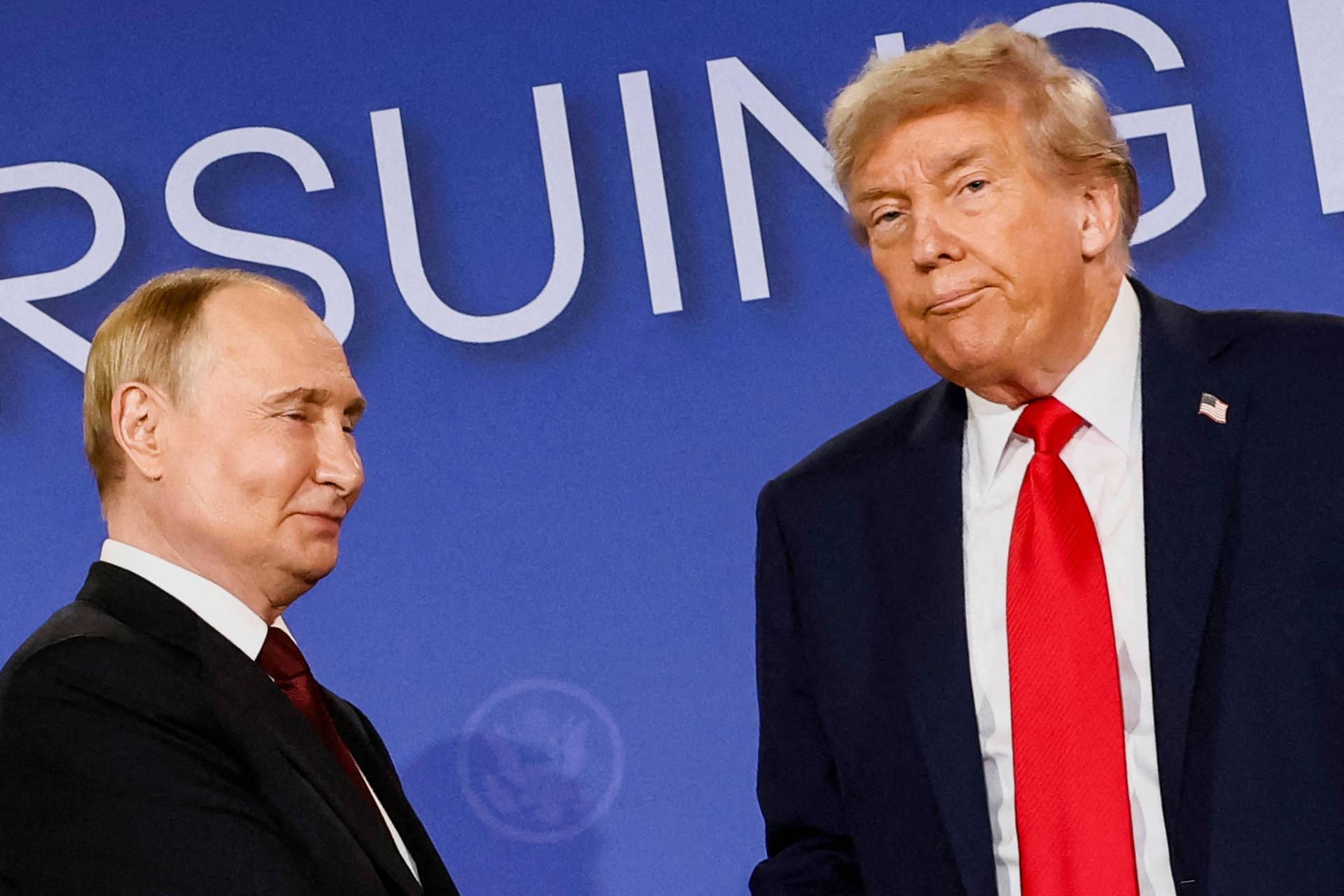
Times of India said the call lasted around 1.5 hours and that Ushakov told reporters the presidents “paid particular attention to the situation regarding Iran and in the Persian Gulf,” while also discussing Ukraine. Türkiye Today reported that Trump told reporters in the Oval Office that “We talked about more about the war in Ukraine,” while the Kremlin emphasized the Iran dimension.
What comes next and who pays
The reporting also described immediate operational steps and the broader cost of the conflict, including U.S. naval blockade milestones and the economic and military toll. Radio Free Europe/Radio Liberty said US Central Command (CENTCOM) reached a “significant milestone” on April 29 in its naval blockade of Iranian ports, with CENTCOM Commander Admiral Brad Cooper saying in a statement on X that U.S. forces redirected the “42nd commercial vessel attempting to violate the blockade.” The same report said, “Right now there are 41 tankers with 69 million barrels of oil that the Iranian regime can't sell,” and it described this as “an estimated $6 billion-plus from” as the article cut off.
Al Jazeera reported that at least two commercial ships linked to Iran have been captured by the U.S. as part of the siege and that the U.S. military said on Monday it redirected 39 vessels in regional waters over the past weeks, while Iran responded by seizing vessels it accuses of violating maritime regulations. On the human and military side, NewsNation said that since Operation Epic Fury began against Iran, “14 U.S. service members have been killed,” and it added that a U.S. defense official confirmed to NewsNation that “13 of the deaths were combat-related and one was non-combat.”
NewsNation further specified that “Six service members were killed in an Iranian drone strike in Kuwait,” “six died in a KC-135 crash,” and “one later died from wounds sustained in a separate attack at Prince Sultan Air Base in Saudi Arabia.” On the economic front, NewsNation reported that Pakistan’s weekly oil import bill rose from $300 million before the Middle East conflict to $800 million, and it quoted Prime Minister Shehbaz Sharif saying, “Due to our immense efforts, the ceasefire has been extended, which is still ongoing.”