Technology and Scienceupdated 1h ago2 min read
Archive photo · 30 March 2020Voyager 1 Reaches One Light-Day From Earth as NASA Power Declines
“The question that matters is not how far Voyager 1 has gone.”
“On November 18, 2026, Voyager 1 reaches an unprecedented cosmic milestone”
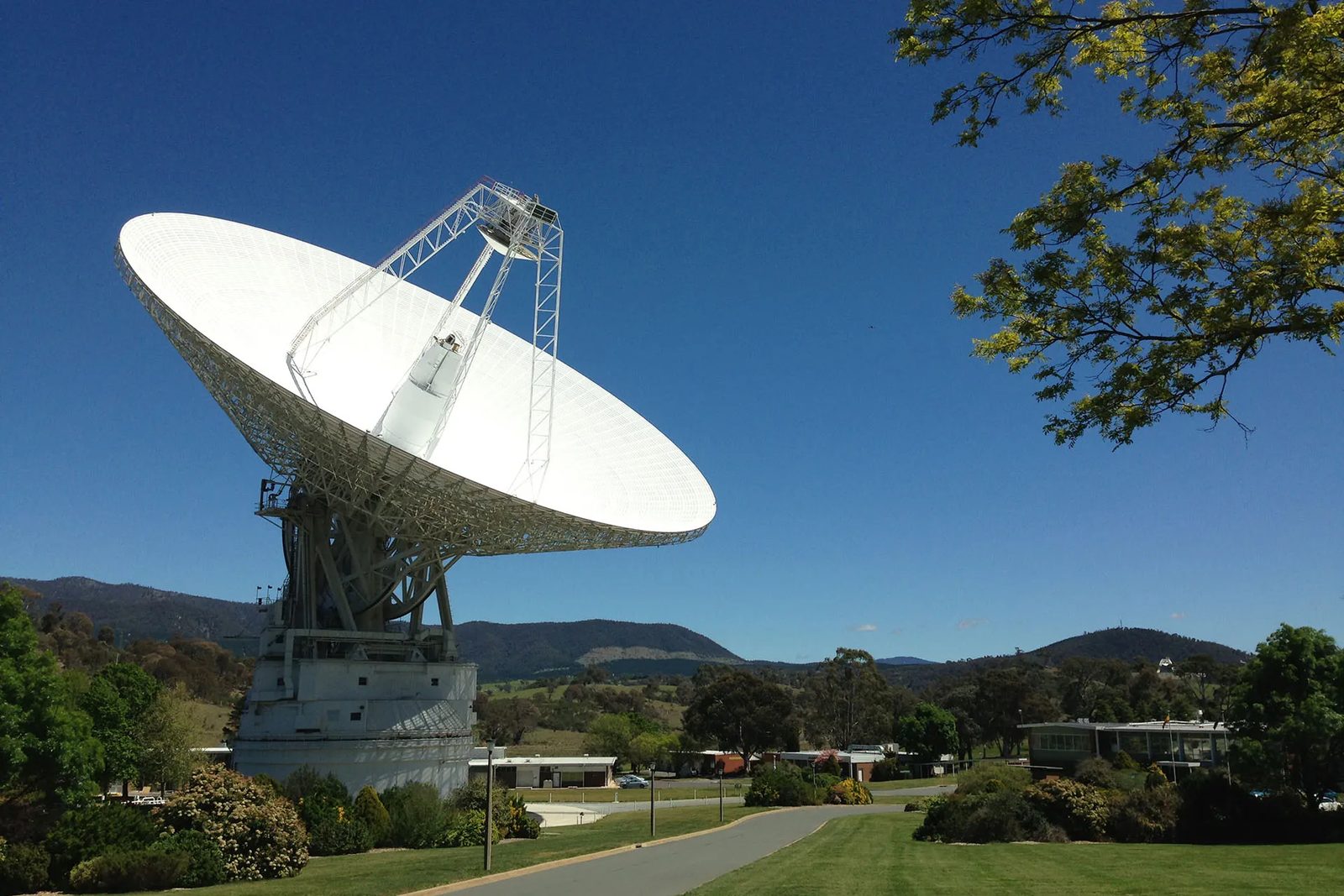
Photo: NASA/JPL-Caltech / US federal government, Public domain · Cropped for layout
This article is an automated aggregation of coverage from news outlets. Our editorials offer in-depth analysis curated by the NewsCord team.
Voyager 1 is about one light-day from Earth, the farthest human-made object. Power is fading, forcing aging hardware to perform unexpected tasks with two-day delays.
Save coverage image
Light-day milestone nears
Voyager 1 reached a distance from Earth of one light-day, more than 16 billion miles, as NASA’s probe continued to beam back data about magnetic fields, charged particles and plasma waves while its power steadily declined.
Voyager 1 was expected to pass the one-light-day milestone as of 5:16 a.m. EST Wednesday, and the 13-member team at NASA’s Jet Propulsion Laboratory would wait until Thursday for Voyager 1’s first post-light-day signal to confirm the achievement.
Voyager 1 sailed through space at nearly 38,000 mph, with radio signals traveling at 186,000 miles every second and needing 24 hours to reach flight controllers.
Ars Technica framed the moment as an opportunity to revisit the hardware behind the Golden Record, noting that Voyager 1 left Earth in 1977 and crossed into interstellar space in 2012.
Glen Swanson, former chief historian for NASA’s Johnson Space Center in Houston, uncovered overlooked second operating directions and located duplicates made and distributed almost five decades ago.
Golden Record details
Voyager 1 carried a commemorative phonograph record as a message from humanity to whoever or whatever encounters the spacecraft, and Ars Technica said the record was in part a nod to the 100th anniversary of the recording medium. Glen Swanson said, "So much has been written about the contents of the record" while he focused on "the hardware, the bottle itself." collectSPACE described Swanson’s research as uncovering the discs’ overlooked second set of operating directions and locating duplicates made and distributed almost five decades ago.
collectSPACE also reported that Swanson and Jon Lomberg set about writing "Voyager's Golden Record: An Enduring Reflection" for release by the University of Chicago Press in August of next year. Ars Technica added that Swanson said, "There isn’t a whole lot of information, and some of the information is somewhat contradictory," about existing resources and publications.
Power, commands, and time
NASA’s Voyager 1 continued operating with power declining from about 470 watts at launch to a little more than 210 watts now, enough to run just two of its 10 instruments while keeping the spacecraft properly oriented. Commands from flight controllers at JPL now take a full day to reach the spacecraft, with another 24 hours required to find out if the commands were received and acted upon. qz reported that engineers keep Voyager 1 going by working around aging hardware, and it quoted Voyager mission manager Kareem Badaruddin saying, "We're using very old machines to do something they weren't really designed to do."
qz also quoted Suzanne Dodd saying, "you send your message and then you go home and you wait two days before you finally get a response," describing the two-day round trip for any exchange. Ars Technica said Swanson and Jon Lomberg were writing Voyager’s Golden Record: An Enduring Reflection, and it noted that the book would be released by the University of Chicago Press in August 2027.