Lebanon23 August, 20263 min read
World Bank Projects Lebanon Economy Shrinking 6.4% After Hezbollah Returns to War With Israel
World Bank projects Lebanon GDP to shrink 6.4% in 2026 amid Hezbollah-Israel war. Lebanon's 2025 real GDP grew 4.2%, strongest in years before the decline.
The New York Times was read line by line by the Watchdog: 2.9. See the score →
War, displacement, and GDP
Lebanon’s economy is projected to shrink by 6.4% in 2026 after Hezbollah’s decision to return to war with Israel wiped out early recovery achieved in 2025, according to the World Bank Lebanon Economic Monitor report titled “A Conflict-Torn Economy.” The report said Lebanon’s real gross domestic product (GDP) expanded by 4.2% in 2025, its strongest growth since the onset of the country’s financial crisis in 2019, before the renewed conflict in March 2026 caused further damage to housing and infrastructure and displaced communities. The World Bank monitor estimated that around 360,000 people remain displaced, including at least 22,000 people living in collective shelters, and it said more than 700,000 people are still affected by damage to water infrastructure in parts of southern Lebanon.
At the height of the conflict, the UN reported that 1.2 million people were internally displaced, and the report estimated the conflict would reduce GDP growth by 10.4 percentage points relative to a scenario without the conflict. World Bank Group Middle East director Dahlia Khalifa said Lebanon’s “fragile recovery has been sharply set back by the renewed conflict,” adding that advancing reforms will be critical to restoring confidence and mobilizing financing for reconstruction and recovery.
State vs Hezbollah talks
President Joseph Aoun took office with a popular mandate to reassert control after Hezbollah dragged Lebanon back into war with Israel, and the New York Times described Lebanon’s leaders calling April talks with Israel a breakthrough after “four months and seven rounds of negotiations.” The standstill was framed as a blow to Aoun, who pledged to restore the state’s monopoly on arms and curtail Hezbollah’s political sway, while the government he formed worked to strip Hezbollah’s influence from the country’s international airport, the commercial port in Beirut, and the banks. The New York Times reported that Israel insists its forces will remain in the large swath of southern Lebanon seized in this war until Hezbollah is disarmed, and it said Hezbollah denounced the talks, saying it will not consider surrendering its weapons until Israeli forces withdraw from Lebanese territory.
In southern Lebanon, Le Monde described a “race between preserving memory and destruction,” quoting film producer Adeeb Farhat as he said the intensity of demolitions carried out by Israel in the partly occupied south had forced him to evacuate archives from Arab Salim. Le Monde also said the conflict had been partially frozen since the ceasefire on June 20, while “Every day, however, the Israeli army detonates homes in the occupied zone and carries out airstrikes around the area.”
Phosphorus strikes and risks
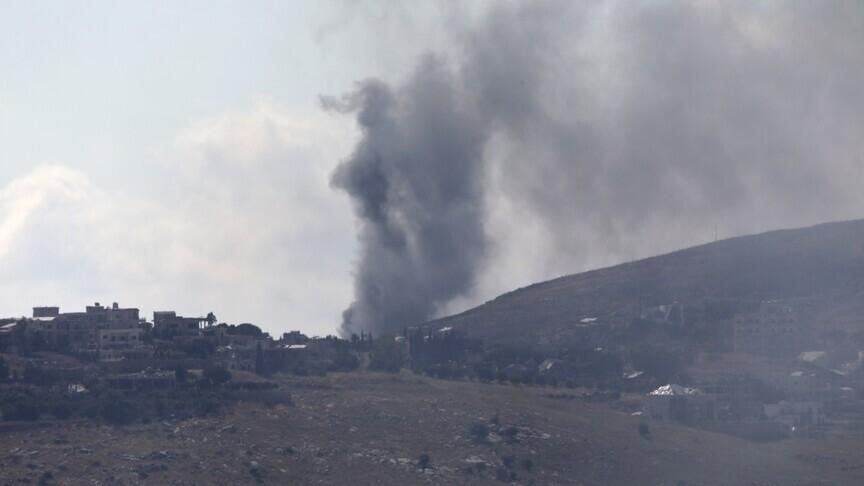
Multiple outlets described continued Israeli escalation in southern Lebanon using phosphorus shells, with Monte Carlo International saying Israel “continues its military escalation in southern Lebanon by intensifying its air raids and shelling, and continues demolishing buildings.” Monte Carlo International reported that phosphorus shells and artillery shelling hit towns including Tila al-Dubsha and Douha Karamaneh, and it said fires occurred in al-Mansouriyah while warplanes carried out raids on al-Mansouri and the area between Sirpbin and al-Shuqayf. The Lebanese National News Agency was cited by TRT عربي as reporting an Israeli strike in the evening on Sirbin in the Bint Jbeil District, and it said a drone targeted a herder in the Wadi Sirbin “without recording any injury.”
The New York Times’ account of the political stakes in Lebanon’s war with Israel and the World Bank’s warning about economic contraction both point to a widening set of consequences, with the World Bank monitor projecting GDP shrinkage in 2026 and the New York Times describing a stalled effort to reclaim control from Hezbollah. The World Bank monitor warned that public debt is unsustainable and inflation is expected to rise to 17.5% by the end of 2026, while it said energy imports accounted for 23% of Lebanon’s total imports in 2025 and that dependence on imported fuel for electricity generation and transportation can only be expected to worsen the crisis.