Lebanon26 August, 20263 min read
Israeli Airstrikes Kill Hezbollah Member Mohammed Ali In Markaba, South Lebanon
This article is an automated aggregation of coverage from news outlets. Our editorials offer in-depth analysis curated by the NewsCord team.
Israeli airstrikes and artillery target southern Lebanon, escalating cross-border hostilities. Dozens of towns and villages hit by airstrikes and shelling in the region.

4 outlets told this the same way.
The Guardian was read line by line by the Watchdog: 2.3. See the score →
State vs Hezbollah
Fatima al-Ashkar, a 26-year-old resident of Markaba in south Lebanon, told of using toys to explain to her children that “Israel came and bombed here. Daddy was here. Daddy was martyred. Daddy was protecting us from Israel,” after her husband, Mohammed Ali, a Hezbollah member, was killed fighting Israel in the region in early April.
The Guardian reported that Hezbollah’s martyr foundation found and furnished an apartment for al-Ashkar and her children in the southern suburbs of Beirut, covering the rent in full, and it continues to provide stipends for each child, pay for their school fees and cover all healthcare costs for the family.
The article said it was not the Lebanese state that al-Ashkar and other residents of south Lebanon turned to, but Hezbollah, as the Lebanese state tries to reassert its authority amid divisions over Hezbollah.
The Guardian quoted al-Ashkar saying, “Honestly, I don’t care about the state. Before, we used to say: ‘They should speak, they should do something.’ Now, whether they speak, or don’t speak, it makes no difference to us,” while describing her home being blown up during a nominal ceasefire between Hezbollah and Israel in 2024.
For Mustapha Hamze, a 66-year-old doctor from the outskirts of Nabatieh, the Guardian reported that neither Hezbollah’s weapons nor the government’s diplomacy has helped him access his home, and it said an Israeli drone fired on him when he last tried in the early days of the war.
Airstrikes and shelling
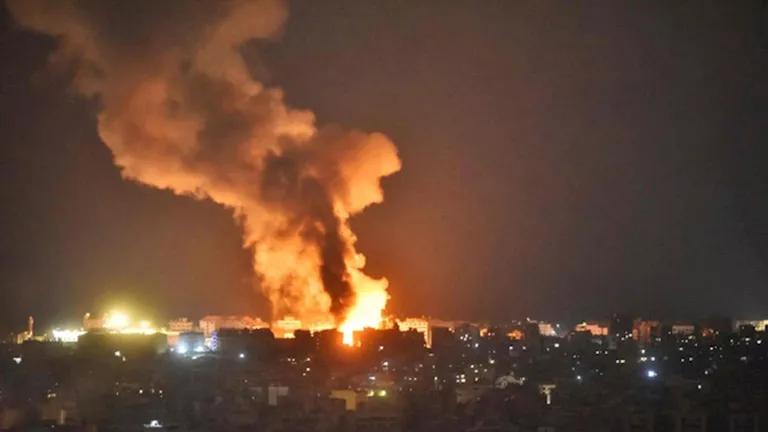
Masrawy reported that early this Wednesday morning the Israeli Air Force launched a series of strikes on southern Lebanon synchronized with artillery shelling and heavy machine-gun fire, hitting dozens of towns and villages. The report listed Israeli airstrikes on al-Mansouri, Wadi al-Salouqi, the area between Wadi al-Salouqi and the town of Shuqra, and between Sardin and Markaba, along with Al-Khayam, Duhat Keramoun, and areas between the Qantara and Deir Siryan, al-Nabatieh al-Fauqa, and the surroundings of al-Tayba and Deir Siryan. Masrawy said the shelling and strikes continued into the early hours of Wednesday dawn, with strikes registered around al-Tayba, Deir Siryan, and Nabatieh al-Fauqa, and artillery shelling of the area between Ali al-Tahir and al-Dabsha, in addition to Wadi al-Hujjar and the outskirts of Maifdon and Qasr.
Al-Manar TV Lebanon posted that “Israeli artillery shells Wadi Al-Slouqi in southern Lebanon: Al-Manar reporter,” on Wednesday, 26/08/2026. The Guardian had earlier described how the state’s narrative is undermined every time Israel shells Lebanese land, framing the latest round of war as hardening divisions over Hezbollah.
What comes next
The Guardian said the Lebanese government is using three “pilot zones” as prototypes of communities where it is trying to rebuild trust in the state, with reconstruction in these areas mostly destroyed by Israeli shelling. It reported that the Lebanese army is not allowing the southern council, a government body closely tied to the Hezbollah-allied Amal movement, to conduct reconstruction as was the case in the past, and instead “it is the Lebanese army taking charge of rebuilding roads and repairing infrastructure.” The Guardian added that the state’s narrative is undermined every time Israel shells Lebanese land, even as the article described the state’s challenge as extending far beyond disarming Hezbollah and persuading its supporters that it can provide security.
A senior Lebanese security official, speaking on condition of anonymity, told the Guardian that “This needs to be a whole-of-government approach,” and said for supporters of Hezbollah “you are talking about three generations of social indoctrination.” The Guardian also reported that Hezbollah’s opponents blame the group for provoking a war by launching rockets at Israel on 2 March, triggering Israel’s invasion and current occupation, while Hezbollah’s supporters accuse the government of humiliating Lebanon by negotiating directly with Israel and not responding to its attacks.