Financeupdated 2h ago2 min read
WTO Raises 2026 Global Merchandise Trade Growth Forecast To 3.9% On AI Investment
Global merchandise trade growth for 2026 raised to 3.9% from 1.9%. AI investment and supply-chain adaptation cited as primary growth drivers.
23 outlets told this the same way.
WTO lifts goods outlook
The World Trade Organization raised its forecast for global merchandise trade growth in 2026 to 3.9 percent, up from its March forecast of 1.9 percent, in its Global Trade Outlook and Statistics report. The WTO projected global GDP growth at 2.6 percent in 2026 and 2.9 percent in 2027, and it said the revision was driven by supply chain adaptation and strong investment in artificial intelligence (AI).
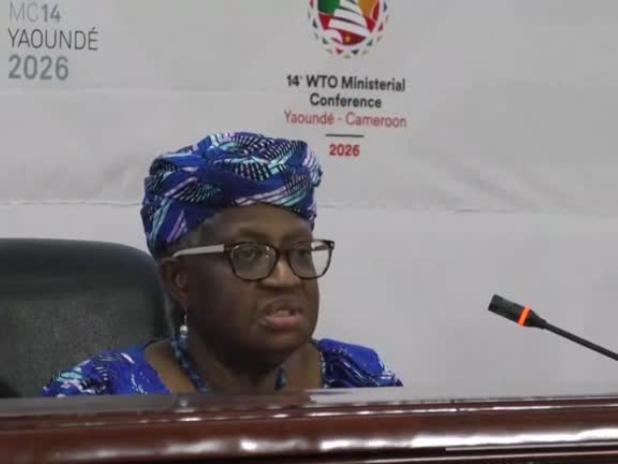
WTO Director-General Ngozi Okonjo-Iweala said the figures "reflect trade resilience in action." WTO Deputy Director-General Johanna Hill told a press conference that "Vulnerabilities remain, and WTO members are working to address them."
Services forecast cut
The WTO lowered its outlook for commercial services trade in 2026 due to the impact of the Middle East conflict, revising the forecast for services trade volume growth in 2026 to 3.3 percent from 4.8 percent in March. The WTO said services trade growth slowed from 14 percent year-on-year in value terms in the first quarter of 2026 to 10 percent in the second quarter.
The WTO also projected that in 2027, growth rates in volume terms for merchandise and services trade would rise to 4.1 percent and 6.4 percent, respectively. The WTO said merchandise trade volume grew by 3.5 percent in the first half of 2026, exceeding expectations despite disruption caused by the Middle East conflict.
AI investment offsets shocks
The WTO said a stronger-than-expected surge in AI-related capital investment contributed to the higher merchandise trade growth forecast. The WTO reported that in the first half of 2026, AI-enabling goods such as semiconductors and servers accounted for 47 percent of global merchandise trade growth, with trade in these products up 67 percent year-on-year.
The WTO said crude oil exports from the Middle East fell by roughly 24 percent and liquefied natural gas (LNG) exports by 47 percent in the first half of 2026, but increased shipments from other suppliers helped limit the decline in global exports to around 6 percent for crude oil and just 1 percent for LNG. The WTO said the Middle East conflict disrupted transport and travel services, while other services, especially digitally delivered services such as computer and financial services exports, remained resilient and continued to support overall services trade growth.