Russia20 May, 20263 min read
Xi Jinping and Vladimir Putin Meet in Beijing, Cite “Law of the Jungle”
This article is an automated aggregation of coverage from news outlets. Our editorials offer in-depth analysis curated by the NewsCord team.
Beijing summit included ceremonial welcome, signaling deeper China-Russia strategic ties. They warned against U.S. influence and a return to the 'law of the jungle'.

Beijing summit, no pipeline
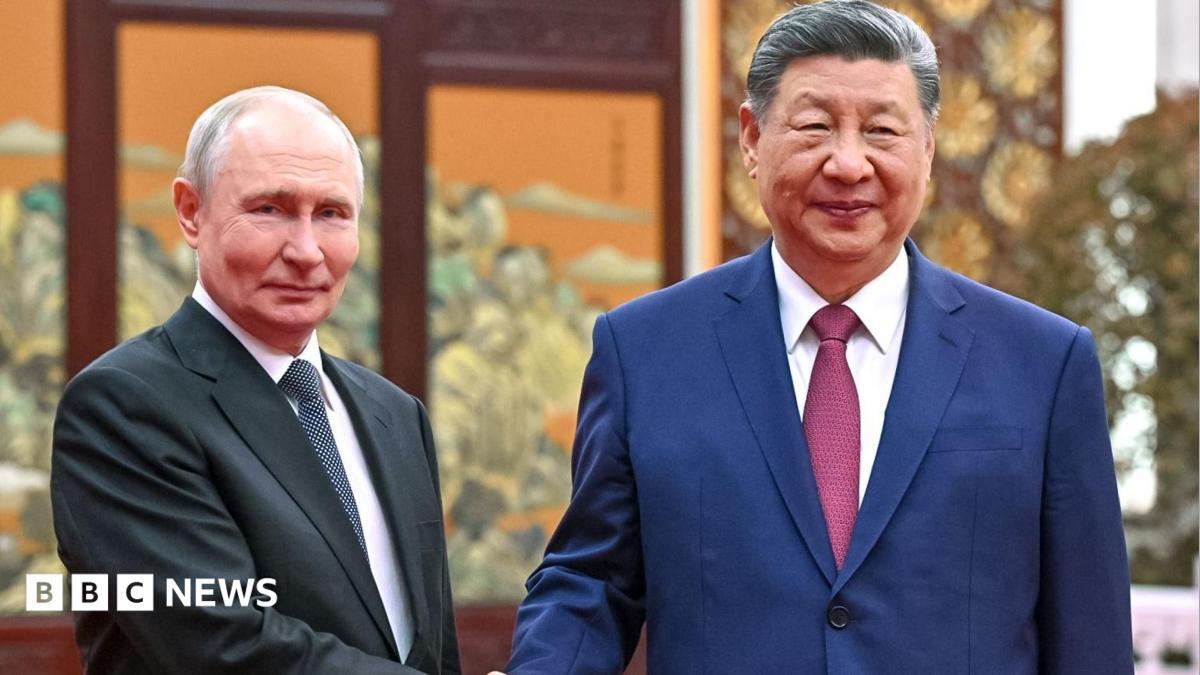
Chinese leader Xi Jinping and Russian President Vladimir Putin met in Beijing on Wednesday, with Xi hailing China-Russia cooperation as a force of “calm amid chaos” during their bilateral talks. Xi and Putin both used the “law of the jungle” warning in their messaging, with Xi telling Putin that “The international landscape is undergoing profound changes, and the world faces the danger of sliding back into the law of the jungle,” while Al Jazeera said the pair warned against a global return to the “law of the jungle” in a joint statement.
The summit’s energy centerpiece—Power of Siberia 2—did not produce a public breakthrough, and NBC News reported there was “no timeline for implementation” even as the Kremlin said there was general agreement on the pipeline. BBC described the same gap in outcomes, saying the Kremlin said Russia and China had reached a “general understanding on the parameters” of Power of Siberia 2 but that there was “no sign of a final agreement.”
Golden Dome and Iran
In Beijing, Xi and Putin signalled a united front against Washington, with Al Jazeera reporting that in a joint statement China and Russia took aim at U.S. President Donald Trump’s $175bn “Golden Dome” defence system.
Al Jazeera also quoted Xi warning that further conflict over Iran was “inadvisable” and that a ceasefire was necessary, while the joint statement advised that “there is a danger of fragmentation of the international community and a return to the ‘law of the jungle'”.
NBC News said Putin criticized the U.S. for allowing the 2010 New START nuclear arms control treaty to expire earlier this year and that the leaders agreed Trump’s “Golden Dome” missile defense project was “a threat to global stability.”
CNN reported that Xi used language about “unilateral hegemonic currents” running rampant as he sat down with Putin, and it said the two leaders signed a joint statement denouncing the “Golden Dome” project as posing “a clear threat to strategic stability.”
Agreements, leverage, and limits
Despite the lack of a public pipeline deal, the summit produced signed commitments, with NBC News saying the two leaders later signed nearly two dozen agreements in areas including economy, trade, education, science and technology.
Radio Free Europe/Radio Liberty said the May 20 state visit ended without any public breakthrough on Power of Siberia-2 and quoted Kremlin spokesperson Dmitry Peskov saying “the basic parameters of understanding” for the pipeline are in place, including its route and construction method.
BBC framed the limits of the relationship around energy interests, quoting the Russian government newspaper’s concession that “The positions of Russia and China are not identical. Their interests do not always coincide,” while also noting Putin’s foreign policy aide Yuri Ushakov said “The spirit of Beijing exists,” but “the spirit of Anchorage? I never used that phrase.”
In the same vein of what comes next, NBC News reported that the Kremlin also said there was general agreement on Power of Siberia 2 but that there is no timeline for implementation, leaving the next step dependent on resolving the pipeline’s stalled details rather than announcing a new deal in Beijing.