Full story
Houthi strikes in Red Sea
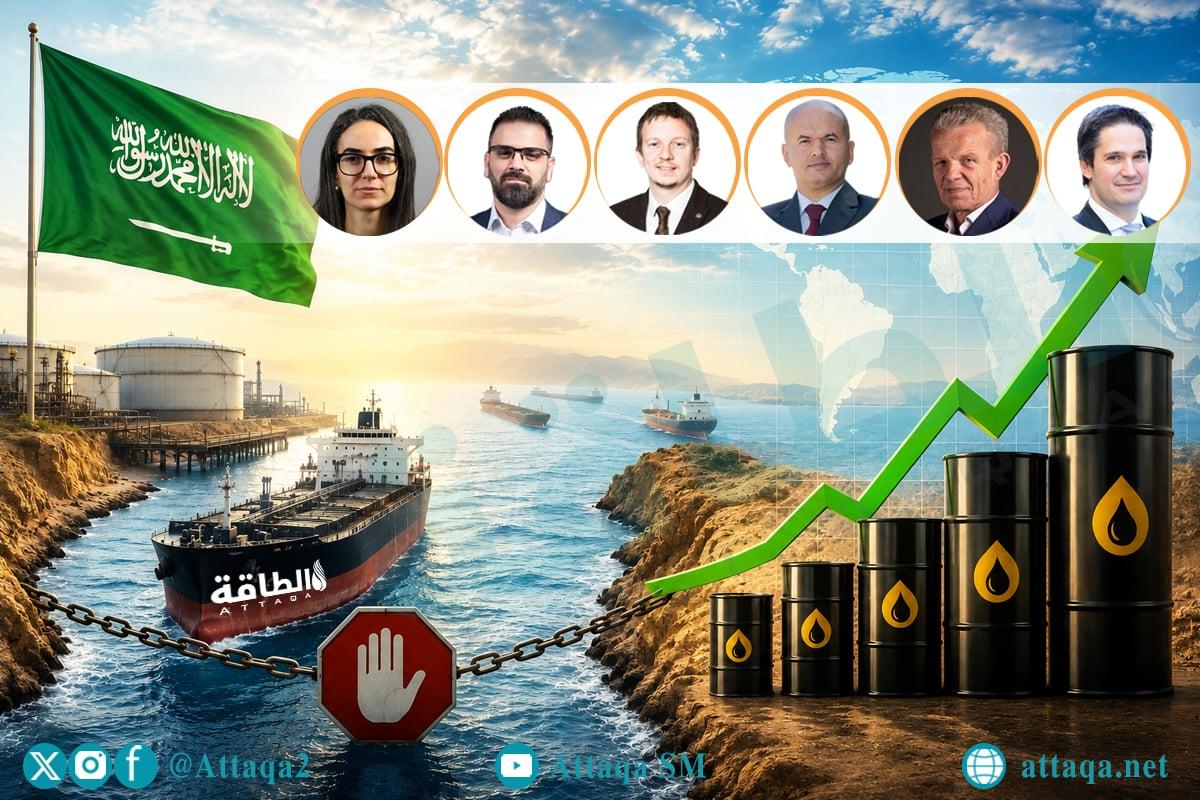
Iran-backed Houthi rebels in Yemen said on Thursday that they attacked two Saudi oil tankers in the Red Sea, namely Ensilia and Leila, using drones and missiles while alleging they violated a naval blockade of Red Sea ports imposed on Monday.
“Oil prices hit $100 a barrel for the first time since May as the escalating conflict in the Middle East reignited fears over global energy supplies”
The Saudi state news agency (SPA) reported that the oil tanker 'Ensilia' came under attack while crossing the Red Sea, causing a fire to break out in its bow, and cited an unnamed official from the General Transport Authority saying that all crew members were safe.
Separately, the United Kingdom Maritime Trade Operations (UKMTO) said on Wednesday that an 'unknown projectile' struck an oil tanker about 130 kilometers (80 miles) from the Saudi coastal city of Al-Shuqaiq, and that the attack caused a fire on board with no injuries reported.
Brent crude rose above $98 per barrel on Thursday following the strike news, and at 8:37 a.m. Eastern Time Brent traded at $99.12 per barrel, up 5.37% from the previous day.
The Houthis said their blockade was imposed in response to a Saudi missile strike that hit Sana'a International Airport last week, and Al-Monitor reported that a fragile UN-brokered two-month truce was in place in April 2022 but fighting has resumed since.
Trump threatens punishment
U.S. President Donald Trump threatened Iran and the Houthis with severe military punishment after the Houthis attacked two Saudi oil tankers in the Red Sea, and said in a post on Truth Social on Thursday that if the Houthis repeat such attacks, the United States will hold Iran responsible.
The same report said Trump noted that the Houthis are agents of Iran and that Tehran and the Houthis will face severe military punishment, as Brent crude rose above $100 per barrel for the first time since May.

Al-Monitor also reported that President Donald Trump said on Tuesday that the United States would respond if the Houthis carry out the blockade, while U.S. Secretary of State Marco Rubio told reporters on the sidelines of the ASEAN Foreign Ministers' meeting in Manila that Iran is not yet ready to accept a deal.
The Al-Monitor account added that CENTCOM said in a Wednesday statement that its twelfth round of strikes against Iran targeted military objectives, including naval assets and facilities storing missiles and drones.
In parallel, Iran’s Islamic Revolutionary Guards Corps said three tankers had abandoned an attempt to pass through Hormuz after an explosion aboard one of them caused it to catch fire, according to Ada Derana citing BBC—Agencies.
Energy corridor at risk
Al-Monitor said the Bab el-Mandeb Strait—described as a Red Sea chokepoint closed by the Houthis—is a major export route, and that Saudi Arabia has increased its reliance on it due to the near-total closure of the Strait of Hormuz in March as a result of the Iran conflict.
It reported that Saudi Arabia has redirected more than 70% of its crude oil shipments through a pipeline to the Yanbu port on the Red Sea coast, and that about 4.5 million barrels per day of Yanbu’s oil exports are currently at risk of blockade by the Houthis.
The Al-Monitor account also said the alleged attacks on oil tankers are the first known assaults on Saudi ships since the Houthis imposed their blockade, broadening the scope of the war that the United States and Israel have waged against Iran since February 28.
In related reporting, Reuters-cited market sources in the Iran-focused account said Aramco offered additional crude shipments for loading through the Egyptian port of Sidi Kerir, routed first to Ain Sokhna on the Red Sea and then via the Sumed pipeline to the Sidi Kerir port to provide greater flexibility.
That same account said QatarEnergy extended force majeure to LNG supplies to several Asian buyers and continued to charter LNG carriers through mid-October, indicating expectations of continued disruption as the conflict and navigation risks persist.